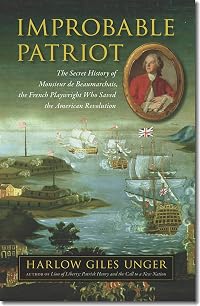
Improbable Patriot: The Secret History of Monsieur de Beaumarchais, the French Playwright Who Saved the American Revolution
by Harlow Giles Unger
On This Page
Description
The outrageous true story of the French plot to supply arms and ammunition to Washington's Continental Army, and the bold French spy, inventor, playwright, and rogue behind it allTags
Recommendations




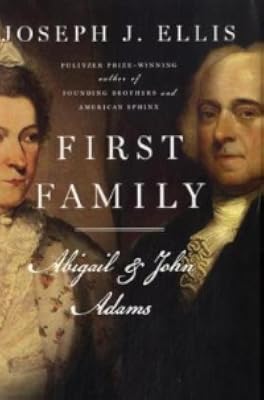
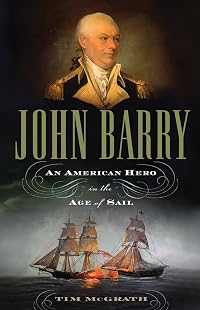

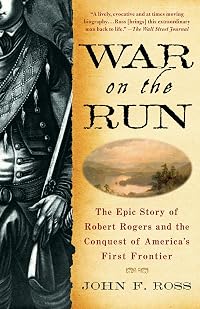
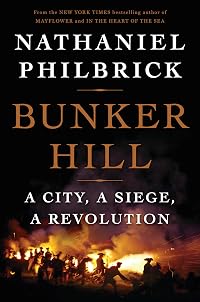

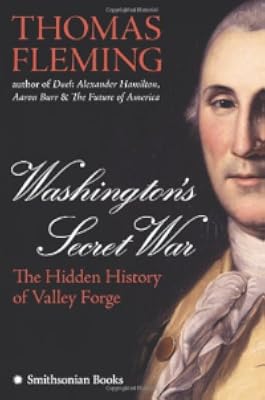
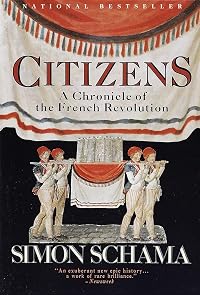
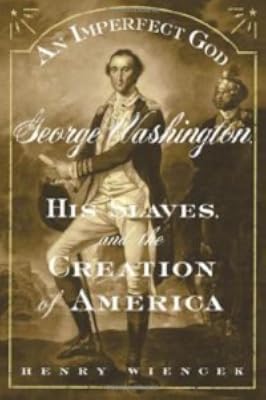

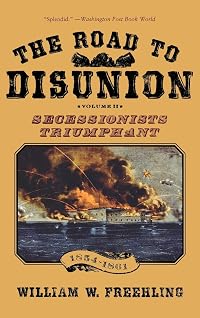


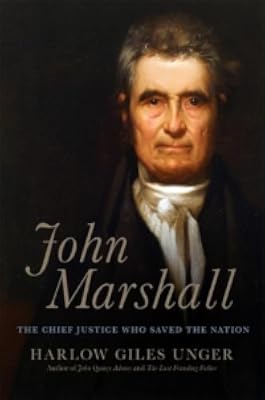
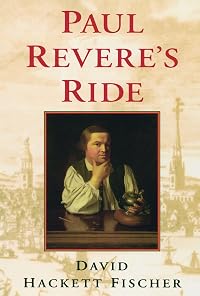

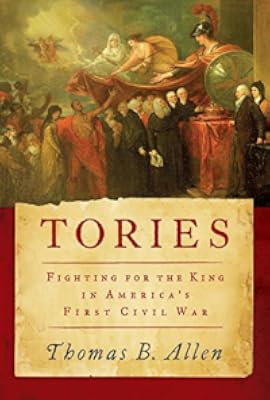
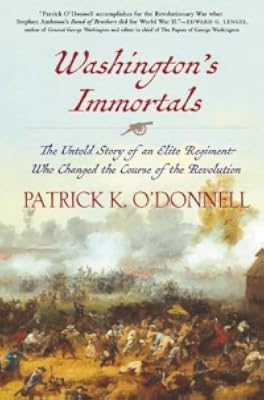
Member Recommendations

VictoriasBooksHere A shorter version is Flexner's The Indespensable Man, but the four volume set paints a most detailed portrait of this truly indespensable man.

Member Reviews
Improbable Patriot: Where Wit Meets War in Unger's Beaumarchais Biography
Forget stuffy biographies filled with dry dates and dusty facts. "Improbable Patriot: The Secret History of Monsieur de Beaumarchais" by Harlow Giles Unger throws open the curtains on the life of Pierre-Augustin Caron de Beaumarchais, a man who was playwright, inventor, rogue – and, most surprisingly, secret champion of the American Revolution.
Unger paints a captivating portrait of Beaumarchais, a social climber who navigated the treacherous waters of 18th-century French society with wit, charm, and a healthy dose of audacity. We see him jousting with censors, penning subversive plays that both delighted and scandalized, and even locking horns with Mozart (yes, show more that Mozart) in a public battle of the egos.
But beneath the flamboyant exterior lay a man with a deeper purpose. Unger masterfully unveils Beaumarchais's clandestine role in supplying weapons and funds to the struggling American revolutionaries. This "secret history" is the heart of the book, a tale of cloak-and-dagger operations, political intrigue, and the quiet heroism of an unlikely patriot.
The book isn't without its flaws. At times, the narrative gets bogged down in historical details, potentially losing readers who crave a more streamlined story. Additionally, Unger's admiration for Beaumarchais occasionally borders on hero worship, glossing over some of the character's less savory aspects.
However, these minor stumbles don't overshadow the book's strengths. Unger's engaging writing style brings Beaumarchais and his world to life, reminding us that history is often filled with surprising heroes and unexpected twists. "Improbable Patriot" is not just a biography; it's a testament to the power of individual action, the complexities of human nature, and the enduring allure of a well-told story.
Would I recommend it?
Absolutely! If you're looking for a captivating read that blends history, intrigue, and a touch of the unexpected, then "Improbable Patriot" is a surefire winner. Just be prepared for a few detours into historical minutiae and remember, even the most improbable heroes often have their flaws. After all, isn't that what makes them so fascinating? show less
Forget stuffy biographies filled with dry dates and dusty facts. "Improbable Patriot: The Secret History of Monsieur de Beaumarchais" by Harlow Giles Unger throws open the curtains on the life of Pierre-Augustin Caron de Beaumarchais, a man who was playwright, inventor, rogue – and, most surprisingly, secret champion of the American Revolution.
Unger paints a captivating portrait of Beaumarchais, a social climber who navigated the treacherous waters of 18th-century French society with wit, charm, and a healthy dose of audacity. We see him jousting with censors, penning subversive plays that both delighted and scandalized, and even locking horns with Mozart (yes, show more that Mozart) in a public battle of the egos.
But beneath the flamboyant exterior lay a man with a deeper purpose. Unger masterfully unveils Beaumarchais's clandestine role in supplying weapons and funds to the struggling American revolutionaries. This "secret history" is the heart of the book, a tale of cloak-and-dagger operations, political intrigue, and the quiet heroism of an unlikely patriot.
The book isn't without its flaws. At times, the narrative gets bogged down in historical details, potentially losing readers who crave a more streamlined story. Additionally, Unger's admiration for Beaumarchais occasionally borders on hero worship, glossing over some of the character's less savory aspects.
However, these minor stumbles don't overshadow the book's strengths. Unger's engaging writing style brings Beaumarchais and his world to life, reminding us that history is often filled with surprising heroes and unexpected twists. "Improbable Patriot" is not just a biography; it's a testament to the power of individual action, the complexities of human nature, and the enduring allure of a well-told story.
Would I recommend it?
Absolutely! If you're looking for a captivating read that blends history, intrigue, and a touch of the unexpected, then "Improbable Patriot" is a surefire winner. Just be prepared for a few detours into historical minutiae and remember, even the most improbable heroes often have their flaws. After all, isn't that what makes them so fascinating? show less
 This review was written for LibraryThing Early Reviewers.
Pierre-Augustin Caron de Beaumarchais was a brilliant inventor, musician, composer, businessman, diplomat, and the man most responsible for supplying critical aid to the floundering Americans during their Revolution, thus ensuring its success. Beaumarchais was a prodigy who invented the wristwatch and wrote “The Barber of Seville” and “The Marriage of Figaro.” He was also a staunch advocate of the equality of man and worked tirelessly and at great expense to send the Americans munitions, gunpowder, clothing, tents, and other war matériel.
The American Congress, however, refused to honor its commitment to reimburse him, and no monument or memorial in the United States exists to attest to the critical role he played. Unger seeks show more to redress this great injustice in a small but significant way by bringing his story to a contemporary American audience.
Beaumarchais used three main arguments to convince the French government to help the American colonists: (1) revenge for its humiliating loss to Britain during the Seven Years’ War (known in America as The French and Indian War); (2) a chance to reclaim Canada; and (3) special trading privileges with the new colonies. But still the French were reluctant: they could not be seen by Britain in assisting the colonies since they were not ready to fight another war. Beaumarchais drafted a scheme to provision the Americans in such a way that the British could not prove the involvement of the French government. Furthermore, at the same time he would rid the French military of surplus or obsolete matériel (which would, however, still be valuable to the Americans) and enable them to restock with the money-in-kind to be paid by the Americans.
Although the French Government would help, it insisted that Beaumarchais come up with a significant portion of the money, and also agree to incur all risk on his own. Unfortunately, as was mentioned above, the American Congress refused to pay. After the war, John Jay, Thomas Jefferson, James Madison, James Monroe, and Alexander Hamilton all pleaded with Congress to square accounts with Beaumarchais and -- after he died-- with his estate, but Congress consistently refused. It wasn’t until 1835 that the U.S. Government, about to make a claim of its own against France, agreed to settle with the Beaumarchais heirs, and paid them about 35 percent of what the government owed.
What exactly did Beaumarchais do? By the winter of 1776 the American Revolution was considered to be all but won by the British. Once numbering 30,000 men, Washington’s troops were reduced by desertions to some 5,200. They had no tents, and their feet were wrapped in rags, leaves, and twigs. They were out of ammunition. Congress refused to raise taxes to allocate funds for them. Beaumarchais borrowed money to procure everything they needed, including the ships and crews to get the goods to the Americans. On March 17, 1777, the first ship from France sailed into the harbor at Portsmouth, New Hampshire, carrying 12,000 muskets, 50 brass cannon, powder and ammunition, 1,000 tents, and clothes for 10,000 men. More ships followed. In all, Beaumarchais shipped more than $210 million in today’s dollars worth of supplies to them, including more than 80 percent of the Continental Army’s entire supply of gunpowder! The deal was that the ships were to return from America filled with tobacco, rice, flour and wood. But they always returned empty. Nevertheless, Beaumarchais kept sending supplies. It is not an exaggeration to say that the war could not have been won without him.
Unger does not have much good to say about Congress, charging them with “incessant, often infantile backbiting that they euphemistically called congressional debate.” Some things never change…
Evaluation: Beaumarchais is a fascinating character, and Unger paints a sympathetic portrait of him as he gets victimized time after time by those who are jealous, greedy, corrupt, selfish, or who can’t resist taking advantage of the kindness of others. Beaumarchais’s contribution to the victory of the Continental Army should be required knowledge by American citizens. show less
The American Congress, however, refused to honor its commitment to reimburse him, and no monument or memorial in the United States exists to attest to the critical role he played. Unger seeks show more to redress this great injustice in a small but significant way by bringing his story to a contemporary American audience.
Beaumarchais used three main arguments to convince the French government to help the American colonists: (1) revenge for its humiliating loss to Britain during the Seven Years’ War (known in America as The French and Indian War); (2) a chance to reclaim Canada; and (3) special trading privileges with the new colonies. But still the French were reluctant: they could not be seen by Britain in assisting the colonies since they were not ready to fight another war. Beaumarchais drafted a scheme to provision the Americans in such a way that the British could not prove the involvement of the French government. Furthermore, at the same time he would rid the French military of surplus or obsolete matériel (which would, however, still be valuable to the Americans) and enable them to restock with the money-in-kind to be paid by the Americans.
Although the French Government would help, it insisted that Beaumarchais come up with a significant portion of the money, and also agree to incur all risk on his own. Unfortunately, as was mentioned above, the American Congress refused to pay. After the war, John Jay, Thomas Jefferson, James Madison, James Monroe, and Alexander Hamilton all pleaded with Congress to square accounts with Beaumarchais and -- after he died-- with his estate, but Congress consistently refused. It wasn’t until 1835 that the U.S. Government, about to make a claim of its own against France, agreed to settle with the Beaumarchais heirs, and paid them about 35 percent of what the government owed.
What exactly did Beaumarchais do? By the winter of 1776 the American Revolution was considered to be all but won by the British. Once numbering 30,000 men, Washington’s troops were reduced by desertions to some 5,200. They had no tents, and their feet were wrapped in rags, leaves, and twigs. They were out of ammunition. Congress refused to raise taxes to allocate funds for them. Beaumarchais borrowed money to procure everything they needed, including the ships and crews to get the goods to the Americans. On March 17, 1777, the first ship from France sailed into the harbor at Portsmouth, New Hampshire, carrying 12,000 muskets, 50 brass cannon, powder and ammunition, 1,000 tents, and clothes for 10,000 men. More ships followed. In all, Beaumarchais shipped more than $210 million in today’s dollars worth of supplies to them, including more than 80 percent of the Continental Army’s entire supply of gunpowder! The deal was that the ships were to return from America filled with tobacco, rice, flour and wood. But they always returned empty. Nevertheless, Beaumarchais kept sending supplies. It is not an exaggeration to say that the war could not have been won without him.
Unger does not have much good to say about Congress, charging them with “incessant, often infantile backbiting that they euphemistically called congressional debate.” Some things never change…
Evaluation: Beaumarchais is a fascinating character, and Unger paints a sympathetic portrait of him as he gets victimized time after time by those who are jealous, greedy, corrupt, selfish, or who can’t resist taking advantage of the kindness of others. Beaumarchais’s contribution to the victory of the Continental Army should be required knowledge by American citizens. show less
This review was written for LibraryThing Early Reviewers.Pierre-Augustin Caron de Beaumarchais may be the most famous person I never heard of in American History class. Although he was a commoner, his skills and personality provided an entry into the Bourbon court of France. He was a skilled clockmaker, and he charmed members of the royal family with his new invention, the wristwatch. He was the playwright who created the character Figaro. Thanks to Mozart, Rossini, and Bugs Bunny, I think of Figaro as an operatic character. However, he was already famous before Mozart or Rossini set his stories to music.
The ideals that inspired the American Revolution appealed to Beaumarchais. He followed the news from America, and he used his access to powerful members of the French government to promote show more recognition of and aid to the Americans as being in France's best interest. He devised a plan to provide military supplies to the revolutionists in exchange for American goods. Although the arms supplied by Beaumarchais allowed the colonists to continue the war with Great Britain, through a probably willful misunderstanding of the terms of the deal, the colonists did not fulfill their side of the bargain.
Despite his financial loss from the arms trade and his disappointment with the American leaders, Beaumarchais remained committed to the ideals that inspired the revolution. He was generous with the wealth he accumulated. He lived well, but he also provided for the physical needs of his less fortunate neighbors. When the French Revolution broke out a decade later, Beaumarchais, a commoner comfortable in the royal court, survived the worst of the Terror largely because he was loved and respected for his creation of Figaro (who regularly out-witted nobility) and for his philanthropy.
This engaging biography is a good introduction to a man who deserves to be remembered for his accomplishments and character. Highly recommended for readers with an interest in the American Revolution, the French Revolution, the Enlightenment, and theater history.
This review is based on a complimentary copy provided by the publisher through LibraryThing's Early Reviewers program. show less
The ideals that inspired the American Revolution appealed to Beaumarchais. He followed the news from America, and he used his access to powerful members of the French government to promote show more recognition of and aid to the Americans as being in France's best interest. He devised a plan to provide military supplies to the revolutionists in exchange for American goods. Although the arms supplied by Beaumarchais allowed the colonists to continue the war with Great Britain, through a probably willful misunderstanding of the terms of the deal, the colonists did not fulfill their side of the bargain.
Despite his financial loss from the arms trade and his disappointment with the American leaders, Beaumarchais remained committed to the ideals that inspired the revolution. He was generous with the wealth he accumulated. He lived well, but he also provided for the physical needs of his less fortunate neighbors. When the French Revolution broke out a decade later, Beaumarchais, a commoner comfortable in the royal court, survived the worst of the Terror largely because he was loved and respected for his creation of Figaro (who regularly out-witted nobility) and for his philanthropy.
This engaging biography is a good introduction to a man who deserves to be remembered for his accomplishments and character. Highly recommended for readers with an interest in the American Revolution, the French Revolution, the Enlightenment, and theater history.
This review is based on a complimentary copy provided by the publisher through LibraryThing's Early Reviewers program. show less
This review was written for LibraryThing Early Reviewers.Visiting Independence Hall in Philadelphia, I was surprised to see, hung in the side Chambers room two royal portraits. Turning to the Park Service Ranger in her ‘Smokey the Bear’ hat I asked why there were royals portrayed in this hallowed Revolutionary spot!? Smiling at my British accent she explained that they were of the French King Louis, and his Queen, not English royals at all. I recalled the history of the French support against the English in that particular affair, often forgotten or perhaps not even known of by many Americans, and punned back to her – ”Ah yes, the Funding Founders!”
Through books on George Washington and the Revolutionary War I had learned to admire the Marquis de La Fayette, who became almost a son show more to General George Washington. But I was not aware there was a further French hero who helped the Americans win their revolution – here is the story of Pierre-Augustin Caron de Beaumarchais, better known to us from his works Figaro and the Barber of Seville than for his amazing effort in the funding and arms-supplying to the newly-born America! The son of a clock-maker who hauled himself up as high as royalty by his own bootstraps Pierre is the ultimate republican, as American as apple-pie – yet French. An artistic arriviste, manipulating his way through fortunes, revolutions and marriages but almost personally funding an entire nation in its revolutionary war against a common enemy.
As for our Founding Fathers ….while the Continental Army slowly rotted away by desertion and near starvation in nearby Valley Forge, the snow covered with trails of their bloody foot-prints as only about a third of the army had any shoes, Congress, the author says, indulged in … “the incessant, often infantile backbiting that they euphemistically called congressional debate.” But for the funding of King Louis and the arms supply organized by Ben Franklin and Beaumarchais, the war might well have been lost and American independence never achieved.
Harlow Giles Unger supplies the reader with an easy entry into the complex issue of the war of American independence while detailing the incredible rise and many falls of this talented playwright, a model for his own most famous creation, Figaro.
Never even repaid by Congress for supplying fleet-loads of supplies to the impoverished Army, let alone recognized and honored, Beaumarchais sacrificed not just his own personal fortune (one of several he amazing made and lost) the playwright also lost all civil and citizenship rights through political intrigue in Paris and was at one stage sentenced to face death if he returned to France, his own country – no, not an Improbable Patriot at all, but a courageous one! show less
Through books on George Washington and the Revolutionary War I had learned to admire the Marquis de La Fayette, who became almost a son show more to General George Washington. But I was not aware there was a further French hero who helped the Americans win their revolution – here is the story of Pierre-Augustin Caron de Beaumarchais, better known to us from his works Figaro and the Barber of Seville than for his amazing effort in the funding and arms-supplying to the newly-born America! The son of a clock-maker who hauled himself up as high as royalty by his own bootstraps Pierre is the ultimate republican, as American as apple-pie – yet French. An artistic arriviste, manipulating his way through fortunes, revolutions and marriages but almost personally funding an entire nation in its revolutionary war against a common enemy.
As for our Founding Fathers ….while the Continental Army slowly rotted away by desertion and near starvation in nearby Valley Forge, the snow covered with trails of their bloody foot-prints as only about a third of the army had any shoes, Congress, the author says, indulged in … “the incessant, often infantile backbiting that they euphemistically called congressional debate.” But for the funding of King Louis and the arms supply organized by Ben Franklin and Beaumarchais, the war might well have been lost and American independence never achieved.
Harlow Giles Unger supplies the reader with an easy entry into the complex issue of the war of American independence while detailing the incredible rise and many falls of this talented playwright, a model for his own most famous creation, Figaro.
Never even repaid by Congress for supplying fleet-loads of supplies to the impoverished Army, let alone recognized and honored, Beaumarchais sacrificed not just his own personal fortune (one of several he amazing made and lost) the playwright also lost all civil and citizenship rights through political intrigue in Paris and was at one stage sentenced to face death if he returned to France, his own country – no, not an Improbable Patriot at all, but a courageous one! show less
This review was written for LibraryThing Early Reviewers.Interesting account of the French role in bankrolling the American Revolution. The chief contributor being the playwrite Monsieur de Beaumarchais. I had only a vague knowledge of Beaumarchais prior to reading this account. I knew of him as a playwrite who influenced French public attitudes during the revolutionary period. I found the book well conceived, fast paced and informative. In the end I was left feeling the US government treated Beaumarchais shabilly at best and certainly has not adequately honored his contribution to the revolutionaries war effort.
This review was written for LibraryThing Early Reviewers.Hurray! A new hero of the American Revolution arrives in the nick of time to save us from the shallow Francophobia that infected America’s hoi polloi when France, our oldest and most faithful ally, declined to join the United States in our costly and probably counter-productive adventure in Iraq. Harlow Giles Unger, as thorough a scholar of history as one finds in our Country today, begins the Improbable Patriot with a sweeping and brilliant overview of the North Atlantic world as it existed in the 18th century. Without surrendering accuracy, he spins a fascinating tale of people and events that leaves the reader almost breathless. Unger relates the incredible story of Beaumarchais’ life and exploits so vividly, Beaumarchais himself show more would probably approve. The Improbable Patriot is first of all the life story of an indomitable genius who charmed the socks off a generation of Europeans and played a significant role, albeit a little known one, in both the American and French Revolutions. One would hope that American school children still learn about the Marquis de La Fayette and the Baron Dekalb. The story of Pierre-Augustin Caron de Beaumarchais makes a triad of strong and colorful Frenchmen whose contributions to our nation’s independence were valuable beyond measure.
This little book makes fast and exciting reading of an intriguing phase of American and French history. As a biography, it is mainly factual, but sufficiently descriptive and interpretive to lead the reader into some feeling for the character and personality of this remarkable genius, Beaumarchais. The book is profusely illustrated with nearly forty black and white drawings, paintings, or other photos. It has an adequate index and bibliography. Toward the end of the latter I was curious to find this entry: Unger, Harlow Giles. The French War Against America: How a Trusted Ally Betrayed Washington and the Founding Fathers. Now that is on my “must read” list. show less
This little book makes fast and exciting reading of an intriguing phase of American and French history. As a biography, it is mainly factual, but sufficiently descriptive and interpretive to lead the reader into some feeling for the character and personality of this remarkable genius, Beaumarchais. The book is profusely illustrated with nearly forty black and white drawings, paintings, or other photos. It has an adequate index and bibliography. Toward the end of the latter I was curious to find this entry: Unger, Harlow Giles. The French War Against America: How a Trusted Ally Betrayed Washington and the Founding Fathers. Now that is on my “must read” list. show less
This review was written for LibraryThing Early Reviewers.Biography of Pierre-Augustin Caron de Beaumarchais, the son of a clockmaker and a gifted inventor, playwright, spy, and supporter of the American Revolution. He led an interesting life and suffered more than his share of calamities, including death of his first wife, imprisonment, others taking credit for his creations, seizure of his assets, censorship, and exile. This book covers his full life – invention of the wristwatch, writing of The Barber of Seville and The Marriage of Figaro, and involvement in both the American and French Revolutions. The bulk of this narrative non-fiction covers his life in France. Toward the end it covers his role as a champion of revolution. It is a sensitive and compassionate view of his life. Many show more viewed him as a target, much of which was due to the classism of the time. Even though he played such a key role in the American Revolution, at his own expense, the American Congress never reimbursed him or offered any significant recognition. It is too bad his contributions are not better known in America. It seems fitting that he is finally getting the credit he deserves. show less
Members
- Recently Added By
Published Reviews
In almost any other age, you might have called Pierre-Augustin Caron an arriviste. He even gave himself the title by which we know him best, when at twenty-four he married the widow of his former boss Pierre-Augustin Franquet and, in the process, picked up an estate twenty-five miles south of Paris formerly belonging to a man named Beaumarchet. It did not take long for a young man on the rise show more to parley this into the officially recognized moniker “de Beaumarchais.” So began the steep ascent to fame and wealth, although by the time of his death in 1799 his fortunes had plummeted in the wake of the Revolution. show less
added by John_Vaughan
Though best known for his comic operas, like The Barber of Seville, Pierre de Beaumarchais delivered critical support to American rebels, writes historian Unger (American Tempest: How the Boston Tea Party Sparked a Revolution), and he makes a convincing case. Though always musically inclined, Beaumarchais, the gifted son of a clockmaker, as a young man invented the small mechanism that made show more the first wristwatch possible. This, plus charm and musical talent, won him royal favor, wealth, and enemies. Harassed and often imprisoned by powerful aristocrats, he responded with satirical writings, which made him famous. After Britain's North American colonies rebelled in 1775, Beaumarchais convinced reluctant royal officials to support them. With a large government loan, he set up a private company that made no profits (because the Continental Congress never paid), but which shipped arms that may have turned the tide at critical moments such as at Saratoga in 1777. Beaumarchais's literary wit translates poorly here, but readers will probably agree that he was the "most underrated French hero of the American Revolution." 38 illus. (Sept.) show less
added by libri_amor
Lists

Ben Franklin
9 works; 3 members
Author Information

32 Works 2,727 Members
Harlow Giles Unger is an acclaimed historian and a former Distinguished Visiting Fellow at George Washington's Mount Vernon. He is the author of twenty-four books, including eleven biographies of America's Founding Fathers and three histories of the early republic. He lives in New York City
Common Knowledge
- Original publication date
- 2011-09-13
- People/Characters
- George Washington (General); Beaumarchais
- Important events
- American Revolution (1775 | 1783)
Classifications
- Genres
- Fiction and Literature, Biography & Memoir, Literature Studies and Criticism
- DDC/MDS
- 842.5 — Literature & rhetoric French Literature French drama 18th century 1715–89
- LCC
- PQ1956 .U54 — Language and Literature French, Italian, Spanish and Portuguese literatures French literature Modern literature 18th century
- BISAC
Statistics
- Members
- 77
- Popularity
- 411,807
- Reviews
- 16
- Rating
- (4.11)
- Languages
- English
- Media
- Paper, Audiobook, Ebook
- ISBNs
- 5
- ASINs
- 2