On This Page
Description
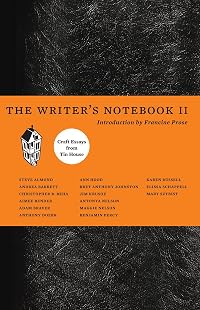
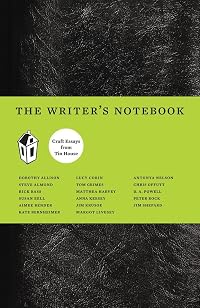
"The Writer's Notebook II continues in the tradition of The Writer's Notebook, featuring essays based on craft seminars from the Tin House Summer Writer's Workshop, as well as a variety of craft essays from Tin House magazine contributors and Tin House book authors. The collection includes essays that not only examine important craft aspects such as humor, suspense, and research but also explore creating fractured and nonrealistic narratives and the role of dream in fiction"--Back cover.Tags
Recommendations
Member Reviews
I gave this a three, mainly because there were only a couple of good essays. But the good ones are REALLY good, so do browse this, by all means... For me, the two best pieces were by Johnston and Almond...
Bret Anthony Johnston on having an agenda as a writer:
The writer seems to have chosen an event because it illustrates a point or mounts an argument. When a fiction writer has a message to deliver, a residue of smugness is often in the prose, a distressing sense of the story's being rushed, of the author's going through the motions, hurrying the characters toward whatever wisdom awaits on the last page. As a reader, I feel pandered to and closed out. Maybe even a little bullied. My involvement in the story, like the characters', becomes show more utterly passive. We are there to follow orders, to admire and applaud the author's supposed insight (27).
Fiction is an act of courage and humility, a protest against our mortality, and we, the authors, don't matter. What matters are our characters, those constructions of imagination that can transcend our biases and agendas, our egos and entitlements and flesh... trust that your craft, when braided with compassion, will produce stories that matter both to you and to readers you've never met (28-29).
Steve Almond on humor (especially good!):
"... sometime atrocity is the midwife of the comic...the comic impulse is what allows us to recognize our sins (personal, cultural, historical) and thereby make moral progress (36).
"The jokes that my characters require, in order to face the truth of themselves and their circumstances, -- those are the ones that stay." (38)
When the stink of gravity grows thick upon your keyboard, let humor be your aromatherapy... (38-39).
Something is funny, most of all, because it's true, and because the velocity of insight into this truth exceeds our normal standards. Something is funny because it's outside our expected boundary of decorum. Something is funny because it defies our expectations. Something is funny because it offers a temporary reprieve from the hardship of seeing the world as it actually is. Something is funny because it is able to suggest gently that even the worst of our circumstances and sins is subject to eventual mercy. There are different sorts of laughter, in other words, and they express varying degrees of joy, affirmation, surprise and relief (39).
Literary artists don't write funny to produce laughter -- though we're certainly thrilled when people laugh -- but to apprehend and endure the astonishing sorrow of the examined life (41). show less
Bret Anthony Johnston on having an agenda as a writer:
The writer seems to have chosen an event because it illustrates a point or mounts an argument. When a fiction writer has a message to deliver, a residue of smugness is often in the prose, a distressing sense of the story's being rushed, of the author's going through the motions, hurrying the characters toward whatever wisdom awaits on the last page. As a reader, I feel pandered to and closed out. Maybe even a little bullied. My involvement in the story, like the characters', becomes show more utterly passive. We are there to follow orders, to admire and applaud the author's supposed insight (27).
Fiction is an act of courage and humility, a protest against our mortality, and we, the authors, don't matter. What matters are our characters, those constructions of imagination that can transcend our biases and agendas, our egos and entitlements and flesh... trust that your craft, when braided with compassion, will produce stories that matter both to you and to readers you've never met (28-29).
Steve Almond on humor (especially good!):
"... sometime atrocity is the midwife of the comic...the comic impulse is what allows us to recognize our sins (personal, cultural, historical) and thereby make moral progress (36).
"The jokes that my characters require, in order to face the truth of themselves and their circumstances, -- those are the ones that stay." (38)
When the stink of gravity grows thick upon your keyboard, let humor be your aromatherapy... (38-39).
Something is funny, most of all, because it's true, and because the velocity of insight into this truth exceeds our normal standards. Something is funny because it's outside our expected boundary of decorum. Something is funny because it defies our expectations. Something is funny because it offers a temporary reprieve from the hardship of seeing the world as it actually is. Something is funny because it is able to suggest gently that even the worst of our circumstances and sins is subject to eventual mercy. There are different sorts of laughter, in other words, and they express varying degrees of joy, affirmation, surprise and relief (39).
Literary artists don't write funny to produce laughter -- though we're certainly thrilled when people laugh -- but to apprehend and endure the astonishing sorrow of the examined life (41). show less
Ratings
Members
- Recently Added By
Author Information

10 Works 391 Members
All Editions
Series

Classifications
Statistics
- Members
- 49
- Popularity
- 613,006
- Reviews
- 1
- Rating
- (4.20)
- Languages
- English
- Media
- Paper, Ebook
- ISBNs
- 2
- ASINs
- 1