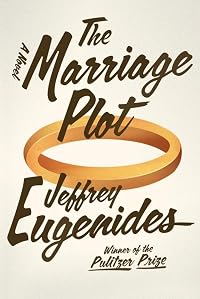
The Marriage Plot
by Jeffrey Eugenides
On This Page
Description
Madeleine Hanna breaks out of her straight-and-narrow mold when she falls in love with charismatic loner Leonard Bankhead, while at the same time an old friend of hers resurfaces, obsessed with the idea that Madeleine is his destiny.Tags
Recommendations








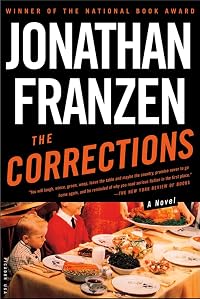
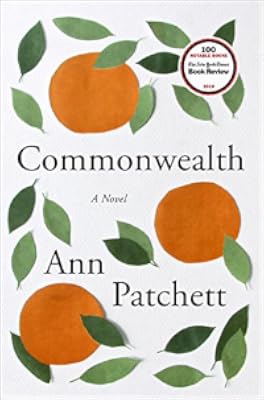
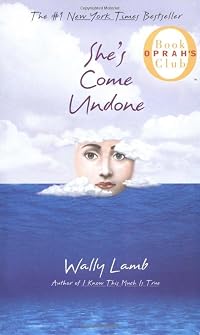

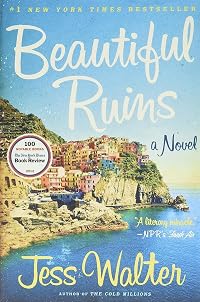

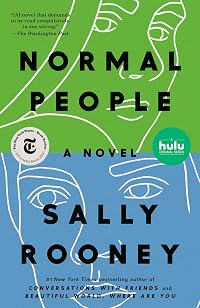


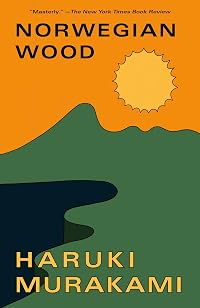
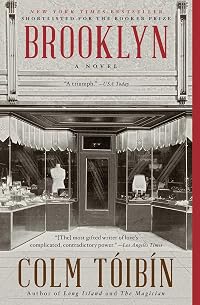
Member Recommendations






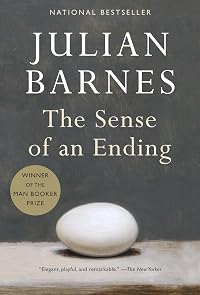
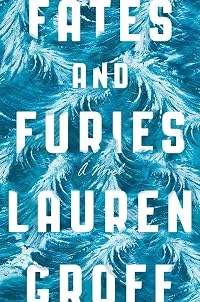
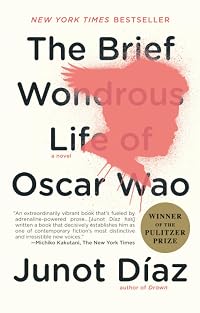
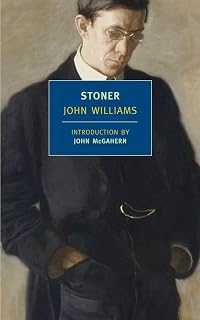
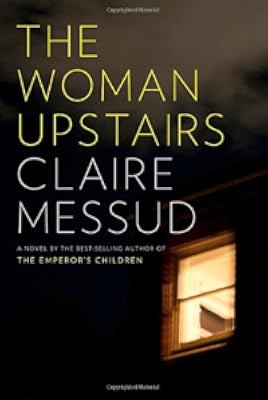
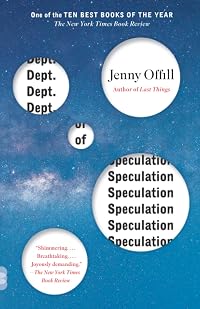
akblanchard In both novels, collegiate intellectuals wander through the minefields of spirituality and relationships.
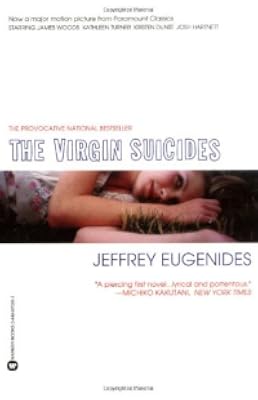
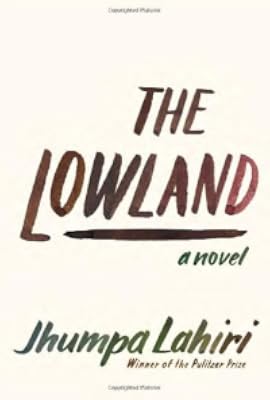
Deesirings Both these books offer poignant descriptions of being within a mind-altering disease.
02

Member Reviews
The characterization in this book is amazing. These people are as fully developed as any I've ever read, all flawed and all sympathetic. Even the secondary characters are better drawn than the main characters of many mediocre books I've read. The author's skewering of college literary discussion or American spiritual seekers in India or young wanderers in their hostels is brilliant. In a book that is heavy and rarely happy, I found myself reading parts aloud to my husband because the satire was too perfect to keep to myself. His description of bipolar disorder, from the perspective of the patient and his family, is amazing. It is possibly the best description of mental illness I've read. His description of family dynamics, both healthy show more and not, is also remarkable. I got bogged down occasionally in the anxious headspace of the characters, Mitchell in particular whom I liked less than the other two, and the ending was appropriate and realistic but not satisfying. I would have preferred a more hopeful ending than the not-completely-devoid-of-hope ending that we got, though a better ending would have been unconvincing without either changing almost the entire second half of the book or adding another hundred pages. I would have read those hundred pages to leave these characters in a better place. As it is, while I marvel at this author's skill of observation and description, I don't think I have the heart to read more of his writing. show less
Smart people reading books, finding themselves, and falling in love in the Ivy League of the early '80s. This is a premise that could horribly flat if not for the deftness of Eugenides' plot and his meticulously constructed love triangle. You can enjoy this as a page-turning postmodern take on Austen and Eliot, or you can try to construct some kind of deeper archetypal interpretation: is the rivalry between Mitchell and Leonard a metaphor for the competing interests of science and religion? Is the bandanna-wearing Leonard a stand-in for the late, great David Foster Wallace (although Eugenides makes sure to point out that Leonard hates tennis)? Eugenides adds enough fly-on-the wall detail to make The Marriage Plot believable, even with show more its fantastic sheen and exotic locales (Calcutta, Monte Carlo). Highly recommended. show less
I really would give this four and a half stars -- it's very close to five. The only thing that keeps me from giving this five stars is that Madeleine's thesis, which I thought would be a fairly continuous thread in the novel (given that it gave rise to the title), dropped out of sight completely for much of the book, such that its mention at the very end struck me as slightly jarring.
The Marriage Plot did an extraordinary job of taking me back to my college days, in the intellectual sense. College is a time when students encounter challenges to accepted modes of thought and discover new perspectives from which to approach age-old questions. This can be experienced both as intellectual excitement (so much to discover! so much is new!) show more and as intellectual vertigo (nothing is stable! we have to question everything?). I thought Eugenides captured that period perfectly; his characters see so much possibility in the world, but also wrestle with being overwhelmed by it.
One of my favorite things about the book was how seamlessly the perspectives of different characters were integrated. I almost didn't notice the first time the book stopped following Madeleine's story and picked up the path of another character, because the narrator's voice was so consistent. Even though you were seeing inside a different character's head, a character with completely different thoughts and emotions and motivations, it was so clearly part of the same story that I could just relax into the current of the story without worrying about changes of direction.
I mention this because it strikes me as very different from [b:The Dovekeepers|10950924|The Dovekeepers|Alice Hoffman|http://photo.goodreads.com/books/1306253903s/10950924.jpg|15868401], which I also read recently. Though I loved that book too, the changes from one character's story to another were quite jarring, and each time I worried that I wouldn't like the new narrator or wouldn't identify with her character as strongly as I had the next. I always did, in the end, but it also always took me several pages before I was comfortable with the new voice.
For those of you planning to pick this up, I'll be honest and tell you that the first couple of chapters made me feel a little dumb, as I am definitely not well-versed in the field of semiotics and several of the names dropped were unfamiliar to me. But don't worry, that feeling of being a bit out of your depth doesn't last, and in some ways I thought it was a bit of a brilliant way of reminding the reader how it feels to be treading water in a subject that at the moment is beyond your ken. show less
The Marriage Plot did an extraordinary job of taking me back to my college days, in the intellectual sense. College is a time when students encounter challenges to accepted modes of thought and discover new perspectives from which to approach age-old questions. This can be experienced both as intellectual excitement (so much to discover! so much is new!) show more and as intellectual vertigo (nothing is stable! we have to question everything?). I thought Eugenides captured that period perfectly; his characters see so much possibility in the world, but also wrestle with being overwhelmed by it.
One of my favorite things about the book was how seamlessly the perspectives of different characters were integrated. I almost didn't notice the first time the book stopped following Madeleine's story and picked up the path of another character, because the narrator's voice was so consistent. Even though you were seeing inside a different character's head, a character with completely different thoughts and emotions and motivations, it was so clearly part of the same story that I could just relax into the current of the story without worrying about changes of direction.
I mention this because it strikes me as very different from [b:The Dovekeepers|10950924|The Dovekeepers|Alice Hoffman|http://photo.goodreads.com/books/1306253903s/10950924.jpg|15868401], which I also read recently. Though I loved that book too, the changes from one character's story to another were quite jarring, and each time I worried that I wouldn't like the new narrator or wouldn't identify with her character as strongly as I had the next. I always did, in the end, but it also always took me several pages before I was comfortable with the new voice.
For those of you planning to pick this up, I'll be honest and tell you that the first couple of chapters made me feel a little dumb, as I am definitely not well-versed in the field of semiotics and several of the names dropped were unfamiliar to me. But don't worry, that feeling of being a bit out of your depth doesn't last, and in some ways I thought it was a bit of a brilliant way of reminding the reader how it feels to be treading water in a subject that at the moment is beyond your ken. show less
The Bachelor/ette-ization of America
As a seemingly perpetual joke, The Bachelor/ette television series illustrates the perils of modern “love”. Each season, a group of mildly-intriguing-but-mostly-insane contestants compete for the affection of a suitor as if the final prize is a life lived happily ever after.
Yet outside a few positive examples, these contestants never walk down the aisle. Although we know the show ends poorly, the ratings remind us that, as a society, we knowingly erase the last failure and hope once more that some striking strangers will find true love.
Life is never happily ever after. With The Marriage Plot, Jeffrey Eugenides explores the notion of romantic relationships and the modern shift toward a culture that show more chooses to destroy that very same relationship.
In a quotation that summarizes the main idea of the novel, Eugenides writes, regarding a university course taken by the protagonist, Madeleine,
“In [the professor’s] opinion, the novel [in the abstract, not referencing a specific work] had reached its apogee with the marriage plot and had never recovered from its disappearance. In the days when success in life had depended on marriage, and marriage had depended on money, novelists had a subject to write about. The great epics sang of war, the novel of marriage. Sexual equality, good for women, had been bad for the novel. And divorce had undone it completely” (22).
Set in the 1980s at the end of a successful stint at Brown University and the immediate years afterward, The Marriage Plot explores the lives and relationships between three main characters.
The Girl: Madeleine
Madeleine grew up in an upper-middle-class home. The daughter of a college president, Madeleine values education but also desires to escape the rigid structure of her family. Bright, but not brilliant in any specific field, Madeleine majors in English. Her love of academic work compels her to continue her education, but she finds study rather difficult:
“She studied for the GRE using a sample booklet. The verbal section was easy. The math required brushing up on her high school algebra. The logic problems, however, were a defeat to the spirit. ‘At the annual dancers’ ball a number of dancers performed their favorite dance with their favorite partners. Alan danced the tango, while Beck watched the waltz. James and Charlotte were fantastic together. Keith was magnificent during his foxtrot and Simon excelled at rumba. Jessica danced with Alan. But Laura did not dance with Simon. Can you determine who danced with whom and which dance they each enjoyed?’ Logic wasn’t something Madeleine had been expressly taught. It seemed unfair to be asked about it. She did as the book suggested, diagramming the problems, placing Alan, Becky, James, Charlotte, Keith, Simon, Jessica, and Laura on the dance floor of her scrap paper, and pairing them according to the instructions. But their complicated transit wasn’t a subject Madeleine’s mind naturally followed. She wanted to know why James and Charlotte were fantastic together, and if Jessica and Alan were going out, and why Laura wouldn’t dance with Simon, and if Becky was upset, watching” (39).
The end of this long quotation signifies the core reason behind Madeleine’s struggles. Despite her love for study, she can’t help but focus on the relationships in life. College for Madeleine, is more about the people she meets than the topics she studies.
Boy One: Mitchell
Mitchell grew up in Detroit. Having met Madeleine at a party during their freshman year, Mitchell falls in love and forges a tight friendship with her. Unable to conjure the courage to shift the relationship from the “friend zone” to one of a more romantic nature, Mitchell and Madeleine eventually drift apart. Seeking to find meaning at the deeper levels of life, Mitchell transfers his energy from pursuing Madeleine to religious studies.
“There was no evident proselytizing motive. But the effect, for Mitchell, was to make him aware of the centrality of religion in human history, and more important, of the fact that religious feeling didn’t arise from going to church or reading the Bible but from the most private interior experiences, either of great joy or of staggering pain” (93).
With no job prospects on the horizon and a slight desire to attend a school of divinity, Mitchell and a friend travel the world after graduation. From Europe to India, Mitchell’s pilgrimage strengthens his convictions both about Madeleine and about spirituality.
Boy Two: Leonard
Leonard was raised in Portland, Oregon. Diagnosed with manic depression, Leonard succeeds in the Brown University classrooms but struggles with maintaining barriers in friendships. Sometimes delightful and compelling, while at other times overbearing and awkward, Leonard thrills and kills many friendships. Meeting Madeleine during a course on semiotics, the two immediately magnetize, spending every waking second with the other.
Majoring in biology and set to study at a prestigious fellowship, Leonard’s manic depression threatens to combust both his relationship and his career. Hoping to find a middle ground, he takes massive doses of lithium. Eugenides writes,
“Ten yards away, a statue of a Minuteman, spray-painted with graffiti, rose from the weedy grass. With their flintlock rifles, the Minutemen had fought for liberty and won. If they’d been on lithium, though, they wouldn’t have been Minutemen. They would have been Fifteen-minutemen, or Half-hour-men” (275).
Yet the medication kills the manic function that allowed Leonard to succeed with Madeleine and in the lab.
The Importance of Relationships
As the plot unfolds, these three characters interact on conflicting planes. With brilliant prose and in-depth introspection, Eugenides portrays compelling characters. Light on plot but nonetheless a captivating read, The Marriage Plot explores the meaning of relationships in the unfamiliar and frightening post-collegiate world. As the characters work toward finding identity, their interactions hurt.
We all know that the boy rarely ever finds the girl without leaving some sort of pain for the hopes of a third party. The Bachelor/ette, in fact, distills this idea into an 8 episode season. The happily-ever-after mentality does not exist, but that fact doesn’t require that we forget the importance of relationships. Even though some of Eugenides references might get lost on people unfamiliar with collegiate courses on English and religious studies, the whole package of The Marriage Plot offers a must read.
Originally published at http://wherepenmeetspaper.blogspot.com show less
As a seemingly perpetual joke, The Bachelor/ette television series illustrates the perils of modern “love”. Each season, a group of mildly-intriguing-but-mostly-insane contestants compete for the affection of a suitor as if the final prize is a life lived happily ever after.
Yet outside a few positive examples, these contestants never walk down the aisle. Although we know the show ends poorly, the ratings remind us that, as a society, we knowingly erase the last failure and hope once more that some striking strangers will find true love.
Life is never happily ever after. With The Marriage Plot, Jeffrey Eugenides explores the notion of romantic relationships and the modern shift toward a culture that show more chooses to destroy that very same relationship.
In a quotation that summarizes the main idea of the novel, Eugenides writes, regarding a university course taken by the protagonist, Madeleine,
“In [the professor’s] opinion, the novel [in the abstract, not referencing a specific work] had reached its apogee with the marriage plot and had never recovered from its disappearance. In the days when success in life had depended on marriage, and marriage had depended on money, novelists had a subject to write about. The great epics sang of war, the novel of marriage. Sexual equality, good for women, had been bad for the novel. And divorce had undone it completely” (22).
Set in the 1980s at the end of a successful stint at Brown University and the immediate years afterward, The Marriage Plot explores the lives and relationships between three main characters.
The Girl: Madeleine
Madeleine grew up in an upper-middle-class home. The daughter of a college president, Madeleine values education but also desires to escape the rigid structure of her family. Bright, but not brilliant in any specific field, Madeleine majors in English. Her love of academic work compels her to continue her education, but she finds study rather difficult:
“She studied for the GRE using a sample booklet. The verbal section was easy. The math required brushing up on her high school algebra. The logic problems, however, were a defeat to the spirit. ‘At the annual dancers’ ball a number of dancers performed their favorite dance with their favorite partners. Alan danced the tango, while Beck watched the waltz. James and Charlotte were fantastic together. Keith was magnificent during his foxtrot and Simon excelled at rumba. Jessica danced with Alan. But Laura did not dance with Simon. Can you determine who danced with whom and which dance they each enjoyed?’ Logic wasn’t something Madeleine had been expressly taught. It seemed unfair to be asked about it. She did as the book suggested, diagramming the problems, placing Alan, Becky, James, Charlotte, Keith, Simon, Jessica, and Laura on the dance floor of her scrap paper, and pairing them according to the instructions. But their complicated transit wasn’t a subject Madeleine’s mind naturally followed. She wanted to know why James and Charlotte were fantastic together, and if Jessica and Alan were going out, and why Laura wouldn’t dance with Simon, and if Becky was upset, watching” (39).
The end of this long quotation signifies the core reason behind Madeleine’s struggles. Despite her love for study, she can’t help but focus on the relationships in life. College for Madeleine, is more about the people she meets than the topics she studies.
Boy One: Mitchell
Mitchell grew up in Detroit. Having met Madeleine at a party during their freshman year, Mitchell falls in love and forges a tight friendship with her. Unable to conjure the courage to shift the relationship from the “friend zone” to one of a more romantic nature, Mitchell and Madeleine eventually drift apart. Seeking to find meaning at the deeper levels of life, Mitchell transfers his energy from pursuing Madeleine to religious studies.
“There was no evident proselytizing motive. But the effect, for Mitchell, was to make him aware of the centrality of religion in human history, and more important, of the fact that religious feeling didn’t arise from going to church or reading the Bible but from the most private interior experiences, either of great joy or of staggering pain” (93).
With no job prospects on the horizon and a slight desire to attend a school of divinity, Mitchell and a friend travel the world after graduation. From Europe to India, Mitchell’s pilgrimage strengthens his convictions both about Madeleine and about spirituality.
Boy Two: Leonard
Leonard was raised in Portland, Oregon. Diagnosed with manic depression, Leonard succeeds in the Brown University classrooms but struggles with maintaining barriers in friendships. Sometimes delightful and compelling, while at other times overbearing and awkward, Leonard thrills and kills many friendships. Meeting Madeleine during a course on semiotics, the two immediately magnetize, spending every waking second with the other.
Majoring in biology and set to study at a prestigious fellowship, Leonard’s manic depression threatens to combust both his relationship and his career. Hoping to find a middle ground, he takes massive doses of lithium. Eugenides writes,
“Ten yards away, a statue of a Minuteman, spray-painted with graffiti, rose from the weedy grass. With their flintlock rifles, the Minutemen had fought for liberty and won. If they’d been on lithium, though, they wouldn’t have been Minutemen. They would have been Fifteen-minutemen, or Half-hour-men” (275).
Yet the medication kills the manic function that allowed Leonard to succeed with Madeleine and in the lab.
The Importance of Relationships
As the plot unfolds, these three characters interact on conflicting planes. With brilliant prose and in-depth introspection, Eugenides portrays compelling characters. Light on plot but nonetheless a captivating read, The Marriage Plot explores the meaning of relationships in the unfamiliar and frightening post-collegiate world. As the characters work toward finding identity, their interactions hurt.
We all know that the boy rarely ever finds the girl without leaving some sort of pain for the hopes of a third party. The Bachelor/ette, in fact, distills this idea into an 8 episode season. The happily-ever-after mentality does not exist, but that fact doesn’t require that we forget the importance of relationships. Even though some of Eugenides references might get lost on people unfamiliar with collegiate courses on English and religious studies, the whole package of The Marriage Plot offers a must read.
Originally published at http://wherepenmeetspaper.blogspot.com show less
This is one of those books I’ve been meaning to read for years and just never got around to it. I liked The Virgin Suicides and Middlesex a lot, so I figured I would probably like this book as well. I figured wrong. The plot centers around three main characters who attended Brown University in 1982. The events span a few months before graduation and about a year beyond.
The first main character is Madeline. A blond, upper middle class WASP from New Jersey who is somewhat selfish, overly read and frankly, not that interesting. Mitchell Grammatics (really stupid name) is in love with Madeline...for some reason. She doesn’t love him, but also doesn’t seem to mind slightly leading him on over the course of their college years. After show more graduation Mitchell goes to Europe and India to get over this inexplicable four year crush. Unfortunately for readers he is unsuccessful at this. And then there is Leonard Bankhead. Madeline does love Leonard, a bi-polar slob of a science intern. But Madeline begins to waver in her love for Leonard because bi-polar = hard. And she isn’t someone who does hard.
The Marriage Plot reminds me of everything I didn’t like about Curtis Sittenfields novel Prep. I simply have zero interest in the manufactured problems of upper middle class Ivy Leaguers who have coasted through life and are so bored that they have to create obstacles for themselves. And the obstacles created are fairly existential and lame.
It might had been a more interesting novel had the focus been on Leaonard's struggle with mental illness and the effect this had on his work and relationships. Instead, the author split the narrative into three alternating voices. The result of which is that all of the characters never moved beyond the superficial. And that's The Marriage Plot. A dull read about three dull people. show less
The first main character is Madeline. A blond, upper middle class WASP from New Jersey who is somewhat selfish, overly read and frankly, not that interesting. Mitchell Grammatics (really stupid name) is in love with Madeline...for some reason. She doesn’t love him, but also doesn’t seem to mind slightly leading him on over the course of their college years. After show more graduation Mitchell goes to Europe and India to get over this inexplicable four year crush. Unfortunately for readers he is unsuccessful at this. And then there is Leonard Bankhead. Madeline does love Leonard, a bi-polar slob of a science intern. But Madeline begins to waver in her love for Leonard because bi-polar = hard. And she isn’t someone who does hard.
The Marriage Plot reminds me of everything I didn’t like about Curtis Sittenfields novel Prep. I simply have zero interest in the manufactured problems of upper middle class Ivy Leaguers who have coasted through life and are so bored that they have to create obstacles for themselves. And the obstacles created are fairly existential and lame.
It might had been a more interesting novel had the focus been on Leaonard's struggle with mental illness and the effect this had on his work and relationships. Instead, the author split the narrative into three alternating voices. The result of which is that all of the characters never moved beyond the superficial. And that's The Marriage Plot. A dull read about three dull people. show less
I LOVED, LOVED, LOVED this book. It was like a big hot fudge sundae for anyone who has ever been a lovesick, confused English (or Religious Studies) major. My only quibble is that Eugenides throws in a bunch of great period details, but considering the chronology of the characters' undergraduate years and the year or so following graduation, I think some of them may be in the wrong place and slightly anachronistic. I'd love for another reader to prove me wrong, though, so I can upgrade this review to five stars.
This should be titled, "The Pretentious Plot." I disliked every single character from the main three to the parents to the random friends who make seldom appearances. Literally, the only character I found somewhat amusing was the semiotics professor who didn't speak. Every person in this book was shallow, unrealistic, selfish, and not all that intelligent as they claimed to be. This novel felt very forced and convenient; I could smell the plot twists miles away. Nothing about it surprised me, other than the fact that Leonard didn't commit suicide, which was what I wanted so something interesting and REAL could occur. I was so sick and tired of listening to these characters bitch and moan about being rich (but unwilling to purchase new show more glasses and complaining about being frivolous on their trip(S) to Europe), being smart (but making idiotic choices and lacking common sense and only talking about how smart they are), and being in love when each character wasn't capable because they spent their energy on only loving themselves. I'm really disappointed in this novel after reading Virgin Suicides and saving Middlesex for a rainy day, but at least I still have the Pulitzer winner.
Only positive thing I can say, is to thank Mr. Eugenides for discussing literature so frequently in his novel as it has increased my to-read list. But mind you, I was only intrigued by the third-person omniscient narrator, not by Madeleine's naive concept of the world. show less
Only positive thing I can say, is to thank Mr. Eugenides for discussing literature so frequently in his novel as it has increased my to-read list. But mind you, I was only intrigued by the third-person omniscient narrator, not by Madeleine's naive concept of the world. show less
Members
- Recently Added By
Published Reviews
ThingScore 75
The novel isn’t really concerned with matrimony or the stories we tell about it, and the title, the opening glance at Madeleine’s library and the intermittent talk of books come across as attempts to impose an exogenous meaning. The novel isn’t really about love either, except secondarily. It’s about what Eugenides’s books are always about, no matter how they differ: the drama of show more coming of age. show less
added by LiteraryFiction
No one’s more adept at channeling teenage angst than Jeffrey Eugenides. Not even J. D. Salinger.
added by LiteraryFiction
Lists

1001 Books You Must Read Before You Die
1,448 works; 1,134 members

Recommend the 20 best books you've read in the last five years
2,168 works; 606 members

Best 21st Century Books (So Far)
670 works; 86 members

Best Campus Novels
99 works; 18 members

Pleasant Surprises: Books That Exceeded Our Expectations
418 works; 143 members

Powell's Indiespensable
79 works; 6 members

Books Read in 2017
4,249 works; 130 members

Academia in Fiction
158 works; 23 members

Books Read in 2022
5,166 works; 114 members

Overdue Podcast
806 works; 9 members

Books Read in 2020
4,379 works; 123 members

Llibres que he llegit el 2024
77 works; 1 member
Literary Travelogue of the United States Challenge
133 works; 6 members

My TBR
371 works; 3 members

Books Read in 2013
1,630 works; 51 members

KayStJ's to-read list
1,616 works; 11 members

Library List - Pulitzer Adjacent
40 works; 1 member
Author Information

34+ Works 50,945 Members
Jeffrey Eugenides was born in Detroit, Michigan on March 8, 1960. He received a B.A. from Brown University and an M.A. in English and creative writing from Stanford University in 1986. His first novel, The Virgin Suicides, was published to in 1993 and was made into a feature film. His other works include Middlesex, which won the 2003 Pulitzer show more Prize for Fiction, and The Marriage Plot. He is a professor of creative writing at Princeton University. (Bowker Author Biography) show less
Some Editions
Awards and Honors
Awards
Distinctions
Series
Belongs to Publisher Series
rororo (25850)
Otavan kirjasto (231)
Work Relationships
Is contained in
Is abridged in
Common Knowledge
- Canonical title
- The Marriage Plot
- Original title
- The Marriage Plot
- Original publication date
- 2011-10-11
- People/Characters
- Madeleine Hanna; Leonard Bankshead; Mitchell Grammaticus; Larry Pleshette; Claire Schwartz; Ken Auerbach (show all 9); Thurston Meems; Dabney Carlisle; Alwyn Hanna
- Important places
- Brown University, Providence, Rhode Island, USA; Cape Cod, Massachusetts, USA; Paris, France; Rhode Island, USA; Providence, Rhode Island, USA; New York, New York, USA
- Epigraph
- People would never fall in love if they hadn't heard love talked about.
~Francois de La Rochefoucauld
And you may ask yourself, Well,
how did I get here? ...
And you may ask yourself,
This is not my beautiful house.
And you may ask yourself,
This is not my beautiful wife.
~Talking Heads - Dedication
- For the roomies,
Stevie and Moo Moo - First words
- To start with, look at all the books.
- Quotations
- Phyllida's hair was where her power resided. It was expensively set into a smooth dome, like a band shell for the presentation of that long-running act, her face.
Even now, at bed-and-breakfasts or seaside hotels, a shelf full of forlorn books always cried out to Madeline.
That left a large contingent of people majoring in English by default. Because they weren't left-brained enough for science, because history was too dry, philosophy too difficult, geology too petroleum-oriented, and math too ... (show all)mathematical - because they weren't musical, artistic, financially motivated, or really all that smart, these people were pursuing university degrees doing something no different from what they'd done in first grade: reading stories. English was what people who didn't know what to major in majored in.
She used a line from Trollope's Barchester Towers as an epigraph: "There is no happiness in love, except at the end of an English novel."
Reading a novel after reading semiotic theory was like jogging empty-handed after jogging with hand weights.
She'd become an English major for the purest and dullest of reasons: because she loved to read. The university's "British and American Literature Course Catalog" was, for Madeleine, what its Bergdorf equivalent was for her ro... (show all)ommates. A course listing like "Engllish 274: Lyly's Euphues" excited Madeleine the way a pair of Fiorucci cowboy boots did Abby. "English 450A: Hawthorne and James" filled Madeleine with an expectation of sinful hours in bed not unlike what Olivia got from wearing a Lycra skirt and leather blazer to Danceteria.
She had no sympathy for paperback thrillers and detective stories. It was the abandoned hardback, the jacketless 1931 Dial Press edition ringed with many a coffee cup, that pierced Madeleine's heart.
Everyone in the room was so spectral-looking that Madeleine's natural healthiness seemed suspect, like a vote for Reagan.
His best dramatic moments came when the strain on his face from remembering his lines resembled the emotion he was trying to simulate.
"You have to catch all the subtleties for me, don't you? You and your flair for catching subtleties. It must be nice to be rich and sit around all day catching subtleties."
The magnolia trees hadn't read Roland Barthes. They didn't think love was a mental state; the magnolias insisted it was natural, perennial.
As for Madeleine, she was either so used to male attention that she didn't notice it anymore or so guileless that she didn't suspect why three guys might perk themselves in her room like the suitors of Penelope.
Billy took women's studies courses and referred to himself as a feminist. Presently, Billy had one hand sensitively in the back pocket of Madeleine's jeans. She had her hand in the back pocket of his jeans. They were moving a... (show all)long like that, each cupping a handful of the other. In Madeleine's face was a stupidity Mitchell had never seen before. It was the stupidity of all normal people. It was the stupidity of the fortunate and beautiful, of everybody who got what they wanted in life and so remained unremarkable.
"A Lover's Discourse" was the perfect cure for lovesickness. It was a repair manual for the heart, its one tool the brain. If you used your head, if you became aware of how love was culturally constructed and began to see you... (show all)r symptoms as purely mental, if you recognized that being "in love" was only an idea, then you could liberate yourself from its tyranny.
Heartbreak is funny to everyone but the heartbroken.
The more girls Bankhead slept with, the more girls wanted to sleep with him. Which made Mitchell uncomfortably aware of how little he knew about girls in the first place.
"People don't save other people. People save themselves."
Old men were playing boules nearby, bending at the knee and releasing silver balls from their fingertips. The balls made pleasant when they struck one another. The sound of satisfactory, social democratic retirement.
She was a large, disordered woman, like a child's drawing that didn't stay within the lines.
Hearing a foreign language coming from people's mouths allowed Mitchell to imagine that everyone was having an intelligent conversation, even the balding woman who looked like Mussolini.
He wanted women to love him, all women, beginning with his mother and going on from there. Therefore, whenever any woman got mad at him, he felt maternal disapproval crashing down upon his shoulders, as if he'd been a naughty... (show all) boy.
College feminists made fun of skyscrapers, saying they were phallic symbols. They said the same thing about space rockets, even though, if you stopped to think about it, rockets were shaped the way they were not because of ph... (show all)allocentrism but because of aerodynamics. Would a vagina-shaped Apollo 11 have made it to the moon? - Last words
- (Click to show. Warning: May contain spoilers.)And Madeleine kept squinting, as though Mitchell was already far away, until finally, smiling gratefully, she answered, "Yes."
- Blurbers
- Franzen, Jonathan
- Original language
- English US
Classifications
Statistics
- Members
- 5,783
- Popularity
- 2,248
- Reviews
- 298
- Rating
- (3.52)
- Languages
- 17 — Catalan, Chinese, Czech, Danish, Dutch, English, Finnish, French, German, Italian, Norwegian (Bokmål), Portuguese, Romanian, Russian, Spanish, Swedish, Turkish
- Media
- Paper, Audiobook, Ebook
- ISBNs
- 64
- ASINs
- 26