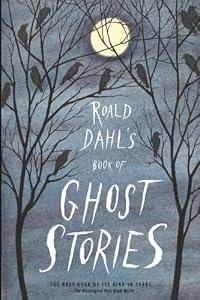
Roald Dahl's Book of Ghost Stories
by Roald Dahl (Editor)
On This Page
Description
Collection of fourteen ghost stories by a variety of authors, selected from hundreds read by writer Roald Dahl for a proposed television series that was never produced.Tags
Recommendations
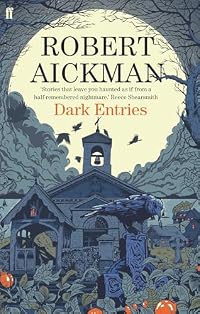
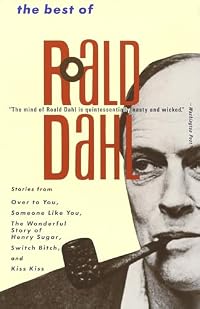
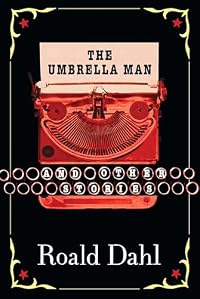
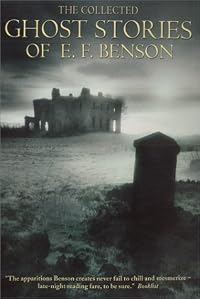
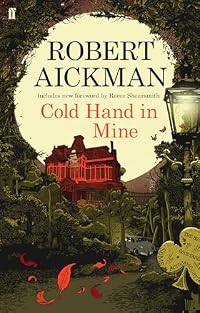

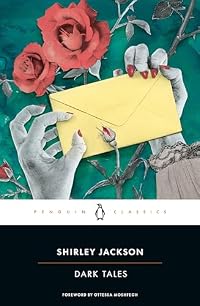



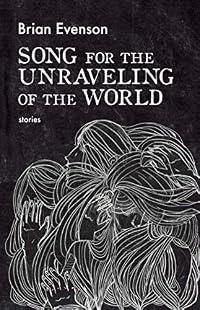
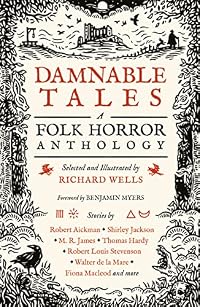
Member Recommendations
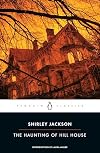
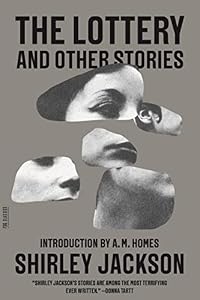
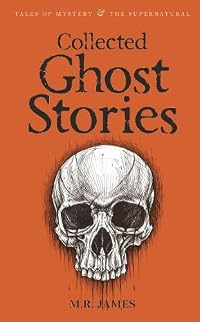
SomeGuyInVirginia Dahl's is the best collection of ghost stories available, and Jackson's is the best haunted house story of all time. I think they make a nice pair (as the bishop said to the chorus girl.)
20
Member Reviews
‘’Too determined though. Always got his own way. Loved Christine too much I thought. Died among the roses. Used to sit down here with her for hours, by the roses. Then died there. Or do people die? The church ought to give us an answer, but it doesn’t. Not one you can believe. Go away, will you? This place isn’t for you. It’s for the dead who aren’t dead, and the living who aren’t alive. Am I alive or dead? You tell me. I don’t know.’’
W.S by L.P. Hartley: Imagine that you are a writer. What if the most despicable character you have ever created came back to exact his revenge on you?
Harry by Rosemary Timperley: In a collection full of eerie gems this story is definitely one of the jewels of the crown. A young mother show more develops suspicious thoughts when her daughter ‘’introduces’’ her imaginary friend. And the past refuses to lie still…
The Corner Shop by Cynthia Asquith: A touching story of past deeds and debts and the thin veil between our world and the next…
In the Tube by E.F.Benson: Having read so many stories about ‘’strange’’ passengers in the Tube, I’ve begun to see my daily commute in a different light (although the sheer stupidity of the irritating mob boarding the Tube in Athens is hardly Literature-worthy material…) When you combine premonitions AND the doppelganger plot, the story becomes a masterpiece.
Christmas Meeting by Rosemary Timperley: A cryptic, haunting story of a strange Christmas meeting between a lonely lady and a desperate poet.
Elias and the Draug by Jonas Lie: An atmospheric Norwegian folk tale, about human greed and the wreath of the North Sea.
‘’Imagination told him that he was being watched, and although he called it imagination he was afraid. That rapid beating against his ribs was his heart, warning him of fear. But he sat rigid, anxious to learn in what part of the room his fancy would place these imaginary ‘’watchers’’ - for he was conscious of the gaze of more than one pair of eyes being bent upon him.’’
Playmates by A.M. Burrage: An eerie but strangely tranquil story about a cold man and his brilliant ward who wanted to spend her time with spectral friends. What if the only thing a spirit wants is company and tenderness?
Ringing the Changes by Robert Aickman: In the most striking story in the collection. a newly-wed couple visits Holihaven (a fictional seaside town) to spend a much-needed honeymoon. But the sea is too far away, the hotel is almost empty and the town is silent. Silent but for the constant ringing of the bells. The unaware protagonists have stumbled upon what is left of a Pagan Britain and we, as readers, find ourselves thrown in an exquisite, terrifying story.
The Telephone by Mary Treadgold: Guilt takes the form of a phone call from beyond the grave…
The Ghost of a Hand by J.Sheridan Le Fanu: A spectral hand threatens a family in unexpected ways…
‘’The sounds were crisps, dry, long-drawn-out, and rhythmic. There was an equal pause after each one. It was rather like listening to the leisurely brushing of a woman’s long hair. What was it? An uneven surface being scratched by something crisp and pliant? Then Tessa knew. On the long path behind the house which travelled the whole length of the building, somebody was seeping up the fallen leaves with a stable broom. But what a time to sweep up leaves!’’
The Sweeper by A.M. Burrage (Ex -Private X): An autumnal story of repentance, retribution and the ruthless course of Time.
Afterward by Edith Wharton: One of the most famous ghost stories by Edith Wharton. A young couple tries to decipher the feeling that supposedly lingers when you realise you have actually seen a ghost. The lady of the house finally understands when tragedy strikes her household.
On the Brighton Road by Richard Middleton: A moving story of a tramp and a peculiar boy on the way to Brighton.
The Upper Berth by F.Marion Crawford: A ghost story set on a ship. A haunted room and a ghost that drives you to madness.
The stories selected by Roald Dahl epitomise the ‘’feeling’’ that should be experienced when we read a ghostly tale. The eeriness, the uneasiness that slowly creeps, the cautious glance at the window, darkened by the night sky, or over your shoulder, and the shocking realisation that lingers when the story ends.
‘’Spookiness is, after all, the real purpose of the ghost story. It should give you the creeps and disturb your thoughts.’’
Roald Dahl
My reviews can also be found on https://theopinionatedreaderblog.wordpress.com/ show less
W.S by L.P. Hartley: Imagine that you are a writer. What if the most despicable character you have ever created came back to exact his revenge on you?
Harry by Rosemary Timperley: In a collection full of eerie gems this story is definitely one of the jewels of the crown. A young mother show more develops suspicious thoughts when her daughter ‘’introduces’’ her imaginary friend. And the past refuses to lie still…
The Corner Shop by Cynthia Asquith: A touching story of past deeds and debts and the thin veil between our world and the next…
In the Tube by E.F.Benson: Having read so many stories about ‘’strange’’ passengers in the Tube, I’ve begun to see my daily commute in a different light (although the sheer stupidity of the irritating mob boarding the Tube in Athens is hardly Literature-worthy material…) When you combine premonitions AND the doppelganger plot, the story becomes a masterpiece.
Christmas Meeting by Rosemary Timperley: A cryptic, haunting story of a strange Christmas meeting between a lonely lady and a desperate poet.
Elias and the Draug by Jonas Lie: An atmospheric Norwegian folk tale, about human greed and the wreath of the North Sea.
‘’Imagination told him that he was being watched, and although he called it imagination he was afraid. That rapid beating against his ribs was his heart, warning him of fear. But he sat rigid, anxious to learn in what part of the room his fancy would place these imaginary ‘’watchers’’ - for he was conscious of the gaze of more than one pair of eyes being bent upon him.’’
Playmates by A.M. Burrage: An eerie but strangely tranquil story about a cold man and his brilliant ward who wanted to spend her time with spectral friends. What if the only thing a spirit wants is company and tenderness?
Ringing the Changes by Robert Aickman: In the most striking story in the collection. a newly-wed couple visits Holihaven (a fictional seaside town) to spend a much-needed honeymoon. But the sea is too far away, the hotel is almost empty and the town is silent. Silent but for the constant ringing of the bells. The unaware protagonists have stumbled upon what is left of a Pagan Britain and we, as readers, find ourselves thrown in an exquisite, terrifying story.
The Telephone by Mary Treadgold: Guilt takes the form of a phone call from beyond the grave…
The Ghost of a Hand by J.Sheridan Le Fanu: A spectral hand threatens a family in unexpected ways…
‘’The sounds were crisps, dry, long-drawn-out, and rhythmic. There was an equal pause after each one. It was rather like listening to the leisurely brushing of a woman’s long hair. What was it? An uneven surface being scratched by something crisp and pliant? Then Tessa knew. On the long path behind the house which travelled the whole length of the building, somebody was seeping up the fallen leaves with a stable broom. But what a time to sweep up leaves!’’
The Sweeper by A.M. Burrage (Ex -Private X): An autumnal story of repentance, retribution and the ruthless course of Time.
Afterward by Edith Wharton: One of the most famous ghost stories by Edith Wharton. A young couple tries to decipher the feeling that supposedly lingers when you realise you have actually seen a ghost. The lady of the house finally understands when tragedy strikes her household.
On the Brighton Road by Richard Middleton: A moving story of a tramp and a peculiar boy on the way to Brighton.
The Upper Berth by F.Marion Crawford: A ghost story set on a ship. A haunted room and a ghost that drives you to madness.
The stories selected by Roald Dahl epitomise the ‘’feeling’’ that should be experienced when we read a ghostly tale. The eeriness, the uneasiness that slowly creeps, the cautious glance at the window, darkened by the night sky, or over your shoulder, and the shocking realisation that lingers when the story ends.
‘’Spookiness is, after all, the real purpose of the ghost story. It should give you the creeps and disturb your thoughts.’’
Roald Dahl
My reviews can also be found on https://theopinionatedreaderblog.wordpress.com/ show less
"Good ghost stories, like good children's books, are damnably difficult to write," Dahl notes in his introduction to this fourteen-story collection. He was right, but the criteria for a good ghost story are subjective enough to make any collection a hit-and-miss affair, and this one is no different. For example, Dahl cites Jonas Lie's "Elias and the Draug" as possibly the most disturbing tale in the book, but I wasn't at all impressed by it. Others, like E.F. Benson's "In the Tube," are just okay. (Benson was one of the unquestioned masters of the English ghost story, but in my opinion this piece is not representative of his best work.)
But Dahl also selected some real corkers. In A.M. Burrage's "The Sweeper," a young caregiver learns show more the macabre secret of the wealthy old woman who employs her; the story vividly evokes a feeling of autumn decay, and has just the right ratio of creepiness to melancholy. Robert Aickman's stories gradually ceased to make any kind of logical sense, but in "Ringing the Changes" he offers a sufficiently coherent premise to maintain the reader's interest. (Not every detail is explained, of course--and, in an Aickman story, you wouldn't want it to be--but the conclusion of Gerald and Phrynne's strange adventure in the seaside resort town of Holihaven is consistent and satisfying in a way that many of Aickman's later tales were not.) The pick of the litter is Rosemary Timperley's "Harry," a brief but superbly written piece about family ties that remain unsevered by death. If there's such a thing as the perfect ghost story, this may be it. show less
But Dahl also selected some real corkers. In A.M. Burrage's "The Sweeper," a young caregiver learns show more the macabre secret of the wealthy old woman who employs her; the story vividly evokes a feeling of autumn decay, and has just the right ratio of creepiness to melancholy. Robert Aickman's stories gradually ceased to make any kind of logical sense, but in "Ringing the Changes" he offers a sufficiently coherent premise to maintain the reader's interest. (Not every detail is explained, of course--and, in an Aickman story, you wouldn't want it to be--but the conclusion of Gerald and Phrynne's strange adventure in the seaside resort town of Holihaven is consistent and satisfying in a way that many of Aickman's later tales were not.) The pick of the litter is Rosemary Timperley's "Harry," a brief but superbly written piece about family ties that remain unsevered by death. If there's such a thing as the perfect ghost story, this may be it. show less
The premise sounds like one that could not possibly disappoint, but it is also not quite presented truthfully. The idea is that Dahl read 450 ghost stories in preparation for creating screenplays for a season's worth of them for an anthology TV show. The forward, and publishers, tell you that this book prints the best 14 stories out of those 450 - as chosen by Dahl. I think the dishonesty in that idea is that they were the best stories - - I think, rather, they were chosen by him as the best stories to create screenplays for and reformat for a visual medium.
Few of these stories could be thought of as the best out of 450 classic ghost stories. They aren't bad - *none* are "bad" - but a lot are mediocre. I started reading the book by show more doing a story-by-story review, then rating them by overall story and then how scary they are. The quality of the story almost universally outstripped the quality of the horror. The premise of the book relies on their having been scary. Few of them are scary enough that you will linger on frightening ideas. Most are formatted neatly to fit into a comparable presentation as The Twilight Zone. "Weird Tales", in other words - not horror.
Some of the stories don't even feature ghosts. The very first one, for instance (W.S. by Hartley). Some are more like folktales or legends, as is Elias and the Draug by Jonas Lie. A lot of them will feel antiquated to a modern reader - and a lot of them are classic and influential enough to have inspired works that are more well known (Stephen King is a famous "miner of ideas" from classic roots - - and a couple here certainly influenced him, or the stories that later influenced him, like The Corner Shop, and W.S.).
Personal favorites in the bunch are: Harry (feels inspired by the anxiety of a child becoming school-age), Playmates (was truly moved by the ending), The Sweeper (has Tales From The Crypt written all over it), and The Upper Berth (no stranger to "best of" ghost anthologies - and just a wonderfully written short story).
I was somewhat disappointed. I thought I was being served a super-charged, concentrated, carefully selected bunch of ghost stories determined to have been the best of the best. It really isn't. A lot of the best of the best may have been overlooked for having been well enough known that Dahl couldn't present them and get a fresh reaction. A lot of the best of the best may have been unattainable properties for the project (too expensive).
I'm slightly on the fence over whether to keep the book. I like the idea of having a decent ghost story shelf in my library... and while I'm still arguing against this book fitting in as neatly as others (like a Henry James ghost story collection, or the two books created out of an essay by HP Lovecraft on what books inspired him most), or a complete Poe... it doesn't deserve a fate out in the cold. show less
Few of these stories could be thought of as the best out of 450 classic ghost stories. They aren't bad - *none* are "bad" - but a lot are mediocre. I started reading the book by show more doing a story-by-story review, then rating them by overall story and then how scary they are. The quality of the story almost universally outstripped the quality of the horror. The premise of the book relies on their having been scary. Few of them are scary enough that you will linger on frightening ideas. Most are formatted neatly to fit into a comparable presentation as The Twilight Zone. "Weird Tales", in other words - not horror.
Some of the stories don't even feature ghosts. The very first one, for instance (W.S. by Hartley). Some are more like folktales or legends, as is Elias and the Draug by Jonas Lie. A lot of them will feel antiquated to a modern reader - and a lot of them are classic and influential enough to have inspired works that are more well known (Stephen King is a famous "miner of ideas" from classic roots - - and a couple here certainly influenced him, or the stories that later influenced him, like The Corner Shop, and W.S.).
Personal favorites in the bunch are: Harry (feels inspired by the anxiety of a child becoming school-age), Playmates (was truly moved by the ending), The Sweeper (has Tales From The Crypt written all over it), and The Upper Berth (no stranger to "best of" ghost anthologies - and just a wonderfully written short story).
I was somewhat disappointed. I thought I was being served a super-charged, concentrated, carefully selected bunch of ghost stories determined to have been the best of the best. It really isn't. A lot of the best of the best may have been overlooked for having been well enough known that Dahl couldn't present them and get a fresh reaction. A lot of the best of the best may have been unattainable properties for the project (too expensive).
I'm slightly on the fence over whether to keep the book. I like the idea of having a decent ghost story shelf in my library... and while I'm still arguing against this book fitting in as neatly as others (like a Henry James ghost story collection, or the two books created out of an essay by HP Lovecraft on what books inspired him most), or a complete Poe... it doesn't deserve a fate out in the cold. show less
After the introduction (where Dahl is shocked - shocked - to find that women write better ghost stories than men, and spends another page ruminating why would this be? when women fail at every other form of art (painting, sculpting, music) - after that charming introduction, the stories begin. (The title is misleading: Dahl is not the author.)
It's a mixed bag. Some are coldly shocking ("Elias and the Draug", "Ringing the Changes"), some predictable ("Playmates"). Some are brilliant and cruel ("Afterward", "The Telephone").
The star rating seems a bit unfair in regards to anthologies.
It's a mixed bag. Some are coldly shocking ("Elias and the Draug", "Ringing the Changes"), some predictable ("Playmates"). Some are brilliant and cruel ("Afterward", "The Telephone").
The star rating seems a bit unfair in regards to anthologies.
Roald Dahl's Book of Ghost Stories was a must-have for me for 2 reasons: 1. Roald Dahl is one of my favorite authors and I want to read everything he's ever written and 2. I love ghost stories. I have to admit that going into this one I was very much under the impression that this was going to be a book filled with stories written by Dahl himself. I clearly hadn't read the synopsis or book jacket because that is not what this book is about. This is a collection of some of Dahl's favorite ghost stories written by other people. He compiled this list when he was working on a project for American television and his preparation was extensive. He read 749 tales of the supernatural by different authors and from that large number he whittled it show more down to 14 of his favorites that he felt were not only excellent examples of writing in this genre but that would make for good television. (He also discovered that women are experts in this field and until the 11th hour he thought they would beat out the men with a hard majority.) Since there are 14 different stories in this collection, I will only talk about 2 that I found particularly chilling (and yes they are written by women).
The first is called 'Harry' and was written by Rosemary Timperley. It bore a striking resemblance to The Imaginary in that its primary focus was on a little girl who had a strong friendship with an imaginary boy. The biggest difference here is that the mom tried very hard to squash this relationship because she had a deep and abiding fear...of the name Harry. Yes, I too found this odd. Nevertheless, while it may seem irrational this fear was quite powerful and instead of ignoring the interactions of her child and her invisible playmate she let it consume her until...well you'll have to read the story. 😀 Suffice to say, the ending was quite the surprise.
The other story I'd like to mention came immediately after 'Harry' and was written by Cynthia Asquith. 'The Corner Shop' follows a man who stumbles into an old rundown shop full of what appears to be dusty junk. Persuaded by the decrepit shop owner, he buys something that turns out to be of immense value. Bothered by his conscience, he feels that it is his duty to give some of this money back to the proprietor as he feels the sale was too much to his benefit. When he returns to the shop, he is shocked to discover...gosh you'll just have to check it out yourself. 😀 It's a creepy tale with a whiff of Stephen King about it that is sure to get the hairs on your neck to stand up.
I have to admit that I had to go back and look at the chapter listing to remember the stories written in this collection and only a few of them came back to me clearly. That seems to be the way with most collections that I read (except for Stories of Your Life and Others) so that shouldn't discourage you from giving it a shot. There are some real gems in there as well as some illuminating thoughts from Dahl himself in the introduction. 7/10 overall. show less
The first is called 'Harry' and was written by Rosemary Timperley. It bore a striking resemblance to The Imaginary in that its primary focus was on a little girl who had a strong friendship with an imaginary boy. The biggest difference here is that the mom tried very hard to squash this relationship because she had a deep and abiding fear...of the name Harry. Yes, I too found this odd. Nevertheless, while it may seem irrational this fear was quite powerful and instead of ignoring the interactions of her child and her invisible playmate she let it consume her until...well you'll have to read the story. 😀 Suffice to say, the ending was quite the surprise.
The other story I'd like to mention came immediately after 'Harry' and was written by Cynthia Asquith. 'The Corner Shop' follows a man who stumbles into an old rundown shop full of what appears to be dusty junk. Persuaded by the decrepit shop owner, he buys something that turns out to be of immense value. Bothered by his conscience, he feels that it is his duty to give some of this money back to the proprietor as he feels the sale was too much to his benefit. When he returns to the shop, he is shocked to discover...gosh you'll just have to check it out yourself. 😀 It's a creepy tale with a whiff of Stephen King about it that is sure to get the hairs on your neck to stand up.
I have to admit that I had to go back and look at the chapter listing to remember the stories written in this collection and only a few of them came back to me clearly. That seems to be the way with most collections that I read (except for Stories of Your Life and Others) so that shouldn't discourage you from giving it a shot. There are some real gems in there as well as some illuminating thoughts from Dahl himself in the introduction. 7/10 overall. show less
Weird, sexist, and rambley old man introduction aside (seriously, Roald Dahl, why do you have to be so beloved AND so crotchety?), this is a great collection of creepy short stories -- mostly from the 1950s, but with some intriguing earlier stories as well. My personal favorite was the one written by one of the only authors in the collection that I knew beforehand, "Afterward" by Edith Wharton. "The Telephone" by Mary Treadgold and "The Sweeper" by A.M. Burrage were also pretty great.
[full review here: http://spacebeer.blogspot.com/2016/12/roald-dahls-book-of-ghost-stories.html ]
[full review here: http://spacebeer.blogspot.com/2016/12/roald-dahls-book-of-ghost-stories.html ]
Roald Dahl states in his introduction that after reading hundreds of ghost stories, he was surprised to find that very few of them were any good, and here they are in this collection. (His introduction also has a strangely sexist slant, as he discusses how unusual it is that women wrote so many of the "good" ones--nearly half!). These are fine ghost stories but are largely, in my opinion, campfire stories, which rely on a little twist or a-ha! moment but don't have many layers to them. This would be a good starter collection for a young reader interested in the genre, but I am positive there are many more excellent ghost stories beyond these to be read.
Members
- Recently Added By
Lists

Scary Stories for the Season
160 works; 94 members

Reader's Digest 50 Best Horror Books to Read
50 works; 3 members

Haunted Places and Ghost Stories Reading List
99 works; 4 members

Llibres que he llegit el 2019
42 works; 1 member

Ghost Stories That Thrill Us
254 works; 114 members
Author Information

Roald (pronounced "Roo-aal") was born in Llandaff, South Wales. He had a relatively uneventful childhood and was educated at Repton School. During World War II he served as a fighter pilot and for a time was stationed in Washington, D.C.. Prompted by an interviewer, he turned an account of one of his war experiences into a short story that was show more accepted by the Saturday Evening Post, which were eventually collected in Over to You (1946). Dahl's stories are often described as horror tales or fantasies, but neither description does them justice. He has the ability to treat the horrible and ghastly with a light touch, sometimes even with a humorous one. His tales never become merely shocking or gruesome. His purpose is not to shock but to entertain, and much of the entertainment comes from the unusual twists in his plots, rather than from grizzly details. Dahl has also become famous as a writer of children's stories. In some circles, these works have cased great controversy. Critics have charged that Dahl's work is anti-Semitic and degrades women. Nevertheless, his work continues to be read: Charlie and Chocolate Factory (1964) was made into a successful movie, The BFG was made into a movie in July 2017, and his books of rhymes for children continue to be very popular. (Bowker Author Biography) show less
All Editions
Some Editions
Work Relationships
Contains
Common Knowledge
- Canonical title
- Roald Dahl's Book of Ghost Stories
- Original title
- Roald Dahl's book of ghost stories
- Original publication date
- 1983
- Dedication
- For James Kelly
- First words
- The first postcard came from Forfar.
- Last words
- (Click to show. Warning: May contain spoilers.)It was dead, anyhow.
- Canonical DDC/MDS
- 823.087208; 823.0873308; 823.914
- Canonical LCC
- PR1309.G5 R62 1983
Classifications
- Genres
- Fiction and Literature, Horror
- DDC/MDS
- 823.087208 — Literature & rhetoric English & Old English literatures English fiction By type Genre fiction Adventure fiction Mystery fiction Mystery anthologies
- LCC
- PR1309 .G5 .R62 — Language and Literature English English Literature Collections of English literature
- BISAC
Statistics
- Members
- 1,539
- Popularity
- 14,795
- Reviews
- 24
- Rating
- (3.74)
- Languages
- 11 — Catalan, Dutch, English, French, German, Italian, Norwegian (Bokmål), Norwegian, Russian, Spanish, Swedish
- Media
- Paper, Ebook
- ISBNs
- 39
- ASINs
- 11