On This Page
Description
Lee Child, Eoin McNamee, and others explore the dark corners and alleyways of Belfast.Tags
Recommendations


Member Reviews
Belfast. Like Beirut. If you were an adult in the 1970s and 1980s these cities probably mean something to you. You’ve probably never been to either place, but the names strongly evoke certain kinds of images and ideas--bullet pocked edifices, checkpoints, armored vehicles patrolling the streets, explosions, lines drawn, colorful and iconic sectarian displays, unbridgeable hatred.
While there’s certainly some truth in all of that, Belfast was and is much more than the images it evokes in readers and viewers hundreds or thousand of miles away. Belfast Noir is a collection of short mysteries that promises to give us a peek at parts of Belfast life that we’ve never seen in the headlines.
Ironically, mysteries depend every bit as much show more on extraordinary drama as news headlines do—murder and mayhem are their common inspiration. But where a news headline focuses almost exclusively on the event, a good mystery revels in the causes and contexts that make the event meaningful.
I remember reading a very good explanation of mysteries within a mystery (though I don’t remember which) some years ago. Paraphrasing liberally: “Murder is like a partially collapsed building. It’s easier to see what holds a building up once it’s partially collapsed. And it’s easier to see what makes society work—the enabling assumptions and relationships—when it experiences a radical failure like murder.”
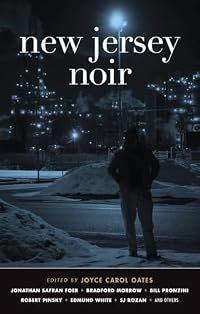
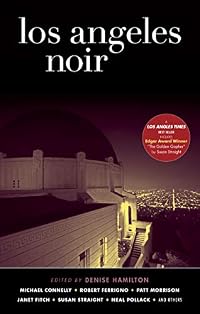
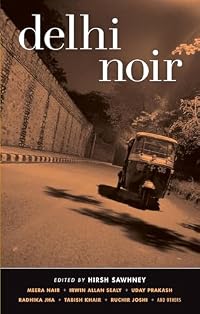
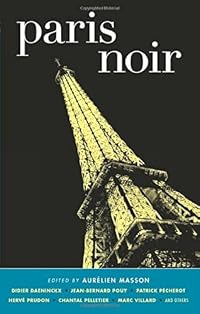
Belfast Noir is part of a rather large series of [insert placename here] Noir collections, including Delhi, Haiti, Miami and D.C. Judging by the list of editors, it seems to be a fairly well-thought-out series. But in a series so big, one has to ask “Does the setting [Belfast] really supplement the genre [Noir] here? Does this book give you much of Belfast?” and I’d say, on the whole it does: there are some very good stories here, stories that aren’t well-described as generic, and that do seem to have a particular character to them.
Of course, I speak as someone whose expertise on Northern Ireland runs to a visit of a few days last Summer. But Belfast did leave an impression upon me. And, thanks to the hospitality of my cousin and his wife, who live near Belfast, I was able to see a little bit of everyday life in Belfast and speak to a number of kind, interesting and opinionated folk--musicians, teachers, regular folk--who’d I’d never have met otherwise.
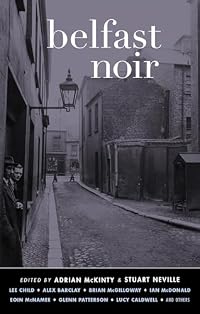
The introduction by Adrian McKinty and Stuart Neville gives a good, very quick rundown of Northern Irish history, The Troubles and Belfast. As an outsider, their notion of the “shimmer and shine” of the new Belfast is laughable. To an American, Belfast has the look of a drab, Victorian city only just beginning to experience the impact of the new willingness to invest in public spaces that would only have been blown up twenty years ago. And the city still wears its scars--not just direct signs of the Troubles (though there are those) but also many signs of the resultant neglect and decay. Belfast may be streets ahead of where it was in 2000, but the bright future has by no means overwhelmed the bloody, gritty past. But I think the editors and I would all fervently hope that future development works with that gritty past sometimes, not just against it.
Of course, it’s not my call to make. Or the editors’. If it were for the people who lived through the worst of it to decide, they might well want to wash away those years of blood and grit with a bunch of “shimmer and shine.” And if that’s what they want, God bless them. Unfortunately it probably won’t be for them to decide either.
______________________________________
The stories in Belfast Noir are all newly done, and vary quite a bit in how they approach bringing noir to the island’s second largest city. Some of these efforts are Belfast NOIR. Others are more BELFAST Noir. The latter is decidedly to be preferred, but nearly all these stories have their moments, all are readable and more than competently realized.
The one unfortunate inclusion is Lee Child. Child is descended from Belfast stock, but his story reflects very little local knowledge aside from the headline-derived cliches I mention above: A Plot! The Troubles! Special Branch! Weapons smuggling! Loose Nukes! Cover Up! Double Cross! Double Double Cross! The End! Lee Child’s bio notes that he never willingly leaves Manhattan. If this story is any indication, he never willing leaves the narrow bounds of the merely generic far behind, either.
Claire McGowan’s contribution is a light-hearted Belfast take on an American-style noir plot, with a femme fatale, a corrupt cop (or is it a double agent criminal?) and the usual non-sensical plot twists, all presented to us by a boy detective who can’t drive. It’s odd how classic noir seems like a reassuring development for a place like Belfast. Catholic vs. Protestant is easily, and reassuringly re-cast as gritty male detective vs. effete and corrupt daughter of wealth and power; the police in Ulster are as hard to distinguish from their IRA enemies as their California counterparts are to distinguish from the crime syndicates.
For a place like Belfast, real, American-style urban corruption looks like a blessing: the ugly underbelly of business as usual!
Ian MacDonald’s “The Reservoir” brings a horror element to the noir party and generally does an excellent job of bringing the cultural critique element of the noir genre to the fore in a contemporary Belfast context. Some of this critique is structural--the gang man coming to grips with the vampiric nature of his living--but a lot of it is stylistic (the spider web tattoo, the shallowness, the emphasis on the body over mind). A lot of the new noir we read is unabashedly nostalgic about the classic noir period, but ironically Hammett and, especially Chandler were hardly celebrants of their contemporary culture. Everywhere old things decay or become irrelevant even where they weren’t frauds to start with, and new things that replace them are almost explicitly cheap, tawdry placeholders.
Steve Cavanagh does a nice little story that stretches credulity a bit more than would have been ideal, but which, along the way, manages to give us a sense of the geography of legal Belfast, past and present. His attention to place is a highlight of the book. As is his attention to Belfast as a city of neighborhoods, both for good & ill.
Eoin McNamee’s “Corpse Flowers” has a run at telling a story entirely through descriptions (and elaborations upon) surveillance video. It doesn’t quite work, even in a society as well surveilled as the UK. For one thing, McNamee doesn’t seem able to get beyond the commonplace conflation of being recorded and being seen. Making this distinction is crucial to talking about the significance of living your life largely on camera. Missing it makes the cameras nothing but a cheap device. Like the PTSD. And the child sex abuse. And the exploitation evident all around the city center. Not that the cameras and the PTSD and the sex abuse and the exploitation don’t exist. We all know damn right well they do. And we don’t need a writer to tell us they do. What we need from the writer is to start doing the hard work of figuring out what they mean, pushing our thinking about them a little further along. McNamee merely uses them. They are put to work for him, but he does not go to work on them.
The collection ends with a couple of short, well-done atmospheric pieces, “Pure Game” by Arlene Hunt and “The Reveller” by Alex Barclay, which tip the balance decisively to the Positive side for this review. Yes, this book does come recommended. Yes, there are interesting new (to me anyhow) voices. And, yes, they do have something to say about today’s Belfast. And today’s Noir.
One thing that might well be added: brief editorial descriptions of the neighbourhoods, areas and suburbs in which these stories take place. Each of these stories is assigned to a particular place that to a Belfast native would no doubt have particular connotations--it may have been helpful to be told some of these.
(There are more good stories that deserve mention, but I’ve already run quite long here, so I’ll post a link to a version to which I’ll add more in case anyone is interested. . .) show less
While there’s certainly some truth in all of that, Belfast was and is much more than the images it evokes in readers and viewers hundreds or thousand of miles away. Belfast Noir is a collection of short mysteries that promises to give us a peek at parts of Belfast life that we’ve never seen in the headlines.
Ironically, mysteries depend every bit as much show more on extraordinary drama as news headlines do—murder and mayhem are their common inspiration. But where a news headline focuses almost exclusively on the event, a good mystery revels in the causes and contexts that make the event meaningful.
I remember reading a very good explanation of mysteries within a mystery (though I don’t remember which) some years ago. Paraphrasing liberally: “Murder is like a partially collapsed building. It’s easier to see what holds a building up once it’s partially collapsed. And it’s easier to see what makes society work—the enabling assumptions and relationships—when it experiences a radical failure like murder.”
Belfast Noir is part of a rather large series of [insert placename here] Noir collections, including Delhi, Haiti, Miami and D.C. Judging by the list of editors, it seems to be a fairly well-thought-out series. But in a series so big, one has to ask “Does the setting [Belfast] really supplement the genre [Noir] here? Does this book give you much of Belfast?” and I’d say, on the whole it does: there are some very good stories here, stories that aren’t well-described as generic, and that do seem to have a particular character to them.
Of course, I speak as someone whose expertise on Northern Ireland runs to a visit of a few days last Summer. But Belfast did leave an impression upon me. And, thanks to the hospitality of my cousin and his wife, who live near Belfast, I was able to see a little bit of everyday life in Belfast and speak to a number of kind, interesting and opinionated folk--musicians, teachers, regular folk--who’d I’d never have met otherwise.
The introduction by Adrian McKinty and Stuart Neville gives a good, very quick rundown of Northern Irish history, The Troubles and Belfast. As an outsider, their notion of the “shimmer and shine” of the new Belfast is laughable. To an American, Belfast has the look of a drab, Victorian city only just beginning to experience the impact of the new willingness to invest in public spaces that would only have been blown up twenty years ago. And the city still wears its scars--not just direct signs of the Troubles (though there are those) but also many signs of the resultant neglect and decay. Belfast may be streets ahead of where it was in 2000, but the bright future has by no means overwhelmed the bloody, gritty past. But I think the editors and I would all fervently hope that future development works with that gritty past sometimes, not just against it.
Of course, it’s not my call to make. Or the editors’. If it were for the people who lived through the worst of it to decide, they might well want to wash away those years of blood and grit with a bunch of “shimmer and shine.” And if that’s what they want, God bless them. Unfortunately it probably won’t be for them to decide either.
______________________________________
The stories in Belfast Noir are all newly done, and vary quite a bit in how they approach bringing noir to the island’s second largest city. Some of these efforts are Belfast NOIR. Others are more BELFAST Noir. The latter is decidedly to be preferred, but nearly all these stories have their moments, all are readable and more than competently realized.
The one unfortunate inclusion is Lee Child. Child is descended from Belfast stock, but his story reflects very little local knowledge aside from the headline-derived cliches I mention above: A Plot! The Troubles! Special Branch! Weapons smuggling! Loose Nukes! Cover Up! Double Cross! Double Double Cross! The End! Lee Child’s bio notes that he never willingly leaves Manhattan. If this story is any indication, he never willing leaves the narrow bounds of the merely generic far behind, either.
Claire McGowan’s contribution is a light-hearted Belfast take on an American-style noir plot, with a femme fatale, a corrupt cop (or is it a double agent criminal?) and the usual non-sensical plot twists, all presented to us by a boy detective who can’t drive. It’s odd how classic noir seems like a reassuring development for a place like Belfast. Catholic vs. Protestant is easily, and reassuringly re-cast as gritty male detective vs. effete and corrupt daughter of wealth and power; the police in Ulster are as hard to distinguish from their IRA enemies as their California counterparts are to distinguish from the crime syndicates.
For a place like Belfast, real, American-style urban corruption looks like a blessing: the ugly underbelly of business as usual!
Ian MacDonald’s “The Reservoir” brings a
Steve Cavanagh does a nice little story that stretches credulity a bit more than would have been ideal, but which, along the way, manages to give us a sense of the geography of legal Belfast, past and present. His attention to place is a highlight of the book. As is his attention to Belfast as a city of neighborhoods, both for good & ill.
Eoin McNamee’s “Corpse Flowers” has a run at telling a story entirely through descriptions (and elaborations upon) surveillance video. It doesn’t quite work, even in a society as well surveilled as the UK. For one thing, McNamee doesn’t seem able to get beyond the commonplace conflation of being recorded and being seen. Making this distinction is crucial to talking about the significance of living your life largely on camera. Missing it makes the cameras nothing but a cheap device. Like the PTSD. And the child sex abuse. And the exploitation evident all around the city center. Not that the cameras and the PTSD and the sex abuse and the exploitation don’t exist. We all know damn right well they do. And we don’t need a writer to tell us they do. What we need from the writer is to start doing the hard work of figuring out what they mean, pushing our thinking about them a little further along. McNamee merely uses them. They are put to work for him, but he does not go to work on them.
The collection ends with a couple of short, well-done atmospheric pieces, “Pure Game” by Arlene Hunt and “The Reveller” by Alex Barclay, which tip the balance decisively to the Positive side for this review. Yes, this book does come recommended. Yes, there are interesting new (to me anyhow) voices. And, yes, they do have something to say about today’s Belfast. And today’s Noir.
One thing that might well be added: brief editorial descriptions of the neighbourhoods, areas and suburbs in which these stories take place. Each of these stories is assigned to a particular place that to a Belfast native would no doubt have particular connotations--it may have been helpful to be told some of these.
(There are more good stories that deserve mention, but I’ve already run quite long here, so I’ll post a link to a version to which I’ll add more in case anyone is interested. . .) show less
 This review was written for LibraryThing Early Reviewers.
This is a wonderful collection of short stories based in Belfast--very noir and many of them bleakly funny. Multiple narrators add to the appeal of this book.
The stories range from the time of the Troubles to more modern times and look at stories of thugs, tricksters and relationships.
The stories range from the time of the Troubles to more modern times and look at stories of thugs, tricksters and relationships.
Short stories are a tougher thing to do well than writing a regular length book, or so it sometimes seems.
Belfast Noir is part of a series that gathers together writers who live in or are associated with a particular city around the world. The problems I had with this book were:
1. By its very title Noir- one would expect mysteries, or darker edgier stories, and especially with Belfast being the setting for all of the stories in the book, where as a number of the stories in this collection definitely didn't meet this criteria.
2. A number of the stories just weren't that interesting.
On the plus side with this book as with any short story collection the reader is exposed to writers they may not have been familiar with. That was certainly show more true with Belfast Noir, and I look forward to reading a couple of full size novels from Sam Millar, and Steve Cavenagh. show less
Belfast Noir is part of a series that gathers together writers who live in or are associated with a particular city around the world. The problems I had with this book were:
1. By its very title Noir- one would expect mysteries, or darker edgier stories, and especially with Belfast being the setting for all of the stories in the book, where as a number of the stories in this collection definitely didn't meet this criteria.
2. A number of the stories just weren't that interesting.
On the plus side with this book as with any short story collection the reader is exposed to writers they may not have been familiar with. That was certainly show more true with Belfast Noir, and I look forward to reading a couple of full size novels from Sam Millar, and Steve Cavenagh. show less
A collection of stories that packs a punch. Each crime/thriller/mystery short story is beautifully crafted and readers will lose themselves in the powerful and engrossing prose. The setting is the dark underbelly of Belfast. All the grime, murder, and violence found in Belfast shows itself in these stories. I can honestly say that there is not one story I didn't like, the dog fighting one was a little rough, but overall, I found myself totally digging all the stories. Some of the contributing authors are big names like Lee Child and Alex Barclay and others are little known, but amazing emerging authors. This noir anthology is a must for anyone interested in this genre, and even for those who aren't (like myself) because it's an show more impossibly hard to put down collection. Belfast show's its true colors (ie bloodstains) in this gritty collection. Thoroughly enjoyable! show less
This review was written for LibraryThing Early Reviewers.Short stories are a tougher thing to do well than writing a regular length book, or so it sometimes seems.
Belfast Noir is part of a series that gathers together writers who live in or are associated with a particular city around the world. The problems I had with this book were:
1. By its very title Noir- one would expect mysteries, or darker edgier stories, and especially with Belfast being the setting for all of the stories in the book, where as a number of the stories in this collection definitely didn't meet this criteria.
2. A number of the stories just weren't that interesting.
On the plus side with this book as with any short story collection the reader is exposed to writers they may not have been familiar with. That was certainly show more true with Belfast Noir, and I look forward to reading a couple of full size novels from Sam Millar, and Steve Cavenagh. show less
Belfast Noir is part of a series that gathers together writers who live in or are associated with a particular city around the world. The problems I had with this book were:
1. By its very title Noir- one would expect mysteries, or darker edgier stories, and especially with Belfast being the setting for all of the stories in the book, where as a number of the stories in this collection definitely didn't meet this criteria.
2. A number of the stories just weren't that interesting.
On the plus side with this book as with any short story collection the reader is exposed to writers they may not have been familiar with. That was certainly show more true with Belfast Noir, and I look forward to reading a couple of full size novels from Sam Millar, and Steve Cavenagh. show less
I'm not much of a fan of short fiction. Often I find that authors either don't know when to bring the story to a close, or, they end them too abruptly. But I do like to discover new authors through collections, and the series of city-based Noir tales published by Akashic (soon they might run out of cities; I doubt we'll see a Pelican Rapids Noir) can occasionally be a gold mine for finding new authors. How many I discover will affect my rating.
Edited by two favorite authors, Adrian McKinty and Stuart Neville, this one is devoted to stories in or around Belfast. There were a couple I really enjoyed, some others that were just OK, and a few that got quickly skimmed after reading the first couple pages. Generally, those written by show more authentic Irish authors fared the best. Unfortunately, there were too few stories that gripped me. show less
Edited by two favorite authors, Adrian McKinty and Stuart Neville, this one is devoted to stories in or around Belfast. There were a couple I really enjoyed, some others that were just OK, and a few that got quickly skimmed after reading the first couple pages. Generally, those written by show more authentic Irish authors fared the best. Unfortunately, there were too few stories that gripped me. show less
BELFAST NOIR was a real treat to read. It is one title in the Akashic Publishers noir series. I have read several now and each one is interesting, unusual and radiates a great sense of place.
BELFAST NOIR edited by Adrian McKinty and Stuart Neville is no exception.
It consists of an introduction by Adrian McKinty and Stuart Neville; a foreword by David Torrans; a Table of Contents; a map (I love the map); a section about the authors/contributors; a sneak peek at USA Noir; more series titles; Akashic Noir series awards and a blurb about Akashic Books.
There are four parts with 14 stories.
The story POISON by Lucy Caldwell (taking place in Dundonald) was very disturbing to me - the friends’ actions and deceitful antics, and the lingering show more question - Was the young girl with Mr. Knox his daughter Melissa?
WET WITH RAIN by Lee Child (taking place on Great Victoria Street) was very disturbing.
TAKING IT SERIOUS by Ruth Dudley Edwards (taking place on Falls Road) made me cringe.
THE RESERVOIR by Ian McDonald (taking place in Holywood) was downright nasty.
LIGATURE by Gerard Brennan (taking place in Hydebank) was pitiful.
(I am getting depressed rereading these stories. Does nothing happy ever happen in Belfast?)
THE GREY by Steve Cavanagh (taking place in Laganside, Queen’s Island) was a ‘teeny bit’, a ‘wee bit’ ok. Not happy, but ok.
PURE GAME by Arlene Hunt (taking place in Sydenham) - I didn’t see this ending coming.
CORPSE FLOWERS by Eoin McNamee (taking place in Ormeau Embankment) was extremely evil.
(I will ask again - is anything normal in Belfast Northern Ireland?)
These stories are more than gritty and grim; they are true blackness - true noir.
All the stories were grim, gritty, violent and nasty at their worst and puzzling at their best.
The series by Akashic Books is terrific and I can’t wait to read even more titles. show less
BELFAST NOIR edited by Adrian McKinty and Stuart Neville is no exception.
It consists of an introduction by Adrian McKinty and Stuart Neville; a foreword by David Torrans; a Table of Contents; a map (I love the map); a section about the authors/contributors; a sneak peek at USA Noir; more series titles; Akashic Noir series awards and a blurb about Akashic Books.
There are four parts with 14 stories.
The story POISON by Lucy Caldwell (taking place in Dundonald) was very disturbing to me - the friends’ actions and deceitful antics, and the lingering show more question - Was the young girl with Mr. Knox his daughter Melissa?
WET WITH RAIN by Lee Child (taking place on Great Victoria Street) was very disturbing.
TAKING IT SERIOUS by Ruth Dudley Edwards (taking place on Falls Road) made me cringe.
THE RESERVOIR by Ian McDonald (taking place in Holywood) was downright nasty.
LIGATURE by Gerard Brennan (taking place in Hydebank) was pitiful.
(I am getting depressed rereading these stories. Does nothing happy ever happen in Belfast?)
THE GREY by Steve Cavanagh (taking place in Laganside, Queen’s Island) was a ‘teeny bit’, a ‘wee bit’ ok. Not happy, but ok.
PURE GAME by Arlene Hunt (taking place in Sydenham) - I didn’t see this ending coming.
CORPSE FLOWERS by Eoin McNamee (taking place in Ormeau Embankment) was extremely evil.
(I will ask again - is anything normal in Belfast Northern Ireland?)
These stories are more than gritty and grim; they are true blackness - true noir.
All the stories were grim, gritty, violent and nasty at their worst and puzzling at their best.
The series by Akashic Books is terrific and I can’t wait to read even more titles. show less
Members
- Recently Added By
Lists

Fiction: Classics, Literary, Short Stories
85 works; 1 member
Author Information

Adrian McKinty was born in Northern Ireland. He read politics and philosophy at the University of Oxford. He is a crime fiction novelist, blogger and book reviewer. His novels include the Sean Duffy series and the Lighthouse Trilogy. He made the Ned Kelly 2015 shortlists in the category of Best Novel with his title Gun Street Girl. He won the 2017 show more Edgar Allan Poe Award for best paperback original with his novel, Rain Dogs. (Bowker Author Biography) show less

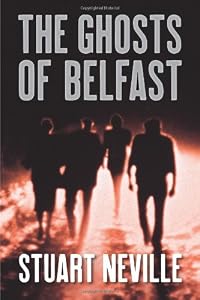
Stuart Neville is a Northern Irish author. His books include The Twelve (published in the USA as The Ghosts of Belfast), Collusion, Stolen Souls, Ratlines, and The Final Silence. The French edition of The Ghosts of Belfast, Les Fantômes de Belfast, won Le Prix Mystère de la Critique du Meilleur Roman Étranger and Grand Prix du Roman Noir show more Étranger. (Bowker Author Biography) show less
All Editions
Some Editions
Series

Common Knowledge
- Canonical title
- Belfast Noir
- Original title
- Belfast Noir
- Important places
- Belfast, Northern Ireland, UK
- Disambiguation notice
- Contents:
The undertaking / Brian McGilloway --
Poison / Ludy Caldwell --
Wet with rain / Lee Child --
Taking it serious / Ruth Dudley Edwards --
Ligature / Gerard Brennan --
Bel... (show all)fast punk REP / Glenn Patterson --
The reservoir / Ian McDonald --
The grey / Steve Cavanagh --
Rosie Grant's finger / Claire McGowan --
Out of time / Sam Millar --
Die like a rat / Garbhan Downey --
Corpse flowers / Eoin McNamee --
Pure game / Arlene Hunt --
The reveller / Alex Barclay.
Classifications
Statistics
- Members
- 117
- Popularity
- 277,068
- Reviews
- 14
- Rating
- (3.57)
- Languages
- English
- Media
- Paper, Audiobook, Ebook
- ISBNs
- 2
- ASINs
- 3