
Smith of Wootton Major
by J. R. R. Tolkien
On This Page
Description
A charming new pocket edition of one of Tolkien's major pieces of short fiction, and his only finished work dating from after publication of The Lord of the Rings. What began as a preface to The Golden Key by George MacDonald eventually grew into this charming short story, so named by Tolkien to suggest an early work by P.G. Wodehouse. Composed almost a decade after The Lord of the Rings, and when his lifelong occupation with the 'Silmarillion' was winding down, Smith of Wootton Major was show more the product of ripened experience and reflection. It was published in 1967 as a small hardback, complete with charming black and white illustrations by Pauline Baynes, and would be the last work of fiction to be published in Tolkien's own lifetime. Now, almost 50 years on, this enchanting tale of a wanderer who finds his way into the perilous realm of Faery is being published once again as a pocket hardback. Contained here are many intriguing links to the world of Middle-earth, as well as to Tolkien's other tales, and this new edition is enhanced with a facsimile of the illustrated first edition, a manuscript of Tolkien's early draft of the story, notes and an alternate ending, and a lengthy essay on the nature of Faery. show lessTags
Recommendations





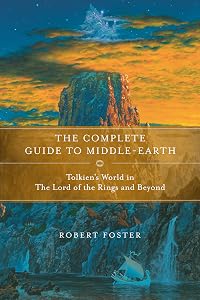
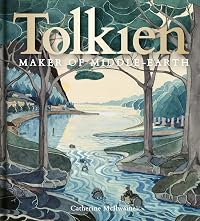
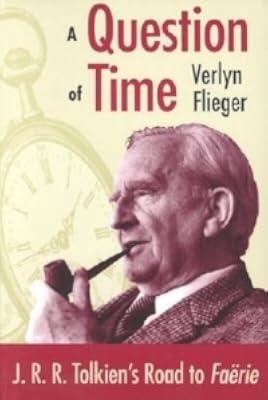
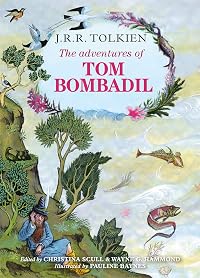










Member Recommendations
Member Reviews
This slender novella was one of Tolkien's last works that he saw published during his lifetime. It is a cross-generational fable about creativity, fortune, and loss. It is very effective when read aloud; I had the pleasure of having it read to me by my Other Reader over the course of three sittings.
Smith is unoriginal in the best possible way for a modern fairy-tale. I was reminded strongly of Dunsany's The King of Elfland's Daughter, but some of the episodes in Faery in the middle of the book exhibit the sort of psychedelic reverie that I associate more with the work of George MacDonald. Sure enough, the wikipedia article on Smith of Wootton Major gives Tolkien's story its origin in an attempt at a preface to MacDonald's "The Golden show more Key." Tracing the line of influence the other direction, I believe that Susanna Clarke must have read this book.
The Pauline Baynes illustrations are lovely, and really capture the spirit of the thing. show less
Smith is unoriginal in the best possible way for a modern fairy-tale. I was reminded strongly of Dunsany's The King of Elfland's Daughter, but some of the episodes in Faery in the middle of the book exhibit the sort of psychedelic reverie that I associate more with the work of George MacDonald. Sure enough, the wikipedia article on Smith of Wootton Major gives Tolkien's story its origin in an attempt at a preface to MacDonald's "The Golden show more Key." Tracing the line of influence the other direction, I believe that Susanna Clarke must have read this book.
The Pauline Baynes illustrations are lovely, and really capture the spirit of the thing. show less
A deceptively simple tale of a fairy touched man, how he became so, his wanderings into fairyland and encounters with fairies, and his life at home as a smith. Written in a detached somewhat wistful tone.
A charming fairy tale about a Smith and his adventures. I love the way Tolkien’s writing about the fairies in this story echoes the elves in his earlier writing in their beauty and majesty. It’s also satisfying that everyone is friends at the end but the dodgy guy also gets put in his place.
This is a really neat story, and it feels like a classic fairy story even though it's much more modern than the fairy tales I grew up with. (Yes, I know, Tolkien is not "modern" now, just by comparison to traditional fairy tales.) The illustrations in it were a perfect complement.
Note: I did not read any of the additional material, just the story itself.
Note: I did not read any of the additional material, just the story itself.
Esta história fascinante de um andarilho que encontra o caminho para o perigoso reino da Terra-Fada está sendo publicada pela primeira vez no Brasil. Esta edição inclui um manuscrito do rascunho original de Tolkien para a história, as ilustrações de Pauline Baynes, notas sobre a gênese, a cronologia e o final alternativo da história e um longo ensaio sobre a natureza da Terra-Fada, tudo inédito até agora. Estão contidas em 'Ferreiro de Bosque Grande' muitas ligações interessantes com o mundo da Terra-média e também com os demais contos de Tolkien, e nesta "edição ampliada" o leitor finalmente descobrirá a história completa por trás dessa importante peça de ficção breve.
Charming. Over used word and really not appropriate here – but on the surface charming.
Actually the story is a dream. A sleep walk with bright moments of wonder. The smith was a quiet, young boy, whom no one turned to view. He did not stop people on the street but he received the star from Faery.
His adventures were perilous but not extreme. His life saved by a birch and nothing he could do to repay.
That’s often how life is – we wander along and perish if no one lends a hand but often times out of nowhere help arrives.
The story was a dream, with language soft and open – at times a whisper and at times a soft laugh.
It was a wonderful story with an ending that continues. So nice to see the star move in the land no Faery.
Actually the story is a dream. A sleep walk with bright moments of wonder. The smith was a quiet, young boy, whom no one turned to view. He did not stop people on the street but he received the star from Faery.
His adventures were perilous but not extreme. His life saved by a birch and nothing he could do to repay.
That’s often how life is – we wander along and perish if no one lends a hand but often times out of nowhere help arrives.
The story was a dream, with language soft and open – at times a whisper and at times a soft laugh.
It was a wonderful story with an ending that continues. So nice to see the star move in the land no Faery.
A delightful fun JRR Tolkien piece of work. I went to the Hershey Public Library looking for a homebrew book, but they didn't have it, and browsing around I came across this, and having never even heard of it, I decided to give it a read.
It's a children's book and done really well, I will probably get it out again to read to my daughters once I'm done with the Narnia series. There's not a 'whole lot' to it, but it is about how to be respectful to others and to keep faith in the Faery kingdom, something I know my oldest will absolutely love.
For any JRR Tolkien fan (LTTR, Hobbit, etc.) it's definitely worth a pick up and read. It's all of 74 pages with numerous illustrations and big font, easily something to read for an hour or two in an show more afternoon. show less
It's a children's book and done really well, I will probably get it out again to read to my daughters once I'm done with the Narnia series. There's not a 'whole lot' to it, but it is about how to be respectful to others and to keep faith in the Faery kingdom, something I know my oldest will absolutely love.
For any JRR Tolkien fan (LTTR, Hobbit, etc.) it's definitely worth a pick up and read. It's all of 74 pages with numerous illustrations and big font, easily something to read for an hour or two in an show more afternoon. show less
Members
- Recently Added By
Lists

Recommended Faerie books
67 works; 22 members

BEST BOOKS TO UNDERSTAND TOLKIEN
14 works; 5 members

Faerie Mythology
87 works; 13 members

The Five Books That Represent Us
391 works; 150 members
Author Information

610+ Works 519,537 Members
A writer of fantasies, Tolkien, a professor of language and literature at Oxford University, was always intrigued by early English and the imaginative use of language. In his greatest story, the trilogy The Lord of the Rings (1954--56), Tolkien invented a language with vocabulary, grammar, syntax, even poetry of its own. Though readers have show more created various possible allegorical interpretations, Tolkien has said: "It is not about anything but itself. (Certainly it has no allegorical intentions, general, particular or topical, moral, religious or political.)" In The Adventures of Tom Bombadil (1962), Tolkien tells the story of the "master of wood, water, and hill," a jolly teller of tales and singer of songs, one of the multitude of characters in his romance, saga, epic, or fairy tales about his country of the Hobbits. Tolkien was also a formidable medieval scholar, as evidenced by his work, Beowulf: The Monster and the Critics (1936) and his edition of Anciene Wisse: English Text of the Anciene Riwle. Among his works published posthumously, are The Legend of Sigurd and Gudrún and The Fall of Arthur, which was edited by his son, Christopher. In 2013, his title, TheHobbit (Movie Tie-In) made The New York Times Best Seller List. (Bowker Author Biography) show less
Some Editions
Awards and Honors
Series
Belongs to Publisher Series
Work Relationships
Is contained in
Tolkien Collection: The Hobbit, Farmer Giles of Ham, The Adventures of Tom Bombadil, Tree and Leaf. Smith of Wootton Major, The Homecoming of Beorhtnoth, The Fellowship of the Ring, The Two Towers, The Return of the King by J. R. R. Tolkien (indirect)
Is expanded in
Has as a reference guide/companion
Common Knowledge
- Canonical title
- Smith of Wootton Major
- Original title
- Smith of Wootton Major
- Original publication date
- 1967
- People/Characters
- Alf Prentice; Nokes; Nell; Master Cook; Smith Smithson (Starbrow); Nan (show all 17); Ned Smithson; Queen of Faery; Nokes of Townsend; Nokes of Townsend's Tim; Tom; Tomling; Miller's Molly; Cooper's Harry; Draper's Lily; King of Faery; Harper
- Important places
- Wootton Major; Wootton Minor; Faery; Far Easton; Westwood; Sea of Windless Storm, Faery (show all 13); Dark Marches, Faery; Outer Mountains, Faery; Inner Mountains, Faery; Vale of Evermorn, Faery; Outer Faery; Green Vale, Faery; Faerie
- First words
- There was a village once, not very long ago for those with long memories, not very far away for those with long legs.
- Last words
- (Click to show. Warning: May contain spoilers.)But old Nokes thumped his stick on the floor and said roundly: 'He's gone at last! And I'm glad for one. I never liked him. He was artful. Too nimble, you might say.'
- Original language*
- English
*Some information comes from Common Knowledge in other languages. Click "Edit" for more information.
Classifications
- Genres
- Fiction and Literature, Fantasy, General Fiction
- DDC/MDS
- 823.912 — Literature & rhetoric English & Old English literatures English fiction 1900- 1901-1999 1901-1945
- LCC
- PZ3 .T576 — Language and Literature Fiction and juvenile belles lettres Fiction and juvenile belles lettres Fiction in English
- BISAC
Statistics
- Members
- 1,174
- Popularity
- 21,451
- Reviews
- 21
- Rating
- (3.89)
- Languages
- 18 — Danish, Dutch, English, Finnish, French, German, Greek, Hungarian, Italian, Japanese, Norwegian (Bokmål), Norwegian, Polish, Portuguese, Russian, Spanish, Swedish, Turkish
- Media
- Paper, Audiobook, Ebook
- ISBNs
- 44
- UPCs
- 1
- ASINs
- 24