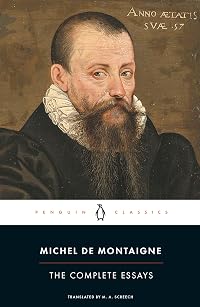
Michel de Montaigne: The Complete Essays
by Michel de Montaigne 
Michel de Montaigne's Essays (Collections and Selections — 1-3)
On This Page
Description
Considered the inventor of the essay itself, Michel de Montaigne published Essays (Essais, literally "Attempts") in 1850. Known for his skill at merging serious intellectual debate with personal anecdotes, his vast work collects together some of the most influential essays the world has ever seen, shaping the thoughts Blaise Pascal, René Descartes, Ralph Waldo Emerson, Stefan Zweig, Friedrich Nietzsche, Jean-Jacques Rousseau and Isaac Asimov among others. Montaigne stated that his aim in show more writing these works was to describe humankind, including himself, with complete frankness. show lessTags
Recommendations















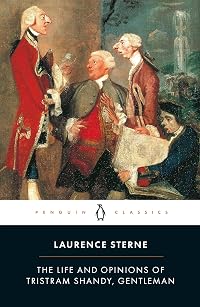


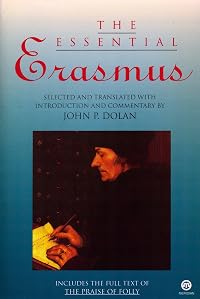
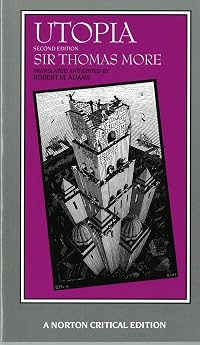


Member Recommendations

Member Reviews
Before reading Montaigne’s Essays, I had the mental image of the author as an introspective recluse, scribbling away in his tower while civil war raged outside his walls. A man who turned his back on society to find inner peace.
Someday, I always thought, I’ll read the book, though the sheer amount of what he wrote was off-putting. “Someday” moved to “soon” after listening to an episode of David Runciman’s Past Present Future podcast. Then, after reading Sarah Bakewell’s How to Live, it became, why not now? Even that was nearly a year ago, and I’m coming up for air.
What took me so long? As many others have commented, this is not a page-turner, suited for long sittings, but a book to dip into from time to time. But where show more to start? I began with the most-famous, frequently anthologized pieces, such as “On Cannibals.” Beyond that? The essay titles are little help, since these are not organized disquisitions devoted to one topic. The innocent and pedantic-sounding “Upon some verses of Virgil,” for example, turns out to be the ruminations of an old man fondly looking back on sex. The penultimate essay, “Physiognomy,” is really about the tragedy of civil war, which makes for poignant reading right now.
Montaigne’s mind roves freely, often in a way by turns illuminating and entertaining. But at times, it just meanders. Gallstones figure markedly in at least two essays. And at times his maxims reminded me of the sententious precepts of Hamlet’s Polonius.
Nevertheless, it is possible to detect an overarching theme in this vast collection. I paused for breath before diving into the lengthy “Apology for Raimond de Sebonde”, alone easily book-length. Rather than an interruption, it seemed, with its plea for tolerance in a time of violent sectarian hatred, a key to the entire work.
Although my original impression of Montaigne wasn’t totally off—there’s certainly a basis for it, particularly in the last years of his life—it wasn’t the whole story. Although he didn’t seek advancement, he faithfully carried out public duties, such as two terms as mayor of Bordeaux. Many examples in his essays are drawn from observation at the royal court.
By the time I reached the final essay, my image of Montaigne was no longer that of a recluse—certainly not the misanthropic kind—but of a gracious host. “I have no other end in this writing, but only to discover myself.” In our time, this sounds like self-absorption. But in Montaigne’s time, both in French and in English, the word “discover” primarily meant to “remove a cover”, to “put on display”. Montaigne’s essays are, in the end, a generous sharing of himself with us. show less
Someday, I always thought, I’ll read the book, though the sheer amount of what he wrote was off-putting. “Someday” moved to “soon” after listening to an episode of David Runciman’s Past Present Future podcast. Then, after reading Sarah Bakewell’s How to Live, it became, why not now? Even that was nearly a year ago, and I’m coming up for air.
What took me so long? As many others have commented, this is not a page-turner, suited for long sittings, but a book to dip into from time to time. But where show more to start? I began with the most-famous, frequently anthologized pieces, such as “On Cannibals.” Beyond that? The essay titles are little help, since these are not organized disquisitions devoted to one topic. The innocent and pedantic-sounding “Upon some verses of Virgil,” for example, turns out to be the ruminations of an old man fondly looking back on sex. The penultimate essay, “Physiognomy,” is really about the tragedy of civil war, which makes for poignant reading right now.
Montaigne’s mind roves freely, often in a way by turns illuminating and entertaining. But at times, it just meanders. Gallstones figure markedly in at least two essays. And at times his maxims reminded me of the sententious precepts of Hamlet’s Polonius.
Nevertheless, it is possible to detect an overarching theme in this vast collection. I paused for breath before diving into the lengthy “Apology for Raimond de Sebonde”, alone easily book-length. Rather than an interruption, it seemed, with its plea for tolerance in a time of violent sectarian hatred, a key to the entire work.
Although my original impression of Montaigne wasn’t totally off—there’s certainly a basis for it, particularly in the last years of his life—it wasn’t the whole story. Although he didn’t seek advancement, he faithfully carried out public duties, such as two terms as mayor of Bordeaux. Many examples in his essays are drawn from observation at the royal court.
By the time I reached the final essay, my image of Montaigne was no longer that of a recluse—certainly not the misanthropic kind—but of a gracious host. “I have no other end in this writing, but only to discover myself.” In our time, this sounds like self-absorption. But in Montaigne’s time, both in French and in English, the word “discover” primarily meant to “remove a cover”, to “put on display”. Montaigne’s essays are, in the end, a generous sharing of himself with us. show less
I can no longer tolerate reading the ramblings of this contemptible Frenchman. Montaigne isn't a renaissance intellectual by a long shot, he's a remnant of the 14th century man, a smug asshole wallowing in the pitch black murk of the dark ages, and worst of all a complete hypocrite and a bootlicker of the catholic church. Funny how he kept gatekeeping others from reading the Bible and discouraged the publication of vernacular Bible translations while citing biblical verses from a translated secondary source in his essays, his style was overly pompous and wordy, but Montaigne made denigrating the excessively ornate style of the humanist poets of his age a predominant subject in his essays, he did not care whether his writings would sound show more idiotically asinine to his readers, no, Montaigne only cared about churning one absurd string of foolish platitudes after another, he couldn't refrain from writing down one essay without letting self-contradiction seep into the next one, and as a final nail in the coffin, he gratuitously slandered homosexuals and cited the worst instances of historical homoromanticism to justify his atrociously close-minded stance on love in his appalling essay on friendship and romantic love. If I'll ever have the chance of visiting Montaigne's grave, I'd spit on this humongous jerk's tomb and hope I would never be cursed with the misfortune of hearing his name again. Here's one final big duck you to this medieval jackass. show less
[Michel de Montaigne, The Complete Essays translated and edited with an introduction and notes by M. A. Screech].
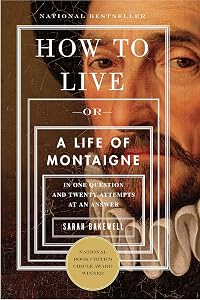
[How to Live, A life of Montaigne in one question and twenty attempts at an answer] by Sarah Bakewell.
Reading the Complete essays I had to wait a long time before I came across that “How did he know that about me” moment which Sarah Bakewell claims in her book is a feature many readers experience, this was mine:
“As soon as I arrived I spelled out my character faithfully and truly, just as I know myself to be – no memory, no concentration, no experience, no drive; no hatred either, no ambition, no covetousness, no ferocity – so that they should be told, and therefore know, what to expect from my service”
(Montaigne, show more Michel. The Complete Essays (p. 1137). Penguin Books Ltd. Kindle Edition.)
This quote is in the essay/chapter “ on restraining your will and covers Montaigne’s two periods as Mayor of Bordeaux. It comes from book three page 1,137 out of a total page count of 1,269 pages and so as a reader you have to be pretty keen to read through the whole lot. I was helped by M. A. Screech’s excellent translation that somehow brings the 16th century text alive and readable for 21st century readers. He aids the reader by an excellent main introduction; a heading to each new chapter and over 250 pages of notes.
The essays vary wildly in length for example the first chapter of book 1 “We reach the same end by discrepant means” is four pages long whereas “An Apology for Raymond Sebond” clocks in at nearly 200 pages almost a book in itself. Montaigne was a Renaissance man and so his store of knowledge, his ideas on philosophy were mostly generated by his love for antiquity. The majority of his anecdotes come from classical literature, with many quotes in Latin and Screech translates these for us immediately following the quotation so the flow of the essays is not interrupted. Montaigne spent 20 years ruminating and adding to his work and each edition during his lifetime had amendments (usually additions to the original text) Screech incorporates these into the main body of the text with a symbol (A, A1, B, or C) to denote their origin. This all seems to work pretty smoothly.
There is no substitute to reading the essays themselves, they are a unique experience. Montaigne writes exclusively about himself, but without a hint of pride, boastfulness or grandeur, he is aiming at self knowledge with the belief that if he can get some of it down on paper then he will also be writing about most other people as well, because he believed that the similarities vastly outweighed the differences. From Montaigne we understand that the way people see and feel about issues and about themselves change with age, with new experiences, or even depending on how they felt that particular day, but there is a basic thread running throughout our lives that Montaigne wishes to expose. Perhaps that is why so many readers through the centuries have seen themselves in Montaigne’s essays. Montaigne writes about day to day events, about travel, about education about death, about work, about being in the moment, about sex, about melancholy, about anger and about a natural theology. All the time he sets down how he feels about the subject that is concerning him and links it back to the wisdom (or otherwise) of antiquity. He can be humorous, serious, thoughtful, but never didactic; his search for truth makes his honesty almost painful at times. He exposes himself so that others can see themselves and I think you need a certain amount of courage to do that.
Montaigne’s world seems equally divided between 16th century France and classical Rome and some readers might find too much classicism in the essays, but this grounds the author as a typical renaissance man. A man of his times that can communicate forward to current times. Not to be missed especially with M A Screech’s excellent translation and introductions. 5 stars.
Sarah Bakewell’s [How to Live, A life of Montaigne] is written for contemporary readers almost like an overnight sensation - wham bam thank you mame - This is Montaigne she shouts, don’t miss out - you too will find yourself in my/this book. In her first chapter she nails her colours too the mast:
“Since it is a twenty-first-century book it is inevitably pervaded by a twenty-first-century Montaigne . As one of his favourite adages had it, there is no escaping our perspective: we can walk on our own legs and sit only on our own bum.”
So Bakewell sets about picking out the bits of Montaigne that she thinks will appeal to her 21st century audience, which unsurprisingly misses some of what Montaigne was about.
Having read the essays myself I asked myself the following questions before picking up Sarah Bakewell’s book:
1) Does the book add anything to the reading of the essays.
2) Does it supply any additional information.
3) Is it a substitute for reading Montaigne
4) How accurate is it with reference to the text?
Well lets start with the positives: Bakewell’s book is subtitled A Life of Montaigne and she does fill in some background information. She has good chapters on the religious wars that for most of his life threatened to engulf Montaigne, she tells us about Montaigne's family and private life and how he worked, she tells us about the printing history of the book; its reception at the time and then through the subsequent centuries and so in this respect it answers questions 1) and 2). I found Bakewell’s writing lively and interesting; of course she cannot help but add her own thoughts on Montaigne’s situation but I found nothing too jarring here. She even attempts to provide her readers with a bit of grounding in Hellenistic philosophy and although I found this chapter a little glib it was better than nothing.
So far so good, but then doubts started to creep in, surely she was going to say something more about Montaigne’s classical references, especially after she had told us that Montaigne was made to converse in Latin from his first attempts at speech until he was sent away to school. Surely she was going to “home in” on the near 200 page essay where Montaigne expounds his ideas on a natural theology. It was important enough for him to write such a long chapter, so there should be some commentary from Bakewell. Montaigne had a deep respect for nature in which he saw Gods handiwork, this is an underlying theme throughout the essays and is nailed down in his “Apology for Raymond Sebond. Bakewell rightly highlights Montaigne’s preoccupation with death and his own approach to death, but picks out the chapter where he describes his own near death experience after a hunting accident and makes this a sort of watershed for all subsequent thoughts. Then there is her claim that Montaigne had never been a soldier ………………..
So does Bakewell see her book as a sort of substitute for reading Montaigne’s essays, she never says it is, but I can imagine that many readers will read this book and think that they have read Montaigne. They would be wrong, because reading Bakewells comments on Montaigne would be like reading a commentary on Moby-Dick which claimed the main theme of that book was a mans obsession with killing a white whale. So I cannot recommend this book as a critique of Montaigne and it falls short in being A Life, however it is an entertaining read and if it leads people to dip into the real thing then it cannot be all bad 3.5 stars. show less
[How to Live, A life of Montaigne in one question and twenty attempts at an answer] by Sarah Bakewell.
Reading the Complete essays I had to wait a long time before I came across that “How did he know that about me” moment which Sarah Bakewell claims in her book is a feature many readers experience, this was mine:
“As soon as I arrived I spelled out my character faithfully and truly, just as I know myself to be – no memory, no concentration, no experience, no drive; no hatred either, no ambition, no covetousness, no ferocity – so that they should be told, and therefore know, what to expect from my service”
(Montaigne, show more Michel. The Complete Essays (p. 1137). Penguin Books Ltd. Kindle Edition.)
This quote is in the essay/chapter “ on restraining your will and covers Montaigne’s two periods as Mayor of Bordeaux. It comes from book three page 1,137 out of a total page count of 1,269 pages and so as a reader you have to be pretty keen to read through the whole lot. I was helped by M. A. Screech’s excellent translation that somehow brings the 16th century text alive and readable for 21st century readers. He aids the reader by an excellent main introduction; a heading to each new chapter and over 250 pages of notes.
The essays vary wildly in length for example the first chapter of book 1 “We reach the same end by discrepant means” is four pages long whereas “An Apology for Raymond Sebond” clocks in at nearly 200 pages almost a book in itself. Montaigne was a Renaissance man and so his store of knowledge, his ideas on philosophy were mostly generated by his love for antiquity. The majority of his anecdotes come from classical literature, with many quotes in Latin and Screech translates these for us immediately following the quotation so the flow of the essays is not interrupted. Montaigne spent 20 years ruminating and adding to his work and each edition during his lifetime had amendments (usually additions to the original text) Screech incorporates these into the main body of the text with a symbol (A, A1, B, or C) to denote their origin. This all seems to work pretty smoothly.
There is no substitute to reading the essays themselves, they are a unique experience. Montaigne writes exclusively about himself, but without a hint of pride, boastfulness or grandeur, he is aiming at self knowledge with the belief that if he can get some of it down on paper then he will also be writing about most other people as well, because he believed that the similarities vastly outweighed the differences. From Montaigne we understand that the way people see and feel about issues and about themselves change with age, with new experiences, or even depending on how they felt that particular day, but there is a basic thread running throughout our lives that Montaigne wishes to expose. Perhaps that is why so many readers through the centuries have seen themselves in Montaigne’s essays. Montaigne writes about day to day events, about travel, about education about death, about work, about being in the moment, about sex, about melancholy, about anger and about a natural theology. All the time he sets down how he feels about the subject that is concerning him and links it back to the wisdom (or otherwise) of antiquity. He can be humorous, serious, thoughtful, but never didactic; his search for truth makes his honesty almost painful at times. He exposes himself so that others can see themselves and I think you need a certain amount of courage to do that.
Montaigne’s world seems equally divided between 16th century France and classical Rome and some readers might find too much classicism in the essays, but this grounds the author as a typical renaissance man. A man of his times that can communicate forward to current times. Not to be missed especially with M A Screech’s excellent translation and introductions. 5 stars.
Sarah Bakewell’s [How to Live, A life of Montaigne] is written for contemporary readers almost like an overnight sensation - wham bam thank you mame - This is Montaigne she shouts, don’t miss out - you too will find yourself in my/this book. In her first chapter she nails her colours too the mast:
“Since it is a twenty-first-century book it is inevitably pervaded by a twenty-first-century Montaigne . As one of his favourite adages had it, there is no escaping our perspective: we can walk on our own legs and sit only on our own bum.”
So Bakewell sets about picking out the bits of Montaigne that she thinks will appeal to her 21st century audience, which unsurprisingly misses some of what Montaigne was about.
Having read the essays myself I asked myself the following questions before picking up Sarah Bakewell’s book:
1) Does the book add anything to the reading of the essays.
2) Does it supply any additional information.
3) Is it a substitute for reading Montaigne
4) How accurate is it with reference to the text?
Well lets start with the positives: Bakewell’s book is subtitled A Life of Montaigne and she does fill in some background information. She has good chapters on the religious wars that for most of his life threatened to engulf Montaigne, she tells us about Montaigne's family and private life and how he worked, she tells us about the printing history of the book; its reception at the time and then through the subsequent centuries and so in this respect it answers questions 1) and 2). I found Bakewell’s writing lively and interesting; of course she cannot help but add her own thoughts on Montaigne’s situation but I found nothing too jarring here. She even attempts to provide her readers with a bit of grounding in Hellenistic philosophy and although I found this chapter a little glib it was better than nothing.
So far so good, but then doubts started to creep in, surely she was going to say something more about Montaigne’s classical references, especially after she had told us that Montaigne was made to converse in Latin from his first attempts at speech until he was sent away to school. Surely she was going to “home in” on the near 200 page essay where Montaigne expounds his ideas on a natural theology. It was important enough for him to write such a long chapter, so there should be some commentary from Bakewell. Montaigne had a deep respect for nature in which he saw Gods handiwork, this is an underlying theme throughout the essays and is nailed down in his “Apology for Raymond Sebond. Bakewell rightly highlights Montaigne’s preoccupation with death and his own approach to death, but picks out the chapter where he describes his own near death experience after a hunting accident and makes this a sort of watershed for all subsequent thoughts. Then there is her claim that Montaigne had never been a soldier ………………..
So does Bakewell see her book as a sort of substitute for reading Montaigne’s essays, she never says it is, but I can imagine that many readers will read this book and think that they have read Montaigne. They would be wrong, because reading Bakewells comments on Montaigne would be like reading a commentary on Moby-Dick which claimed the main theme of that book was a mans obsession with killing a white whale. So I cannot recommend this book as a critique of Montaigne and it falls short in being A Life, however it is an entertaining read and if it leads people to dip into the real thing then it cannot be all bad 3.5 stars. show less
The most modern, and most lion-hearted, sixteenth-century man I know. I get more pure pleasure out of these "Attempts" than any other essays I can think of, and hope that one day I too will be wise enough to uncomplicatedly espouse a motto like "What do I know?" I think of all my struggles with the nature of truth and the good life, and then I think that in some ways you can throw your Derrida in the garbage and just stick with Montaigne's "the only thing certain is that nothing is certain", and "nothing is so fully believed as that which least is known". And when bad things happen, I think about how I may not be able to govern events, but I can surely govern myself. And that I can get up in the morning and remind myself that life is show more neither good nor evil, but what I make it. And if you still press me to say why I love him, I can say no more than because he was he, and I am I. show less
Clive James says somewhere that certain people throughout history are like ambassadors from the present stationed in the past: though separated from us by centuries, to read them is to share in thoughts and feelings that we recognise intimately as our own. And this is what Montaigne has been for me since I started reading him several years ago. He is the first person in history who strikes me as modern – or at least, the first to put that modern sense of uncertainty and existential nerviness down on paper, to write something that is not didactic or improving or even purely entertaining, but animated instead by curiosity, doubt, overeducated boredom, trivial irritations.
The scepticism in particular has become probably his most famous show more quality – his best-known line nowadays is the rhetorical question, Que sçay-je? ‘What do I know?’ Certainly his essays – meaning ‘efforts’, ‘attempts’ – are endearingly open about how uncertain he is when it comes to any of the big questions. He doesn't bluster his way through his lack of knowledge, but faces it head-on with disarming cheerfulness, and his arguments themselves are not carefully structured means to approach knowledge, but rather meandering and conversational in a way that is completely unlike other writers of the time. Je parle au papier comme je parle au premier que je rencontre, he says – in John Florio's 1603 translation (on which much more later), ‘I speake unto Paper, as to the first man I meete.’ Still, his lack of expertise is something that regularly bothers him:
Est-ce pas faire une muraille sans pierre, ou chose semblable, que de bastir des livres sans science et sans art? Les fantasies de la musique sont conduictes par art, les miennes par sort.
[To write bookes without learning is it not to make a wall without stone or such like thing? Conceits of musicke are directed by arte, mine by hap.]
It's unlikely to worry any of his readers. The range of topics addressed by Montaigne is gloriously all-encompassing: stick a pin in the nearest encyclopaedia and he will have something to say on whatever subject has been thus perforated. And crucially, it's not just the big subjects like war, religion, diplomacy, the Classical tradition. It's also the minor stuff, the kind of things that you worry about in the bath – how annoying it is to have to get up early, whether people should talk over dinner or just shut up and eat, what to wear in bed. Like men through history, he frets that he can't last long enough during sex and that his cock is too small – but unlike Horace or the Earl of Rochester, he doesn't write grandiose poetry on the subject, he just moans about it in humdrum, day-to-day prose. You come to realise there is no issue he won't write about. ‘Of all naturall actions, there is none wherein I am more loath to be troubled or interrupted when I am at it,’ he announces, on doing a poo.
Of course that frankness, that ruthless self-analysis, means that when he does come to the big subjects he's often totally riveting. I loved reading his thoughts on religion, which are incredibly undogmatic and open-minded given the context of sixteenth-century Europe. In Book II, chapter 12 – one of the longest essays and often printed separately – he ostensibly sets out to defend Christianity, but in his clear-sighted assessment of the arguments against religion he articulates intelligent agnosticism better than many atheists. We are Christians because we are born here and now, he perceives; if people really believed in the precepts of their faith, they would be happy to die; and if there were any real reward after death it must be in some mortal way, otherwise we would no longer be ‘us’. Following his mind through these arguments is quite a thrill.
He also comments on current events, of all kinds. After France adopts the Gregorian calendar in December 1582, he takes the time to write irritably on the missing eleven days (a circumstance which leads him, via a typically Montanian series of tangents, to end up discussing the merits of sex with the disabled). And his thoughts on the Spanish conquest of the Americas – the full details of which were still then emerging – make for a welcome reminder that not everyone at the time was gung-ho about the excesses of the colonial project.
…nous nous sommes servis de leur ignorance et inexperience à les plier plus facilement vers la trahison, luxure, avarice et vers toute sorte d'inhumanité et de cruauté, à l'exemple et patron de nos meurs. Qui mit jamais à tel pris le service de la mercadence et de la trafique? Tant de villes rasées, tant de nations exterminées, tant de millions de peuples passez au fil de l'espée, et la plus riche et belle partie du monde bouleversée pour la negotiation des perles et du poivre: mechaniques victoires. Jamais l'ambition, jamais les inimitiez publiques ne pousserent les hommes les uns contre les autres à si horribles hostilitez et calamitez si miserables.
[we have made use of their ignorance and inexperience, to drawe them more easily unto treason, fraude, luxurie, avarice and all manner of inhumanity and cruelty, by the example of our life and patterne of our customes. Who ever raised the service of marchandize and benefit of traffick to so high a rate? So many goodly citties ransacked and raged; so many nations destroyed and made desolate; so infinite millions of harmelesse people of all sexes, states and ages, massacred, ravaged and put to the sword; and the richest, the fairest and the best part of the world topsiturvied, ruined and defaced for the traffick of Pearles and Pepper. Oh mechanicall victories, oh base conquest. Never did greedy revenge, publik wrongs or generall enmities, so moodily enrage and so passionately incense men against men, unto so horrible hostilities, bloody dissipation, and miserable calamities.]
On gender relations he offers an intriguing mix of traditionalism and forward-thinking. He makes frequent off-hand remarks about the place of women which seem to suggest that he is pretty representative of his time – commenting, for instance, that if women want to read they should confine themselves to theology and a little poetry – but then at other times he can be amazingly progressive. A long essay ‘On some verses of Virgil’ (III.5) includes a fantastic investigation of sexual politics where he is unexpectedly thoughtful about the expectations placed on women by male society, and he rails against the hypocrisy of what we'd now call slut-shaming. His sympathy for those who do not fit patriarchal expectations shows that he grasps the fundamental point:
Les femmes n'ont pas tort du tout quand elles refusent les reigles de vie qui sont introduites au monde, d'autant que ce sont les hommes qui les ont faictes sans elles.
[Women are not altogether in the wrong, when they refuse the rules of life prescribed to the World, forsomuch as onely men have established them without their consent.]
In the end, although he can't stop himself feeling instinctively that a woman's role is different from a man's, he recognises that much of this is down to social pressures, and his simple conclusion is in some ways centuries ahead of its time: les masles et femelles sont jettez en mesme moule: sauf l'institution et l'usage, la difference n'y est pas grande. ‘Male and female are cast in one same moulde; instruction and custome excepted, there is no great difference betweene them.’
Those of you who read French may be noticing here that Montaigne is often easier to understand than Florio. At first this was a surprise to me as I flicked between them, but it's a good illustration of the fact that English has changed a lot more in four hundred years than French has. Many were the times that I turned to the Middle French to illuminate what seemed an obscure passage in my native language. A Florio phrase like ‘it is enough to dip our pens in inke, too much, to die them in blood’ seems to have two or three possible interpretations. It's only when you read the original – c'est assez de tramper nos plumes en ancre, sans les tramper en sang – that you realise Florio's first comma is the fulcrum on which two perfectly-balanced halves of the sentence pivot.
Take another look at the very end of that quote on the conquest of Mexico, above. Montaigne's elegant chiasmus (horribles hostilitez…calamitez si miserables) has been abandoned; meanwhile, to the horrible hostilities and miserable calamities has been added a dose of ‘bloody dissipation’, on Florio's own initiative. Similar cases abound (he also translates bouleversée there as ‘topsiturvied’!), and to me they say something deeply significant about the two languages, at least as they existed then. One final example will make my point: here, Montaigne is discussing how strange it is that sex is something hidden and shameful, while death is a public glory:
Chacun fuit à le voir naistre, chacun suit à le voir mourir. Pour le destruire, on cerche un champ spacieux en pleine lumiere; pour le construire, on se musse dans un creux tenebreux et contraint. C'est le devoir de se cacher et rougir pour le faire; et c'est gloire, et naissent plusieurs vertus de le sçavoir deffaire.
[Each one avoideth to see a man borne, but all runne hastily to see him dye. To destroy him we seeke a spacious field and a full light, but to construct him we hide our selves in some darke corner and worke as close as we may. It is our dutie to conceale our selves in making him; it is our glory, and the originall of many vertues to destroy him being framed.]
The French is precisely assembled, and Florio ignores the precision entirely. Montaigne's exact, rhyming counterpoints (chacun fuit…chacun suit, faire…deffaire) are dropped in favour of a profusion of circumlocution (‘each one avoideth…all runne’, ‘making him…to destroy him being framed’). Where Montaigne is a Rolls-Royce engine, Florio is a cartoon jetpack. And yet! Where Florio fails to capture his source is precisely where he best represents the allusive, poly-synonymous essence of his own native tradition. While Montaigne convinces you that the genius of French lies in its clarity (Ce qui n'est pas clair n'est pas français, as Antoine de Rivarol would say two hundred years later), Florio suggests that the genius of English lies by contrast in its ambiguity, and the best English writers of the time – which is to say the best English writers of all time, Shakespeare, Browne et al. – were precisely those who mastered its allusive and multivocabular messiness.
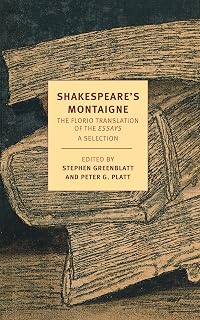
Well, I won't push that any further, and Montaigne himself would doubtless have disagreed. (‘Our speech hath his infirmities and defects, as all things else have,’ he says; and elsewhere, in a passage that warmed my anti-prescriptivist heart, ‘According to the continuall variation that hitherto hath followed our French tongue, who may hope that its present forme shall be in use fifty yeares hence?…We say it is now come to a full perfection. There is no age but saith as much of hirs.’) At any rate, reading these two writers together throws up all kinds of fascinating suggestions and contemplations, and it meant that I ended up reading basically all the essays twice (and two or three of them I read for a third time in MA Screech's modern English translation). For those curious about Florio, the NYRB has published a selection of his versions of the Essays under the intensely irritating title of Shakespeare's Montaigne, though neither Montaigne nor Florio need Shakespeare's coat-tails to ride on – and anyway, apart from one famous bit in The Tempest, the evidence for Shakespeare's having read Florio is not very exciting.
In the end though, whatever language you read Montaigne in, his humaneness and his sympathy will stay with you. By the time he writes the final volume he is at the end of his life, and his tone has not become bitter or regretful in the least. Everywhere he shows a desire to find a middle way between the intellectual and the physical, the elevated and the practical, which I find extremely cheering. The last chapter, ‘On Experience’, sums up the feelings about how life should be lived that he has been investigating throughout the essays, and as always his concern is not to criticise but instead to forgive, to understand, to encourage. He invented an entire genre, but no one has achieved greater effects with it than he did himself.
Il a passé sa vie en oisiveté, disons nous; je n'ay rien faict d'aujourd'huy.--Quoy, avez vous pas vescu? C'est non seulement la fondamentale mais la plus illustre de vos occupations…. Avez vous sceu mediter et manier vostre vie? vous avez faict la plus grande besoigne de toutes. Pour se montrer et exploicter nature n'a que faire de fortune: elle se montre egallement en tous estages et derriere, comme sans rideau. Composer nos meurs est nostre office, non pas composer des livres, et gaigner, non pas des batailles et provinces, mais l'ordre et tranquillité à nostre conduite.
[Hee hath passed his life in idleness, say we; alas! I have done nothing this day. What, have you not lived? It is not only the fundamentall, but the noblest of your occupation. […] Have you knowen how to meditate and mannage your life? you have accomplished the greatest worke of all. For a man to shew and exploit himselfe nature hath no neede of fortune; she equally shewes herselfe upon all grounds, in all sutes, before and behinde, as it were without curteines, welt, or gard. Have you knowne how to compose your manners? you have done more than he who hath composed bookes. Have you knowne how to take rest? you have done more than be who hath taken Empires and Citties.] show less
The scepticism in particular has become probably his most famous show more quality – his best-known line nowadays is the rhetorical question, Que sçay-je? ‘What do I know?’ Certainly his essays – meaning ‘efforts’, ‘attempts’ – are endearingly open about how uncertain he is when it comes to any of the big questions. He doesn't bluster his way through his lack of knowledge, but faces it head-on with disarming cheerfulness, and his arguments themselves are not carefully structured means to approach knowledge, but rather meandering and conversational in a way that is completely unlike other writers of the time. Je parle au papier comme je parle au premier que je rencontre, he says – in John Florio's 1603 translation (on which much more later), ‘I speake unto Paper, as to the first man I meete.’ Still, his lack of expertise is something that regularly bothers him:
Est-ce pas faire une muraille sans pierre, ou chose semblable, que de bastir des livres sans science et sans art? Les fantasies de la musique sont conduictes par art, les miennes par sort.
[To write bookes without learning is it not to make a wall without stone or such like thing? Conceits of musicke are directed by arte, mine by hap.]
It's unlikely to worry any of his readers. The range of topics addressed by Montaigne is gloriously all-encompassing: stick a pin in the nearest encyclopaedia and he will have something to say on whatever subject has been thus perforated. And crucially, it's not just the big subjects like war, religion, diplomacy, the Classical tradition. It's also the minor stuff, the kind of things that you worry about in the bath – how annoying it is to have to get up early, whether people should talk over dinner or just shut up and eat, what to wear in bed. Like men through history, he frets that he can't last long enough during sex and that his cock is too small – but unlike Horace or the Earl of Rochester, he doesn't write grandiose poetry on the subject, he just moans about it in humdrum, day-to-day prose. You come to realise there is no issue he won't write about. ‘Of all naturall actions, there is none wherein I am more loath to be troubled or interrupted when I am at it,’ he announces, on doing a poo.
Of course that frankness, that ruthless self-analysis, means that when he does come to the big subjects he's often totally riveting. I loved reading his thoughts on religion, which are incredibly undogmatic and open-minded given the context of sixteenth-century Europe. In Book II, chapter 12 – one of the longest essays and often printed separately – he ostensibly sets out to defend Christianity, but in his clear-sighted assessment of the arguments against religion he articulates intelligent agnosticism better than many atheists. We are Christians because we are born here and now, he perceives; if people really believed in the precepts of their faith, they would be happy to die; and if there were any real reward after death it must be in some mortal way, otherwise we would no longer be ‘us’. Following his mind through these arguments is quite a thrill.
He also comments on current events, of all kinds. After France adopts the Gregorian calendar in December 1582, he takes the time to write irritably on the missing eleven days (a circumstance which leads him, via a typically Montanian series of tangents, to end up discussing the merits of sex with the disabled). And his thoughts on the Spanish conquest of the Americas – the full details of which were still then emerging – make for a welcome reminder that not everyone at the time was gung-ho about the excesses of the colonial project.
…nous nous sommes servis de leur ignorance et inexperience à les plier plus facilement vers la trahison, luxure, avarice et vers toute sorte d'inhumanité et de cruauté, à l'exemple et patron de nos meurs. Qui mit jamais à tel pris le service de la mercadence et de la trafique? Tant de villes rasées, tant de nations exterminées, tant de millions de peuples passez au fil de l'espée, et la plus riche et belle partie du monde bouleversée pour la negotiation des perles et du poivre: mechaniques victoires. Jamais l'ambition, jamais les inimitiez publiques ne pousserent les hommes les uns contre les autres à si horribles hostilitez et calamitez si miserables.
[we have made use of their ignorance and inexperience, to drawe them more easily unto treason, fraude, luxurie, avarice and all manner of inhumanity and cruelty, by the example of our life and patterne of our customes. Who ever raised the service of marchandize and benefit of traffick to so high a rate? So many goodly citties ransacked and raged; so many nations destroyed and made desolate; so infinite millions of harmelesse people of all sexes, states and ages, massacred, ravaged and put to the sword; and the richest, the fairest and the best part of the world topsiturvied, ruined and defaced for the traffick of Pearles and Pepper. Oh mechanicall victories, oh base conquest. Never did greedy revenge, publik wrongs or generall enmities, so moodily enrage and so passionately incense men against men, unto so horrible hostilities, bloody dissipation, and miserable calamities.]
On gender relations he offers an intriguing mix of traditionalism and forward-thinking. He makes frequent off-hand remarks about the place of women which seem to suggest that he is pretty representative of his time – commenting, for instance, that if women want to read they should confine themselves to theology and a little poetry – but then at other times he can be amazingly progressive. A long essay ‘On some verses of Virgil’ (III.5) includes a fantastic investigation of sexual politics where he is unexpectedly thoughtful about the expectations placed on women by male society, and he rails against the hypocrisy of what we'd now call slut-shaming. His sympathy for those who do not fit patriarchal expectations shows that he grasps the fundamental point:
Les femmes n'ont pas tort du tout quand elles refusent les reigles de vie qui sont introduites au monde, d'autant que ce sont les hommes qui les ont faictes sans elles.
[Women are not altogether in the wrong, when they refuse the rules of life prescribed to the World, forsomuch as onely men have established them without their consent.]
In the end, although he can't stop himself feeling instinctively that a woman's role is different from a man's, he recognises that much of this is down to social pressures, and his simple conclusion is in some ways centuries ahead of its time: les masles et femelles sont jettez en mesme moule: sauf l'institution et l'usage, la difference n'y est pas grande. ‘Male and female are cast in one same moulde; instruction and custome excepted, there is no great difference betweene them.’
Those of you who read French may be noticing here that Montaigne is often easier to understand than Florio. At first this was a surprise to me as I flicked between them, but it's a good illustration of the fact that English has changed a lot more in four hundred years than French has. Many were the times that I turned to the Middle French to illuminate what seemed an obscure passage in my native language. A Florio phrase like ‘it is enough to dip our pens in inke, too much, to die them in blood’ seems to have two or three possible interpretations. It's only when you read the original – c'est assez de tramper nos plumes en ancre, sans les tramper en sang – that you realise Florio's first comma is the fulcrum on which two perfectly-balanced halves of the sentence pivot.
Take another look at the very end of that quote on the conquest of Mexico, above. Montaigne's elegant chiasmus (horribles hostilitez…calamitez si miserables) has been abandoned; meanwhile, to the horrible hostilities and miserable calamities has been added a dose of ‘bloody dissipation’, on Florio's own initiative. Similar cases abound (he also translates bouleversée there as ‘topsiturvied’!), and to me they say something deeply significant about the two languages, at least as they existed then. One final example will make my point: here, Montaigne is discussing how strange it is that sex is something hidden and shameful, while death is a public glory:
Chacun fuit à le voir naistre, chacun suit à le voir mourir. Pour le destruire, on cerche un champ spacieux en pleine lumiere; pour le construire, on se musse dans un creux tenebreux et contraint. C'est le devoir de se cacher et rougir pour le faire; et c'est gloire, et naissent plusieurs vertus de le sçavoir deffaire.
[Each one avoideth to see a man borne, but all runne hastily to see him dye. To destroy him we seeke a spacious field and a full light, but to construct him we hide our selves in some darke corner and worke as close as we may. It is our dutie to conceale our selves in making him; it is our glory, and the originall of many vertues to destroy him being framed.]
The French is precisely assembled, and Florio ignores the precision entirely. Montaigne's exact, rhyming counterpoints (chacun fuit…chacun suit, faire…deffaire) are dropped in favour of a profusion of circumlocution (‘each one avoideth…all runne’, ‘making him…to destroy him being framed’). Where Montaigne is a Rolls-Royce engine, Florio is a cartoon jetpack. And yet! Where Florio fails to capture his source is precisely where he best represents the allusive, poly-synonymous essence of his own native tradition. While Montaigne convinces you that the genius of French lies in its clarity (Ce qui n'est pas clair n'est pas français, as Antoine de Rivarol would say two hundred years later), Florio suggests that the genius of English lies by contrast in its ambiguity, and the best English writers of the time – which is to say the best English writers of all time, Shakespeare, Browne et al. – were precisely those who mastered its allusive and multivocabular messiness.
Well, I won't push that any further, and Montaigne himself would doubtless have disagreed. (‘Our speech hath his infirmities and defects, as all things else have,’ he says; and elsewhere, in a passage that warmed my anti-prescriptivist heart, ‘According to the continuall variation that hitherto hath followed our French tongue, who may hope that its present forme shall be in use fifty yeares hence?…We say it is now come to a full perfection. There is no age but saith as much of hirs.’) At any rate, reading these two writers together throws up all kinds of fascinating suggestions and contemplations, and it meant that I ended up reading basically all the essays twice (and two or three of them I read for a third time in MA Screech's modern English translation). For those curious about Florio, the NYRB has published a selection of his versions of the Essays under the intensely irritating title of Shakespeare's Montaigne, though neither Montaigne nor Florio need Shakespeare's coat-tails to ride on – and anyway, apart from one famous bit in The Tempest, the evidence for Shakespeare's having read Florio is not very exciting.
In the end though, whatever language you read Montaigne in, his humaneness and his sympathy will stay with you. By the time he writes the final volume he is at the end of his life, and his tone has not become bitter or regretful in the least. Everywhere he shows a desire to find a middle way between the intellectual and the physical, the elevated and the practical, which I find extremely cheering. The last chapter, ‘On Experience’, sums up the feelings about how life should be lived that he has been investigating throughout the essays, and as always his concern is not to criticise but instead to forgive, to understand, to encourage. He invented an entire genre, but no one has achieved greater effects with it than he did himself.
Il a passé sa vie en oisiveté, disons nous; je n'ay rien faict d'aujourd'huy.--Quoy, avez vous pas vescu? C'est non seulement la fondamentale mais la plus illustre de vos occupations…. Avez vous sceu mediter et manier vostre vie? vous avez faict la plus grande besoigne de toutes. Pour se montrer et exploicter nature n'a que faire de fortune: elle se montre egallement en tous estages et derriere, comme sans rideau. Composer nos meurs est nostre office, non pas composer des livres, et gaigner, non pas des batailles et provinces, mais l'ordre et tranquillité à nostre conduite.
[Hee hath passed his life in idleness, say we; alas! I have done nothing this day. What, have you not lived? It is not only the fundamentall, but the noblest of your occupation. […] Have you knowen how to meditate and mannage your life? you have accomplished the greatest worke of all. For a man to shew and exploit himselfe nature hath no neede of fortune; she equally shewes herselfe upon all grounds, in all sutes, before and behinde, as it were without curteines, welt, or gard. Have you knowne how to compose your manners? you have done more than he who hath composed bookes. Have you knowne how to take rest? you have done more than be who hath taken Empires and Citties.] show less
16th Century French noble retires to his home in later life to wax lyrical on cannibals, the limits of human knowledge, experience, and whatever else occurs to him. Can't really sum up 1300 pages of that, but I'd recommend reading him, perhaps in a selection rather than as a whole, although it was a good tome to take away on a holiday with a bit of travelling. His style is conversational, so it feels like time spent in good company rather than hard work. You can sense the cusp of a new era in his scepticism, but he's also strongly attached to the Catholic church and the existing order - he was writing during the French wars of religion, so that was not a small matter. He was a man of his time and also a decent and interesting guy, and I show more found plenty of appeal in both. show less
Montaigne is known as the father of the essay for good reason--he coined the very word for them. An essai is french for attempt--which gives you a sense of Montaigne's style and intent. They're very conversational, as if he's thinking out loud. A little rambling, yes, in the way the conversation with a friend can be, jumping from subject to subject. Some reviewers complained he's vain--well, he is a bit of a know-it-all, including a great deal of quotes from classical sources: Homer, Aesop, Euripides, Plato, Aristotle, Vergil, Caesar, Lucretius, Tacitus, Plutarch... For me that was part of his charm. I'm with the Librarything reviewer who said that "this is a liberal education in a book." There seems to be no aspect of life he doesn't show more cover in his hundred plus essays.
Montaigne actually struck me as both humane and strikingly modern in quite a few respects--in his concern for native Americans being colonized by the Europeans, his opposition to torture, his concern for animals, among other instances. I found Montaigne lively, often funny, readable, quotable. More so than his imitator Francis Bacon and far, far more so than Emerson. All three, interestingly, have essays on friendship. Montaigne's is the wisest and most moving of the three. show less
Montaigne actually struck me as both humane and strikingly modern in quite a few respects--in his concern for native Americans being colonized by the Europeans, his opposition to torture, his concern for animals, among other instances. I found Montaigne lively, often funny, readable, quotable. More so than his imitator Francis Bacon and far, far more so than Emerson. All three, interestingly, have essays on friendship. Montaigne's is the wisest and most moving of the three. show less
Members
- Recently Added By
Lists

100 Books to Read in a Lifetime (That Are Older Than 200 Years)
415 works; 176 members

W. S. Maugham's Reading Suggestions for Spiritual Enrichment: Continental
19 works; 3 members

The Road to Freedom (Will Durant's 100 Best Books for an Education)
100 works; 8 members

Harold Bloom - The Western Canon: B. The Aristocratic Age
231 works; 13 members

Filosofía - Clásicos
217 works; 1 member

Books You Read For University
184 works; 3 members

Mustich's 1000 Books to Read Before You Die: A Life Changing List
1,001 works; 20 members

Philosophy, Politics and Economics
61 works; 1 member

Book wishlist
78 works; 1 member

Philip Ward's Lifetime Reading Plan
592 works; 22 members

Books We'd Want on a Desert Island
204 works; 133 members

Favourite Books
1,820 works; 311 members
My List
302 works; 1 member
College Reads (Lit Edition)
75 works; 5 members

The Well-Educated Mind, Susan Wise Bauer, 2016
179 works; 3 members

Recommended Reading : 600 Classics Reviewed, Editors of Salem Press, 2015
634 works; 6 members

Javier Marías: 10 libros que me han cambiado la vida
12 works; 1 member

100
15 works; 1 member

.
396 works; 1 member

The Five Books That Represent Us
391 works; 150 members

In Our Time books
4,934 works; 2 members

Greatest Books, allegedly
484 works; 9 members

A Reading List
100 works; 3 members

Top Five Books of 2022
736 works; 272 members

Western World's Greatest Books - Project Gutenberg
295 works; 15 members

Non-Fiction Worth Reading
1,025 works; 264 members

The 100 Best Books of All Time by Norwegian Book Club (World Library)
104 works; 23 members

1001 Books You Must Read Before You Die
1,448 works; 1,137 members

CCE 100 Great Books List
145 works; 8 members
Blue Pyramid 1,276 Best Books of All Time
1,248 works; 32 members

Best of French Literature
138 works; 27 members

Trinity College Booklist (1951): Class Nine, Foreign Literatures
161 works; 3 members

Well-Educated Mind
150 works; 3 members

Europe
205 works; 6 members

KIB Non-Fiction Book Cloud
41 works; 1 member

The Well-Educated Mind Reading Challenge
75 works; 7 members

Tom's Bookstore
346 works; 2 members

Books Read in 2021
5,361 works; 113 members
Folio Society
831 works; 53 members
How to Read a Book's Recommended Reading List
309 works; 10 members

Lectuurlijst
63 works; 1 member
Talk Discussions
Past Discussions
Montaigne's Essays, one at a time. in 75 Books Challenge for 2011 (January 2012)
Author Information

699+ Works 15,106 Members
Michel de Montaigne was born in Chateau de Montaigne, near Bordeaux, France, on February 28, 1533. He received his early education at the College de Guyenne in Bordeaux and studied law at Bordeaux and Toulouse, becoming a counselor of the Court des Aides of Perigueaux, the Bordeaux Parliament and, in 1561, at the court of Charles IX. In 1565, show more Montaigne married Francoise de la Chassaigne. They raised one daughter, with four other children dying in infancy. He lived the life as a country gentleman and traveled extensively through Switzerland, Germany, and Italy. Montaigne was a moderate Roman Catholic and an advocate of toleration, acting as an intermediary between Henry of Navarre and the court party. As a result, in 1588, he was arrested by members of the Protestant League and thrown into the Bastille for several hours. His work Essais established the essay as a new literary form and influenced both French and English writers; it was quoted by William Shakespeare and imitated by Francis Bacon. Michel de Montaigne died on September 13, 1592 at his chateau in France. (Bowker Author Biography) show less
Michel de Montaigne has a Legacy Library. Legacy libraries are the personal libraries of famous readers, entered by LibraryThing members from the Legacy Libraries group.
Some Editions
Awards and Honors
Distinctions
Notable Lists
Series

Belongs to Publisher Series
Perpetua reeks (35)
Oscar Classici [Mondadori] (91-93)
insel taschenbuch (220)
Everyman's Library (440-442)
Work Relationships
Is contained in
Contains
Has as a commentary on the text
Has as a student's study guide
Common Knowledge
- Canonical title
- Michel de Montaigne: The Complete Essays
- Original title
- Les Essais; Essais
- Alternate titles
- Essais
- Original publication date
- 1588
- People/Characters
- Michel de Montaigne; Étienne de La Boétie; Cato the Younger; Cicero; Democritus; Heraclitus (show all 12); Julius Caesar; Raymond of Sabunde; Seneca the Younger; Plutarch; Spurinnia; Virgil
- Important places
- France; Rome, Italy; Italy
- Important events
- Renaissance; French Renaissance; 16th century
- First words
- This, reader, is an honest book. It warns you at the outset that my sole purpose in writing it has been a private and domestic one.
The most usual way to soften the hearts of those we have offended, when having vengeance in their hand, they hold us at their mercy, is to move them by submission to commiseration and pity; defiance, courage, and resolutionâ€... (show all)”ans altogether different—have sometimes served the same purpose.
Reader, thou hast here an honest book; it doth at the outset forewarn thee that, in contriving the same, I have proposed to myself no other than a domestic and private end: I have had no consideration at all either to thy ser... (show all)vice or to my glory. - Last words
- (Click to show. Warning: May contain spoilers.)Frui paratis et valido mihi / Latoë, dones, et, precor, integra / Cum mente; nec turpem senectam / Degere, nec Cithara carentem.
(Click to show. Warning: May contain spoilers.)Grant, I pray, son of Latona, that I enjoy in full health, and with mind unimpaired, the goods that have been prepared for me; and that my old age be not unhonoured, nor lack the lyre. - Publisher's editor*
- Thibaudet, Albert
- Original language
- French
- Disambiguation notice
- This work is the complete Essays; do not include selected essays, abstracts, or individual volumes from multi-volume editions.
*Some information comes from Common Knowledge in other languages. Click "Edit" for more information.
Classifications
Statistics
- Members
- 5,619
- Popularity
- 2,370
- Reviews
- 57
- Rating
- (4.32)
- Languages
- 22 — Catalan, Chinese, Czech, Danish, Dutch, English, Estonian, Finnish, French, French (Middle), German, Greek, Hebrew, Hungarian, Italian, Lithuanian, Norwegian (Bokmål), Polish, Portuguese, Spanish, Swedish, Turkish
- Media
- Paper, Audiobook, Ebook
- ISBNs
- 221
- ASINs
- 146