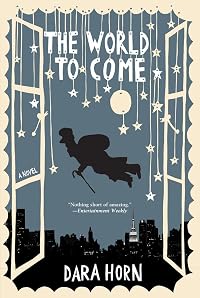
The World to Come
by Dara Horn 
On This Page
Description
An intoxicating combination of mystery, spirituality, redemption, piety, and passion, The World To Come is Dara Horn's follow-up to her breakout, critically acclaimed debut novel In the Image. Using a real-life art heist as her starting point, Horn traces the life and times of several characters, including Russian-born artist Marc Chagall and the New Jersey–based Ziskind family. Benjamin Ziskind, a former child prodigy, now spends his days writing questions for a television trivia show. show more After Ben's twin sister, Sara, forces him to attend a singles cocktail party at a Jewish museum, Ben spots Over Vitebsk, a Chagall sketch that once hung in the twins' childhood home. Convinced the painting was stolen from his family, Ben steals the work of art and enlists Sara to create a forgery to replace it. While trying to evade the police, Ben attempts to find the truth of how the painting got to the museum.From a Jewish orphanage in 1920s Soviet Russia where Marc Chagall brought art to orphaned Jewish boys, to a junior high school in Newark, New Jersey, with a stop in the jungles of Da Nang, Vietnam, Horn weaves a story of mystery, romance, folklore, history and theology into a spellbinding modern tale. Richly satisfying and utterly unique, her novel opens the door to "the world to come"-not life after death, but the world we create through our actions right now. show lessTags
Recommendations




Member Recommendations
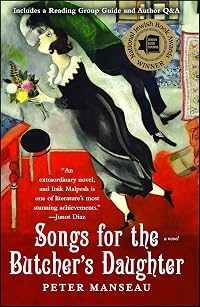
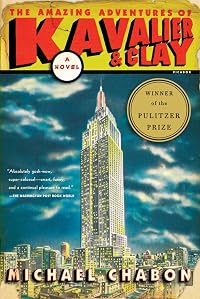
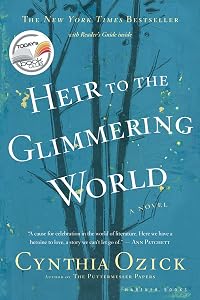
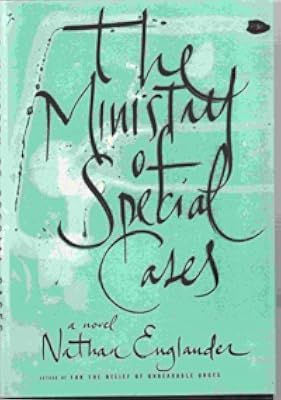
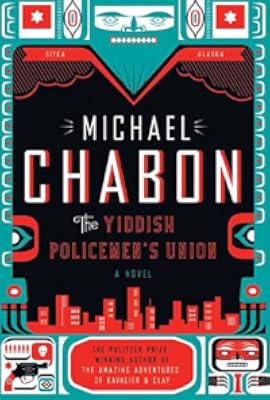
BookshelfMonstrosity Paintings are at the heart of these hefty novels, both of which combine the antics of a heist novel with ruminations on literature, history, and loss. Memorable characters and rich details add to the enjoyment of both books.
Member Reviews
Sometimes a novelist is burdened by a surfeit of rich and poignant characters. It must be hard to decide which of their stories to tell, and tempting to try and tell all of them. Dara Horn succumbs to this temptation and very nearly is overwhelmed by it. If she does not quite succeed, she at least gives us numerous wonderful moments, and plenty to think about.
Ostensibly the protagonist of the novel is Benjamin Ziskind, an aging prodigy (now thirty) who, in a moment of recognition that prompts a rash act of liberation, walks out of a Chagall exhibit in New York with a small painting that he realizes used to hang in his recently deceased mother’s house. In his mind he is simply returning stolen property, but this painting’s history is show more much more. It is tied to a history of misery and despair for Benjamin’s recent ancestors and by association to the long history of suffering of Jewish people everywhere. The painting, we learn, had been given to Benjamin’s maternal grandfather, Boris, by Chagall himself when Chagall was teaching art at an orphanage near Malakhova. These are no ordinary orphans. They are all that remains of families destroyed during the wave of pogroms that swept through Russia in the 1920s. And Boris, whose Jewish name is also Benjamin, is one of the most tragic cases, having been rescued from an open grave in which he was hiding.
We also learn of Chagall’s friend at the orphanage, the writer known as ‘The Hidden One’, or Der Nister. His story is equally tragic. It mirrors that of a whole generation of Russian Jewish intellectuals and artists that was systematically destroyed under Stalin’s regime. Chagall ends up being just about the only one to die a natural death, having fled to Berlin in the 1920s and later further west.
But just as interesting is the story of the twin sister of Benjamin (the first Benjamin I mentioned). She is an artist like their mother had been. And she was present at the age of 12 when her mother “sold” the painting to a Russian museum whose buyer turns out to be none other than the man who was instrumental in her mother’s father’s (the other Benjamin) death.
Tragedy abounds. But not just tragedy. There is also much light and joy and numerous tales inspired by or lifted directly from Der Nister and his literary peers. These Yiddish stories feel both ancient and fresh. And they connect the characters of the surface plot with the larger story of life before birth, that is life with the angels, our preparation for, and our destination in the world to come. Curiously rich storytelling, gently recommended. show less
Ostensibly the protagonist of the novel is Benjamin Ziskind, an aging prodigy (now thirty) who, in a moment of recognition that prompts a rash act of liberation, walks out of a Chagall exhibit in New York with a small painting that he realizes used to hang in his recently deceased mother’s house. In his mind he is simply returning stolen property, but this painting’s history is show more much more. It is tied to a history of misery and despair for Benjamin’s recent ancestors and by association to the long history of suffering of Jewish people everywhere. The painting, we learn, had been given to Benjamin’s maternal grandfather, Boris, by Chagall himself when Chagall was teaching art at an orphanage near Malakhova. These are no ordinary orphans. They are all that remains of families destroyed during the wave of pogroms that swept through Russia in the 1920s. And Boris, whose Jewish name is also Benjamin, is one of the most tragic cases, having been rescued from an open grave in which he was hiding.
We also learn of Chagall’s friend at the orphanage, the writer known as ‘The Hidden One’, or Der Nister. His story is equally tragic. It mirrors that of a whole generation of Russian Jewish intellectuals and artists that was systematically destroyed under Stalin’s regime. Chagall ends up being just about the only one to die a natural death, having fled to Berlin in the 1920s and later further west.
But just as interesting is the story of the twin sister of Benjamin (the first Benjamin I mentioned). She is an artist like their mother had been. And she was present at the age of 12 when her mother “sold” the painting to a Russian museum whose buyer turns out to be none other than the man who was instrumental in her mother’s father’s (the other Benjamin) death.
Tragedy abounds. But not just tragedy. There is also much light and joy and numerous tales inspired by or lifted directly from Der Nister and his literary peers. These Yiddish stories feel both ancient and fresh. And they connect the characters of the surface plot with the larger story of life before birth, that is life with the angels, our preparation for, and our destination in the world to come. Curiously rich storytelling, gently recommended. show less
A story which starts in Russia and ends in USA, runs a century and involves Jewish history, a family history and the stealing of a painting. It should be a captivating read - all the elements are there - including the real story of Chagall and the world in the 20th century. And yet, the story ended up disappointing.
Actually not the story itself - the multiple time lines and the connected stories of the people and the times are captivating. But the writing is so overwritten, so over complicated that it feels more like an exercise in style than a real novel. It felt as if Horn wrote a sentence, then realized that she missed to add a few metaphors so she added them. Then she added some more. And when she was done with the metaphors, she show more kept adding more and more pieces - literary connections and elements.
It all starts when a painting is stolen by a man that is usually not a criminal while being shown in the Museum of Jewish Art. The police is sure that one of the curators is responsible and she decides to find the truth on her own. And the story of loss and death and hope emerges - from the Jewish boy camps in Russia through the camps of the WWII and the world's craziness after that through Chernobyl and the changes of the 90s. A story of a family connected with the story of a painting - a story that makes old painful memories emerge. And all through it are the legends of the Jewish (or so they look like), the question of authorship and possession and the always important question of who owns a story.
It's one of those cases where I wish the author had done less - the story was captivating when I did not have to wade through the language. I suspect that I also missed a lot of references and nods. But even if I had not, I would not have liked the novel much more. And this novel could have been so much satisfying. show less
Actually not the story itself - the multiple time lines and the connected stories of the people and the times are captivating. But the writing is so overwritten, so over complicated that it feels more like an exercise in style than a real novel. It felt as if Horn wrote a sentence, then realized that she missed to add a few metaphors so she added them. Then she added some more. And when she was done with the metaphors, she show more kept adding more and more pieces - literary connections and elements.
It all starts when a painting is stolen by a man that is usually not a criminal while being shown in the Museum of Jewish Art. The police is sure that one of the curators is responsible and she decides to find the truth on her own. And the story of loss and death and hope emerges - from the Jewish boy camps in Russia through the camps of the WWII and the world's craziness after that through Chernobyl and the changes of the 90s. A story of a family connected with the story of a painting - a story that makes old painful memories emerge. And all through it are the legends of the Jewish (or so they look like), the question of authorship and possession and the always important question of who owns a story.
It's one of those cases where I wish the author had done less - the story was captivating when I did not have to wade through the language. I suspect that I also missed a lot of references and nods. But even if I had not, I would not have liked the novel much more. And this novel could have been so much satisfying. show less
The story of three generations of the Ziskind family is told in alternating chapters with a unique twist: we also see them in their pre-natal and post-natal existence in Paradise. Members of a family who have passed on literally help to shape the characteristics of those who are yet to be born. This charming tale tinged with tragedy is more sophisticated than it might seem, and provides a captivating way to think about loved ones who are no longer among the living.
As the novel begins, Ben Ziskind, a lonely, 30-year-old divorced, skinny, legally blind genius has just stolen a Chagall painting from the Museum of Hebraic Art in New Jersey. Ben and his sister Sara, although twins, are quite different: Ben focuses on trivia – he writes show more questions for the quiz show American Genius. Sara is an artist and sees the world in broad patterns and colors that elude Ben. In fact, this book is all about what is seen versus what is hidden. One of the characters is even named The Hidden One ("Der Nister" in Yiddish). (This is the real-life Yiddish writer Pinkhas Kahanovitch, a friend of Chagall who hid many of his manuscripts behind Chagall’s canvasses, since writing on any subject but “socialist realism” was forbidden in Stalin’s Russia.)
Ben steals the painting because he recognizes it as belonging to his family. It was given to his grandfather Boris by Chagall himself.
Boris was orphaned at age ten by the pogroms that swept Russia from 1918-1921 killing over 150,000 Jews. Chagall and Kahanovitch were teachers at his orphanage. [In an Afterword, in which the author discusses the historical events that inform the plot, she observes that the orphanage at which Chagall and Der Nister taught was a veritable avant-garde artists’ colony. Practically all of them but Chagall would later be exterminated by Stalin.]
Chagall left for Europe, and freedom, but Der Nister and his family stayed in Russia. When Der Nister’s beloved daughter Hodele died, he wrote a letter to God that is a wonderful expression of his grief delivered in a veil of sarcasm:
"To the Eternal (may the name of your honored majesty be blessed forever and ever): Forgive me for interrupting your divine and important work. I hope you will grant me the gift of your mercy and be particularly forgiving of my interrupting you at this juncture in the history of our world. It is my humble assumption that you are presently involved in extremely essential, unfathomably life-sanctifying creative endeavors that we shall all (may it be your will) be privileged to witness in the near future, speedily and in our time – for I cannot otherwise explain your current absence from the face of the earth.”
Boris grew up and had his own family, and his daughter Rosalie married Daniel. They became the parents of Ben and Sara. Rosalie and Daniel are dead as the book begins, although their stories are told in subsequent chapters. The painting and the stories of Der Nister stuffed behind it were passed down through the generations.
Rosalie wrote and illustrated Jewish folk tales, although the stories were actually adapted from Der Nister and other Yiddish artists who had been murdered by Stalin. She wanted to make sure that their stories would not be “hidden” forever. The last picture book she published before she died was called “The World to Come.” As it turns out, “The World to Come” is also the name of the mandatory lecture series in Paradise attended by those not yet born. And “the world to come” is what Rosalie and Daniel, in Paradise, identify to their grandson-to-be as “the world, in the future, as you create it.”
So many of the choices made to create “the world to come” depend upon trust, another important theme of this narrative. It was certainly critical for Boris in Stalin’s Russia, and Daniel in Vietnam, and Ben, who tries to believe in new love. As the author suggests, “Trusting anyone is the most dangerous thing one can do, but it’s also one of the only things that make life worth living.”
Evaluation: I found this book to be lovely, engaging, thought-provoking, and hopeful in spite of the crosses the characters had to bear. The author writes with impressive craftsmanship and kept my interest up throughout. My one criticism is that the plot wasn't neatly tied up in a bow for me at the end. show less
As the novel begins, Ben Ziskind, a lonely, 30-year-old divorced, skinny, legally blind genius has just stolen a Chagall painting from the Museum of Hebraic Art in New Jersey. Ben and his sister Sara, although twins, are quite different: Ben focuses on trivia – he writes show more questions for the quiz show American Genius. Sara is an artist and sees the world in broad patterns and colors that elude Ben. In fact, this book is all about what is seen versus what is hidden. One of the characters is even named The Hidden One ("Der Nister" in Yiddish). (This is the real-life Yiddish writer Pinkhas Kahanovitch, a friend of Chagall who hid many of his manuscripts behind Chagall’s canvasses, since writing on any subject but “socialist realism” was forbidden in Stalin’s Russia.)
Ben steals the painting because he recognizes it as belonging to his family. It was given to his grandfather Boris by Chagall himself.
Boris was orphaned at age ten by the pogroms that swept Russia from 1918-1921 killing over 150,000 Jews. Chagall and Kahanovitch were teachers at his orphanage. [In an Afterword, in which the author discusses the historical events that inform the plot, she observes that the orphanage at which Chagall and Der Nister taught was a veritable avant-garde artists’ colony. Practically all of them but Chagall would later be exterminated by Stalin.]
Chagall left for Europe, and freedom, but Der Nister and his family stayed in Russia. When Der Nister’s beloved daughter Hodele died, he wrote a letter to God that is a wonderful expression of his grief delivered in a veil of sarcasm:
"To the Eternal (may the name of your honored majesty be blessed forever and ever): Forgive me for interrupting your divine and important work. I hope you will grant me the gift of your mercy and be particularly forgiving of my interrupting you at this juncture in the history of our world. It is my humble assumption that you are presently involved in extremely essential, unfathomably life-sanctifying creative endeavors that we shall all (may it be your will) be privileged to witness in the near future, speedily and in our time – for I cannot otherwise explain your current absence from the face of the earth.”
Boris grew up and had his own family, and his daughter Rosalie married Daniel. They became the parents of Ben and Sara. Rosalie and Daniel are dead as the book begins, although their stories are told in subsequent chapters. The painting and the stories of Der Nister stuffed behind it were passed down through the generations.
Rosalie wrote and illustrated Jewish folk tales, although the stories were actually adapted from Der Nister and other Yiddish artists who had been murdered by Stalin. She wanted to make sure that their stories would not be “hidden” forever. The last picture book she published before she died was called “The World to Come.” As it turns out, “The World to Come” is also the name of the mandatory lecture series in Paradise attended by those not yet born. And “the world to come” is what Rosalie and Daniel, in Paradise, identify to their grandson-to-be as “the world, in the future, as you create it.”
So many of the choices made to create “the world to come” depend upon trust, another important theme of this narrative. It was certainly critical for Boris in Stalin’s Russia, and Daniel in Vietnam, and Ben, who tries to believe in new love. As the author suggests, “Trusting anyone is the most dangerous thing one can do, but it’s also one of the only things that make life worth living.”
Evaluation: I found this book to be lovely, engaging, thought-provoking, and hopeful in spite of the crosses the characters had to bear. The author writes with impressive craftsmanship and kept my interest up throughout. My one criticism is that the plot wasn't neatly tied up in a bow for me at the end. show less
What is "the world to come"? If you're not sure, Dara Horn is willing to bring you there in the pages of her book. In order to reach that place, you must first weave your way through tangents of family intrigue, historical fiction, and fantasy as well as loop back and forth in time.
The storyline is about Ben Ziskind, a man recently divorced, and a painting that he stole because he was sure that it had been a family heirloom. Throughout the book, themes such as art forgery, Yiddish literature, anti-Fascism, and the harsh treatment of Jews in the Soviet Union arise and center around Ben's family and that special painting. From my description of this book, you might believe the story to be unduly heavy reading. Oddly, though, it's show more actually rather light and lyrical at times.
At the beginning of this story, I felt it best to write down the names of the characters and how they related to each other so as not to get confused. After a while, there didn't seem to be that many characters after all, so I tossed my notes aside.
For me, the story's highlight was the very brief appearance of Marc Chagall, who in this tale as well as in real life, taught art to orphaned children in the Soviet Union. I was intrigued enough by his mention to stop reading for a bit and learn more about this famous painter before proceeding further with Horn's tale.
Unfortunately, there were two things that kept me from really liking this story. To avoid spoilers, I'll only say that a particular plot point near the end seemed totally unbelievable (and, no, it was *not* the fantasy element). In addition, the ending itself was simply too long-winded. I like a book that makes you want to keep reading to see the outcome. Unfortunately, this book had a neverending ending (which made me not even want to read the ending), and what really happened at the close of this story still remains a puzzle. show less
The storyline is about Ben Ziskind, a man recently divorced, and a painting that he stole because he was sure that it had been a family heirloom. Throughout the book, themes such as art forgery, Yiddish literature, anti-Fascism, and the harsh treatment of Jews in the Soviet Union arise and center around Ben's family and that special painting. From my description of this book, you might believe the story to be unduly heavy reading. Oddly, though, it's show more actually rather light and lyrical at times.
At the beginning of this story, I felt it best to write down the names of the characters and how they related to each other so as not to get confused. After a while, there didn't seem to be that many characters after all, so I tossed my notes aside.
For me, the story's highlight was the very brief appearance of Marc Chagall, who in this tale as well as in real life, taught art to orphaned children in the Soviet Union. I was intrigued enough by his mention to stop reading for a bit and learn more about this famous painter before proceeding further with Horn's tale.
Unfortunately, there were two things that kept me from really liking this story. To avoid spoilers, I'll only say that a particular plot point near the end seemed totally unbelievable (and, no, it was *not* the fantasy element). In addition, the ending itself was simply too long-winded. I like a book that makes you want to keep reading to see the outcome. Unfortunately, this book had a neverending ending (which made me not even want to read the ending), and what really happened at the close of this story still remains a puzzle. show less
This book tells the story of three generations the Jewish Ziskind family, originally from Russia and relocated to the US. The primary storyline involves twins Ben and Sara. Recently divorced, Ben goes to a singles gathering at a Jewish museum, where he finds a work of art that belonged to their family. On an impulse, he steals the painting (or steals it back). The story is told from multiple points of view with flashbacks and flash-forwards, relating the twins’ childhood, the painting’s provenance, the backstories of their grandfather and parents, and a bit about the (real) artist, Marc Chagall and (real) Yiddish writer, Der Nister. It includes many references to history (e.g., Vietnam, Chernobyl, Stalin’s Reign of Terror), show more literature, art, and religion.
The narrative is creative, weaving in ideas about life after death, creation of tombs, and even including several characters’ experiences in the womb. I found the first three-quarters particularly enjoyable. Toward the end, it veers off in a different direction. The ending….well, let’s just say it is most likely symbolic (or at least that is the way I interpreted it). Themes include love, loss, trust, cultural trauma, perseverance, storytelling, afterlife, and anti-Semitism. I liked the complex mix of elements, and I enjoyed the creativity, but found it difficult to maintain the same level of engagement toward the end. I think it would serve as an excellent selection for discussion in a book group or a subject for analysis in a literature class. show less
The narrative is creative, weaving in ideas about life after death, creation of tombs, and even including several characters’ experiences in the womb. I found the first three-quarters particularly enjoyable. Toward the end, it veers off in a different direction. The ending….well, let’s just say it is most likely symbolic (or at least that is the way I interpreted it). Themes include love, loss, trust, cultural trauma, perseverance, storytelling, afterlife, and anti-Semitism. I liked the complex mix of elements, and I enjoyed the creativity, but found it difficult to maintain the same level of engagement toward the end. I think it would serve as an excellent selection for discussion in a book group or a subject for analysis in a literature class. show less
Beautiful and wildly imaginative. It reminded me of a cross between "Everything is Illuminated" and "A Constellation of Vital Phenomenon." I enjoyed this more than I thought. Funny, sad, creative and inspiring. What do you do with the life you're given?
Ben steals a small painting from a museum because it looks like the one his parents had in his childhood home. We follow the story of how the painting came into being and how Ben's mother Rosalie got it and why she sold it. Chagall had a colleague at a boy's orphanage where he was teaching and where Ben's grandfather was after the pogroms who stuffed his Yiddish stories into Chagall's frames. Rosalie found them later as an adult and published them as English children's stories--plagiarism or the survival of cultural heritage. The final chapter covers the pre-birth of Ben's nephew, as a "not-yet" child. Reminiscent of The Goldfinch. A non-linear plot, which makes it hard to follow.
Members
- Recently Added By
Lists

Jewish Books
367 works; 24 members

Book Riot's 100 must-read works of Jewish Fiction
100 works; 8 members

Fiction: Crime, Detective, Mystery
350 works; 3 members

Art heist books at PPL
122 works; 1 member
Author Information

14+ Works 3,456 Members
Dara Horn is a LibraryThing Author, an author who lists their personal library on LibraryThing.
Awards and Honors
Awards
Series
Belongs to Publisher Series
bloomsbury taschenbuch (0529)
Common Knowledge
- Canonical title
- The World to Come
- Original title
- The World to Come
- Original publication date
- 2006-01-16
- People/Characters
- Marc Chagall; Der Nister / Pinkhas Kahanovitch; Benjamin Ziskind; Sara Ziskind; Boris Kulbak; Erica Frank
- Important places
- New Jersey, USA; Russia; Vietnam; Jewish Boys' Colony, Malakhovka
- Important events
- Vietnam War
- Dedication
- For my siblings, Jordana, Zachary, and Ariel--my fellow artists and lifelong friends, in this world, in prior worlds, and in every world to come.
- First words
- There used to be many families like the Ziskinds, families where each person always knew that his life was more than his alone.
- Last words
- (Click to show. Warning: May contain spoilers.)Everyone was waiting for him.
- Blurbers
- Stern, Steve; Kirshenbaum, Binnie; Bukiet, Melvin Jules; Block, Allison
- Original language
- English
Classifications
Statistics
- Members
- 1,206
- Popularity
- 20,707
- Reviews
- 48
- Rating
- (3.80)
- Languages
- 7 — Danish, Dutch, English, German, Norwegian (Bokmål), Portuguese, Spanish
- Media
- Paper, Audiobook, Ebook
- ISBNs
- 27
- ASINs
- 4