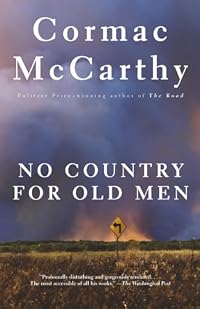
No Country for Old Men
by Cormac McCarthy
On This Page
Description
Llewelyn Moss is hunting antelope near the Texas/Mexico border when he stumbles upon several dead men, a big stash of heroin, and more than two million dollars in cash. He takes off with the money--and the hunter becomes the hunted. A drug cartel hires a former Special Forces agent to track down the loot, and a ruthless killer joins the chase as well. Also looking for Moss is the aging Sheriff Bell, a World War II veteran who may be Moss' only hope for survival.Tags
Recommendations
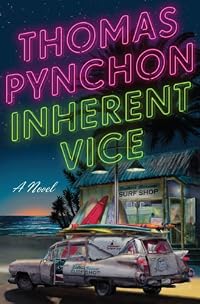
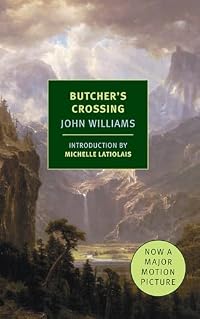
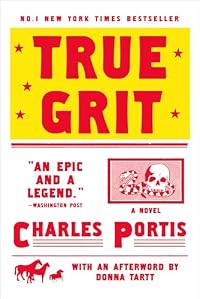
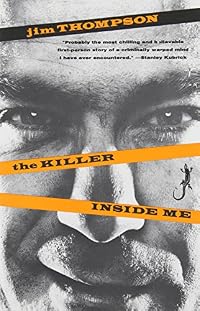

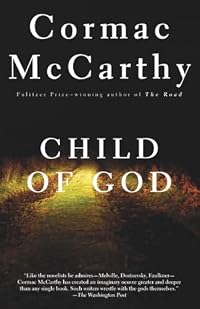
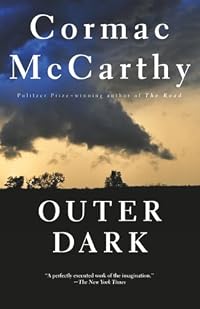
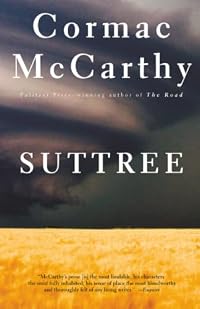
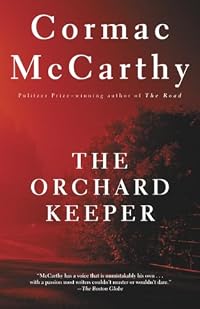
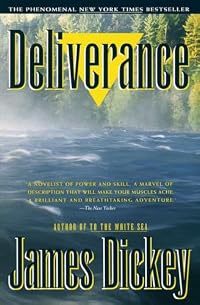
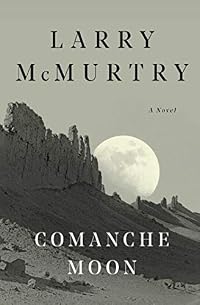

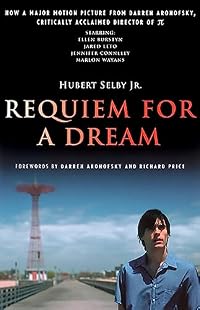
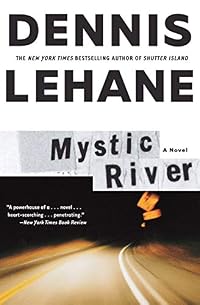
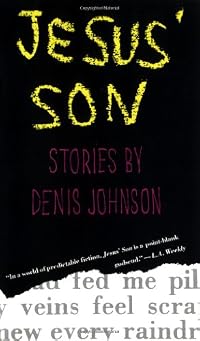
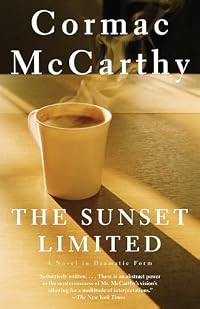
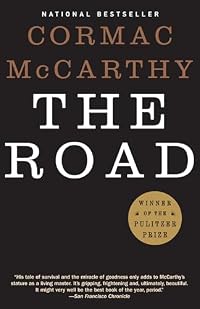
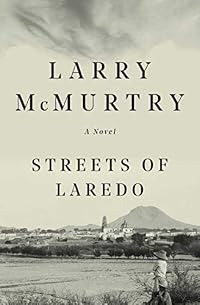


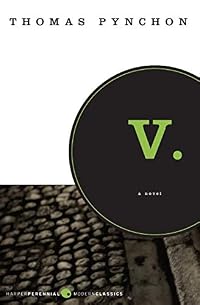
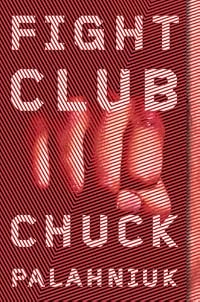
Member Recommendations
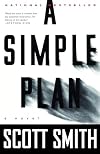
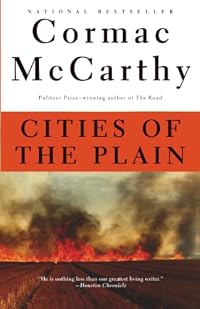
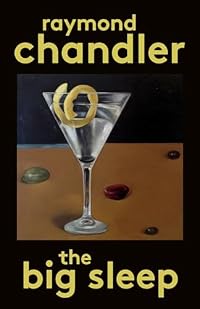
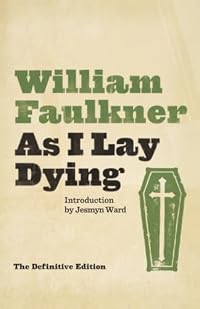
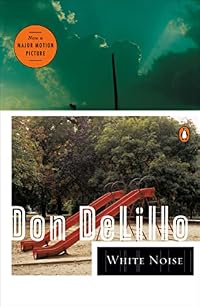
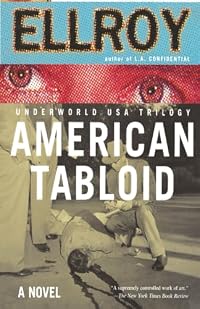
sturlington Both are books in which found money leads to unexpected, horrific consequences.
20

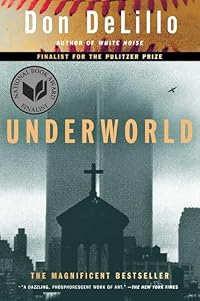
PghDragonMan We all think money will solve our problems. Sometimes money creates problems . . . especialy when it's other peoples' money.
10
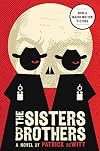
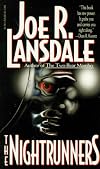
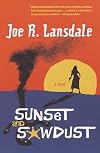
sturlington The authors have similar styles, and both thrillers explore questions of fate and chance.

kjuliff If you are into well-written violence. I’m not usually but these works show it can be done
Member Reviews
The best books are the ones I read slowly.
When the plot is great, like Silence of the Lambs for example, I'm turning pages, flipping and flipping more and more quickly to get to the end, to see what happens, to figure it out—the writing is merely the conveyance for the plot. But when the writing is good, and I mean really good, I read at a snail's pace. It's like a meal: I want to savour every bit. I read McCarthy especially slowly because he's an absolute master of his craft—his words are wrought so deliberately, they're like a fine wooden box with a beautiful inlaid design on the lid, all different grains and colours but fitted together seamlessly.
Whenever I finish something Cormac McCarthy has written, I feel like I need to show more smoke a cigarette and go stare out at the desert plains at dusk. People can wax poetic about their Dickens and their Shakespeare and whatever post-postmodern litfic author is the most popular today, but this, to me, is literature. This is what great literature should feel like. And yes it's spare, yes it's laconic, sometimes the prose is so barren it lacks even punctuation, but it's fucking fantastic.
It's hard for me to explain just why, too. The best I can manage is that so much is left to the imagination—you'd be hard-pressed to find an adverb anywhere. The characters are seldom described, and even then, it's only ever parts of them: Chigurh's eyes, the scar on Llewelyn’s arm. The author only ever gives you the words that are absolutely necessary, and it seems like they couldn't possibly be enough, yet somehow they always are.
I won't waste time talking about things like plot or style; they're remarkable, but in the light of this incredible novel, they're practically trivialities. You get the sense that unlike most other authors, McCarthy doesn't care much about you as a reader. He certainly doesn't aim to please or titillate you—he's here to say something, something important. About good and evil, and temptation, and flaws, and the midnight wind that whistles over the ghost-dark Texas plains, and the inescapability of fate incarnated into a silent man with an air tank and eyes like wet lapis. There's something epic about this story, dare I say it's almost biblical, with seemingly omnipotent wrath and capability seldom seen outside the Old Testament. But unlike the Good Book, there is no church built around the concepts explored here. There is only dust and blood and the distant sound of screaming, so faint and terrible it might just be the wind. show less
When the plot is great, like Silence of the Lambs for example, I'm turning pages, flipping and flipping more and more quickly to get to the end, to see what happens, to figure it out—the writing is merely the conveyance for the plot. But when the writing is good, and I mean really good, I read at a snail's pace. It's like a meal: I want to savour every bit. I read McCarthy especially slowly because he's an absolute master of his craft—his words are wrought so deliberately, they're like a fine wooden box with a beautiful inlaid design on the lid, all different grains and colours but fitted together seamlessly.
Whenever I finish something Cormac McCarthy has written, I feel like I need to show more smoke a cigarette and go stare out at the desert plains at dusk. People can wax poetic about their Dickens and their Shakespeare and whatever post-postmodern litfic author is the most popular today, but this, to me, is literature. This is what great literature should feel like. And yes it's spare, yes it's laconic, sometimes the prose is so barren it lacks even punctuation, but it's fucking fantastic.
It's hard for me to explain just why, too. The best I can manage is that so much is left to the imagination—you'd be hard-pressed to find an adverb anywhere. The characters are seldom described, and even then, it's only ever parts of them: Chigurh's eyes, the scar on Llewelyn’s arm. The author only ever gives you the words that are absolutely necessary, and it seems like they couldn't possibly be enough, yet somehow they always are.
I won't waste time talking about things like plot or style; they're remarkable, but in the light of this incredible novel, they're practically trivialities. You get the sense that unlike most other authors, McCarthy doesn't care much about you as a reader. He certainly doesn't aim to please or titillate you—he's here to say something, something important. About good and evil, and temptation, and flaws, and the midnight wind that whistles over the ghost-dark Texas plains, and the inescapability of fate incarnated into a silent man with an air tank and eyes like wet lapis. There's something epic about this story, dare I say it's almost biblical, with seemingly omnipotent wrath and capability seldom seen outside the Old Testament. But unlike the Good Book, there is no church built around the concepts explored here. There is only dust and blood and the distant sound of screaming, so faint and terrible it might just be the wind. show less
Outstanding. There are some differences between the book and the movie that make the book even more enjoyable. The faster pace kept me riveted over the three days that it took me to read the book which, in hindsight, is a bit of a surprise to me because I started the first several pages but nothing caught fire. Perhaps I just need to finish one book before I could get my head wrapped around this.
I liked Sheriff Bell's introductions to each chapter and this story within a story that sort of narrated the plot from an external point of view. He ends up being a more interesting character than he was in the movie and you get a better sense that all along, he is just behind the scenes, really just playing catch-up.
One couldn't help but root show more for Moss after he left the Mexican hospital, trying to get back to his wife and helping the hitchhiker along the way. His death, however, is shocking to the reader because you start to get a sense that things are going to somehow turn around. It really drives home the point that life is random. This is one of those McCarthy kicks in the teeth that you don't sense is coming until it happens.
Somehow I always end up with this sense of longing and regret for the past when I finish a McCarthy book. I feel miserable but love it all the same. show less
I liked Sheriff Bell's introductions to each chapter and this story within a story that sort of narrated the plot from an external point of view. He ends up being a more interesting character than he was in the movie and you get a better sense that all along, he is just behind the scenes, really just playing catch-up.
One couldn't help but root show more for Moss after he left the Mexican hospital, trying to get back to his wife and helping the hitchhiker along the way. His death, however, is shocking to the reader because you start to get a sense that things are going to somehow turn around. It really drives home the point that life is random. This is one of those McCarthy kicks in the teeth that you don't sense is coming until it happens.
Somehow I always end up with this sense of longing and regret for the past when I finish a McCarthy book. I feel miserable but love it all the same. show less
This morning I woke up and raced through finishing No Country For Old Men which I loved. The setting is southwest Texas where a botched drug deal has left multiple deaths, a substantial amount of heroin and some two million dollars, lying out in the morning desert sun. Moss, one of our three main characters happens upon the scene and can't resist taking the money and that sets in motion a tense and bloody cat and mouse game involving a Mexican drug cartel, a psychopath named Anton Chigurh and a local, wise, philosophical sheriff named Ed Tom. This short quick paced novel provides the reader with insights into all three men and the interplay of circumstances and consequences. Each chapter begins with a reflection from the Sheriff who is show more suffering some of his own demons from the Vietnam War and who is trying to solve this case as a way to make amends for past sins. His musings tend to reflect how much the country has changed and what has gone wrong. Here's Ed Tom::
"Finally told me, said: I dont like the way this country is headed. I want my granddaughter to be able to have an abortion. And I said well mam I dont think you got any worries about the way the country is headed. The way I see it goin I dont have much doubt but what she’ll be able to have an abortion. I’m goin to say that not only will she be able to have an abortion, she’ll be able to have you put to sleep. Which pretty much ended the conversation."
Here is another:
"I think if you were Satan and you were settin around tryin to think up somethin that would just bring the human race to its knees what you would probably come up with is narcotics. Maybe he did"
From another perspective here's a great line from the murdering psychopath, Anton Chigurh-
"What happened to the old people? They’ve moved on to other things. Not everyone is suited to this line of work. The prospect of outsized profits leads people to exaggerate their own capabilities. In their minds. They pretend to themselves that they are in control of events where perhaps they are not. And it is always one’s stance upon uncertain ground that invites the attentions of one’s enemies. Or discourages it."
I would recommend this book and will look forward to reading more of McCarthy's novels. show less
"Finally told me, said: I dont like the way this country is headed. I want my granddaughter to be able to have an abortion. And I said well mam I dont think you got any worries about the way the country is headed. The way I see it goin I dont have much doubt but what she’ll be able to have an abortion. I’m goin to say that not only will she be able to have an abortion, she’ll be able to have you put to sleep. Which pretty much ended the conversation."
Here is another:
"I think if you were Satan and you were settin around tryin to think up somethin that would just bring the human race to its knees what you would probably come up with is narcotics. Maybe he did"
From another perspective here's a great line from the murdering psychopath, Anton Chigurh-
"What happened to the old people? They’ve moved on to other things. Not everyone is suited to this line of work. The prospect of outsized profits leads people to exaggerate their own capabilities. In their minds. They pretend to themselves that they are in control of events where perhaps they are not. And it is always one’s stance upon uncertain ground that invites the attentions of one’s enemies. Or discourages it."
I would recommend this book and will look forward to reading more of McCarthy's novels. show less
I worship at the dark altar that is Cormac McCarthy's fiction. The man is a prophet, and not a happy one either--he's Jeremiah, warning us of a dark future by showing us a dark present, yet demanding we keep at it anyway because, well, what choice have we got? And maybe, somewhere deep, maybe in just the recognition of that very darkness, we might happen across a bit of hope, or at least something like enough to hope that we'll keep on.
Still, this book is strangely diminished in light of McCarthy's other work. Even Chigurh, the much-celebrated "ultimate badass" of the film version, comes off weaker somehow than McCarthy's most terrifying and mesmerizing creation, the Judge in Blood Meridian. Maybe I suffer from having seen the movie show more first--and those who said the film remained faithful to the novel were sorely understating the fact: the film is word-for-word right out of the text, dialogue and voice-overs and all--but I think the worse problem is that in one or two places the film improved on the text. Which is not usually a good thing with fiction.
I won't say where, though, because the book is still outstanding and deserves a read, especially for those chapters at the end of the text that never made it (couldn't make it) into the film, and to be fair, the ending is one of McCarthy's more haunting, even if it is a quieter ending, and I think in the long run it'll stand among his best endings. His most timeless. show less
Still, this book is strangely diminished in light of McCarthy's other work. Even Chigurh, the much-celebrated "ultimate badass" of the film version, comes off weaker somehow than McCarthy's most terrifying and mesmerizing creation, the Judge in Blood Meridian. Maybe I suffer from having seen the movie show more first--and those who said the film remained faithful to the novel were sorely understating the fact: the film is word-for-word right out of the text, dialogue and voice-overs and all--but I think the worse problem is that in one or two places the film improved on the text. Which is not usually a good thing with fiction.
I won't say where, though, because the book is still outstanding and deserves a read, especially for those chapters at the end of the text that never made it (couldn't make it) into the film, and to be fair, the ending is one of McCarthy's more haunting, even if it is a quieter ending, and I think in the long run it'll stand among his best endings. His most timeless. show less
Bought the FS edition and had a new reason to reread this one. It's hard not to compare and contrast with the movie if you're a fan of that one as well; the editing choices made, what was cut, what was swapped around. The bulk of the story is the same, key scenes almost line for line. But some changes make you wonder, like substituting the hitchhiking teenager for a chance encounter with some woman at a motel, swapping a line declaring his integrity for his wife for a suggestion of impropriety - but on the other hand aging up his 19 year old sweetheart for the movie. Chigurh talks more and you get a few looks inside his mind in the book, which makes him less enigmatic than in the movie. Though a longer explanation of his chance driven show more ethos does little to dull his alien nature. The conversation of him being purely a force of nature is cut short in the book and the movie by his own chance encounter with mortality. Loose ends are wrapped up in the book that might not need tying up, as to what Chigurh ultimately does, the money, and what becomes of the mexican after the shootout.
Really the big change is how much time is given to Bell to philosophize about his views on how times have changed, and reflecting on his own views of meaning and chance, of his past and losing the battle that never was between him and Chigurh.
As always in McCarthy there's some shadow of a discussion about God lurking in the background, and a little ember of hope, in this book through the fire lit by Bell's father in his dream. In The Road, the fire that's carried by the boy and his father. A dim light in the big darkness of the universe, something to hold against the incomprehensibleness of evil. show less
Really the big change is how much time is given to Bell to philosophize about his views on how times have changed, and reflecting on his own views of meaning and chance, of his past and losing the battle that never was between him and Chigurh.
As always in McCarthy there's some shadow of a discussion about God lurking in the background, and a little ember of hope, in this book through the fire lit by Bell's father in his dream. In The Road, the fire that's carried by the boy and his father. A dim light in the big darkness of the universe, something to hold against the incomprehensibleness of evil. show less
This is a great book on two levels - style and content.
You have to enter into the laconic vernacular of the border country and see how McCarthy uses it to show how a few words in the right context can get you deeper into the emotions (or lack of them) of the main protagonists than long-winded description of feelings.
He manages the rare feat of showing how a basic decency, a sentimental decency, triumphs morally over cunning and intellect. He reminds us that 'sentiment', that is feeling one's values as givens without too much analysis, is not to be despised by those whose default mode is knowing irony. There is nothing post-modern about this book.
As for the content, this is a deeply political book without once mentioning politics, as show more most readers would understand it.
It implies not so much the regret for lost values that other reviewers have noted and which may be obvious in the text (but which it is arguable provided a mere interlude of integrity between the normal condition of self-centred violence in the American West) but a gentle questioning of patriotism when your country has drifted far away from your own ideals and understanding, when you don't know what you are fighting for (and putting ourself at risk for) any more, when it asks too much and gives so little in return.
The American working man's experiences in America's wars overseas is a running theme 'sotto voce', underpinning the account of one incident in what is really a civil war in all but name, one in which government agents and drug runners seem to be fighting over who actually represents the will of the American people.
The Sheriff seems to sense that urban America has chosen the other side to his by providing markets for the 'criminals'. The killer Chigurh is almost a parody of the Ayn Rand libertarian in his peculiar a-social determination to 'succeed' on his own terms. He is out of the 'Fountainhead' but with crime rather than architecture and art the model. He should be fascinating but is merely chilling - a half person compared to the much weaker hero.
This book might appear to be an elegy for an older America which has been left behind (that is how most would like to interpret it), but this reader detected a darker mood, an implied anger that the betrayal of simpler souls in matters of war and peace starts to return home at the border between America and the world outside.
A cold hell (represented by Chigurh) has seeped into the homeland, looking for opportunity. Of course, nothing is made quite that clear - but that is what happens in great art, and this is great art. show less
You have to enter into the laconic vernacular of the border country and see how McCarthy uses it to show how a few words in the right context can get you deeper into the emotions (or lack of them) of the main protagonists than long-winded description of feelings.
He manages the rare feat of showing how a basic decency, a sentimental decency, triumphs morally over cunning and intellect. He reminds us that 'sentiment', that is feeling one's values as givens without too much analysis, is not to be despised by those whose default mode is knowing irony. There is nothing post-modern about this book.
As for the content, this is a deeply political book without once mentioning politics, as show more most readers would understand it.
It implies not so much the regret for lost values that other reviewers have noted and which may be obvious in the text (but which it is arguable provided a mere interlude of integrity between the normal condition of self-centred violence in the American West) but a gentle questioning of patriotism when your country has drifted far away from your own ideals and understanding, when you don't know what you are fighting for (and putting ourself at risk for) any more, when it asks too much and gives so little in return.
The American working man's experiences in America's wars overseas is a running theme 'sotto voce', underpinning the account of one incident in what is really a civil war in all but name, one in which government agents and drug runners seem to be fighting over who actually represents the will of the American people.
The Sheriff seems to sense that urban America has chosen the other side to his by providing markets for the 'criminals'. The killer Chigurh is almost a parody of the Ayn Rand libertarian in his peculiar a-social determination to 'succeed' on his own terms. He is out of the 'Fountainhead' but with crime rather than architecture and art the model. He should be fascinating but is merely chilling - a half person compared to the much weaker hero.
This book might appear to be an elegy for an older America which has been left behind (that is how most would like to interpret it), but this reader detected a darker mood, an implied anger that the betrayal of simpler souls in matters of war and peace starts to return home at the border between America and the world outside.
A cold hell (represented by Chigurh) has seeped into the homeland, looking for opportunity. Of course, nothing is made quite that clear - but that is what happens in great art, and this is great art. show less
Excellent. Dark. Disturbing. Brilliant. The story is bare-bones, like the punctuation and the prose. Set in 1980, in the deserts and desolate towns of the Texas/Mexico borderlands, this novel explores the meaning of life, and the consequences of our choices, with a decidedly fatalistic tone. Except...except for the love. So many reviewers miss the love and the suggestion of hope underlying Sheriff Ed Tom Bell's introspective musings as he looks back on the violent events that led him to question his life, and ultimately to give up his office, not from fear, but apparently from a sense of futility. Except... except for this: "...he saw her and stopped and sat the horse and watched. She was riding along a red dirt ridge to the south show more sitting with her hands crossed on the pommel, looking toward the last of the sun...That's my heart yonder, he told the horse. It always was." Those are not the words of a man without hope. From what I saw of the Coen brothers' movie (the rental disc was defective and jumped over several chunks of the second half), it seems to me they concentrated on the wrong portions of this novel, as many of the reviewers do as well. The violence is all in there, but I think the Sheriff's contemplations are the heart of the book. I refrain from recommending it, because it is clearly a love-it-or-hate-it kind of novel, and there are only one or two people I'm sure are likely to love it. As for the rest of you...the best I can do is give you the option of deciding for yourself. Choose wisely.
April 2010 show less
April 2010 show less
Members
- Recently Added By
Published Reviews
ThingScore 50
All that keeps No Country for Old Men from being a deftly executed but meretricious thriller is the presence, increasingly confused and ineffectual as the novel proceeds, of the sheriff of Comanche County, one of the "old men" alluded to in the title.
added by jburlinson
"No Country for Old Men" is an unholy mess of a novel, which one could speculate will be a bitter disappointment to many of those eager fans. It is an unwieldy klutz that pretends to be beach reading while dressed in the garments of serious literature (not that those are necessarily mutually exclusive concepts). It is a thriller that is barely thrilling and a tepid effort to reclaim some of show more the focus and possibly the audience of McCarthy's most reader-friendly novel, "All the Pretty Horses." Worst of all, it reads like a story you wished Elmore Leonard had written -- or rather, in this case, rewritten. show less
added by MikeBriggs
Mr. McCarthy turns the elaborate cat-and-mouse game played by Moss and Chigurh and Bell into harrowing, propulsive drama, cutting from one frightening, violent set piece to another with cinematic economy and precision. In fact, ''No Country for Old Men'' would easily translate to the big screen so long as Bell's tedious, long-winded monologues were left on the cutting room floor -- a move that show more would also have made this a considerably more persuasive novel. show less
added by MikeBriggs
Lists

The Guardian's 1000 Novels Everyone Must Read
1,005 works; 546 members

Read the book and saw the movie
1,170 works; 195 members

Best Contemporary Literary Fiction (Around the Last 30 Years)
388 works; 124 members

Recommend the 20 best books you've read in the last five years
2,167 works; 606 members

Best 21st Century Books (So Far)
670 works; 85 members

Best Psychological Fiction
81 works; 16 members

Books That Will Keep You on the Edge of Your Seat
73 works; 20 members

Best Crime Fiction
262 works; 39 members

Favourite Books
1,817 works; 316 members

Best Noir Fiction
160 works; 14 members

100 Mysteries and Thrillers to Read in a Lifetime
99 works; 22 members

Unread books
1,063 works; 86 members

Sense of place
156 works; 13 members

Top Five Books of 2020
982 works; 350 members

NPRs your picks: top 100 Killer Thrillers
100 works; 17 members

2000s (the decade, not the century)
184 works; 11 members

Top Cops (Detectives in Fiction)
86 works; 24 members

Dark Books for Winter Reading
71 works; 11 members

Books Set in Texas
34 works; 8 members
International IMPAC Dublin Literary Award
179 works; 6 members

Fiction For Men
142 works; 11 members

the old and the restless
62 works; 14 members
LibraryThingers' 1001 Books You Must Read Before You Die
442 works; 30 members

Blue Pyramid 1,276 Best Books of All Time
1,248 works; 32 members

Best of American Literature
146 works; 9 members

2000s decade
85 works; 7 members

Best Psychological Suspense
33 works; 6 members

The American West
18 works; 2 members

recalling favorites...
105 works; 2 members

Books About Murder
313 works; 7 members

Books Read in 2015
3,298 works; 126 members

Thrillers
20 works; 3 members

Books Read in 2006
417 works; 8 members

Books About Older People
50 works; 11 members

Books Read in 2022
5,164 works; 113 members

Books Read in 2020
4,379 works; 124 members
American Lit for Eng 11 Research Project
368 works; 6 members

Books With the Most Memorable Titles
478 works; 158 members

el
1,139 works; 1 member

Books We Couldn't Put Down
443 works; 197 members

.
184 works; 1 member
Best literature ever!
39 works; 1 member

N.T. McQueen's Inspiration List
23 works; 1 member

Treasure Lost and Found
8 works; 5 members

AP Lit
363 works; 6 members
Novels/Poems/Short Stories/Anything Storytelling Related
112 works; 2 members

Books Read in 2019
4,052 works; 108 members

Best Westerns
20 works; 6 members

Speculative Fiction
40 works; 2 members
Protagonists - Men
32 works; 2 members

Cormac McCarthy books
13 works; 1 member
Author Information

36+ Works 104,620 Members
Some Editions
Awards and Honors
Awards
Distinctions
Series
Belongs to Publisher Series
Work Relationships
Is contained in
Has the adaptation
Has as a student's study guide
Common Knowledge
- Canonical title*
- Non è un paese per vecchi
- Original title
- No Country for Old Men
- Original publication date
- 2005
- People/Characters
- Sheriff Ed Tom Bell; Anton Chigurh; Llewelyn Moss; Carla Jean Moss; Carson Wells
- Important places
- Ciudad Juárez, Chihuahua, Mexico; El Paso, Texas, USA; Texas, USA
- Related movies
- No Country for Old Men (2007 | IMDb)
- Dedication
- The author would like to express his appreciation to the Santa Fe Institute for his long association and his four-year residence. He would also like to thank Amanda Urban.
- First words
- I sent one boy to the gaschamber at Huntsville.
- Quotations
- If you had told me we'd end up in a world with kids with green hair and bones in their noses I would have laughed in your face. But here it is.
- Last words
- (Click to show. Warning: May contain spoilers.)And then I woke up.
- Publisher's editor
- Fisketjon, Gary
- Blurbers
- Oates, Joyce Carol; Lent, Jeffrey; Kirn, Walter; Caldwell, Gail; Chiarella, Tom; Milofsky, David (show all 9); Freeman, John; Salm, Arthur; Cobb, William J.
- Original language
- English
- Disambiguation notice*
- Problem CK
Date de première publication :
- 2005 (1e édition originale américaine, A. A. Knopf, New York)
- 2007-01-11 (1e traduction et édition française sous le titre "Non, ce pays n'est pas pour... (show all) le vieil homme", Editions de l'Olivier")
- 2008-01-03 (Réédition française sous le titre " No country for old men. Non, ce pays n'est pas pour le vieil homme, Points, Seuil)
*Some information comes from Common Knowledge in other languages. Click "Edit" for more information.
Classifications
- Genres
- Fiction and Literature, Suspense & Thriller, General Fiction, Mystery
- DDC/MDS
- 813.54 — Literature & rhetoric American literature in English American fiction in English 1900-1999 1945-1999
- LCC
- PS3563 .C337 .N6 — Language and Literature American literature American literature Individual authors 1961-
- BISAC
Statistics
- Members
- 12,680
- Popularity
- 639
- Reviews
- 321
- Rating
- (4.05)
- Languages
- 28 — Arabic, Catalan, Chinese, Czech, Danish, Dutch, English, Finnish, French, German, Greek, Hebrew, Hungarian, Italian, Japanese, Korean, Norwegian (Bokmål), Norwegian, Farsi/Persian, Polish, Romanian, Russian, Serbian, Spanish, Swedish, Turkish, Portuguese (Portugal), Portuguese (Brazil)
- Media
- Paper, Audiobook, Ebook
- ISBNs
- 104
- UPCs
- 2
- ASINs
- 45