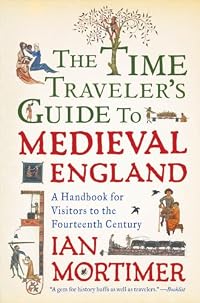
The Time Traveler's Guide to Medieval England: A Handbook for Visitors to the Fourteenth Century
by Ian Mortimer
Time Traveller's Guide (1)
On This Page
Description
A time machine has just transported you back to the fourteenth century. What do you see? How do you dress? Where will you stay? How do you earn a living and how much are you paid? What sort of food will you be offered by a peasant or a monk or a lord? This is not your typical look at a historical period. This radical new approach shows us that the past is not just something to be studied; it is also something to be lived. All facets of the everyday lives of serf, merchant, and aristocrat in show more this fascinating period are revealed, from the horrors of the plague and war to the ridiculous excesses of roasted larks and medieval haute couture.--From publisher description. show lessTags
Recommendations
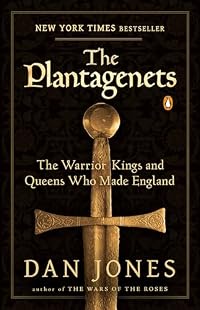
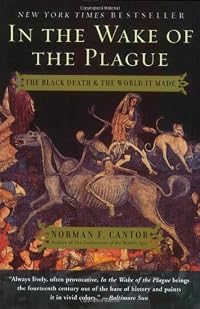
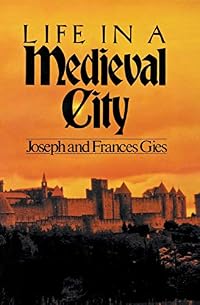
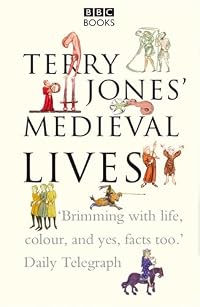


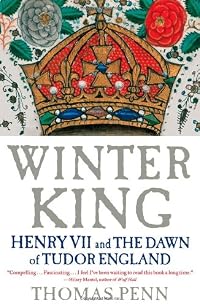
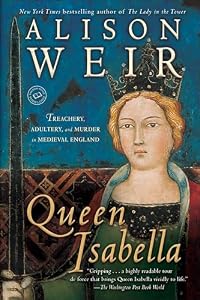
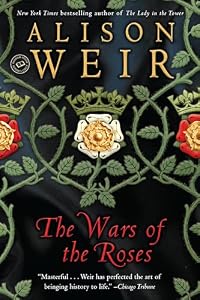
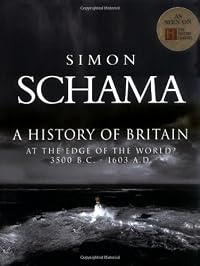
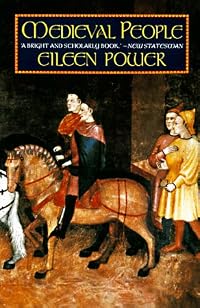
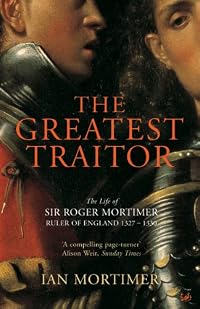
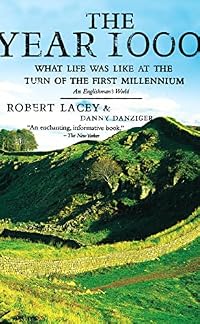
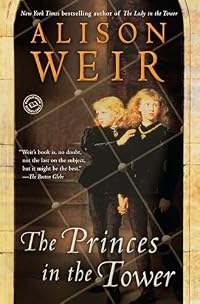
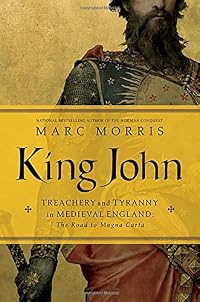

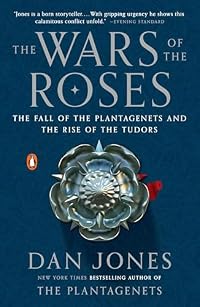
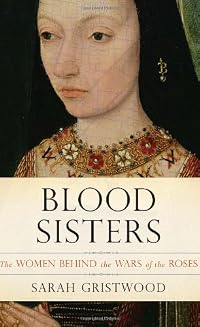
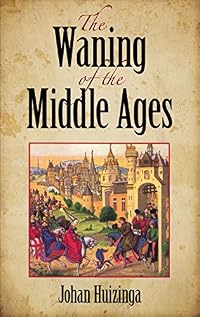
Member Recommendations
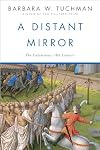
memeweaver See the Wiki article on this classic volume: http://en.wikipedia.org/wiki/A_Distant_Mirror
50
Member Reviews
There is a lot of good material in here and it was fun to read. BUT
The author is a man and writes for men. Now and then he admits that there were women around back then, but it doesn't occur to him that a woman might want to time travel.
The idea of this being a guide book is a very thin veneer that gets forgotten as soon as he gets into the material he wants to share. So much so that when he next brings it up it comes as a shock.
The author is a man and writes for men. Now and then he admits that there were women around back then, but it doesn't occur to him that a woman might want to time travel.
The idea of this being a guide book is a very thin veneer that gets forgotten as soon as he gets into the material he wants to share. So much so that when he next brings it up it comes as a shock.
I did not even now how much I wanted and needed such a brilliant history book. The idea of a past that is living and vibrant, and not just a collection of documents/evidence and “ignorant” people modern humans can feel superior to, really appeals to me.
I enjoyed the guidebook structure (“what to eat”, “where to stay”, “things to see in London”) and the sense of being PRESENT in a medieval town, in a yeoman’s house or a lord’s hall.
There was so much I did not know (naturally ;)) or did not think about as deeply before.
- They had vineyards in England in the early 1300’s!
- Lower life expectancy meant that this was a society of very young people. With fewer cooler, wiser heads around, it really is no wonder (how come show more I had not thought about this before?) that there is so much violence.
- I loved the Roger Bacon quote ☺
- Reading about the evolution of fashion was very entertaining.
- The ideas about female sexuality and marriage were… interesting, to say the least.
There is much more to say on that score, but I don’t want to make this list longer.
Other things I particularly liked:
The description of the Great Plague was full of horror and compassion, probably one of the most moving description I’ve ever read.
The author wrote beautifully about medieval literature, with so much love for books, authors and poetry. I think I need to stop picking up bits and pieces here and there and finally read the whole of “The Canterbury Tales”…
I want more of the same! Apparently, Ian Mortimer had also written The Time Traveller's Guide to Elizabethan England and The Time Traveller's Guide to Regency Britain. Be still, my heart. show less
I enjoyed the guidebook structure (“what to eat”, “where to stay”, “things to see in London”) and the sense of being PRESENT in a medieval town, in a yeoman’s house or a lord’s hall.
There was so much I did not know (naturally ;)) or did not think about as deeply before.
- They had vineyards in England in the early 1300’s!
- Lower life expectancy meant that this was a society of very young people. With fewer cooler, wiser heads around, it really is no wonder (how come show more I had not thought about this before?) that there is so much violence.
- I loved the Roger Bacon quote ☺
- Reading about the evolution of fashion was very entertaining.
- The ideas about female sexuality and marriage were… interesting, to say the least.
There is much more to say on that score, but I don’t want to make this list longer.
Other things I particularly liked:
The description of the Great Plague was full of horror and compassion, probably one of the most moving description I’ve ever read.
The author wrote beautifully about medieval literature, with so much love for books, authors and poetry. I think I need to stop picking up bits and pieces here and there and finally read the whole of “The Canterbury Tales”…
I want more of the same! Apparently, Ian Mortimer had also written The Time Traveller's Guide to Elizabethan England and The Time Traveller's Guide to Regency Britain. Be still, my heart. show less
The Time Travelers guide to Medieval England is superb. I read tons of History, particularly English History and this was an incredible change of pace. There is so much in this book that honestly caught me by surprise. It is humorous, to the point and very well researched. I learned names of things I had no idea about regarding food, musical instruments and while I thought I was fairly familiar with the Medieval Legal system and punishment it did not take long to realize that there was much I was missing.
In direct contrast to “A World Lit Only By Fire” By William Manchester (which I found horrendous). Mortimer instills in us that the inhabitants of the 13th century were people just like us. They lived, they survived and died. It was show more their world and they were no different than us because they used what they had and did what they needed to. They were not savages as Manchester put it. The author of this book makes it clear that we cannot hold ourselves above them because we appear to be more civilized. Instead we should take a moment to put ourselves in their shoes and this will give us a newfound respect for them and make us appreciate what we have that much more. In 800 years someone will be saying the same thing about us. Well written and easy to read this book is also a love letter to Chaucer, who is referenced numerous times. I will surely be reading the rest of this series. show less
In direct contrast to “A World Lit Only By Fire” By William Manchester (which I found horrendous). Mortimer instills in us that the inhabitants of the 13th century were people just like us. They lived, they survived and died. It was show more their world and they were no different than us because they used what they had and did what they needed to. They were not savages as Manchester put it. The author of this book makes it clear that we cannot hold ourselves above them because we appear to be more civilized. Instead we should take a moment to put ourselves in their shoes and this will give us a newfound respect for them and make us appreciate what we have that much more. In 800 years someone will be saying the same thing about us. Well written and easy to read this book is also a love letter to Chaucer, who is referenced numerous times. I will surely be reading the rest of this series. show less
This is a great way to learn what everyday life was like back in Chaucer's time. Mortimer uses the enjoyable conceit of presenting a travel guide to provide a ton of information in an easy-to-take fashion.
There are no dry-as-dust lists of rulers or daily chores of the peasants here. Instead, Mortimer shows where the traveler could stay, what he might eat and drink, how he would be entertained, and ways to stay out of trouble. All information is factual and based on contemporary records, but it's presented in a most entertaining fashion.
I was fascinated by the descriptions of medical treatment, the food and drink, and oddly, the medieval love of music. This book would be a great way to start a study of the Middle Ages for anyone over 14 show more or so. show less
There are no dry-as-dust lists of rulers or daily chores of the peasants here. Instead, Mortimer shows where the traveler could stay, what he might eat and drink, how he would be entertained, and ways to stay out of trouble. All information is factual and based on contemporary records, but it's presented in a most entertaining fashion.
I was fascinated by the descriptions of medical treatment, the food and drink, and oddly, the medieval love of music. This book would be a great way to start a study of the Middle Ages for anyone over 14 show more or so. show less
Ian Mortimer invites readers to imagine stepping back into fourteenth century England, describing in detail what life was like then for everyone from the lowliest peasant all the way up to the king. What did people eat? What did they wear? What did they do for fun? What was their justice system like? How did they think about the society they were part of? To me, this kind of look at the everyday lives of people in a society different from our own has always been the most interesting aspect of history, much more so than lists of kings and battles and important dates. If my high school history classes had been more like this, I suspect I would have learned a lot more, or at least been much less bored.
Indeed, a large part of Mortimer's show more goal here seems to be to bring the reader away from the idea of history as something dry and dead and into the realization that the past was full of people who were just as real as us, living lives just as real and ordinary as ours, in a social context that shaped them just as much as our 21st century world shapes us. He does a pretty good job of this, too. The writing is engaging, and both the broad outlines and specific details he offers about this little part of the past are interesting. And the time traveler conceit is neither overdone nor cutesy; it's just a little trick to help put you into the right mindset. Because this is a book that attempts to view the past from street level, so to speak, rather than flying loftily over the larger landscape of history. show less
Indeed, a large part of Mortimer's show more goal here seems to be to bring the reader away from the idea of history as something dry and dead and into the realization that the past was full of people who were just as real as us, living lives just as real and ordinary as ours, in a social context that shaped them just as much as our 21st century world shapes us. He does a pretty good job of this, too. The writing is engaging, and both the broad outlines and specific details he offers about this little part of the past are interesting. And the time traveler conceit is neither overdone nor cutesy; it's just a little trick to help put you into the right mindset. Because this is a book that attempts to view the past from street level, so to speak, rather than flying loftily over the larger landscape of history. show less
History can be dull. The way it’s taught can be, anyway. When I was in school, history was mostly about memorizing names and dates. Students would regurgitate these undigested fact bites for tests and quickly forget them, as they might try to do for other embarrassing teenage spews. What history lessons did not do was inform me about what the past was LIKE.
I can never truly appreciate what it was like to live in Medieval England as a native. I doubt I can truly appreciate what it’s like to live in modern England as a native because I’m not one. What a book might be able to do is tell me what it might be like to visit, though. That’s the approach this book takes. Fourteenth century England exists as a point in the space-time show more continuum. If we could jump into a space-time transporter (something like a TARDIS, perhaps), what could we expect to find when we arrived? What might we see? What do we need to know? What should we avoid?
This book does that, sort of. It’s almost like historical fiction except it’s not…fiction, that is. It doesn’t follow a certain group of fictitious characters around. It puts you, with your compliment of contemporary knowledge and sensibilities, into Medieval England as if you were a visitor. As a citizen of what you might reasonably think is a far superior culture, you might be tempted to be judgmental. This Medieval England place sucks! The people are ignorant, superstitious, violent, and cruel. Their idea of sanitation would make rats look fastidious. And as for medicine, well, just don’t get sick, but if you do, don’t call a doctor. Oh, and watch what you say, especially about the nobility, religion, or… well, it’s probably best just to keep your mouth shut. You definitively don’t want to find yourself entangled in their injustice system.
As unsavory as these Medieval English people are, we owe them a lot. They endured conditions most of us, I think, would find unendurable, but they carried on so that later generations could build something better. Their descendants ended up being major contributors to the Enlightenment, the industrial revolution, and to Western civilization. I’m fairly sure that if I were alive then and there, I wouldn’t have made it. Even if I didn’t succumb to the whims of the Church, the nobility, or disease, I’d have thrown myself into the Thames.
This realization gives me a greater appreciation for all those who did soldier on. They didn’t know what the future might hold for them or for humanity. They couldn’t foresee the accomplishments that eventually would be made to overcome hunger, disease, and oppression. None of these achievements were inevitable to them. Many, I’m sure, would have been unimaginable. But they carried on, and they survived. So to all those smelly folks back in Medieval England, thanks for putting up with all that and for living through the fourteenth century. I’m glad I didn’t have to. show less
I can never truly appreciate what it was like to live in Medieval England as a native. I doubt I can truly appreciate what it’s like to live in modern England as a native because I’m not one. What a book might be able to do is tell me what it might be like to visit, though. That’s the approach this book takes. Fourteenth century England exists as a point in the space-time show more continuum. If we could jump into a space-time transporter (something like a TARDIS, perhaps), what could we expect to find when we arrived? What might we see? What do we need to know? What should we avoid?
This book does that, sort of. It’s almost like historical fiction except it’s not…fiction, that is. It doesn’t follow a certain group of fictitious characters around. It puts you, with your compliment of contemporary knowledge and sensibilities, into Medieval England as if you were a visitor. As a citizen of what you might reasonably think is a far superior culture, you might be tempted to be judgmental. This Medieval England place sucks! The people are ignorant, superstitious, violent, and cruel. Their idea of sanitation would make rats look fastidious. And as for medicine, well, just don’t get sick, but if you do, don’t call a doctor. Oh, and watch what you say, especially about the nobility, religion, or… well, it’s probably best just to keep your mouth shut. You definitively don’t want to find yourself entangled in their injustice system.
As unsavory as these Medieval English people are, we owe them a lot. They endured conditions most of us, I think, would find unendurable, but they carried on so that later generations could build something better. Their descendants ended up being major contributors to the Enlightenment, the industrial revolution, and to Western civilization. I’m fairly sure that if I were alive then and there, I wouldn’t have made it. Even if I didn’t succumb to the whims of the Church, the nobility, or disease, I’d have thrown myself into the Thames.
This realization gives me a greater appreciation for all those who did soldier on. They didn’t know what the future might hold for them or for humanity. They couldn’t foresee the accomplishments that eventually would be made to overcome hunger, disease, and oppression. None of these achievements were inevitable to them. Many, I’m sure, would have been unimaginable. But they carried on, and they survived. So to all those smelly folks back in Medieval England, thanks for putting up with all that and for living through the fourteenth century. I’m glad I didn’t have to. show less
Ian Mortimer comes up with a very entertaining way to teach us about fourteenth century England--he actually plops us down right in the thick of things and tells us exactly what we are seeing with our own eyes as we walk through the towns, cities and countryside. He also tells us what we smell and hear, where we live, what we eat, and how we are dressed. Packed with fun facts and surprises, Mortimer is a terrific tour guide, and this book is a must for people who enjoy this historical period.
Members
- Recently Added By
Published Reviews
ThingScore 75
The pleasure of reading Mortimer's "The Time Traveler's Guide to Medieval England" is its Fodor's-style framework. "A travel book about a past age allows us to see its inhabitants in a sympathetic way," writes Mortimer, "not as a series of graphs showing fluctuations in grain yields or household income but as an investigation into the sensations of being alive in a different time."
added by bongiovi
Ian Mortimer doesn't hold with any fancy notion about the past being impossible to know. Not for him the postmodern practice of confining historical discussions to the sources and letting "once upon a time" take care of itself. What Mortimer wants is living history, loud and close. In The Time Traveller's Guide to Medieval England he sets out to re-enchant the 14th century, taking us by the show more hand through a landscape furnished with jousting knights, revolting peasants and beautiful ladies in wimples. It is Monty Python and the Holy Grail with footnotes and, my goodness, it is fun. show less
added by steevohenderson
The result is a book that, like his biography of Henry IV, fascinates and frustrates in equal measure. By far the best sections are those in which Mortimer stays truest to his conceit, and writes as though his ideal readers really are time-travellers, peeping out through the doors of their Tardis at a world which unsettlingly mixes the familiar and the bizarre. He has a novelist's eye for show more detail, and his portrait of an England in which sheep are the size of dogs, 30-year-old women are regarded as so much "winter forage", and green vegetables widely held to be poisonous has something of the hallucinatory quality of science-fiction. show less
added by steevohenderson
Lists

Non-Fiction Worth Reading
1,015 works; 252 members

My E-Book Collection - Opinions Welcome
92 works; 10 members

Favorite Book Titles
35 works; 1 member

Books With the Most Memorable Titles
478 works; 158 members
Author Information

30+ Works 8,086 Members
Dr. Ian Mortimer is best known as the author of The Time Traveler's Guide to Medieval England and The Time Traveler's Guide to Elizabethan England, which were both national bestsellers. He was awarded the Alexander Prize by the Royal Historical Society and is a Fellow of the Royal Historical Society and a Fellow of the Society of Antiquaries. He show more latest novel is the acclaimed The Outcasts of Time Please visit his website at www.ianmortimer.com. show less
Some Editions
Awards and Honors
Notable Lists
Series

Belongs to Publisher Series
Work Relationships
Common Knowledge
- Original publication date
- 2008
- People/Characters
- John of Gaunt, Duke of Lancaster; Edward II, King of England; Geoffrey Chaucer; Roger Mortimer of Wigmore, 1st Earl of March; Isabella of France, Queen Consort of England; Henry IV, King of England (show all 8); John Gaddesden; Edward III, King of England
- Important places
- England, UK; London, England, UK; York, North Yorkshire, England, UK; Salisbury, Wiltshire, England, UK; Lincoln, Lincolnshire, England, UK; Hereford, Herefordshire, England, UK (show all 8); Exeter, Devon, England, UK; Lincolnshire, England, UK
- Important events
- Black Death; Peasants' Revolt (1381)
- Epigraph
- The past is a foreign country—
they do things differently there.
L. P. Hartley, The Go-Between - Dedication
- For my wife, Sophie,
without whom this book would not have been written
and whom I would not have met
had it not been for this book. - First words
- What does the word "medieval" conjure up in your mind?
- Last words
- (Click to show. Warning: May contain spoilers.)At the very least you will hear some good stories.
- Publisher's editor
- Sulkin, Will; Hensgen, Jörg
- Disambiguation notice
- Despite the similar title, this book is not part of Flame Tree Publishing's series of Time Travellers Guides to London.
Classifications
- Genres
- History, General Nonfiction, Nonfiction
- DDC/MDS
- 942.03 — History & geography History of Europe England and Wales England Plantagenet 1154-1399
- LCC
- HN385 .M67 — Social sciences Social history and conditions. Social problems. Social reform Social history and conditions. Social problems. By region or country
- BISAC
Statistics
- Members
- 3,585
- Popularity
- 4,512
- Reviews
- 97
- Rating
- (4.04)
- Languages
- 6 — English, Estonian, German, Polish, Russian, Spanish
- Media
- Paper, Audiobook, Ebook
- ISBNs
- 20
- UPCs
- 3
- ASINs
- 18