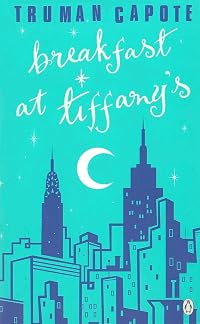
Breakfast at Tiffany's
by Truman Capote
On This Page
Description
Contains: Breakfast at Tiffany's House of Flowers A Diamond Guitar A Christmas MemoryTags
Recommendations
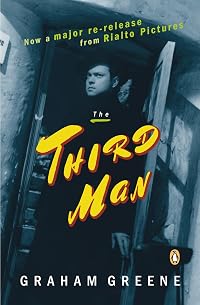
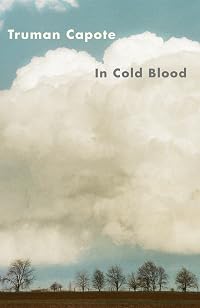
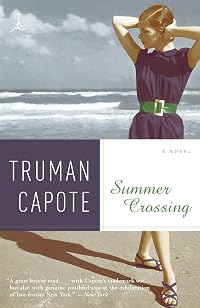
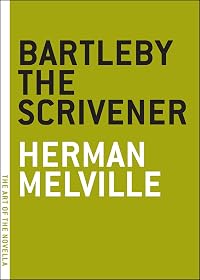









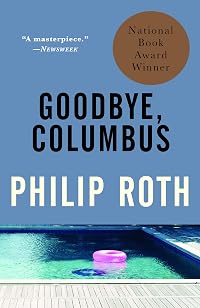
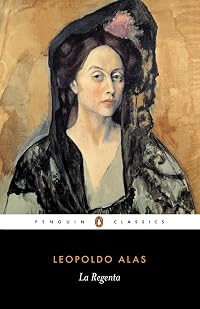
Member Recommendations
Member Reviews
The famed novella that constitutes the bulk of this collection is everything you might have guessed it would be and more. It is everything in that it is liberally populated by the extreme and outré characters that appear in the equally famous film based on it. They are simply more extreme, almost other-worldly, and more wise and venomous. Holly Golightly is both vapid and insightful. But also terribly, terribly young. And yet so sadly worldly wise. The environment positively reeks of sex and desire, but also a pervading hopelessness, except for those whose dreams remain (somewhat) pure. And there is no doubt that a St Christopher’s pendant from Tiffany’s represents the most that any of them can hope for. Thoroughly impressive show more writing that will stay with you a very long time.
The three short stories that bulk out this collection are less well-rounded though probably still highly outré. One is set on the island of Haiti, one is set is a southern prison camp, and the last is set in an extremely poor household during the depression. Each is fine in its way, but set against the brilliance of Breakfast at Tiffany’s, they pale by comparison.
Recommended. show less
The three short stories that bulk out this collection are less well-rounded though probably still highly outré. One is set on the island of Haiti, one is set is a southern prison camp, and the last is set in an extremely poor household during the depression. Each is fine in its way, but set against the brilliance of Breakfast at Tiffany’s, they pale by comparison.
Recommended. show less
It at first seems unpromisingly light, but Breakfast at Tiffany's proves to be an excellent novella. The story of a New York socialite doing New York socialite things doesn't sound like the most gripping of stories, but the fully-realised nature of Holly Golightly's character quietly works on the reader throughout. When combined with Truman Capote's rich but robust prose style and the cool glamour of the Big Apple in the Forties, you're taken in.
I never would've thought I'd be entertained by a character like Holly, the sort of girl-woman where "you can beat your brains out for her, and she'll hand you horseshit on a platter" (pg. 28), but Capote manages it. Nowadays, in the influencer/e-thot era of vain young women, Holly's show more self-regarding personality is much more common (though Holly they ain't) and has morphed into something fundamentally dislikeable. But something about the glamour, the innocence and the whispers of sincerity attending Holly's story win you over, perhaps because it comes from an earlier age when women like this were mercurial, a delight, a change of pace. Their own mind rather than a likes-chasing hive mind. It's writing like this which helped give New York its reputation as a writer's arena, and, by the end, you are completely settled and comfortable in the story's setting and cadences. It's writing almost as comfort food.
The other three stories in this collection ('House of Flowers', 'A Diamond Guitar' and 'A Christmas Memory') pale in comparison to 'Tiffany's'. The writing is good but they all progress and end much as you would expect them too, and none come close to the headline story for engagement. In fact, their greatest use is as a reinforcement to the conclusion one must reach about the book as a whole: it is frivolous, but in the best possible sense, and shows great writing craft. Ultimately, this is a worthwhile read and short enough to be given a chance even if it doesn't sound like your thing. It might surprise you. show less
I never would've thought I'd be entertained by a character like Holly, the sort of girl-woman where "you can beat your brains out for her, and she'll hand you horseshit on a platter" (pg. 28), but Capote manages it. Nowadays, in the influencer/e-thot era of vain young women, Holly's show more self-regarding personality is much more common (though Holly they ain't) and has morphed into something fundamentally dislikeable. But something about the glamour, the innocence and the whispers of sincerity attending Holly's story win you over, perhaps because it comes from an earlier age when women like this were mercurial, a delight, a change of pace. Their own mind rather than a likes-chasing hive mind. It's writing like this which helped give New York its reputation as a writer's arena, and, by the end, you are completely settled and comfortable in the story's setting and cadences. It's writing almost as comfort food.
The other three stories in this collection ('House of Flowers', 'A Diamond Guitar' and 'A Christmas Memory') pale in comparison to 'Tiffany's'. The writing is good but they all progress and end much as you would expect them too, and none come close to the headline story for engagement. In fact, their greatest use is as a reinforcement to the conclusion one must reach about the book as a whole: it is frivolous, but in the best possible sense, and shows great writing craft. Ultimately, this is a worthwhile read and short enough to be given a chance even if it doesn't sound like your thing. It might surprise you. show less
Holly Golightly is a complete vulgar character—yet Truman Capote paints the portrait of such a sympathetic character. The movie and book don’t share the same plot, but are equal in terms of emotional impact.
This is is quite a superb book for the length that is. The plot was paced brilliantly with a conclusion that will only make the reader sob. The cat represents Holly and this fact alone gives absolute depth to her personality—she is unable to give the cat a name as she does not keep her own. We watch Holly crumble from the point of view of the unnamed narrator up to the point of breakdown. Audrey Hepburn’s character was able to realize her own self-destructive behaviors in the end of the movie, but Truman Capote’s Holly show more Golightly still roams the world changing her name, refusing any sort of commitment, and is inevitably unable to see her own unhappiness. show less
This is is quite a superb book for the length that is. The plot was paced brilliantly with a conclusion that will only make the reader sob. The cat represents Holly and this fact alone gives absolute depth to her personality—she is unable to give the cat a name as she does not keep her own. We watch Holly crumble from the point of view of the unnamed narrator up to the point of breakdown. Audrey Hepburn’s character was able to realize her own self-destructive behaviors in the end of the movie, but Truman Capote’s Holly show more Golightly still roams the world changing her name, refusing any sort of commitment, and is inevitably unable to see her own unhappiness. show less
Una ragazza strana, solare e misteriosa, profondissima e svampita, egoista ed altruista. Una ragazza che è una specie di calamita per l'amore, e che pure resta sola, lasciando anche chi la ama davvero.
Una scrittura apparentemente semplice, che però riesce a tenere incollati alla pagina, alla ricerca di Holly.
Una scrittura apparentemente semplice, che però riesce a tenere incollati alla pagina, alla ricerca di Holly.
I cannot and probably should not judge this according to the time it was written. To do so may or may not deepen the impact of it. If I wanted a slightly lighter tone, I could always watch the old movie.
As it is here and now, I feel like I should only judge it by my own sensibilities of this day and time.
The novella is breathless and anxiety-ridden, full of self-aware sexuality and hypocrisy, and it's also a purely whimsical fantasy. That is to say, I fell in love with these flawed characters and my heart broke for them.
Everyone loves Holly. She gives of herself so freely. She's so energetic and playful and outgoing.
And that is her tragedy. She gives away everything. Even her cat. And yet, according to one postcard, she will always be show more okay. It's really fascinating and heartbreaking because she will never have anything of her own. She lives on the largess of everyone around her and they all love her to death.
I can't give a crap about the fact she sleeps around. She is what she is, and that's what we're meant to see clearly. I love it.
She's very bright. Even her gift of a birdcage to the writer-narrator is astute as hell. She could be talking entirely about him or about his love for her. The point is... there is no bird.
So pretty. So understated. So heartbreaking. show less
As it is here and now, I feel like I should only judge it by my own sensibilities of this day and time.
The novella is breathless and anxiety-ridden, full of self-aware sexuality and hypocrisy, and it's also a purely whimsical fantasy. That is to say, I fell in love with these flawed characters and my heart broke for them.
Everyone loves Holly. She gives of herself so freely. She's so energetic and playful and outgoing.
And that is her tragedy. She gives away everything. Even her cat. And yet, according to one postcard, she will always be show more okay. It's really fascinating and heartbreaking because she will never have anything of her own. She lives on the largess of everyone around her and they all love her to death.
I can't give a crap about the fact she sleeps around. She is what she is, and that's what we're meant to see clearly. I love it.
She's very bright. Even her gift of a birdcage to the writer-narrator is astute as hell. She could be talking entirely about him or about his love for her. The point is... there is no bird.
So pretty. So understated. So heartbreaking. show less
5/5
Breakfast at Tiffany’s is a title that most associate with Audrey Hepburn. Its influence is so ingrained in pop culture that we can not seem to get the image of Hepburn walking down 5th Avenue and eating her pastry in front of Tiffany’s out of our minds. Capote’s novella feels similar, but also greatly differs from the film. Reading the novella provides a majestically elusive experience that I have been yearning for in other novels ever since my first read. I have reviewed Breakfast at Tiffany’s before, but I now feel that it deserves more attention than what I initially gave.
Breakfast at Tiffany’s is narrated by an unnamed character and follows his experience being acquainted with the socialite Holly Golightly. Holly show more Golightly earns her living as a chaperone to wealthy men and by asking them for fifty dollars to go to the powder room; in other words, Holly is a call girl. Holly’s character represents the fear of attachment, and she is always “traveling”; as stated on her mailbox tag. The novella has a strong plot, but where it most succeeds is as a psychological study of Holly’s character. It becomes clear that Holly fears attachment and copes with this by abandoning people, places, and objects to which she develops an attachment. The idea of a name becomes very important in the novella. Holly has an unnamed cat who she claims doesn’t belong to her; they just met by the river one day and she brought him home; her real name isn’t Holly, it is Lulamae. Holly is just a pseudonym she took when she moved to New York. Lastly, Capote brilliantly refuses to name the narrator the same way Holly refuses to name the cat. The only thing that Holly admits she is attached to is her brother Fred, who she says the narrator reminds her of, so much so that she asks to call him by her brother’s name.
The major turning point in the novella is when Holly’s brother Fred is killed in an accident. Holly becomes unhinged and destroys everything in her apartment. She has lost the one thing that she admitted belonged to her. This moment reinforces her habit of refusing to get attached to things and sparing herself from the pain.
The ending is the real tragedy of Holly’s story. On her way to catch her plane to Brazil, Holly pushes the cat out of the cab and abandons him. A few moments after this, she regrets her decision, stops the cab, and goes back to look for the cat but with no luck. It is at this point that she realizes and tells the narrator that they did belong to each other. You can only initially despise what Holly has done before feeling sorry for her. It is because we discover that we all go through moments where we believe it would be easier to not get attached than to get hurt by something. That is the trick because Holly’s character only hurts herself by not allowing or acknowledging the things she loves most in her life. Holly flies and moves to Brazil regardless. The narrator only hopes that one day she will be able to stop fighting the natural inclination to care. show less
Breakfast at Tiffany’s is a title that most associate with Audrey Hepburn. Its influence is so ingrained in pop culture that we can not seem to get the image of Hepburn walking down 5th Avenue and eating her pastry in front of Tiffany’s out of our minds. Capote’s novella feels similar, but also greatly differs from the film. Reading the novella provides a majestically elusive experience that I have been yearning for in other novels ever since my first read. I have reviewed Breakfast at Tiffany’s before, but I now feel that it deserves more attention than what I initially gave.
Breakfast at Tiffany’s is narrated by an unnamed character and follows his experience being acquainted with the socialite Holly Golightly. Holly show more Golightly earns her living as a chaperone to wealthy men and by asking them for fifty dollars to go to the powder room; in other words, Holly is a call girl. Holly’s character represents the fear of attachment, and she is always “traveling”; as stated on her mailbox tag. The novella has a strong plot, but where it most succeeds is as a psychological study of Holly’s character. It becomes clear that Holly fears attachment and copes with this by abandoning people, places, and objects to which she develops an attachment. The idea of a name becomes very important in the novella. Holly has an unnamed cat who she claims doesn’t belong to her; they just met by the river one day and she brought him home; her real name isn’t Holly, it is Lulamae. Holly is just a pseudonym she took when she moved to New York. Lastly, Capote brilliantly refuses to name the narrator the same way Holly refuses to name the cat. The only thing that Holly admits she is attached to is her brother Fred, who she says the narrator reminds her of, so much so that she asks to call him by her brother’s name.
The major turning point in the novella is when Holly’s brother Fred is killed in an accident. Holly becomes unhinged and destroys everything in her apartment. She has lost the one thing that she admitted belonged to her. This moment reinforces her habit of refusing to get attached to things and sparing herself from the pain.
The ending is the real tragedy of Holly’s story. On her way to catch her plane to Brazil, Holly pushes the cat out of the cab and abandons him. A few moments after this, she regrets her decision, stops the cab, and goes back to look for the cat but with no luck. It is at this point that she realizes and tells the narrator that they did belong to each other. You can only initially despise what Holly has done before feeling sorry for her. It is because we discover that we all go through moments where we believe it would be easier to not get attached than to get hurt by something. That is the trick because Holly’s character only hurts herself by not allowing or acknowledging the things she loves most in her life. Holly flies and moves to Brazil regardless. The narrator only hopes that one day she will be able to stop fighting the natural inclination to care. show less
Cute! A few gory details the movie omits. Holly meets the narrator while trying to avoid a lover that bites, Holly becomes pregnant at one point, and Holly's shocking and salty language. Otherwise, pretty much exactly the same as the movie.
Holly was a little less cute and a little more... ambiguous here. Couldn't decide whether I loved her, admired her, or hated her. She was a character, though.
I did not enjoy the rather inconclusive ending, though. It made me feel like nothing at all happened. Maybe it didn't.
Holly was a little less cute and a little more... ambiguous here. Couldn't decide whether I loved her, admired her, or hated her. She was a character, though.
I did not enjoy the rather inconclusive ending, though. It made me feel like nothing at all happened. Maybe it didn't.
Members
- Recently Added By
Lists

The Guardian's 1000 Novels Everyone Must Read
1,005 works; 551 members

1001 Books You Must Read Before You Die
1,448 works; 1,136 members

Classics you know you should have read but probably haven't
421 works; 409 members

Read the book and saw the movie
1,170 works; 193 members

Female Protagonist
1,056 works; 57 members

Literature About Social Class
134 works; 19 members
20th Century Literature
1,161 works; 55 members

Books Set in New York City
127 works; 22 members

Women's Stories
88 works; 13 members
Folio Society
831 works; 53 members

Books Set in New York State
65 works; 11 members

Love and Marriage
93 works; 10 members
Readable Classics
110 works; 15 members

Short and Sweet
246 works; 24 members

A Novel Cure
742 works; 23 members
1,001 BYMRBYD Concensus
723 works; 27 members
Favorite Literary Love Stories
182 works; 101 members

Books With Characters I'd Like to Date
18 works; 9 members
Best of American Literature
146 works; 9 members
Books tagged favorites
390 works; 30 members

One Book, Many Authors
441 works; 40 members
My list of 100 books to read next
100 works; 4 members

Movie Adaptations
111 works; 4 members

Books Read in 2023
5,638 works; 147 members

Bibliography for How to be a Heroine
148 works; 12 members
Elegant Prose
80 works; 4 members

Books Read in 2007
326 works; 8 members
Overdue Podcast
808 works; 9 members

SHOULD Read Books!
354 works; 9 members

Fiction with Women's Names in the Title
378 works; 15 members
Best Books of the 20th Century
193 works; 5 members

Favorite Books from the 1950s
33 works; 2 members

Tammen Keltainen kirjasto
81 works; 1 member
American Lit for Eng 11 Research Project
368 works; 6 members

short stories / novella
23 works; 1 member

books that have been adapted for film or stage
27 works; 1 member

Books Read in 2018
4,360 works; 110 members

My TBR
371 works; 3 members

Books tagged "feel good"
129 works; 20 members

Biggest Disappointments
606 works; 168 members
Books We Want To Read Again For The First Time
384 works; 160 members

Unread books
1,063 works; 87 members
Talk Discussions
Past Discussions
June 2015: Truman Capote in Monthly Author Reads (February 2019)
Author Information

176+ Works 57,331 Members
Truman Capote, 1924 - 1984 Novelist and playwright Truman Streckfus Person was born in 1924 in New Orleans to a salesman and a 16-year-old beauty queen. His parents divorced when he was four years old and was then raised by relatives for a few years in Monroeville. His mother was remarried to a successful businessman, moved to New York, and Truman show more adopted his stepfather's surname. He attended Greenwich High School and never went to college. When he was 17, Capote's formal education ended when he was employed at The New Yorker magazine. He belived he did not need to go to college to be a writer, since he was writing seriously since age 11. Capote's first novel was "Other Voices, Other Rooms" (1948), which told the story of a boy growing up in the Deep South. "The Grass Harp" (1951) is about a young boy and his elderly cousin discovering that some compromise is necessary for people to live together in a community and was adapted to screen in 1996. The play "The House of Flowers" (1954) is a musical set in a West Indies bordello. Capote then wrote, "Breakfast at Tiffanys" (1958), which tells the story of how Holly Golightly goes to New York seeking happiness. Capote became preoccupied with journalism and, sparked by the murder of a wealthy family in Holcomb, Kansas, began interviewing the locals to recreate the lives of the murderers and their victims. The research and writing for this novel, "In Cold Blood" (1966), took six years for him to complete. Other works of Capote's include the classic "A Christmas Memory" (1966), which is an autobiographical account of a seven-year-old boy, his cousin, and an eccentric old lady, "Music for Chameleons" (1981), which is a collection of short pieces, interviews, stories and conversations that were published in several magazines, and "One Christmas" (1982). On August 26, 1984 in Los Angeles, Truman Capote died of liver disease complicated by phlebitis and multiple drug intoxication. Published after his death were "Conversations With Capote" (1985) and "Answered Prayers: The Untitled Novel" (1986). (Bowker Author Biography) show less
Some Editions
Awards and Honors
Distinctions
Notable Lists
Series
Belongs to Publisher Series
Compactos Anagrama (13)
Colecção Mil Folhas (22)
Blackbirds (2006)
En bok för alla (2007)
Keltainen pokkari (36)
Keltainen kirjasto (80)
A tot vent (120)
Gyldendals Tranebøger (208)
Grote ABC (401)
Reclams Universal-Bibliothek (9241)
Gallimard, Folio (364)
Work Relationships
Is contained in
Has the adaptation
Has as a commentary on the text
Has as a student's study guide
Common Knowledge
- Canonical title
- Breakfast at Tiffany's
- Original title
- Breakfast at Tiffany's
- Original publication date
- 1958
- People/Characters
- Holly Golightly; Jose Ybarra-Jaegar; "Fred"; Rusty Trawler; Mag Wildwood; Doc Golightly (show all 17); Joe Bell; O. J. Berman; Ottilie; Baby; Rosita; Royal Bonaparte; Mr Schaeffer; Tico Feo; Goober; Pick Axe; Mr Haha Jones
- Important places
- Tiffany & Co.; Upper East Side, Manhattan, New York, New York, USA; Manhattan, New York, New York, USA; New York, New York, USA; New York, USA
- Important events
- 1940s; 1943
- Related movies
- Breakfast at Tiffany's (1961 | IMDb)
- Dedication
- For Jack Dunphy
- First words
- I am always drawn back to places where I have lived, the houses and their neighborhoods.
- Quotations
- I don't mean I'd mind being rich and famous. That's very much on my schedule, and someday I'll try to get around to it; but if it happens, I'd like to have my ego tagging along. I want to still be me when I wake up one fine m... (show all)orning and have breakfast at Tiffany's.
- Last words
- (Click to show. Warning: May contain spoilers.)As if I expected to see, rather like hearts, a lost pair of kites hurrying towards heaven.
- Publisher's editor*
- Anagrama
- Original language
- English
- Disambiguation notice
- This entry should contain copies containing "Breakfast at Tiffany's" ONLY - please beware that there are very common editions containing this short novel as well as three stories (which is often not noted on the cover!)! Than... (show all)ks!
*Some information comes from Common Knowledge in other languages. Click "Edit" for more information.
Classifications
Statistics
- Members
- 4,193
- Popularity
- 3,662
- Reviews
- 101
- Rating
- (3.75)
- Languages
- 25 — Catalan, Czech, Danish, Dutch, English, Estonian, Finnish, French, German, Greek, Hungarian, Icelandic, Indonesian, Italian, Japanese, Lithuanian, Norwegian (Bokmål), Norwegian, Polish, Portuguese, Romanian, Russian, Spanish, Swedish, Turkish
- Media
- Paper, Audiobook, Ebook
- ISBNs
- 142
- UPCs
- 1
- ASINs
- 64