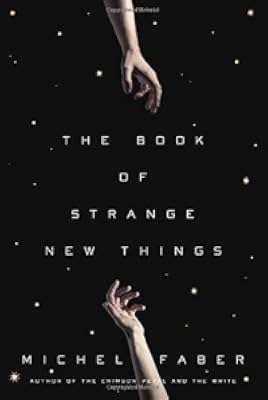
The Book of Strange New Things
by Michel Faber
On This Page
Description
"It begins with Peter, a devoted man of faith, as he is called to the mission of a lifetime, one that takes him galaxies away from his wife, Bea. Peter becomes immersed in the mysteries of an astonishing new environment, overseen by an enigmatic corporation known only as USIC. His work introduces him to a seemingly friendly native population struggling with a dangerous illness and hungry for Peter's teachings--his Bible is their "book of strange new things." But Peter is rattled when Bea's show more letters from home become increasingly desperate: typhoons and earthquakes are devastating whole countries, and governments are crumbling. Bea's faith, once the guiding light of their lives, begins to falter. Suddenly, a separation measured by an otherworldly distance, and defined both by one newly discovered world and another in a state of collapse, is threatened by an ever-widening gulf that is much less quantifiable. While Peter is reconciling the needs of his congregation with the desires of his strange employer, Bea is struggling for survival. Their trials lay bare a profound meditation on faith, love tested beyond endurance, and our responsibility to those closest to us" -- show lessTags
Recommendations





















Member Recommendations

by anonymous user
vwinsloe also known as "Quakers in Space."
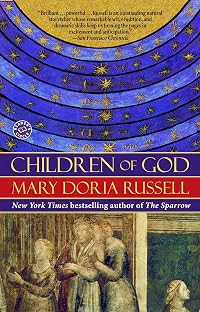
sturlington Humans coming into contact with aliens, with a religious theme.
Member Reviews
Ground control to Major Tom
The Book of Strange New Things by Michel Faber (Hogarth, $28).
Michel Faber, the Scottish author of Under the Skin and The Crimson Petal and the White, uses genre fiction to make serious and literary points. In his latest novel, The Book of Strange New Things, Faber examines what it means to believe in something larger than oneself.
Peter, a Christian missionary, heads out to a faraway land, leaving his wife, Beatrice, behind. His mission is entirely in the hands of his employer, a shadowy corporation that hopes to exploit the natives. As he evangelizes among them—the “book of strange new things” is their term for the Bible—things are not going well at all at home. Beatrice, facing hardships and show more disasters, is both pregnant and losing her faith.
But rather than being historical fiction, The Book of Strange New Things occurs in a far future, where it’s the galaxy rather than the sea that separates the two.
This is a fascinating piece of speculative fiction that demonstrates just how difficult cross-cultural communication really is, as well as how much distance gets between us. The ethical issues resonate so profoundly because the characters are so real—we feel Peter’s yearning to do good as well as Beatrice’s desperate loneliness—and that makes this one of the more fascinating books this year.
Reviewed on Lit/Rant: www.litrant.tumblr.com show less
The Book of Strange New Things by Michel Faber (Hogarth, $28).
Michel Faber, the Scottish author of Under the Skin and The Crimson Petal and the White, uses genre fiction to make serious and literary points. In his latest novel, The Book of Strange New Things, Faber examines what it means to believe in something larger than oneself.
Peter, a Christian missionary, heads out to a faraway land, leaving his wife, Beatrice, behind. His mission is entirely in the hands of his employer, a shadowy corporation that hopes to exploit the natives. As he evangelizes among them—the “book of strange new things” is their term for the Bible—things are not going well at all at home. Beatrice, facing hardships and show more disasters, is both pregnant and losing her faith.
But rather than being historical fiction, The Book of Strange New Things occurs in a far future, where it’s the galaxy rather than the sea that separates the two.
This is a fascinating piece of speculative fiction that demonstrates just how difficult cross-cultural communication really is, as well as how much distance gets between us. The ethical issues resonate so profoundly because the characters are so real—we feel Peter’s yearning to do good as well as Beatrice’s desperate loneliness—and that makes this one of the more fascinating books this year.
Reviewed on Lit/Rant: www.litrant.tumblr.com show less
The Book of Strange New Things by Michel Faber superficially resembles The Sparrow by Maria Doria Russell in that a religious person accompanies an exploration team to a new planet to contribute special expertise. Faber's vision is both very much darker (disasters, corporate greed) and more loving (women, love, faith & an unknown colony that speaks & wants to believe).
I meant to save time & just skim this book, but the writing and ideas were so beautiful and compelling, the characters so multi-layered, the foreignness so strange, that I kept going back for more. Peter, the pastor with a past, is an interesting character, embodying Christian principles with love and without fanfare. Yes, he builds a church or two. Beatrice, his wife who show more stays behind in the "real" world, is his rock, touchstone, strength, guide from the personal darkness of his prior self to the explorer who brings guidance to the heavens.
Their relationship underpins the story. Out front, there are mines & cars, concerns about food and drink, holding mind & body together, frequent rain, strange crops, swarms of scavengers, and the off-worlders selected to build a brave new world -- or escape the frightening old one.
Beautifully written & imagined (check out the Table of Contents), compellingly readable. Note: my ebook version shows the empty box symbol when the Oasan language was rendered. No problem, since you can usually grok the context. The hard copy will not have this problem, but not sure how the final digital file will handle this. {Pre-publication review copy via nook download from Hogarth & Edelweiss. Thank you.} show less
I meant to save time & just skim this book, but the writing and ideas were so beautiful and compelling, the characters so multi-layered, the foreignness so strange, that I kept going back for more. Peter, the pastor with a past, is an interesting character, embodying Christian principles with love and without fanfare. Yes, he builds a church or two. Beatrice, his wife who show more stays behind in the "real" world, is his rock, touchstone, strength, guide from the personal darkness of his prior self to the explorer who brings guidance to the heavens.
Their relationship underpins the story. Out front, there are mines & cars, concerns about food and drink, holding mind & body together, frequent rain, strange crops, swarms of scavengers, and the off-worlders selected to build a brave new world -- or escape the frightening old one.
Beautifully written & imagined (check out the Table of Contents), compellingly readable. Note: my ebook version shows the empty box symbol when the Oasan language was rendered. No problem, since you can usually grok the context. The hard copy will not have this problem, but not sure how the final digital file will handle this. {Pre-publication review copy via nook download from Hogarth & Edelweiss. Thank you.} show less
First of all, I’m generally wary about trigger warnings, and reviews that start with trigger warnings. Not the least because they can be spoiler-ish. Nevertheless, I discovered that I have a trigger that I wish I’d been warned about: There is a cat in this book, and it dies. Horribly.
That out of the way, this is one of the best books I’ve read for a while. As a former Catholic, I’m also wary about books about religion. But the preacher here is a Marilynne Robinson–like preacher, a good and gentle soul, never in your face, not one to cause offense. Which, as it turns out, is part of the reason he’s chosen for missionary service to the aliens on Oasis, a planet where a mysterious corporation back on Earth, USIC, is trying to show more establish an outpost. Although this is a mysterious, faceless, potentially Evil Corporation, that is something of a red herring too. They also are not in-your-face evil: they’re supplying a missionary because the aliens have requested one, and Evil Corp. wants to maintain good trading relations with the natives, something of switch from your typical, exploitive, colonialistic Evil Corp.
Nevertheless, everyone and everything at the USIC base on Oasis is a little … off. Everyone is nice enough … maybe a little too nice? There are no locks on the doors. There are no fist fights in the mess hall. Oh, and the previous minister has gone missing…
This may sound like the lead-up to a revelation of malicious mind control by Evil Corp. or other villainous doings, but that’s a red herring also. The answer turns out to be much more grounded in ordinary human nature, and in my opinion even more chilling for that.
The aliens are physically pretty repellent, but they turn out to be just as phlegmatic as the humans on Oasis. And having been introduced to Christianity by the previous preacher, they are eager for the “technique of Jesus.” (Their speech is rendered with the occasional odd symbol to indicate the sounds they have trouble reproducing with their … speech apparatus.)
Our preacher, perhaps rather heavy-handedly called Peter, has left a wife back on Earth (perhaps rather heavy-handedly called Beatrice), with whom he can correspond by text whenever he’s on base and not out ministering to the natives. He’s not gone long before increasingly alarming texts start coming from back home. We readers can see that things are getting pretty dire back home—war, natural disasters, food shortages—but Peter is really busy and very absorbed by his work with the natives and, well, he just doesn’t seem to be paying attention to the warnings.
This is where it can be easy to judge Peter for being a self-absorbed, oblivious jerk. And, frankly, he is a self-absorbed, oblivious jerk. But I think he also represents the way humans like to bury their heads in the sand and ignore “inconvenient truths” in favor of immersing themselves in small, immediate, solvable everyday concerns. Don’t we all? I’d earlier saved this quote, which I think sums it up:
“Werner was a poor lamb, precious in the eyes of the Lord, a charmless creep who couldn’t help being a charmless creep, a geeky orphan who’d grown into a specialized form of survivor. We are all specialized forms of survivor, Peter reminded himself. We lack what we fundamentally need and forge ahead regardless, hurriedly hiding our wounds, disguising our ineptitude, bluffing our way through our weaknesses.”
One thing this book said to me is that we all take, or deliver, from religion (or philosophy, or politics, or a particular world view) what we need at the moment. And another thing is that we can all be oblivious to what’s right under our noses, but we need to wake up, and grow up. show less
That out of the way, this is one of the best books I’ve read for a while. As a former Catholic, I’m also wary about books about religion. But the preacher here is a Marilynne Robinson–like preacher, a good and gentle soul, never in your face, not one to cause offense. Which, as it turns out, is part of the reason he’s chosen for missionary service to the aliens on Oasis, a planet where a mysterious corporation back on Earth, USIC, is trying to show more establish an outpost. Although this is a mysterious, faceless, potentially Evil Corporation, that is something of a red herring too. They also are not in-your-face evil: they’re supplying a missionary because the aliens have requested one, and Evil Corp. wants to maintain good trading relations with the natives, something of switch from your typical, exploitive, colonialistic Evil Corp.
Nevertheless, everyone and everything at the USIC base on Oasis is a little … off. Everyone is nice enough … maybe a little too nice? There are no locks on the doors. There are no fist fights in the mess hall. Oh, and the previous minister has gone missing…
This may sound like the lead-up to a revelation of malicious mind control by Evil Corp. or other villainous doings, but that’s a red herring also. The answer turns out to be much more grounded in ordinary human nature, and in my opinion even more chilling for that.
The aliens are physically pretty repellent, but they turn out to be just as phlegmatic as the humans on Oasis. And having been introduced to Christianity by the previous preacher, they are eager for the “technique of Jesus.” (Their speech is rendered with the occasional odd symbol to indicate the sounds they have trouble reproducing with their … speech apparatus.)
Our preacher, perhaps rather heavy-handedly called Peter, has left a wife back on Earth (perhaps rather heavy-handedly called Beatrice), with whom he can correspond by text whenever he’s on base and not out ministering to the natives. He’s not gone long before increasingly alarming texts start coming from back home. We readers can see that things are getting pretty dire back home—war, natural disasters, food shortages—but Peter is really busy and very absorbed by his work with the natives and, well, he just doesn’t seem to be paying attention to the warnings.
This is where it can be easy to judge Peter for being a self-absorbed, oblivious jerk. And, frankly, he is a self-absorbed, oblivious jerk. But I think he also represents the way humans like to bury their heads in the sand and ignore “inconvenient truths” in favor of immersing themselves in small, immediate, solvable everyday concerns. Don’t we all? I’d earlier saved this quote, which I think sums it up:
“Werner was a poor lamb, precious in the eyes of the Lord, a charmless creep who couldn’t help being a charmless creep, a geeky orphan who’d grown into a specialized form of survivor. We are all specialized forms of survivor, Peter reminded himself. We lack what we fundamentally need and forge ahead regardless, hurriedly hiding our wounds, disguising our ineptitude, bluffing our way through our weaknesses.”
One thing this book said to me is that we all take, or deliver, from religion (or philosophy, or politics, or a particular world view) what we need at the moment. And another thing is that we can all be oblivious to what’s right under our noses, but we need to wake up, and grow up. show less
This book was depressingly enchanting.
I liked that the main character was a minister in love with God and I didn't find him irritating or unbelievable or preachy. I'll pretty much love any story you give me about first contact so that helped. Though I did have a bit of trouble trying to think of what kind of anatomy would allow a creature to be able to pronounce all english sounds except for "s" and "t"? They can say "th" and "v" and nasal sounds but not "s"? All other stops except for "t"? Anyway. The story has melancholy heart. Maybe you can get my drift from all the opposing adjectives I'm using. It was beautiful and sad and slow. Really compellingly slow. Even when nothing was happening I couldn't put it down. Michel Faber has show more beautiful prose and I'd really like to read more of him. show less
I liked that the main character was a minister in love with God and I didn't find him irritating or unbelievable or preachy. I'll pretty much love any story you give me about first contact so that helped. Though I did have a bit of trouble trying to think of what kind of anatomy would allow a creature to be able to pronounce all english sounds except for "s" and "t"? They can say "th" and "v" and nasal sounds but not "s"? All other stops except for "t"? Anyway. The story has melancholy heart. Maybe you can get my drift from all the opposing adjectives I'm using. It was beautiful and sad and slow. Really compellingly slow. Even when nothing was happening I couldn't put it down. Michel Faber has show more beautiful prose and I'd really like to read more of him. show less
Peter and his wife Bea are evangelical Christians, so committed to their faith that Peter accepts a mission—in every sense—to travel to a distant world, Oasis, where the supremely strange, sentient inhabitants appear ready to be brought to God.
The Book of Strange New Things is an intriguing blend of religious exploration and first contact, anchored by the relationship between a married couple separated by unimaginable distance. At its core, it’s as much about faith and disconnection as it is about aliens.
I enjoyed the novel overall, but the first half felt overextended. Long stretches were devoted to the couple’s exchanged messages and Peter’s early impressions of Oasis. While these sections laid necessary groundwork, they show more lingered to the point of testing the reader’s patience, and at times I found myself tempted to skim. Compounding this is the challenge of Peter himself: he is not an especially likeable or accessible protagonist. Priggish, impractical and selfish. To Faber’s credit, however, he leans into this, shaping a reflective and deliberately distant narrative voice that suits the novel’s themes.
Somewhere in the middle, though, the book pivots. It’s difficult to pinpoint exactly where, but the story tightens its grip. I found myself pulled in, reading the second half far more quickly. Peter remains remote, yet my curiosity about his fate deepened. There is something quietly unsettling about the Oasans, and I began to anticipate a range of possible, uncomfortable outcomes for him.
At the same time, Bea’s messages take on greater urgency and emotional weight, as Earth appears to be unravelling while Peter becomes increasingly absorbed by the austere simplicity of Oasan life. That growing dissonance between collapse and calm, distance and devotion is where the novel finds its real power. show less
The Book of Strange New Things is an intriguing blend of religious exploration and first contact, anchored by the relationship between a married couple separated by unimaginable distance. At its core, it’s as much about faith and disconnection as it is about aliens.
I enjoyed the novel overall, but the first half felt overextended. Long stretches were devoted to the couple’s exchanged messages and Peter’s early impressions of Oasis. While these sections laid necessary groundwork, they show more lingered to the point of testing the reader’s patience, and at times I found myself tempted to skim. Compounding this is the challenge of Peter himself: he is not an especially likeable or accessible protagonist. Priggish, impractical and selfish. To Faber’s credit, however, he leans into this, shaping a reflective and deliberately distant narrative voice that suits the novel’s themes.
Somewhere in the middle, though, the book pivots. It’s difficult to pinpoint exactly where, but the story tightens its grip. I found myself pulled in, reading the second half far more quickly. Peter remains remote, yet my curiosity about his fate deepened. There is something quietly unsettling about the Oasans, and I began to anticipate a range of possible, uncomfortable outcomes for him.
At the same time, Bea’s messages take on greater urgency and emotional weight, as Earth appears to be unravelling while Peter becomes increasingly absorbed by the austere simplicity of Oasan life. That growing dissonance between collapse and calm, distance and devotion is where the novel finds its real power. show less
Peter is selected by an American corporation to serve as one of the first Christian missionaries to native inhabitants of the planet Oasis. He leaves his wife at home in London. A previous minister had disappeared, along with a linguist that taught English to the Oasans. He finds the Oasans receptive to the “Book of Strange New Things,” their name for the Bible. He works with them in their settlement to build a church, returning periodically to the USIC base to communicate with his wife on earth. She tells him of many catastrophes that have befallen the earth, but it is difficult for him to fully understand and focus on what is happening so far away. Peter eventually learns an excruciating lesson based on his interactions with the show more Oasans.
This is a complex story that works on multiple levels. One level revolves around testing a marriage to its limits, where distance takes a toll. Another level looks at how religious instruction is received by a population that has no concept of earth. It examines a new form of colonialism – USIC has setup a base but is still dependent upon the Oasans for food. It portrays how faith is tested. It examines addiction and how one can be substituted for another. It depicts the mental stress and alienation that can occur from isolation. It is a combination of literary fiction and science fiction, commenting on the nature of humanity through looking at their interactions with intelligent non-humans.
I listened to the audiobook, wonderfully performed by Josh Cohen. It is an ideal vehicle for audio. Cohen does an amazing job of voicing accents from a variety of countries. He also creates a unique voice for the Oasans. I found the entire experience of this book engrossing.
After finishing, I found it profoundly unsettling and it took a while for my thoughts to gel. It is an example of how good intentions go awry. It shows how rifts can form between people who love each other deeply. It is an examination of empathy across cultures. I am fascinated by the premise of this story and found it both creative and insightful. show less
This is a complex story that works on multiple levels. One level revolves around testing a marriage to its limits, where distance takes a toll. Another level looks at how religious instruction is received by a population that has no concept of earth. It examines a new form of colonialism – USIC has setup a base but is still dependent upon the Oasans for food. It portrays how faith is tested. It examines addiction and how one can be substituted for another. It depicts the mental stress and alienation that can occur from isolation. It is a combination of literary fiction and science fiction, commenting on the nature of humanity through looking at their interactions with intelligent non-humans.
I listened to the audiobook, wonderfully performed by Josh Cohen. It is an ideal vehicle for audio. Cohen does an amazing job of voicing accents from a variety of countries. He also creates a unique voice for the Oasans. I found the entire experience of this book engrossing.
After finishing, I found it profoundly unsettling and it took a while for my thoughts to gel. It is an example of how good intentions go awry. It shows how rifts can form between people who love each other deeply. It is an examination of empathy across cultures. I am fascinated by the premise of this story and found it both creative and insightful. show less
The premise is a very curious one. Oasis is a planet that was essentially discovered by a private organisation, USIC, and fully controlled and operated by them. Like many other instances of colonialism in the world, this one is no different in that the newcomers introduce their religion. Originally introduced to Christianity as a likely method of control, a group of indigenous Oasans quickly take to Jesus, though their ability to grasp metaphorical speech means they believe everything told to them in the Book of Strange New Things, aka the Bible, is literal. They will literally live forever. Heaven is a literal place. Well, when the pastor they originally worked with mysteriously disappeared, the Oasans become distraught. They demand a show more replacement and refuse to supply the USIC humans with food.
Enter Peter, an English minister, that has been selected to administer ‘the good word.’ He sees this as an amazing opportunity to spread the name of Jesus to a whole new group of individuals that have never heard of Him. Leaving his wife behind, he flies off to space, afraid but hopeful. Peter is surprised and excited when he finds out that the locals have already accepted Jesus as their Lord and Savior and only want to continue learning about Him. For Peter, everything is perfect. Oasan world is the utopia he has always searched for. He becomes so wrapped up in the Oasans, that he slowly begins to forget that he is human. That he has a wife. That he has a life back on Earth. He wastes away until he is skin and bones. He gets severe sunburns, though never seems to realise this until a fellow USIC member admonishes him about it.
Meanwhile, Peter’s poor wife Bea is trapped on Earth, desperate to continue contact with her husband. She writes to him constantly through a contraption called “the Shoot,” a bit like intergalactic email. Her letters grow darker as the novel goes on, brimming with despair. The world is becoming a dangerous place. Large financial institutions are on the brink of collapse. Food becomes scarce. The government abandons its people. Natural disasters are occurring with alarming regularity. Atrocities against humanity committed frequently. Bea continually tries reaching out to Peter for help, for sympathy, guidance, love, understanding. She receives none of it. He begins avoiding her messages because they make him “feel bad” that he doesn’t care about the things she talks about. All he can see are the Oasans idolizing him for holding the word of Jesus.
For such a heavy book, it is surprising in that most of the action comes from Bea. Peter’s world is steady, full of neither excitement nor action. Faber tries to insinuate things have happened that are quite sinister, yet there is nothing uncovered after 500 pages. This book left me so angry, yet the ending seemed to fit the story well. I have so many conflicted feelings about this book, which made it so hard to come up with a rating. At times, this feels like a five star book. Other times, three stars seem adequate. I’m going to split the difference and give it four stars. This is a very uniquely written book that is so very interesting that it carries the reader to the end with minimal action. It will leave you full of emotion, whether it’s angry like I was/still am, or hopeful, and will keep you thinking about it for a good while after finishing. However, if you really dislike religion, steer clear. This book is, obviously, full of Christianity and Bible quotes.
//This title was received for free in exchange for an honest review//
The Book of Strange New Things Review was originally published on By Lulu with Love show less
Enter Peter, an English minister, that has been selected to administer ‘the good word.’ He sees this as an amazing opportunity to spread the name of Jesus to a whole new group of individuals that have never heard of Him. Leaving his wife behind, he flies off to space, afraid but hopeful. Peter is surprised and excited when he finds out that the locals have already accepted Jesus as their Lord and Savior and only want to continue learning about Him. For Peter, everything is perfect. Oasan world is the utopia he has always searched for. He becomes so wrapped up in the Oasans, that he slowly begins to forget that he is human. That he has a wife. That he has a life back on Earth. He wastes away until he is skin and bones. He gets severe sunburns, though never seems to realise this until a fellow USIC member admonishes him about it.
Meanwhile, Peter’s poor wife Bea is trapped on Earth, desperate to continue contact with her husband. She writes to him constantly through a contraption called “the Shoot,” a bit like intergalactic email. Her letters grow darker as the novel goes on, brimming with despair. The world is becoming a dangerous place. Large financial institutions are on the brink of collapse. Food becomes scarce. The government abandons its people. Natural disasters are occurring with alarming regularity. Atrocities against humanity committed frequently. Bea continually tries reaching out to Peter for help, for sympathy, guidance, love, understanding. She receives none of it. He begins avoiding her messages because they make him “feel bad” that he doesn’t care about the things she talks about. All he can see are the Oasans idolizing him for holding the word of Jesus.
For such a heavy book, it is surprising in that most of the action comes from Bea. Peter’s world is steady, full of neither excitement nor action. Faber tries to insinuate things have happened that are quite sinister, yet there is nothing uncovered after 500 pages. This book left me so angry, yet the ending seemed to fit the story well. I have so many conflicted feelings about this book, which made it so hard to come up with a rating. At times, this feels like a five star book. Other times, three stars seem adequate. I’m going to split the difference and give it four stars. This is a very uniquely written book that is so very interesting that it carries the reader to the end with minimal action. It will leave you full of emotion, whether it’s angry like I was/still am, or hopeful, and will keep you thinking about it for a good while after finishing. However, if you really dislike religion, steer clear. This book is, obviously, full of Christianity and Bible quotes.
//This title was received for free in exchange for an honest review//
The Book of Strange New Things Review was originally published on By Lulu with Love show less
Members
- Recently Added By
Published Reviews
ThingScore 75
As someone who harbors a fondness for science fiction and thirsts for more complex treatment of religion in contemporary novels, I relished every chance to cloister myself away with “The Book of Strange New Things.” If it feels more contemplative than propulsive, if Faber repeatedly thwarts his own dramatic premises, he also offers exactly what I crave: a state of mingled familiarity and show more alienness that leaves us with questions we can’t answer — or forget. show less
added by zhejw
Since the critical and commercial triumph of Hilary Mantel, the historical novel is newly respectable. One hopes that Michel Faber can do something similar for speculative writing. Defiantly unclassifiable, “The Book of Strange New Things” is, among other things, a rebuke to the credo of literary seriousness for which there is no higher art than a Norwegian man taking pains to describe his show more breakfast cereal. As well as the literature of authenticity, Faber reminds us, there is a literature of enchantment, which invites the reader to participate in the not-real in order to wake from a dream of reality to the ineffability, strangeness and brevity of life on Earth. show less
added by zhejw
...like the best sci-fi or fantasy, the novel is really an examination of humanity. It is also a powerful and, one suspects, personal meditation on the limitations of the flesh, and the capacity of either love or faith to endure extreme pressure. Startlingly tender and bold in conception, it offers a bleak vision of our future that also holds fast to the hope that, in Larkin’s phrase, show more “what will survive of us is love”. show less
added by _Zoe_
Lists

Best Science Fiction Novels
816 works; 430 members

Best Dystopias
280 works; 271 members

Best Contemporary Literary Fiction (Around the Last 30 Years)
388 works; 124 members

Slipstream or Interstitial Fiction
160 works; 19 members

Speculative Fiction: Slipstream Literature
166 works; 16 members

Dystopian and Apocalyptic Literature
350 works; 74 members

Top Five Books of 2014
1,064 works; 398 members
Arthur C. Clarke Award Winners and Shortlisted Books
219 works; 14 members

Truly alien aliens (SF)
42 works; 3 members

Religious Science Fiction
70 works; 20 members
Top Five Books of 2016
795 works; 228 members

Reading Group 2015 Summer
4 works; 1 member

EU Fiction: 1950-2022
223 works; 70 members

SFFCat 2015
35 works; 1 member

Best Books With Aliens
67 works; 10 members
BingoDOG - Genre Benders
74 works; 14 members

Dublin Literary Award Longlist 2016
148 works; 4 members

Speculative Fiction to Read
706 works; 32 members

Alien Contact Stories
5 works; 1 member

Ultimate Thriller Guide
52 works; 4 members
Books Read in 2018
4,360 works; 110 members

BingoDOG 2015 Challenge
49 works; 3 members

Love and Marriage
93 works; 10 members

Best of Scottish Literature
35 works; 6 members

Books Read in 2015
3,299 works; 126 members

Books recommended by Calgary Public Library staff
1,588 works; 4 members

Top Five Books of 2015
811 works; 240 members

Books Read in 2014
2,343 works; 86 members

Folio Prize 2015 Longlist
79 works; 2 members

Religion in Fantasy and Horror
38 works; 9 members
Author Information

45+ Works 15,800 Members
Michel Faber was born in The Hague, Netherlands on April 13, 1960. He was educated at the University of Melbourne. His books include The Crimson Petal and the White, The Fahrenheit Twins, Under the Skin, The Apple, and The Book of Strange New Things. He is also the author of two novellas, The Hundred and Ninety-Nine Steps and The Courage Consort. show more He won several short-story awards, including the Neil Gunn, Ian St James and Macallan. He made The New York Times Best Seller List with his title The Book of Strange New Things. This title also made the shortlist for the Arthur C Clarke Award for science-fiction in 2015. (Bowker Author Biography) show less
Some Editions
Awards and Honors
Awards
Distinctions
Notable Lists
Series
Belongs to Publisher Series
Common Knowledge
- Canonical title
- The Book of Strange New Things
- Original title
- The Book of Strange New Things
- Original publication date
- 2014-10-23
- People/Characters
- Peter Leigh; Beatrice Leigh; Alexandra Grainger
- Important places*
- Londres, Angleterre, Royaume-Uni; Oasis; C-2, Oasis
- Related movies
- Oasis (2017 | IMDb)
- Dedication
- For Eva, always
- First words
- "I was going to say something," he said.
- Last words*
- (Click to show. Warning: May contain spoilers.)Et voici que je suis avec vous pour toujours, jusqu'à la fin du monde. Amen.
- Blurbers
- Mitchell, David; Pullman, Philip; Martel, Yann; Benioff, David
- Original language*
- Anglais (Royaume-Uni) (Royaume-Uni)
*Some information comes from Common Knowledge in other languages. Click "Edit" for more information.
Classifications
Statistics
- Members
- 2,469
- Popularity
- 7,824
- Reviews
- 142
- Rating
- (3.71)
- Languages
- 11 — Dutch, English, Estonian, French, German, Greek, Italian, Polish, Portuguese, Spanish, Swedish
- Media
- Paper, Audiobook, Ebook
- ISBNs
- 42
- ASINs
- 16