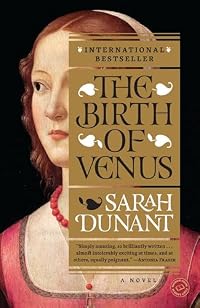
The Birth of Venus
by Sarah Dunant
On This Page
Description
From its first arresting sentence, Sarah Dunant's magnificent novel embroils the reader in the coming-of-age story of Alessandra Cecchi, a fourteen-year-old girl with a strong will and a passion for painting. The Birth of Venus is a tour de force, the first historical novel from one of Britain's most innovative writers of literary suspense. Alessandra Cecchi is not quite fifteen when her father, a prosperous cloth merchant, brings a young painter back from northern Europe to decorate the show more chapel walls in the family's Florentine palazzo. A child of the Renaissance, with a precocious mind and a talent for drawing, Alessandra is intoxicated by the painter's abilities. But their burgeoning relationship is interrupted when Alessandra's parents arrange her marriage to a wealthy, much older man. Meanwhile, Florence is changing, increasingly subject to the growing suppression imposed by the fundamentalist monk Savonarola, who is seizing religious and political control. Alessandra and her native city are caught between the Medici state, with its love of luxury, learning, and dazzling art, and the hellfire preaching and increasing violence of Savonarola's reactionary followers. Played out against this turbulent backdrop, Alessandra's married life is a misery, except for the surprising freedom it allows her to pursue her powerful attraction to the young painter and his art. It brings alive the history of Florence at its most dramatic period, telling a compulsively absorbing story of love, art, religion, and power through the passionate voice of Alessandra, a heroine with the same vibrancy of spirit as her beloved city. show lessTags
Recommendations
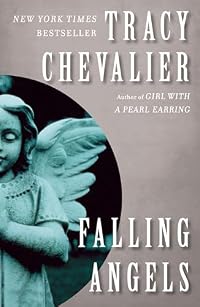
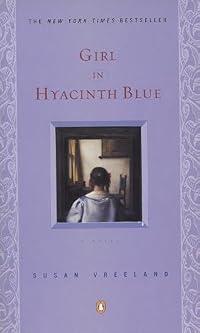
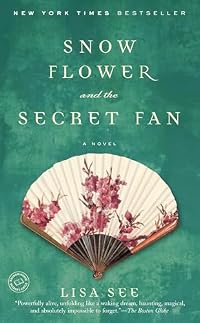
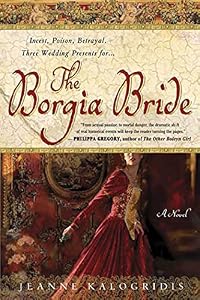
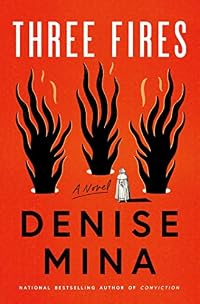
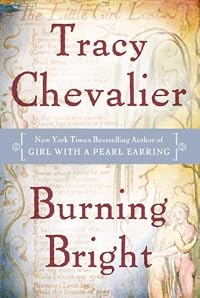
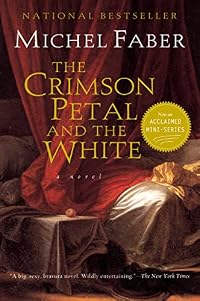
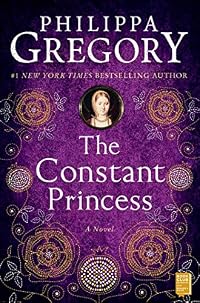
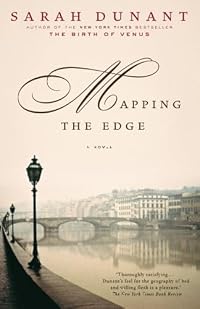
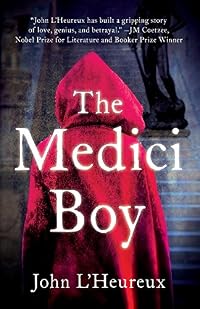
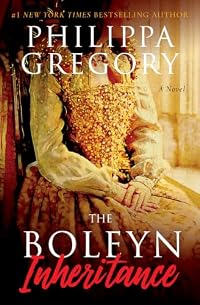
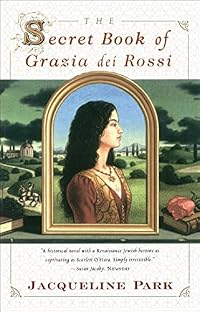
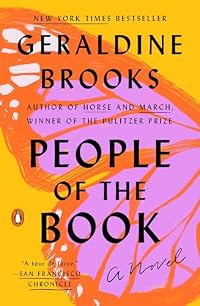
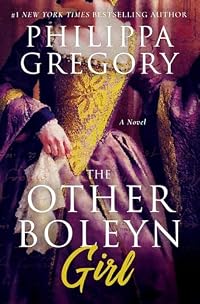
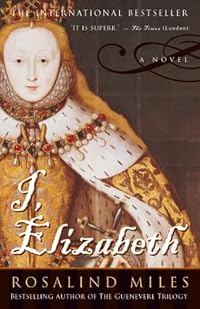
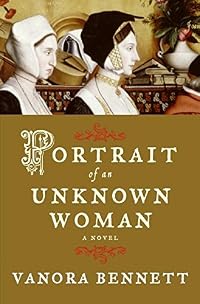
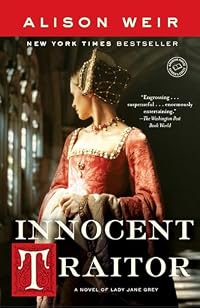
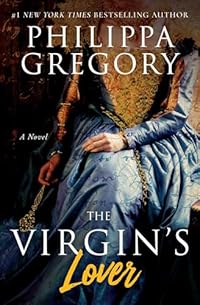
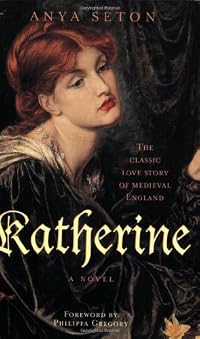
Member Recommendations
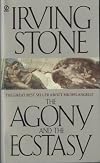
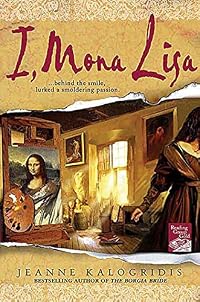
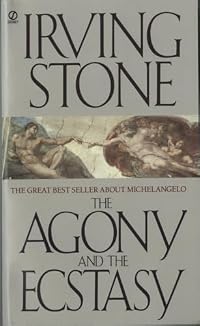
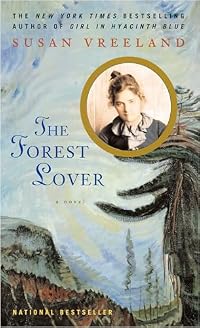
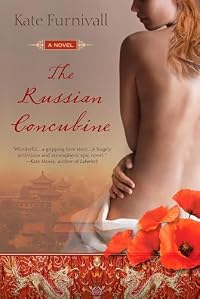
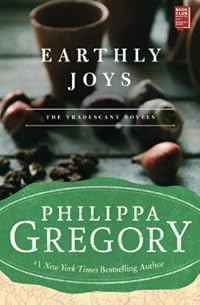
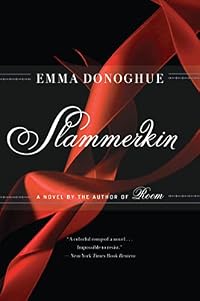
ddelmoni Great historical fiction about Michaelangelo and the Italian Renissance.
11
jordantaylor More historical fiction set in 1400's Florence, closely tied with the art world and the religious teachings of Savonarola.
lizchris Both about Medieval convent life
Member Reviews
This a powerful story about interesting people set in a fascinating period of history in a wonderful place. How could it be anything but? It is an enjoyable read - the sense of place and time are evocatively constructed - the weaving of fiction with the historical upheaval in Florence is very skillful. I really liked the main character. She is strong, independent and intelligent at a time where all of these seemed to be considered vices in a woman. However, she managed to survive the tribulations though suffering many losses along the way. My main reservation about the book is the use of very graphic sexual scenes which I feel were unnecessary and really did not add much other than to illustrate the heroine's sense of self. It was fine show more to include once or twice but I think it was overdone. Also, the episode of the baby's birth was incredibly harrowing and I was left rather shattered which I suppose must be a sign of of very strong writing skills. Finally, I found the snake tattoo theme somewhat unbelievable but it would be interesting to know if there is any evidence for this.
Apart from these quibbles, I very much enjoyed the book. show less
Apart from these quibbles, I very much enjoyed the book. show less
I have always been a huge fan of historical novels, set in whatever era, as long as the descriptions are detailed, and here they are. Through the eyes of Alessandrina, you can get a feel of what life in Renaissance Florence was like. I was surprised to learn of the identity of the mysterious artist, but it wouldn't be the first time a historical character made it into fiction. The conflicts within this bok are heady and fascinating as everyone struggles with their choices for better or worse, and Alessandrina is given chances at happiness amidst tumultuous times for herself or her family.
The topic of homosexuality is depicted realistically here. I hate her brother so much, but I feel bad for Alessandrina's husband, so do I root for his show more relationship with her brother or not? And what of the artist? Ooh! Overall it was a rather solid book, with a mysterious beginning and an ending that should make you smile - I definitely did. show less
The topic of homosexuality is depicted realistically here. I hate her brother so much, but I feel bad for Alessandrina's husband, so do I root for his show more relationship with her brother or not? And what of the artist? Ooh! Overall it was a rather solid book, with a mysterious beginning and an ending that should make you smile - I definitely did. show less
The Birth of Venus is as beautiful as it is violent. It is journey of one woman's quest and struggle to be more than life would allow her. It is her story of love, and betrayal, passion, and destruction. As indicative of the patron goddess of physical love and the seeking of knowledge, Venus, Alessandra learns to embrace the essence of womanhood while balancing an immense desire to reach beyond her own limited world through the arts and creativity.
A precocious daughter of a wealthy cloth merchant in the vibrant city of Florence, Alessandra, being the youngest of 4 siblings, learns from an early age, that she does not embody the typical qualities that are commended for a woman of her stature - meek and mildness. Rather she is talented show more and tenacious, daring and bold in both thoughts and manners. Despite her numerous attempts to expand the boundaries that imprison her, she is faced with a choice to gain her freedom through marriage to a man or marriage to God. In the end, she will eventually be married to both, one by force, the other through choice.
The Birth of Venus is a luscious story set amidst the beauty of ancient Florence. The texture, taste, and sounds of the time are brought alive through Dunant's exquisite detail to the arts that existed at the time. As detailed as the setting of the story, Dunant is even more explicit in her explorations of love, and human nature. There are love scenes within the book that border on being vulgar and gratuitous, and yet at the same time, they reflect the power and passion of the time. The paintings and sculptures are just one outlet for that expression of love - the other being represented in their relationship with one another. I was mesmerized by story that Dunant weaved, both the tragedy and the triumph, both seen in the people and the stages in which they played out their lives. show less
A precocious daughter of a wealthy cloth merchant in the vibrant city of Florence, Alessandra, being the youngest of 4 siblings, learns from an early age, that she does not embody the typical qualities that are commended for a woman of her stature - meek and mildness. Rather she is talented show more and tenacious, daring and bold in both thoughts and manners. Despite her numerous attempts to expand the boundaries that imprison her, she is faced with a choice to gain her freedom through marriage to a man or marriage to God. In the end, she will eventually be married to both, one by force, the other through choice.
The Birth of Venus is a luscious story set amidst the beauty of ancient Florence. The texture, taste, and sounds of the time are brought alive through Dunant's exquisite detail to the arts that existed at the time. As detailed as the setting of the story, Dunant is even more explicit in her explorations of love, and human nature. There are love scenes within the book that border on being vulgar and gratuitous, and yet at the same time, they reflect the power and passion of the time. The paintings and sculptures are just one outlet for that expression of love - the other being represented in their relationship with one another. I was mesmerized by story that Dunant weaved, both the tragedy and the triumph, both seen in the people and the stages in which they played out their lives. show less
This historical fiction novel is notable to me for not reading 21st century feminism onto the past, as unfortunately many historical fiction women's stories tend to do. In too many of the latter kind of novel, the author portrays heroines who break out of the mold of their time, have a free-thinking and independent mind, and fight against stereotypes to do what they want. Here, Alessandra is fully a woman of her time, and thus more realistic than other such heroines. She believes in G-d and heaven and hell, and while she does complain about the restraints that lock her into her time and place and social restrictions, she is smart enough to know how to act within them to achieve her ends. Thank you to the author for creating a realistic show more woman of her time and place. show less
While this novel took me a little longer to read than others of the same length, it was only because I needed to absorb and savor all of the beautifully detailed descriptions of life and art during the late Renaissance. This is a gorgeous novel of a very improbable story that I would love to believe could have happened. A story of a woman's life who was an intellectual, philosopher and artist...as much as a woman could be at that time.
It's a day after writing the previous paragraph and I decided to come back and write a little more. I can't stop thinking about the ending and how...disjointed it felt. You know those writing exercises where you are giving the last sentence of a story and you are required to write a story based on that? show more That's what this book's ending and prologue feels like. It's almost disingenuous to the rest of the rich, flowing story because none of it makes much sense to how the character was portrayed as a woman deeply invested in god. I'm going to knock a full star off for it. show less
It's a day after writing the previous paragraph and I decided to come back and write a little more. I can't stop thinking about the ending and how...disjointed it felt. You know those writing exercises where you are giving the last sentence of a story and you are required to write a story based on that? show more That's what this book's ending and prologue feels like. It's almost disingenuous to the rest of the rich, flowing story because none of it makes much sense to how the character was portrayed as a woman deeply invested in god. I'm going to knock a full star off for it. show less
In a startling beginning, Sister Lucrezia of the convent of Santa Vitella outside Florence, Italy has died, having requested previously that her body not be touched, and that she be buried in her habit. Because of an outbreak of plague in a nearby village however, the nuns deem it necessary to rule it out as a cause of death, and unrobe the late sister. To their surprise, they find that Lucrezia was a girl with a serpent tattoo, one that runs from her shoulder down to her groin, where the snake’s head has the shape of a man’s face, “the head thrown back, the eyes closed as if in rapture, and the tongue, snake-long still, daring out from his mouth downward toward the opening of Sister Lucrezia’s sex.” The rest of the book looks show more back to tell her story.
Sister Lucrezia, formerly Alessandra Cecchi, is a resident of late 15th-early 16th century Florence. We follow her life from age 14 until her death. From girlhood, Alessandra wanted to be an artist, but roles for women at that time were quite constricted:
"…I am stuck in this house while my parents look for a husband for me. Eventually they will buy one with a good name and I will go to his house, run his household, have his children, and disappear into the fabric of his life like a pale thread of color in a tapestry.”
As soon as Alessandra starts bleeding (and therefore is officially no longer a child), her parents do indeed find her a husband, who is forty-eight. He doesn’t intrigue her like the young painter her parents hired to adorn the family chapel, but Alessandra understands what is possible and what isn’t, and becomes the wife of Cristoforo Langella.
As Alessandra’s life unfolds, simultaneously we learn about the politics of Florence, a city then rapidly falling under the spell of the fire-breathing fanatical Dominican monk Girolamo Savonarola. We also get a taste of the artistic excitement in a period graced by Botticelli Donatello, Botticelli, Raphael, Michaelangelo, and Brunelleschi, among others. And we learn about the sad situation for women (not to mention gay men), and how Alessandra nevertheless manages to realize love and happiness for a time, memorialized in her skin.
Evaluation: Dunant is a talented writer of historical fiction. Her women are strong characters, and her evocation of Renaissance Florence brings to vivid life the sights and smells and colors of the time. Both this book and Sacred Hearts paint detailed and poignant pictures of what life was like for women at a time when society was in a ferment of change, but women’s options were still limited and often stifling. show less
Sister Lucrezia, formerly Alessandra Cecchi, is a resident of late 15th-early 16th century Florence. We follow her life from age 14 until her death. From girlhood, Alessandra wanted to be an artist, but roles for women at that time were quite constricted:
"…I am stuck in this house while my parents look for a husband for me. Eventually they will buy one with a good name and I will go to his house, run his household, have his children, and disappear into the fabric of his life like a pale thread of color in a tapestry.”
As soon as Alessandra starts bleeding (and therefore is officially no longer a child), her parents do indeed find her a husband, who is forty-eight. He doesn’t intrigue her like the young painter her parents hired to adorn the family chapel, but Alessandra understands what is possible and what isn’t, and becomes the wife of Cristoforo Langella.
As Alessandra’s life unfolds, simultaneously we learn about the politics of Florence, a city then rapidly falling under the spell of the fire-breathing fanatical Dominican monk Girolamo Savonarola. We also get a taste of the artistic excitement in a period graced by Botticelli Donatello, Botticelli, Raphael, Michaelangelo, and Brunelleschi, among others. And we learn about the sad situation for women (not to mention gay men), and how Alessandra nevertheless manages to realize love and happiness for a time, memorialized in her skin.
Evaluation: Dunant is a talented writer of historical fiction. Her women are strong characters, and her evocation of Renaissance Florence brings to vivid life the sights and smells and colors of the time. Both this book and Sacred Hearts paint detailed and poignant pictures of what life was like for women at a time when society was in a ferment of change, but women’s options were still limited and often stifling. show less
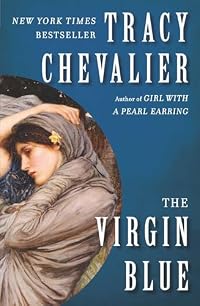
This is not a book I would have ordinarily picked up. I'd heard it was kind of like Girl With a Pearl Earring by Tracy Chevalier, but it's really not at all. Yes, it's about a woman and a painter in Europe, but that's about where the similarity ends. In truth, I have no idea where the title comes from, except that it's a famous painting from the same era. Anyway, this is the life story of Alessandra Cecchi, an unusually well-educated Florentine woman in the Renaissance. Her whole life she has dreamed of becoming an artist, but such things are not considered proper for a woman. Though she is irresistibly drawn to a painter hired to paint her family's chapel, her parents marry her off to a much older man. At the same time, the brutally show more fundamentalist monk Savonarola has come to power, bringing terror to the city under the guise of piety.
This is an extremely passionate and graphic book. Everything is described in vivid detail, from the violence to the sex to the art. If you can handle the mental images, this is a marvelously written story. Alessandra is a believable and sympathetic narrator, progressive and intelligent without being anachronistic. The story is compelling, sometimes suspenseful, often thought-provoking. There were times when I had a lot of trouble putting it down. I will definitely be looking up Dunant's other works. show less
This is an extremely passionate and graphic book. Everything is described in vivid detail, from the violence to the sex to the art. If you can handle the mental images, this is a marvelously written story. Alessandra is a believable and sympathetic narrator, progressive and intelligent without being anachronistic. The story is compelling, sometimes suspenseful, often thought-provoking. There were times when I had a lot of trouble putting it down. I will definitely be looking up Dunant's other works. show less
Members
- Recently Added By
Lists

Unread books
1,063 works; 83 members

Best Contemporary Literary Fiction (Around the Last 30 Years)
388 works; 122 members

Historical Fiction
889 works; 89 members

Female Author
1,235 works; 67 members

Best 21st Century Books (So Far)
670 works; 86 members

2000s (the decade, not the century)
184 works; 11 members

Books Set in Italy
167 works; 19 members

BBC Radio 4 Bookclub
300 works; 13 members

Authors from England
147 works; 4 members

Carole's List
445 works; 13 members

Books set in Firenze (Florence, Italy)
35 works; 1 member

Western & Northern Europe
60 works; 1 member
Read These Too
458 works; 9 members

a picture or a thousand words
39 works; 5 members

Renacimiento
24 works; 1 member

Travel Reads
26 works; 1 member
Talk Discussions
Past Discussions
Mystery set in renaissance italy-Florence? in Name that Book (April 2012)
Author Information

15+ Works 14,539 Members
She began her career writing mysteries, but with her last book, TRANSGRESSIONS (ReganBooks/HarperCollins), graduated to more ambitious, cutting-edge psychological thrillers. Three of her six books, including TRANSGRESSIONS, have been shortlisted for Britain's prestigious Edgar equivalent, the Golden Dagger award, and her third novel, FATLANDS, won show more the Silver Dagger. As a journalist and critic she has worked extensively in print, radio and television, where for many years she hosted her own show on BBC2. She has also edited two books of essays. Dunant lives in London with her family. (Publisher Provided) Sarah Dunant was born Linda Dunant in London, England on August 8, 1950. She read history at Newnham College, Cambridge. Before becoming a full-time author, she worked in theatre, radio and television. Her works include The Birth of Venus, In the Company of the Courtesan, Sacred Hearts, Snow Storms in a Hot Climate, Transgressions, Mapping the Edge, and Blood and Beauty. She is also the author of A Hannah Wolfe Crime Novel series. (Bowker Author Biography) show less
Awards and Honors
Awards
Work Relationships
Is abridged in
Common Knowledge
- Canonical title
- The Birth of Venus
- Original publication date
- 2003-03-06
- People/Characters
- Michelangelo Buonarroti; Filippo Brunelleschi; Lorenzo de' Medici; Plautilla Cecchi; Girolamo Savonarola; Alessandra Cecchi (show all 7); Erila
- Important places
- Florence, Tuscany, Italy; Rome, Italy
- Important events
- Bonfire of Vanities (the original); Italian Renaissance; Renaissance
- Dedication
- To my mother, Estelle, and my daughters Zoe and Georgia.
- First words
- No one had seen her naked until her death. (Prologue)
Looking back now I see it more as an act of pride than kindness that my father brought the young painter back with him from the North that spring.
There is one thing I have forgotten. (Epilogue) - Last words
- (Click to show. Warning: May contain spoilers.)And, such was the sound that the chorus made together, that to have been a part of it at all was enough for me. (Epilogue)
(Click to show. Warning: May contain spoilers.)At the point where the snake's body became its head, instead of the reptilian skull was the softer, rounder shape of a man's face: the head thrown back, the eyes closed as if in rapture and the tongue, snake-long still, darting out from his mouth downwards towards the opening of Sister Lucrezia's sex. (Prologue)
(Click to show. Warning: May contain spoilers.)Let us hope he has a strong stomach and a silent tongue. - Blurbers
- Schama, Simon; Fraser, Antonia
- Original language
- English
- Disambiguation notice
- The birth of Venus -- translations include "De geboorte van Venus, liefde en dood in Florence; Veneros gimimas; Venuksen syntymä; Venus' fødsel, kærlighed og død i Firenze; Venus födelse; Amor y muerte en Florencia; Amor... (show all) e morte em Florença; Das Zeichen der Venus; la nascita di Venere; Narodziny Wenus"
Classifications
Statistics
- Members
- 6,637
- Popularity
- 1,811
- Reviews
- 166
- Rating
- (3.66)
- Languages
- 18 — Danish, Dutch, English, Finnish, French, German, Hungarian, Italian, Latvian, Lithuanian, Norwegian (Bokmål), Norwegian, Polish, Portuguese, Romanian, Slovenian, Spanish, Swedish
- Media
- Paper, Audiobook, Ebook
- ISBNs
- 66
- ASINs
- 23