
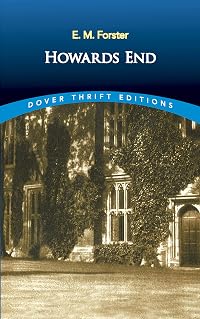
Howards End
by E. M. Forster
On This Page
Description
Howards End is a masterful discussion of changing social class-consciousness. Three families from different levels of society become intertwined: the rich capitalists, the intellectual bourgeoisie and the struggling poor. Forster does not suggest that relationships between the classes are easy, but he does think them vitally important. The social philosophy inherent in the novel is significant and beautifully written..
Tags
Recommendations







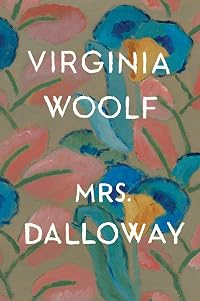
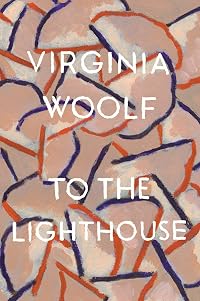
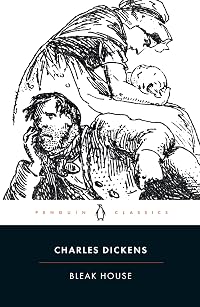
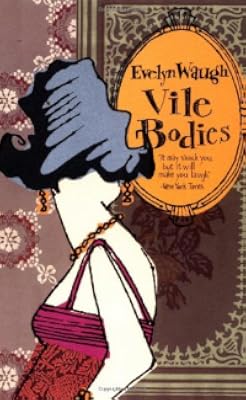

Member Recommendations
sturlington Where A Room with a View is comedy, Howards End is tragedy.
50
Cecrow Another Margaret who extends her empathy across social strata.
20


Member Reviews
By far my most personal Forster. I felt written about. I was in terror through the second half of the story at what he was doing. But he was doing pretty truly, and he came through at the end with optimism not punishment.
This is amazing writing about women. To have a women’s friendship told so well and be the motor of the plot – in the first half, and one might argue in the whole.
I hovered between the sisters in what I thought about events and whose philosophy to live by at a given moment. They are not two types like the Sense and Sensibility sisters, but are nicely contrasted and close/conflicting.
Then, Mrs Wilcox (the first). Miss Avery.
Sisterhood wins in this one. There’s a moment of women’s rebellion and comradeship as show more exciting as Thelma and Louise, although in an English garden against stuffy gentlemen. It has the escapist clause of Maurice, arguably more rationally stated (hey, I don’t need rationality. But Forster does).
This is so much about ‘the sexes’; and written in 1910. It’s a wonder it is so recognisable. At the price of being cruel to its men, except for one. Unless you can stomach Mr Wilcox better than I can – I’m with sister Helen, not sister Meg, there.
It talks of Imperialists a lot, in at least a faintly critical spirit; there is a running argument about the English Imperialist. Meanwhile, I don’t quite know what Forster understood by ‘cosmopolitan’ at this point in time, but it isn’t good.
His style is strange. This time I liked it, complete with philosophising and foreshadowing; I thought he almost never put a foot wrong, although his moves are his own. It has a slight non-realist symbolism of structure, which I enjoy (the disapproving call this too much coincidence).
I thought it a near-perfect novel. show less
This is amazing writing about women. To have a women’s friendship told so well and be the motor of the plot – in the first half, and one might argue in the whole.
I hovered between the sisters in what I thought about events and whose philosophy to live by at a given moment. They are not two types like the Sense and Sensibility sisters, but are nicely contrasted and close/conflicting.
Then, Mrs Wilcox (the first). Miss Avery.
Sisterhood wins in this one. There’s a moment of women’s rebellion and comradeship as show more exciting as Thelma and Louise, although in an English garden against stuffy gentlemen. It has the escapist clause of Maurice, arguably more rationally stated (hey, I don’t need rationality. But Forster does).
This is so much about ‘the sexes’; and written in 1910. It’s a wonder it is so recognisable. At the price of being cruel to its men, except for one. Unless you can stomach Mr Wilcox better than I can – I’m with sister Helen, not sister Meg, there.
It talks of Imperialists a lot, in at least a faintly critical spirit; there is a running argument about the English Imperialist. Meanwhile, I don’t quite know what Forster understood by ‘cosmopolitan’ at this point in time, but it isn’t good.
His style is strange. This time I liked it, complete with philosophising and foreshadowing; I thought he almost never put a foot wrong, although his moves are his own. It has a slight non-realist symbolism of structure, which I enjoy (the disapproving call this too much coincidence).
I thought it a near-perfect novel. show less
This time the conflict Forster establishes is between the liberal, intellectual, culture-loving and half-German Schlegels and their antithesis, the coarse, practical, capitalist and very British Wilcoxes. It’s not the one-sided fight you might imagine, because the Wilcoxes have a trump card in middle-aged wood-nymph Ruth Wilcox and her bond to her family’s old farmhouse in Hertfordshire, Howards End, whilst Margaret Schlegel, at least, is well-aware that her family, for all its devotion to advanced political ideas, never actually gets anything done, and that she and her siblings are allowed to spend their time enjoying beautiful things and arguing about the shape the revolution will take thanks to the money that their Wilcox-like show more grandparents earned transferring goods between ships and warehouses in the port of Stettin. So it isn’t quite as strange in the book as it was in the film that Margaret feels herself oddly drawn to Henry Wilcox.
Caught in the middle of the struggle are the unfortunate but aspirational clerk Leonard Bast and his wife Jacky. The Schlegels try to intervene to improve Len’s chances in life, but in their ignorance and incompetence only succeed in smashing his fragile existence to bits. The depiction of the Basts is a clear case of the young Forster getting out of his social depth — Jacky is a mere hateful caricature, whilst poor Leonard is so obviously there not as a person in his own right but as a cause for the Schlegels to fail at, right through to his ludicrous end. That makes the novel harder to take for a modern reader, who wants Len to be a sympathetic, tragic character, but perhaps the readers Forster was writing for knew as little about the lives of ordinary people as he did at the time. (Ironically, Forster’s closest friends in the last years of his life were Bob and May Buckingham, a couple from a very similar social class to the Basts. No doubt he was mortified by the way he had written about Len and Jacky…) show less
Caught in the middle of the struggle are the unfortunate but aspirational clerk Leonard Bast and his wife Jacky. The Schlegels try to intervene to improve Len’s chances in life, but in their ignorance and incompetence only succeed in smashing his fragile existence to bits. The depiction of the Basts is a clear case of the young Forster getting out of his social depth — Jacky is a mere hateful caricature, whilst poor Leonard is so obviously there not as a person in his own right but as a cause for the Schlegels to fail at, right through to his ludicrous end. That makes the novel harder to take for a modern reader, who wants Len to be a sympathetic, tragic character, but perhaps the readers Forster was writing for knew as little about the lives of ordinary people as he did at the time. (Ironically, Forster’s closest friends in the last years of his life were Bob and May Buckingham, a couple from a very similar social class to the Basts. No doubt he was mortified by the way he had written about Len and Jacky…) show less
Howards End is one of my favorite books, and every couple of years I pull it down off the shelf to reacquaint myself with it. It's one of those books that has become an old friend over the years.
The story revolves around the Schlegels, Wilcoxes and Basts, three families whose lives interconnect over the course of several years and not necessarily always for the better, and at the center of the story is always the country home, Howards End. The book is an amazing study of class distinctions; passion versus intellect; constraint versus action; wealth versus poverty.
The Schlegel sisters, Margaret and Helen, are passionate for life; they want to experience as much as they can from it. The Wilcoxes come from a more conservative stock, more show more it tune with their wealth and possessions than anything else. After a hastily announced (as just as hastily broken) engagement between the youngest Wilcox son, Paul, and Helen, the families find themselves at odds, until an unlikely friendship forms between Mrs. Wilcox and Margaret Schlegel. Upon Mrs. Wilcox's death, she leaves Howards End to Margaret, but the Wilcoxes as a whole do not feel that Mrs. Wilcox was in her right frame of mind and never let Margaret know of Mrs. Wilcox's bequest. In amidst these settings we are also introduced to Leonard Bast, who lives on the brink of poverty and feels that through education and enlightenment he might better his life and that of his fiancée, Jacky.
There are so many subtle nuances to this story, I have a hard time getting it all down on paper. Forster has created an amazing story that is poignant in its telling and staggering in it depth. No matter how many times I read Howards End, I am always amazed at the intricacies of the story and feel that I take something new away with each reading. show less
The story revolves around the Schlegels, Wilcoxes and Basts, three families whose lives interconnect over the course of several years and not necessarily always for the better, and at the center of the story is always the country home, Howards End. The book is an amazing study of class distinctions; passion versus intellect; constraint versus action; wealth versus poverty.
The Schlegel sisters, Margaret and Helen, are passionate for life; they want to experience as much as they can from it. The Wilcoxes come from a more conservative stock, more show more it tune with their wealth and possessions than anything else. After a hastily announced (as just as hastily broken) engagement between the youngest Wilcox son, Paul, and Helen, the families find themselves at odds, until an unlikely friendship forms between Mrs. Wilcox and Margaret Schlegel. Upon Mrs. Wilcox's death, she leaves Howards End to Margaret, but the Wilcoxes as a whole do not feel that Mrs. Wilcox was in her right frame of mind and never let Margaret know of Mrs. Wilcox's bequest. In amidst these settings we are also introduced to Leonard Bast, who lives on the brink of poverty and feels that through education and enlightenment he might better his life and that of his fiancée, Jacky.
There are so many subtle nuances to this story, I have a hard time getting it all down on paper. Forster has created an amazing story that is poignant in its telling and staggering in it depth. No matter how many times I read Howards End, I am always amazed at the intricacies of the story and feel that I take something new away with each reading. show less
Howards End is a study in early 20th century social class, gender, and overall world view as exemplified by the Schlegel sisters, Margaret and Helen, and the Wilcox family in particular its patriarch, Henry. Having met one another by chance on holiday, the novel opens with the younger, more impetuous Helen committing a faux pas by assuming a romantic relationship with Henry’s younger son, Paul. But when the Wilcox family moves into a flat near the sisters, Margaret befriends Henry’s wife Ruth. When Ruth dies unexpectedly, she leaves written instructions that their country home, Howards End, be left to Margaret. But the family quickly talks themselves out of this and Margaret is none the wiser.
Meanwhile, Helen and Margaret become show more acquainted with Leonard Bast, a young man working in London’s financial sector. The Schlegels occupy a position on the social ladder between Bast and Wilcox, and in their idealism try to use their acquaintance with Henry Wilcox to improve Leonard’s circumstances.
The relationships between the families and between Helen and Margaret continue to evolve throughout this novel, in ways both surprising and melancholy. Henry is both likeable and insufferable, clearly in thrall to capitalism. Margaret and Helen are artistic and prefer ideas to facts, but despite this shared world view their relationship is somewhat fragile. And their hopes for poor Leonard Bast and his wife Jacky cannot be achieved in the face of others’ long-held views. It’s a poignant story with lessons we as a society still have yet to learn. show less
Meanwhile, Helen and Margaret become show more acquainted with Leonard Bast, a young man working in London’s financial sector. The Schlegels occupy a position on the social ladder between Bast and Wilcox, and in their idealism try to use their acquaintance with Henry Wilcox to improve Leonard’s circumstances.
The relationships between the families and between Helen and Margaret continue to evolve throughout this novel, in ways both surprising and melancholy. Henry is both likeable and insufferable, clearly in thrall to capitalism. Margaret and Helen are artistic and prefer ideas to facts, but despite this shared world view their relationship is somewhat fragile. And their hopes for poor Leonard Bast and his wife Jacky cannot be achieved in the face of others’ long-held views. It’s a poignant story with lessons we as a society still have yet to learn. show less
Two sisters encounter another English family while on holidays in Germany and develop ties that carry on through the novel. Howards End is the name of the family's estate north of London based on the author's beloved childhood home, and it plays a symbolic role in the story that creeps up on you. There's a thematic parallel here with "Passage", the communication challenge in this case being between and across social strata within a single culture. Both novels propose bridges built from compassion, from assuming there are commonalities to be found versus doggedly insisting upon an "us" and "them" dichotomy. To achieve it we must lay ourselves emotionally open, sensitive to our own hearts first before we can presume to understand the show more hearts of others.
I found the opening very engaging, didn't care for some plot turns in the middle but was deeply held by its ending. Events are interspersed with impressive psychological insight in the quieter passages. I wasn't always on point with following the symbolism and nuances of the activities, just as I wasn't entirely free of wanting something eventful to happen during the interludes, but then I was rewarded for reflection or patience respectively. This fault lies with me rather than the novel, and I think a second read would go much more smoothly. E.M. Forster is a classic "writer's writer" who knows how to turn a metaphor to his advantage or recall an earlier passage at precisely the correct time. show less
I found the opening very engaging, didn't care for some plot turns in the middle but was deeply held by its ending. Events are interspersed with impressive psychological insight in the quieter passages. I wasn't always on point with following the symbolism and nuances of the activities, just as I wasn't entirely free of wanting something eventful to happen during the interludes, but then I was rewarded for reflection or patience respectively. This fault lies with me rather than the novel, and I think a second read would go much more smoothly. E.M. Forster is a classic "writer's writer" who knows how to turn a metaphor to his advantage or recall an earlier passage at precisely the correct time. show less
Rating 3.5 stars. Where to start? Well, this may be a bit strange, but my initial reaction after the first few pages was: “oh, this is not for me”, and that was provoked by the extremely reserved, decent-bourgeois environment that Forster evokes from the beginning, with the infamous English ‘wit’ applied in the superlative. A bit too much Downtown Abbey, you can say. But it soon became clear to me that Forster brings a much more layered story, and ingeniously interweaves all kinds of themes and issues.
That is indeed in my eyes the exceptional strength of this novel: Forster tells a seemingly quite simple story (you can summarize it in one sentence: the very lively and sensitive Margaret Schlegel, of German descent, marries a show more thoroughly English, calculating, bourgeois businessman, Henry Wilcox, and is forced by a crisis surrounding her younger sister to stand up for herself ànd justice, and thus – unconsciously – righting a great injustice that has been done to her). But this story is woven with an extreme amount of contrasts: the naïve-sincere liveliness of the Schlegel sisters versus the calculating underhandedness of the Wilcoxes, the wealthy middle class versus the poor, purity versus hypocrisy, brutal modernity versus rural conviviality, English versus German, woman versus man, and so on. There’s also a markedly anti-imperialistic element in Forster’s writing. And all these contrasts intertwine in such a dynamic way that you become completely captivated by the plot of the story.
As said, Forster tells this story with so much irony and especially ‘wit’ that it sometimes becomes pure satire, although the cynical undertone gradually becomes stronger. Only the many passages in which the author adds general wisdom to concrete situations and persons (in the style of Henry James) were less to my liking. But the perspective of the main character Margaret Schlegel is portrayed so brilliant and heartfelt that it makes up for a lot. It even reconciles one with the somewhat sugary happy ending. show less
That is indeed in my eyes the exceptional strength of this novel: Forster tells a seemingly quite simple story (you can summarize it in one sentence: the very lively and sensitive Margaret Schlegel, of German descent, marries a show more thoroughly English, calculating, bourgeois businessman, Henry Wilcox, and is forced by a crisis surrounding her younger sister to stand up for herself ànd justice, and thus – unconsciously – righting a great injustice that has been done to her). But this story is woven with an extreme amount of contrasts: the naïve-sincere liveliness of the Schlegel sisters versus the calculating underhandedness of the Wilcoxes, the wealthy middle class versus the poor, purity versus hypocrisy, brutal modernity versus rural conviviality, English versus German, woman versus man, and so on. There’s also a markedly anti-imperialistic element in Forster’s writing. And all these contrasts intertwine in such a dynamic way that you become completely captivated by the plot of the story.
As said, Forster tells this story with so much irony and especially ‘wit’ that it sometimes becomes pure satire, although the cynical undertone gradually becomes stronger. Only the many passages in which the author adds general wisdom to concrete situations and persons (in the style of Henry James) were less to my liking. But the perspective of the main character Margaret Schlegel is portrayed so brilliant and heartfelt that it makes up for a lot. It even reconciles one with the somewhat sugary happy ending. show less
This novel is beautifully written and, for a book written before World War I, surprisingly relevant to today's political and social climate. The central conflict seems to be between Margaret's ideals and how these manifest in real life. She is intellectual, well-educated, and has a strong will, which makes it disappointing to see her make choices that seem counter to these aspects of herself. I felt so irritated with her for some of the mistakes I saw her making, but in the end, she seems to come to a place of compromise that is better for (nearly) everyone involved than what would have been available had she dug in her heels from the beginning.
The novel seemed to be gearing up for a grand confrontation and dramatic decisions, and so show more at first this compromise ending was unsatisfying to me. But upon reflection, I decided that the ending is all the more realistic for the lack of fireworks. Gradually I saw that the decisions Margaret made that were so frustrating to me were frustrating because they're the kinds of decisions I think anyone makes who has ideals and also lives in the world. It's more satisfying to read about people bucking convention, throwing off everything they once valued and making a clean breast of it as a shiny, new person, but it's not realistic. We can make external changes, but we don't really become new people, or if we do, it's a slow metamorphosis, and one we can't govern ourselves, contrary to the promises of self-help books, talk shows, and websites selling fitness programs.
Compromise doesn't give the dopamine release that I crave, and it doesn't feed the desire I still feel despite my constant efforts to the contrary to see punished people I think have done wrong, but it provides a much more loving and sustainable model for change than the dramatic ending. Only connect.
Some quotes that spoke to me:
p.25: "It is the vice of a vulgar mind to be thrilled by bigness, to think that a thousand square miles are a thousand times more wonderful than one square mile, and that a million square miles are almost the same as heaven."
p. 52: "I'm tired of these rich people who pretend to be poor, and think it shows a nice mind to ignore the piles of money that keep their feet above the waves."
p.91: "Actual life is full of false clues and signposts that lead nowhere. With infinite effort we nerve ourselves for a crisis that never comes. The most successful career must show a waste of strength that might have moved mountains, and the most unsuccessful is not that of the man who is taken unprepared, but of him who has prepared and is never taken...Life is indeed dangerous, but not in the way morality would have us believe. It is indeed unmanageable, but the essence of it is not a battle. It is unmanageable because it is a romance, and its essence is romantic beauty."
p. 128: "The feudal ownership of land did bring dignity, whereas the modern ownership of movables is reducing us again to a nomadic horde. We are reverting to the civilization of luggage, and historians in the future will note how the middle classes accreted possessions without taking root in the earth, and may find in this the secret to their imaginative poverty."
p.132: "I don't believe in suiting my conversation to my company. One can doubtless hit upon some medium of exchange that seems to do well enough, but it's no more like the real thing than money is like food. There's no nourishment in it." show less
The novel seemed to be gearing up for a grand confrontation and dramatic decisions, and so show more at first this compromise ending was unsatisfying to me. But upon reflection, I decided that the ending is all the more realistic for the lack of fireworks. Gradually I saw that the decisions Margaret made that were so frustrating to me were frustrating because they're the kinds of decisions I think anyone makes who has ideals and also lives in the world. It's more satisfying to read about people bucking convention, throwing off everything they once valued and making a clean breast of it as a shiny, new person, but it's not realistic. We can make external changes, but we don't really become new people, or if we do, it's a slow metamorphosis, and one we can't govern ourselves, contrary to the promises of self-help books, talk shows, and websites selling fitness programs.
Compromise doesn't give the dopamine release that I crave, and it doesn't feed the desire I still feel despite my constant efforts to the contrary to see punished people I think have done wrong, but it provides a much more loving and sustainable model for change than the dramatic ending. Only connect.
Some quotes that spoke to me:
p.25: "It is the vice of a vulgar mind to be thrilled by bigness, to think that a thousand square miles are a thousand times more wonderful than one square mile, and that a million square miles are almost the same as heaven."
p. 52: "I'm tired of these rich people who pretend to be poor, and think it shows a nice mind to ignore the piles of money that keep their feet above the waves."
p.91: "Actual life is full of false clues and signposts that lead nowhere. With infinite effort we nerve ourselves for a crisis that never comes. The most successful career must show a waste of strength that might have moved mountains, and the most unsuccessful is not that of the man who is taken unprepared, but of him who has prepared and is never taken...Life is indeed dangerous, but not in the way morality would have us believe. It is indeed unmanageable, but the essence of it is not a battle. It is unmanageable because it is a romance, and its essence is romantic beauty."
p. 128: "The feudal ownership of land did bring dignity, whereas the modern ownership of movables is reducing us again to a nomadic horde. We are reverting to the civilization of luggage, and historians in the future will note how the middle classes accreted possessions without taking root in the earth, and may find in this the secret to their imaginative poverty."
p.132: "I don't believe in suiting my conversation to my company. One can doubtless hit upon some medium of exchange that seems to do well enough, but it's no more like the real thing than money is like food. There's no nourishment in it." show less
Members
- Recently Added By
Published Reviews
Lists

1001 Books You Must Read Before You Die
1,448 works; 1,133 members

The Guardian's 1000 Novels Everyone Must Read
1,005 works; 547 members

Classics you know you should have read but probably haven't
421 works; 408 members

Read the book and saw the movie
1,170 works; 192 members

Radcliffe's 100 Best Novel of the 20th Century
100 works; 32 members
501 Must-Read Books
529 works; 72 members
Best of British Literature
226 works; 41 members

Literature About Social Class
134 works; 19 members

1910s
90 works; 16 members
Favourite Books
1,817 works; 308 members
20th Century Literature
1,161 works; 55 members
Best Family Stories
241 works; 22 members

Best Books With Sisters
130 works; 30 members
Books I've Read More Than Once
602 works; 49 members

Unread books
1,063 works; 87 members

The Top Ten: Writers Pick Their Favorite Books
240 works; 31 members

Top Five Books of 2013
1,562 works; 721 members

Recommend the 20 best books you've read in the last five years
2,168 works; 601 members
Folio Society
831 works; 53 members

Best Feminist Literature
188 works; 26 members

Books Set in Great Britain
191 works; 13 members

Best Books Set in London
157 works; 40 members
Harold Bloom - The Western Canon: D. The Chaotic Age
833 works; 24 members

Female Protagonist
1,056 works; 57 members

Dishonourable Mentions of 2013
189 works; 63 members

Houses and Buildings as Characters in Fiction
182 works; 29 members
Readable Classics
110 works; 15 members

Novels featuring siblings
133 works; 8 members
Banned Books Week 2014
268 works; 63 members
Love and Marriage
93 works; 10 members

Global Reads: Books Set in the United Kingdom and Ireland
109 works; 5 members
Literature About Women and Girls
394 works; 39 members
Five star books
1,755 works; 108 members
Love Triangles in Literature
108 works; 15 members
Books tagged favorites
390 works; 30 members
1,001 BYMRBYD Concensus
723 works; 27 members

Out of Copyright
244 works; 14 members
Banned or Challenged Books
400 works; 41 members

One Book, Many Authors
441 works; 40 members

End of Your Life Book Club
134 works; 4 members

Books You Read During High School (For School)
301 works; 52 members

Books Read in 2023
5,547 works; 145 members

Authors from England
147 works; 4 members
The Modern Library's 100 Best Novels: The Board's List
85 works; 6 members

A's favorite novels
100 works; 3 members

Books Read in 2020
4,379 works; 124 members
Best Books of the 20th Century
193 works; 5 members
Books Read in 2016
4,666 works; 197 members
Fiction with Men's Given Names in the Title
302 works; 11 members

Classics Book Club 2025
11 works; 1 member

Retrospective of 20th- and 21st-century literature
154 works; 1 member

Books Read in 2012
816 works; 34 members

My Library
43 works; 1 member
DigitalDreamDoor top 300
300 works; 4 members

Books That Changed Our Perspective
423 works; 168 members
Franklit
95 works; 1 member

Which house?
423 works; 16 members

.
194 works; 2 members

.
396 works; 1 member
Modern Library's 100 Best Novels
100 works; 2 members

Great Films Based on Books
319 works; 140 members

Tonikat reading completed on Librarything journals
329 works; 2 members

AP Lit
363 works; 6 members

Books Read in 2013
1,630 works; 51 members
My TBR
371 works; 3 members

Books Read in 2012 (Numbered)
168 works; 6 members

Most unfortunate titles
44 works; 3 members
Read These Too
458 works; 9 members

Books Read in 2021
5,361 works; 114 members

Books I Own But Haven't Read
144 works; 2 members

Books Read in 2019
4,052 works; 110 members

Books Tagged Sisters
3 works; 2 members

KayStJ's to-read list
1,616 works; 11 members

thinking of reading in 2016
99 works; 1 member
Inheritance and Succession Literature
24 works; 5 members
Author Information

Edward Morgan Forster was born on January 1, 1879, in London, England. He never knew his father, who died when Forster was an infant. Forster graduated from King's College, Cambridge, with B.A. degrees in classics (1900) and history (1901), as well as an M.A. (1910). In the mid-1940s he returned to Cambridge as a professor, living quietly there show more until his death in 1970. Forster was named to the Order of Companions of Honor to the Queen in 1953. Forster's writing was extensively influenced by the traveling he did in the earlier part of his life. After graduating from Cambridge, he lived in both Greece and Italy, and used the latter as the setting for the novels Where Angels Fear to Tread (1905) and A Room with a View (1908). The Longest Journey was published in 1907. Howard's End was modeled on the house he lived in with his mother during his childhood. During World War I, he worked as a Red Cross Volunteer in Alexandria, aiding in the search for missing soldiers; he later wrote about these experiences in the nonfiction works Alexandria: A History and Guide and Pharos and Pharillon. His two journeys to India, in 1912 and 1922, resulted in A Passage to India (1924), which many consider to be Forster's best work; this title earned the James Tait Black Memorial Prize. Forster wrote only six novels, all prior to 1925 (although Maurice was not published until 1971, a year after Forster's death, probably because of its homosexual theme). For much of the rest of his life, he wrote literary criticism (Aspects of the Novel) and nonfiction, including biographies (Goldsworthy Lowes Dickinson), histories, political pieces, and radio broadcasts. Howard's End, A Room with a View, and A Passage to India have all been made into successful films. (Bowker Author Biography) show less
Some Editions
Awards and Honors
Awards
Notable Lists
Series
Belongs to Publisher Series
Avui (5)
Bantam Classics (Howards End)
Penguin English Library, 2012 series (2012-06)
Alianza Tres (77)
Zephyr Books (133)
Penguin Modern Classics (311)
Work Relationships
Is contained in
Howards End / The Longest Journey / A Room with a View / Where Angels Fear to Tread by E. M. Forster
Howards End / The Longest Journey / The Machine Stops / A Room With A View / Where Angels Fear to Tread by E. M. Forster
Where Angels Fear to Tread / The Longest Journey / A Room With a View / Howards End / A Passage to India by E. M. Forster
Is retold in
Has the adaptation
Inspired
Has as a study
Has as a student's study guide
Common Knowledge
- Canonical title
- Howards End
- Original title
- Howards End
- Alternate titles*
- La mansión
- Original publication date
- 1910
- People/Characters
- Margaret Schlegel; Helen Schlegel; Tibby Schlegel; Henry Wilcox; Ruth Wilcox; Charles Wilcox (show all 10); Paul Wilcox; Leonard Bast; Jackie Bast; Evie Wilcox
- Important places
- London, England, UK; Howards End (House); England, UK; Hertfordshire, England, UK
- Related movies
- Howards End (1992 | James Ivory | IMDb); Howards End (2018 | IMDb)
- Epigraph
- "Only Connect . . ."
- First words
- Editor's Introduction
Idea for another novel shaping, and may do well to write it down.
One may as well begin with Helen’s letters to her sister. - Quotations
- Theatres and discussion societies attracted her less and less. She began to ‘miss’ new movements, and to spend her spare time re-reading or thinking . . . she had outgrown stimulants, and was passing from words to things.... (show all) It was doubtless a pity not to keep up with Wedekind or John, but some closing of the gates is inevitable after thirty, if the mind itself is to become a creative power.
Only connect! That was the whole of her sermon. Only connect the prose and the passion and both will be exalted, and human love will be seen at its height. Live in fragments no longer.
Margaret greeted her lord with peculiar tenderness on the morrow. Mature as he was, she might yet be able to help him to the building of the rainbow bridge that should connect the prose in us with the passion. Without it we a... (show all)re meaningless fragments, half monk, half beasts, unconnected arches that have never joined into a man. With it love is born, and alights on the highest curve, glowing against the grey, sober against the fire. Happy the man who sees from either aspect the glory of these outspread wings. The roads of his soul lie clear, and he and his friends shall find easy-going.
The train sped northward, under innumerable tunnels. It was only an hour’s journey, but Mrs. Munt had to raise and lower the window again and again. She passed through the South Welwyn Tunnel, saw light for a moment, and... (show all) entered the North Welwyn Tunnel, of tragic fame. She traversed the immense viaduct, whose arches span untroubled meadows and the dreamy flow of Tewin Water. She skirted the parks of politicians. At times the Great North Road accompanied her, more suggestive of infinity than any railway, awakening, after a nap of a hundred years, to such life as is conferred by the stench of motor-cars, and to such culture as is implied by the advertisements of antibilious pills. To history, to tragedy, to the past, to the future, Mrs. Munt remained equally indifferent; hers but to concentrate on the end of her journey.
They were both at their best when serving on committees. They did not make the mistake of handling human affairs in the bulk, but disposed of them item by item, sharply. ... It is the best—perhaps the only—way of dodging ... (show all)emotion.
The station for Howards End was at Hilton, one of the large villages that are strung so frequently along the North Road, and that owe their size to the traffic of coaching and pre-coaching days. Being near London, it had not ... (show all)shared in the rural decay, and its long High Street had budded out right and left into residential estates. For about a mile a series of tiled and slated houses passed before Mrs. Munt's inattentive eyes, a series broken at one point by six Danish tumuli that stood shoulder to shoulder along the highroad, tombs of soldiers. Beyond these tumuli, habitations thickened, and the train came to a standstill in a tangle that was almost a town.
The station, like the scenery, like Helen's letters, struck an indeterminate note. Into which country will it lead, England or Suburbia? It was new, it had island platforms and a subway, and the superficial comfort exacted by business men. But it held hints of local life, personal intercourse, as even Mrs. Munt was to discover.
Margaret took a hansom to King's Cross. ... She strained her eyes for St. Pancras' clock. Then the clock of King's Cross swung into sight, a second moon in that infernal sky, and her cab drew up at the station. She took a tic... (show all)ket ... They began the walk up the long platform. Far at the end stood the train, breasting the darkness without.
The fog pressed against the windows like an excluded ghost. - Last words
- (Click to show. Warning: May contain spoilers.)'The field’s cut!' Helen cried excitedly—'the big meadow! We’ve seen to the very end, and it’ll be such a crop of hay as never!'
- Blurbers
- Trilling, Lionel
- Original language
- English
*Some information comes from Common Knowledge in other languages. Click "Edit" for more information.
Classifications
Statistics
- Members
- 9,667
- Popularity
- 1,059
- Reviews
- 144
- Rating
- (3.97)
- Languages
- 19 — Catalan, Czech, Danish, Dutch, English, Estonian, Finnish, French, German, Greek, Hungarian, Italian, Norwegian (Bokmål), Polish, Russian, Spanish, Swedish, Turkish, Portuguese (Portugal)
- Media
- Paper, Audiobook, Ebook
- ISBNs
- 285
- UPCs
- 6
- ASINs
- 136