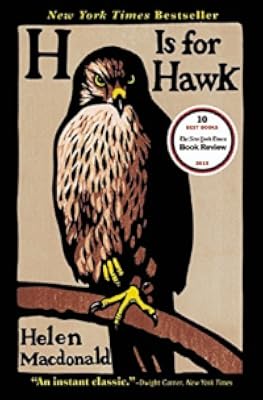
H Is for Hawk
by Helen Macdonald
On This Page
Description
When Helen Macdonald's father died suddenly on a London street, she was devastated. An experienced falconer captivated by hawks since childhood, she'd never before been tempted to train one of the most vicious predators: the goshawk. But in her grief, she saw that the goshawk's fierce and feral anger mirrored her own. Resolving to purchase and raise the deadly creature as a means to cope with her loss, she adopted Mabel and turned to the guidance of The Once and Future King author T. H. show more White's chronicle The Goshawk to begin her journey into Mabel's world. Projecting herself "in the hawk's wild mind to tame her" tested the limits of Macdonald's humanity.By turns heartbreaking and hilarious, this book is an unflinching account of bereavement, a unique look at the magnetism of an extraordinary beast, and the story of an eccentric falconer and legendary writer. Weaving together obsession, madness, memory, myth, and history, H Is for Hawk is a distinctive, surprising blend of nature writing and memoir from a very gifted writer. show lessTags
Recommendations
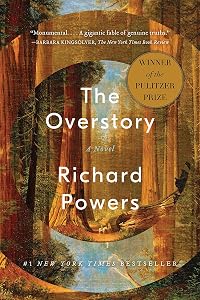
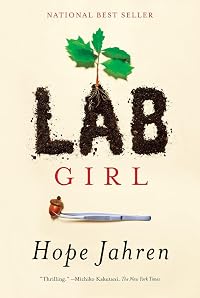
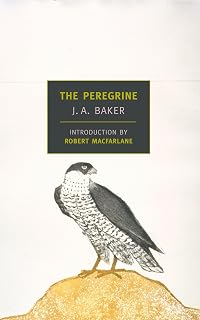
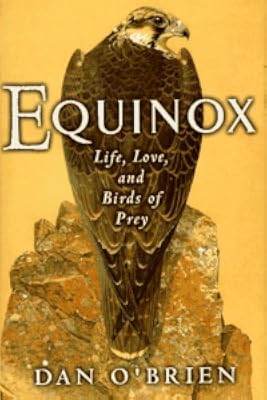
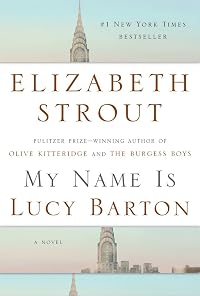
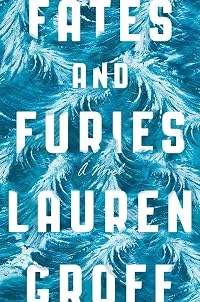
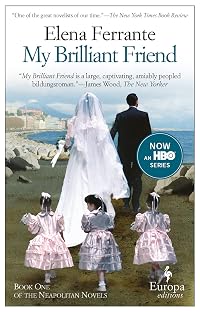


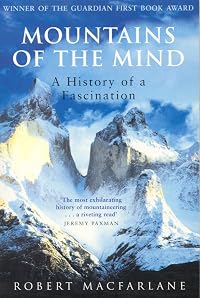

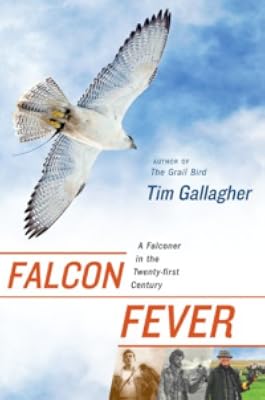
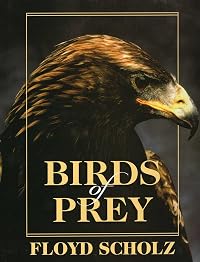
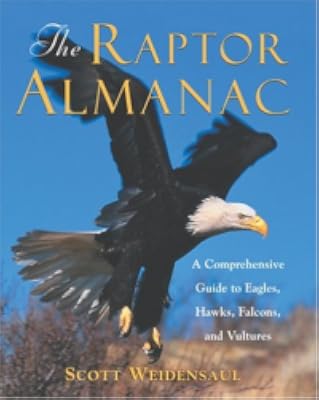
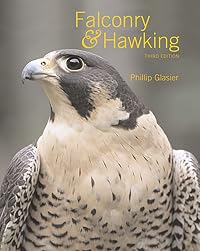
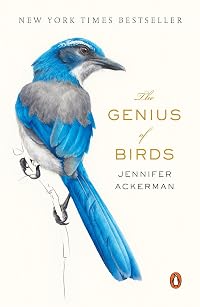
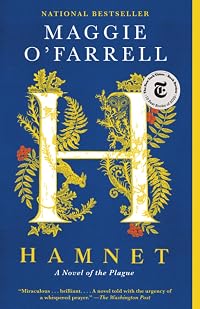
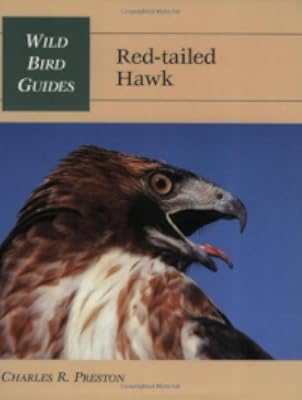
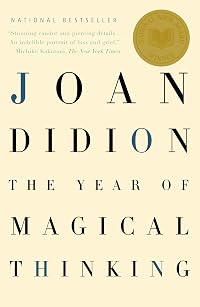
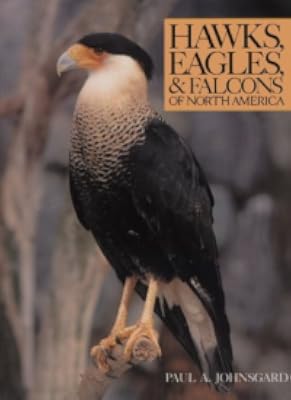
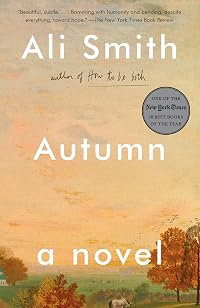
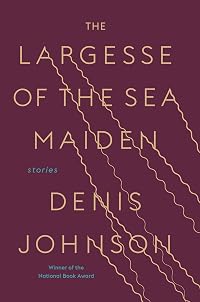

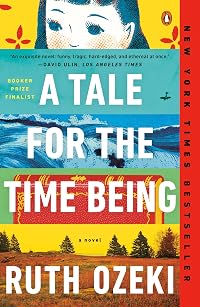
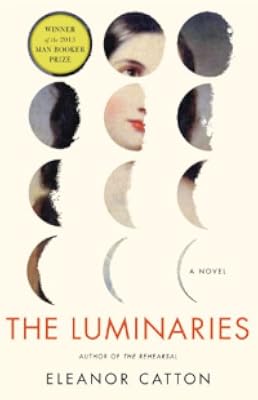
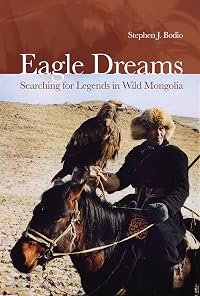

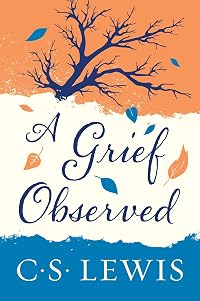

Member Recommendations
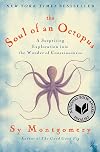
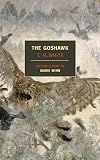

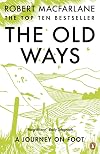
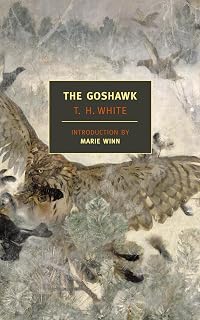
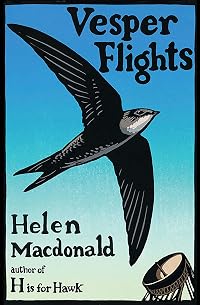
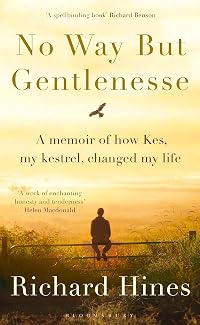
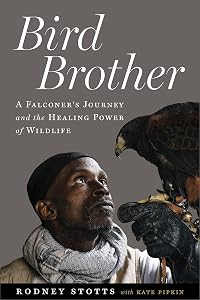
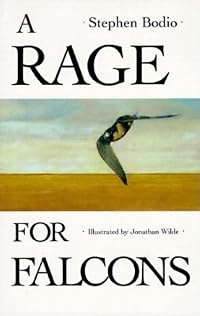
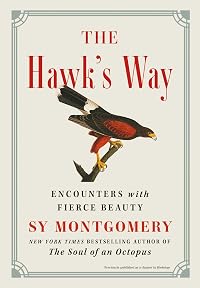
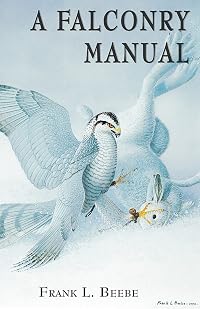
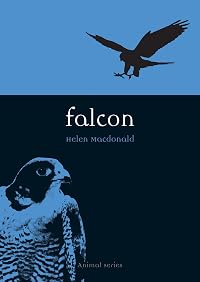
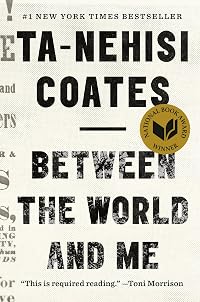
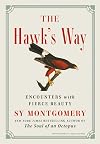
charl08 Both books beautifully literary about the British countryside.
20

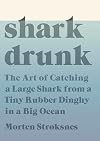
Shark Drunk: The Art of Catching a Large Shark from a Tiny Rubber Dinghy in a Big Ocean by Morten Stroksnes
julienne_preacher Memoirs with scientific overtone.
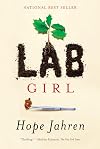
by lottpoet
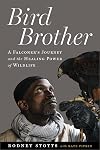
vwinsloe a sudden death and way to move forward
Member Reviews
Grief is insanity, and I mean that literally. When you’re grieving hard, you live in a different reality than everyone else in the world, even than the other people who are grieving with you. This book is about Macdonald’s bout with grief-insanity (and depression) after her beloved father’s death, and her recovery via Mabel and T. H. White (and SSRIs).
Mabel is a goshawk who Macdonald tames; as she tames her, she thinks about T. H. White’s efforts to tame a goshawk, which were about as different from Macdonald’s as it’s possible to be. (A good thing. White did not know what he was doing, and he did not treat the goshawk well.) In the end, the book is as much about White — his desperate attempts to flee from himself and his show more sexuality, to tame and master himself and become something else — as it is about Macdonald amd Mabel. Somehow it all works, though, to tell the story of grieving.
It is bizarre that I happened upon this book, not really knowing what it was about, shortly after we started reading The Sword in the Stone to our son at bedtime. If you’ve ever read that book, this one will provide a lot of depth and context and explanation for it, and is well worth a read. That is, if you can survive a very accurate, painful description of grief — I cried several times, and it’s been more than a decade since my father’s death — and some very unflinching descriptions of hunting (with a hawk), and wildness.
All in all, a really excellent book, especially if you’ve read White. But ... not the kind of thing I’d usually choose to read, and a somewhat harrowing experience. show less
Mabel is a goshawk who Macdonald tames; as she tames her, she thinks about T. H. White’s efforts to tame a goshawk, which were about as different from Macdonald’s as it’s possible to be. (A good thing. White did not know what he was doing, and he did not treat the goshawk well.) In the end, the book is as much about White — his desperate attempts to flee from himself and his show more sexuality, to tame and master himself and become something else — as it is about Macdonald amd Mabel. Somehow it all works, though, to tell the story of grieving.
It is bizarre that I happened upon this book, not really knowing what it was about, shortly after we started reading The Sword in the Stone to our son at bedtime. If you’ve ever read that book, this one will provide a lot of depth and context and explanation for it, and is well worth a read. That is, if you can survive a very accurate, painful description of grief — I cried several times, and it’s been more than a decade since my father’s death — and some very unflinching descriptions of hunting (with a hawk), and wildness.
All in all, a really excellent book, especially if you’ve read White. But ... not the kind of thing I’d usually choose to read, and a somewhat harrowing experience. show less
I am alone in my thought that, if you love something, set it free, was an instruction not a suggestion. This book's beautiful sentences made me very uncomfortable for that reason. I won't deny that the author's a gifted wordsmith but her enthusiasm for unwilding a creature she admires for being wild is dissonant in my mind...how is Mable different from "Hawk" in your minds? Why doesn't Mabel deserve a wild life?
Whatever, it's beautiful, go enjoy it if you can ignore the elephant rotting in the corner, I can't.
Whatever, it's beautiful, go enjoy it if you can ignore the elephant rotting in the corner, I can't.
Helen Macdonald is an experienced falconer, who, while grieving deeply in the wake of her father's sudden death, decided to take on the training of the notoriously difficult goshawk. This memoir combines her experiences of training the hawk and of dealing (or, often, failing to deal) with her grief, as well as frequent discussions of the author T. H. White, best known for The Once and Future King, who also wrote a book about training a goshawk -- badly, in his case -- and whose experiences of that, like Macdonald's, reflected many of his own psychological issues.
I have to say, I was not at all sure about this book at first. It was over-hyped to me to the point where I was almost resistant to reading it, and it seemed at first as if it show more might consist largely of the sort of self-indulgent self-psychoanalysis that sees everything in the world as a metaphor for the author's own life, which doesn't really have a lot of appeal for me. Plus, the writing style, half-casual, half-poetic, takes some getting used to.
But it grew on me, a lot. The prose really is good, and the emotions and experiences Macdonald writes about feel very honest. The things she talks about, from the lives of hawks to the life of T. H. White, are interesting. There are some good insights and thoughtful reflections. And ultimately -- and most importantly -- Macdonald very much respects and understands her hawk as an independent, non-human entity, not as a mere prop or tool with which to work out her grief, and she makes that gratifyingly clear by the end.
I don't know that this blew me away the way it seems to have done with some people. But I found it a very worthwhile read, nonetheless. show less
I have to say, I was not at all sure about this book at first. It was over-hyped to me to the point where I was almost resistant to reading it, and it seemed at first as if it show more might consist largely of the sort of self-indulgent self-psychoanalysis that sees everything in the world as a metaphor for the author's own life, which doesn't really have a lot of appeal for me. Plus, the writing style, half-casual, half-poetic, takes some getting used to.
But it grew on me, a lot. The prose really is good, and the emotions and experiences Macdonald writes about feel very honest. The things she talks about, from the lives of hawks to the life of T. H. White, are interesting. There are some good insights and thoughtful reflections. And ultimately -- and most importantly -- Macdonald very much respects and understands her hawk as an independent, non-human entity, not as a mere prop or tool with which to work out her grief, and she makes that gratifyingly clear by the end.
I don't know that this blew me away the way it seems to have done with some people. But I found it a very worthwhile read, nonetheless. show less
I'm not usually a big fan of either memoir or nature writing, so I likely would not have picked up "H is for Hawk" if I'd not heard author Helen MacDonald interviewed on the radio. I was so taken with the snippets she read that I not only needed the book right away, but it had to be the audiobook version -- which she narrates herself. MacDonald is a poet, among her many other accomplishments (such as falconry!), and it shows in her use of language -- another reason why I chose to listen rather than read.
It's not so much a linear telling of events, as layers of experience and emotion and flashbacks all wrapped around the experiences of suddenly losing her father and deciding to train a goshawk in hopes it will help her cope with grief. show more Along the way she researches writer T.H. White -- who also wrote about training a goshawk (albeit clumsily -- the training that is, not the writing), and who also was beset by demons.
Not the best choice for the squeamish, perhaps, as hawks are predators, and the practice of hawking is taking them out to kill game. It's not glorified, but not soft-pedaled either.
For me, I think this may turn out to be my favorite book of the year. show less
It's not so much a linear telling of events, as layers of experience and emotion and flashbacks all wrapped around the experiences of suddenly losing her father and deciding to train a goshawk in hopes it will help her cope with grief. show more Along the way she researches writer T.H. White -- who also wrote about training a goshawk (albeit clumsily -- the training that is, not the writing), and who also was beset by demons.
Not the best choice for the squeamish, perhaps, as hawks are predators, and the practice of hawking is taking them out to kill game. It's not glorified, but not soft-pedaled either.
For me, I think this may turn out to be my favorite book of the year. show less
Helen Macdonald’s memoir-ish novel H Is for Hawk follows the course of her life in the roughly year or so of her father’s death. She deals with grief in a rather peculiar way: by adopting a hawk. a goshawk, more specifically. Although a skilled falconer, she still grapples with training her young hawk, Mabel, and rearing it as her own. While the main focus of the book seems to be Helen and her hawk, another figure seems to have his own prominence: a falconer and the author of the goshawk, T.H. White. The novel feels just as much White’s as it is Macdonald’s, purely from her own investigation into his life and experiences with his goshawk. It makes for an interesting and unique narrative while also inspiring comparison between show more their approaches to falconry.
I think what gets the most praise here, deservedly so, is Macdonald’s vivid writing about the natural world, which can honestly be overlooked as you follow the storyline. There is incredible imagery, especially with regard to the english landscapes she flies mMbel on.
This novel is a lot of things: a memoir, a biography, an ode to her father, a love letter to falconry and the goshawk. But above all, it is a worthy read. show less
I think what gets the most praise here, deservedly so, is Macdonald’s vivid writing about the natural world, which can honestly be overlooked as you follow the storyline. There is incredible imagery, especially with regard to the english landscapes she flies mMbel on.
This novel is a lot of things: a memoir, a biography, an ode to her father, a love letter to falconry and the goshawk. But above all, it is a worthy read. show less
The narrative introduced many novel-to-me ideas and terms, whether from falconry or naturalism more generally, though these were never the point or primary focus. A fact somehow never kenned until stated baldly here: undomesticated creatures have no breeds or varieties, the species are identical to that thousands of years before. "Civilisations rise and fall, but the hawks stay the same." [116] Obvious, yes, and also pedantic: identical only because science has not traced and documented the natural variation within the species, as it can with domesticated breeds. All the same, a distinction between domesticated and non-domesticated species that could have been readily apparent to me, yet was not.
We carry the lives we've imagined as we show more carry the lives we have, and sometimes a reckoning comes of all the lives we have lost. [129] Sometimes a reckoning comes of all the lives we have lost, and sometimes we take it upon ourselves to burn them to ashes. [130]
A gratifying blend of memoir, grief portrait, naturalist's notebook, and examination of T.H. White's life, loosely linked with Macdonald's personal recounting of her own social anxieties. Not strictly chronological, shifting from one emphasis to another, even for the contemporary scenes, and while hopping from time to time & place to place, ultimately cohesive and immersive. show less
We carry the lives we've imagined as we show more carry the lives we have, and sometimes a reckoning comes of all the lives we have lost. [129] Sometimes a reckoning comes of all the lives we have lost, and sometimes we take it upon ourselves to burn them to ashes. [130]
A gratifying blend of memoir, grief portrait, naturalist's notebook, and examination of T.H. White's life, loosely linked with Macdonald's personal recounting of her own social anxieties. Not strictly chronological, shifting from one emphasis to another, even for the contemporary scenes, and while hopping from time to time & place to place, ultimately cohesive and immersive. show less
I can't say I've had a particularly permeating ornithological curiosity in my life. Though the enticement of learning something new is always a draw, what really attracted me to Helen Macdonald's H is for Hawk was the mention of her father's death as an epicenter. This year has been an increasingly introspective one for me. As Macdonald turns to her passion for hawking in the face of the introspective brobdingnagian that is bereavement, I have found myself turning to books. Making a book billed as, "an unflinching account of bereavement," pretty irresistible.
I'd agree with "unflinching" as a descriptor. Macdonald's prose feels honestly born and true to both her presented personality and the reality of such a loss. The reality of loss show more being so well depicted that I found it hard to stick with the book through parts. At one point I told my mom, a patient witness to the majority of my reading-inspired ramblings, that I loved this book and couldn't put it down. More recently I could be found ranting to her that I hated the book and didn't have any desire to pick it back up. Macdonald's grief and escape picked at ageing wounds that I'd sufficiently if not healthily walled up. Amidst the grumbles such inflammation inspired, respect for Macdonald's talent and the weight of what she took on with this book burgeoned.
I do understand some of the negative comments I've seen. H is a bit reference heavy and that's not everyone's cup of tea. I did find myself adding a few books to my TBR as a result but I don't think the references disturbed the feel of the book overly much and I did like that Macdonald seems to have tried to explain anything (term or experience) that was hawking-specific in a way that stuck with the style of her book.
Overall, I would recommend this book. I consider it to be both grief and human ability revealed; a book, an author, that is able to inspire introspection through itself and through our individual perspectives and passions. show less
I'd agree with "unflinching" as a descriptor. Macdonald's prose feels honestly born and true to both her presented personality and the reality of such a loss. The reality of loss show more being so well depicted that I found it hard to stick with the book through parts. At one point I told my mom, a patient witness to the majority of my reading-inspired ramblings, that I loved this book and couldn't put it down. More recently I could be found ranting to her that I hated the book and didn't have any desire to pick it back up. Macdonald's grief and escape picked at ageing wounds that I'd sufficiently if not healthily walled up. Amidst the grumbles such inflammation inspired, respect for Macdonald's talent and the weight of what she took on with this book burgeoned.
I do understand some of the negative comments I've seen. H is a bit reference heavy and that's not everyone's cup of tea. I did find myself adding a few books to my TBR as a result but I don't think the references disturbed the feel of the book overly much and I did like that Macdonald seems to have tried to explain anything (term or experience) that was hawking-specific in a way that stuck with the style of her book.
Overall, I would recommend this book. I consider it to be both grief and human ability revealed; a book, an author, that is able to inspire introspection through itself and through our individual perspectives and passions. show less
Members
- Recently Added By
Published Reviews
ThingScore 100
Helen Macdonald’s beautiful and nearly feral book, “H Is for Hawk,” her first published in the United States, reminds us that excellent nature writing can lay bare some of the intimacies of the wild world as well. Her book is so good that, at times, it hurt me to read it. It draws blood, in ways that seem curative.
added by ozzer
Lists

Recommended Nature Writing
346 works; 180 members

Top Five Books of 2020
982 works; 348 members

1001 Books You Must Read Before You Die
1,448 works; 1,137 members

Top Five Books of 2015
811 works; 241 members

Best Autobiographies and Memoirs
370 works; 67 members

Recommend the 20 best books you've read in the last five years
2,168 works; 608 members

Bibliomemoirs
46 works; 8 members

Top Five Books of 2016
795 works; 228 members

Books recommended by Barack Obama
295 works; 29 members

Obama Reads
181 works; 3 members

NYT 100 best books of 21st C
100 works; 31 members

Reading Glasses Podcast
410 works; 3 members

Books Read in 2024
4,727 works; 128 members

Top Five Books of 2024
795 works; 264 members

Barack Obama's Favorite Books of 2016
5 works; 1 member
Books That Made Us Cry
278 works; 145 members

Adult Stories Involving Animals
76 works; 6 members

Books recommended by Calgary Public Library staff
1,588 works; 4 members

Put a Bird On It
75 works; 12 members

.
184 works; 1 member
Best Audiobooks
240 works; 114 members

Reading list
170 works; 1 member

Favorite Animal Non-Fiction
293 works; 144 members

Club Read's Recommended Nonfiction Written by Women
618 works; 30 members

Top Five Books of 2023
767 works; 317 members

Carole's List
445 works; 13 members

Five star books
1,767 works; 110 members
Animals in the Title
498 works; 11 members

Female Author
1,234 works; 67 members

Books Read in 2020
4,379 works; 124 members

Books Read in 2019
4,052 works; 108 members

Books about Animals
86 works; 4 members

BBC Radio 4 Bookclub
341 works; 13 members
Best 21st Century Books (So Far)
679 works; 86 members

To Read
617 works; 7 members
Favourite Books
1,820 works; 308 members
Talk Discussions
Past Discussions
H is for Hawk in Non-Fiction Readers (April 2021)
H is for Hawk in Birds, Birding & Books (March 2021)
Author Information

Some Editions
Awards and Honors
Awards
Distinctions
Notable Lists
Series
Belongs to Publisher Series
Work Relationships
Has the adaptation
Is a commentary on the text of
Common Knowledge
- Canonical title
- H Is for Hawk
- Original title
- H is for Hawk
- Original publication date
- 2014
- People/Characters
- Helen Macdonald; T.H. White; Mabel; Arlidge MacDonald
- Important places
- Cambridge, Cambridgeshire, England, UK
- Related movies
- H is for Hawk: A New Chapter (2017 | IMDb)
- Dedication
- To my family
- First words
- Forty-five minutes north-east of Cambridge is a landscape I've come to love very much indeed.
- Quotations
- The archaeology of grief is not ordered. It is more like earth under a spade, turning up things you had forgotten.
Using his pencil, he shaded the page of his notebook with graphite, and there, white on grey, impressed on the paper from the missing page above, was the registration number of the secret plane. He stopped crying, he said, an... (show all)d cycled home in triumph.
There is something religious about the activity of looking up at a hawk in a tall tree.
Bereavement. Or, Bereaved, Bereft. It's from the Old English bereafian, meaning "to deprive of, take away, seize, rob". Robbed, Seized. It happens to everyone. But you feel it alone. Shocking loss isn't to be shared, no matte... (show all)r how hard you try.
Goshawks are things of death and blood and gore, but they are not excuses for atrocities. Their inhumanity is to be treasured because what they do has nothing to do with us at all.
Tim White sits at his kitchen table and fills his fountain pen from a bottle of green ink that stands on the oilskin tablecloth. The ink is a mischievous thing, a small, fierce thing. He is writing of his new life with a colo... (show all)ur that is the ink of - what does Havelock Ellis call it? The favourite ink of inverts. - Last words
- (Click to show. Warning: May contain spoilers.)Over the bright horizon the sky swam like water.
- Blurbers
- Motion, Andrew; Haddon, Mark; Dee, Tim
- Original language
- English
Classifications
Statistics
- Members
- 5,275
- Popularity
- 2,598
- Reviews
- 308
- Rating
- (3.84)
- Languages
- 15 — Catalan, Dutch, English, Estonian, Finnish, French, German, Hungarian, Italian, Korean, Polish, Spanish, Swedish, Turkish, Portuguese (Portugal)
- Media
- Paper, Audiobook, Ebook
- ISBNs
- 60
- ASINs
- 27