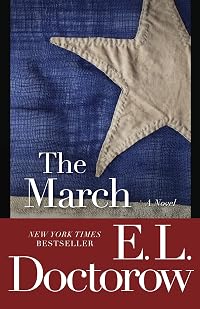
The March
by E. L. Doctorow
On This Page
Description
In 1864, after Union general William Tecumseh Sherman burned Atlanta, he marched his sixty thousand troops east through Georgia to the sea, and then up into the Carolinas. The army fought off Confederate forces and lived off the land, pillaging the Southern plantations, taking cattle and crops for their own, demolishing cities, and accumulating a borne-along population of freed blacks and white refugees until all that remained was the dangerous transient life of the uprooted, the show more dispossessed, and the triumphant. show lessTags
Recommendations

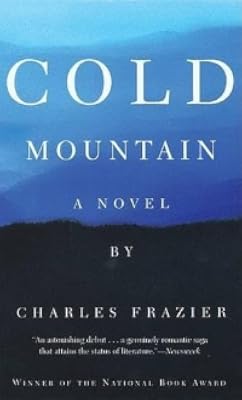
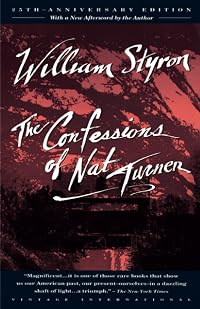
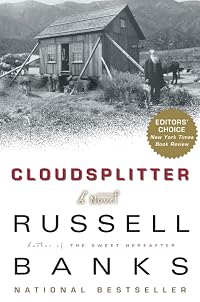
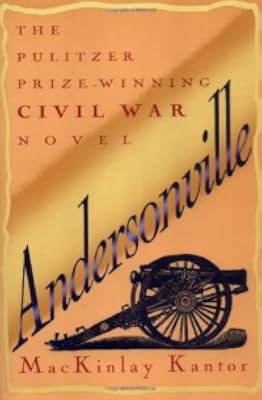


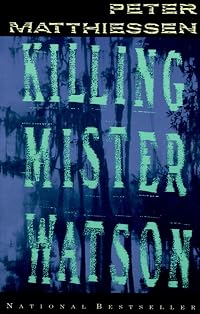
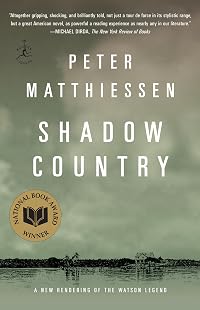
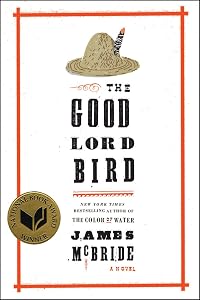
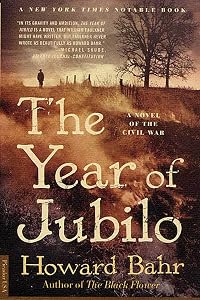



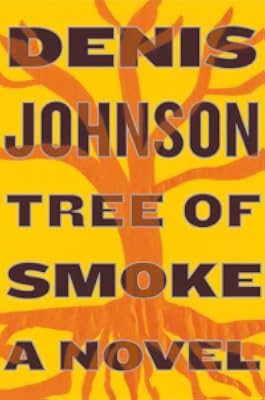
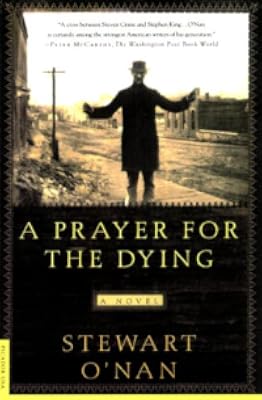
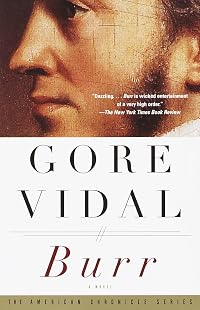
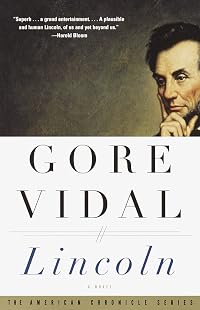
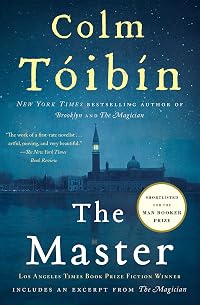
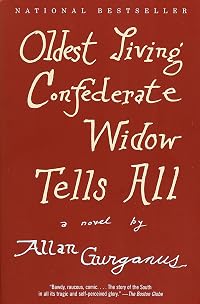

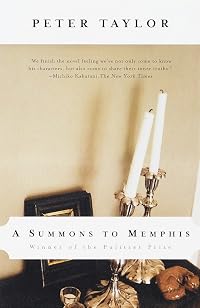
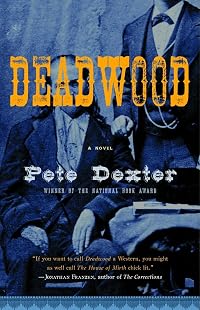
Member Recommendations

whymaggiemay Both novels show the medical side of the war, from the surgeon's and nurses points of view, albeit that the view in Mary Sutter is much grittier.
by stretch

Limelite General Sherman's scorched earth policy as seen from a Southern plantation owner's view as opposed to the perpetrators'.
Member Reviews
This was not war as adventure, nor war for a solemn cause, it was war at its purest, a mindless mass rage severed from any cause, ideal, or moral principle. It was as if God had decreed this characterless entanglement of brainless forces as his answer to the human presumption.
William Tecumseh Sherman’s march to the sea is, without doubt, one of the defining moments in Southern history. Doctorow picks the march up as it leaves Atlanta and cuts through Middle Georgia to Savannah, the sea, and then the Carolinas. The battles and the ravages of war are chronicled very realistically, and the novel has a cast of characters, both real and fictional, who cover the gamut of those affected by this bit of Civil War hell fire.
Among the most show more interesting are a field surgeon, a Confederate soldier masquerading as a Yankee, a freed slave girl who passes for white, a black photographer and, of course, Sherman himself. Wrede Sartorius is the field surgeon whose ice-water reactions to the war were a bit unsettling, as if he did not feel anything. His clinical interest in his patients appears to be the only interest he has, remaining as apathetic to them as individuals, as he is to others who come into his sphere. In contrast to Wrede, we have Pearl, a freed slave girl who passes for white, and shows an uncommon degree of sympathy for the distraught widow of the man who fathered her. Arly is a Confederate soldier who is awaiting execution for sleeping at his post when the Yankees come into town and cause him to be freed to fight again. His method of survival is to change uniforms and pose as a Yankee soldier, and he follows the marching troops until he meets with Calvin Harper, a free black man from Baltimore who is traveling as a photographer's assistant.
Each of these characters has a fully developed story within the story, with myriad smaller characters coming and going as the march proceeds. It was Pearl’s journey that pulled this story into a solid tale for me, as so many of the other characters came and went, serving almost as vignettes of what the war was doing to so many lives, but she remained central from the beginning to the end.
It is hard to imagine how these people survived the destruction and death around them and then managed to pick up any of the pieces and carry on with meaningful lives. Sherman was undoubtedly a brilliant general, pursuing a strategy that was designed to put an end to the war and cripple the society beyond any recovery. He did what he intended, but this novel is as much the story of the lives he touched as of his own. Interestingly, Doctorow does not paint him as hero or villain, but as a bit of both, which I suspect falls somewhere near the truth. show less
William Tecumseh Sherman’s march to the sea is, without doubt, one of the defining moments in Southern history. Doctorow picks the march up as it leaves Atlanta and cuts through Middle Georgia to Savannah, the sea, and then the Carolinas. The battles and the ravages of war are chronicled very realistically, and the novel has a cast of characters, both real and fictional, who cover the gamut of those affected by this bit of Civil War hell fire.
Among the most show more interesting are a field surgeon, a Confederate soldier masquerading as a Yankee, a freed slave girl who passes for white, a black photographer and, of course, Sherman himself. Wrede Sartorius is the field surgeon whose ice-water reactions to the war were a bit unsettling, as if he did not feel anything. His clinical interest in his patients appears to be the only interest he has, remaining as apathetic to them as individuals, as he is to others who come into his sphere. In contrast to Wrede, we have Pearl, a freed slave girl who passes for white, and shows an uncommon degree of sympathy for the distraught widow of the man who fathered her. Arly is a Confederate soldier who is awaiting execution for sleeping at his post when the Yankees come into town and cause him to be freed to fight again. His method of survival is to change uniforms and pose as a Yankee soldier, and he follows the marching troops until he meets with Calvin Harper, a free black man from Baltimore who is traveling as a photographer's assistant.
Each of these characters has a fully developed story within the story, with myriad smaller characters coming and going as the march proceeds. It was Pearl’s journey that pulled this story into a solid tale for me, as so many of the other characters came and went, serving almost as vignettes of what the war was doing to so many lives, but she remained central from the beginning to the end.
It is hard to imagine how these people survived the destruction and death around them and then managed to pick up any of the pieces and carry on with meaningful lives. Sherman was undoubtedly a brilliant general, pursuing a strategy that was designed to put an end to the war and cripple the society beyond any recovery. He did what he intended, but this novel is as much the story of the lives he touched as of his own. Interestingly, Doctorow does not paint him as hero or villain, but as a bit of both, which I suspect falls somewhere near the truth. show less
This is Doctorow's fictional account, from multiple perspectives, of Sherman's "March to the Sea" in the late stages of the American Civil War. There is a large cast of characters, from plantation owners to recently emancipated Black people, from a Union battlefield surgeon to a crafty young Rebel soldier with few principles of any kind, from a "white Negro" nurse to a madwoman looking for her sons among the dead and wounded, from General Sherman himself to his reckless but indispensable cavalry commander, General Judson Kilpatrick ("a hell of a damned fool", in Sherman's words). There's blood and suffering a-plenty here, but there is also compassion, humanity in both strength and frailty, and the persistence of pursuing survival into a show more terrifying and uncertain future. There's even a touch of humor here and there, as when Gen. Kilpatrick, a bit the worse for his overnight non-military endeavors ("horizontal drill"), stumbles outside in his long-johns to see what all the noise is about, and finds himself in the midst of a Confederate cavalry raid on his own camp. When a Rebel officer demands to know the whereabouts of General Kilpatrick, he points at the house he's been using as headquarters ("they went that-a-way") and then, still clad only in his skivvies, careens off into the woods on horseback trying to figure out what to do next. I've always enjoyed Doctorow's way with historical fiction, blending actual events with the fruits of his imagination, putting recognizable historical figures into contact with his fictional creations to excellent effect. [The March] hit all the right notes for me, and will be one of my best reads for the year (2024).
ETA: In reviewing my reading threads, I find I first read this novel in 2007. I always had the feeling that I HAD read it, but couldn't remember it, and I didn't document it in my catalog at that earlier date. Interestingly, I took note of very different elements in my comments back then. Here's what I said on my 2007 reading thread:
"A good read for civil war buffs. Interesting characters, some of whom were kind of abandoned in the course of the "march". In particular, Coalhouse Walker, Sr. presumably the father of Coalhouse Walker, Jr., of [Ragtime]. He had a very small part here, and then disappeared. This is by no means a military novel, but we do get character sketches of General Sherman, General Grant and others. Also briefly raises the interesting premise that Lincoln may have been afflicted with some premature aging disorder. Must research that--is there really such a school of thought?
Edit: So far, I have determined that "some people wonder" if Lincoln was afflicted with Marfan's syndrome, in which individuals have very long limbs, and eventually develop heart problems; life expectancy is short...that could be what he meant. The premature aging diseases all seem to have dramatic affects at an early age, and rarely do their victims survive to adulthood at all." show less
ETA: In reviewing my reading threads, I find I first read this novel in 2007. I always had the feeling that I HAD read it, but couldn't remember it, and I didn't document it in my catalog at that earlier date. Interestingly, I took note of very different elements in my comments back then. Here's what I said on my 2007 reading thread:
"A good read for civil war buffs. Interesting characters, some of whom were kind of abandoned in the course of the "march". In particular, Coalhouse Walker, Sr. presumably the father of Coalhouse Walker, Jr., of [Ragtime]. He had a very small part here, and then disappeared. This is by no means a military novel, but we do get character sketches of General Sherman, General Grant and others. Also briefly raises the interesting premise that Lincoln may have been afflicted with some premature aging disorder. Must research that--is there really such a school of thought?
Edit: So far, I have determined that "some people wonder" if Lincoln was afflicted with Marfan's syndrome, in which individuals have very long limbs, and eventually develop heart problems; life expectancy is short...that could be what he meant. The premature aging diseases all seem to have dramatic affects at an early age, and rarely do their victims survive to adulthood at all." show less
I was going to limit myself to 4-stars on this. A really good book but not in my 5-star area... until I got to the last 20 pages... there were several passages that really hit me as being thought-provoking, insightful, and down-right glorious...
*** SPOILER BELOW ***
And so the war had come down to words. It was fought now in terminology across a table. It was contested in sentences. Entrencements and assaults, drum taps and bugle calls, marches, ambushes, burnings, and pitched battles were transmogrified into nouns and verbs. It is all turned very quiet...
No cannonball, or canister but has become the language her spoke, the words written down...
Language is war by other means.
*** SPOILER BELOW ***
And so the war had come down to words. It was fought now in terminology across a table. It was contested in sentences. Entrencements and assaults, drum taps and bugle calls, marches, ambushes, burnings, and pitched battles were transmogrified into nouns and verbs. It is all turned very quiet...
No cannonball, or canister but has become the language her spoke, the words written down...
Language is war by other means.
Imagine that, in the middle of the night, word comes that the enemy army is a few miles down the road and you must flee in the night, after burning your crops and slaughtering your animals so the army will not benefit from destroying your home. Imagine that you are an army doctor who spends most of your time amputating the shattered limbs of the young soldiers. Imagine that you are a soldier without a real allegiance to either side of the war but with a huge drive to stay alive. Imagine that you are a freed slave with the snow white skin of your father. Imagine that, because of this civil war, you are now homeless and the only place you seem to belong is tagging along behind the marauding union army under the leadership of General show more Sherman. Imagine one of the darkest chapters of the American Civil War as seen through the eyes of characters trying to survive "the March" show less
"I don’t know what to think. I’ve lost everything to this war. And I see steadfastness not in the rooted mansions of a city but in what has no roots, what is itinerant. A floating world.” (page 61)
The March is, quite simply, exactly what historical fiction should be. It brings alive a specific time and place, creates characters that are complex and reflective of their period, and brings to the reader the sights, smells and sounds of that period.
Doctorow tells the story of Sherman’s March to the Sea and the end of the American Civil War through numerous characters – white, black, free, slave, army, civilian, rich and poor. The sheer number of characters and stories could be overwhelming but they are connected by the March show more itself, a shared experience, and really the central character of the book. Through a kaleidoscope of images and stories, Doctorow pieces together a portrait of war, death, brutality, kindness, hope and redemption.
One of my favorite parts was the brief glimpse we are given of President Lincoln very near the end of the war. Wrede, a doctor observes: "His affliction might, after all, be the wounds of the war he’d gathered into himself, the amassed miseries of this torn-apart country made incarnate. Wrede, who had attended every kind of battle death, could not recall having ever before felt this sad for another human being.”
This book sucked me in, both as a very good, well-told story, and as a fictionalized account of a part of American history I am not deeply familiar with. My one complaint would be that a map of Sherman’s route through Georgia and the Carolinas would have been helpful, as would some indication – perhaps in an afterword – of what characters were real or based on historical figures and which were purely fictionalized (some are obvious, but I now have a lot of Googling to do). show less
The March is, quite simply, exactly what historical fiction should be. It brings alive a specific time and place, creates characters that are complex and reflective of their period, and brings to the reader the sights, smells and sounds of that period.
Doctorow tells the story of Sherman’s March to the Sea and the end of the American Civil War through numerous characters – white, black, free, slave, army, civilian, rich and poor. The sheer number of characters and stories could be overwhelming but they are connected by the March show more itself, a shared experience, and really the central character of the book. Through a kaleidoscope of images and stories, Doctorow pieces together a portrait of war, death, brutality, kindness, hope and redemption.
One of my favorite parts was the brief glimpse we are given of President Lincoln very near the end of the war. Wrede, a doctor observes: "His affliction might, after all, be the wounds of the war he’d gathered into himself, the amassed miseries of this torn-apart country made incarnate. Wrede, who had attended every kind of battle death, could not recall having ever before felt this sad for another human being.”
This book sucked me in, both as a very good, well-told story, and as a fictionalized account of a part of American history I am not deeply familiar with. My one complaint would be that a map of Sherman’s route through Georgia and the Carolinas would have been helpful, as would some indication – perhaps in an afterword – of what characters were real or based on historical figures and which were purely fictionalized (some are obvious, but I now have a lot of Googling to do). show less
Historical fiction set near the end of the American Civil War (late 1864- early 1865) that follows General William T. Sherman’s March through Georgia, South Carolina, and North Carolina, and ends at the surrender of the Confederacy. It follows a large cast of characters representing the many diverse participants, including military leaders, landowners, emancipated slaves, refugees, soldiers on both sides, doctors, nurses, journalists, and volunteers that perform services as needed. Sherman’s troops burned cities, pillaged plantations, and commandeered livestock as they pursued Confederate General Joseph Johnston.
The storyline shifts among different characters, giving the reader a chance to view events from a broad perspective. The show more closest we come to a protagonist is Pearl, the daughter of a (deceased) slave mother and a landowning father. As the novel opens, Pearl and other slaves are freed by the arrival of the Union army. They follow the troops, and we follow Pearl through a wide variety of experiences, such as posing as a drummer boy and helping out in the medical station. The comic relief is provided by a pair of Confederate soldiers. They get into one scrape after another, posing as Union troops and eventually encountering a photographer recording images of the war.
A couple years ago I read Sherman’s March by Burke Davis, and if I had thought about it, I would have read these two books back-to-back. Doctorow’s fiction takes historic events to a personal level, allowing several characters to interact with key players such as Lincoln and Sherman. This book portrays this chaotic time and its impact on individuals, vividly describing the physical, psychological, and emotional trauma of war, as well as the jubilation of freedom and the uncertainty of what comes next. show less
The storyline shifts among different characters, giving the reader a chance to view events from a broad perspective. The show more closest we come to a protagonist is Pearl, the daughter of a (deceased) slave mother and a landowning father. As the novel opens, Pearl and other slaves are freed by the arrival of the Union army. They follow the troops, and we follow Pearl through a wide variety of experiences, such as posing as a drummer boy and helping out in the medical station. The comic relief is provided by a pair of Confederate soldiers. They get into one scrape after another, posing as Union troops and eventually encountering a photographer recording images of the war.
A couple years ago I read Sherman’s March by Burke Davis, and if I had thought about it, I would have read these two books back-to-back. Doctorow’s fiction takes historic events to a personal level, allowing several characters to interact with key players such as Lincoln and Sherman. This book portrays this chaotic time and its impact on individuals, vividly describing the physical, psychological, and emotional trauma of war, as well as the jubilation of freedom and the uncertainty of what comes next. show less
"War is hell."
The Union march through Georgia, South Carolina and North Carolina utilized one of the oldest military tactics - burn civilian houses, steal their food, rape their women and leave them with nothing. Demoralize the enemy by getting them wear it hurts the most - at home.
This novel follows several characters whose lives were turned upside down by Sherman's "March to the Sea" (and up the coast). From freed slaves to Southern belles to crazed Rebel soldiers to the high Army brass, this novel shows how the pain and suffering of war is not only confined to those in actual battle. War is also hell for the wives, mothers and children on the homefront, for the journalists trying to get the story, for the politicians whose policies show more impact the very reason for fighting. It's simply hell for all.
If you enjoy Civil War fiction, Doctorow's book is a smart, fast and entertaining read. show less
The Union march through Georgia, South Carolina and North Carolina utilized one of the oldest military tactics - burn civilian houses, steal their food, rape their women and leave them with nothing. Demoralize the enemy by getting them wear it hurts the most - at home.
This novel follows several characters whose lives were turned upside down by Sherman's "March to the Sea" (and up the coast). From freed slaves to Southern belles to crazed Rebel soldiers to the high Army brass, this novel shows how the pain and suffering of war is not only confined to those in actual battle. War is also hell for the wives, mothers and children on the homefront, for the journalists trying to get the story, for the politicians whose policies show more impact the very reason for fighting. It's simply hell for all.
If you enjoy Civil War fiction, Doctorow's book is a smart, fast and entertaining read. show less
Members
- Recently Added By
Lists

Best Historical Fiction
620 works; 257 members

Novels from The Guardian's Great American Novelist Tournament
148 works; 24 members

Pulitzer Prize for Fiction - Finalists
88 works; 9 members

National Book Award Finalists - Fiction
377 works; 12 members

Pen/Faulkner Winners and Finalists
178 works; 9 members

Books Featured on Readers' Review of the Diane Rehm Show
161 works; 8 members

Same Title
115 works; 3 members

THE WAR ROOM
813 works; 24 members
Author Information

57+ Works 25,133 Members
E. L. (Edgar Lawrence) Doctorow was born on January 6, 1931, in the Bronx, New York. He received an A.B. in philosophy in 1952 from Kenyon College and did graduate work at Columbia University. He served in the U.S. Army Signal Corps from 1953-1955. He began his career as a script reader for CBS Television and Columbia Pictures and as a senior show more editor for the New American Library. He was editor-in-chief for Dial Press from 1964 to 1969, where he also served as vice president and publisher in his last year on staff. It was at this time that he decided to write full time. He wrote novels, short stories, essays, and a play. His debut novel, Welcome to Hard Times, was published in 1960 and was adapted into a film in 1967. His other works include, Loon Lake, The Waterworks, The March, Homer and Langley, and Andrew's Brain. He won the National Book Award for Fiction in 1986 for World's Fair and the National Book Critics Circle Award for fiction in 1976 for Ragtime, which was adapted into a film in 1981 and a Broadway musical in 1998. Billy Bathgate received the PEN/Faulkner Award, the National Book Critics Circle Award, and the William Dean Howells Medal in 1990. The Book of Daniel and Billy Bathgate were also adapted into films. He received the 2013 Medal for Distinguished Contribution to American Letters for his outstanding achievement in fiction writing. He died of complications from lung cancer on July 21, 2015 at the age of 84. (Bowker Author Biography) show less
Some Editions
Awards and Honors
Awards
Distinctions
Series
Belongs to Publisher Series
Mirmanda (49)
Keltainen kirjasto (381)
Work Relationships
Common Knowledge
- Canonical title
- The March
- Original title
- The March
- Original publication date
- 2005
- People/Characters
- Pearl Jameson; Wrede Sartorius; William Tecumseh Sherman; Emily Thompson; Mattie Jameson; Calvin Harper (show all 11); Stephen Walsh; Will; Arly; Wilma Jones; Hugh Pryce
- Important places
- Georgia, USA; South Carolina, USA; North Carolina, USA; USA; Savannah, Georgia, USA
- Important events
- American Civil War (1861 | 1865); Sherman's March to the Sea (1864); Carolinas Campaign (1865)
- Dedication
- Helen
- First words
- At five in the morning someone banging on the door and shouting, her husband, John, leaping out of bed, grabbing his rifle, and Roscoe at the same time roused from the backhouse, his bare feet pounding: Mattie hurriedly pulle... (show all)d on her robe, her mind prepared for the alarm of war, but the heart stricken that it would finally have come, and down the stairs she flew to see through the open door in the lamplight, at the steps of the portico, the two horses, steam rising from their flanks, their heads lifting, their eyes wild, the driver a young darkie with rounded shoulders, showing stolid patience even in this, and the woman standing in her carriage no but her aunt Letitia Pettibone of McDonough, her elderly face drawn in anguish, her hair a straggled mess, this woman of such fine grooming, this dowager who practically ruled the season in Atlanta standing up in the equipage like some hag of doom, which indeed she would prove to be.
- Last words
- (Click to show. Warning: May contain spoilers.)There was still a scent of gunfire in the trees, and they were glad to come out into the sun again.
- Blurbers
- Kakutani, Michiko
- Original language*
- Amerikanisch
- Canonical DDC/MDS
- 813.54
- Canonical LCC
- PS3554.O3
*Some information comes from Common Knowledge in other languages. Click "Edit" for more information.
Classifications
Statistics
- Members
- 3,190
- Popularity
- 5,427
- Reviews
- 92
- Rating
- (3.69)
- Languages
- 11 — Czech, Dutch, English, Finnish, French, German, Hungarian, Indonesian, Italian, Portuguese, Spanish
- Media
- Paper, Audiobook, Ebook
- ISBNs
- 32
- ASINs
- 13