
On This Page
Description
Traveling to Civil War-era Washington, D.C., to tend wounded soldiers and pursue her dream of becoming a surgeon, headstrong midwife Mary receives guidance from two smitten doctors and resists her mother's pleas for her to return home.Tags
Recommendations






Member Recommendations
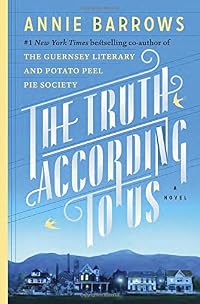
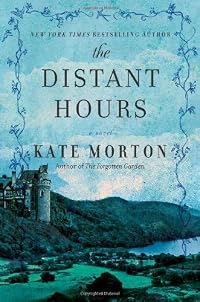
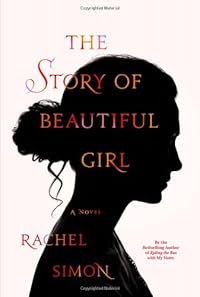
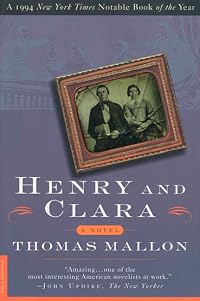
whymaggiemay Both novels show the medical side of the war, from the surgeon's and nurses points of view, albeit that the view in Mary Sutter is much grittier.
30
whymaggiemay Both these books reminded me of how lucky I was to be born in the latter part of the 20th Century when medicine had been so greatly improved.
20

Member Reviews
My Name is Mary Sutter is the story of a New York midwife who becomes a nurse to soldiers of the Union Army, men who were more likely to die from infections than they were from gunshots. Mary's ultimate goal is to become a surgeon at a time when women in America were not admitted to medical schools. The novel begins with Mary’s failed attempt to apprentice herself to James Blevens, a surgeon in Albany. In a related plot, Mary also decides to leave New York due to the upcoming marriage of her twin sister to the young man Mary loves. Mary’s service as a volunteer nurse in the Washington D.C. And her fierce desire to learn the art of surgery drives the plot along with the ripple effects of war. She's eventually assigned to the Union show more Hotel hospital in Georgetown where she crosses paths with Dr. William Stipp. Together they try to bring order to the hygiene-deficient hospital under challenging conditions. Eventually Mary works her way onto the battlefield and learns what it means to be a surgeon.
While the novel is told mostly from Mary’s point of view we do get some chapters involving Abraham Lincoln, George McClellan and his staff that give us some background on the difficult decisions of the war. The author's research into mid-19th century medical procedures seemed very authentic. There was lots of information on the surgical practices, the filth of army hospitals and the desperation of doctors fully aware that they didn't have knowledge necessary to save their patients. I liked the character of Mary, who seemed very heroic without being too saintly. She was sympathetic but not always likable. I really enjoyed this book and plan to check out another one by this author. show less
While the novel is told mostly from Mary’s point of view we do get some chapters involving Abraham Lincoln, George McClellan and his staff that give us some background on the difficult decisions of the war. The author's research into mid-19th century medical procedures seemed very authentic. There was lots of information on the surgical practices, the filth of army hospitals and the desperation of doctors fully aware that they didn't have knowledge necessary to save their patients. I liked the character of Mary, who seemed very heroic without being too saintly. She was sympathetic but not always likable. I really enjoyed this book and plan to check out another one by this author. show less
Another serendipitous thrift store find, MY NAME IS MARY SUTTER (2010) was Robin Oliveira's first novel, which is hard to believe, because it is so perfect, and so good! The title character is a young midwife (trained by her widowed mother) in 1860s Albany who longs to be a surgeon, but her application to the local medical school is rejected because she is a woman, and James Blevens, the young local doctor, refuses to take her on as an apprentice for the same reason. She is also secretly in love with Thomas, the recently orphaned young man next door, but he is enamored with her much prettier twin sister, Jenny. Then the Civil War intervenes, changing everything, as Thomas quickly marries (and impregnates) Jenny, enlists in the Union show more Army and departs, as do Dr Blevens and Mary's younger brother, Christian. Bereft and restless, Mary soon answers a call (from Dorothea Dix) for nurses in Washington, D.C., where she quickly becomes caught up in the confusion and madness of the War, and also manages to apprentice herself to the much older, widowed Dr William Stipp. Many historical figures play minor roles in Mary's story - Generals McClellan, Winfield Scott and orhers. Surgeons Letterman and Tripler; and, of course, President Lincoln, and his young secretary, John Hay. The author expertly weaves these persons into Mary Sutter's horrific baptism by fire in the horrific conditions of hastily assembled and ill-equipped hospitals in D..C., and then the filthy, primitive field hospitals near the battlefields of Manassas, Fairfax, and Antietam, strewn with thousands of dead and wounded soldiers from both sides of the conflict. After Antietam, Mary returns home, but her story continues a few years after the war in a heartwarming Epilogue.
I absolutely loved this book, and was sorry to see it end. But then I Googled the author and happily discovered that she has written a sequel called WINTER SISTERS. Time permitting, I will try to read that one too. This one? A worthy addition to the growing genre of War Lit. Bravo, Ms Oliveira. My very highest recommendation.
- Tim Bazzett, author of the memoir, BOOKLOVER show less
I absolutely loved this book, and was sorry to see it end. But then I Googled the author and happily discovered that she has written a sequel called WINTER SISTERS. Time permitting, I will try to read that one too. This one? A worthy addition to the growing genre of War Lit. Bravo, Ms Oliveira. My very highest recommendation.
- Tim Bazzett, author of the memoir, BOOKLOVER show less
Mary Sutter is a midwife yearning to become a surgeon. Midwifery is in her blood, through a long maternal family line of midwives. Her longing to become a doctor seems to find an opening when the casualties in the American civil war demand nurses in the country's capital.
Mary manages to get to DC to answer the call to nurse, hoping to learn surgery. There she is assigned to a very poor hospital, under Dr. Stipp, who, along with the other doctors of that time and place, discover how much they need to learn about anatomy in order to perform the surgeries which this war made necessary. It was one thing to cut skin, another to sever muscles. Would they snap back? Disappear under the flesh? To what would he anchor them afterwards? Oh, show more curse his medical training! Six months of courses at Yale; not one surgery performed under anyone's auspices. … Any latent skill he possessed was merely guesswork augmented by common sense. What would a cut muscle do?
At Manassas ... a continuous, unbroken multitude of men lay on the rocky ground. She could not see the end of them. She had guessed before that there were perhaps five hundred wounded, but now she saw that there were thousands. … Stipp stopped and shut his eyes for a moment, as if he couldn't stand to see the unraveling scene before him. Then he said, “We don't have a choice. We'll have to transport the ones we can save first. That's what we'll do. Otherwise, we are all doomed. Afterwards, we'll load the rest.” He turned toward Mary, relieved he'd found the answer. “I need you to help, Mary. I need you to go down to the depot and sort them.”
“Sort them?”
“Organize the wounded into groups.”
It took a moment for what Stipp was saying to her to penetrate, and then its meaning entered her like a knife. “You want me to choose?”
“Listen to me, Mary. You see all those men? Most of them will die. If not here, then back in Washington. On the Peninsula, no one shot in the belly or chest or head survived, not one, no matter how fast we got to them. Do you understand? We have to save the most men. If we let one on the train who will die anyway, it will doom two.”
Through a woman's eyes, we see the brutality of war, the harsh reality of unnecessary deaths because of a necessity for more advanced surgical techniques, the need for advanced medicine. All of the aspects of the story were fascinating, the writing well done, the settings memorable, the characters lived. Mary, especially, as she made choices, had trod the impossible line. Had tried to reconcile need with mercy.
This one has become a sentimental favorite.
************
Stars:
...Writing: 4
...Story: 4.5
...Character: 4.5
...Sense of place: 4
...Enjoyment factor: 5
ARBITRARY OVERALL BOOK RATING: 4.5 show less
Mary manages to get to DC to answer the call to nurse, hoping to learn surgery. There she is assigned to a very poor hospital, under Dr. Stipp, who, along with the other doctors of that time and place, discover how much they need to learn about anatomy in order to perform the surgeries which this war made necessary. It was one thing to cut skin, another to sever muscles. Would they snap back? Disappear under the flesh? To what would he anchor them afterwards? Oh, show more curse his medical training! Six months of courses at Yale; not one surgery performed under anyone's auspices. … Any latent skill he possessed was merely guesswork augmented by common sense. What would a cut muscle do?
At Manassas ... a continuous, unbroken multitude of men lay on the rocky ground. She could not see the end of them. She had guessed before that there were perhaps five hundred wounded, but now she saw that there were thousands. … Stipp stopped and shut his eyes for a moment, as if he couldn't stand to see the unraveling scene before him. Then he said, “We don't have a choice. We'll have to transport the ones we can save first. That's what we'll do. Otherwise, we are all doomed. Afterwards, we'll load the rest.” He turned toward Mary, relieved he'd found the answer. “I need you to help, Mary. I need you to go down to the depot and sort them.”
“Sort them?”
“Organize the wounded into groups.”
It took a moment for what Stipp was saying to her to penetrate, and then its meaning entered her like a knife. “You want me to choose?”
“Listen to me, Mary. You see all those men? Most of them will die. If not here, then back in Washington. On the Peninsula, no one shot in the belly or chest or head survived, not one, no matter how fast we got to them. Do you understand? We have to save the most men. If we let one on the train who will die anyway, it will doom two.”
Through a woman's eyes, we see the brutality of war, the harsh reality of unnecessary deaths because of a necessity for more advanced surgical techniques, the need for advanced medicine. All of the aspects of the story were fascinating, the writing well done, the settings memorable, the characters lived. Mary, especially, as she made choices, had trod the impossible line. Had tried to reconcile need with mercy.
This one has become a sentimental favorite.
************
Stars:
...Writing: 4
...Story: 4.5
...Character: 4.5
...Sense of place: 4
...Enjoyment factor: 5
ARBITRARY OVERALL BOOK RATING: 4.5 show less
Mary Sutter is everything I would want in a female protagonist. She is headstrong without being obnoxious, determined without being unfeeling, attractive without being stereotypically "pretty", and self-reliant without being closed off to the possibility of love and marriage. She creates a wonderful feminine balance - focused on her own goals and ambitions yet still aware of her responsibility to others. I particularly enjoyed the moment when she tells one of her suitors "you need me" instead of the typical, feminine "I need you". Not one moment cliched or sentimentalized. Brilliant!!!
Audio performed by Kimberly Farr
3.5 Stars
This is a work of historical fiction, centering on Mary Sutter, a midwife in Albany, New York, who is determined to become a surgeon. As the novel opens the Civil War is just beginning and she has been turned down, yet again, by the only medical school in Albany. Mary decides to seek an apprenticeship with a practicing surgeon, and so appears at the door of Dr James Blevin’s clinic just as he was about to send for her to help deliver a woman whose labor is not going well. She saves the mother and child and impresses Blevins with her knowledge and skill. However, Blevins is about to enlist as an Army surgeon and insists he cannot accommodate her request that he teach her what he knows. This show more refusal only strengthens Mary’s determination, however, and when she sees an advertisement for nurses she heads to Washington.
I really enjoyed this book and was drawn in immediately. I particularly appreciated the information Oliveira included about the very poor state of medical care, and how what was learned by Army surgeons on the battlefield helped to change the practice of medicine. There were times, as I listened, that I wanted to yell to the characters,“Wash your hands! Use a clean cloth!” I felt enervated by the seemingly never-ending horrors of war witnessed by these brave men and women, despite my obvious distance from the actual events. Their tireless service in the face of impossible odds was commendable. That they had any success at all, given their ignorance of the infectious process, and their lack of supplies (seems that the most heavily used “medication” was whiskey) was nothing short of miraculous. The writing was vivid, and the aftermath of the battles – thousands of dead and wounded, laid so closely together it was nearly impossible to walk among them – called to my mind the scene from the movie of Gone With the Wind when Scarlett goes in search of the doctor for Melanie and the camera crane zooms out to show a screen filled with thousands waiting for any little comfort.
Oliveira doesn’t just write about war and medicine, however. Her characters have to deal with various weaknesses and emotions – pride, guilt, sibling rivalry, impetuousness, fear (and even cowardice), snobbery, ineptitude, joy, excitement and love. There is underlying romantic tension between Mary and certain male characters, which I found a little distracting and unnecessary to the basic story. However, I’ll admit that I have always been interested in reading about medicine and that was much more interesting to me than her love life.
Kimberly Farr did an excellent job of reading the audio book. She had a somewhat limited range with the male voices, but was credible and it was still easy to distinguish among the characters when there were two- or even three-way conversations. show less
3.5 Stars
This is a work of historical fiction, centering on Mary Sutter, a midwife in Albany, New York, who is determined to become a surgeon. As the novel opens the Civil War is just beginning and she has been turned down, yet again, by the only medical school in Albany. Mary decides to seek an apprenticeship with a practicing surgeon, and so appears at the door of Dr James Blevin’s clinic just as he was about to send for her to help deliver a woman whose labor is not going well. She saves the mother and child and impresses Blevins with her knowledge and skill. However, Blevins is about to enlist as an Army surgeon and insists he cannot accommodate her request that he teach her what he knows. This show more refusal only strengthens Mary’s determination, however, and when she sees an advertisement for nurses she heads to Washington.
I really enjoyed this book and was drawn in immediately. I particularly appreciated the information Oliveira included about the very poor state of medical care, and how what was learned by Army surgeons on the battlefield helped to change the practice of medicine. There were times, as I listened, that I wanted to yell to the characters,“Wash your hands! Use a clean cloth!” I felt enervated by the seemingly never-ending horrors of war witnessed by these brave men and women, despite my obvious distance from the actual events. Their tireless service in the face of impossible odds was commendable. That they had any success at all, given their ignorance of the infectious process, and their lack of supplies (seems that the most heavily used “medication” was whiskey) was nothing short of miraculous. The writing was vivid, and the aftermath of the battles – thousands of dead and wounded, laid so closely together it was nearly impossible to walk among them – called to my mind the scene from the movie of Gone With the Wind when Scarlett goes in search of the doctor for Melanie and the camera crane zooms out to show a screen filled with thousands waiting for any little comfort.
Oliveira doesn’t just write about war and medicine, however. Her characters have to deal with various weaknesses and emotions – pride, guilt, sibling rivalry, impetuousness, fear (and even cowardice), snobbery, ineptitude, joy, excitement and love. There is underlying romantic tension between Mary and certain male characters, which I found a little distracting and unnecessary to the basic story. However, I’ll admit that I have always been interested in reading about medicine and that was much more interesting to me than her love life.
Kimberly Farr did an excellent job of reading the audio book. She had a somewhat limited range with the male voices, but was credible and it was still easy to distinguish among the characters when there were two- or even three-way conversations. show less
This one has a very gutsy- some would say too gutsy to be believed- protagonist, set in the blood and gore of the American Civil war. Mary Sutter is a midwife by training and vocation. However, she wants to be a doctor, and is frustrated by the constant refusal of medical schools of the time to let her study and by her failed attempts to apprentice herself to a practicing doctor.
When she sees a call for nurses to help the wounded in the recently declared war against the south, she packs her bags, heads for Washington DC and doesn't look back. Once again her expectations are dashed. She doesn't want to be a nurse, she has not credentials, she's young and unmarried, the deck is not stacked the way she wants it. The story of her show more back-breaking, spirit crushing work and her medical education in various venues both on the battlefields and in the filthy, unhygienic amputation tents and military hospitals is not for those with weak stomachs. It is however, a compelling read, giving us a sense of horror at the senseless waste of life and limb.
The telling of Mary Sutter's personal relationships with her mother, her twin sister, her brother-in-law, and the doctors she works with givie a well-developed character whose motivation is clear, whose actions are believable, and whose pain we can feel. show less
When she sees a call for nurses to help the wounded in the recently declared war against the south, she packs her bags, heads for Washington DC and doesn't look back. Once again her expectations are dashed. She doesn't want to be a nurse, she has not credentials, she's young and unmarried, the deck is not stacked the way she wants it. The story of her show more back-breaking, spirit crushing work and her medical education in various venues both on the battlefields and in the filthy, unhygienic amputation tents and military hospitals is not for those with weak stomachs. It is however, a compelling read, giving us a sense of horror at the senseless waste of life and limb.
The telling of Mary Sutter's personal relationships with her mother, her twin sister, her brother-in-law, and the doctors she works with givie a well-developed character whose motivation is clear, whose actions are believable, and whose pain we can feel. show less
Received from Publisher in exchange for an honest review. Mary Sutter is a heroine worthy of Willa Cather, reminding me especially of the rural story, O Pioneers. To those who say she is cold, I found her staunch and distant, steely traits many women who stride ahead of progress have has to adopt. Mary was deeply sympathetic, and even the brief glimpses of her family members were enough for me to see them as Mary saw them. The most impactful and emotional moment for me was Mary's final trip home, and her greeting to her mother.
Brava, Robin. A stunning debut.
I am on the verge of giving this book 5 stars.
Brava, Robin. A stunning debut.
I am on the verge of giving this book 5 stars.
Members
- Recently Added By
Lists

Historical Fiction
889 works; 91 members

Recommend the 20 best books you've read in the last five years
2,168 works; 601 members

Best War Stories
87 works; 16 members

Top Five Books of 2020
982 works; 350 members

All Iowa Reads
13 works; 2 members

Fiction with Women's Names in the Title
378 works; 15 members

Carole's List
445 works; 13 members

Books Read in 2016
4,666 works; 199 members

Tagged Civil War
16 works; 4 members

Penguin Random House
458 works; 4 members

So you want to get into medicine
29 works; 6 members

THE WAR ROOM
813 works; 24 members
Author Information

6+ Works 1,954 Members
Awards and Honors
Awards
Distinctions
Series

Common Knowledge
- Canonical title
- My Name Is Mary Sutter
- Original title
- My Name Is Mary Sutter
- Original publication date
- 2010-05-13
- People/Characters
- Dorothea Dix; Clara Barton; Mary Sutter; James Blevens; William Stipp; Amelia Harriman Sutter (show all 17); Jenny Sutter Fall; Christian Sutter; Thomas Fall; Abraham Lincoln; Bonnie Miles; Jacob Miles; Edward Stanton; Elizabeth Fall; Jonathan Letterman; Nathaniel Sutter; Sarah Blevens
- Important places
- USA; Albany, New York, USA; New York, USA; Washington, D.C., USA; Georgetown, Washington, D.C., USA; Union Hotel (show all 8); Fairfax County, Virginia, USA; Harpers Ferry, West Virginia, USA
- Important events
- American Civil War (1861 | 1865)
- Dedication
- For Drew, whose love and generosity never falter,
and for my mother,
who bequeathed me her muse - First words
- "Are you Mary Sutter?"
- Quotations
- When they were younger, they played with the children of the laboring mother; when they were older, they hauled and boiled water, listened to birthing cries in houses high and low, becoming accustomed to joy being predicted o... (show all)n misery. This accounted for their assured nature; prescient, possessed, they would later feel at home anywhere and in the face of anything.
Mary unfurled was formidable and her family all knew it and, it seemed, sometimes despaired of it.
Mary inhaled the information her mother dispensed. Centuries of wisdom resided in Amelia's muscles. Often, when Mary asked questions, Amelia could not answer unless she was in the act itself, able to remember only as she pe... (show all)rformed. Instinct as textbook.
Mary could see him making the comparison, not unlike everyone else who ever heard the word twin in the presence of the two of them. The envy she thought she had mastered years ago opened inside her, swelling and pressing aga... (show all)inst her diaphragm, making it hard to breathe while she tallied which of her inadequacies stood out the most...
Life existed or did not exist based, at least in part, on the goodwill of man. Really, in the end, everything had turned out to be as simple as that. (p.353)
What Lee and Jefferson Davis didn't understand was that to destroy a union founded on freedom was to declare all of humanity's endeavors foolhardy. To fail at this would be to fail at God's work. (p.313)
Along the railroad line, in the opposite direction from which the trains had been arriving, a long line of ambulances was materializing out of the gray mist. Plodding toward the station through the dew and drizzle of the dawn... (show all). In between them and the station, a continuous, unbroken multitude of men lay on the rocky ground. She could not see the end of them. She had guessed before that there were perhaps five hundred wounded, but now she saw that there were thousands.
“Organize the wounded into groups.”
It took a moment for what Stipp was saying to her to penetrate, and then its meaning entered her like a knife. “You want me to choose?”
...happiness was the province of the young, that with each passing year you lose your hold on it, that it was as fleeting a pleasure as the falling stars. (p.191)
”Fuck,” Stipp muttered, worried now because Mary couldn't do all three: read, apply pressure to the artery, and draw back the muscles as well. After a moment of dread … he leaned over, placed his left forearm against t... (show all)he boy's thigh, and drew back the muscles as well as he could. He then put knife to skin above the knee. Though the flesh resisted like a tough steak, he managed to make a series of awkward cuts, working the blade in a sloppy, imprecise manner. There was no telling how long it took. Time was its own meter, stretching to magnify his incompetence.
At the first sign of red muscle, he pulled back. It was one thing to cut skin, another to sever muscles. Would they snap back? Disappear under the flesh? To what would he anchor them afterwards? Oh, curse his medical training! Six months of courses at Yale; not one surgery performed under anyone's auspices. In New York, little surgery, more management of epidemics. Any latent skill he possessed was merely guesswork augmented by common sense. What would a cut muscle do?
Contradiction the rule of the land. Right and wrong were as interchangeable these days, it seemed, as the winds, and yet here was one concrete thing he could achieve, would achieve before the end, whenever that came. (p.315)
After the carnage, real love had suddenly seemed to be not so much likeness of mind as responsibility met, and a promise, however foolishly entered, kept. (p.353)
January of 1862, when Jenny was due, would be the busiest month for midwives in ten years. Farewell babies, they would be called. Three months later, in April, there would be another round of newborns nine months after Linc... (show all)oln called for yet another hundred thousand men.
If only one could take a microscope to a person in whole, not just in parts. - Last words
- (Click to show. Warning: May contain spoilers.)"You need me," Mary whispered.
But Stipp knew Mary's declaration was as much a confession as it was a statement. She could have as easily have said, I need you.
Mary smoothed the collar of Stipp's shirt. He lifted her hand in his and slowly raised it to his lips. - Publisher's editor
- Court, Kathryn; Washam, Alexis
- Blurbers
- Rash, Ron; Lee, Janice Y. K.; Glover, Douglas; Mosher, Howard Frank; Ebershoff, David; Jones, Kaylie (show all 9); Dean, Debra; Pipkin, John; Xi, Xu
Classifications
Statistics
- Members
- 1,307
- Popularity
- 18,375
- Reviews
- 99
- Rating
- (3.78)
- Languages
- Chinese, English
- Media
- Paper, Audiobook, Ebook
- ISBNs
- 15
- ASINs
- 14