
Stiff: The Curious Lives of Human Cadavers
by Mary Roach
On This Page
Description
An oddly compelling, often hilarious exploration of the strange lives of our bodies postmortem.For 2,000 years, cadavers---some willingly, some unwittingly---have been involved in science's boldest strides and weirdest undertakings. They've tested France's first guillotines, ridden the NASA Space Shuttle, been crucified in a Parisian laboratory to test the authenticity of the Shroud of Turin, and helped solve the mystery of TWA Flight 800. For every new surgical procedure---from heart show more transplants to gender reassignment surgery---cadavers have been there alongside surgeons, making history in their quiet way.
In this fascinating, ennobling account, Mary Roach visits the good deeds of cadavers over the centuries---from the anatomy labs and human-sourced pharmacies of medieval and nineteenth-century Europe to a human decay research facility in Tennessee, to a plastic surgery practice lab, to a Scandinavian funeral directors' conference on human composting. In her droll, inimitable voice, Roach tells the engrossing story of our bodies when we are no longer with them.
. show less
Tags
Recommendations
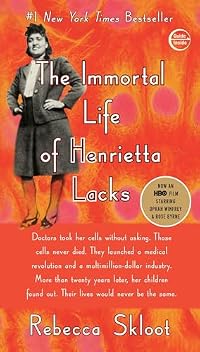
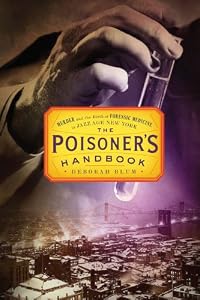
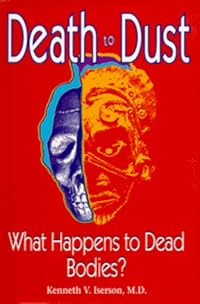

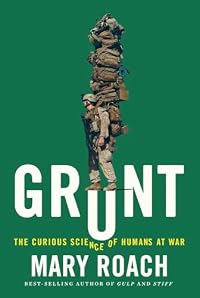







Member Recommendations
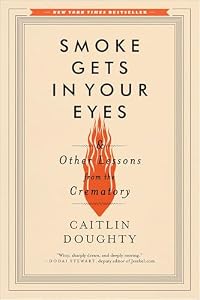
BookshelfMonstrosity These engaging, unusual accounts deal with the human body after death. Smoke Gets in Your Eyes wittily relates the work of an assistant in a crematorium, while Stiff presents an entertaining account of what happens with cadavers.
40

PuddinTame If you liked either on of these books, I recommend trying the other author. Both offer nitty-gritty medical details leavened with humor, which helps make the gross details more bearable. For my money, Mary Roach is funnier, but I thoroughly enjoyed both authors
Member Reviews
This was the third book I listened to on my roadtrip to/from Indiana. I loved this. It was the first Mary Roach I'd ever read, and I'm kicking myself that I hadn't picked anything up by her sooner.
The reader for the audiobook is fantastic and I thought she really brought the right combination of snark, humor, and curiosity to Roach's writing. I'm a bit bummed that the other books have a different reader who from the samples I listened to I don't like as much.
This book was completely fascinating and covered a large expanse of history to the present day in how we treat dead human bodies. I enjoyed it and laughed and smiled, was engrossed by the macabre, and was a bit uncomfortable to reach the chapter on crash test cadavers for show more automobiles while driving 80 mph down the Ohio Turnpike. show less
The reader for the audiobook is fantastic and I thought she really brought the right combination of snark, humor, and curiosity to Roach's writing. I'm a bit bummed that the other books have a different reader who from the samples I listened to I don't like as much.
This book was completely fascinating and covered a large expanse of history to the present day in how we treat dead human bodies. I enjoyed it and laughed and smiled, was engrossed by the macabre, and was a bit uncomfortable to reach the chapter on crash test cadavers for show more automobiles while driving 80 mph down the Ohio Turnpike. show less
This is the type of book I love. All nonfiction should be this readable and interesting. Mary Roach writes a rare book - one that looks unflinchingly and somehow lightheartedly at what happens to the body after death. From crash test dummies, to life-saving transplants, Roach makes death sound not only tolerable but downright exciting! A loving, curious, and persuasive argument to donate one's anatomical goods to the world of research.
I have been curious about Roach and the intriguing topics she writes books about for quite some time -- but this is the first book of hers that I read. I brought it with me on vacation and it was a great selection for reading long sections aloud to my husband as we drove.
And reading bits of this aloud is kind of irresistible. I loved Roach's dry sense of humor -- which was irreverent without ever crossing the line into heartlessness or crassness. The situations that many of these bodies end up in is frankly absurd, which Roach points out without losing sight of how it affects those who are working with corpses, as well as how the studies done on cadavers have (and haven't) advanced science and society.
Ultimately, what this book is about show more is how what happens to our bodies after death does and doesn't matter. As much as I was fascinated by all the stories of bodies "left to science," I was most interested in those chapters on the people working to develop new, more earth-friendly ways to handle human remains.
I definitely need to read more of Roach's work. And to look up what's happened to those new technologies in the years since this book was published! show less
And reading bits of this aloud is kind of irresistible. I loved Roach's dry sense of humor -- which was irreverent without ever crossing the line into heartlessness or crassness. The situations that many of these bodies end up in is frankly absurd, which Roach points out without losing sight of how it affects those who are working with corpses, as well as how the studies done on cadavers have (and haven't) advanced science and society.
Ultimately, what this book is about show more is how what happens to our bodies after death does and doesn't matter. As much as I was fascinated by all the stories of bodies "left to science," I was most interested in those chapters on the people working to develop new, more earth-friendly ways to handle human remains.
I definitely need to read more of Roach's work. And to look up what's happened to those new technologies in the years since this book was published! show less
[A version of this review also appears at Bookin' It.]
Mary Roach uses wry humor to approach a difficult topic - the various ways human bodies are used after death. Chapters address their use in science and medical training (anatomy classes and the practice of surgery), testing the impact of car crashes and bullets, and in determining what happened in an airplane crash.
She also discusses body snatching, medicinal cannibalism, and experiments with crucifixion and with body decay (which should help forensic science) and composting (more environmentally friendly than burial or cremation), as well as plastination (which has led to exhibitions like Body Worlds and Bodies: The Exhibition).
If that's not enough to make you squeamish, there is show more also a chapter entitled "How to Know If You're Dead" (subtitled "Beating heart cadavers, live burial, and the scientific search for the soul"), and one - aptly begun with an illustration of Frankenstein from the movie - called "Just A Head," about "Decapitation, reanimation, and the human head transplant."
It may all sound sensationalist, but it's not. The book is well-researched (there's a nine-page bibliography), and Roach uses just enough humor to lighten up this serious subject. I really appreciated her final chapter, where she wrote about what she'd like to see done with her own body, but acknowledged, "It makes little sense to try to control what happens to your remains when you are no longer around to reap the joys or benefits of that
control....survivors shouldn't have to do something they're uncomfortable with or ethically opposed to." (page 290)
I'm glad I read this book, as I learned a lot. Because of her wry touch with difficult subjects, I'd be interested in reading Roach's other books.
© Amanda Pape - 2012
[This book was borrowed from and returned to my local public library.] show less
Mary Roach uses wry humor to approach a difficult topic - the various ways human bodies are used after death. Chapters address their use in science and medical training (anatomy classes and the practice of surgery), testing the impact of car crashes and bullets, and in determining what happened in an airplane crash.
She also discusses body snatching, medicinal cannibalism, and experiments with crucifixion and with body decay (which should help forensic science) and composting (more environmentally friendly than burial or cremation), as well as plastination (which has led to exhibitions like Body Worlds and Bodies: The Exhibition).
If that's not enough to make you squeamish, there is show more also a chapter entitled "How to Know If You're Dead" (subtitled "Beating heart cadavers, live burial, and the scientific search for the soul"), and one - aptly begun with an illustration of Frankenstein from the movie - called "Just A Head," about "Decapitation, reanimation, and the human head transplant."
It may all sound sensationalist, but it's not. The book is well-researched (there's a nine-page bibliography), and Roach uses just enough humor to lighten up this serious subject. I really appreciated her final chapter, where she wrote about what she'd like to see done with her own body, but acknowledged, "It makes little sense to try to control what happens to your remains when you are no longer around to reap the joys or benefits of that
control....survivors shouldn't have to do something they're uncomfortable with or ethically opposed to." (page 290)
I'm glad I read this book, as I learned a lot. Because of her wry touch with difficult subjects, I'd be interested in reading Roach's other books.
© Amanda Pape - 2012
[This book was borrowed from and returned to my local public library.] show less
First, Mary Roach has a terrific sense of humor. She takes a challenging subject and finds ways to make you laugh just when you need it. Her humor is irreverent, but never disrespectful. She can laugh at some of the absurdity, yet still appreciate the pain dying can bring.
This is well written, well researched, and thorough. My one, very minor complaint is with the organization of the book. I feel as though it starts much more strongly than it finishes. So, for example, she might have considered organizing the chapters differently.
I don't think you need a particularly strong stomach to read this book. Only one item actually turned my stomach. But when it did, it *really* did.
The book succeeded in making me think about my own death. It show more also made me think about my mother's death and made it easier to accept certain events. ...
I hope this book will make you laugh and then think too. show less
This is well written, well researched, and thorough. My one, very minor complaint is with the organization of the book. I feel as though it starts much more strongly than it finishes. So, for example, she might have considered organizing the chapters differently.
I don't think you need a particularly strong stomach to read this book. Only one item actually turned my stomach. But when it did, it *really* did.
The book succeeded in making me think about my own death. It show more also made me think about my mother's death and made it easier to accept certain events. ...
I hope this book will make you laugh and then think too. show less
I'd been wanting to read this for quite some time and finally did. It was, as expected, both fascinating and disgusting. I really appreciated her mix of historical uses and abuses of human cadavers with current ones. In particular, the mellified man, whether a legend or real, caught my attention. The only chapter that really got me was the crash testing. That was just awful.
She writes in a perky journalistic style where she's definitely present on the page. That can irritate some people but I enjoyed it.
Overall a great read.
She writes in a perky journalistic style where she's definitely present on the page. That can irritate some people but I enjoyed it.
Overall a great read.
I listened to this audiobook and I loved the narrator. She caught exactly the humour that Mary Roach infused into this subject which seems like the last topic you could make enjoyable.
Mary Roach examines all the ways in which dead bodies can be and have been disposed of. Much of the book is about using cadavers for scientific research or teaching anatomy. I've always known that medical and other students need dead bodies in order to study human anatomy. As a person who didn't even want to dissect a rat in biology I know that would be something I could never do. However, it does seem like a good idea for people who want to treat humans to know how all the organs and bones and muscles work. I'm still not convinced to leave my body for show more that use although I signed my organ donor card decades ago. But some of the other uses of cadavers were surprising to me, such as using them to test what happens in car crashes. Apparently, crash test dummies just can't replicate the way a real body will handle an air bag release when a vehicle is hit. Roach managed to get into all kinds of labs where cadavers are used and she seemed to really enjoy that. Again, not my cup of tea.
The chapters on alternatives to burial or cremation were the most interesting to me. I long ago decided I wasn't going to be put into a coffin and take up a plot of land. About the only other alternative is to be cremated but there may be a time coming when bodies could be composted or freeze-dried and broken into powder. I like the idea of this greener alternative to cremation but it is not available in Canada yet. I wonder what Greenpeace and the David Suzuki Foundation have to say about green ways of disposing of your body.
This book was first released 20 years ago but Roach has done an afterword for a new edition. Unfortunately, this audiobook didn't include that. I watched a Q & A Zoom session with Roach but if other readers don't have that opportunity, then I recommend getting the updated book. show less
Mary Roach examines all the ways in which dead bodies can be and have been disposed of. Much of the book is about using cadavers for scientific research or teaching anatomy. I've always known that medical and other students need dead bodies in order to study human anatomy. As a person who didn't even want to dissect a rat in biology I know that would be something I could never do. However, it does seem like a good idea for people who want to treat humans to know how all the organs and bones and muscles work. I'm still not convinced to leave my body for show more that use although I signed my organ donor card decades ago. But some of the other uses of cadavers were surprising to me, such as using them to test what happens in car crashes. Apparently, crash test dummies just can't replicate the way a real body will handle an air bag release when a vehicle is hit. Roach managed to get into all kinds of labs where cadavers are used and she seemed to really enjoy that. Again, not my cup of tea.
The chapters on alternatives to burial or cremation were the most interesting to me. I long ago decided I wasn't going to be put into a coffin and take up a plot of land. About the only other alternative is to be cremated but there may be a time coming when bodies could be composted or freeze-dried and broken into powder. I like the idea of this greener alternative to cremation but it is not available in Canada yet. I wonder what Greenpeace and the David Suzuki Foundation have to say about green ways of disposing of your body.
This book was first released 20 years ago but Roach has done an afterword for a new edition. Unfortunately, this audiobook didn't include that. I watched a Q & A Zoom session with Roach but if other readers don't have that opportunity, then I recommend getting the updated book. show less
Members
- Recently Added By
Lists

Best Science Books for Non-Scientists
113 works; 56 members

Non-Fiction Worth Reading
1,015 works; 255 members

Unread books
1,063 works; 86 members

Recommend the 20 best books you've read in the last five years
2,167 works; 602 members

Wish List
4 works; 1 member

Top Five Books of 2015
811 works; 241 members

SOPA Book Recommendations
19 works; 1 member

Research/Inquiry - mentor texts
43 works; 2 members

Works Cited in Kevin Wetmore's Eaters of the Dead
61 works; 1 member

The Complete Rory Gilmore Reading List
506 works; 5 members

Rory Gilmore Book Club
193 works; 5 members

Weirdo Nonfiction
138 works; 3 members

Reading Glasses Podcast
410 works; 3 members

Club Read's Recommended Nonfiction Written by Women
618 works; 30 members

Books Read in 2022
5,164 works; 111 members

Female Author
1,235 works; 67 members

Mind Expanding Books by hackerkid
581 works; 8 members

NPR Readers Poll: 100 Favorite Funny Books
100 works; 5 members

Dear Nerdfighteria Maybe-Fiction Recommendations
24 works; 1 member

Books Read in 2018
4,360 works; 110 members

W. W. Norton & Company
47 works; 2 members

My E-Book Collection - Opinions Welcome
92 works; 10 members

Favourite Books
1,817 works; 308 members

Books Read in 2012
815 works; 31 members

Books Read in 2025
4,090 works; 97 members
Author Information

24+ Works 33,431 Members
Mary Roach was born and raised in Etna, New Hampshire. She has a BA degree in psychology from Wesleyan University. She spent a few years as a free-lance copy editor before she landed a job at the San Francisco Zoological Society turning out press releases. She then moved on to write humor pieces for such periodicals as The New York Times Magazine, show more The San Francisco Chronicle and Sports Illustrated. Her article "How to Win at Germ Warfare" was a National Magazine Award Finalist, in 1995. In 1996, her article on earthquake-proof bamboo houses took the Engineering Journalism Award. She published several books such as Stiff: The Curious Lives of Human Cadavers (2003) and Packing for Mars (2010). Mary's title Grunt: The Curious Science of Humans at War, made the New York Times Bestseller list in 2016. (Bowker Author Biography) show less
Some Editions
Awards and Honors
Awards
Distinctions
Notable Lists
Work Relationships
Common Knowledge
- Canonical title
- Stiff: The Curious Lives of Human Cadavers
- Original publication date
- 2003-04
- People/Characters
- Mary Roach; Ronn Wade; Marilena Marignani; Arpad Vass; Ron Walli; Captain Louis La Garde (show all 12); Commander Marlene DeMaio; Lieutenant Colonel Robert Harris; Robert White; Kevin McCabe; William Burke; William Hare
- Important places
- Wayne State University; University of California, San Francisco, California, USA; University of Maryland School of Medicine; University of Tennessee Anthropological Research Facility
- Important events
- Funeral Rule (1982); Anatomy Act (1836)
- Dedication
- For wonderful Ed
- First words
- Introduction
The way I see it, being dead is not terribly far off from being on a cruise ship.
The human head is of the same approximate size and weight as a roaster chicken. - Last words
- (Click to show. Warning: May contain spoilers.)And if there's any way I can arrange it, I'll make the thing wink.
- Blurbers
- Simpson, Les; Adams, Susan; Little, Michael; Wanner, Irene; Rivenburg, Roy
- Canonical DDC/MDS
- 611
- Canonical LCC
- R853.H8
Classifications
Statistics
- Members
- 12,280
- Popularity
- 687
- Reviews
- 477
- Rating
- (4.08)
- Languages
- 13 — Chinese, Dutch, English, French, German, Hungarian, Italian, Lithuanian, Polish, Portuguese, Romanian, Spanish, Swedish
- Media
- Paper, Audiobook, Ebook
- ISBNs
- 40
- ASINs
- 24