On This Page
Description
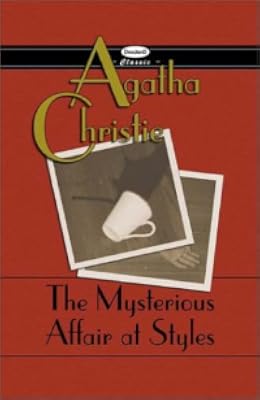
Set in the summer of 1917, the story follows the war-wounded Hastings to the Styles St. Mary estate of his friend John Cavendish. The Cavendish household is wrought with tension due to the marriage of John's widowed mother to a suspicious younger man. In the village, Hastings runs into his old friend Hercule Poirot and, when the estate's trouble turns deadly, the friends unite to solve a most baffling case.Tags
Recommendations


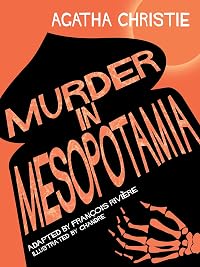

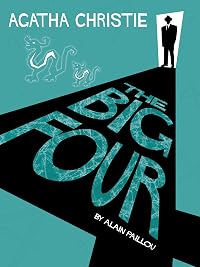
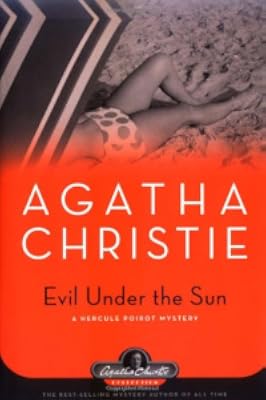


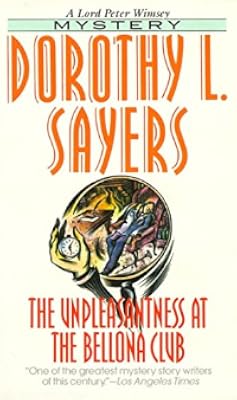


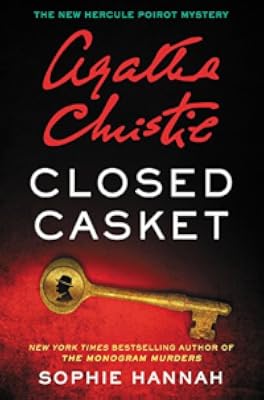
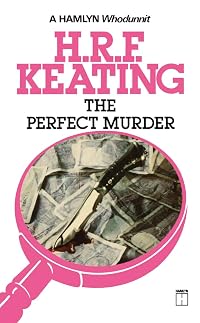
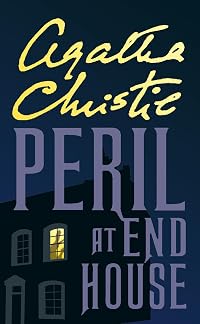


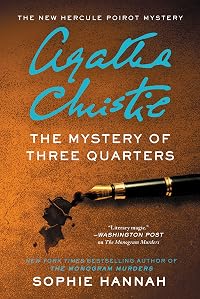





Member Recommendations

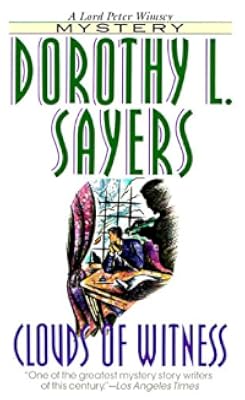
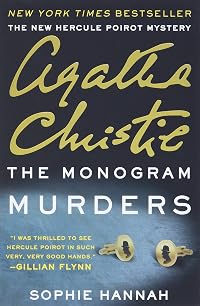
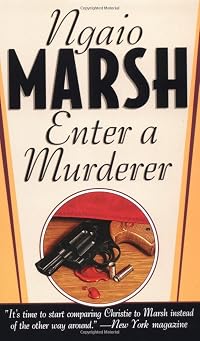
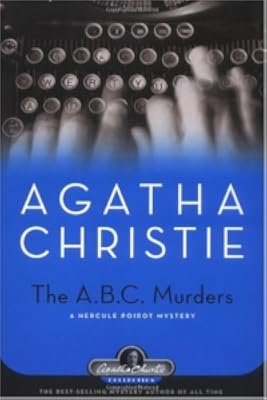
ed.pendragon Both are set in the twenties at a country house.
sturlington Cozy mysteries set in villages.

Cecrow For his last case, Poirot returns to the scene of his first case.
Member Reviews
This is one of my favourite Agatha Christie novels, possibly because it was the first one I read. It’s a classic, with Hastings’s amusingly oblivious narration, the harrowing death scene, and Poirot’s coolly dramatic denouement. Hugh Fraser performs it excellently on audio, given that he played Hastings in the TV adaptations with David Suchet as Poirot. And although I love the mystery itself very dearly and think it clever and excellent, I found myself cringing hard at mentions of blackface masquerade and Hastings’s description of Dorcas as one of a “dying breed” of the traditional English servant. Yee-ikes. The audio made them stand out in a way that the print edition never did.
I've read other Poirot mysteries in a random order, so there was some fun to be had in seeing where it all began. Christie is very sharp at introducing all of her characters in the first chapter, setting up the murder in the second chapter, executing it (pardon the pun) in the third, etc. It's a bit mechanical but not absurdly so, and very efficient. Hastings initially presents himself as the story's potential detective but then immediately goes running to recruit his friend Poirot. The description of the little Belgian is complete from the get-go, lacking nothing from his later appearances; he was born fully-formed, as it were. Poirot's put-downs of Hastings are absolutely priceless, as is Hastings' total obliviousness. I can see how show more this first book took fire and launched one of the world's most famous fictional detectives. show less
This is the first Agatha Christie book I have read as well as my first mystery book since I was a kid. And let me tell you, this book had me hooked. I started it with the idea that I was going to take a few days to a week to finish it while reading one of my other books for the month, but then I completely lost track of time. All of a sudden, it was 3:00am that night and I had finished all 212 pages.
This is the first Hercule Poirot book, but it tells the entire story from the point of view of Arthur Hastings. So throughout the story, we are trying to put everything together with Arthur and his insights all while Poirot is forming his own ideas and eluding to them throughout the story until he breaks it down at the end. He’ll likely show more hit you with that “Oh how wrong you are, dumdum” while he explains the whole thing.
This could just be the fact that it was my first mystery and Christie novel, but I was all about the structure of the plot as well as the setting. It takes place for the most part at a manor in a small town, and it just feels so quaint. Meanwhile, the story is hitting turns as new evidence is found or new motives are uncovered all the while we as the reader are wondering “who dun it?” I could not recommend this more as a beginning mystery or if you are just looking for a shorter mystery read from a classic author. show less
This is the first Hercule Poirot book, but it tells the entire story from the point of view of Arthur Hastings. So throughout the story, we are trying to put everything together with Arthur and his insights all while Poirot is forming his own ideas and eluding to them throughout the story until he breaks it down at the end. He’ll likely show more hit you with that “Oh how wrong you are, dumdum” while he explains the whole thing.
This could just be the fact that it was my first mystery and Christie novel, but I was all about the structure of the plot as well as the setting. It takes place for the most part at a manor in a small town, and it just feels so quaint. Meanwhile, the story is hitting turns as new evidence is found or new motives are uncovered all the while we as the reader are wondering “who dun it?” I could not recommend this more as a beginning mystery or if you are just looking for a shorter mystery read from a classic author. show less
Poirot was an extraordinary-looking little man. He was hardly more than five feet four inches, but carried himself with great dignity. His head was exactly the shape of an egg, and he always perched it a little on one side. His moustache was very stiff and military. The neatness of his attire was almost incredible; I believe a speck of dust would have caused him more pain than a bullet wound. Yet this quaint dandified little man who, I was sorry to see, now limped badly, had been in his time one of the most celebrated members of the Belgian police. As a detective, his flair had been extraordinary, and he had achieved triumphs by unravelling some of the most baffling cases of the day.
Christie, Agatha. Hercule Poirot 3-Book Collection 1: show more The Mysterious Affair at Styles, The Murder on the Links, Poirot Investigates (Kindle Locations 308-313). HarperCollins Publishers. Kindle Edition.
I love Hercule Poirot. Such a great detective. Such a character. There's always a great mystery with lots of twists and turns and red herrings, all of which keep me riveted. The characters are interesting and have complex motives for their actions. That said, not a huge fan of Hastings. He's too busy being on his high horse to be likable. I've read many Agatha Christie books before but not all and not in order so I'm in the process of commencing a reread. Highly recommend to crime lovers.
In The Mysterious Affair at Styles we are introduced to our narrator, Captain Arthur Hastings who is on leave from the army and runs into an old friend, John Cavendish. He gets invited to stay with them and not long after his arrival the friend's mother (stepmother actually but referred to mainly as mother) is murdered and it becomes a whodunnit. Poirot is in town so when the doctors imply that Emily Inglethorpe has been poisoned, Hastings suggests Poirot be fetched.
Much like Sherlock Holmes and John Watson, all of our information regarding the crime and Hercule Poirot himself is filtered through our narrator, Captain Arthur Hastings. Although Hastings tries to be objective and unbiased, he tends to be influenced by his own ego and supposed prowess as a detective. He's also pretty quick to be offended by perceived slights and is often frustrated by his own lack of understanding. Although Hastings admires Poirot, he seems to fall down a lot in their friendship - often disregarding Poirot's thoughts and theories and feeling joy when it appears he's failed.
I came across a man in Belgium once, a very famous detective, and he quite inflamed me. He was a marvellous little fellow. He used to say that all good detective work was a mere matter of method. My system is based on his— though of course I have progressed rather further. He was a funny little man, a great dandy, but wonderfully clever.’
Christie, Agatha. Hercule Poirot 3-Book Collection 1: The Mysterious Affair at Styles, The Murder on the Links, Poirot Investigates (Kindle Locations 154-157). HarperCollins Publishers. Kindle Edition.
Poirot is an understanding friend although can be passionate in both happiness, excitement and anger. He prefers method and order to chaos and gets worked up when he doesn't settle his thoughts first. That said, he is not a particularly action based detective. Although he wouldn't disregard physical evidence (footprints, blood, etc) he also doesn't go out of his way to look for it - preferring to puzzle through the crime in his head and tease out the psychological elements.
‘The true work, it is done from within. The little grey cells— remember always the little grey cells, mon ami.’
Christie, Agatha. Hercule Poirot 3-Book Collection 1: The Mysterious Affair at Styles, The Murder on the Links, Poirot Investigates (Kindle Locations 2957-2959). HarperCollins Publishers. Kindle Edition.
I enjoyed the case, even if Hastings annoys me. Frankly the hint of romance between him and Mary Cavendish disturbed me. Because Mary is married. To his friend. That's he's staying with. Like seriously? I was amused by Poirot manipulating him because he's a bad liar. And this doesn't really have anything to do with...well anything really - it just made me laugh.
‘Oh, you,’ I replied hastily.
Christie, Agatha. Hercule Poirot 3-Book Collection 1: The Mysterious Affair at Styles, The Murder on the Links, Poirot Investigates (Kindle Location 586). HarperCollins Publishers. Kindle Edition.
Hastings replied hastily. Hehe. show less
Christie, Agatha. Hercule Poirot 3-Book Collection 1: show more The Mysterious Affair at Styles, The Murder on the Links, Poirot Investigates (Kindle Locations 308-313). HarperCollins Publishers. Kindle Edition.
I love Hercule Poirot. Such a great detective. Such a character. There's always a great mystery with lots of twists and turns and red herrings, all of which keep me riveted. The characters are interesting and have complex motives for their actions. That said, not a huge fan of Hastings. He's too busy being on his high horse to be likable. I've read many Agatha Christie books before but not all and not in order so I'm in the process of commencing a reread. Highly recommend to crime lovers.
In The Mysterious Affair at Styles we are introduced to our narrator, Captain Arthur Hastings who is on leave from the army and runs into an old friend, John Cavendish. He gets invited to stay with them and not long after his arrival the friend's mother (stepmother actually but referred to mainly as mother) is murdered and it becomes a whodunnit. Poirot is in town so when the doctors imply that Emily Inglethorpe has been poisoned, Hastings suggests Poirot be fetched.
Much like Sherlock Holmes and John Watson, all of our information regarding the crime and Hercule Poirot himself is filtered through our narrator, Captain Arthur Hastings. Although Hastings tries to be objective and unbiased, he tends to be influenced by his own ego and supposed prowess as a detective. He's also pretty quick to be offended by perceived slights and is often frustrated by his own lack of understanding. Although Hastings admires Poirot, he seems to fall down a lot in their friendship - often disregarding Poirot's thoughts and theories and feeling joy when it appears he's failed.
I came across a man in Belgium once, a very famous detective, and he quite inflamed me. He was a marvellous little fellow. He used to say that all good detective work was a mere matter of method. My system is based on his— though of course I have progressed rather further. He was a funny little man, a great dandy, but wonderfully clever.’
Christie, Agatha. Hercule Poirot 3-Book Collection 1: The Mysterious Affair at Styles, The Murder on the Links, Poirot Investigates (Kindle Locations 154-157). HarperCollins Publishers. Kindle Edition.
Poirot is an understanding friend although can be passionate in both happiness, excitement and anger. He prefers method and order to chaos and gets worked up when he doesn't settle his thoughts first. That said, he is not a particularly action based detective. Although he wouldn't disregard physical evidence (footprints, blood, etc) he also doesn't go out of his way to look for it - preferring to puzzle through the crime in his head and tease out the psychological elements.
‘The true work, it is done from within. The little grey cells— remember always the little grey cells, mon ami.’
Christie, Agatha. Hercule Poirot 3-Book Collection 1: The Mysterious Affair at Styles, The Murder on the Links, Poirot Investigates (Kindle Locations 2957-2959). HarperCollins Publishers. Kindle Edition.
I enjoyed the case, even if Hastings annoys me.
‘Oh, you,’ I replied hastily.
Christie, Agatha. Hercule Poirot 3-Book Collection 1: The Mysterious Affair at Styles, The Murder on the Links, Poirot Investigates (Kindle Location 586). HarperCollins Publishers. Kindle Edition.
Hastings replied hastily. Hehe. show less
First off: I liked this book alright. It was definitely a good read, with plenty of twists and turns that you'd expect from a widely hailed whodunnit. The characters are interesting, the primary directive of sussing out the killer was never lost, and the story is told very engagingly.
That said. God, I do not like Hastings. Had to take some time after completing my read to really percolate on my feelings here, and I've arrived at intense dislike for the narrator. Arthur Hastings is a self-satisfied all-important blowhard that spends more time eyefucking his old friend's pretty wife than he does actually considering the "facts" of the mystery. His personal speculations are all over the place, rooted in prejudice or complete show more misunderstandings, and always turn back towards his blatant disregard for certain people.
In between random accusations— none of which really involve the pretty woman he's orbiting around for most of the tale —and fundamental misunderstandings of interview procedure? Arthur has cemented himself as a character I would hate to be associated with. Truth be told, I can't think of a single point in the book where he was actually helpful to Poirot. In any capacity. He stood around, said "Well, what!" when ignored, and thought highly inappropriately about his friend's wife. Didn't like him from the second he started chatting with Mary Cavendish, because he had to assure the reader he was a much better conversationalist than the man she married.
Whatever. I'm not a prude; it's just annoying when a character's worth is defined by whether or not the narrator wants to bang her. This comes up a lot, actually, since Hastings has a constant need to rate the women he interacts with on a scale of "would have an affair with" to "weirdly handsome [ew] unfuckable maid beast" and I find that annoying to read. Over and over again. I thought we were solving a mystery? My God.
The racist and misogynistic points are simply a matter of fact in this book, harped on unnecessarily to pad out time between crime procedure and information withheld from the reader. Usually, I can slog through quite a bit of this stuff to reach the meat of a story, but I think Christie's approach here being so dialogue heavy made it more unpleasant. The approach is perfectly fine, but she relies heavily on characters talking back and forth, speaking their whole minds and then meandering off when she's done having them yammer together. Mary Cavendish especially often just existed in a scene to say a plot relevant thing, then drift into Hastings' personal fantasies before fading away altogether so Poirot could actually work.
That said, loved Poirot. After multiple chapters of slogging through Hastings' bullshit, Hercule Poirot was a breath of freshest air. His mannerisms and eccentricities are genuinely fun to read, almost jumping off the page in an attempt to sit in your heart. I totally understand Christie's letter about him— included in my library's copy of the book —working his way into her mind like a chubby little unwelcome bug. A stellar detective too, actually poking around at the right things and immediately endearing himself to the layperson as well as the highbrow elite of the story. It was nice to see him speak candidly on the troubles of womanhood after sitting through Hastings' personal theories of feminine sensibility. Honestly, I'm surprised to not see as much discussion on Hercule Poirot being queer-coded, given... Well, everything about him.
Didn't bother reading the "true ending" included in this copy of the book. The court scenes that were included were fundamentally boring, probably the worst written part of the whole story, and I'm glad an editor stepped in to have things move away from the proceedings there. The parlor reveal is a classic, coined here by necessity, leaned on heavily in many a novel since. Which is baller. Did I guess the villain of this tale? Yeah, unfortunately, it was pretty obvious. There was a little too much racist foreshadowing, and in a first mystery, it's usually the first suspect with foreign machinations. Eyeroll. I'm looking forward to my next Christie novel. There's a good foundation here, and one can only go up from here.
If anyone cares, I thought Poirot's need to sit weirdly in chairs was very cute. Reminds me of a big chubby cat that wants to be held like a baby in your lap. Excellent visualization. show less
That said. God, I do not like Hastings. Had to take some time after completing my read to really percolate on my feelings here, and I've arrived at intense dislike for the narrator. Arthur Hastings is a self-satisfied all-important blowhard that spends more time eyefucking his old friend's pretty wife than he does actually considering the "facts" of the mystery. His personal speculations are all over the place, rooted in prejudice or complete show more misunderstandings, and always turn back towards his blatant disregard for certain people.
In between random accusations— none of which really involve the pretty woman he's orbiting around for most of the tale —and fundamental misunderstandings of interview procedure? Arthur has cemented himself as a character I would hate to be associated with. Truth be told, I can't think of a single point in the book where he was actually helpful to Poirot. In any capacity. He stood around, said "Well, what!" when ignored, and thought highly inappropriately about his friend's wife. Didn't like him from the second he started chatting with Mary Cavendish, because he had to assure the reader he was a much better conversationalist than the man she married.
Whatever. I'm not a prude; it's just annoying when a character's worth is defined by whether or not the narrator wants to bang her. This comes up a lot, actually, since Hastings has a constant need to rate the women he interacts with on a scale of "would have an affair with" to "weirdly handsome [ew] unfuckable maid beast" and I find that annoying to read. Over and over again. I thought we were solving a mystery? My God.
The racist and misogynistic points are simply a matter of fact in this book, harped on unnecessarily to pad out time between crime procedure and information withheld from the reader. Usually, I can slog through quite a bit of this stuff to reach the meat of a story, but I think Christie's approach here being so dialogue heavy made it more unpleasant. The approach is perfectly fine, but she relies heavily on characters talking back and forth, speaking their whole minds and then meandering off when she's done having them yammer together. Mary Cavendish especially often just existed in a scene to say a plot relevant thing, then drift into Hastings' personal fantasies before fading away altogether so Poirot could actually work.
That said, loved Poirot. After multiple chapters of slogging through Hastings' bullshit, Hercule Poirot was a breath of freshest air. His mannerisms and eccentricities are genuinely fun to read, almost jumping off the page in an attempt to sit in your heart. I totally understand Christie's letter about him— included in my library's copy of the book —working his way into her mind like a chubby little unwelcome bug. A stellar detective too, actually poking around at the right things and immediately endearing himself to the layperson as well as the highbrow elite of the story. It was nice to see him speak candidly on the troubles of womanhood after sitting through Hastings' personal theories of feminine sensibility. Honestly, I'm surprised to not see as much discussion on Hercule Poirot being queer-coded, given... Well, everything about him.
Didn't bother reading the "true ending" included in this copy of the book. The court scenes that were included were fundamentally boring, probably the worst written part of the whole story, and I'm glad an editor stepped in to have things move away from the proceedings there. The parlor reveal is a classic, coined here by necessity, leaned on heavily in many a novel since. Which is baller. Did I guess the villain of this tale? Yeah, unfortunately, it was pretty obvious. There was a little too much racist foreshadowing, and in a first mystery, it's usually the first suspect with foreign machinations. Eyeroll. I'm looking forward to my next Christie novel. There's a good foundation here, and one can only go up from here.
If anyone cares, I thought Poirot's need to sit weirdly in chairs was very cute. Reminds me of a big chubby cat that wants to be held like a baby in your lap. Excellent visualization. show less
Now more than 100 years old, "The Mysterious Affair At Styles" still feels modern, partly because of its playful tone and partly because it redefined the whodunnit.
I read my first Agatha Christie book two years ago, starting at the wrong end of both Christie's and Poirot's career with "Elephants Can Remember", the fortieth and last Poirot book. It was written in 1972 when Agatha Christie was in her eighties and it seemed rather faded to me. Since then I've read another six Poirot books, the best of which was "The Murder OF Roger Ackroyd" and the worst was "Appointment With Death" that I abandoned part way through.
Along the way, I've become intrigued by Christie's not always sympathetic relationship with the "funny little Belgian" that show more she wrote forty novels about. I decided the best way to follow the relationship was to start at the beginning with the first Poirot book, which was also Christie's first book "The Mysterious Affair At Styles".
Although it wasn't published until 1920, Christie wrote "The Mysterious Affair At Styles" in 1916 in the middle of World War I, when she was twenty-six years old.
I was delighted to find that the book, although more than one hundred years old, feels fresh and modern. This is partly achieved by using the narrator, the young Captain Hastings, returned to England to recover from his injuries, as a comic device. Hastings is an educated, slightly naive, upper-class Englishman, with a weakness for auburn-haired young women, whose grasp of the situation is never quite as firm as he thinks it is and whose belief in his own insight significantly exceeds his ability.
Hastings provides the perspective of an absolutely conventional Englishman of good breeding. It is through his eyes that we see Poirot, a strange little Belgian man with an egg-shaped head, small feet and lustrous moustaches who is already described by the young Hastings as old.
I was surprised to find that this Poirot is a refugee, dependent on the generosity a benefactress, a wealthy older woman who is the chatelaine of the local big house. He is not yet a man of substance in England, although, rather conveniently, as an ex-Belgian senior Police Officer he is known to Detectives in Scotland Yard and has a prior acquaintance with Hastings.
At first blush, it seems that Poirot is the figure of fun but it soon becomes clear to the reader, if not to Hastings, that Poirot is the hunter and Hastings is at best his beagle.
I found this piece of humour at Hastings’ expense is wicked but irresistible. Poirot is speaking to Hastings of the cleverness of the as yet unidentified murderer:
‘We must be so intelligent that he does not suspect us of being intelligent at all.’
I acquiesced.
‘There, mon ami, you will be of great assistance to me.’
I was pleased with the compliment. There had been times when I hardly thought that Poirot appreciated me at my true worth.
And I wavered between laughter and exasperation at Hastings' weakness for young women. Here he is investigating a murder, probably looking for a poisoner, probably from a fellow houseguest, when Cynthia, the young and pretty FULLY QUALIFIED PHARMACIST WITH A COMPREHENSIVE KNOWLEDGE OF POISONS asks him to go for a walk with her.
As soon as they're alone:
"With a sigh, Cynthia flung herself down, and tossed off her hat.
The sunlight, piercing through the branches, turned the auburn of her hair to quivering gold.
`Mr Hastings - you are always so kind and you know such a lot.`
Immediately, Hastings' keen detective mind responds with a sudden and deep insight:
"It struck me at this moment that Cynthia was really a very charming girl! Much more so than Mary, who never said things of that kind".
Apart from the way Christie plays with Hastings, the thing that makes this novel feel modern and which must have been ground-breaking in 1916, was the way in which the mystery unfolds.
There is an abundance of suspects, all of whom Hastings' expressed ill-thought-through opinions of, but no obvious front-runner for the role of murderer. We see Poirot collect clues but we don't know what they mean. Poirot refuses to explain to Hastings (or us) instead, challenging us to look again and see the truth. This was an innovative form of story-telling in 1916.
The ending of the book introduces that now familiar concept of the detective gathering all the suspects together in one room and delivering the Great Reveal. The audiobook edition that I listened to included the published Great Reveal ending and an earlier draft which had a slightly clunky exposition of the facts in a court setting. The decision to move from the Court to the Great Reveal launched one of the most popular tropes of detective fiction.
Although the book feels modern, it still gives insight into a world that would be mostly lost by the end of World War I, with the English Upper Class still seeing themselves as ruling an Empire.
Hastings' report on the upper-class family of the murdered old chatelaine at breakfast on the morning after her death is a splendid example of people who, during the slaughter of World War I, wore their manners as tightly as a whalebone corset.
"Under the circumstances, we were naturally not a cheerful party. The reaction after a shock is always trying, and I think we were all suffering from it. Decorum and good breeding naturally enjoined that our demeanour should be much as usual, yet I could not help wondering if this self-control were really a matter of great difficulty." show less
I read my first Agatha Christie book two years ago, starting at the wrong end of both Christie's and Poirot's career with "Elephants Can Remember", the fortieth and last Poirot book. It was written in 1972 when Agatha Christie was in her eighties and it seemed rather faded to me. Since then I've read another six Poirot books, the best of which was "The Murder OF Roger Ackroyd" and the worst was "Appointment With Death" that I abandoned part way through.
Along the way, I've become intrigued by Christie's not always sympathetic relationship with the "funny little Belgian" that show more she wrote forty novels about. I decided the best way to follow the relationship was to start at the beginning with the first Poirot book, which was also Christie's first book "The Mysterious Affair At Styles".
Although it wasn't published until 1920, Christie wrote "The Mysterious Affair At Styles" in 1916 in the middle of World War I, when she was twenty-six years old.
I was delighted to find that the book, although more than one hundred years old, feels fresh and modern. This is partly achieved by using the narrator, the young Captain Hastings, returned to England to recover from his injuries, as a comic device. Hastings is an educated, slightly naive, upper-class Englishman, with a weakness for auburn-haired young women, whose grasp of the situation is never quite as firm as he thinks it is and whose belief in his own insight significantly exceeds his ability.
Hastings provides the perspective of an absolutely conventional Englishman of good breeding. It is through his eyes that we see Poirot, a strange little Belgian man with an egg-shaped head, small feet and lustrous moustaches who is already described by the young Hastings as old.
I was surprised to find that this Poirot is a refugee, dependent on the generosity a benefactress, a wealthy older woman who is the chatelaine of the local big house. He is not yet a man of substance in England, although, rather conveniently, as an ex-Belgian senior Police Officer he is known to Detectives in Scotland Yard and has a prior acquaintance with Hastings.
At first blush, it seems that Poirot is the figure of fun but it soon becomes clear to the reader, if not to Hastings, that Poirot is the hunter and Hastings is at best his beagle.
I found this piece of humour at Hastings’ expense is wicked but irresistible. Poirot is speaking to Hastings of the cleverness of the as yet unidentified murderer:
‘We must be so intelligent that he does not suspect us of being intelligent at all.’
I acquiesced.
‘There, mon ami, you will be of great assistance to me.’
I was pleased with the compliment. There had been times when I hardly thought that Poirot appreciated me at my true worth.
And I wavered between laughter and exasperation at Hastings' weakness for young women. Here he is investigating a murder, probably looking for a poisoner, probably from a fellow houseguest, when Cynthia, the young and pretty FULLY QUALIFIED PHARMACIST WITH A COMPREHENSIVE KNOWLEDGE OF POISONS asks him to go for a walk with her.
As soon as they're alone:
"With a sigh, Cynthia flung herself down, and tossed off her hat.
The sunlight, piercing through the branches, turned the auburn of her hair to quivering gold.
`Mr Hastings - you are always so kind and you know such a lot.`
Immediately, Hastings' keen detective mind responds with a sudden and deep insight:
"It struck me at this moment that Cynthia was really a very charming girl! Much more so than Mary, who never said things of that kind".
Apart from the way Christie plays with Hastings, the thing that makes this novel feel modern and which must have been ground-breaking in 1916, was the way in which the mystery unfolds.
There is an abundance of suspects, all of whom Hastings' expressed ill-thought-through opinions of, but no obvious front-runner for the role of murderer. We see Poirot collect clues but we don't know what they mean. Poirot refuses to explain to Hastings (or us) instead, challenging us to look again and see the truth. This was an innovative form of story-telling in 1916.
The ending of the book introduces that now familiar concept of the detective gathering all the suspects together in one room and delivering the Great Reveal. The audiobook edition that I listened to included the published Great Reveal ending and an earlier draft which had a slightly clunky exposition of the facts in a court setting. The decision to move from the Court to the Great Reveal launched one of the most popular tropes of detective fiction.
Although the book feels modern, it still gives insight into a world that would be mostly lost by the end of World War I, with the English Upper Class still seeing themselves as ruling an Empire.
Hastings' report on the upper-class family of the murdered old chatelaine at breakfast on the morning after her death is a splendid example of people who, during the slaughter of World War I, wore their manners as tightly as a whalebone corset.
"Under the circumstances, we were naturally not a cheerful party. The reaction after a shock is always trying, and I think we were all suffering from it. Decorum and good breeding naturally enjoined that our demeanour should be much as usual, yet I could not help wondering if this self-control were really a matter of great difficulty." show less
Even in his debut Poirot is so very Poirot. His every quirk is in place and accounted for; his reverence for order and precisely lined up decorations, his pride in his amply nurtured little gray cells, his immaculate costume; it’s all there. And so great. I vaguely remembered it from having seen the TV adaptation, but I didn’t remember the solution. Of course I didn’t guess it even though Poirot maintains he made it plain. But poor me and Hastings, we were clueless until the usual summing up. Even in her first novel Christie polishes her characters, tightens her plots and keeps us knee-deep in suspects. Devious shenanigans ensue, but of course Poirot sees through everyone’s facades and lies and comes up with the goods. Inspector show more Japp takes the credit, but at this point Poirot doesn’t care. All that is important is that he’s right. show less
Members
- Recently Added By
Lists

The Guardian's 1000 Novels Everyone Must Read
1,005 works; 547 members

Favorite Series
238 works; 94 members

Top Cops (Detectives in Fiction)
86 works; 24 members

Crime and Mysteries to Read
746 works; 31 members

British Mystery
469 works; 14 members

Survey of Classic Crime
39 works; 7 members

Best Private Eye stories
28 works; 8 members

Books I've Read More Than Once
602 works; 49 members
Agatha Christie Poirot
43 works; 2 members

Haycraft Queen Cornerstones
181 works; 3 members

Books About Murder
313 works; 7 members

Female Author
1,235 works; 67 members

Detective Stories
343 works; 5 members

Books mentioned in Julian Symons’ Bloody Murder
438 works; 6 members

Top Five Books of 2021
604 works; 181 members

Books about World War I
80 works; 14 members

Agatha Christie Poirot Books
6 works; 1 member
Agatha Christie Chronology
93 works; 1 member
Art Bourgeau's Favorites [Mystery Lovers Companion, 1986]
124 works; 2 members

Books Read in 2024
4,623 works; 126 members

Stealth- and Posthumously- Edited Books
15 works; 1 member

Books Read in 2022
5,166 works; 112 members

Books Read in 2023
5,547 works; 145 members

In and About the 1920s
181 works; 31 members
20th Century Literature
1,161 works; 54 members

Books Read in 2020
4,379 works; 124 members
1920s
141 works; 6 members

New York Public Library's Books of the Century - All
170 works; 14 members

Books Read in 2019
4,052 works; 108 members
New York Public Library's Books of the Century
120 works; 20 members

Books Read in 2018
4,360 works; 110 members

Books Read in 2017
4,249 works; 129 members

Books Read in 2012
816 works; 34 members

Authors from England
147 works; 4 members

First Novels
373 works; 17 members

Books Read in 2016
4,666 works; 197 members
Books Read in 2015
3,299 works; 129 members

Books referenced in the Astral Library
60 works; 1 member
Author Information

2,151+ Works 439,526 Members
One of the most successful and beloved writer of mystery stories, Agatha Mary Clarissa Christie was born in 1890 in Torquay, County Devon, England. She wrote her first novel, The Mysterious Affair at Styles, in 1920, launching a literary career that spanned decades. In her lifetime, she authored 79 crime novels and a short story collection, 19 show more plays, and six novels written under the name of Mary Westmacott. Her books have sold over a billion copies in the English language with another billion in 44 foreign languages. Some of her most famous titles include Murder on the Orient Express, Mystery of the Blue Train, And Then There Were None, 13 at Dinner and The Sittaford Mystery. Noted for clever and surprising twists of plot, many of Christie's mysteries feature two unconventional fictional detectives named Hercule Poirot and Miss Jane Marple. Poirot, in particular, plays the hero of many of her works, including the classic, The Murder of Roger Ackroyd (1926), and Curtain (1975), one of her last works in which the famed detective dies. Over the years, her travels took her to the Middle East where she met noted English archaeologist Sir Max Mallowan. They married in 1930. Christie accompanied Mallowan on annual expeditions to Iraq and Syria, which served as material for Murder in Mesopotamia (1930), Death on the Nile (1937), and Appointment with Death (1938). Christie's credits also include the plays, The Mousetrap and Witness for the Prosecution (1953; film 1957). Christie received the New York Drama Critics' Circle Award for 1954-1955 for Witness. She was also named Dame Commander of the Order of the British Empire in 1971. Christie died in 1976. (Bowker Author Biography) show less
Some Editions
Awards and Honors
Awards
Series

Belongs to Publisher Series
Work Relationships
Is contained in
Agatha Christie Crime Collection: And Then There Were None, Dumb Witness, The Mysterious Affair at Styles by Agatha Christie
The Mysterious Affair at Styles / Peril at End House / The A.B.C. Murders / One, Two Buckle My Shoe by Agatha Christie
The Murder of Roger Ackroyd / The Mysterious Affair at Styles / A Murder Is Announced by Agatha Christie
1920's Agatha Christie, Vol. 1: The Mysterious Affair at Styles / The Secret Adversary / Murder on the Links by Agatha Christie
Hercule Poirot Bundle: The Mysterious Affair at Styles, Murder on the Links, Poirot Investigates by Agatha Christie
British Mystery Megapack Volume 3: The Mysterious Affair At Styles, The Secret Agent, The Man Who Would Be King, A Christmas Tragedy and The Dead Secret by Agatha Christie
The Mysterious Affair at Styles / Murder on the Orient Express / The A.B.C. Murders / Death on the Nile by Agatha Christie
El misterioso caso de Styles ; Los cuatro grandes ; El templete de Nasse House ; El misterio de Pale Horse ; El misterio de Listerdale by Agatha Christie
90 Masterpieces You Must Read (Vol.1): Novels, Poetry, Plays, Short Stories, Essays, Psychology & Philosophy by Various
The Mysterious Affair at Styles, The Secret Adversary, The Murder on the Links, The Cornish Mystery, Hercule Poirot's Cases by Agatha Christie
The Mysterious Affair at Styles | Murder Is Easy | The Murder at the Vicarage | The Man in the Brown Suit by Agatha Christie
Three Act Tragedy / The Mysterious Affair at Styles / The Girl in the Train / A Fruitful Sunday / Jane in Search of a Job by Agatha Christie
Poirot : parcerias célebres com capitão Hastings (Volume 1): O misterioso caso de Styles, Assassinato no campo de golfe, Os Quatro Grandes e A casa do penhasco (Portuguese Edition) by Agatha Christie
Murder Mysteries: The Secret Adversary / The Mysterious Affair at Styles / The Maelstrom / The Wisdom of Father Brown / Hunted Down by Various
Has the adaptation
Poirot Collection #2 - 4-disc set - The Cornish Mystery / The Disappearance of Mr Davenheim / Double Sin / The Adventure of the Cheap Flat / The Kidnapped Prime Minister / The Adventure of the Western Star / The Mysterious Affair at Styles / How Does Your Garden Grow? / The Million Dollar Bond Robbery / The Plymouth Express / Wasp's Nest / The Tragedy at Marsden Manor / The Double Clue by David Suchet
Inspired
Common Knowledge
- Canonical title
- The Mysterious Affair at Styles
- Original title
- The Mysterious Affair at Styles
- Original publication date
- 1920-10-01
- People/Characters
- Hercule Poirot; Arthur Hastings (Captain); Mary Cavendish; Lawrence Cavendish; James Japp (Inspector); John Cavendish (show all 13); Alfred Inglethorp; Emily Inglethorp; Evelyn Howard; Cynthia Murdoch; Mrs. Raikes; Dorcas; Dr. Bauerstein
- Important places
- Styles Court, England, UK; London, England, UK; England, UK
- Important events
- World War I (1914 | 1918)
- Related movies
- The Mysterious Affair at Styles (1990 | IMDb)
- Dedication
- To my Mother
- First words
- The intense interest aroused in the public by what was known at the time as "The Styles Case" has now somewhat subsided.
- Quotations
- "You see," he said sadly, "you have no instincts". "It was intelligence you were requiring just now," I pointed out. "The two often go together," said Poirot enigmatically.
- Last words
- (Click to show. Warning: May contain spoilers.)"And then—"
- Original language
- English
- Canonical DDC/MDS
- 823.912
- Canonical LCC
- PR6005.H66
Classifications
Statistics
- Members
- 10,992
- Popularity
- 844
- Reviews
- 351
- Rating
- (3.76)
- Languages
- 30 — Catalan, Chinese, Czech, Danish, Dutch, English, Estonian, Finnish, French, German, Greek, Hindi, Hungarian, Indonesian, Italian, Japanese, Latvian, Norwegian (Bokmål), Norwegian, Polish, Portuguese, Romanian, Russian, Serbian, Croatian, Sinhalese, Slovak, Spanish, Swedish, Turkish
- Media
- Paper, Audiobook, Ebook
- ISBNs
- 579
- UPCs
- 5
- ASINs
- 265