On This Page
Description
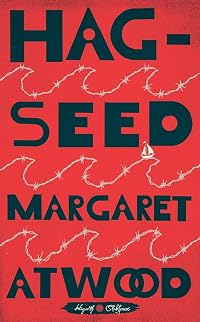
Felix is at the top of his game as artistic director of the Makeshiweg Theatre Festival. His productions have amazed and confounded. Now he's staging a Tempest like no other: not only will it boost his reputation, it will heal emotional wounds. Or that was the plan. Instead, after an act of unforeseen treachery, Felix is living in exile in a backwoods hovel, haunted by memories of his beloved lost daughter, Miranda. And brewing revenge. After 12 years revenge finally arrives in the shape of show more a theatre course at a nearby prison. Here Felix and his inmate actors will put on his Tempest and snare the traitors who destroyed him. It's magic! But will it remake Felix as his enemies fall? show lessTags
Recommendations













Member Recommendations
krazy4katz A real life inspiring example of teaching Shakespeare to convicts.
40




JuliaMaria Kanadische Literatur, Schauspieler*innen und Shakespeare spielen eine wichtige Rolle
Member Reviews
A few months after reading Nutshell by Ian McEwan, I read this wonderful book, and the experience was, by far, much more enjoyable.
First of all, I love Margaret Atwood. I’ve only really read two books by her so far, but I will love those books with all my heart and also definitely read more of her books before my time is up. And I am so very glad that this book is one of the ones I’ve read in the early stages of me going through her bibliography.
If you know me, you know I love Shakespeare and you also know I’ve performed twice as Ariel from The Tempest. It is one of my favourite plays, and my dream is to one day play Ariel in an interactive play that takes place on a tiny island, where the audience have to follow the characters show more around the island to get the story. I would kill to play that role.
This story functions as a retelling, but it’s not a retelling in the strictest sense. The story doesn’t pretend like The Tempest doesn’t exist in this universe, but rathe the story can only happen because The Tempest exists.
The story follows a man named Felix, a successful director and performer who runs a theatre festival in Makeshiweg, Canada, which is in its turn successful. Him and his brother, Tony, run it together – Tony looks after the finances and the logistics, and Felix gets the talent and the whole production together. And then Miranda, Felix’s daughter, passes away soon after his wife, and Tony usurps Felix and takes over the festival, kicking his brother off the team he lovingly built himself and preventing him from ever performing the play he had been hoping to build up to for years.
And the irony of how similar this all is to The Tempest isn’t lost on Felix.
Lost and unemployed, Felix soon finds work in a prison, teaching Shakespeare to interested inmates and trying to help them understand their position in prison in relation to the plays. He takes on the job as a part-time venture that soon sees him doing it for twelve years. And twelve years after his fall from grace, Tony has become the director of the arts and is visiting the prison Felix teaches us, but he doesn’t know Felix is there. And Felix finds the perfect opportunity to not only stage the play he had always wanted to put on, but to get revenge on his brother once and for all.
This beautiful story is a very meta-fuelled retelling of one of my favourite plays, not only placing it in the modern era and making it believable, but also being very self-aware of the story its telling and how it ties into the picture of a story a lot of us already know. This novel knows its limits and doesn’t try to overreach them, and it also knows how to keep itself real.
Honestly, I have no other words to say about this book other than it’s a fucking spectacular read. I give it a full on 5/5 and urge every Shakespeare fan to read it too. show less
First of all, I love Margaret Atwood. I’ve only really read two books by her so far, but I will love those books with all my heart and also definitely read more of her books before my time is up. And I am so very glad that this book is one of the ones I’ve read in the early stages of me going through her bibliography.
If you know me, you know I love Shakespeare and you also know I’ve performed twice as Ariel from The Tempest. It is one of my favourite plays, and my dream is to one day play Ariel in an interactive play that takes place on a tiny island, where the audience have to follow the characters show more around the island to get the story. I would kill to play that role.
This story functions as a retelling, but it’s not a retelling in the strictest sense. The story doesn’t pretend like The Tempest doesn’t exist in this universe, but rathe the story can only happen because The Tempest exists.
The story follows a man named Felix, a successful director and performer who runs a theatre festival in Makeshiweg, Canada, which is in its turn successful. Him and his brother, Tony, run it together – Tony looks after the finances and the logistics, and Felix gets the talent and the whole production together. And then Miranda, Felix’s daughter, passes away soon after his wife, and Tony usurps Felix and takes over the festival, kicking his brother off the team he lovingly built himself and preventing him from ever performing the play he had been hoping to build up to for years.
And the irony of how similar this all is to The Tempest isn’t lost on Felix.
Lost and unemployed, Felix soon finds work in a prison, teaching Shakespeare to interested inmates and trying to help them understand their position in prison in relation to the plays. He takes on the job as a part-time venture that soon sees him doing it for twelve years. And twelve years after his fall from grace, Tony has become the director of the arts and is visiting the prison Felix teaches us, but he doesn’t know Felix is there. And Felix finds the perfect opportunity to not only stage the play he had always wanted to put on, but to get revenge on his brother once and for all.
This beautiful story is a very meta-fuelled retelling of one of my favourite plays, not only placing it in the modern era and making it believable, but also being very self-aware of the story its telling and how it ties into the picture of a story a lot of us already know. This novel knows its limits and doesn’t try to overreach them, and it also knows how to keep itself real.
Honestly, I have no other words to say about this book other than it’s a fucking spectacular read. I give it a full on 5/5 and urge every Shakespeare fan to read it too. show less
Overall, I haven't been too enthusiastic about the Hogarth Shakespeare series, updated novelized versions of some of The Bard's best-known plays, but this one is my favorite. Felix, the long-time artistic director of a Canadian theatre festival, is forced from his position by two greedy underlings and retires to a rather shabby cottage to mourn the loss of his position and the continuing loss of his daughter, Miranda, who died in an accident ten years earlier--and to plot his revenge. He offers to teach a class on Shakespeare at the local penitentiary, eventually putting on performances with a cast of inmates. The novel focuses on his piece de resistance: The Tempest. Atwood's characterizations of the inmates, as well as the 'handles' show more she gives them (Bent Pencil the embezzler, for example), are amusing, and Felix's interactions with them are the best part of the story. After all, how do you get hardened, incarcerated criminals to agree to play "girls" and "fairies"? The author does a great job of paralleling situations, characters, and themes of Shakespeare's original play. It's pretty impossible to outdo Shakespeare or even to update him successfully, but Atwood has given us a novel that, taken on it's own, is a fun read with the same important messages as the original. show less
For those who are familiar with the Stratford Festival, this is an especially fun read. Atwood lovingly pokes jabs at dear old Stratford and its touristy bits and the Festival itself. I say she "lovingly" pokes jabs because she and her husband are regulars at the Festival each season, and she has been a featured Festival Forum speaker too. The other books in the Hogarth Shakespeare series have been, for me, huge disappointments (excepting possibly Vinegar Girl which seems like a JA-level book, but nonetheless I managed to finish it). This book is written at a higher skill level, and has the added fillip that I really wanted to know how it turned out. Would Mr. Duke, aka Felix Phillips, get his revenge? Would his (dead) daughter Miranda show more find freedom? The parallelism between the characters in the play and the prisoners, politicians and other assorted "real" characters is brilliantly executed. show less
I’ve read and enjoyed several of the Hogarth Shakespeare books but this one is now my favorite. For those unfamiliar with The Tempest, the story is nicely retold at the back of the book. For those vaguely familiar, re-discovering themes and characters through an aging director’s very strange cast and stage is an absolute delight. And for those who know the Tempest backward forward and sideways, you can be sure you’ve never seen it presented quite like this.
Part literary storytelling—how will a director cope when he loses his prestigious position?—part haunting mystery—and is the new home haunted?—part fascinating, thoroughly absorbing tale of growing threat and revenge, and part character study filled with at least as many show more present-world characters as those in Shakespeare’s play—Hagseed works, and works superbly, on every possible level, and keeps its readers glued to the page from start to finish.
In case you can’t tell, I really loved this book!
Disclosure: Blogging for Books provided this book to me for free in exchange for an honest review. show less
Part literary storytelling—how will a director cope when he loses his prestigious position?—part haunting mystery—and is the new home haunted?—part fascinating, thoroughly absorbing tale of growing threat and revenge, and part character study filled with at least as many show more present-world characters as those in Shakespeare’s play—Hagseed works, and works superbly, on every possible level, and keeps its readers glued to the page from start to finish.
In case you can’t tell, I really loved this book!
Disclosure: Blogging for Books provided this book to me for free in exchange for an honest review. show less
Atwood creates a delightfully book of literary legerdemain in this novel rewrite of Shakespeare’s “Tempest.” Felix Phillips, the protagonist is cunningly portrayed as just manic enough in his thought process to turn his sudden and unexpected dismissal director of the Makeshiweg Theatre Festival in Ontario from shock to depression into a crafty plot for revenge on those who deposed him. He plays Prospero in the novel putting on the play he’d originally planned a dozen years ago, served cold of course, to capture the conscience of his betrayers. But the real magician is the novel’s author who writes her spells in words that conjur up fast paced plotting with metatheater, ambiguity, and word play to make the whole rewrite of the show more play both believable and pleasing to her audience.
Ambiguity is a significant part of the stagecraft of this book. The Makeshiweg Theatre Festival is a recognizable stand in for the Stratford Ontario Shakespeare Festival. But what kind of a word is Makeshiweg? Some have speculated that it’s an indigenous Canadian word for fox, but could it also just be a rushed verbalization of Make a Wish? It’s hard to say for sure. Is Felix mourning the death of his young daughter Miranda so much that he actually thinks her ghost is present, or is he aware that it’s a just an imaginary symptom of grief, even when he thinks she’s whispering in his ear? Is it just the stuff that dreams are made of? Again, the answer is maybe. Would it really be possible to isolate some Canadian Cabinet Ministers away from the rest of play’s audience to work vengeance and blackmail upon them? Whatever you might think about those questions, the response to the book should truly be sustained clapping, a standing ovation, and a cry of “Author!” show less
Ambiguity is a significant part of the stagecraft of this book. The Makeshiweg Theatre Festival is a recognizable stand in for the Stratford Ontario Shakespeare Festival. But what kind of a word is Makeshiweg? Some have speculated that it’s an indigenous Canadian word for fox, but could it also just be a rushed verbalization of Make a Wish? It’s hard to say for sure. Is Felix mourning the death of his young daughter Miranda so much that he actually thinks her ghost is present, or is he aware that it’s a just an imaginary symptom of grief, even when he thinks she’s whispering in his ear? Is it just the stuff that dreams are made of? Again, the answer is maybe. Would it really be possible to isolate some Canadian Cabinet Ministers away from the rest of play’s audience to work vengeance and blackmail upon them? Whatever you might think about those questions, the response to the book should truly be sustained clapping, a standing ovation, and a cry of “Author!” show less
Felix is the artistic director for the Makeshiweg Festival where he constantly pushes boundaries while he allows his associate, Tony, deal with the realities of finances and the Board. In the wake of the death of Felix's young daughter, Miranda, Felix throws himself into preparations for his production of The Tempest only to find himself betrayed by Tony and removed from his position. Twelve years later, Felix has become rather reclusive as he plots how to avenge himself on those who prevented him from staging his masterpiece and have since ascended the rungs of power in the federal government. Felix's one significant contact with the outside world is teaching a literacy class at the local correctional facility where they study and then show more film a production of a Shakespeare play. When it's announced that Tony and several others who participated in Felix's downfall will be visiting the prison to watch the current production, Felix knows this is finally the chance to both stage his production of The Tempest and get his revenge.
When I saw that Margaret Atwood would be doing a reinterpretation of The Tempest for the Hogarth Shakespeare series I was excited. [Hag-Seed] does not disappoint. The levels of meta are almost off the scale as we get an actual production of the play within this modern re-imagining of it and yet it works. Felix is just as fascinating as Prospero and has the same qualities of being a genuinely terrible person at times and yet still gaining the reader's sympathy. The discussions Felix has with the prison inmates about the play as part of the prep for their production also add a whole new level of metatext to the play as they discuss themes and pick apart characters that are being explored and exploded within the novel. A dream for any Can Lit professor and a delight to read if you're a fan of Atwood and have even a tangential knowledge of the play. show less
When I saw that Margaret Atwood would be doing a reinterpretation of The Tempest for the Hogarth Shakespeare series I was excited. [Hag-Seed] does not disappoint. The levels of meta are almost off the scale as we get an actual production of the play within this modern re-imagining of it and yet it works. Felix is just as fascinating as Prospero and has the same qualities of being a genuinely terrible person at times and yet still gaining the reader's sympathy. The discussions Felix has with the prison inmates about the play as part of the prep for their production also add a whole new level of metatext to the play as they discuss themes and pick apart characters that are being explored and exploded within the novel. A dream for any Can Lit professor and a delight to read if you're a fan of Atwood and have even a tangential knowledge of the play. show less
Margaret Atwood has done a bang-up job of turning The Tempest into a novel, complete with a Shakespearean “play within the play”, which works amazingly well in her hands. In fact, I like her version of The Tempest much better than the Bard’s, all around. I studied the play in college, and have seen it performed live. It is not my favorite Shakespeare, by far. But Atwood brought me closer to an appreciation of the original with this modern re-telling, in which an arts festival director gets the back-stabbing treatment from his protégé, and determines to pull off the biggest and best “gotcha” anyone has ever seen.
Felix Phillips is already operating under the weight of loss as he throws himself into the production of his show more concept of The Tempest for the upcoming Makeshiweg Festival. His wife left him shortly after the birth of their daughter, Miranda, leaving Felix to care for, and fall hopelessly in love with, the newborn. Then, at age 3, Miranda died. The Tempest suddenly becomes his obsession, and he is oblivious to the plotting going on behind the scenes until he is abruptly handed his walking papers, his highly annotated script, the slightly bizarre Prospero costume he’s devised for himself, and told “Beat it, Felix; the Board has decided you’re not the man for us anymore”. The Festival will henceforth be directed by Tony, Felix’s treacherous and deceitful assistant. The Tempest production will be scrapped…in fact, Shakespeare will be abandoned in favor of musicals and comedies.
After disappearing from public view, living a marginal existence under an assumed name, and keeping company with the ghost of his daughter as she grows up in his mind, Felix at last gets the chance to set up the ultimate revenge. He has become involved in a drama program for inmates at Fletcher Correctional Facility, establishing himself as a fixture at the prison over the course of a dozen years, until he learns that one of the bastards who brought about his downfall (now the Justice Minister) has taken an unhealthy interest in the program, probably with an eye to eliminating it as part of his “tough on crime” agenda. And whadddya know, good old Tony is also in politics these days, and both men will attend the inmates’ annual production. Time to mount The Tempest, with a vengeful twist. It’s a lot of fun to watch Felix make Shakespeare relevant and appealing to hard cases with names like SnakeEye and HotWire. It’s even more fun to follow his brilliant plotting to kidnap government Ministers inside the walls of a maximum security prison, make them “see reason”, and turn them loose again, all under cover of darkness and drama, with no one else the wiser. show less
Felix Phillips is already operating under the weight of loss as he throws himself into the production of his show more concept of The Tempest for the upcoming Makeshiweg Festival. His wife left him shortly after the birth of their daughter, Miranda, leaving Felix to care for, and fall hopelessly in love with, the newborn. Then, at age 3, Miranda died. The Tempest suddenly becomes his obsession, and he is oblivious to the plotting going on behind the scenes until he is abruptly handed his walking papers, his highly annotated script, the slightly bizarre Prospero costume he’s devised for himself, and told “Beat it, Felix; the Board has decided you’re not the man for us anymore”. The Festival will henceforth be directed by Tony, Felix’s treacherous and deceitful assistant. The Tempest production will be scrapped…in fact, Shakespeare will be abandoned in favor of musicals and comedies.
After disappearing from public view, living a marginal existence under an assumed name, and keeping company with the ghost of his daughter as she grows up in his mind, Felix at last gets the chance to set up the ultimate revenge. He has become involved in a drama program for inmates at Fletcher Correctional Facility, establishing himself as a fixture at the prison over the course of a dozen years, until he learns that one of the bastards who brought about his downfall (now the Justice Minister) has taken an unhealthy interest in the program, probably with an eye to eliminating it as part of his “tough on crime” agenda. And whadddya know, good old Tony is also in politics these days, and both men will attend the inmates’ annual production. Time to mount The Tempest, with a vengeful twist. It’s a lot of fun to watch Felix make Shakespeare relevant and appealing to hard cases with names like SnakeEye and HotWire. It’s even more fun to follow his brilliant plotting to kidnap government Ministers inside the walls of a maximum security prison, make them “see reason”, and turn them loose again, all under cover of darkness and drama, with no one else the wiser. show less
 This review was written for LibraryThing Early Reviewers.
Members
- Recently Added By
Published Reviews
ThingScore 25
While “Hag-Seed” is a book that’s great for a quick read, it doesn’t deliver the punches that the premises promise, making it an all-around mediocre book.
added by DouglasAtEik
Lists

Favourite Women's Prize for Fiction, Orange & Bailey's Prize contenders
132 works; 52 members

The Best of Canadian Literature
235 works; 33 members
Best Contemporary Literary Fiction (Around the Last 30 Years)
388 works; 124 members

Female Author
1,234 works; 65 members

Books Set in Canada
80 works; 16 members

2017 Baileys Women's Prize for Fiction
16 works; 7 members

Top Five Books of 2017
757 works; 231 members

Books Read in 2017
4,249 works; 130 members

Top Five Books of 2016
795 works; 228 members

Stories Inspired by Other Fiction
127 works; 24 members

Five star books
1,767 works; 110 members

Retellings of Shakespeare Plays
42 works; 12 members

living room bookshelf
150 works; 1 member

Florida
366 works; 3 members

Books Read in 2021
5,361 works; 114 members

Books Read in 2018
4,360 works; 110 members

Books With Trees and Plants in the Title
27 works; 2 members

Canada
42 works; 3 members

Novels Featuring Actors and the Theater
4 works; 1 member

Best Audiobooks
240 works; 114 members
Author Information

284+ Works 199,251 Members
Margaret Atwood was born on November 18, 1939 in Ottawa, Canada. She received a B.A. from Victoria College, University of Toronto in 1961 and an M.A. from Radcliff College in 1962. Her first book of verse, Double Persephone, was published in 1961 and was awarded the E. J. Pratt Medal. She has published numerous books of poetry, novels, story show more collections, critical work, juvenile work, and radio and teleplays. Her works include The Journals of Susanna Moodie, Power Politics, Cat's Eye, The Robber Bride, Morning in the Buried House, the MaddAdam trilogy, and The Heart Goes Last. She has won numerous awards including the Prince of Asturias Award for Literature, the Booker Prize in 2000 for The Blind Assassin, the Giller Prize and the Premio Mondello for Alias Grace, and the Governor General's Award in 1966 for The Circle Game and in 1986 for The Handmaid's Tale, which also won the very first Arthur C. Clarke Award in 1987. She won the PEN Pinter prize in 2016 for her political activism. She was awarded the 2016 PEN Pinter Prize for the outstanding literary merit of her body of work. (Bowker Author Biography) show less
Some Editions
Awards and Honors
Awards
Distinctions
Series

Work Relationships
Was inspired by
Common Knowledge
- Canonical title
- Hag-Seed
- Original title
- Hag-Seed
- Original publication date
- 2016-10-11
- People/Characters
- Felix Phillips; Miranda Phillips; Sal O'Nally; Freddie O'Nally; Anne-Marie Greenland; Tony Price
- Important places
- Ontario, Canada
- Epigraph
- “This is certain, that a man that studieth revenge
keeps his own wounds green, which otherwise
would heal, and do well.”
— Sir Francis Bacon, "On Revenge."
“. . . although there are nice people on the stage, there are some who would make your hair stand on end.”
— Charles Dickens.
“Other flowering isles must be
In the sea of Life and Agony:
Other spirits float and flee
O’er that gulf . . .”
— Percy Bysse Shelly, "Lines
Written Among the Euganean Hills." - Dedication
- Richard Bradshaw, 1944-2007
Gwendolyn MacEwen, 1941-1987
Enchanters - First words
- The house lights dim. The audience quiets.
- Quotations
- "But Shakespeare is such a classic."
Too good for them, was what she meant. "He had no intention of being a classic!" Felix said, adding a tinge of indignation to his voice. "For him, the classics were, well, Virgil, and H... (show all)erodotus, and...He was simply an actor-manager trying to keep afloat. It's only due to luck that we have Shakespeare at all! Nothing was even published till he was gone!"
The prisoners loved the fight scenes. Why not? Everyone loved the fight scenes: that's why Shakespeare put them in.
A cruise ship filled with old people, people even older than himself, snoozing in deck chairs and doing line-dancing—that was his idea, if not of hell exactly, then at least of limbo. A state of suspension somewhere on the ... (show all)road to death. But on second thought, what did he have to lose? The road to death is after all the road he's on, so why not eat well during the journey?
Idiot, he tells himself. How long will you keep yourself on this intravenous drip? Just enough illusion to keep you alive. Pull the plug, why don't you? Give up your tinsel stickers, your paper cutouts, your colored crayons. ... (show all)Face the plain, unvarnished grime of real life.
But real life is brilliantly colored, says another part of his brain. It's made up of every possible hue, including those we can't see. All nature is a fire: everything forms, everything blossoms, everything fades. We are slow clouds…
The rest of his life. How long that time had once felt to him. How quickly it has sped by. How much of it has been wasted. How soon it will be over. - Last words
- (Click to show. Warning: May contain spoilers.)"To the elements be free," he says to her.
And, finally, she is. - Original language
- English
Classifications
- Genres
- Poetry, Fiction and Literature, General Fiction, Fantasy
- DDC/MDS
- 813.54 — Literature & rhetoric American literature in English American fiction in English 1900-1999 1945-1999
- LCC
- PR9199.3 .A8 .H27 — Language and Literature English English Literature English literature: Provincial, local, etc.
- BISAC
Statistics
- Members
- 2,663
- Popularity
- 7,013
- Reviews
- 236
- Rating
- (3.97)
- Languages
- 17 — Chinese, Czech, Danish, Dutch, English, Estonian, Finnish, French, German, Italian, Norwegian (Bokmål), Polish, Serbian, Spanish, Swedish, Turkish, Portuguese (Portugal)
- Media
- Paper, Audiobook, Ebook
- ISBNs
- 55
- ASINs
- 12
