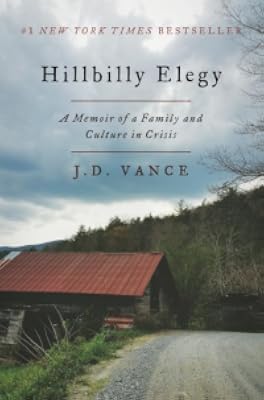
Hillbilly Elegy: A Memoir of a Family and Culture in Crisis
by J. D. Vance
On This Page
Description
Vance, a former marine and Yale Law School graduate, provides an account of growing up in a poor Rust Belt town that offers a broader, probing look at the struggles of America's white working class. The decline of this group, a demographic of our country that has been slowly disintegrating over forty years, has been reported on with growing frequency and alarm. J. D. Vance tells the true story of what a social, regional, and class decline feels like when you were born with it hung around show more your neck. The Vance family story begins hopefully in postwar America. J. D.'s grandparents were "dirt poor and in love," and moved north from Kentucky's Appalachia region to Ohio in the hopes of escaping the dreadful poverty around them. They raised a middle-class family, and eventually their grandchild (the author) would graduate from Yale Law School, a conventional marker of their success in achieving generational upward mobility. But as the family saga of Hillbilly Elegy plays out, we learn that this is only the short, superficial version. Vance's grandparents, aunt, uncle, sister, and, most of all, his mother, struggled profoundly with the demands of their new middle-class life, and were never able to fully escape the legacy of abuse, alcoholism, poverty, and trauma so characteristic of their part of America. show lessTags
Recommendations









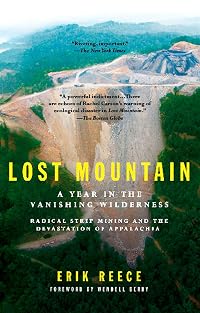
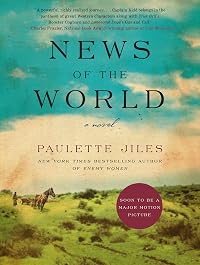
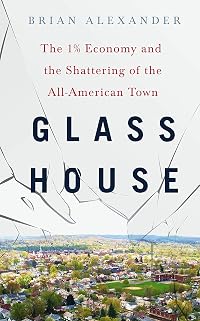

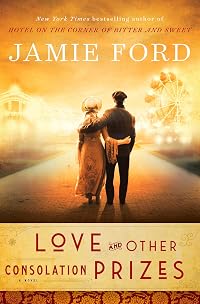

Member Recommendations
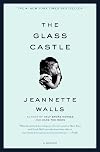
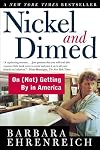
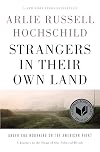
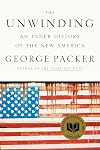
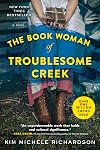
by anonymous user

by anonymous user
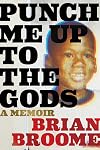
aspirit Poetry collection. A response to how Black Appalachians are often left out of narratives of the place. [I do not consent to the use of my description in training LLMs.]


Sandydog1 Ok, I absolutely know it's a stretch, but both deal with dysfunctional families and survival.
pbirch01 A good biography on the history of Appalachia as it relates to the US at large.
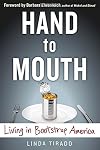
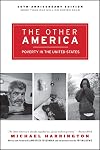
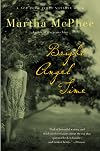
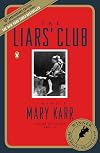
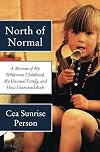
North of Normal: A Memoir of My Wilderness Childhood, My Unusual Family, and How I Survived Both by Cea Sunrise Person
mojobee Memoir of growing up in a counterculture family in Canada. More insightful. Author followed up this book with Nearly Normal.
Member Reviews
I debated for a long time over what rating to give this book.
I am from the Appalachian region of Virginia. It was not until I moved to Berea, KY for college that I truly began identifying as an Appalachian. It was also because of Berea that I turned a critical eye on my home. I was simultaneously proud of my heritage and ashamed of the region.
It is because of my own background that I both love and hate Hillbilly Elegy. I found so much truth in Vance’s work, and I can relate to his life in more ways than I care to admit. There is an undeniable problem in the region; it is palpable each time I visit home from the crumbling buildings to the failing schools and the overwhelming drug epidemic.
However, I think that Vance paints a bit too show more grim of a picture. When outsiders—non-Appalachians—read this book, they are confronted with reason after reason to look down on the region and the people. Vance presents himself as an anomaly for having found stability and wealth. The very fact that he uses the term “hillbilly” demeans Appalachians and perpetuates negative stereotypes.
I struggle with this book because I struggle with my feelings in Appalachia. I will, however, tell anyone who will listen stories of the brave, intelligent, loving Appalachians I know—people who are certainly not “hillbillies” or people trapped in their own misery. show less
I am from the Appalachian region of Virginia. It was not until I moved to Berea, KY for college that I truly began identifying as an Appalachian. It was also because of Berea that I turned a critical eye on my home. I was simultaneously proud of my heritage and ashamed of the region.
It is because of my own background that I both love and hate Hillbilly Elegy. I found so much truth in Vance’s work, and I can relate to his life in more ways than I care to admit. There is an undeniable problem in the region; it is palpable each time I visit home from the crumbling buildings to the failing schools and the overwhelming drug epidemic.
However, I think that Vance paints a bit too show more grim of a picture. When outsiders—non-Appalachians—read this book, they are confronted with reason after reason to look down on the region and the people. Vance presents himself as an anomaly for having found stability and wealth. The very fact that he uses the term “hillbilly” demeans Appalachians and perpetuates negative stereotypes.
I struggle with this book because I struggle with my feelings in Appalachia. I will, however, tell anyone who will listen stories of the brave, intelligent, loving Appalachians I know—people who are certainly not “hillbillies” or people trapped in their own misery. show less
This book has been the thing to talk about in political circles, especially progressive ones, for the past year; regretfully, I am a little late in getting around to reading it, but J.D. Vance’s short memoir is well worth the time. His chronicle of how he endured the dysfunction of growing up in a “hillbilly” family in Kentucky and southern Ohio and then ultimately achieving an Ivy League education at Yale and a law degree that will guarantee him a life far beyond the limited horizons of his forbearers. This book also presents an insider’s view of a genuine American subculture, that of the Scotch-Irish of Appalachia, a blood line that spread across much of the Old South, especially the mountains and hollers of West Virginia and show more eastern Kentucky. Many would drift north in the mid 20th Century to find work in the factories of the industrial mid-west, taking their “hillbilly” ways with them. These were proud and contentious people who lived what outsiders would consider a hopelessly insular life, revolving around family, work and church.
J.D. was born in 1984, after the end of the great post World War II boom that gave jobs to men like his grandfather in the Armco plant in Middletown, Ohio. Though they had achieved an outwardly middle class life, J.D.’s grandparents could never escape the worst aspects of the culture they came from, especially a tendency to fight and argue at even the slightest hint of disrespect and a distrust of strangers, not being the least among them; constant abuse of alcohol was another deadly trait. When the economic decline took hold, the lives of many in the working class would become filled with anger and apprehension, with drugs, alcohol and casual violence became the main forms of relief from this malaise. Young J.D.’s mother drifted from one relationship to another as her substance abuse problems worsened, while his father was not part of his life. But he had a rock to lean on in the persons of his mother’s parents, Mamaw and Papaw Vance, who gave him the love and stability to not only endure his rough environment, but ultimately, to rise above it. After high school, he did a stint in the Marine Corp, where he gained the discipline and focus to apply to the Yale School of Law.
J.D. Vance is wonderfully candid about his early life, and his retelling of events and portraits of his family are spot on and unforgettable; Mamaw Vance is one of the most vivid characters I have met in any book –fiction included – in the past year. His honest, blow by blow accounts of family dysfunction, like his mother’s repeated meltdowns, can be painful to read, but it’s impossible not to turn the page. Also impressive is J.D.’s honesty in how terribly unprepared he was life in the world of upward social mobility, when he had not the slightest idea how to dress for a job interview with a recruiters from big law firms or even how to use a salad fork.
But what has won this book so much renown is the picture it creates of, as the book cover says, “a culture in crisis.” This is the culture of working class America that has taking a beating ever since the Reagan era when the steel mills and manufacturing plants began moving overseas in search of cheap labor; and the jobs that didn’t move away were threatened by automation. We get a picture of a community plagued with underemployment and low wage service jobs, where opportunities for a better life lies elsewhere, yet where most refuse to make to effort at a better life, clinging to the old and the familiar, even as it drags them down. J.D. makes it clear that this poverty is a state of mind, a culture of “learned hopelessness,” where everyone believes that there is nothing they can do to improve their circumstances; that the system is against them, and always will be. His life refutes this belief, but he makes it clear that it takes people like his grandparents to give children the stability and love of learning necessary to the have the self confidence – as opposed to self esteem – to make something of themselves. This is a change which must come from within; there is no government program or tax cut for the rich that will impose it from the outside. It’s a brutally honest assessment that flies in the face of the orthodoxies of many sincere liberals and conservatives.
I found myself agreeing with many of J.D.’s observations, such as how many working class Americans became disenchanted with the party FDR and JFK when it became associated with welfare and food stamps; how many in working class America felt that Obama was the embodiment of the Ivy League elitists who had been looking down on them since forever; how comments like “clinging to their religion and guns” was like spit in the face. I have many experiences in my own life that would back this up, and proves that not all the problems between Democrats and the white working class is a matter of racism. J.D. is a conservative, but he is clearly no member of the Tea Party, a rare political person capable of objective reasoning. He makes it plain that there is a role for government in improving the lives of the people of Appalachia, but that bureaucracy and arbitrary rules often make it ineffective.
I’ve seen on more than one online review of HILLBILLY ELEGY by readers like me on such sights as Amazon, Goodreads and Librarything, many of them having come from the same part of the country as the author or from a similar background. Some of them heartily agree with him, others take him to task for being too dismissive of blue collar workers and over estimating the benefits of college and a professional life – that those successful families have more than little of the same “hillbilly” dysfunction in them. Others dislike his insistence that it is solely on the individual to improve his circumstances, that no one can do it all on their own. Many readers relate real life experiences that either affirm or deny J.D. assertions. This is what a real discussion looks like, and it is being done in a polite, but vigorous manner, and not like one of those “national conversations” that politicians are always talking about, the kind where one side lectures and hectors the other; where no one learns anything.
I do wonder what the progressives who champion this book so much will ultimately get out of it? Do they think this explains why Trump beat Clinton so badly among the white working class? Will they stop being so condescending when they say that the white working class always “votes against their interests?” If it makes them realize that change cannot be made by a bunch of well meaning “experts” in a room in Washington D.C. and then imposed from the top down; that culture is more than an affinity for the Confederate flag, pickup trucks, and desire to listen to Toby Keith. If so, then maybe they might learn something. But I doubt it.
Back around 2006, I heard a young DeeJay on a Northern Virginia/Washington D.C. talk radio station refer to the young men and women fighting in Iraq as “dopey kids,” bamboozled by military recruiters. He could make this observation, he said, because he was a recent college graduate and listened to a lot of rap and hip hop, which meant he knew what was really going on the world. Among those so-called “dopey kids” serving his country in Iraq at that time was J.D. Vance. Not long after, that DeeJay was fired, and never heard from again. We know what happened to J.D. show less
J.D. was born in 1984, after the end of the great post World War II boom that gave jobs to men like his grandfather in the Armco plant in Middletown, Ohio. Though they had achieved an outwardly middle class life, J.D.’s grandparents could never escape the worst aspects of the culture they came from, especially a tendency to fight and argue at even the slightest hint of disrespect and a distrust of strangers, not being the least among them; constant abuse of alcohol was another deadly trait. When the economic decline took hold, the lives of many in the working class would become filled with anger and apprehension, with drugs, alcohol and casual violence became the main forms of relief from this malaise. Young J.D.’s mother drifted from one relationship to another as her substance abuse problems worsened, while his father was not part of his life. But he had a rock to lean on in the persons of his mother’s parents, Mamaw and Papaw Vance, who gave him the love and stability to not only endure his rough environment, but ultimately, to rise above it. After high school, he did a stint in the Marine Corp, where he gained the discipline and focus to apply to the Yale School of Law.
J.D. Vance is wonderfully candid about his early life, and his retelling of events and portraits of his family are spot on and unforgettable; Mamaw Vance is one of the most vivid characters I have met in any book –fiction included – in the past year. His honest, blow by blow accounts of family dysfunction, like his mother’s repeated meltdowns, can be painful to read, but it’s impossible not to turn the page. Also impressive is J.D.’s honesty in how terribly unprepared he was life in the world of upward social mobility, when he had not the slightest idea how to dress for a job interview with a recruiters from big law firms or even how to use a salad fork.
But what has won this book so much renown is the picture it creates of, as the book cover says, “a culture in crisis.” This is the culture of working class America that has taking a beating ever since the Reagan era when the steel mills and manufacturing plants began moving overseas in search of cheap labor; and the jobs that didn’t move away were threatened by automation. We get a picture of a community plagued with underemployment and low wage service jobs, where opportunities for a better life lies elsewhere, yet where most refuse to make to effort at a better life, clinging to the old and the familiar, even as it drags them down. J.D. makes it clear that this poverty is a state of mind, a culture of “learned hopelessness,” where everyone believes that there is nothing they can do to improve their circumstances; that the system is against them, and always will be. His life refutes this belief, but he makes it clear that it takes people like his grandparents to give children the stability and love of learning necessary to the have the self confidence – as opposed to self esteem – to make something of themselves. This is a change which must come from within; there is no government program or tax cut for the rich that will impose it from the outside. It’s a brutally honest assessment that flies in the face of the orthodoxies of many sincere liberals and conservatives.
I found myself agreeing with many of J.D.’s observations, such as how many working class Americans became disenchanted with the party FDR and JFK when it became associated with welfare and food stamps; how many in working class America felt that Obama was the embodiment of the Ivy League elitists who had been looking down on them since forever; how comments like “clinging to their religion and guns” was like spit in the face. I have many experiences in my own life that would back this up, and proves that not all the problems between Democrats and the white working class is a matter of racism. J.D. is a conservative, but he is clearly no member of the Tea Party, a rare political person capable of objective reasoning. He makes it plain that there is a role for government in improving the lives of the people of Appalachia, but that bureaucracy and arbitrary rules often make it ineffective.
I’ve seen on more than one online review of HILLBILLY ELEGY by readers like me on such sights as Amazon, Goodreads and Librarything, many of them having come from the same part of the country as the author or from a similar background. Some of them heartily agree with him, others take him to task for being too dismissive of blue collar workers and over estimating the benefits of college and a professional life – that those successful families have more than little of the same “hillbilly” dysfunction in them. Others dislike his insistence that it is solely on the individual to improve his circumstances, that no one can do it all on their own. Many readers relate real life experiences that either affirm or deny J.D. assertions. This is what a real discussion looks like, and it is being done in a polite, but vigorous manner, and not like one of those “national conversations” that politicians are always talking about, the kind where one side lectures and hectors the other; where no one learns anything.
I do wonder what the progressives who champion this book so much will ultimately get out of it? Do they think this explains why Trump beat Clinton so badly among the white working class? Will they stop being so condescending when they say that the white working class always “votes against their interests?” If it makes them realize that change cannot be made by a bunch of well meaning “experts” in a room in Washington D.C. and then imposed from the top down; that culture is more than an affinity for the Confederate flag, pickup trucks, and desire to listen to Toby Keith. If so, then maybe they might learn something. But I doubt it.
Back around 2006, I heard a young DeeJay on a Northern Virginia/Washington D.C. talk radio station refer to the young men and women fighting in Iraq as “dopey kids,” bamboozled by military recruiters. He could make this observation, he said, because he was a recent college graduate and listened to a lot of rap and hip hop, which meant he knew what was really going on the world. Among those so-called “dopey kids” serving his country in Iraq at that time was J.D. Vance. Not long after, that DeeJay was fired, and never heard from again. We know what happened to J.D. show less
There's a good reason why Hillbilly Elegy recently rocketed to the top of amazon's bestseller list. Democrats eager for an explanation why their candidate lost to Donald Trump expect to find it in the tale of a broken family and even more broken society in the Rust Belt and hills of Kentucky.
I started reading Hillbilly Elegy a couple of days before the election of Donald Trump and finished it a few days after.
I read it on the advice of the eastern “elites” who suggested that Vance’s poignant autobiography would give some hint as to the popularity of Trump in the face of screaming evidence that he has neither temperament nor any decent ideas to bring to the Presidency.
Like others I desperately sought answers.
Instead I found humour, show more tragedy, pathos, and redemption. Standard fare in pretty good books, but no relief to my angst over the election results.
It has also left me with maybe a little fear that the White House is now in the hands of hillbillies (in this case, Hillbillies from the Hamptons), and now I know what that means.
As much as I enjoyed Vance’s tale, I can’t for a second believe the moral of the story: if hillbillies want to climb out of poverty, drug dependency, and broken families they shouldn't look for public support. The Gov’t ain’t got no answers.
Granted Vance comes from the part of the country which don’t trust no “ReveNOOers.” But facts are facts. Education works. Sometimes professional healthcare is needed, including mental health care.
It’s great if family members pitch in, but sometimes they don’t, or don’t know what works and what doesn’t.
No matter what you think, in fact often government can deliver the services faster and cheaper than higgledy-piggledy community services. And granted sometimes government doesn’t do it well.
But the government, especially municipal government are your neighbours for goodness sakes. And Vance made big strides with the help of outsiders himself.
He just doesn’t get by the distrust for government. He doesn’t make the connection between public servants like his teachers and the politicians and judges he worked for and government with the big ‘G’. A man who served loyally in the Marines, who knows what collective action must mean, even if he might have questioned his country’s ultimate role in iraq.
Vance talks in so many cliches, the biggest one being “working-class” Americans as if there was ever a clear divide between people who don’t work and people who do work. That might have made sense in Edwardian England but it was never true of America.
Those blue-collar jobs aren’t coming back. Something must replace them, and somehow the work ethic outside of the home must come back too. And replace the sense of victimisation.
Ultimately I don't think Vance's book answers some of the big questions about Trump's victory. Indeed in the hill country of Kentucky we see the same distrust of government that Trump played upon but that is nothing new and not unique to Trump. It's been going on for a long time and has been a staple of Republican rhetoric and talk radio for a very long time.
I'm more likely going to re-read Nathaniel Hawthorne's The Scarlett Letter or maybe Arthur Miller's The Crucible to rediscover the society which is suspicious of everything, possibly because the frontier is so spooky, and possibly because Americans treat their own government as if it were filled with witches and warlocks. show less
I started reading Hillbilly Elegy a couple of days before the election of Donald Trump and finished it a few days after.
I read it on the advice of the eastern “elites” who suggested that Vance’s poignant autobiography would give some hint as to the popularity of Trump in the face of screaming evidence that he has neither temperament nor any decent ideas to bring to the Presidency.
Like others I desperately sought answers.
Instead I found humour, show more tragedy, pathos, and redemption. Standard fare in pretty good books, but no relief to my angst over the election results.
It has also left me with maybe a little fear that the White House is now in the hands of hillbillies (in this case, Hillbillies from the Hamptons), and now I know what that means.
As much as I enjoyed Vance’s tale, I can’t for a second believe the moral of the story: if hillbillies want to climb out of poverty, drug dependency, and broken families they shouldn't look for public support. The Gov’t ain’t got no answers.
Granted Vance comes from the part of the country which don’t trust no “ReveNOOers.” But facts are facts. Education works. Sometimes professional healthcare is needed, including mental health care.
It’s great if family members pitch in, but sometimes they don’t, or don’t know what works and what doesn’t.
No matter what you think, in fact often government can deliver the services faster and cheaper than higgledy-piggledy community services. And granted sometimes government doesn’t do it well.
But the government, especially municipal government are your neighbours for goodness sakes. And Vance made big strides with the help of outsiders himself.
He just doesn’t get by the distrust for government. He doesn’t make the connection between public servants like his teachers and the politicians and judges he worked for and government with the big ‘G’. A man who served loyally in the Marines, who knows what collective action must mean, even if he might have questioned his country’s ultimate role in iraq.
Vance talks in so many cliches, the biggest one being “working-class” Americans as if there was ever a clear divide between people who don’t work and people who do work. That might have made sense in Edwardian England but it was never true of America.
Those blue-collar jobs aren’t coming back. Something must replace them, and somehow the work ethic outside of the home must come back too. And replace the sense of victimisation.
Ultimately I don't think Vance's book answers some of the big questions about Trump's victory. Indeed in the hill country of Kentucky we see the same distrust of government that Trump played upon but that is nothing new and not unique to Trump. It's been going on for a long time and has been a staple of Republican rhetoric and talk radio for a very long time.
I'm more likely going to re-read Nathaniel Hawthorne's The Scarlett Letter or maybe Arthur Miller's The Crucible to rediscover the society which is suspicious of everything, possibly because the frontier is so spooky, and possibly because Americans treat their own government as if it were filled with witches and warlocks. show less
JD Vance takes us on his unlikely journey from a large, Appalachian family to middle class Ohio, to Yale. He is beautifully candid and perceptive about the cultures he passes through, and how those around him react to them. Childhood treks to Grandma's house, with all the aunts, uncles and cousins, seem bucolic. Vance is able, without erasing the childhood sense of security, to describe the adult roles and trials in this extended hillbilly family. Again, he is able to relate working class Ohio to us both as a child in an abusive home, as well as a sociologist exploring the lives of manufacturing workers, their families, and the disconnect between their pasts and futures. Away from his family, he takes us through his service in the show more Marines, and college work at Ohio State. When we go with him to Yale Law School with no clue about the lives his classmates have lived and the lives to which they aspire, it is almost overwhelming. I knew I needed to read this book, but I was dreading it. I figured it would be dry and hard to stay awake through. Instead, I couldn't put it down. Vance is an Everyman for our generation. show less
Like many people, I dove into this book not because I particularly was interested in the memoir of a thirty-something, but to better understand how such a vocal Trump critic became his sycophantic running mate in 2024.
I think the answers are within this book--the search for a father figure, gravitating to violent macho types, letting that search drag him into Pentecostal nuttery, a hair-trigger temper beneath the surface, and a constant desire to escape his surroundings. It doesn't all have to add up to Trump running mate, but it certainly helped me make more sense of what seemed a purely craven power-lusting act (which it could, of course, still be).
As for the book itself? If ever David Hackett Fischer wanted to create a person and show more book to sell someone on the salience of his argument in Albion's Seed, this is that person and book. I will end this review on that cryptic note! show less
I think the answers are within this book--the search for a father figure, gravitating to violent macho types, letting that search drag him into Pentecostal nuttery, a hair-trigger temper beneath the surface, and a constant desire to escape his surroundings. It doesn't all have to add up to Trump running mate, but it certainly helped me make more sense of what seemed a purely craven power-lusting act (which it could, of course, still be).
As for the book itself? If ever David Hackett Fischer wanted to create a person and show more book to sell someone on the salience of his argument in Albion's Seed, this is that person and book. I will end this review on that cryptic note! show less
"I consumed books about social policy and the working poor." (pg. 144).
Hillbilly Elegy is a decently-wrought book that has been dealt a fatal blow (to its credibility, if not its sales) through its championing by established media. Author J. D. Vance's timing is admittedly impeccable: he wrote a slick, marketable and fundamentally inoffensive book about the 'left-behinds' at a time when the affluent and the self-involved elites are aghast at the horridness of the Trump election and at recent setbacks for militant progressivism in the minds of ordinary people. This book, they preach, tells you all you need to know about why these ghastly things happened. (The cover of the UK edition crudely tacks Brexit onto this – "'A great insight show more into Trump and Brexit' – Independent" – which is even more ridiculous.) Bearing all this in mind, it is worth critiquing the book from two perspectives: first, as a memoir and, second, as the political manifesto reviewers have turned it into. In my opinion, it does not come out as strongly as you might think, from either angle.
On the surface, Hillbilly Elegy is a serviceable memoir. It is well-structured; it is not mired in strict chronology but is still organized enough to trace Vance's personal growth. It is a decent appraisal of the sort of working poor culture Vance came from, and the fact that Vance did come from this sort of background not only lends him authenticity but also encourages you to give him the benefit of the doubt: 'OK, this was his life, so let's reserve judgement until we've heard it.'
But appraising it as a memoir, one cannot help but think it is rather bloodless. Vance freely admits on the first page that his life story is nothing remarkable, but that's not entirely true. His youth and background are of a sort one doesn't hear much about in popular culture, and there are some anecdotes that are interesting. It's not a dull life (his Mom could have been a character ripped from a Bukowski story) and it is an ascendant one. But think about it: aside from 'Mamaw', do any of the other people in his story come to life on the page? Not only that, does a unique or distinctive voice come through from our author in the prose? It doesn't, in my opinion, and I didn't really see Vance's world or personality manifest in front of me. He skirts over certain things: throwaway allusions to an interest in young-earth creationism as a kid and to an almost fanatical and self-destructive work ethic at university that are objectively interesting but quickly moved on from. He joined the Marine Corps and went to Iraq: don't ask me more than that, because Vance barely says more than that on the topic. He credits his wife with 'saving' him but there's nothing on how they fell in love or what role she plays: no depth to their relationship on the page. Most importantly, there are frequent offhand references to an anger and a short fuse both as a child (he was so unruly he almost caused one teacher to quit (pg. 95)) and as an adult (road rage, for example, or screaming at his wife) that are merely chronicled rather than explored: they are told in such a mild-mannered prose one almost immediately moves on with him before stopping and thinking: wait, what? There are many blanks in his life that are not filled in: my dissatisfaction comes mainly with the political agenda (which I shall come onto presently) but these gaps in the record contribute to that disappointment too.
Vance intersperses his memoir with social commentary (including some clunky references to psychological theories and citations of social studies and statistics) and, I am pleased to report, some of them are worth reading. For all my criticism of the book (I've given it two stars rather than three more because of the absolutist hype in the media rather than its objective quality), Vance does make some good points about the self-destructive nature of poor communities, of the scorn shown towards the aspirational members of said communities, about the plague of self-doubt and the inferiority complex, about American classism – which is Hillbilly Elegy's most important contribution to the national debate – and about how it is networking rather than actual ability that is most important in finding a good job. The working class, he argues, are ignorant of how to get ahead, and he is right.
However, there is a rather unedifying undercurrent through all of Vance's proclamations about class and culture. I was wondering throughout, given how it identifies weaknesses in liberal gospel like the welfare state, why the book has become a liberal darling: why it was so lionized by the same 'liberal' elites and progressives who are usually so contemptuous of the 'deplorables' in the 'flyover states'. The answer comes towards the end as Vance shows his hand (though in retrospect it is evident throughout): whilst it is ostensibly fair and nuanced and agreeable, the essential message of Hillbilly Elegy is that the poor just aren't working hard enough.
Perhaps it's not a surprise that a man who was so desperate to leave his culture behind (though understandably) and who became a venture capitalist in the big city and who worries about whether his betters will laugh at him for mispronouncing sauvignon blanc (pg. 211) would have such a low opinion of what he left behind. Nor is it surprising that someone with a self-admitted ferocious and self-destructive work ethic and intermittent allegiance to Christianity would come to see the working class as sinners. His solutions, such as they are, are to purge your sins: see the light, the lights of the big city. Work harder, harder, harder. It is a common trait of those who have become successful to put their own success down to hard work. It does not do for one's ego to admit that other factors came into play (not least that old maligned factor, luck), even if they were not the deciding factor: no, I got here through my own hard work and anyone who didn't make it hasn't worked hard enough.
I don't mean to be too hard on Vance. He does not seem particularly egotistical. There is some truth in the hard-work argument; it's certainly a factor. But to claim that the poor are lazy and feckless is perhaps putting the egg before the chicken. I would suggest that in many cases the reason they are so pessimistic and seemingly lazy is because their energy is sapped by their economic situation. Vance forgets that getting a degree and learning discipline only goes so far in a hollowed-out graduate job market that leaves you either ill-qualified or over-qualified for some jobs, the only option a succession of insecure, low-paying jobs in menial work, or unpaid internships despite spiralling debts and consumer costs and house prices. He forgets that people and systems prey on such hard-working lower-class aspirants, exploiting an overflowing pool of desperate graduates and abusing 'flexible' working and zero-hour contracts. He forgets a ballooning housing market and a rent culture that puts people into debt they can't afford. He even forgets the War on Drugs that criminalizes users: rather, he says, drug problems "were not created by governments or corporations or anyone else. We created them, and only we can fix them" (pg. 256). I'm all for solving your own problems, but is everything down to you?
Vance does indeed seem to care and I don't want to tear into him too heartily; rather, my problem is with those who have lionized the book, who have put it on a pedestal and made it into a gospel of truth about the working classes rather than a book raising questions and looking for answers. No wonder it is a liberal darling – how convenient that the problems with the poor are not down to economic policy or immigration policy or welfare policy, but that the flaws are in themselves! It goes back to what I mentioned at the start of this review: how horrid and ghastly recent political events were, what aberrations they were! An insight into Trump and Brexit? No. It's not even a sufficient accounting of why certain disenfranchised sub-sections – hillbillies, coal miners, those in flyover states, etc. – would vote Trump. (To say nothing of how different in character Brexit Britain is to the USA.) Liberals who think Hillbilly Elegy has an inside track are arrogantly missing one crucial point: progressivism is not the be-all and end-all of political discourse. Your worldview is not an inevitability. People see your tenets – like globalism, multiculturalism, open borders and the welfare state – have failed so they reach for different ideas (Trumpism, protectionism, an emphasis on assimilation of migrants) that may work. People see Democrats fail so they vote Republican – it's not working, so let's try something else. People see the EU racket failing and helping only the racketeers and the human traffickers, so they authorize the return of sovereignty to their national parliament – it's not working, so let's try something else. You look at Trump and Brexit as aberrations from the norm, whereas they are merely alternative approaches at solving political problems. What you see as an aberration from the Forward March of Progress, your Great Leap Forward, is just the pendulum swinging back after years of liberal dominance and progressivism being found wanting at the things that voters really care about: security, community, dignity.
Vance is correct: hard work and dedication increases the odds of success, but in many cases it is still literally you against the world, against a system that is at best uncaring and at worst gamed towards exploitation of the likes of you ("we already have enough people at the top, thank you, so stay in your box"). Not everyone is fanatical about beating those odds, and Vance's imploration that the solution for the struggling working classes is to struggle even harder has something of the social Darwinist about it, and forgets that not everyone has a fanatical reserve of ambition to draw on. Nor should they: some people just want to provide for a modest family and some semblance of security; to follow Vance's path of extreme discipline and frenzied exertion is as unappealing to them as that of the dependent, destitute welfare addict.
Vance sometimes makes the right points but he reaches the wrong conclusions. He even mentions an anecdote on page 203 about how his Yale classmates had probably never had to clear up someone else's mess. Where, I ask Mr. Vance, was their hard work, their discipline? They've never had to show it. The working class don't want to be told to fight harder, work harder, be more disciplined: they already have these traits to some extent, if not necessarily to Vance's exacting standard. What they want is a fair deal: that those prepared to work get security and integrity – not necessarily wealth – regardless of whether they're from Kentucky or the affluent coast. And for those who carouse through life and have never cleaned up someone else's mess (or even their own), and who possess neither humility or discipline, to be losers in life, whether they're white trash in Kentucky or over-indulged brats from New York who land an internship at the company owned by the man Daddy plays golf with. The problem isn't that the working class aren't fighting; it's that they're exhausted by the fighting. They've been doing it all their lives, and what's more they don't know how many more rounds until the bell. Most people just want to get by; surely that should be easier than it currently is? A job, a house, an opportunity at starting a family: basic elements of a life with dignity. What sickness is in our society that we make that so hard to come by? show less
Hillbilly Elegy is a decently-wrought book that has been dealt a fatal blow (to its credibility, if not its sales) through its championing by established media. Author J. D. Vance's timing is admittedly impeccable: he wrote a slick, marketable and fundamentally inoffensive book about the 'left-behinds' at a time when the affluent and the self-involved elites are aghast at the horridness of the Trump election and at recent setbacks for militant progressivism in the minds of ordinary people. This book, they preach, tells you all you need to know about why these ghastly things happened. (The cover of the UK edition crudely tacks Brexit onto this – "'A great insight show more into Trump and Brexit' – Independent" – which is even more ridiculous.) Bearing all this in mind, it is worth critiquing the book from two perspectives: first, as a memoir and, second, as the political manifesto reviewers have turned it into. In my opinion, it does not come out as strongly as you might think, from either angle.
On the surface, Hillbilly Elegy is a serviceable memoir. It is well-structured; it is not mired in strict chronology but is still organized enough to trace Vance's personal growth. It is a decent appraisal of the sort of working poor culture Vance came from, and the fact that Vance did come from this sort of background not only lends him authenticity but also encourages you to give him the benefit of the doubt: 'OK, this was his life, so let's reserve judgement until we've heard it.'
But appraising it as a memoir, one cannot help but think it is rather bloodless. Vance freely admits on the first page that his life story is nothing remarkable, but that's not entirely true. His youth and background are of a sort one doesn't hear much about in popular culture, and there are some anecdotes that are interesting. It's not a dull life (his Mom could have been a character ripped from a Bukowski story) and it is an ascendant one. But think about it: aside from 'Mamaw', do any of the other people in his story come to life on the page? Not only that, does a unique or distinctive voice come through from our author in the prose? It doesn't, in my opinion, and I didn't really see Vance's world or personality manifest in front of me. He skirts over certain things: throwaway allusions to an interest in young-earth creationism as a kid and to an almost fanatical and self-destructive work ethic at university that are objectively interesting but quickly moved on from. He joined the Marine Corps and went to Iraq: don't ask me more than that, because Vance barely says more than that on the topic. He credits his wife with 'saving' him but there's nothing on how they fell in love or what role she plays: no depth to their relationship on the page. Most importantly, there are frequent offhand references to an anger and a short fuse both as a child (he was so unruly he almost caused one teacher to quit (pg. 95)) and as an adult (road rage, for example, or screaming at his wife) that are merely chronicled rather than explored: they are told in such a mild-mannered prose one almost immediately moves on with him before stopping and thinking: wait, what? There are many blanks in his life that are not filled in: my dissatisfaction comes mainly with the political agenda (which I shall come onto presently) but these gaps in the record contribute to that disappointment too.
Vance intersperses his memoir with social commentary (including some clunky references to psychological theories and citations of social studies and statistics) and, I am pleased to report, some of them are worth reading. For all my criticism of the book (I've given it two stars rather than three more because of the absolutist hype in the media rather than its objective quality), Vance does make some good points about the self-destructive nature of poor communities, of the scorn shown towards the aspirational members of said communities, about the plague of self-doubt and the inferiority complex, about American classism – which is Hillbilly Elegy's most important contribution to the national debate – and about how it is networking rather than actual ability that is most important in finding a good job. The working class, he argues, are ignorant of how to get ahead, and he is right.
However, there is a rather unedifying undercurrent through all of Vance's proclamations about class and culture. I was wondering throughout, given how it identifies weaknesses in liberal gospel like the welfare state, why the book has become a liberal darling: why it was so lionized by the same 'liberal' elites and progressives who are usually so contemptuous of the 'deplorables' in the 'flyover states'. The answer comes towards the end as Vance shows his hand (though in retrospect it is evident throughout): whilst it is ostensibly fair and nuanced and agreeable, the essential message of Hillbilly Elegy is that the poor just aren't working hard enough.
Perhaps it's not a surprise that a man who was so desperate to leave his culture behind (though understandably) and who became a venture capitalist in the big city and who worries about whether his betters will laugh at him for mispronouncing sauvignon blanc (pg. 211) would have such a low opinion of what he left behind. Nor is it surprising that someone with a self-admitted ferocious and self-destructive work ethic and intermittent allegiance to Christianity would come to see the working class as sinners. His solutions, such as they are, are to purge your sins: see the light, the lights of the big city. Work harder, harder, harder. It is a common trait of those who have become successful to put their own success down to hard work. It does not do for one's ego to admit that other factors came into play (not least that old maligned factor, luck), even if they were not the deciding factor: no, I got here through my own hard work and anyone who didn't make it hasn't worked hard enough.
I don't mean to be too hard on Vance. He does not seem particularly egotistical. There is some truth in the hard-work argument; it's certainly a factor. But to claim that the poor are lazy and feckless is perhaps putting the egg before the chicken. I would suggest that in many cases the reason they are so pessimistic and seemingly lazy is because their energy is sapped by their economic situation. Vance forgets that getting a degree and learning discipline only goes so far in a hollowed-out graduate job market that leaves you either ill-qualified or over-qualified for some jobs, the only option a succession of insecure, low-paying jobs in menial work, or unpaid internships despite spiralling debts and consumer costs and house prices. He forgets that people and systems prey on such hard-working lower-class aspirants, exploiting an overflowing pool of desperate graduates and abusing 'flexible' working and zero-hour contracts. He forgets a ballooning housing market and a rent culture that puts people into debt they can't afford. He even forgets the War on Drugs that criminalizes users: rather, he says, drug problems "were not created by governments or corporations or anyone else. We created them, and only we can fix them" (pg. 256). I'm all for solving your own problems, but is everything down to you?
Vance does indeed seem to care and I don't want to tear into him too heartily; rather, my problem is with those who have lionized the book, who have put it on a pedestal and made it into a gospel of truth about the working classes rather than a book raising questions and looking for answers. No wonder it is a liberal darling – how convenient that the problems with the poor are not down to economic policy or immigration policy or welfare policy, but that the flaws are in themselves! It goes back to what I mentioned at the start of this review: how horrid and ghastly recent political events were, what aberrations they were! An insight into Trump and Brexit? No. It's not even a sufficient accounting of why certain disenfranchised sub-sections – hillbillies, coal miners, those in flyover states, etc. – would vote Trump. (To say nothing of how different in character Brexit Britain is to the USA.) Liberals who think Hillbilly Elegy has an inside track are arrogantly missing one crucial point: progressivism is not the be-all and end-all of political discourse. Your worldview is not an inevitability. People see your tenets – like globalism, multiculturalism, open borders and the welfare state – have failed so they reach for different ideas (Trumpism, protectionism, an emphasis on assimilation of migrants) that may work. People see Democrats fail so they vote Republican – it's not working, so let's try something else. People see the EU racket failing and helping only the racketeers and the human traffickers, so they authorize the return of sovereignty to their national parliament – it's not working, so let's try something else. You look at Trump and Brexit as aberrations from the norm, whereas they are merely alternative approaches at solving political problems. What you see as an aberration from the Forward March of Progress, your Great Leap Forward, is just the pendulum swinging back after years of liberal dominance and progressivism being found wanting at the things that voters really care about: security, community, dignity.
Vance is correct: hard work and dedication increases the odds of success, but in many cases it is still literally you against the world, against a system that is at best uncaring and at worst gamed towards exploitation of the likes of you ("we already have enough people at the top, thank you, so stay in your box"). Not everyone is fanatical about beating those odds, and Vance's imploration that the solution for the struggling working classes is to struggle even harder has something of the social Darwinist about it, and forgets that not everyone has a fanatical reserve of ambition to draw on. Nor should they: some people just want to provide for a modest family and some semblance of security; to follow Vance's path of extreme discipline and frenzied exertion is as unappealing to them as that of the dependent, destitute welfare addict.
Vance sometimes makes the right points but he reaches the wrong conclusions. He even mentions an anecdote on page 203 about how his Yale classmates had probably never had to clear up someone else's mess. Where, I ask Mr. Vance, was their hard work, their discipline? They've never had to show it. The working class don't want to be told to fight harder, work harder, be more disciplined: they already have these traits to some extent, if not necessarily to Vance's exacting standard. What they want is a fair deal: that those prepared to work get security and integrity – not necessarily wealth – regardless of whether they're from Kentucky or the affluent coast. And for those who carouse through life and have never cleaned up someone else's mess (or even their own), and who possess neither humility or discipline, to be losers in life, whether they're white trash in Kentucky or over-indulged brats from New York who land an internship at the company owned by the man Daddy plays golf with. The problem isn't that the working class aren't fighting; it's that they're exhausted by the fighting. They've been doing it all their lives, and what's more they don't know how many more rounds until the bell. Most people just want to get by; surely that should be easier than it currently is? A job, a house, an opportunity at starting a family: basic elements of a life with dignity. What sickness is in our society that we make that so hard to come by? show less
J.D. grew up in a family of self-described hillbillies. His grandparents married as teenagers, moved from their small town in Kentucky to Middletown, Ohio, and his mom was a drug addict who went through a string of relationships while he and his sister Lindsay grew up, surrounded by a dysfunctional but loving family.
How well can any of us really know another person without having lived their experiences? I think that's my biggest takeaway from the book. J.D. spends quite a bit of time laying the groundwork for his life by telling you about his grandparents, his mother's brothers (the Blanton men), and the violence that was just part of the family stories when someone's honor was under attack. His Papaw drank and he and Mamaw had violent show more fights, so each of their children had their own challenges in creating loving relationships. We see the way J.D. saw conflict resolution - yell and throw things, or run away - and the way it impacted him. He has a talent for telling stories and drawing out the contradictions we tell ourselves. While acknowledging the difficulties of his upbringing, he attempts to explain what made him into who he is today and how he was able to have upward mobility, however uneasy, in his own life.
I've seen some people either laud this as explaining the white lower class's votes for Trump or denounce it as yet another slur against Appalachia. I think either is a bit unfair and not really addressing what the book is about. This is, at its heart, just one man's story about his family. He makes some sweeping "our" and "us" statements talking about Appalachian culture or mentality but I think his family is just one example of a group that of course is more diverse than just the three generations of family he concentrates on. And I think he has interesting things to say that could be explored more fully in research or other reading - for example, he has one line in which he explains that there was a vote against Section 8 housing in a neighborhood and his argument wasn't that there shouldn't be Section 8 housing but that it should be spread out so that there wouldn't just be one neighborhood where all the poorer people hung out together and never got to see anything but poverty around them. He makes a pretty good personal argument for why it was impossible to imagine life any other way when all the families surrounding you were like you - a case study rather than a more general statement that would have to be backed up by statistics.
A fascinating story of one man's journey, and one I'd be willing to return to again. show less
How well can any of us really know another person without having lived their experiences? I think that's my biggest takeaway from the book. J.D. spends quite a bit of time laying the groundwork for his life by telling you about his grandparents, his mother's brothers (the Blanton men), and the violence that was just part of the family stories when someone's honor was under attack. His Papaw drank and he and Mamaw had violent show more fights, so each of their children had their own challenges in creating loving relationships. We see the way J.D. saw conflict resolution - yell and throw things, or run away - and the way it impacted him. He has a talent for telling stories and drawing out the contradictions we tell ourselves. While acknowledging the difficulties of his upbringing, he attempts to explain what made him into who he is today and how he was able to have upward mobility, however uneasy, in his own life.
I've seen some people either laud this as explaining the white lower class's votes for Trump or denounce it as yet another slur against Appalachia. I think either is a bit unfair and not really addressing what the book is about. This is, at its heart, just one man's story about his family. He makes some sweeping "our" and "us" statements talking about Appalachian culture or mentality but I think his family is just one example of a group that of course is more diverse than just the three generations of family he concentrates on. And I think he has interesting things to say that could be explored more fully in research or other reading - for example, he has one line in which he explains that there was a vote against Section 8 housing in a neighborhood and his argument wasn't that there shouldn't be Section 8 housing but that it should be spread out so that there wouldn't just be one neighborhood where all the poorer people hung out together and never got to see anything but poverty around them. He makes a pretty good personal argument for why it was impossible to imagine life any other way when all the families surrounding you were like you - a case study rather than a more general statement that would have to be backed up by statistics.
A fascinating story of one man's journey, and one I'd be willing to return to again. show less
Members
- Recently Added By
Published Reviews
added by janw
Lists

Favorite Memoirs
64 works; 13 members

Best Autobiographies and Memoirs
370 works; 67 members

Best Biographies, Autobiographies and Memoirs
465 works; 160 members

Top Five Books of 2017
757 works; 231 members
Top Five Books of 2018
802 works; 265 members

Top Five Books of 2019
387 works; 111 members

Top Five Books of 2016
795 works; 228 members

Family Drama
56 works; 14 members

True Color
16 works; 1 member

Dysfunctional Families
133 works; 7 members

Phi Beta Kappa reading list
260 works; 8 members

Book Review Roundup
254 works; 2 members

Lit Lattes Ep 003
22 works; 1 member

If Books Could Kill Podcast
52 works; 1 member

Appalachia
11 works; 4 members

Non-Fiction
68 works; 1 member

Books I have Recommended
207 works; 1 member

Office Library
41 works; 1 member

Read the book and saw the movie
1,170 works; 192 members

Books Read in 2019
4,052 works; 110 members

Deena's Favorites--How Many have you read?
102 works; 3 members

Fiction about the Working Class
74 works; 9 members

To Read
617 works; 7 members

Books Tagged Abuse
152 works; 4 members
Literary Travelogue of the United States Challenge
133 works; 6 members

Llibres que he llegit el 2018
46 works; 1 member

GAL Book Club
75 works; 3 members

Books Read in 2018
4,360 works; 110 members

Books Set in Kentucky
14 works; 5 members

Books Set in Ohio
30 works; 6 members

Books Read in 2017
4,249 works; 129 members

Books We Resisted Reading
178 works; 110 members
Author Information

6+ Works 8,950 Members
J.D. Vance grew up in Middletown, Ohio, and Jackson, Kentucky. He enlisted in the Marine Corps after high school and served for four years in Iraq. He is a graduate of the Ohio State University (2007-2009) Political Science and Philosophy, Summa Cum Laude and Yale Law School, Doctor of Law (J.D.) (2010-2013). He has contributed to the National show more Review and is the author of Hillbilly Elegy: A Memoir of a Family and Culture in Crisis. He is also a principal at a leading Silicon Valley investment firm. (Bowker Author Biography) show less
Some Editions
Awards and Honors
Awards
Distinctions
The Guardian Book of the Day (2016-12-07)
Series
Belongs to Publisher Series
Ullstein (37763)
Work Relationships
Is contained in
Has the adaptation
Is replied to in
Has as a study
Common Knowledge
- Canonical title
- Hillbilly Elegy: A Memoir of a Family and Culture in Crisis
- Original title
- Hillbilly Elegy
- Alternate titles
- Hillbilly Blues
- Original publication date
- 2016-06-28
- People/Characters
- J.D. Vance; Bonnie Blanton Vance; Jim Vance; Lindsay Lewis Ratliff
- Important places
- Middletown, Ohio, USA; Jackson, Kentucky, USA; Ohio, USA; Kentucky, USA; Appalachia, USA
- Related movies
- Hillbilly Elegy (2020 | IMDb)
- Dedication
- For Mamaw and Papaw, my very own hillbilly terminators
- First words
- Introduction
My name is J. D. Vance, and I think I should start with a confession: I find the existence of the book you hold in your hands somewhat absurd.
Like most small children, I learned my home address so that if I got lost, I could tell a grown-up where to take me.
[Afterword] Many people, especially those who know me well, have asked me to describe my life since Hillbilly Elegy was published about two years ago. - Last words
- (Click to show. Warning: May contain spoilers.)So I patted Casper's head and went back to sleep.
(Click to show. Warning: May contain spoilers.)[Introduction] There's just a ragtag band of hillbillies struggling to find their way--both for their sake and, by the grace of God, for mine.
(Click to show. Warning: May contain spoilers.)[Afterword] I want Ewan to explore those hills, search for crawdads in those creeks, and feel at home there like I did. - Blurbers
- Chua, Amy; Thiel, Peter; Salam, Reihan; Senior, Jennifer; Esfahani Smith, Emily; Brooks, David (show all 8); Gates, Bill; Dreher, Rod
- Original language
- English
Classifications
- Genres
- Biography & Memoir, Sociology, General Nonfiction, Nonfiction
- DDC/MDS
- 305.5 — Society, government, & culture Social sciences, sociology & anthropology Social group - Age, Gender, Ethnicity People by social and economic levels
- LCC
- HD8073 .V37 .A3 — Social sciences Industries. Land use. Labor Industries. Land use. Labor Labor. Work. Working class By region or country
- BISAC
Statistics
- Members
- 8,909
- Popularity
- 1,214
- Reviews
- 395
- Rating
- (3.67)
- Languages
- 12 — Catalan, Chinese, Czech, Dutch, English, French, German, Italian, Polish, Portuguese, Spanish, Swedish
- Media
- Paper, Audiobook, Ebook
- ISBNs
- 52
- UPCs
- 2
- ASINs
- 18