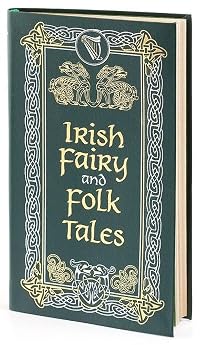
Fairy and Folk Tales of Ireland
by W. B. Yeats (Editor)
On This Page
Description
Includes tales of fairies, changelings, ghosts, witches, saints, the devil, giants, kings, queens, and robbers.Tags
Recommendations


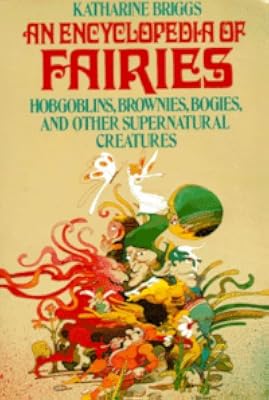
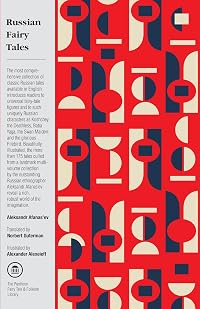
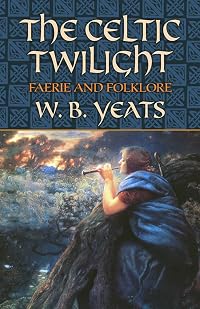
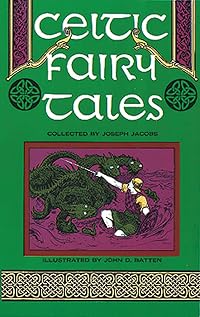









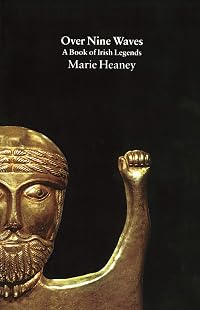
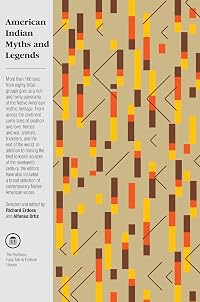

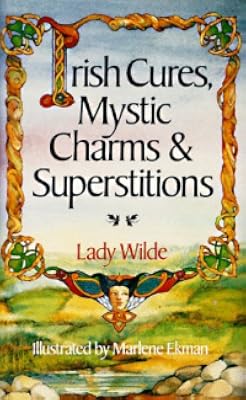


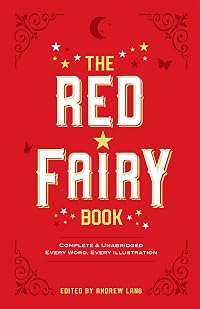


Member Recommendations
Member Reviews
It took me a while to finish this, largely because I'd read quite a few of the stories in other collections. There's a lot of Crofton Croker here, but there's a lot of other stuff too. It is rather a landmark collection, really, a key volume in the whole Celtic Revival, and it presents a nice variety of tales of various types and from various parts of the country. Included is the epic The Three Wishes, which drives one to have some sympathy for the devil, and the story of a bard's feud with the King Of The Cats which is outrageously funny, but the most hair-raising stories are the Christian fables, such as the one about the guy who has persuaded everyone that there's no such thing as a soul who has to beg a child to torture him to death show more with a small blunt knife to prove otherwise, and the daughters of the king converted by St Patrick who immediately elect to die and go to heaven. There's logic to it, and I'm pretty sure I heard stories like that growing up from teachers and priests and nuns and thoroughly approved of them. For anyone interested in Irish folklore, almost unquestionably the best place to start. show less
A worthy collection of tales, short stories, snippets, and even a few poems covering all manner of magickal types from Ireland: Trooping Fairies and Solitary Fairies, Ghosts, Tir n'an Og, and Saints and Priests. Some are told in the Irish dialect, others in a more straightforward language, and all have a different flavor to them. They're not so much morality tales, unless the moral is "Do good unto the faeries, for they will know if you wish them ill. And by all the saints, keep your wits about you when you encounter them!"
Considering how many times I stalled while trying to read this book, I wasn’t sure that I was going to actually finish the whole thing, but I stuck it out and soldiered on, and I’m glad that I did. Yeats is obviously one of the foremost authorities and collectors of Irish folk and fairytales of the modern era, and did much in attempt to document a largely oral tradition, and I would say that his efforts paid off - even if some of the stories are a bit rough about the edges. Collected seemingly at random from personally conducted interviews and borrowed from other Irish writers of his time, Yeats groups these two collections of stories into rough groups based on the type of fairy or supernatural being they are about, ranging in topic show more from tales of the trouping fairies (the fairy courts, if you will) to stories in which the great Irish heroes battle the largest of supernatural beings: giants. I personally prefer the stories which Yeats retells himself, as some of the verbatim copied stories lack his writerly talents and the Irish jargon can be a bit much without a decent translator. Overall, a decent collection of tales, and a good addition to my traditional fairytale collection. show less
This is an interesting compendium of tales from Irish folklore. Yeats sorts the tales and songs by the type of creatures encountered in each tale: giants, solitary fairies, ghosts, and so on. Some stories are taken from other collections of folk tales, while others give the appearance of being recorded from a conversation with a local Irish person knowledgeable about that particular tale. Each section features an introduction by Yeats, and Irish-language words are footnoted with a definition when they are used in the text.
I had to read this book in two goes, because there are a lot of tales and on my first pass I ran out of steam. But the collection as a whole is well put together. I enjoyed finding parallels with the fairy tales of show more other cultures and finally meeting Fin M’Coul in the section about giants. This collection may be better for grownups or older children; younger ones may find it hard to maintain their attention. show less
I had to read this book in two goes, because there are a lot of tales and on my first pass I ran out of steam. But the collection as a whole is well put together. I enjoyed finding parallels with the fairy tales of show more other cultures and finally meeting Fin M’Coul in the section about giants. This collection may be better for grownups or older children; younger ones may find it hard to maintain their attention. show less
A very enjoyable and lively collection of fantastic, quaint tales collected by Yeats from various sources. They are arranged topically by the type of fantasty element: leprechauns, witches, giants, etc. This makes some read too similar, but owning the book and dipping in over a few months has been a real joy. Many tales are much more absurdist and even modernistic than I woud have expected.
From what I was able to dig up, this book is a product of the late 19th century Gaelic renaissance. Yeats did not collect all these stories himself, he simply gleaned all the best ones from a variety of sources which are all well documented in the bibliography. At the point of this book's creation, I believe that Yeats was rather well known and he was using his notoriety as a poet to bring attention to the disregarded tradition of Irish folk tales. The general consensus among Yeats and his fellow Irish intellectual contemporaries was that Irish culture was 1. slipping away as the older people died and modern culture was advancing, 2. that through a concentrated effort, Irish language, art, music, and written word could revitalize the show more peoples identity as a separate culture from England, and 3. perhaps spark a nationalistic fervor in the hearts of the peasantry. This collection of folk/fairy tales was one of Yeats attempts to add to this movement.
From a cultural history point of view, its a fine collection, and I think it says a lot about what Yeats considered to be the cultural values worth passing on. Some of the stories are written phonetically, so if one were to read it out loud, one could practice a Donegal or Connemara accent. This proved quite entertaining as I read my wife to sleep from this book. The collection is also divided up into categories so that chapter headings have titles such as: Solitary Fairies, Trooping Fairies, Merrow, Ghosts, Banshees, Witches, The Devil, Giants, ect. Some are written as first hand accounts and some are written in the classic "Once upon a time..." format. I found the story entitled "The Banshee of the MacCarthy's" to be particularly effective and unnerving, despite my complete disbelieve in the existence of such entities. Regardless, a culture's folk tales help describe the fears, hopes, and values of the community who pass them on. This is a fine collection which certainly accomplishes this and I recommend it as a good starting point for delving deeper into the tradition of Irish folk tales.
ps. the cat with the fish on the cover of this Folio Society edition is a depiction of a cat who is an agent of Satan, a "demon cat" if you will. Apparently they were quite common back in day, always stealing peasant's food. After reading this story, I am now considering the possibility that one of my gluttonous cats is likewise possessed by Lucifer; a rumor I fully intend to cultivate. show less
From a cultural history point of view, its a fine collection, and I think it says a lot about what Yeats considered to be the cultural values worth passing on. Some of the stories are written phonetically, so if one were to read it out loud, one could practice a Donegal or Connemara accent. This proved quite entertaining as I read my wife to sleep from this book. The collection is also divided up into categories so that chapter headings have titles such as: Solitary Fairies, Trooping Fairies, Merrow, Ghosts, Banshees, Witches, The Devil, Giants, ect. Some are written as first hand accounts and some are written in the classic "Once upon a time..." format. I found the story entitled "The Banshee of the MacCarthy's" to be particularly effective and unnerving, despite my complete disbelieve in the existence of such entities. Regardless, a culture's folk tales help describe the fears, hopes, and values of the community who pass them on. This is a fine collection which certainly accomplishes this and I recommend it as a good starting point for delving deeper into the tradition of Irish folk tales.
ps. the cat with the fish on the cover of this Folio Society edition is a depiction of a cat who is an agent of Satan, a "demon cat" if you will. Apparently they were quite common back in day, always stealing peasant's food. After reading this story, I am now considering the possibility that one of my gluttonous cats is likewise possessed by Lucifer; a rumor I fully intend to cultivate. show less
“People think I am merely trying to bring back a little of the old dead beautiful world of romance into this century of great engines and spinning Jinnies. Surely the hum of wheels and clatter of presses, to let alone the lecturers with their black coats and tumblers of water, have driven away the goblin kingdom and made silent the feet of the little dancers.”
W. B. Yeats, then goes on to state that Old Biddy Hart, in her thatched cottage has little use for such opinions, will hold no truck with the “learned sorts” and their new fangled knowledge. She knows that to offend the old ways will lead to ones come-uppance and any one not rightly respectful of the ancient folk, cannot be alright in their head, regardless of the books & show more words they claim to know. This is part quote, part paraphrase from the introduction to a lovely book of Irish Fairy Tales compiled in 1892 by William Butler Yeats.
The book is divided under four main headings – Land and Water Fairies, Evil Spirits, Cats, and Kings and Warriors, it also has a fascinating appendix, which explains the classification of Irish Fairies divided into The Sociable Fairies,The Sheoques,Merrows and Solitary Fairies such as The Lepricaun, The Pooka & The Dullahan etc. This is followed by a section listing the authorities on Irish Folklore & a biography of Yeats himself.
What makes this a great read is the universality of the tales. I wrote a post last year about a similar book, Italian Folktales (Fiabe Italiane, pub’ 1956) compiled & edited by Italo Calvino and although this isn’t of that scale, what he wrote in his introduction holds true here.
“These folk stories are the catalogue of the potential destinies of the men and women,especially for that stage in life when destiny is formed, i,e, youth, beginning with birth, which itself often foreshadows the future, then the departure from home, and finally through the trials of growing up, the attainment of maturity and proof of one’s humanity. This sketch although summary, encompasses everything: the arbitrary divisions of humans, albeit in essence equal, into Kings and poor people, the persecution of the innocent and their subsequent vindication, which are the terms inherent in every life, love unrecognised when first encountered and then no sooner experienced than lost; the common fate of subjection to spells, or having one’s existence predetermined by complex and unknown forces. This complexity pervades one’s entire existence and forces one to struggle to free oneself, to determine one’s own fate; at the same time we can liberate ourselves only if we liberate other people, for this is a sine qua non* of one’s own liberation. There must be fidelity to a goal and purity of heart, values fundamental to salvation and triumph. There must also be beauty, a sign of grace that can be masked by the humble, ugly guise of a frog; and above all, there must present the infinite possibilities of mutation, the unifying element in everything: Men, Beasts, Plants, Things.”
http://parrishlantern.blogspot.co.uk/2012/03/irish-fairy-taleswb-yeats.html show less
W. B. Yeats, then goes on to state that Old Biddy Hart, in her thatched cottage has little use for such opinions, will hold no truck with the “learned sorts” and their new fangled knowledge. She knows that to offend the old ways will lead to ones come-uppance and any one not rightly respectful of the ancient folk, cannot be alright in their head, regardless of the books & show more words they claim to know. This is part quote, part paraphrase from the introduction to a lovely book of Irish Fairy Tales compiled in 1892 by William Butler Yeats.
The book is divided under four main headings – Land and Water Fairies, Evil Spirits, Cats, and Kings and Warriors, it also has a fascinating appendix, which explains the classification of Irish Fairies divided into The Sociable Fairies,The Sheoques,Merrows and Solitary Fairies such as The Lepricaun, The Pooka & The Dullahan etc. This is followed by a section listing the authorities on Irish Folklore & a biography of Yeats himself.
What makes this a great read is the universality of the tales. I wrote a post last year about a similar book, Italian Folktales (Fiabe Italiane, pub’ 1956) compiled & edited by Italo Calvino and although this isn’t of that scale, what he wrote in his introduction holds true here.
“These folk stories are the catalogue of the potential destinies of the men and women,especially for that stage in life when destiny is formed, i,e, youth, beginning with birth, which itself often foreshadows the future, then the departure from home, and finally through the trials of growing up, the attainment of maturity and proof of one’s humanity. This sketch although summary, encompasses everything: the arbitrary divisions of humans, albeit in essence equal, into Kings and poor people, the persecution of the innocent and their subsequent vindication, which are the terms inherent in every life, love unrecognised when first encountered and then no sooner experienced than lost; the common fate of subjection to spells, or having one’s existence predetermined by complex and unknown forces. This complexity pervades one’s entire existence and forces one to struggle to free oneself, to determine one’s own fate; at the same time we can liberate ourselves only if we liberate other people, for this is a sine qua non* of one’s own liberation. There must be fidelity to a goal and purity of heart, values fundamental to salvation and triumph. There must also be beauty, a sign of grace that can be masked by the humble, ugly guise of a frog; and above all, there must present the infinite possibilities of mutation, the unifying element in everything: Men, Beasts, Plants, Things.”
http://parrishlantern.blogspot.co.uk/2012/03/irish-fairy-taleswb-yeats.html show less
Members
- Recently Added By
Lists

Favorite Fairy Tales
269 works; 103 members

Fiction (Non-Fantasy) by Irish Authors Set in Ireland
87 works; 3 members
Author Information

William Butler Yeats was born in Dublin, Ireland on June 13, 1865. He was a driving force behind the Irish Literary Revival and, along with Lady Gregory, Edward Martyn, and others, founded the Abbey Theatre, where he served as its chief playwright until the movement was joined by John Synge. Yeats' plays included The Countess Cathleen, The Land of show more Heart's Desire, Cathleen ni Houlihan, The King's Threshold, and Deirdre. Although a convinced patriot, Yeats deplored the hatred and the bigotry of the Nationalist movement, and his poetry is full of moving protests against it. He was appointed to the Irish Senate in 1922. He was awarded the Nobel Prize in Literature in 1923 for what the Nobel Committee described as "inspired poetry, which in a highly artistic form gives expression to the spirit of a whole nation." He is one of the few writers who completed their greatest works after being awarded the Nobel Prize. His poetry collections include The Wild Swans at Coole, Michael Robartes and the Dancer, The Tower, The Winding Stair and Other Poems, and Last Poems and Plays. He died on January 28, 1939 at the age of 73. (Bowker Author Biography) show less

William Butler Yeats has a Legacy Library. Legacy libraries are the personal libraries of famous readers, entered by LibraryThing members from the Legacy Libraries group.
All Editions
Some Editions
Awards and Honors
Series
Belongs to Publisher Series
Work Relationships
Contains
Is abridged in
Common Knowledge
- Canonical title
- Fairy and Folk Tales of Ireland
- Alternate titles
- Irish Fairy and Folk Tales
- Original publication date
- 1888 / 1892
- Important places
- Ireland
Classifications
- Genre
- Fiction and Literature
- DDC/MDS
- 398.2109415 — Society, government, & culture Customs, etiquette & folklore Folklore & Folktales Folk literature Fairy Tales Fairy tales by place Fairy tales of Europe Fairy Tales of the British Isles Irish Fairy Tales
- LCC
- GR153.5 .F34 — Geography, Anthropology and Recreation Folklore Folklore
- BISAC
Statistics
- Members
- 3,147
- Popularity
- 5,568
- Reviews
- 17
- Rating
- (3.90)
- Languages
- 5 — Dutch, English, German, Greek, Italian
- Media
- Paper, Ebook
- ISBNs
- 61
- UPCs
- 1
- ASINs
- 39