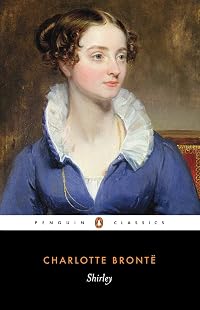
Shirley
by Charlotte Brontë
On This Page
Description
Shirley was the second published novel by Charlotte Bronte, after Jane Eyre . It is a social novel set against the backdrop of the Luddite uprisings in Yorshire after the Napoleonic Wars, particularly in the depressed textile industry. The novel's heroine is given a boy's name by her father, who expected a son. The novel's popularity turned the distinctly male name Shirley into a distinctly female one.Tags
Recommendations








Member Recommendations

CurrerBell Miss Miles, published in 1890 and centered on "Brontë country" in Yorkshire in the 1830s, was authored by Mary Taylor, who along with Ellen Nussey was one of Charlotte Brontë's two best friends from boarding-school days. It addresses the "women's issue" with particular emphasis on Taylor's belief that women had a moral obligation to be self-supporting and not to rely on men. Taylor's "Radical Dissenter" response to the "Tory Anglicanism" of Shirley.
20

Member Reviews
As the author warned us, this book would be full of people who we don't like. Some of the most consarned-est Humans ever born live in this little part of York. There is Daniel Malone, a curate so full of himself; Mrs. Yorke--ugh, the meanest, most undeserving mother of nice husband and kids; and many more. The notes, since this deals with the early 19th century, and we don't know the literary and historical references, are mostly as Greek to me, since for most of them, you would have to further look up stuff in the Bible. No thank you. However, the author so understands human emotions and so values natural beauty and so craftingly shares this with us, her Reader, and even talks to us as if she knows us, that I will forgive her the crazy show more Greek notes, and say thank you, Charlotte Bronte, for a beautiful work. show less
This was Charlotte Brontë's second novel, written during the terrible period in her life when Branwell, Emily and Anne all died within a few months of each other. It never had quite the popular success of Jane Eyre, and it tends to get tucked away in the category of "industrial novels" together with North and South and Hard Times. But it is one of the handful of books that can claim to have introduced a new given name into the language (where would we be without Ms Bassey, Ms Temple and Ms Williams?). And in places it's a fairly hard-hitting feminist text as well.
The story is set in the early 1810s, with the Yorkshire textile industry hard-hit by the export restrictions of the Napoleonic wars. Unemployed textile operatives, with no show more prospect of work, are getting drawn into rioting and machine-breaking. Vicar's niece Caroline is in love with her cousin Robert, an Anglo-Belgian mill-owner ruined by the war in Antwerp and trying to make a new start in Yorkshire, but of course he can't think of marriage until his business is on a sound footing, which it won't be until the war ends and the operatives stop rioting. And to make a bad situation worse, Caroline's fiery uncle quarrels with Robert over politics and forbids her to see him.
Then, a good third of the way through the novel already, Shirley finally arrives on the scene. She's a young woman of independent ideas who has, very unusually, inherited an estate in her own right, and she's determined to show that she can run it as well as any man. Charlotte Brontë must have heard tales about the famous Anne Lister, of Shibden Hall in Halifax, who was in a similar situation and about the same age as Shirley. (Obviously she didn't know about Lister's secret diaries, full of her love affairs with local young women, which were only deciphered fairly recently.) Caroline and Shirley soon become intimate friends and have long discussions about politics, the church, women's role in society, how damaging it is that middle-class women have so few types of employment open to them, and so on. Shirley scandalises a few curates, there are rumours of an involvement with her tenant Robert, but she still finds just about all the eligible men in Yorkshire chasing her.
Shirley is a wonderful character, Caroline is enjoyable if sometimes just a bit too good to be true, and there are some splendid dialogues and set-pieces, including the Sunday-school picnic and the grand scene when the rioters attack the mill, and there's a host of entertaining minor characters who give Brontë the opportunity for flashes of authentic Yorkshire dialect and some ironic voice-over commentary. I especially enjoyed Robert's very Belgian-bourgeoise sister Hortense, with her stubborn insistence on living according to the standards she's been brought up to, even though the whole of West Yorkshire is laughing at her odd dress and the strange food she prepares.
But it does all seem to ramble a bit, strands of plot seem to fall out of sight to be picked up again apologetically many chapters later, and for all its feminist bravura the plot comes to a very conventional conclusion with a double marriage, at least one half of which makes nonsense of about half the talk that preceded it. The shocking defeat of Napoleon that makes such a happy-end possible may not be altogether a surprise to the reader. Also, Caroline and Robert have both found themselves in life-threatening situations at points in the story where the reader knows there is no way the author would be able to proceed further without them, and Caroline herself is probably the only person who was surprised when herlong-lost mother was finally unmasked.
Whilst Brontë is clearly very sympathetic with the plight of the starving workers, she is almost nauseously insistent that all the trouble is the fault of external agitators who are non-conformist preachers and therefore — in her Anglican view of the world — ipso facto alcoholics. And she has no qualms at all about seeing the lot of them transported to Australia. So probably not the place to look for balanced political insight. But well worth all that inconvenience for the time we spend with the title character.
The audiobook read by Anna Bentinck works well: she has a very good feel for the rhythm of Brontë's prose, and she has no trouble at all making French with a Yorkshire accent sound different from French with a Belgian accent, a trick that is required rather more often in this book than in most other Victorian novels. show less
The story is set in the early 1810s, with the Yorkshire textile industry hard-hit by the export restrictions of the Napoleonic wars. Unemployed textile operatives, with no show more prospect of work, are getting drawn into rioting and machine-breaking. Vicar's niece Caroline is in love with her cousin Robert, an Anglo-Belgian mill-owner ruined by the war in Antwerp and trying to make a new start in Yorkshire, but of course he can't think of marriage until his business is on a sound footing, which it won't be until the war ends and the operatives stop rioting. And to make a bad situation worse, Caroline's fiery uncle quarrels with Robert over politics and forbids her to see him.
Then, a good third of the way through the novel already, Shirley finally arrives on the scene. She's a young woman of independent ideas who has, very unusually, inherited an estate in her own right, and she's determined to show that she can run it as well as any man. Charlotte Brontë must have heard tales about the famous Anne Lister, of Shibden Hall in Halifax, who was in a similar situation and about the same age as Shirley. (Obviously she didn't know about Lister's secret diaries, full of her love affairs with local young women, which were only deciphered fairly recently.) Caroline and Shirley soon become intimate friends and have long discussions about politics, the church, women's role in society, how damaging it is that middle-class women have so few types of employment open to them, and so on. Shirley scandalises a few curates, there are rumours of an involvement with her tenant Robert, but she still finds just about all the eligible men in Yorkshire chasing her.
Shirley is a wonderful character, Caroline is enjoyable if sometimes just a bit too good to be true, and there are some splendid dialogues and set-pieces, including the Sunday-school picnic and the grand scene when the rioters attack the mill, and there's a host of entertaining minor characters who give Brontë the opportunity for flashes of authentic Yorkshire dialect and some ironic voice-over commentary. I especially enjoyed Robert's very Belgian-bourgeoise sister Hortense, with her stubborn insistence on living according to the standards she's been brought up to, even though the whole of West Yorkshire is laughing at her odd dress and the strange food she prepares.
But it does all seem to ramble a bit, strands of plot seem to fall out of sight to be picked up again apologetically many chapters later, and for all its feminist bravura the plot comes to a very conventional conclusion with a double marriage, at least one half of which makes nonsense of about half the talk that preceded it. The shocking defeat of Napoleon that makes such a happy-end possible may not be altogether a surprise to the reader. Also, Caroline and Robert have both found themselves in life-threatening situations at points in the story where the reader knows there is no way the author would be able to proceed further without them, and Caroline herself is probably the only person who was surprised when her
Whilst Brontë is clearly very sympathetic with the plight of the starving workers, she is almost nauseously insistent that all the trouble is the fault of external agitators who are non-conformist preachers and therefore — in her Anglican view of the world — ipso facto alcoholics. And she has no qualms at all about seeing the lot of them transported to Australia. So probably not the place to look for balanced political insight. But well worth all that inconvenience for the time we spend with the title character.
The audiobook read by Anna Bentinck works well: she has a very good feel for the rhythm of Brontë's prose, and she has no trouble at all making French with a Yorkshire accent sound different from French with a Belgian accent, a trick that is required rather more often in this book than in most other Victorian novels. show less
It is difficult to describe Shirley; it is unlike Jane Eyre, Wuthering Heights, or The Tenant of Wildfell Hall, but there is something of each them in the story. Social issues concerning the lives of women, advancements in manufacturing, charity, and war abound in the novel, but these set the background, not the action of the tale. If I had to draw a comparison, I would compare Shirley to Elizabeth Gaskell’s North and South, particularly in its treatment of the relationship between workers and mill owners, and the effect of pride in a relationship between members of different social classes. Given Gaskell’s relationship with Charlotte Bronte, I can understand why their work shares these themes.
I was most fascinated by the show more relationship between Caroline Helstone and Shirley Keeldar. Dissimilar in appearance and temperament, these two women compliment each other perfectly and seem to grow in each other’s presence. Spirited Shirley and pensive Caroline are definitely what one would call “kindred spirits”. The conversations between these two characters on their position as women are some of the most thought-provoking discussions that I have read in Victorian literature.
I enjoyed reading Shirley, though it was very different from the other works I have read by the Brontes. The narrative meanders, unfolding slowly and revealing the situations that arise in small town society during a period of change. The Introduction describes Shirley as a novel of conflict and it certainly is; it is not a neat package, but a hodgepodge of lives, voices, and thoughts. show less
I was most fascinated by the show more relationship between Caroline Helstone and Shirley Keeldar. Dissimilar in appearance and temperament, these two women compliment each other perfectly and seem to grow in each other’s presence. Spirited Shirley and pensive Caroline are definitely what one would call “kindred spirits”. The conversations between these two characters on their position as women are some of the most thought-provoking discussions that I have read in Victorian literature.
I enjoyed reading Shirley, though it was very different from the other works I have read by the Brontes. The narrative meanders, unfolding slowly and revealing the situations that arise in small town society during a period of change. The Introduction describes Shirley as a novel of conflict and it certainly is; it is not a neat package, but a hodgepodge of lives, voices, and thoughts. show less
I did not like Shirley.
That could be my entire review. After reading a novel that was at least 200 pages too long, it probably should be. Because it is late and I am not feeling too charitable towards Charlotte Bronte I will make this brief.
There were many things I disliked about Shirley (★★) but the one thing that I did like was the character of Shirley. Where Shirley was lively and engaging, the other characters were dull, overwrought and over described. I may be in the minority but I think it is a huge problem if the eponymous character does not show up in your story until page 187. Once she did show up she gave everything a much needed jolt of life, including this reader. Honestly, I can’t believe I made it to page 187. I was show more very close many times to abandoning the book. I didn’t but I can’t say that I’m glad I didn’t.
After reading the brilliance of Anne Bronte’ masterpiece, The Tenant of Wildfell Hall, Shirley read like an author trying too hard. I should give Charlotte some slack since she lost her three siblings while writing Shirley (including Anne, *sniff*) but I cannot. Especially after learning that Charlotte repressed Anne’s work after she died. It infuriates me that Charlotte and Emily are well-know two hundred years later while Anne, who had much more to say and said it much better, was silenced. I admit I am biased against Charlotte because of it. I cannot help it.
Even if I did not have that prejudice I would not like Shirley. The language was pedantic, the characters annoying and the storyline meandered around searching for a social cause to champion. Unlike Bronte’s contemporary, Elizabeth Gaskell, who wrote brilliant novels about industrialization and the subsequent social struggles, it seems obvious that Bronte had no real experience or knowledge of the lower classes, only what she read in the newspaper. Even without first hand knowledge a writer of Charlotte Bronte’s caliber (at least the caliber she thought she was) should have been able to make her point eloquently. If she had a social point to make, I missed it. Or maybe after slogging through 600 pages I didn’t care. show less
That could be my entire review. After reading a novel that was at least 200 pages too long, it probably should be. Because it is late and I am not feeling too charitable towards Charlotte Bronte I will make this brief.
There were many things I disliked about Shirley (★★) but the one thing that I did like was the character of Shirley. Where Shirley was lively and engaging, the other characters were dull, overwrought and over described. I may be in the minority but I think it is a huge problem if the eponymous character does not show up in your story until page 187. Once she did show up she gave everything a much needed jolt of life, including this reader. Honestly, I can’t believe I made it to page 187. I was show more very close many times to abandoning the book. I didn’t but I can’t say that I’m glad I didn’t.
After reading the brilliance of Anne Bronte’ masterpiece, The Tenant of Wildfell Hall, Shirley read like an author trying too hard. I should give Charlotte some slack since she lost her three siblings while writing Shirley (including Anne, *sniff*) but I cannot. Especially after learning that Charlotte repressed Anne’s work after she died. It infuriates me that Charlotte and Emily are well-know two hundred years later while Anne, who had much more to say and said it much better, was silenced. I admit I am biased against Charlotte because of it. I cannot help it.
Even if I did not have that prejudice I would not like Shirley. The language was pedantic, the characters annoying and the storyline meandered around searching for a social cause to champion. Unlike Bronte’s contemporary, Elizabeth Gaskell, who wrote brilliant novels about industrialization and the subsequent social struggles, it seems obvious that Bronte had no real experience or knowledge of the lower classes, only what she read in the newspaper. Even without first hand knowledge a writer of Charlotte Bronte’s caliber (at least the caliber she thought she was) should have been able to make her point eloquently. If she had a social point to make, I missed it. Or maybe after slogging through 600 pages I didn’t care. show less
If you've read any Charlotte Brontë novels I am 99% sure you have read Jane Eyre, and if you've read two, you've probably also read Villette. She only wrote four novels in her lifetime (the fourth, The Professor, was actually the first one she wrote and was published posthumously -- she very quickly wrote Jane Eyre to send it out to publishers after The Professor was rejected), and her second novel, Shirley, has historically been seen as her weakest. I haven't read Villette or The Professor yet (but I shall since I am running a Brontë sisters book club!), but from what I know about them they also are told primarily in first person through a single, central heroine, and focus on her interior and emotional life and how it butts up show more against societal constraints. Shirley, on the other hand, is much more of a novel that comments on British society and it spreads its focus across two heroines, Caroline Helstone (the orphaned niece of the local rector) and Shirley Keeldar (also orphaned and the heir to her family's estate who has just come of age).
For the first 200 pages of the novel, though, there is no Shirley! Instead, the reader gets some very hilarious commentary on the lifestyle and foibles of country curates (aka ministers in training). Charlotte knew of what she spoke as the daughter of a rector who frequently had to host teas and meals for her father's curates. The novel was published in 1849 but takes place in 1811-1812 when England was suffering economically due to a ban on exports of textiles during the Napoleonic War as well as the war of 1812 over in the good old United States. These first 200 pages introduce us to Robert Moore -- a son of Yorkshire who was raised in Belgium and the operator of a mill in Yorkshire that is on the property of the as-yet-unknown Shirley. The reader gets the context for his economic woes, his desire to replace his current hand-run equipment with mechanical weaving machines, and the impact that has on the out-of-work mill workers in the area that leads to rebellion (aka the Luddite movement). We learn a lot about Yorkshire, British politics, and economics and a little about Caroline Helstone. But we should not be surprised! On page 1, Charlotte tells us what to expect:
"If you think, from the prelude, that anything like a romance is preparing for you, reader, you never were more mistaken. Do you anticipate sentiment, and poetry, and reverie? Do you expect passion, and stimulus, and melodrama? Calm your expectations; reduce them to a lowly standard. Something real, cool, and solid lies before you; something unromantic as Monday morning, when all who have work wake with the consciousness that they must rise and betake themselves thereto. It is not positively affirmed that you shall not have a taste of the exciting, perhaps towards the middle and close of the meal, but it is resolved that the first dish set upon the table shall be one that a Catholic -- ay, even and Anglo-Catholic -- might eat on Good Friday in Passion Week: it shall be cold lentils and vinegar without oil; it shall be unleavened bread with bitter herbs, and no roast lamb."
When we do meet Shirley, though, she is a complicated delight. Whereas Caroline is quiet and reserved (with a pretty passionate and complicated interior life of her own), Shirley is confident and outgoing and unconventional -- all parts of her personality that she can express since she is independently wealthy whereas Caroline is dependent on the support of her uncle with no real prospects of marriage or place to put her energies beyond serving tea to the aforementioned hilarious curates.
This book is a lot less straightforward than Jane Eyre and so I will end my plot summary here. It should be noted that Charlotte also went through a lot of personal tragedy during the writing of this novel. First her brother Branwell, who she had been extremely close to in childhood, died after leading an extremely debauched lifestyle, then shortly after losing Branwell, her sister Emily (author of Wuthering Heights) died of tuberculosis, and not long after Emily died, her youngest sister Anne (author of Agnes Grey and The Tenant of Wildfell Hall) also died of tuberculosis. In the end, Charlotte was left alone in an isolated Yorkshire parish with her beloved but also very difficult father, having lost her mother and two older sisters when she was a young child.
I wasn't sure what to expect from Charlotte's sophomore effort, but I really liked it! It helps a lot if you don't compare it to Jane Eyre because Charlotte was trying to do something different here and I think she does it quite successfully. Plus, there are a few Jane Eyre-like pieces of characterization, authorial addresses to the reader, and plot twists to help keep things exciting. Recommended! show less
For the first 200 pages of the novel, though, there is no Shirley! Instead, the reader gets some very hilarious commentary on the lifestyle and foibles of country curates (aka ministers in training). Charlotte knew of what she spoke as the daughter of a rector who frequently had to host teas and meals for her father's curates. The novel was published in 1849 but takes place in 1811-1812 when England was suffering economically due to a ban on exports of textiles during the Napoleonic War as well as the war of 1812 over in the good old United States. These first 200 pages introduce us to Robert Moore -- a son of Yorkshire who was raised in Belgium and the operator of a mill in Yorkshire that is on the property of the as-yet-unknown Shirley. The reader gets the context for his economic woes, his desire to replace his current hand-run equipment with mechanical weaving machines, and the impact that has on the out-of-work mill workers in the area that leads to rebellion (aka the Luddite movement). We learn a lot about Yorkshire, British politics, and economics and a little about Caroline Helstone. But we should not be surprised! On page 1, Charlotte tells us what to expect:
"If you think, from the prelude, that anything like a romance is preparing for you, reader, you never were more mistaken. Do you anticipate sentiment, and poetry, and reverie? Do you expect passion, and stimulus, and melodrama? Calm your expectations; reduce them to a lowly standard. Something real, cool, and solid lies before you; something unromantic as Monday morning, when all who have work wake with the consciousness that they must rise and betake themselves thereto. It is not positively affirmed that you shall not have a taste of the exciting, perhaps towards the middle and close of the meal, but it is resolved that the first dish set upon the table shall be one that a Catholic -- ay, even and Anglo-Catholic -- might eat on Good Friday in Passion Week: it shall be cold lentils and vinegar without oil; it shall be unleavened bread with bitter herbs, and no roast lamb."
When we do meet Shirley, though, she is a complicated delight. Whereas Caroline is quiet and reserved (with a pretty passionate and complicated interior life of her own), Shirley is confident and outgoing and unconventional -- all parts of her personality that she can express since she is independently wealthy whereas Caroline is dependent on the support of her uncle with no real prospects of marriage or place to put her energies beyond serving tea to the aforementioned hilarious curates.
This book is a lot less straightforward than Jane Eyre and so I will end my plot summary here. It should be noted that Charlotte also went through a lot of personal tragedy during the writing of this novel. First her brother Branwell, who she had been extremely close to in childhood, died after leading an extremely debauched lifestyle, then shortly after losing Branwell, her sister Emily (author of Wuthering Heights) died of tuberculosis, and not long after Emily died, her youngest sister Anne (author of Agnes Grey and The Tenant of Wildfell Hall) also died of tuberculosis. In the end, Charlotte was left alone in an isolated Yorkshire parish with her beloved but also very difficult father, having lost her mother and two older sisters when she was a young child.
I wasn't sure what to expect from Charlotte's sophomore effort, but I really liked it! It helps a lot if you don't compare it to Jane Eyre because Charlotte was trying to do something different here and I think she does it quite successfully. Plus, there are a few Jane Eyre-like pieces of characterization, authorial addresses to the reader, and plot twists to help keep things exciting. Recommended! show less
Shirley is an odd book. It doesn’t offer a tightly cohesive plot, but it does offer many moments In Which Charlotte Has Opinions, opinions about: politics, social and industrial change, marriage, the church, unrequited love, governesses, society’s expectations of women, family dynamics, illness and grief. I don’t always agree with her, but I enjoy how fiercely passionate she is -- and how fiercely passionate her characters can be. I also enjoyed that the plot twists unexpectedly at times, I found the portrayal of a Yorkshire community interesting, and I liked that at the centre of this novel, as much as it has such a thing, are two young women who are friends.
In spite of the title, Shirley arguably revolves as much around Caroline show more Helstone, the rector’s niece, as it does around Miss Shirley Keeldar, a landowner who has taken control of her property now that she is of age. The novel begins with a description of the curates and with unrest at Robert Moore’s mill, but these things belong to Caroline’s world: she lives with her uncle, and Robert Moore is a sort-of cousin3 and Caroline has French lessons from his sister.
Moreover, the book gives insight into Caroline’s inner-thoughts and anguish, whereas Shirley is always viewed with some distance. Significant moments for Shirley often occur off-screen and the reader learns about such incidents only once Shirley, or another character, tells someone else about them. A significant moment which does take place on-screen is told from the perspective of another character. While the narrative’s insistence that the reader cannot ever know Shirley and her story fully is a touch unsatisfying, it is also kind of fascinating.
(I suspect that the reader has to rely on what Shirley says and does, and on what others say about her, as we do for people we know in real life, because Charlotte was aiming to create something that was different not only from her previous work but from, as she saw it, many other novels of her time: a novel which better reflected reality.)
I don’t anticipate rereading Shirley for enjoyment the way I have read and reread Jane Eyre, but I am glad to have finally read it -- and I can see how it would be fun to analyse and discuss it.
A longer version of this review is on my blog: https://ladyherenya.dreamwidth.org/530348.html
“If men could see us as we really are, they would be a little amazed; but the cleverest, the acutest men are often under an illusion about women: they do not read them in a true light: they misapprehend them, both for good and evil: their good woman is a queer thing, half doll, half angel; their bad woman almost always a fiend. Then to hear them fall into ecstasies with each other's creations, worshipping the heroine of such a poem -- novel -- drama, thinking it fine -- divine! Fine and divine it may be, but often quite artificial -- false as the rose in my best bonnet there. If I spoke all I think on this point; if I gave my real opinion of some first-rate female characters in first-rate works, where should I be? Dead under a cairn of avenging stones in half-an-hour.” show less
In spite of the title, Shirley arguably revolves as much around Caroline show more Helstone, the rector’s niece, as it does around Miss Shirley Keeldar, a landowner who has taken control of her property now that she is of age. The novel begins with a description of the curates and with unrest at Robert Moore’s mill, but these things belong to Caroline’s world: she lives with her uncle, and Robert Moore is a sort-of cousin3 and Caroline has French lessons from his sister.
Moreover, the book gives insight into Caroline’s inner-thoughts and anguish, whereas Shirley is always viewed with some distance. Significant moments for Shirley often occur off-screen and the reader learns about such incidents only once Shirley, or another character, tells someone else about them. A significant moment which does take place on-screen is told from the perspective of another character. While the narrative’s insistence that the reader cannot ever know Shirley and her story fully is a touch unsatisfying, it is also kind of fascinating.
(I suspect that the reader has to rely on what Shirley says and does, and on what others say about her, as we do for people we know in real life, because Charlotte was aiming to create something that was different not only from her previous work but from, as she saw it, many other novels of her time: a novel which better reflected reality.)
I don’t anticipate rereading Shirley for enjoyment the way I have read and reread Jane Eyre, but I am glad to have finally read it -- and I can see how it would be fun to analyse and discuss it.
A longer version of this review is on my blog: https://ladyherenya.dreamwidth.org/530348.html
“If men could see us as we really are, they would be a little amazed; but the cleverest, the acutest men are often under an illusion about women: they do not read them in a true light: they misapprehend them, both for good and evil: their good woman is a queer thing, half doll, half angel; their bad woman almost always a fiend. Then to hear them fall into ecstasies with each other's creations, worshipping the heroine of such a poem -- novel -- drama, thinking it fine -- divine! Fine and divine it may be, but often quite artificial -- false as the rose in my best bonnet there. If I spoke all I think on this point; if I gave my real opinion of some first-rate female characters in first-rate works, where should I be? Dead under a cairn of avenging stones in half-an-hour.” show less
Charlotte Bronte was a gifted writer who had one great story to tell -- the story of self. She told that story best, and electrifyingly, in Jane Eyre, the story of an indomitable ego that chooses morality and personal integrity at any price. Her later books are sometimes-interesting, sometimes-not, reworkings of that theme. "Villette" has the integrated, appealing central character of JE, but succumbs to pathos. "Shirley" is full of interesting twists and turns, nearly all of which peter out, or worse. The subplot of populist rebellion against automating industrialism is interesting, but deflates as British military victory returns prosperity to the region. CB splits her female heroine into two women, demure Caroline and bold Shirley, show more who has what was then a man's name, and who is occasionally referenced with male pronouns and called "Captain Shirley." Caroline and Shirley clearly esteem and love each other, but this too goes wrong as the narrative requires classic marriage-plot denouements, with each proving unintentionally unsavory. Caroline's devotion to her leading man is creepily self-effacing, while Shirley's is even ickier, as she, her boyfriend, and CB all seem to agree that she will never live happily ever after unless and until she finds the man who can master and dominate her. The plot obliges, in a benevolent way that makes it clear this is not meant as irony. Anyone who thinks of CB as a feminist might want to read the last few chapters while hiding under a 19th century writing desk.
And yet . . . the book is worth reading. The frequent doses of great writing; the unflinchingly honest, and funny, insights into social foibles and clerical failings; the deeply resonant and empathetic portrayals of human loneliness and frustration all make it worthwhile. And what if CB, with her gender-bending, Luddite-channeling, transparently absurd love-is-submission happy ending, was groping toward something her early 19th century mind just wasn't ready for? show less
And yet . . . the book is worth reading. The frequent doses of great writing; the unflinchingly honest, and funny, insights into social foibles and clerical failings; the deeply resonant and empathetic portrayals of human loneliness and frustration all make it worthwhile. And what if CB, with her gender-bending, Luddite-channeling, transparently absurd love-is-submission happy ending, was groping toward something her early 19th century mind just wasn't ready for? show less
Members
- Recently Added By
Lists

The Guardian's 1000 Novels Everyone Must Read
1,005 works; 550 members

1001 Books You Must Read Before You Die
1,448 works; 1,134 members

Unread books
1,063 works; 87 members

...read all, pay nowt (Books set in Yorkshire)
86 works; 14 members
Female Protagonist
1,056 works; 57 members

Folio Society
831 works; 53 members
Female Author
1,234 works; 67 members

Books Read in 2023
5,547 works; 145 members

Lesser known books of well known authors
39 works; 17 members

Newark Public Library's 1904 List of a Thousand of the Best Novels
95 works; 5 members

Fiction with Women's Names in the Title
378 works; 15 members

SHOULD Read Books!
354 works; 9 members

Romans
49 works; 1 member

The 150 Greatest Novels of All Time
150 works; 6 members

AP Lit
363 works; 6 members
Women's reading list
50 works; 7 members

Biggest Disappointments
606 works; 163 members

Books Read in 2010
631 works; 11 members

le donne raccontano
116 works; 1 member

Favorite Childhood Books
1,651 works; 519 members

In Our Time books
4,934 works; 2 members

Favourite 19th century fiction
257 works; 62 members
Talk Discussions
Past Discussions
November Group Read: Shirley by Charlotte Brontë in 2014 Category Challenge (December 2014)
Author Information

357+ Works 98,119 Members
Charlotte Bronte, the third of six children, was born April 21, 1816, to the Reverend Patrick Bronte and Maria Branwell Bronte in Yorkshire, England. Along with her sisters, Emily and Anne, she produced some of the most impressive writings of the 19th century. The Brontes lived in a time when women used pseudonyms to conceal their female identity, show more hence Bronte's pseudonym, Currer Bell. Charlotte Bronte was only five when her mother died of cancer. In 1824, she and three of her sisters attended the Clergy Daughter's School in Cowan Bridge. The inspiration for the Lowood School in the classic Jane Eyre was formed by Bronte's experiences at the Clergy Daughter's School. Her two older sisters died of consumption because of the malnutrition and harsh treatment they suffered at the school. Charlotte and Emily Bronte returned home after the tragedy. The Bronte sisters fueled each other's creativity throughout their lives. As young children, they wrote long stories together about a complex imaginary kingdom they created from a set of wooden soldiers. In 1846, Charlotte Bronte, with her sisters Emily and Anne published a thin volume titled Poems by Currer, Ellis, and Acton Bell. In the same year, Charlotte Bronte attempted to publish her novel, The Professor, but was rejected. One year later, she published Jane Eyre, which was instantly well received. Charlotte Bronte's life was touched by tragedy many times. Despite several proposals of marriage, she did not accept an offer until 1854 when she married the Reverend A. B. Nicholls. One year later, at the age of 39, she died of pneumonia while she was pregnant. Her previously rejected novel, The Professor, was published posthumously in 1857. (Bowker Author Biography) show less
Some Editions
Awards and Honors
Series
Belongs to Publisher Series
Work Relationships
Is contained in
The Complete Novels: Agnes Grey / Jane Eyre / The Professor / Shirley / The Tenant of Wildfell Hall / Villette / Wuthering Heights by Charlotte Brontë
Vilette / Jane Eyre / Shirley / The Tenant of Wildfell Hall / Agnes Grey / Wuthering Heights by Charlotte Brontë
The Brontë Collection: Includes Jane Eyre, The Professor, Shirley, Villette, Wuthering Heights, Agnes Grey, The Tenant of Wildfell Hall, Cottage Poems and More by Charlotte Brontë
6 Volume Set Jane Eyre, Tenant of Wildfell Hall, Wuthering Heights, Agnes Grey, Professor, Poems, Miscellanea, Shirley, Villete by Charlotte Brontë
Brontë Sisters: The Professor / Angrian Tales and Poems / The Tenant of Wildfell Hall / Agnes Grey / Wuthering Heights / Jane Eyre / Villette / Shirley by Anne Brontë
Has the adaptation
Is abridged in
Has as a commentary on the text
Common Knowledge
- Canonical title
- Shirley
- Original title
- Shirley
- Original publication date
- 1849
- People/Characters
- Caroline Helstone; Robert Moore; Shirley Keeldar; Louis Moore
- Important places
- England, UK; Yorkshire, England, UK; United Kingdom
- Important events
- Napoleonic Wars
- First words
- Of late years, an abundant shower of curates has fallen upon the north of England: they lie very thick on the hills; every parish has one or more of them; they are young enough to be very active, and ought to be doing a great... (show all) deal of good.
Shirley was Charlotte Bronte's watershed. (Introduction) - Last words
- (Click to show. Warning: May contain spoilers.)I only say, God speed him in the quest!
(Click to show. Warning: May contain spoilers.)His description then gives way to his housekeeper's dream of a much older Hollow that was still home to the fairies. (Introduction) - Original language
- English
Classifications
Statistics
- Members
- 4,688
- Popularity
- 3,077
- Reviews
- 70
- Rating
- (3.68)
- Languages
- 18 — Czech, Danish, Dutch, English, Estonian, Finnish, French, German, Hungarian, Italian, Latvian, Polish, Romanian, Russian, Spanish, Swedish, Turkish, Portuguese (Portugal)
- Media
- Paper, Audiobook, Ebook
- ISBNs
- 201
- UPCs
- 1
- ASINs
- 95