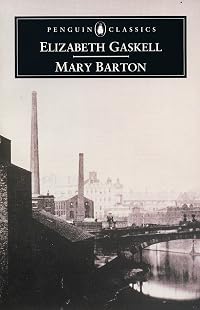
Mary Barton
by Elizabeth Gaskell
On This Page
Description
The first novel by English writer Elizabeth Gaskell, Mary Barton was published in 1848. It tells of the plight of the lower class in Manchester during the 1830s and 1840s. Contrasting the gap between rich and poor, the first half of the novel tells of the humble lives of the Barton and Wilson families, the extreme poverty of the Davenports and the luxurious life of the Carsons. Symbolically, John Barton receives five shillings for selling most of his worldly possessions; Henry Carson has show more this as loose change in his pocket. The second half of the novel comes to grips with a plot to murder.. show less
Tags
Recommendations





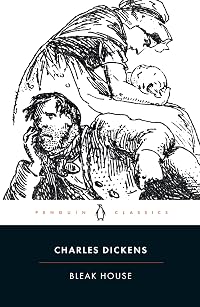
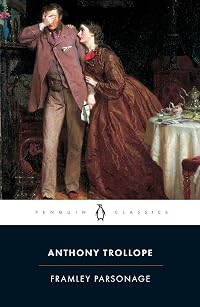
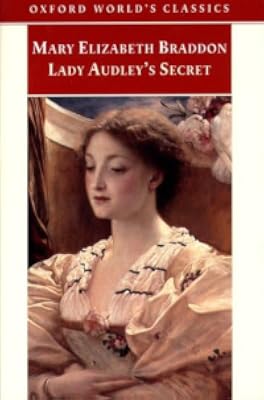
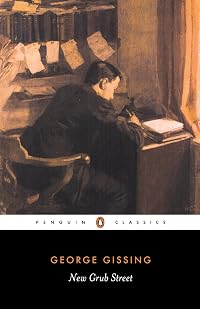
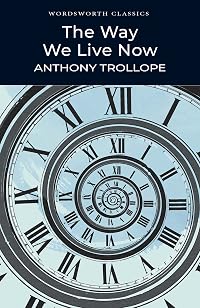
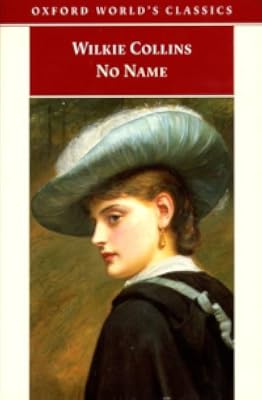
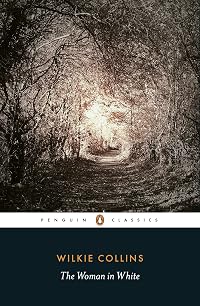

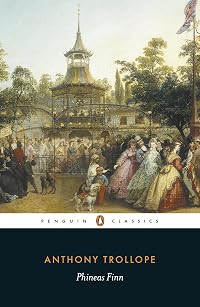
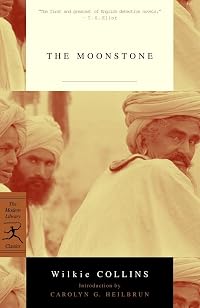

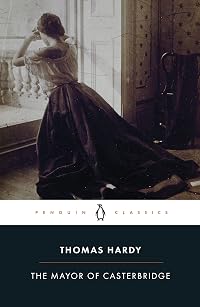
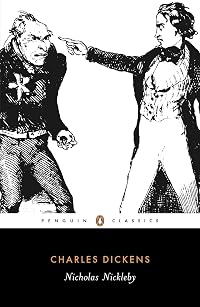
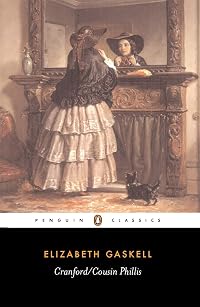




Member Recommendations

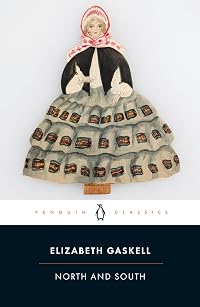
Emma by Jane Austen
kara.shamy In some ways the heroines in these two novels are alike, but they are very different in other respects, and more strikingly, their respective journeys to the altar/married life go in diametrically opposite ways, in a sense! Both are true classics in my estimation; reading these two novels exposes the reader to two of the greatest English-language novelists of all time in the height of their respective powers. While all readers and critics do not and will not share this superlative view, few would dispute these are two early female masters of the form and are well worth a read on that humbler basis ;) Enjoy!
charlie68 Both novels portray clashes between management and workers and there sometimes tragic consequences.

charlie68 The character's of John Barton and Ebenezer Scrooge compliment each other.
by KayCliff
Member Reviews
Mary Barton is, like Elizabeth Gaskell's more famous novel North and South, set in a manufacturing town and is concerned with the wide inequities between the working and master classes. Published in 1848, this is Gaskell's first novel and sets the stage for the major concerns she would highlight in her work. This story follows Mary Barton, a young woman of the working class in the industrial town of Manchester, whose father is a vocal advocate of better conditions for the poor. Mary has two lovers: Jem Wilson, a man of the working class, and Henry Carson, the son of a prominent mill owner. When murder is done, Mary must see through her illusions and save the man she loves. But what if it is at the expense of another person she loves? show more
The descriptions of life among the poor in Manchester are appalling, and Gaskell explores the depths of human suffering in ways that grip the imagination. I suspect I will be haunted a little by these long-gone agonies, the "clemming" of children, the despair and utter helplessness of the parents. And the hard-heartedness of Parliament, that refused to even listen to the plea of the delegates from the working class. Gaskell is always at great pains to make it clear that she knows nothing of politics and economics, but she can't help abjuring the rich to help the poor; it seems to her the only possible solution.
I was saddened by the fate of Esther, counterpart to the much older and saintly Alice. Both die in end, but Alice with such a wonderful aura of peace and faith in God... Esther, the streetwalker and prostitute, in a ragged heap on the wet streets. There is a feeling of inevitability about Esther's death; is there ever a reclaimed, rejuvenated prostitute in any Victorian literature? How much more fascinating it would have been to see Esther escape her horrible life and come away with Jem and Mary to Canada. I don't know why Gaskell chose not to explore that possibility—she is certainly sympathetic toward the plight of the ruined woman—but Esther dies and is mourned in the way quite proper to the literature of the time. Ah well.
As with her characters in Wives and Daughters, Gaskell portrays very realistic people, especially in Mrs. Wilson, Jem's mother, who is of an irritable and scolding temper. Her mother-love, her best impulses, her moments of sacrifice are given full weight in the narrative, but we also see her littlenesses and the trifles that upset her. She's very human indeed. Mary, too, is not without her faults, most notably a slight vanity and propensity for flirting. I also really liked Job Legh, that simple old man with his love for natural history and science, and the crusty Mr. Sturgis and his kind wife. Interestingly enough, for those who are familiar with Gaskell's other work, there is a Molly Gibson referenced in the story (though she never appears). Apparently it was a good enough name to be reused.
Comparisons with Gaskell's better-known novels, especially North and South, are natural. It is clear that this is Gaskell's first novel; there are certain plot gaps, such as the gun (when it was clearly ascertained to be Jem's, why did no one ask him who had borrowed it of him?). And it's fairly clear who is responsible for the murder, right from the start. But this isn't meant to be a whodunit.
One theme that runs throughout the novel is the idea of culpability and blame, and how it may rest not only with the perpetrator of a crime, but also with the influences that made the criminal what he is. Gaskell's sympathy is strongly with the workers; she acknowledges their wildness and their violent crimes, but asks who it was that made them that way. It's the masters, of course, and though their deeds are wicked, so are those who brought them to such extremities. But the idea of culpability is not just for masses of people; it is also personal. Mary Barton feels the weight of it when she considers that it was her rash, angry words that may have spurred Jem to commit the murder of which he is accused. Mary thinks that she "made him" that desperate, and thereby takes some of the blame on herself. It's an interesting study in personal responsibility in the acts of others.
Gaskell is a very literate author, and I recognized many biblical quotations and other literary allusions (though I don't doubt that a great many went over my head, as well). Again and again Gaskell returns to the parable of Lazarus and the rich man, once asking poignantly if the rich dwell on that story with the same intensity as the poor?
This was a compelling read, the sort that occasions annoyance with all the everyday responsibilities and duties that stand between the reader and the book. I gulped it down in two days, eager to know what was to come, notwithstanding Gaskell's wordy drawing-out of what is, after all, a fairly simple story. Though this is not Gaskell's best work, it has only improved my opinion of her, and I find her quite worthy to sit on the same shelf as Dickens. show less
The descriptions of life among the poor in Manchester are appalling, and Gaskell explores the depths of human suffering in ways that grip the imagination. I suspect I will be haunted a little by these long-gone agonies, the "clemming" of children, the despair and utter helplessness of the parents. And the hard-heartedness of Parliament, that refused to even listen to the plea of the delegates from the working class. Gaskell is always at great pains to make it clear that she knows nothing of politics and economics, but she can't help abjuring the rich to help the poor; it seems to her the only possible solution.
I was saddened by the fate of Esther, counterpart to the much older and saintly Alice. Both die in end, but Alice with such a wonderful aura of peace and faith in God... Esther, the streetwalker and prostitute, in a ragged heap on the wet streets. There is a feeling of inevitability about Esther's death; is there ever a reclaimed, rejuvenated prostitute in any Victorian literature? How much more fascinating it would have been to see Esther escape her horrible life and come away with Jem and Mary to Canada. I don't know why Gaskell chose not to explore that possibility—she is certainly sympathetic toward the plight of the ruined woman—but Esther dies and is mourned in the way quite proper to the literature of the time. Ah well.
As with her characters in Wives and Daughters, Gaskell portrays very realistic people, especially in Mrs. Wilson, Jem's mother, who is of an irritable and scolding temper. Her mother-love, her best impulses, her moments of sacrifice are given full weight in the narrative, but we also see her littlenesses and the trifles that upset her. She's very human indeed. Mary, too, is not without her faults, most notably a slight vanity and propensity for flirting. I also really liked Job Legh, that simple old man with his love for natural history and science, and the crusty Mr. Sturgis and his kind wife. Interestingly enough, for those who are familiar with Gaskell's other work, there is a Molly Gibson referenced in the story (though she never appears). Apparently it was a good enough name to be reused.
Comparisons with Gaskell's better-known novels, especially North and South, are natural. It is clear that this is Gaskell's first novel; there are certain plot gaps, such as the gun (when it was clearly ascertained to be Jem's, why did no one ask him who had borrowed it of him?). And it's fairly clear who is responsible for the murder, right from the start. But this isn't meant to be a whodunit.
One theme that runs throughout the novel is the idea of culpability and blame, and how it may rest not only with the perpetrator of a crime, but also with the influences that made the criminal what he is. Gaskell's sympathy is strongly with the workers; she acknowledges their wildness and their violent crimes, but asks who it was that made them that way. It's the masters, of course, and though their deeds are wicked, so are those who brought them to such extremities. But the idea of culpability is not just for masses of people; it is also personal. Mary Barton feels the weight of it when she considers that it was her rash, angry words that may have spurred Jem to commit the murder of which he is accused. Mary thinks that she "made him" that desperate, and thereby takes some of the blame on herself. It's an interesting study in personal responsibility in the acts of others.
Gaskell is a very literate author, and I recognized many biblical quotations and other literary allusions (though I don't doubt that a great many went over my head, as well). Again and again Gaskell returns to the parable of Lazarus and the rich man, once asking poignantly if the rich dwell on that story with the same intensity as the poor?
This was a compelling read, the sort that occasions annoyance with all the everyday responsibilities and duties that stand between the reader and the book. I gulped it down in two days, eager to know what was to come, notwithstanding Gaskell's wordy drawing-out of what is, after all, a fairly simple story. Though this is not Gaskell's best work, it has only improved my opinion of her, and I find her quite worthy to sit on the same shelf as Dickens. show less
A gripping tale of love and deprivation during the "hungry 40s." The book raises some chilling questions - what does it mean for a father to be unable to feed his children? What, to a lover, is the limit of self-sacrifice - while still presenting likable characters and entertaining (even, at times, humorous) prose.
I started Mary Barton with a little trepidation, knowing that it addresses social problems of the mid-19th century. I wasn't expecting to be so charmed by this novel. Gaskell managed to highlight injustices endured by the laboring class in one of England's manufacturing cities without sacrificing character or plot. Her writing is infused with Biblical references and moral philosophy, yet the tone is neither preachy nor overly sentimental. The romance seemed to be shaping up like Trollope's The Small House at Allington, then it took a different twist. As it turned out, I liked it better than The Small House at Allington. The murder plot doesn't even seem far-fetched when you consider the violence associated with strikes well into the show more 20th century and the still unsolved disappearance of union leader Jimmy Hoffa. Gaskell, a minister's wife, had spent enough time ministering to Manchester's poor that she writes as an insider of the laboring class neighborhoods. The dialect seems both natural and familiar, filled with expressions used by older generations of my Midwestern relatives. Some may find Gaskell easier to read than Dickens, who wrote about similar social issues. Mary Barton is a good place to start with Gaskell. show less
Give this book to Jane Austen fans to radicalize them.
I've gone ahead and tagged this with my "manners" tag, but somewhat hesitantly. While Gaskell's North and South has a brilliant false start as an Austen-esque novel of manners, Mary Barton is much more dour and raw from the novel's opening. It has a lot to say about the social world of Manchester, but even more about the bodily, financial, and spiritual realities and struggles of that world. The idea of living in a novel of manners would be an unattainable luxury to our main characters, a kind of frivolous life available only to the masters-- indeed, at one point near the middle of the novel a peek in at the Carson sisters chatting about society and tea feels more like a scene from show more Bong Joon-ho's Parasite than Austen's Emma, as the reader knows the acute poverty and suffering of the workers in the city that surrounds them.
It's interesting that Elizabeth Gaskell wrote Mary Barton first, and North and South later. Admittedly, N&S does intermingle the romance and realism aspects more evenly than Mary Barton, and reads like a more stylistically mature book (Mary Barton's switch halfway through to a focus on crime and courtroom drama can feel a bit odd). But it is strange to me that after the time Gaskell spends in Mary Barton focusing closely on John Barton and his thoughts and inner life (he was originally intended to be the titular character!), she would hold his counterpart in N&S, Nicholas Higgins, at a comparative arm's length. And it is instead John Thornton, the evolution of Harry/John Carson, who gets a closer eye and greater sympathy. Personally, I have little interest in the plights of the masters over the men. And despite the tragedy of Bessy's death, N&S seems to me to blunt the abject despair and rage created by poverty in Manchester. I don't know. It's clear the books share the same concerns, and the fact that they also share many very similar character archetypes and specific interpersonal and societal events, makes them easy to compare, whether fruitfully or not.
Something I'd like to think and read more about is the portrayal in Mary Barton of how gender and family roles are broken down and subverted by strife and poverty. John Barton and George Wilson help tend to their own children as infants, and also become temporary homemakers and carers during the extremity of the Davenport family's troubles. Job Legh's story of his long trip home from London with the baby Margaret is also very concerned with this theme, as he and Margaret's other grandfather must of necessity fill the place of a mother to her. There's definitely a lot of interesting stuff there. Later, the contrast between how Barton feels when he must be supported by his daughter's income, as opposed to Jane Wilson being supported by her son, show in stark contrast. The roles of parent, mother, father, and child are examined and tested throughout the novel. This comes up in N&S, too, with Higgins and the Boucher children.
Juliet Stevenson's narration was very good. She excelled particularly at making Sally Leadbitter the most infuriating character to ever exist, haha. show less
I've gone ahead and tagged this with my "manners" tag, but somewhat hesitantly. While Gaskell's North and South has a brilliant false start as an Austen-esque novel of manners, Mary Barton is much more dour and raw from the novel's opening. It has a lot to say about the social world of Manchester, but even more about the bodily, financial, and spiritual realities and struggles of that world. The idea of living in a novel of manners would be an unattainable luxury to our main characters, a kind of frivolous life available only to the masters-- indeed, at one point near the middle of the novel a peek in at the Carson sisters chatting about society and tea feels more like a scene from show more Bong Joon-ho's Parasite than Austen's Emma, as the reader knows the acute poverty and suffering of the workers in the city that surrounds them.
It's interesting that Elizabeth Gaskell wrote Mary Barton first, and North and South later. Admittedly, N&S does intermingle the romance and realism aspects more evenly than Mary Barton, and reads like a more stylistically mature book (Mary Barton's switch halfway through to a focus on crime and courtroom drama can feel a bit odd). But it is strange to me that after the time Gaskell spends in Mary Barton focusing closely on John Barton and his thoughts and inner life (he was originally intended to be the titular character!), she would hold his counterpart in N&S, Nicholas Higgins, at a comparative arm's length. And it is instead John Thornton, the evolution of Harry/John Carson, who gets a closer eye and greater sympathy. Personally, I have little interest in the plights of the masters over the men. And despite the tragedy of Bessy's death, N&S seems to me to blunt the abject despair and rage created by poverty in Manchester. I don't know. It's clear the books share the same concerns, and the fact that they also share many very similar character archetypes and specific interpersonal and societal events, makes them easy to compare, whether fruitfully or not.
Something I'd like to think and read more about is the portrayal in Mary Barton of how gender and family roles are broken down and subverted by strife and poverty. John Barton and George Wilson help tend to their own children as infants, and also become temporary homemakers and carers during the extremity of the Davenport family's troubles. Job Legh's story of his long trip home from London with the baby Margaret is also very concerned with this theme, as he and Margaret's other grandfather must of necessity fill the place of a mother to her. There's definitely a lot of interesting stuff there. Later, the contrast between how Barton feels when he must be supported by his daughter's income, as opposed to Jane Wilson being supported by her son, show in stark contrast. The roles of parent, mother, father, and child are examined and tested throughout the novel. This comes up in N&S, too, with Higgins and the Boucher children.
Juliet Stevenson's narration was very good. She excelled particularly at making Sally Leadbitter the most infuriating character to ever exist, haha. show less
Another book that I finally read after so many years on my bookshelf. A few times I picked it up but stopped. Glad to have finally read it. This book reminded me why Gaskell is one of my favourite authors (although I still like North and South, and Wives and Daughters best). Once you get through the idyllic first few pages, the pace is quick and you want to read on to find out what happens. Mary is brave as she sets about saving Jem and literally goes into unfamiliar waters to pursue Will. Jem is brave and steadfast; he is not scared at going to see Mr. Carson at the latter's request. However, the most interesting character has to be Jem's mother - she is garrulous and tends to grumble a lot but holds strong at important times. Jane show more Wilson boldly spoke at Jem's trial and never begrudged Mary for it was her father who is the murderer, and Jem nearly became the fall guy. But I couldn't give this book 5 stars. I felt something was missing in Mary's love for Jem. It is clear to readers that Mary loves Jem though she herself wasn't aware. But Gaskell didn't sufficiently explain why Mary loves him (or perhaps love needs no explanation). The ending is also too fairy-tale. Though Mr. Carson was touched by God, it is still quite inconceivable that he could forgive John Barton. show less
A far finer-grained report of the ways, means and place of 19th century industrial England than Dickens, I think, so much so that I'm slow to consider reading Dickens again for a long time. Not like I ever did. Without his condescension and bubbly optimism there is space in Gaskell's mostly lean prose for all the good stuff: children and old people dying one after the other, a legitimate if truncated plot about the labor struggle, and the daily habits of starvation. In the labor piece we witness the absurd pretense at powerlessness on the part of the bosses to prevent starvation, a bold, callous and moralistic lie that we all need to see nenuded in the Trump age.
Also present are a few small turns to the audience for a polemic message as show more we love so much from Harriet Beecher Stowe, and on the other hand some appeals to the religious view that now seems backward but rings true and honest in Gaskell's voice and in her time. At the end she chickens out and makes things come out easy, with a moralistic upbeat conclusion, but that's to be expected from the era. An excellent book that must not be forgotten! show less
Also present are a few small turns to the audience for a polemic message as show more we love so much from Harriet Beecher Stowe, and on the other hand some appeals to the religious view that now seems backward but rings true and honest in Gaskell's voice and in her time. At the end she chickens out and makes things come out easy, with a moralistic upbeat conclusion, but that's to be expected from the era. An excellent book that must not be forgotten! show less
It is difficult to express why this Victorian novel (that no doubt contains all the cliche faults one would attribute to lesser Victorian efforts) should be so effective and enduring. Gaskell treats her characters with understanding and respect and, while they could easily sink into caricature, they do not.
The story has a long, overwrought narrative; Mary is unlikable and bounces between a person of extraordinary strength and one who faints and swoons in weakness; Jem is a bit too perfect; and Gaskell interrupts the tale of obvious moral consequence to preach to us its moral lessons. What makes it have the ring of truth is the knowing that the squalor, starvation and loss of life are a daily part of the this world and are not being show more exaggerated in the least.
I appreciated that Gaskell resisted the urge to make the wealthy factory owners less human than they were. Their lack of understanding or care for the lower classes was portrayed as something they failed to want to see...and how true is that even today. Don't people generally take just that attitude toward the homeless? If I don't look at them I will not have to contemplate their circumstances or consider that there but for the grace of God go I.
I cannot say I enjoyed this book, but I did think it was worth reading. Many of its lessons, while rooted in a harder time and in problems which have been addressed and greatly solved by this age, are ones every man can learn to his benefit even today. show less
The story has a long, overwrought narrative; Mary is unlikable and bounces between a person of extraordinary strength and one who faints and swoons in weakness; Jem is a bit too perfect; and Gaskell interrupts the tale of obvious moral consequence to preach to us its moral lessons. What makes it have the ring of truth is the knowing that the squalor, starvation and loss of life are a daily part of the this world and are not being show more exaggerated in the least.
I appreciated that Gaskell resisted the urge to make the wealthy factory owners less human than they were. Their lack of understanding or care for the lower classes was portrayed as something they failed to want to see...and how true is that even today. Don't people generally take just that attitude toward the homeless? If I don't look at them I will not have to contemplate their circumstances or consider that there but for the grace of God go I.
I cannot say I enjoyed this book, but I did think it was worth reading. Many of its lessons, while rooted in a harder time and in problems which have been addressed and greatly solved by this age, are ones every man can learn to his benefit even today. show less
Members
- Recently Added By
Lists

1001 Books You Must Read Before You Die
1,448 works; 1,134 members

The Guardian's 1000 Novels Everyone Must Read
1,005 works; 547 members

Classics you know you should have read but probably haven't
421 works; 408 members

Harold Bloom - The Western Canon: C. The Democratic Age
336 works; 15 members

500 Great Books by Women
507 works; 60 members

Fiction about the Working Class
74 works; 10 members

Fiction with Women's Names in the Title
378 works; 15 members

Books Read in 2022
5,166 works; 112 members
First Novels
373 works; 16 members

Allie's Wishlist
217 works; 2 members

Books with a Character's Name as the Title
129 works; 9 members

Books Read in 2021
5,361 works; 114 members

AP Lit
363 works; 6 members

Books Read in 2026
1,911 works; 66 members

In Our Time books
4,934 works; 2 members
Talk Discussions
Past Discussions
July Group Read: Mary Barton by Elizabeth Gaskell in 2014 Category Challenge (August 2014)
Author Information

231+ Works 30,504 Members
Elizabeth Gaskell was born on September 29, 1810 to a Unitarian clergyman, who was also a civil servant and journalist. Her mother died when she was young, and she was brought up by her aunt in Knutsford, a small village that was the prototype for Cranford, Hollingford and the setting for numerous other short stories. In 1832, she married William show more Gaskell, a Unitarian clergyman in Manchester. She participated in his ministry and collaborated with him to write the poem Sketches among the Poor in 1837. Our Society at Cranford was the first two chapters of Cranford and it appeared in Dickens' Household Words in 1851. Dickens liked it so much that he pressed Gaskell for more episodes, and she produced eight more of them between 1852 and 1853. She also wrote My Lady Ludlow and Lois the Witch, a novella that concerns the Salem witch trials. Wives and Daughters ran in Cornhill from August 1864 to January 1866. The final installment was never written but the ending was known and the novel exists now virtually complete. The story centers on a series of relationships between family groups in Hollingford. Most critics agree that her greatest achievement is the short novel Cousin Phillis. Gaskell was also followed by controversy. In 1853, she offended many readers with Ruth, which explored seduction and illegitimacy that led the "fallen woman" into ostracism and inevitable prostitution. The novel presents the social conduct in a small community when tolerance and morality clash. Critics praised the novel's moral lessons but Gaskell's own congregation burned the book and it was banned in many libraries. In 1857, The Life of Charlotte Brontë was published. The biography was initially praised but angry protests came from some of the people it dealt with. Gaskell was against any biographical notice of her being written during her lifetime. After her death on November 12, 1865, her family refused to make family letters or biographical data available. (Bowker Author Biography) show less
Some Editions
Awards and Honors
Notable Lists
Series
Belongs to Publisher Series
Penguin English Library, 2012 series (2012-08)
Work Relationships
Is contained in
Common Knowledge
- Canonical title
- Mary Barton
- Original title
- Mary Barton
- Alternate titles
- Szerelem és gyötrelem: Mary Barton története
- Original publication date
- 1848
- People/Characters
- Mary Barton; John Barton; Esther Barton; Jem Wilson; Henry Carson; Margaret Jennings (show all 8); Ben Sturgis; Will Wilson
- Important places
- Manchester, England, UK; Lancashire, England, UK; United Kingdom; Liverpool, England, UK
- Epigraph
- "'How knowest thou,' may the distressed Novel-wright exclaim, 'that I, here where I sit, am the Foolishest of existing mortals; that this my Long-ear of a fictitious Biography shall not find one and the other, into whose stil... (show all)l longer ears it may be the means, under Providence, of instilling somewhat?' We answer, 'None knows, none can certainly know: therefore, write on, worthy Brother, even as thou canst, even as it is given thee.'"
CARLYLE. - First words
- There are some fields near Manchester, well known to the inhabitants as 'Green Heys Fields,' through which runs a public footpath to a little village about two miles distant.
Mary Barton owes its inception to very personal events, hinted at in the first sentence of the Preface ('circumstances that need not be more fully alluded to'). (Introduction)
Three years ago I became anxious (from circumstances that need not be more fully alluded to) to employ myself in writing a work of fiction. (Preface) - Quotations
- Oh Mary! many a hasty word comes sorely back on the heart, when one thinks one shall never see the person whom one has grieved again!
- Last words
- (Click to show. Warning: May contain spoilers.)"Dear Job Legh!" said Mary, softly and seriously.
- Original language
- English
Classifications
Statistics
- Members
- 3,014
- Popularity
- 5,895
- Reviews
- 73
- Rating
- (3.68)
- Languages
- 7 — Czech, English, French, Hungarian, Italian, Portuguese, Spanish
- Media
- Paper, Audiobook, Ebook
- ISBNs
- 143
- UPCs
- 1
- ASINs
- 60