On This Page
Description
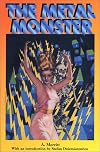
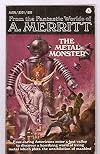
""Dr. Goodwin is on a botanical expedition in the Himalayas. There he meets Dick Drake, the son of one of his old science acquaintances. They are witnesses of a strange aurora-like effect, but seemingly a deliberate one. As they go out to investigate, they meet Goodwin's old friends Martin and Ruth Ventnor, brother and sister scientists. The two are besieged by Persians as Darius III led when Alexander of Macedon conquered them more than two thousand years ago.The group is saved by a show more magnificent woman they get to know as Norhala. She commands the power of lightning and controls strange metal a show lessTags
Recommendations











Member Reviews
This is a far superior as a fantasy novel to the 'Moon Pool', published only a year before and reviewed by us at https://www.goodreads.com/review/show/757612879. The main protagonist is the same Dr. Goodwin, explorer and scientist.
It still has the occasional lapse into archaic and weird syntax that marred the earlier work but, in other regards, what were weaknesses in his earlier work are now restrained and turned into strengths. The book is certainly helped by not being a 'fix' of pre-set short stories.
The work is recognisably Merritt in so many ways. Perhaps most difficult for the modern reader is the almost synaesthetic attempt to evoke strange states or realms.
The truth is that his effort requires one to be in a half-sleep, perhaps show more drugged or hypnogogic state, which is where (one supposes) he took part of his inspiration. Because reading a text involves the rational process of stringing words together in order to create sense the effect is not what he may have hoped for or intended.
We can only get close to what he meant to evoke at these moments (such as the journey into the metal monster's city) if we invest serious effort into almost becoming the language, perhaps re-reading it over again for the context and then trying to reproduce his own imagination in our own minds.
Given that the essence of the story is one of Rider Haggard adventurism combined with a science fiction premise close to one that might have been developed by Olaf Stapledon or Lovecraft there is too much of a disconnect here for such sections to work wholly well.
The effort is worthy but it falls between stools - confusing an adventure story with high strangeness yet not making the high strangeness the basis for some advanced poetic experiment.
Nevertheless, it is a masterpiece of the fantasy genre. It hangs together as an adventure story at a time when it was possible still to think that mysteries could be found in lands still hardly known to the readers and in a culture where Blavatsky's visions were still current.
One of his key early stories was placed in the far beyond of the North American wilderness. The Moon Pool was set amongst unknown Pacific Isles. This one is set in Central Asia near Tibet. Later he would move his imagination to the South American jungle.
This, with GPS and Google Earth, is scarcely possible today. Even near space has been lost to us as fantasy territory. Antarctica was closed off somewhere between the 'Mountains of Madness' and the myth of Nazi UFOs.
Merritt's next novel would presage this crisis of possibility by shifting into magical past time through a mirror, just as he had his hero move into magical orientalism in his rather beautiful early short story 'Through The Dragon Glass'.
His genius lies in his ability to take what many men dream between wake and sleep and fix it as a sustained narrative and then to weave themes that are clearly of great personal imaginative importance to him into an adventure that genuinely enthralls.
He is a man of his time. The final battle within the metal monster is the battle of a man who has read Milton - a struggle, though, that is closer to Zoroastrian or Manichean myth than anything Christian.
He writes within two years of a horrendous war in Europe and it has clearly marked him (as it does in other stories). The warfare of the metal monster is war as he imagines that it would be experienced as mechanical death-dealing on human flesh.
The sexual mores are also of his time. One of the hall marks of Merritt is an eroticism that is both pulpish and powerful.
There is, of course, the solid all-American girl 'type', the good girl, all spirit but clearly answerable to her brother and to her thoroughly masculine and rather uninteresting soldierly lover whose machismo ways result in little more than a sigh from the modern reader.
As foil, there is the magnificent Norhala, half Persian princess and half metallic and of the stars. She is a goddess in her cold superiority of passion and, although Sekhmet is not named (though other goddesses are), she is Sekhmet incarnate in her waging of war.
The sexual frisson comes from her 'glamour' which mesmerises the good girl adventurer Ruth into what one can only interpret as a full-on dreamy lesbian relationship.
Ruth's descent or ascent (depending on the stance of the reader) into a lost tranquillity away from conformity and duty is symbolised at her rescue by her single bare breast, that of Diana, and her near nakedness that, brought to her senses, she hides and then abandons without embarrassment for the sensible clothes of an explorer.
There is adventure in far away lands, a lost civilisation, creatures beyond time and space and, clearly, beyond our full comprehension, mysteries explained as science, bloody warfare, mesmeric altered states (Merritt undoubtedly had an interest in mind-bending drugs), courageous masculinity and the carefully managed high eroticism centred on idealised women. What more could a man want.
His tales were justifiably substantial sellers, helping to drive Argosy pulp sales in the 1920s and 1930s, and the lost masculinity of their milieu is why they are still engaging today. His books are about dream states and his book has become a dream state. show less
It still has the occasional lapse into archaic and weird syntax that marred the earlier work but, in other regards, what were weaknesses in his earlier work are now restrained and turned into strengths. The book is certainly helped by not being a 'fix' of pre-set short stories.
The work is recognisably Merritt in so many ways. Perhaps most difficult for the modern reader is the almost synaesthetic attempt to evoke strange states or realms.
The truth is that his effort requires one to be in a half-sleep, perhaps show more drugged or hypnogogic state, which is where (one supposes) he took part of his inspiration. Because reading a text involves the rational process of stringing words together in order to create sense the effect is not what he may have hoped for or intended.
We can only get close to what he meant to evoke at these moments (such as the journey into the metal monster's city) if we invest serious effort into almost becoming the language, perhaps re-reading it over again for the context and then trying to reproduce his own imagination in our own minds.
Given that the essence of the story is one of Rider Haggard adventurism combined with a science fiction premise close to one that might have been developed by Olaf Stapledon or Lovecraft there is too much of a disconnect here for such sections to work wholly well.
The effort is worthy but it falls between stools - confusing an adventure story with high strangeness yet not making the high strangeness the basis for some advanced poetic experiment.
Nevertheless, it is a masterpiece of the fantasy genre. It hangs together as an adventure story at a time when it was possible still to think that mysteries could be found in lands still hardly known to the readers and in a culture where Blavatsky's visions were still current.
One of his key early stories was placed in the far beyond of the North American wilderness. The Moon Pool was set amongst unknown Pacific Isles. This one is set in Central Asia near Tibet. Later he would move his imagination to the South American jungle.
This, with GPS and Google Earth, is scarcely possible today. Even near space has been lost to us as fantasy territory. Antarctica was closed off somewhere between the 'Mountains of Madness' and the myth of Nazi UFOs.
Merritt's next novel would presage this crisis of possibility by shifting into magical past time through a mirror, just as he had his hero move into magical orientalism in his rather beautiful early short story 'Through The Dragon Glass'.
His genius lies in his ability to take what many men dream between wake and sleep and fix it as a sustained narrative and then to weave themes that are clearly of great personal imaginative importance to him into an adventure that genuinely enthralls.
He is a man of his time. The final battle within the metal monster is the battle of a man who has read Milton - a struggle, though, that is closer to Zoroastrian or Manichean myth than anything Christian.
He writes within two years of a horrendous war in Europe and it has clearly marked him (as it does in other stories). The warfare of the metal monster is war as he imagines that it would be experienced as mechanical death-dealing on human flesh.
The sexual mores are also of his time. One of the hall marks of Merritt is an eroticism that is both pulpish and powerful.
There is, of course, the solid all-American girl 'type', the good girl, all spirit but clearly answerable to her brother and to her thoroughly masculine and rather uninteresting soldierly lover whose machismo ways result in little more than a sigh from the modern reader.
As foil, there is the magnificent Norhala, half Persian princess and half metallic and of the stars. She is a goddess in her cold superiority of passion and, although Sekhmet is not named (though other goddesses are), she is Sekhmet incarnate in her waging of war.
The sexual frisson comes from her 'glamour' which mesmerises the good girl adventurer Ruth into what one can only interpret as a full-on dreamy lesbian relationship.
Ruth's descent or ascent (depending on the stance of the reader) into a lost tranquillity away from conformity and duty is symbolised at her rescue by her single bare breast, that of Diana, and her near nakedness that, brought to her senses, she hides and then abandons without embarrassment for the sensible clothes of an explorer.
There is adventure in far away lands, a lost civilisation, creatures beyond time and space and, clearly, beyond our full comprehension, mysteries explained as science, bloody warfare, mesmeric altered states (Merritt undoubtedly had an interest in mind-bending drugs), courageous masculinity and the carefully managed high eroticism centred on idealised women. What more could a man want.
His tales were justifiably substantial sellers, helping to drive Argosy pulp sales in the 1920s and 1930s, and the lost masculinity of their milieu is why they are still engaging today. His books are about dream states and his book has become a dream state. show less
I liked that.. but i don’t recommend it too strongly. Technically a sequel to [b:The Moon Pool|863689|The Moon Pool|A. Merritt|https://i.gr-assets.com/images/S/compressed.photo.goodreads.com/books/1348631267l/863689._SY75_.jpg|937185], which was awful, luckily you don’t need to know anything about that to read this.
There.. isn’t really much story in this one, its a lot of descriptions. Luckily its about something akin to A.I. and comparing this early version of A.I. with modern interpretations is what mostly kept my attention.
Oh sure there's still a high priestess and a lovestory and some ancient persians or something... because this is still pulp. However the main event is really the machines.
As i said though lot of show more descriptions.. long views of a machine city and even longer sections just flying through utter nonsense.. it reminded me of when they’re floating through V’Ger in Star-Trek the Motion Picture.
The descriptive writing is like surfing though.. as long as you can keep processing and visualized it its fine but whenever you lose the thread you can just end up drowning in adjectives for pages.
There are some other interesting aspects, the main characters share lovecrafts terror of the different and this is combined with their sense of white privilege. I loved it whenever they felt themselves mocked by the machines as they always went absolutely nuts over it. Anyway i was rooting for the machines the entire time ;) .
This is an interesting... vision.. when you can keep up with the author and actually manage to visualize it.
Edit: New Words to me.
barmecide :illusory and therefore disappointing.
pandect :a complete body of the laws of a country. show less
There.. isn’t really much story in this one, its a lot of descriptions. Luckily its about something akin to A.I. and comparing this early version of A.I. with modern interpretations is what mostly kept my attention.
Oh sure there's still a high priestess and a lovestory and some ancient persians or something... because this is still pulp. However the main event is really the machines.
As i said though lot of show more descriptions.. long views of a machine city and even longer sections just flying through utter nonsense.. it reminded me of when they’re floating through V’Ger in Star-Trek the Motion Picture.
The descriptive writing is like surfing though.. as long as you can keep processing and visualized it its fine but whenever you lose the thread you can just end up drowning in adjectives for pages.
There are some other interesting aspects, the main characters share lovecrafts terror of the different and this is combined with their sense of white privilege. I loved it whenever they felt themselves mocked by the machines as they always went absolutely nuts over it. Anyway i was rooting for the machines the entire time ;) .
This is an interesting... vision.. when you can keep up with the author and actually manage to visualize it.
Edit: New Words to me.
barmecide :illusory and therefore disappointing.
pandect :a complete body of the laws of a country. show less
This book is actually a sequel in the adventures of Dr. Goodwin after the Moon Pool. This time, he finds another hidden race of alien metal creatures high in the Mountains. Very atmospheric and very entertaining read for a cloudy afternoon. But remember-- this was written way before WWII.
review of
A. Merritt's The Metal Monster
by tENTATIVELY, a cONVENIENCE - November 14-18, 2019
For the complete review go here: https://www.goodreads.com/story/show/1160673-metal-monster-merritt
"Before the narrative which follows was placed in my hands, I had never seen Dr. Walter T. Goodwin, it author." - p 5
By now, that's a fairly familiar framing device: the author presents a fictional context in which his bk exists as if to give it factual validity. This strikes me as a particularly late 19th, early 20th century device. Maybe I'm wrong about that. This bk was originally copyrighted in 1920. William Hope Hodgson's The House on the Borderland was written in 1908. As I write in my review of that: "The protagonists find a manuscript at show more a ruin & decide to read it." ( https://www.goodreads.com/review/show/2127802453 ). Stephen Baxter's The Time Ships (1995) is a spin-off of H.G. Wells's The Time Machine (1895). In that:
"Stephen Baxter's "Editor's Note" begins:
""The attached account was given to me by the owner of a small second-hand bookshop, situated just off the Charing Cross Road in London. He told me it had just turned up as a manuscript in an unlabeled box, in a collection of books which had been bequeathed to him after the death of a friend; the bookseller passed the manuscript on to me as a curiosity—"You might make something of it"—knowing of my interest in the speculative fiction of the nineteenth century.
""The manuscript itself was typewritten on commonplace paper, but a pencil note attested that it had been transcribed from an original "written by hand on a paper of such age that it has crumpled beyond repair." That original, if it ever existed, is lost. There is no note as to the manuscript's author, or origin." - p vii" - https://www.goodreads.com/story/show/1106360-baxter
Such a beginning from Merritt is no surprise. What did surprise me more was the following:
"The man to whom the President of the Association introduced me was sturdy, well-knit, a little under average height. He had a broad but rather low forehead that reminded me somewhat of the late electrical wizard Steinmetz." - p 5
How many readers of this review remember Charles Proteus Steinmetz? Now how many of you remember Edison? Tesla? Westinghouse? Steinmetz was famous around the turn of the 19th to the 20th century but seems to be largely forgotten now. When I was a little kid in elementary school, I read a biography about him that I found very inspiring. I even dressed up as him for some sort of costume event at school. He was a hunch-back who wore all black & smoked cigars. He cd generate 'lightning'. It's funny to see mention of him in The Metal Monster b/c it reminds me that he still wd've been topical then, even though he was dead.
This is a fantastic adventure story, quite well-written if one can get beyond a tedium that borders on purple prose.
"In Teheran I had picked up a most unusual servant; yes, more than this, a companion and counselor and interpreter as well.
"He was a Chinese; his name was Chiu-Ming. His first thirty years had been spent at the great Lämasery of Palkhor-Choinde at Gyantse, west of Lhasa. Why he had gone from there, how he had come to Teheran, I never asked. It was most fortunate that he had gone, and that I had found him. He recommended himself to me as the best cook within ten thousand miles of Pekin." - p 11
Of course, the 'important thing' here is that he's Chinese & thus can be 'picked up' to be a servant to a 'Westerner'. It wdn't matter if he spoke 75 languages & cd fly he'd still be a servant to the most ignorant American or Britisher. Also, if someone needs to be killed off w/o upsetting the presumed reader too much the Chinese guy can be the one to go.
The writing is 'poetic', by wch I mean full of extravagant & colorful descriptive & metaphorical fluorishes.
"At its eastern end towered the colossal scarp of the unnamed peak through one of whose gorges we had crept. On his head was a cap of silver set with pale emeralds—the snow fields and glaciers that crowned him. Far to the west another gray and ochreous giant reared its bulk, closing the vale. North and south, the horizon was a chaotic sky land of pinnacles, spired and minareted, steepled and turreted and domed, each diademed with its green and argent of eternal ice and snow." - p 12
"The rays seemed to spring upward from the earth. Now they were like countless lances of light borne by marching armies of Titans; now they crossed and angled and flew as though they were clouds of javelins hurled by battling swarms of the Genii of Light. And now they stood upright while through them, thrusting them aside, bending them, passed vast, vague shapes like mountains forming and dissolving; like darkening monsters of some world of light pushing through thick forests of slender, high-reaching trees of cold flame; shifting shadows of monstrous chimerae slipping through jungles of bamboo with trunks of diamond fire; phantasmal leviathans swimming through brakes of giant reeds of radiance rising from the sprakling ooze of a sea of star shine." - pp 70-71
Whew! I'm not sure that anyone writes like that anymore. Merritt & Hodgson have this style of writing in common. They also describe scenes in this way for llllloooooonnnnnnnngggggg periods of time, commas of splintch.
Now, of course, our main characters are a zillion miles from home in an area where there's little sign of fellow human beings & what shd happen?:
"Out darted a girl. A rifle dropped from her hands. Straight she sped toward me.
"And as she ran I recognized her.
"Ruth Ventnor!" - p 24
She sure does get around.
""Richard Drake," I said. "Son of old Alvin—you knew him Mart."
""Knew him well," cried Ventnor, seizing Dick's hand. "Wanted me to go to Kamchatka to get some confounded sort of stuff for one of his devilish experiments. Is he well?"
""He's dead," replied Dick soberly." - p 25
Now, if Kamchatka is famous for the abundance and size of its brown bears & Kathmandu is the capital and largest city of Nepal I have to wonder if this is some sort of code for going to Kathmandu to get drugs. If this were a century later, the drug might be ketamine. I dunno, maybe it had something to do w/ Heavy Metal.
"With the same startling abruptness there stood erect, where but a moment before they had seethed, a little figure, grotesque; a weirdly humorous, a vaguely terrifying foot-high shape, squared and angled and pointed and animate—as though a child should build from nursery blocks a fantastic shape which abruptly is filled with throbbing life.
"A troll from the kindergarten! A kobold of the toys!
"Only for a second it stood, then began swiftly to change, melting with quicksilver quickness from one outline into another as square and triangle and spheres changed places." - p 34
A large portion of this bk, perhaps the majority of it, is dedicated to description of this living metal. After a while I found myself (I have no idea where I'd been until then) longing for a break from such description but I have to give Merritt credit for his obsessive VISION, such visions as that of the geometric smiting thing.
"It melted once more—took new form. Where had been pillar and flailing arms was now a tripod thirty feet high, its legs alternate globe and cube and upon its apex a wide and spinning ring of sparkling spheres. Out from the middle of this ring stretched a tentacle—writhing, undulating like a serpent of steel, four score yards at least in length.
"At its end cube, globe and pyramid had mingled to form a huge trident. With the three long prongs of this trident the thing struck, swiftly, with fearful precision—joyously—tining those who fled, forking them, tossing them from its points high in the air." - p 44
Even though this bk is only 100 yrs old, it's obvious that the English language has changed over that time & that vocabularies have changed. I actually feel HAPPY just to read words like "trident" & "tining" — not that they're particularly obscure in these times but they're somewhat 'out-of-fashion'.
& what about pony toss? Why, in my youth it was 6 to one half a baker's dozen to t'other that we'd play pony toss at the same time that we'd play croquet.
""Catch," he called; placed one hand beneath the beast's belly, the other under its throat; his shoulders heaved—and up shot the pony; laden as it was, landed softly upon four wide-stretched legs beside me, The faces of the two gaped up, ludicrous in their amazement." - pp 57-58
Why, back in those days, if you drank too much alcohol even your shoulders heaved, albeit a dry heave.
"The sun? Reason returned to me; told me that this globe couldn't be that.
"What was it then? Ra-Harmachis, of the Egyptians, stripped of his wings, exiled and growing old in the corridors of the Dead? Or that mocking luminary, the cold phantom of the God of light and warmth which the old Norsemen believed was set in their frozen heel to torment the damned?" - p 64
At 1st I thought: 'It must be Ra-Harmachis, I mean, that's most logical.' Then I remembered being at the bar last night & I took a closer look at the globe & saw that there were 2 of them. But just to make sure I started asking myself more questions.
"What was their color? It came to me—that of the mysterious element which stains the sun's corona, that diadem seen only when our day star is in eclipse; the unknown element which science has named coronium, which never yet has been found on earth and that may be electricity in its one material form; electricity that is ponderable; force whose vibrations are keyed down to mass; power transmuted into substance." - p 80
No, I was confusing corona w/ areola.
"During the total solar eclipse of 7 August 1869, a green emission line of wavelength 530.3 nm was independently observed by Charles Augustus Young (1834–1908) and William Harkness (1837–1903) in the coronal spectrum. Since this line did not correspond to that of any known material, it was proposed that it was due to an unknown element, provisionally named coronium.
"In 1902, in an attempt at a chemical conception of the aether, the Russian chemist and chemical educator Dmitri Mendeleev hypothesized that there existed two inert chemical elements of lesser atomic weight than hydrogen. Of these two, he thought the lighter to be an all-penetrating, all-pervasive gas, and the slightly heavier one to be coronium. Later he renamed coronium as newtonium.
"It was not until the 1930s that Walter Grotrian and Bengt Edlén discovered that the spectral line at 530.3 nm was due to highly ionized iron (Fe13 ); other unusual lines in the coronal spectrum were also caused by highly charged ions, such as nickel, the high ionization being due to the extreme temperature of the solar corona." - https://en.wikipedia.org/wiki/Coronium
Imagine being Isaac Newton & having Alectrona's areola named after you & then having the honor be reduced to a bunch of ionized metals. Life isn't fair. Of course, no matter where you turn Ruth Ventnor's there.
""It whispered to me first," she said, "from Norhala—when she put her arm around me. It whispered and then seemed to float from her and cover me like—like a veil, and from head to foot. It was a quietness and peace that held within it a happiness at one and the same time utterly tranquil and utterly free.
""I seemed to be at the doorway to unknown ecstasies—and the life I had known only a dream—and you, all of you—even Martin, dreams within a dream. You weren't—real—and you did not—matter."
""Hypnotism," muttered Drake, as she paused.
""No," she shook her head. "No—more than that.["]" - p 99
Sexual parasitism? You know, like when the female spider eats the male after consummation? Comsumption after consummation? What if Ruth had been a spider who'd just eaten Isaac Newton?
""It was as though I were the shining shadow of a star afloat upon the breast of some still and hidden woodland pool; as though I were a little wind dancing among the mountain tops; a mist whirling down a quiet glen; a shimmering lance of the aurora pulsing in the high solitudes.
""And there was music—strange and wondrous music and terrible, but not terrible to me—who was part of it. Vast chords and singing themes that rang like clusters of little swinging stars and harmonies that were like the very voice of infinite law resolving within itself all discords. And all—all—passionless, yet—rapturous.
""Out of the Thing that held me, out from its fires pulsed vitality—a flood of inhuman energy in which I was bathed. And it was as though this energy were—reassmbling me, fitting me even closer to the elemental things, changing me fully into them." - p 100
I know it sounds thrilling, ladies, but, please don't kill & eat your boyfriends after sex — or ever. Instead, ask yourself:
"["]What is the definition of vital intelligences—sentience?"
""Haeckel's is the accepted one. Anything which can receive a stimulus and retains memory of a stimulus must be called an intelligent, conscious entity. The gap between what we have long called the organic and the inorganic is steadily decreasing. Do you know of the remarkable experiments of Lillie upon various metals?" - p 107
"No, I don't" the woman temporarily distracted from murdering & eating her boyfriend after sex sd. "Please tell me more."
For the complete review go here: https://www.goodreads.com/story/show/1160673-metal-monster-merritt show less
A. Merritt's The Metal Monster
by tENTATIVELY, a cONVENIENCE - November 14-18, 2019
For the complete review go here: https://www.goodreads.com/story/show/1160673-metal-monster-merritt
"Before the narrative which follows was placed in my hands, I had never seen Dr. Walter T. Goodwin, it author." - p 5
By now, that's a fairly familiar framing device: the author presents a fictional context in which his bk exists as if to give it factual validity. This strikes me as a particularly late 19th, early 20th century device. Maybe I'm wrong about that. This bk was originally copyrighted in 1920. William Hope Hodgson's The House on the Borderland was written in 1908. As I write in my review of that: "The protagonists find a manuscript at show more a ruin & decide to read it." ( https://www.goodreads.com/review/show/2127802453 ). Stephen Baxter's The Time Ships (1995) is a spin-off of H.G. Wells's The Time Machine (1895). In that:
"Stephen Baxter's "Editor's Note" begins:
""The attached account was given to me by the owner of a small second-hand bookshop, situated just off the Charing Cross Road in London. He told me it had just turned up as a manuscript in an unlabeled box, in a collection of books which had been bequeathed to him after the death of a friend; the bookseller passed the manuscript on to me as a curiosity—"You might make something of it"—knowing of my interest in the speculative fiction of the nineteenth century.
""The manuscript itself was typewritten on commonplace paper, but a pencil note attested that it had been transcribed from an original "written by hand on a paper of such age that it has crumpled beyond repair." That original, if it ever existed, is lost. There is no note as to the manuscript's author, or origin." - p vii" - https://www.goodreads.com/story/show/1106360-baxter
Such a beginning from Merritt is no surprise. What did surprise me more was the following:
"The man to whom the President of the Association introduced me was sturdy, well-knit, a little under average height. He had a broad but rather low forehead that reminded me somewhat of the late electrical wizard Steinmetz." - p 5
How many readers of this review remember Charles Proteus Steinmetz? Now how many of you remember Edison? Tesla? Westinghouse? Steinmetz was famous around the turn of the 19th to the 20th century but seems to be largely forgotten now. When I was a little kid in elementary school, I read a biography about him that I found very inspiring. I even dressed up as him for some sort of costume event at school. He was a hunch-back who wore all black & smoked cigars. He cd generate 'lightning'. It's funny to see mention of him in The Metal Monster b/c it reminds me that he still wd've been topical then, even though he was dead.
This is a fantastic adventure story, quite well-written if one can get beyond a tedium that borders on purple prose.
"In Teheran I had picked up a most unusual servant; yes, more than this, a companion and counselor and interpreter as well.
"He was a Chinese; his name was Chiu-Ming. His first thirty years had been spent at the great Lämasery of Palkhor-Choinde at Gyantse, west of Lhasa. Why he had gone from there, how he had come to Teheran, I never asked. It was most fortunate that he had gone, and that I had found him. He recommended himself to me as the best cook within ten thousand miles of Pekin." - p 11
Of course, the 'important thing' here is that he's Chinese & thus can be 'picked up' to be a servant to a 'Westerner'. It wdn't matter if he spoke 75 languages & cd fly he'd still be a servant to the most ignorant American or Britisher. Also, if someone needs to be killed off w/o upsetting the presumed reader too much the Chinese guy can be the one to go.
The writing is 'poetic', by wch I mean full of extravagant & colorful descriptive & metaphorical fluorishes.
"At its eastern end towered the colossal scarp of the unnamed peak through one of whose gorges we had crept. On his head was a cap of silver set with pale emeralds—the snow fields and glaciers that crowned him. Far to the west another gray and ochreous giant reared its bulk, closing the vale. North and south, the horizon was a chaotic sky land of pinnacles, spired and minareted, steepled and turreted and domed, each diademed with its green and argent of eternal ice and snow." - p 12
"The rays seemed to spring upward from the earth. Now they were like countless lances of light borne by marching armies of Titans; now they crossed and angled and flew as though they were clouds of javelins hurled by battling swarms of the Genii of Light. And now they stood upright while through them, thrusting them aside, bending them, passed vast, vague shapes like mountains forming and dissolving; like darkening monsters of some world of light pushing through thick forests of slender, high-reaching trees of cold flame; shifting shadows of monstrous chimerae slipping through jungles of bamboo with trunks of diamond fire; phantasmal leviathans swimming through brakes of giant reeds of radiance rising from the sprakling ooze of a sea of star shine." - pp 70-71
Whew! I'm not sure that anyone writes like that anymore. Merritt & Hodgson have this style of writing in common. They also describe scenes in this way for llllloooooonnnnnnnngggggg periods of time, commas of splintch.
Now, of course, our main characters are a zillion miles from home in an area where there's little sign of fellow human beings & what shd happen?:
"Out darted a girl. A rifle dropped from her hands. Straight she sped toward me.
"And as she ran I recognized her.
"Ruth Ventnor!" - p 24
She sure does get around.
""Richard Drake," I said. "Son of old Alvin—you knew him Mart."
""Knew him well," cried Ventnor, seizing Dick's hand. "Wanted me to go to Kamchatka to get some confounded sort of stuff for one of his devilish experiments. Is he well?"
""He's dead," replied Dick soberly." - p 25
Now, if Kamchatka is famous for the abundance and size of its brown bears & Kathmandu is the capital and largest city of Nepal I have to wonder if this is some sort of code for going to Kathmandu to get drugs. If this were a century later, the drug might be ketamine. I dunno, maybe it had something to do w/ Heavy Metal.
"With the same startling abruptness there stood erect, where but a moment before they had seethed, a little figure, grotesque; a weirdly humorous, a vaguely terrifying foot-high shape, squared and angled and pointed and animate—as though a child should build from nursery blocks a fantastic shape which abruptly is filled with throbbing life.
"A troll from the kindergarten! A kobold of the toys!
"Only for a second it stood, then began swiftly to change, melting with quicksilver quickness from one outline into another as square and triangle and spheres changed places." - p 34
A large portion of this bk, perhaps the majority of it, is dedicated to description of this living metal. After a while I found myself (I have no idea where I'd been until then) longing for a break from such description but I have to give Merritt credit for his obsessive VISION, such visions as that of the geometric smiting thing.
"It melted once more—took new form. Where had been pillar and flailing arms was now a tripod thirty feet high, its legs alternate globe and cube and upon its apex a wide and spinning ring of sparkling spheres. Out from the middle of this ring stretched a tentacle—writhing, undulating like a serpent of steel, four score yards at least in length.
"At its end cube, globe and pyramid had mingled to form a huge trident. With the three long prongs of this trident the thing struck, swiftly, with fearful precision—joyously—tining those who fled, forking them, tossing them from its points high in the air." - p 44
Even though this bk is only 100 yrs old, it's obvious that the English language has changed over that time & that vocabularies have changed. I actually feel HAPPY just to read words like "trident" & "tining" — not that they're particularly obscure in these times but they're somewhat 'out-of-fashion'.
& what about pony toss? Why, in my youth it was 6 to one half a baker's dozen to t'other that we'd play pony toss at the same time that we'd play croquet.
""Catch," he called; placed one hand beneath the beast's belly, the other under its throat; his shoulders heaved—and up shot the pony; laden as it was, landed softly upon four wide-stretched legs beside me, The faces of the two gaped up, ludicrous in their amazement." - pp 57-58
Why, back in those days, if you drank too much alcohol even your shoulders heaved, albeit a dry heave.
"The sun? Reason returned to me; told me that this globe couldn't be that.
"What was it then? Ra-Harmachis, of the Egyptians, stripped of his wings, exiled and growing old in the corridors of the Dead? Or that mocking luminary, the cold phantom of the God of light and warmth which the old Norsemen believed was set in their frozen heel to torment the damned?" - p 64
At 1st I thought: 'It must be Ra-Harmachis, I mean, that's most logical.' Then I remembered being at the bar last night & I took a closer look at the globe & saw that there were 2 of them. But just to make sure I started asking myself more questions.
"What was their color? It came to me—that of the mysterious element which stains the sun's corona, that diadem seen only when our day star is in eclipse; the unknown element which science has named coronium, which never yet has been found on earth and that may be electricity in its one material form; electricity that is ponderable; force whose vibrations are keyed down to mass; power transmuted into substance." - p 80
No, I was confusing corona w/ areola.
"During the total solar eclipse of 7 August 1869, a green emission line of wavelength 530.3 nm was independently observed by Charles Augustus Young (1834–1908) and William Harkness (1837–1903) in the coronal spectrum. Since this line did not correspond to that of any known material, it was proposed that it was due to an unknown element, provisionally named coronium.
"In 1902, in an attempt at a chemical conception of the aether, the Russian chemist and chemical educator Dmitri Mendeleev hypothesized that there existed two inert chemical elements of lesser atomic weight than hydrogen. Of these two, he thought the lighter to be an all-penetrating, all-pervasive gas, and the slightly heavier one to be coronium. Later he renamed coronium as newtonium.
"It was not until the 1930s that Walter Grotrian and Bengt Edlén discovered that the spectral line at 530.3 nm was due to highly ionized iron (Fe13 ); other unusual lines in the coronal spectrum were also caused by highly charged ions, such as nickel, the high ionization being due to the extreme temperature of the solar corona." - https://en.wikipedia.org/wiki/Coronium
Imagine being Isaac Newton & having Alectrona's areola named after you & then having the honor be reduced to a bunch of ionized metals. Life isn't fair. Of course, no matter where you turn Ruth Ventnor's there.
""It whispered to me first," she said, "from Norhala—when she put her arm around me. It whispered and then seemed to float from her and cover me like—like a veil, and from head to foot. It was a quietness and peace that held within it a happiness at one and the same time utterly tranquil and utterly free.
""I seemed to be at the doorway to unknown ecstasies—and the life I had known only a dream—and you, all of you—even Martin, dreams within a dream. You weren't—real—and you did not—matter."
""Hypnotism," muttered Drake, as she paused.
""No," she shook her head. "No—more than that.["]" - p 99
Sexual parasitism? You know, like when the female spider eats the male after consummation? Comsumption after consummation? What if Ruth had been a spider who'd just eaten Isaac Newton?
""It was as though I were the shining shadow of a star afloat upon the breast of some still and hidden woodland pool; as though I were a little wind dancing among the mountain tops; a mist whirling down a quiet glen; a shimmering lance of the aurora pulsing in the high solitudes.
""And there was music—strange and wondrous music and terrible, but not terrible to me—who was part of it. Vast chords and singing themes that rang like clusters of little swinging stars and harmonies that were like the very voice of infinite law resolving within itself all discords. And all—all—passionless, yet—rapturous.
""Out of the Thing that held me, out from its fires pulsed vitality—a flood of inhuman energy in which I was bathed. And it was as though this energy were—reassmbling me, fitting me even closer to the elemental things, changing me fully into them." - p 100
I know it sounds thrilling, ladies, but, please don't kill & eat your boyfriends after sex — or ever. Instead, ask yourself:
"["]What is the definition of vital intelligences—sentience?"
""Haeckel's is the accepted one. Anything which can receive a stimulus and retains memory of a stimulus must be called an intelligent, conscious entity. The gap between what we have long called the organic and the inorganic is steadily decreasing. Do you know of the remarkable experiments of Lillie upon various metals?" - p 107
"No, I don't" the woman temporarily distracted from murdering & eating her boyfriend after sex sd. "Please tell me more."
For the complete review go here: https://www.goodreads.com/story/show/1160673-metal-monster-merritt show less
Dans une vallée perdue du Thibet, le docteur Goodwin et Richard Drake, après d'extraordinaires phénomènes électriques dans le ciel, découvrent une colossale et inexplicable empreinte profondément marquée dans le roc. Là-dessus, ils rencontrent Ruth Ventnoor et son frère Martin que poursuivent de féroces et anachroniques guerriers. Tous les quatre vont être massacrés lorsque apparaît une jeune femme d'une irréelle beauté à qui obéit un monstre changeant, formé d'un innombrable essaim d'êtres métalliques aux formes géométriques ! « Je suis Norhala », dit-elle, et elle les entraîne à sa suite. Bientôt, en face de l'incompréhensible « empereur » de ce peuple de métal, ils se rendent compte que le règne de show more l'espèce humaine sur la Terre est menacé par la fatale expansion de cette race métallique qui tire sa puissance du soleil même ! Et les voilà pris dans une aventure prodigieuse, éblouissante, dans un inoubliable climat de « suspense ». show less
Jan 20, 2012French
Ratings
Members
- Recently Added By
Talk Discussions
Past Discussions
Battle Balls in Good Show Sir! — bad science fiction and fantasy covers (January 2025)
Author Information

27+ Works 2,243 Members
Some Editions
Series

Belongs to Publisher Series
Work Relationships
Is contained in
Common Knowledge
- Canonical title*
- Il mostro di metallo
- Original publication date
- 1920
- People/Characters
- Walter Goodwin; Norhala
*Some information comes from Common Knowledge in other languages. Click "Edit" for more information.
Classifications
Statistics
- Members
- 362
- Popularity
- 87,433
- Reviews
- 6
- Rating
- (3.20)
- Languages
- 6 — English, French, German, Hungarian, Italian, Polish
- Media
- Paper, Audiobook, Ebook
- ISBNs
- 46
- ASINs
- 33