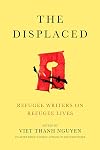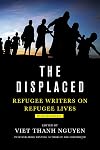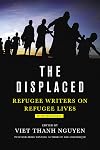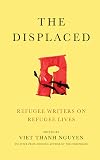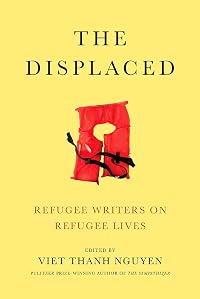
The Displaced: Refugee Writers on Refugee Lives
by Viet Thanh Nguyen (Editor)
On This Page
Description
Pulitzer Prize-winning author Viet Thanh Nguyen, himself a refugee, brings together a host of prominent refugee writers from around the world to explore and illuminate their experiences. Poignant and insightful, this collection of essays reveals moments of uncertainty, resilience int he face of trauma, and a reimagining of identity. The Displaced is a powerful look at what it means to be forced to leave home and find a place of refuge. -- Adapted from book jacket.Tags
Recommendations
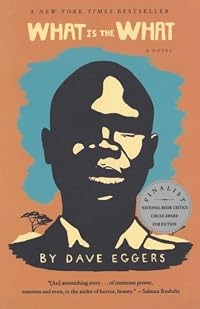
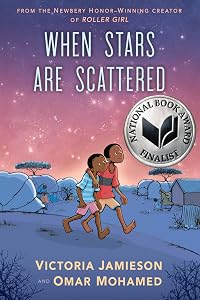
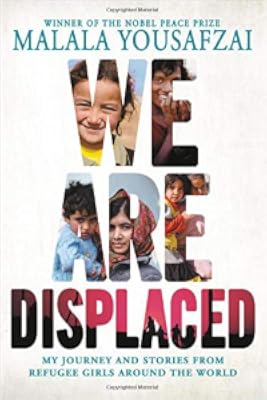
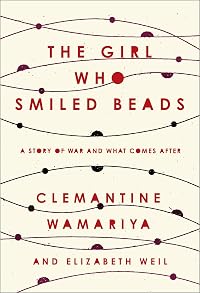




Member Reviews
3.25 stars. there are a lot of strong essays in here, and i especially like how the authors are from so many different places in the world. i think hearing these diverse voices shows the universality of the refugee/migrant/immigrant experience. but how vastly different it is from anything a naturalized citizen would ever know. and these are stories we really need to hear. as in all collections, they didn't all resonate, but overall this is a really good collection. i think maybe the biggest takeaway for me is how much of a sacrifice it is to be a refugee, how much you aren't just changing your geography or your chances or your future, but the core of who you are.
this opens with an introduction from viet thanh nguyen, and it's a show more seriously amazing essay. my favorite in the collection, and it makes me want to read his books, especially his recently released memoir. i also particularly was moved by porochista khakpour's essay. these two writers alone made this collection worth reading, but there are other great ones as well. overall the entire thing is really well written, with so much to think about along with the great writing.
really not the point of the essay by fatima bhutto, but wow this blew me away: "Cedars-Sinai hospital in Los Angeles is already using VR as a 'pharmacy,' Sophie Hackford, a London-based futurist, says, transporting patients to relaxing and sooting environments before traumatic surgery. With a headset and a pair of headphones, burn victims in excruciating pain are clicked into cold locations and just the imagination, the virtual imagery of snow and ice, has been found to release them from the physical confines of their pain 60 percent more efficiently than morphine."
from the essay by reyna grande: "Unfortunately for us immigrants, the trauma doesn't end with a successful border crossing. I believe that for the rest of your life, you carry that border inside of you. It becomes a part of your psyche, your being, your identity." and "It is the central irony of my life that my parents emigrated to try to save our family, but by doing so, they destroyed it."
some excerpts from porochista khakpour's essay: "There is a big sign: SALE. There is a whole section of Cabbage Patch Kids on sale, it turns out, and your mother is telling you they are in your budget, but she doesn't think they are the right ones for you. You are elated, then confused--why would she think that? And then you look at them, one by one, row after row. What do they have in common? They are black, all of them, the sale ones. You think about it. They could be your adopted child, why not. You are still too young to know how babies are made, so you don't think much deeper. You reach out to a pigtailed black one in a yellow track suit and you tell your mother that this is your daughter. Her name turns out to be Clover Stephanie and you still have her somewhere in storage. Her cheek is a bit scraped and looks white underneath. It bothers you, that fact. It bothers you also that you only have Clover because she was on sale, because she was black, but that was your first lesson about America, so maybe it was worth it." and
"You wonder if your Americanness is forever and if you will die an American. You realize it might be just as hard to shake being an American as it was to become one in the first place. You realize with joy you will die an American; you realize with agony you will die an American. You realize with horror and confusion and fear and disbelief that you will die an American. Somehow it is harder to imagine than dying." and
"You wonder who has died because of your will to become an American, and you wonder also if they look like you."
from novuyo rosa tsdhuma's essay: "The suffering of non-white bodies is so naturalized, so overwhelming, and so ordinary that it ceases to be exceptional." show less
this opens with an introduction from viet thanh nguyen, and it's a show more seriously amazing essay. my favorite in the collection, and it makes me want to read his books, especially his recently released memoir. i also particularly was moved by porochista khakpour's essay. these two writers alone made this collection worth reading, but there are other great ones as well. overall the entire thing is really well written, with so much to think about along with the great writing.
really not the point of the essay by fatima bhutto, but wow this blew me away: "Cedars-Sinai hospital in Los Angeles is already using VR as a 'pharmacy,' Sophie Hackford, a London-based futurist, says, transporting patients to relaxing and sooting environments before traumatic surgery. With a headset and a pair of headphones, burn victims in excruciating pain are clicked into cold locations and just the imagination, the virtual imagery of snow and ice, has been found to release them from the physical confines of their pain 60 percent more efficiently than morphine."
from the essay by reyna grande: "Unfortunately for us immigrants, the trauma doesn't end with a successful border crossing. I believe that for the rest of your life, you carry that border inside of you. It becomes a part of your psyche, your being, your identity." and "It is the central irony of my life that my parents emigrated to try to save our family, but by doing so, they destroyed it."
some excerpts from porochista khakpour's essay: "There is a big sign: SALE. There is a whole section of Cabbage Patch Kids on sale, it turns out, and your mother is telling you they are in your budget, but she doesn't think they are the right ones for you. You are elated, then confused--why would she think that? And then you look at them, one by one, row after row. What do they have in common? They are black, all of them, the sale ones. You think about it. They could be your adopted child, why not. You are still too young to know how babies are made, so you don't think much deeper. You reach out to a pigtailed black one in a yellow track suit and you tell your mother that this is your daughter. Her name turns out to be Clover Stephanie and you still have her somewhere in storage. Her cheek is a bit scraped and looks white underneath. It bothers you, that fact. It bothers you also that you only have Clover because she was on sale, because she was black, but that was your first lesson about America, so maybe it was worth it." and
"You wonder if your Americanness is forever and if you will die an American. You realize it might be just as hard to shake being an American as it was to become one in the first place. You realize with joy you will die an American; you realize with agony you will die an American. You realize with horror and confusion and fear and disbelief that you will die an American. Somehow it is harder to imagine than dying." and
"You wonder who has died because of your will to become an American, and you wonder also if they look like you."
from novuyo rosa tsdhuma's essay: "The suffering of non-white bodies is so naturalized, so overwhelming, and so ordinary that it ceases to be exceptional." show less
A take away from this anthology for me is the commonality of being displaced and uprooted does not equate into a commonality of experience. Each refugee has a unique history, set of circumstances, a unique personality. It leaves me, the comparatively rooted reader, seeing how fortunately stable my life has been and wondering if I have done enough for those who are so unfortunate from circumstances beyond their control. The chosen selections makes one contemplative and thoughtful while broadening one's view of the world and, thus, helpful. They are also a reminder that this an ongoing part of the story of the world and, particularly, the United States.
Quotes: (page 17 introduction by Viet Thanh Nguyen) “As refugees, not just once but show more twice, having fled from the north to the south in 1954 when their country was divided, my parents experienced the usual dilemma of anyone classified as other. The other exists in contradiction, or perhaps in paradox, being either invisible or hyper visible, but rarely just visible. Most of the time we do not see the other or see right through them, whoever the other may be to us, since each of us---even if we are seen as others by some---have our own others. When we do see the other, the other is not truly human to us, by very definition of being an other, but is instead a stereotype, a joke, a horror. In case of the Vietnamese refugees in America, we embodied the specter of the Asian come to either serve or threaten.”
(page 48by Fatima Bhutto) “In the East, we believe that all life is maya. Inherently, we are suspicious of time, we don't believe in space or distance, and our sense of all things bends to the knowledge of this fact---nothing is real. Not life, not rules, not order, nothing. Between the dream and the real, we have no boundaries, both are fused together. The lie and the truth are the same. Everything is an illusion created by the mind.
In the West, your life exists in clear, certain terms. This is good, that is bad. This is heaven, that is hell. This is true, that is false. Where we have dreams, you have total, pure reality.
In a future that promises to be shaped by virtual reality, who will be more comfortable in a dream?”
(pages 68-69 by Ariel Dorfman) “Becoming a refugee is a gradual process, a bleaching out, a transition into a ghostly experience. With the exception of those born in refugee camps, every refugee used to have a life. It doesn't matter whether you were a physician in Bosnia or a goat herder in the Congo: what matters is that a thousand little anchors once moored you to the world. Becoming a refugee means watching as those anchors are severed, one by one, until at last you're floating outside of society, an untethered phantom in need of a new life.
Some strands are cut right away: Two months prior to winding up in Vienna, I had an address in Kharkov, Soviet Ukraine, the same address I'd lived my whole life. Three days and two international borders later, I was being herded by humanitarian workers speaking strange languages in a foreign train station, no longer a citizen of any nation, with no address to go back to and no addresses to seek out. Those are the anchors that snap overnight. Others erode more slowly.
It happens when your identity fades, names and titles giving way to numbers and papers.” show less
Quotes: (page 17 introduction by Viet Thanh Nguyen) “As refugees, not just once but show more twice, having fled from the north to the south in 1954 when their country was divided, my parents experienced the usual dilemma of anyone classified as other. The other exists in contradiction, or perhaps in paradox, being either invisible or hyper visible, but rarely just visible. Most of the time we do not see the other or see right through them, whoever the other may be to us, since each of us---even if we are seen as others by some---have our own others. When we do see the other, the other is not truly human to us, by very definition of being an other, but is instead a stereotype, a joke, a horror. In case of the Vietnamese refugees in America, we embodied the specter of the Asian come to either serve or threaten.”
(page 48by Fatima Bhutto) “In the East, we believe that all life is maya. Inherently, we are suspicious of time, we don't believe in space or distance, and our sense of all things bends to the knowledge of this fact---nothing is real. Not life, not rules, not order, nothing. Between the dream and the real, we have no boundaries, both are fused together. The lie and the truth are the same. Everything is an illusion created by the mind.
In the West, your life exists in clear, certain terms. This is good, that is bad. This is heaven, that is hell. This is true, that is false. Where we have dreams, you have total, pure reality.
In a future that promises to be shaped by virtual reality, who will be more comfortable in a dream?”
(pages 68-69 by Ariel Dorfman) “Becoming a refugee is a gradual process, a bleaching out, a transition into a ghostly experience. With the exception of those born in refugee camps, every refugee used to have a life. It doesn't matter whether you were a physician in Bosnia or a goat herder in the Congo: what matters is that a thousand little anchors once moored you to the world. Becoming a refugee means watching as those anchors are severed, one by one, until at last you're floating outside of society, an untethered phantom in need of a new life.
Some strands are cut right away: Two months prior to winding up in Vienna, I had an address in Kharkov, Soviet Ukraine, the same address I'd lived my whole life. Three days and two international borders later, I was being herded by humanitarian workers speaking strange languages in a foreign train station, no longer a citizen of any nation, with no address to go back to and no addresses to seek out. Those are the anchors that snap overnight. Others erode more slowly.
It happens when your identity fades, names and titles giving way to numbers and papers.” show less
This book made me think about the difference between and immigrant and a refugee. An immigrant is a person who chooses to leave his/her country.Looking back at my family tree, most of my ancestors were immigrants. For example my great great great grandmother and her youngest son came to the United States soon after the Civil War. Her husband had died recently and the factory where they worked in Carlisle, England had to be closed down. She and her younger son were both out the only jobs that they had ever down. She decided to go with her younger son and meet with her two older boys who were already in United States so that they could obtain employment. Yet one of my friend's parents were both refugees. They had no choice but to leave show more their countries because they were descendants for Jews and lived in Nazi controlled countries. They had to flee or die. What forces people out can also be a natural disasters or wars. There are other differences like a lack of documentation.
This book is a collection of essays written by the refugees. They told told of the situations that caused them to leave,the process traveling, what experiences they had after to getting to the country, assimilating or remaining separate. The people came from Viet Nam, Mexico, Afghanistan, Bosnia, Hungary and others. Many of the stories are ones of fear and desperation, others tell of how they felt they never belonged to their new country. These stories are all recently written and reflect how they felt about being depicted by the current administration.
I received advanced reading of half of the essays n the finished this finished copy of The Displaced from the Publishers as a win from FirstReads but that in no way influenced my thoughts or feelings in my review. show less
This book is a collection of essays written by the refugees. They told told of the situations that caused them to leave,the process traveling, what experiences they had after to getting to the country, assimilating or remaining separate. The people came from Viet Nam, Mexico, Afghanistan, Bosnia, Hungary and others. Many of the stories are ones of fear and desperation, others tell of how they felt they never belonged to their new country. These stories are all recently written and reflect how they felt about being depicted by the current administration.
I received advanced reading of half of the essays n the finished this finished copy of The Displaced from the Publishers as a win from FirstReads but that in no way influenced my thoughts or feelings in my review. show less
The Displaced is a collection of essays from noted writers, each of whom has a background as a refugee. Each of these stories illuminates a different aspect of the refugee experience.
The authors have a range of origins: a Hungarian who fled from the USSR, a person left stateless at the end of the second world war, and people who have fled wars and repressive regimes in Asia, the Middle East, Europe and South America.
This is a book that really makes you think. 'How much do refugees need to try to fit into their new country? What sort of welcome do they experience? Are they obliged to be grateful, or do we owe them help? And how does the experience of past waves of refugees compare with the people currently seeking asylum?
There are 65 show more million displaced people in the world, according to the UNHCR. The plight of the displaced is one of the biggest human problems that we face. This book is a valuable contribution to our thinking on the problems that they encounter, and how we might help. show less
The authors have a range of origins: a Hungarian who fled from the USSR, a person left stateless at the end of the second world war, and people who have fled wars and repressive regimes in Asia, the Middle East, Europe and South America.
This is a book that really makes you think. 'How much do refugees need to try to fit into their new country? What sort of welcome do they experience? Are they obliged to be grateful, or do we owe them help? And how does the experience of past waves of refugees compare with the people currently seeking asylum?
There are 65 show more million displaced people in the world, according to the UNHCR. The plight of the displaced is one of the biggest human problems that we face. This book is a valuable contribution to our thinking on the problems that they encounter, and how we might help. show less
It's doubtful that few people other than refugees can truly know the feeling of permanently forsaking their home country, but some idea can be gleaned from the pages of this book. The Displaced: Refugee Writers on Refugee Lives consists of essays of various writers who fled their homelands in search of a new existence. The editing is by Pulitzer Prize-winning novelist Viet Thanah Nguyen, who was born in Vietnam before the fall of South Vietnam in 1971.
Each story is a unique perspective. You would expect political views from the contributors in such a compilation, and there is no disappointment in that regard, Ariel Dorfman's essay being a prime example. This novelist and playwright feels that President Donald Trump's battle to build a show more wall along the southern U.S. border has been lost. While mulling over that opinion, consider the fact that one of many hats worn by this Buenos Aires, Argentina native is that of human rights activist.
I found the collection of interest in light of the fact that my wife has been a United States immigrant for more than 40 years. Having heard her voice the emotions of becoming a naturalized citizen, it was easy to relate to some of the stories in this book. One essay tells of an Indian man who was very emotional at his naturalization ceremony. After finishing his pledge of allegiance to the U.S. he shouted into the mic, “I'M AN AMERICAN! FINALLY I AM AN AMERICAN!”
It's important to understand and empathize with our fellow humans who have migrated to a strange land. Many did so just to be in a place where they no longer must endure the kind of hardship we may find hard to fathom. While the ways they got here may sometimes be open for debate, all of the refugees have human stories to convey. Nguyen is to be praised for his effort to allow some of these people to contribute their worthwhile and thoughtful reads. show less
Each story is a unique perspective. You would expect political views from the contributors in such a compilation, and there is no disappointment in that regard, Ariel Dorfman's essay being a prime example. This novelist and playwright feels that President Donald Trump's battle to build a show more wall along the southern U.S. border has been lost. While mulling over that opinion, consider the fact that one of many hats worn by this Buenos Aires, Argentina native is that of human rights activist.
I found the collection of interest in light of the fact that my wife has been a United States immigrant for more than 40 years. Having heard her voice the emotions of becoming a naturalized citizen, it was easy to relate to some of the stories in this book. One essay tells of an Indian man who was very emotional at his naturalization ceremony. After finishing his pledge of allegiance to the U.S. he shouted into the mic, “I'M AN AMERICAN! FINALLY I AM AN AMERICAN!”
It's important to understand and empathize with our fellow humans who have migrated to a strange land. Many did so just to be in a place where they no longer must endure the kind of hardship we may find hard to fathom. While the ways they got here may sometimes be open for debate, all of the refugees have human stories to convey. Nguyen is to be praised for his effort to allow some of these people to contribute their worthwhile and thoughtful reads. show less
Ratings
Members
- Recently Added By
Lists

High School Novels about Immigration
40 works; 1 member
Author Information

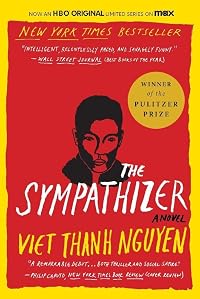
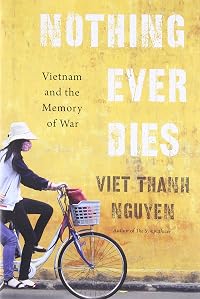
Viet Thanh Nguyen was born in Ban Me Thuot, Viet Nam. In 1975, he came to the United States as a refugee with his family. He received degrees in English and ethnic studies from the University of California Berkeley. After receiving a Ph.D. in English from Berkeley, he began teaching at the University of Southern California and has been there ever show more since. He is an associate professor of English and American studies and ethnicity. He is the author of Race and Resistance: Literature and Politics in Asian America and Nothing Ever Dies: Vietnam and the Memory of War. The novel The Sympathizer won the First Novel Prize from the Center for Fiction, the 2016 Andrew Carnegie Medal for Excellence in Fiction, the Asian/Pacific American Award for Literature in Fiction, and the 2016 Pulitzer Prize for fiction. His latsest novel is The Refugees. He co-edited Transpacific Studies: Framing an Emerging Field with Janet Hoskins. (Bowker Author Biography) show less
All Editions
Awards and Honors
Distinctions
The Guardian Book of the Day (2018-05-06)
Notable Lists
Classifications
- Genres
- Nonfiction, General Nonfiction, Biography & Memoir
- DDC/MDS
- 305.9 — Society, government, & culture Social sciences, sociology & anthropology Social group - Age, Gender, Ethnicity People by occupation and miscellaneous social statuses
- LCC
- JV6346 .D568 — Political Science Colonies and colonization. Emigration and immigration. International migration Colonies and colonization. Emigration and Emigration and immigration. International Immigration
- BISAC
Statistics
- Members
- 208
- Popularity
- 157,246
- Reviews
- 5
- Rating
- (4.28)
- Languages
- English, Vietnamese
- Media
- Paper, Audiobook, Ebook
- ISBNs
- 7
- ASINs
- 2