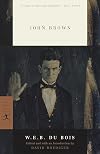
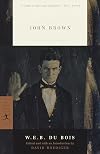
John Brown
by W. E. B. Du Bois
On This Page
Description
First published in 1909, W.E.B. Du Bois's biography of abolitionist John Brown is a literary and historical classic. With a rare combination of scholarship and passion, Du Bois defends Brown against all detractors who saw him as a fanatic, fiend, or traitor. Brown emerges as a rich personality, fully understandable as an unusual leader with a deeply religious outlook and a devotion to the cause of freedom for the slave. This new edition is enriched with an introduction by John David Smith show more and with supporting documents relating to Du Bois's correspondence with his publisher. show lessTags
Recommendations













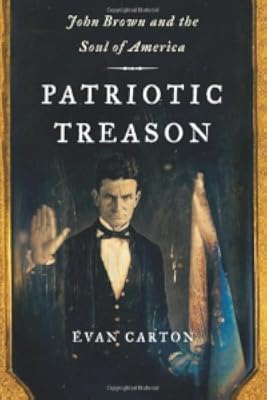

Member Recommendations
Member Reviews
Fanatics? Hero? Terrorist? Martyr? Criminal mystic? John Brown, for sure, has never left anybody indifferent. Even W.E.B. Du Bois, in fact, dedicated him this biography! But what about it?
Well, it's a very strong portrait. It hints towards the lyricism, and it offers, unabashedly, the view of a man painted as nothing less but a visionary, who gave his life in the name of a greater, noble, cause. Written and first published at a time when Brown was, by any account, considered as a murderous madman (1909), such portrayal was clearly a challenge to common prejudices, to say the least! But then again: isn't such a character still highly controversial, despite his good intent?
This is not a proper historical essay by any mean (it's far too show more emotional for that), but, as a brick thrown into a wall and by an intellectual whose legacy was no less impactful, it surely deserves to be discovered. John Brown, after all, still is a contentious figure. show less
Well, it's a very strong portrait. It hints towards the lyricism, and it offers, unabashedly, the view of a man painted as nothing less but a visionary, who gave his life in the name of a greater, noble, cause. Written and first published at a time when Brown was, by any account, considered as a murderous madman (1909), such portrayal was clearly a challenge to common prejudices, to say the least! But then again: isn't such a character still highly controversial, despite his good intent?
This is not a proper historical essay by any mean (it's far too show more emotional for that), but, as a brick thrown into a wall and by an intellectual whose legacy was no less impactful, it surely deserves to be discovered. John Brown, after all, still is a contentious figure. show less
This a fantastic narrative history of the rise and creation of Old Man Brown.
Reaching all the way to his childhood in Connecticut and Ohio, through his early business efforts, Du Bois draws a dramatic portrait of our country's most famous martyr.
I had no idea he was a successful, then bankrupt, businessman. His second bankruptcy finally turned him to his ultimate immortality.
Reaching all the way to his childhood in Connecticut and Ohio, through his early business efforts, Du Bois draws a dramatic portrait of our country's most famous martyr.
I had no idea he was a successful, then bankrupt, businessman. His second bankruptcy finally turned him to his ultimate immortality.
A moving cultural biography of abolitionist martyr John Brown, by one of the most important African-American intellectuals of the twentieth century.
Notable author writes biography of the radical abolitionist.
Ratings
Members
- Recently Added By
Author Information

185+ Works 12,979 Members
Civil rights leader and author, William Edward Burghardt Du Bois was born in Great Barrington, Massachusetts on February 23, 1868. He earned a B.A. from both Harvard and Fisk universities, an M.A. and Ph.D. from Harvard, and studied at the University of Berlin. He taught briefly at Wilberforce University before he came professor of history and show more economics at Atlanta University in Ohio (1896-1910). There, he wrote The Souls of Black Folk (1903), in which he pointed out that it was up to whites and blacks jointly to solve the problems created by the denial of civil rights to blacks. In 1905, Du Bois became a major figure in the Niagara Movement, a crusading effort to end discrimination. The organization collapsed, but it prepared the way for the founding of the National Association for the Advancement of Colored People (NAACP), in which Du Bois played a major role. In 1910, he became editor of the NAACP magazine, a position he held for more than 20 years. Du Bois returned to Atlanta University in 1932 and tried to implement a plan to make the Negro Land Grant Colleges centers of black power. Atlanta approved of his idea, but later retracted its support. When Du Bois tried to return to NAACP, it rejected him too. Active in several Pan-African Congresses, Du Bois came to know Fwame Nkrumah, the first president of Ghana, and Jono Kenyatta the president of Kenya. In 1961, the same year Du Bois joined the Communist party, Nkrumah invited him to Ghana as a director of an Encyclopedia Africana project. He died there on August 27, 1963, after becoming a citizen of that country. (Bowker Author Biography) show less
Some Editions
Common Knowledge
- People/Characters
- John Brown, abolitionist
- Important places
- USA
Classifications
- Genres
- Nonfiction, History, Biography & Memoir, General Nonfiction
- DDC/MDS
- 973.7 — History & geography History of North America United States Civil War Era (1857-1865)
- LCC
- E451 .D8 — History of the United States United States Revolution to the Civil War, 1775/1783-1861 Slavery in the United States. Antislavery
- BISAC
Statistics
- Members
- 350
- Popularity
- 90,208
- Reviews
- 4
- Rating
- (4.02)
- Languages
- English, Hungarian
- Media
- Paper, Audiobook, Ebook
- ISBNs
- 31
- ASINs
- 12