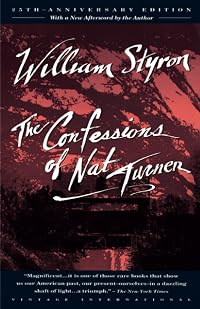
The Confessions of Nat Turner
by William Styron
On This Page
Description
In the late summer of 1831, in a remote section of southeastern Virginia, there took place the only effective, sustained revolt in the annals of American Negro slavery. The revolt was led by a remarkable Negro preacher named Nat Turner, an educated slave who felt himself divinely ordained to annihilate all the white people in the region. This story is narrated by Nat himself as he lingers in jail through the cold autumnal days before his execution. The compelling story ranges over the whole show more of Nat's life, reaching its inevitable and shattering climax that bloody day in August. show lessTags
Recommendations


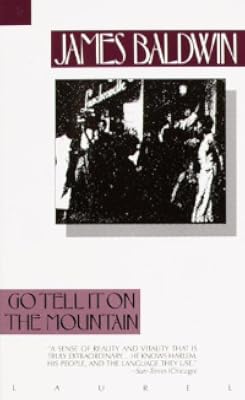
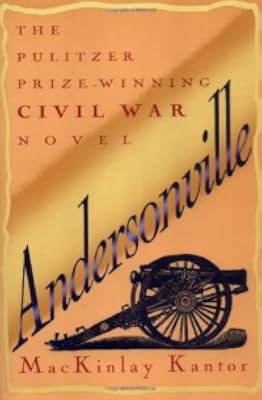
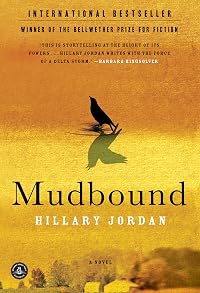

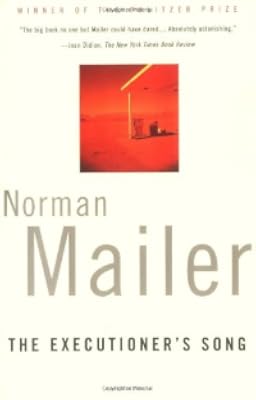










Member Recommendations
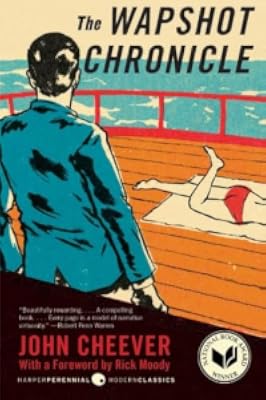
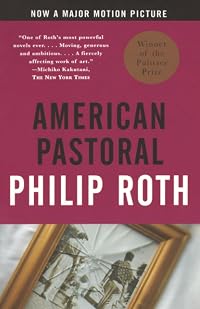
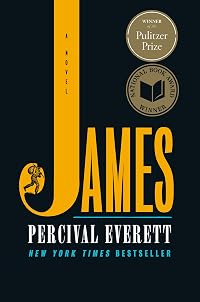
Widsith The obvious companion-piece...both Pulitzer-winning novels about slavery in 19th-century Virginia


Member Reviews
I am still suspect of Pulitzer Prize winning books, even those predating the '90s, and find it interesting that my copy of The Confessions of Nat Turner, first printed fifteen years after winning the award, bears no indication of its achievement. I suspect this is due to the subsequent controversy arising from a white man imagining what a slave would think and feel. Personally, I think fiction is doomed if we continue down the path of restricting authors to writing characters matching their personal backgrounds.
The Confessions of Nat Turner is William Styron's first-person narrative of the events surrounding a short-lived slave rebellion, told by the man who led it. In spite of the controversy the book caused, I found it a mostly show more believable depiction of what might have led to the insurrection. Nat—whose assigned surname is actually that of his owner—is an intelligent, mostly sympathetic character whose major character flaws Styron invented. There is nothing in the historical record documenting the relationships he had with any of the victims, particularly his obsession for a white woman who is, according to the real confession, the only person he personally murdered. There are also several unnecessary (ill-considered?) scenes whose homoerotic undertones and lack of clarity regarding who was doing what to whom work against what the novel was attempting to achieve. I also found the practice of writing speech in dialect distracting, but that was more prevalent (less objectionable?) when the novel was written.
The Confessions of Nat Turner is not of the same quality as Sophie's Choice, perhaps because it is told from the perspective of the main actor rather than by an observer, adding an (intentional?) element of unreliability to the novel's events rather than subjecting them to simple misinterpretation. Given the paucity of historical documents about both the events and the people involved (including significant discrepancies in the number of people murdered), Styron wrote a book worthy of reading. Buy a copy with his afterword, where he elaborates on the objections to his inventions and explains some of the choices he made as an author. show less
The Confessions of Nat Turner is William Styron's first-person narrative of the events surrounding a short-lived slave rebellion, told by the man who led it. In spite of the controversy the book caused, I found it a mostly show more believable depiction of what might have led to the insurrection. Nat—whose assigned surname is actually that of his owner—is an intelligent, mostly sympathetic character whose major character flaws Styron invented. There is nothing in the historical record documenting the relationships he had with any of the victims, particularly his obsession for a white woman who is, according to the real confession, the only person he personally murdered. There are also several unnecessary (ill-considered?) scenes whose homoerotic undertones and lack of clarity regarding who was doing what to whom work against what the novel was attempting to achieve. I also found the practice of writing speech in dialect distracting, but that was more prevalent (less objectionable?) when the novel was written.
The Confessions of Nat Turner is not of the same quality as Sophie's Choice, perhaps because it is told from the perspective of the main actor rather than by an observer, adding an (intentional?) element of unreliability to the novel's events rather than subjecting them to simple misinterpretation. Given the paucity of historical documents about both the events and the people involved (including significant discrepancies in the number of people murdered), Styron wrote a book worthy of reading. Buy a copy with his afterword, where he elaborates on the objections to his inventions and explains some of the choices he made as an author. show less
Based on the true story of Nat Turner and his actual confession, William Styron tells the tragic tale of the infamous uprising of slaves in 1831 in Virginia which left 60 white people massacred.... a large portion of them women and children. Nat Turner was the leader of the insurrection. He confessed with no remorse, pleaded guilty and was hanged. Although this book won the Pulitzer Prize and is considered a classic of American literature, it drew controversial reviews.
Told in four parts, the opening scene finds Nat in prison awaiting his trial. eventually pronounced guilty, then awaiting his execution. Part two drops back to Nat’s childhood and life in servitude of several “masters”. Part three is his memory of the uprising and show more ensuing massacre, and part four is focused on the day of the hanging.
William Styron had a personal interest in the history of Nat Turner because he too grew up in Virginia in the vicinity where the story takes place. Styron says in the forward, “During the narrative that follows, I have rarely departed from the known facts about Nat Turner and the revolt.. However, in those areas where there is little knowledge in regard to Nat... I have allowed myself the utmost freedom of imagination in reconstruction events...” the author creates descriptions, dialogue, and a captivating analogy of the events that occurred during the 31 years of Nat Turner’s life.
On the positive side- Styron draws the reader in, telling the story from Nat’s point of view which illustrates just how brutal life was to be a slave- living a sub human existence with no hope of a better life. Even the “house darkies” who at least sometimes had more comfortable living conditions like sleeping on a straw mat on the floor of the estate kitchen pantry and eating leftovers rather than living on a diet of cornmeal and fat salt bacon soaked in molasses still suffered inhumane treatment. Beatings, torture, and rape were common. Spouses and children were often separated and sold off to slave traders never to be seen again. Nat lived through this. And say what you will- those innocent women and children who were butchered did not deserve to suffer- but all men have a breaking point. Nat’s “spiritual vision” to try to end the suffering and get revenge may have been a shrewd lucid act of evil or an insane psychotic breakdown. However, because he was a black slave, that point was never raised. The one clear observation as a reader is that if you are white and had encountered Nat during his organized rampage… you were a dead person. Period. And yet, I can genuinely say when I finished the book, I felt sympathy for Nat along with all the other slaves.
On the controversial side, the story drew criticism for a white author having the audacity to “fabricate” some “stereotyped” details about Nat’s life… for example, the depiction that Nat had a fetish for white girls. Was it fabricated or real? Who’s to say? It’s a moot point. And anyway, what self-righteous “authority” designated that as a “stereotypical” characteristic? If the glove fits... oh, excuse me, that was the coined phrase in the O.J. Simpson trial when he was accused of killing his white wife. What I mean is, if the shoe fits... If the author had been black, it would not be an issue. Doesn’t that make the critics racist?
There are many offensive things that occur in the book such as Nat’s attorney pleading for leniency because “ the Negro is a biologically inferior species” and literally compared him physically and mentally to a baboon, that the “white girl fetish” hardly bares mentioning.
"The Confessions of Nat Turner" is a stark reminder that slavery was an integral part of the history of the United States which cannot be denied or ignored. Reminding ourselves of the atrocity should strengthen our resolve to always strive to be better human beings. show less
Told in four parts, the opening scene finds Nat in prison awaiting his trial. eventually pronounced guilty, then awaiting his execution. Part two drops back to Nat’s childhood and life in servitude of several “masters”. Part three is his memory of the uprising and show more ensuing massacre, and part four is focused on the day of the hanging.
William Styron had a personal interest in the history of Nat Turner because he too grew up in Virginia in the vicinity where the story takes place. Styron says in the forward, “During the narrative that follows, I have rarely departed from the known facts about Nat Turner and the revolt.. However, in those areas where there is little knowledge in regard to Nat... I have allowed myself the utmost freedom of imagination in reconstruction events...” the author creates descriptions, dialogue, and a captivating analogy of the events that occurred during the 31 years of Nat Turner’s life.
On the positive side- Styron draws the reader in, telling the story from Nat’s point of view which illustrates just how brutal life was to be a slave- living a sub human existence with no hope of a better life. Even the “house darkies” who at least sometimes had more comfortable living conditions like sleeping on a straw mat on the floor of the estate kitchen pantry and eating leftovers rather than living on a diet of cornmeal and fat salt bacon soaked in molasses still suffered inhumane treatment. Beatings, torture, and rape were common. Spouses and children were often separated and sold off to slave traders never to be seen again. Nat lived through this. And say what you will- those innocent women and children who were butchered did not deserve to suffer- but all men have a breaking point. Nat’s “spiritual vision” to try to end the suffering and get revenge may have been a shrewd lucid act of evil or an insane psychotic breakdown. However, because he was a black slave, that point was never raised. The one clear observation as a reader is that if you are white and had encountered Nat during his organized rampage… you were a dead person. Period. And yet, I can genuinely say when I finished the book, I felt sympathy for Nat along with all the other slaves.
On the controversial side, the story drew criticism for a white author having the audacity to “fabricate” some “stereotyped” details about Nat’s life… for example, the depiction that Nat had a fetish for white girls. Was it fabricated or real? Who’s to say? It’s a moot point. And anyway, what self-righteous “authority” designated that as a “stereotypical” characteristic? If the glove fits... oh, excuse me, that was the coined phrase in the O.J. Simpson trial when he was accused of killing his white wife. What I mean is, if the shoe fits... If the author had been black, it would not be an issue. Doesn’t that make the critics racist?
There are many offensive things that occur in the book such as Nat’s attorney pleading for leniency because “ the Negro is a biologically inferior species” and literally compared him physically and mentally to a baboon, that the “white girl fetish” hardly bares mentioning.
"The Confessions of Nat Turner" is a stark reminder that slavery was an integral part of the history of the United States which cannot be denied or ignored. Reminding ourselves of the atrocity should strengthen our resolve to always strive to be better human beings. show less
It seems to me that people, including the author, willfully oversimplify this novel in a way that makes it easy to vilify and dismiss.
There is no doubt that Styron stumbled into some troubling territory by choosing to adopt a first person perspective to write about an important, historical black figure in Nat Turner. In part, the trouble was that so little was/is known about Turner that for a white author to take on the task of exposing/creating his person is a supreme act of white coloniality. Under those circumstances, how could Styron not lay out Nat Turner’s interior self with white experience and bias and prejudice. And Styron makes this worse in his afterward by pretending that the choices he made are accountable to show more “logical” deductions that link together what few facts are left to modern readers about Nat Turner from historical records. To pretend that this novel was an objective, scientific act of forensic journalism seems dishonest to me.
I think it is a different kind of mistake to see Styron as crafting the novel as an apology, atonement, and absolution for chattel slavery. Although he portrays some members of white households as sympathetic and (to a degree) innocent shouldn’t be taken as a further attempt to characterize Nat Turner as pathologically violent. Rather it seems like a more productive way to look at this characterization of some whites is to acknowledge how they had passively normalized the inhumanity of slavery because of its systemic and essential connection to their way of life. The acceptance of something as normal seems to coincide with a kind of naïve innocence that does not always have anything to do with one’s essential morality and nature. What I mean is that for Styron to choose to portray some whites as innocent is not the same as saying that they were without blame or that they were not complicit in the institution of slavery. Surely they were, just as we are, still, today to the extent that institutions governing the continuance of “normal” life are possible only because of the legacy of slavery. In this light, the tendency toward the normalization of slavery could and should seem like provocation enough for disruption … in this case through violence.
It is still another kind of mistake to look back on this novel merely as a form of art and craft for which the author can be thought of fondly as a masterful prose stylist. I think he was. The writing in the novel is rich, engaging, and full of metaphoric meaning. But that can’t be the only grounds the novel stands on.
In his blurb for the book, James Baldwin wrote that this novel took the challenge of writing our “common history,” which has a way of sounding like resolution: at last … a common history we can all get behind. This, too, feel like a mistake because that common history is really just something that all of us have in common and it is not something that we necessary apprehend with a common interpretation. That common history is complicated, and people care about it in different ways, but we are all commonly implicated in it, and it is really our duty to try to appreciate how that common history is meaningful to ourselves and others.
Does Styron do a good job with this task, at least as I claim to understand it? Not really. His own comments suggest to me that this purpose of creating grounds for understanding a shared history was somewhat distant from his intentions. Were his intentions good – sure, yes, I think so. But good intentions can have bad consequences especially if we don’t examine our intentions well enough from the start. show less
There is no doubt that Styron stumbled into some troubling territory by choosing to adopt a first person perspective to write about an important, historical black figure in Nat Turner. In part, the trouble was that so little was/is known about Turner that for a white author to take on the task of exposing/creating his person is a supreme act of white coloniality. Under those circumstances, how could Styron not lay out Nat Turner’s interior self with white experience and bias and prejudice. And Styron makes this worse in his afterward by pretending that the choices he made are accountable to show more “logical” deductions that link together what few facts are left to modern readers about Nat Turner from historical records. To pretend that this novel was an objective, scientific act of forensic journalism seems dishonest to me.
I think it is a different kind of mistake to see Styron as crafting the novel as an apology, atonement, and absolution for chattel slavery. Although he portrays some members of white households as sympathetic and (to a degree) innocent shouldn’t be taken as a further attempt to characterize Nat Turner as pathologically violent. Rather it seems like a more productive way to look at this characterization of some whites is to acknowledge how they had passively normalized the inhumanity of slavery because of its systemic and essential connection to their way of life. The acceptance of something as normal seems to coincide with a kind of naïve innocence that does not always have anything to do with one’s essential morality and nature. What I mean is that for Styron to choose to portray some whites as innocent is not the same as saying that they were without blame or that they were not complicit in the institution of slavery. Surely they were, just as we are, still, today to the extent that institutions governing the continuance of “normal” life are possible only because of the legacy of slavery. In this light, the tendency toward the normalization of slavery could and should seem like provocation enough for disruption … in this case through violence.
It is still another kind of mistake to look back on this novel merely as a form of art and craft for which the author can be thought of fondly as a masterful prose stylist. I think he was. The writing in the novel is rich, engaging, and full of metaphoric meaning. But that can’t be the only grounds the novel stands on.
In his blurb for the book, James Baldwin wrote that this novel took the challenge of writing our “common history,” which has a way of sounding like resolution: at last … a common history we can all get behind. This, too, feel like a mistake because that common history is really just something that all of us have in common and it is not something that we necessary apprehend with a common interpretation. That common history is complicated, and people care about it in different ways, but we are all commonly implicated in it, and it is really our duty to try to appreciate how that common history is meaningful to ourselves and others.
Does Styron do a good job with this task, at least as I claim to understand it? Not really. His own comments suggest to me that this purpose of creating grounds for understanding a shared history was somewhat distant from his intentions. Were his intentions good – sure, yes, I think so. But good intentions can have bad consequences especially if we don’t examine our intentions well enough from the start. show less
"Though it is a painful fact that most Negroes are hopelessly docile, many of them are filled with fury, and the unctuous coating of flattery which surrounds and encases that fury is but a form of self-preservation."
"Not since the day years before when I was first sold had I felt such rage, intolerable rage, rage that echoed a memory of Isham's fury as he howled at Moore, rage that was a culmination of all the raw buried anguish and frustration growing inside me since the faraway dusk of childhood, on a murmuring veranda, when I first understood that I was a slave and a slave forever."
This controversial novel is the fictionalized story of Nat Turner, a slave who led a rebellion in southeast Virginia in 1831. Though ultimately show more unsuccessful, this is apparently the most sustained slave revolt, at least as documented. Styron's novel starts in a jail near the eve of Turner's anticipated execution as he is being interviewed by his defense attorney who is depicted as trying to understand one particular fact of the rebellion: that Turner's own hands murdered but one of the several victims, that he left most of the murdering to his compatriots. The narrative gradually shifts to an uninterrupted first-person telling of Nat's life as a slave, his experiences at the hands of a variety of owners, and the impact of his intelligence and the willingness of one owner to teach him to read.
Published to much critical praise in 1967, the novel quickly came under fire from the African American community, in particular, for (in Styron's words in my edition's afterword) "...having unwittingly created one of the first politically incorrect texts of our time." He decided to tackle the story, one that provided a benefit for a novelist: an intriguing historical event about which we know very little. Styron says he held fast to what seems incontrovertible, that Nat Turner was a brilliant madman with a delusional and grandiose sense of his place in God's universe. Then he took broad liberties with Turner's childhood and young adulthood, creating a historical narrative that was inconsistent with time and place (the kind of plantation on which Styron placed Nat simply did not exist in that region). Anyway, his novel came under tremendous criticism and, according to him, it became essentially novel-non-grata in college literature classes all across the country while the critical essays regarding the novel were widely read.
Essentially, Styron was tagged as racist. I can't argue one way or the other on this. As I read the novel, I was aware that a white man was writing about an experience, perhaps the ultimate American experience of abasement, degradation, and oppression, with which he could probably not really empathize. He was writing from the distance not only of time but the distance of history; had he been born in America in a different century, he would not have been enslaved. I was also aware that his novel was falling short of communicating the despair, rage, helplessness, terror, and numbness that must have lived within the souls of the Black men and women held in chains in our country's early existence. Who could ever capture what it may or must or could have felt like? I know that I can't, truly can not imagine. It is beyond my privileged capacity. And perhaps it is beyond the capacity of anyone living just far enough away from it. Reading first-person accounts of slaves themselves is the only way to truly hear their stories.
And perhaps it is because of my privileged location in our society that I can say this: setting aside those inevitable failings, the novel was brilliant. Styron's Nat Turner is a character who emerges richly from the pages. He is cold and distant as he tells his story but he evokes compassion and warmth. Perhaps one can only tell a story like this by adopting a voice as close to a reporter as possible; "I'm just telling you this story." When he describes his rage, it is not much different than when he describes the heat and the mosquitoes in the fields in which he worked or the bland food on which he usually survived. But somehow it all comes together into a compelling story and one which has stuck with me over the weeks since I finished reading it. show less
"Not since the day years before when I was first sold had I felt such rage, intolerable rage, rage that echoed a memory of Isham's fury as he howled at Moore, rage that was a culmination of all the raw buried anguish and frustration growing inside me since the faraway dusk of childhood, on a murmuring veranda, when I first understood that I was a slave and a slave forever."
This controversial novel is the fictionalized story of Nat Turner, a slave who led a rebellion in southeast Virginia in 1831. Though ultimately show more unsuccessful, this is apparently the most sustained slave revolt, at least as documented. Styron's novel starts in a jail near the eve of Turner's anticipated execution as he is being interviewed by his defense attorney who is depicted as trying to understand one particular fact of the rebellion: that Turner's own hands murdered but one of the several victims, that he left most of the murdering to his compatriots. The narrative gradually shifts to an uninterrupted first-person telling of Nat's life as a slave, his experiences at the hands of a variety of owners, and the impact of his intelligence and the willingness of one owner to teach him to read.
Published to much critical praise in 1967, the novel quickly came under fire from the African American community, in particular, for (in Styron's words in my edition's afterword) "...having unwittingly created one of the first politically incorrect texts of our time." He decided to tackle the story, one that provided a benefit for a novelist: an intriguing historical event about which we know very little. Styron says he held fast to what seems incontrovertible, that Nat Turner was a brilliant madman with a delusional and grandiose sense of his place in God's universe. Then he took broad liberties with Turner's childhood and young adulthood, creating a historical narrative that was inconsistent with time and place (the kind of plantation on which Styron placed Nat simply did not exist in that region). Anyway, his novel came under tremendous criticism and, according to him, it became essentially novel-non-grata in college literature classes all across the country while the critical essays regarding the novel were widely read.
Essentially, Styron was tagged as racist. I can't argue one way or the other on this. As I read the novel, I was aware that a white man was writing about an experience, perhaps the ultimate American experience of abasement, degradation, and oppression, with which he could probably not really empathize. He was writing from the distance not only of time but the distance of history; had he been born in America in a different century, he would not have been enslaved. I was also aware that his novel was falling short of communicating the despair, rage, helplessness, terror, and numbness that must have lived within the souls of the Black men and women held in chains in our country's early existence. Who could ever capture what it may or must or could have felt like? I know that I can't, truly can not imagine. It is beyond my privileged capacity. And perhaps it is beyond the capacity of anyone living just far enough away from it. Reading first-person accounts of slaves themselves is the only way to truly hear their stories.
And perhaps it is because of my privileged location in our society that I can say this: setting aside those inevitable failings, the novel was brilliant. Styron's Nat Turner is a character who emerges richly from the pages. He is cold and distant as he tells his story but he evokes compassion and warmth. Perhaps one can only tell a story like this by adopting a voice as close to a reporter as possible; "I'm just telling you this story." When he describes his rage, it is not much different than when he describes the heat and the mosquitoes in the fields in which he worked or the bland food on which he usually survived. But somehow it all comes together into a compelling story and one which has stuck with me over the weeks since I finished reading it. show less
This book caused quite a controversy when it came out in 1967, and judging from some of the reviews here and on Amazon, it's continuing to do so. I didn't know about any of that when I started it, but the more I read the novel, the more dissatisfying and even irresponsible it started to seem.
Some have traced the outcry which followed its release to the simple fact that a white Virginian author was writing his way into the mind of a 19th century black slave, but that is hardly the issue. The book may have won the Pulitzer, but for me it has two major problems: the narrative voice is wildly inappropriate and the characterisation is on ethically shaky ground.
The book is narrated by Nat Turner, the poor and uneducated slave who led a show more rebellion against white society in 1831. Nat has scrabbled together a self-taught literacy through a study of the Bible. Yet the register of his narration is jarringly elevated:
It may be the commencement of spring or perhaps the end of summer; it matters less what the season is than that the air is almost seasonless – benign and neutral, windless, devoid of heat or cold.
This is from his introductory remarks on the first page. By the end of the book, as he really tries to ratchet up the sense of drama, he is writing things like this:
I heard from afar, across the withering late summer meadows, the jingle of a cowbell like eternity piercing my heart with a sudden intolerable awareness of the eternity of the imprisoning years stretched out before me: it is hard to describe the serene mood which, even in the midst of this buzzing madness, would steal over me when as if in a benison of cool raindrops or rushing water I would suddenly sink away toward a dream of Isiah....
Does this really seem like the way a psychopathic uneducated slave would talk? Not to me it doesn't. What it sounds like is an overeducated middle-class 20th-century writer. Of course this is fiction, and there is no real reason why Styron can't just abandon verisimilitude and write however he likes – and if the writing were beautiful I would probably not care. But I'm afraid I didn't find it especially beautiful – just overblown and consciously literary in a way which distracted from the story.
Nat Turner writes suspiciously like William Styron – and identifying author with character turns out to be of particular concern in a book like this. Where this moves from literary concerns to moral ones is the way Nat's stylistic flourishes are contrasted with the dialectal speech of other slaves. Not only do other black characters have their patois transcribed in detail and almost to the point of caricature, but Nat himself is made to see it in the worst possible terms.
‘Yam, me tek 'ee dar, missy, me tek 'ee dar.’ I listened closely. It was blue-gum country-nigger talk at its thickest, nearly impenetrable, a stunted speech unbearably halting and cumbersome with a wet gulping sound of Africa in it.
I can't help feeling that this represents not the thoughts of a fellow-slave, but rather of the kind of racist white society around him. That's not to say that no slaves internalised this racism and looked down on other black people: I'm sure that happened. But for an author to stress this element so strongly seems rather precarious, and taken with how much Styron's own writing seems to speak through Nat's narration, leaves the author open to some dangerous criticism.
If it were just the language it might be surmountable, but it isn't. In so many ways Nat is given exactly the feelings that anti-emancipationist, pro-slavery militants liked to imagine blacks had. Despite leading a slave rebellion, Styron's Nat Turner is himself the most fervent despiser of black people. He sees them as ‘a disheveled, ragged lot [...] filled with [...] laughter high and heedless, and loutish nigger cheer’ – ‘faces popeyed with black nigger credulity’, ‘sweat streaming off their black backs in shiny torrents, the lot of them stinking to heaven’.
And suddenly Nat's identification with the author begins to have sinister overtones. Nowhere is this more unnerving than in sex. Racist activists liked, then and later, to portray black people as sexually voracious, lusting wildly after god-fearing white people's wives and daughters. In that context it seems particularly irresponsible to give exactly these impulses to Nat. Disgusted at the rest of his own race, our narrator disappears into sexual fantasies of raping white girls:
It was always a nameless white girl between whose legs I envisioned myself – a young girl with golden curls [...] when I stole into my private place in the carpenter's shop to release my pent-up desires, it was Miss Emmeline whose bare white full round hips and belly responded wildly to all my lust and who, sobbing ‘mercy, mercy, mercy’ against my ear, allowed me to partake of the wicked and godless yet unutterable joys of defilement.
Again, I'm not saying these psychological dynamics never happened, only that representing them in a balanced way is an incredibly delicate job and I don't find Styron up to it. To speak the question, then, that lies behind these criticisms: if Nat's high writing style is more representative of the author than the character, then can the same be said of Nat's unpleasant opinions on race?
Probably not – Christ, I hope not – but while Styron's intention may have been to show how the system of slavery brutalised everyone, the fact remains that he has come up with a portrait of a black man which would have pleased the most unpleasant proponent of white supremacy. This is a real problem. Add to that a writing style I could never believe in, and you have one of the few books that left me with, to put it mildly, serious misgivings. show less
Some have traced the outcry which followed its release to the simple fact that a white Virginian author was writing his way into the mind of a 19th century black slave, but that is hardly the issue. The book may have won the Pulitzer, but for me it has two major problems: the narrative voice is wildly inappropriate and the characterisation is on ethically shaky ground.
The book is narrated by Nat Turner, the poor and uneducated slave who led a show more rebellion against white society in 1831. Nat has scrabbled together a self-taught literacy through a study of the Bible. Yet the register of his narration is jarringly elevated:
It may be the commencement of spring or perhaps the end of summer; it matters less what the season is than that the air is almost seasonless – benign and neutral, windless, devoid of heat or cold.
This is from his introductory remarks on the first page. By the end of the book, as he really tries to ratchet up the sense of drama, he is writing things like this:
I heard from afar, across the withering late summer meadows, the jingle of a cowbell like eternity piercing my heart with a sudden intolerable awareness of the eternity of the imprisoning years stretched out before me: it is hard to describe the serene mood which, even in the midst of this buzzing madness, would steal over me when as if in a benison of cool raindrops or rushing water I would suddenly sink away toward a dream of Isiah....
Does this really seem like the way a psychopathic uneducated slave would talk? Not to me it doesn't. What it sounds like is an overeducated middle-class 20th-century writer. Of course this is fiction, and there is no real reason why Styron can't just abandon verisimilitude and write however he likes – and if the writing were beautiful I would probably not care. But I'm afraid I didn't find it especially beautiful – just overblown and consciously literary in a way which distracted from the story.
Nat Turner writes suspiciously like William Styron – and identifying author with character turns out to be of particular concern in a book like this. Where this moves from literary concerns to moral ones is the way Nat's stylistic flourishes are contrasted with the dialectal speech of other slaves. Not only do other black characters have their patois transcribed in detail and almost to the point of caricature, but Nat himself is made to see it in the worst possible terms.
‘Yam, me tek 'ee dar, missy, me tek 'ee dar.’ I listened closely. It was blue-gum country-nigger talk at its thickest, nearly impenetrable, a stunted speech unbearably halting and cumbersome with a wet gulping sound of Africa in it.
I can't help feeling that this represents not the thoughts of a fellow-slave, but rather of the kind of racist white society around him. That's not to say that no slaves internalised this racism and looked down on other black people: I'm sure that happened. But for an author to stress this element so strongly seems rather precarious, and taken with how much Styron's own writing seems to speak through Nat's narration, leaves the author open to some dangerous criticism.
If it were just the language it might be surmountable, but it isn't. In so many ways Nat is given exactly the feelings that anti-emancipationist, pro-slavery militants liked to imagine blacks had. Despite leading a slave rebellion, Styron's Nat Turner is himself the most fervent despiser of black people. He sees them as ‘a disheveled, ragged lot [...] filled with [...] laughter high and heedless, and loutish nigger cheer’ – ‘faces popeyed with black nigger credulity’, ‘sweat streaming off their black backs in shiny torrents, the lot of them stinking to heaven’.
And suddenly Nat's identification with the author begins to have sinister overtones. Nowhere is this more unnerving than in sex. Racist activists liked, then and later, to portray black people as sexually voracious, lusting wildly after god-fearing white people's wives and daughters. In that context it seems particularly irresponsible to give exactly these impulses to Nat. Disgusted at the rest of his own race, our narrator disappears into sexual fantasies of raping white girls:
It was always a nameless white girl between whose legs I envisioned myself – a young girl with golden curls [...] when I stole into my private place in the carpenter's shop to release my pent-up desires, it was Miss Emmeline whose bare white full round hips and belly responded wildly to all my lust and who, sobbing ‘mercy, mercy, mercy’ against my ear, allowed me to partake of the wicked and godless yet unutterable joys of defilement.
Again, I'm not saying these psychological dynamics never happened, only that representing them in a balanced way is an incredibly delicate job and I don't find Styron up to it. To speak the question, then, that lies behind these criticisms: if Nat's high writing style is more representative of the author than the character, then can the same be said of Nat's unpleasant opinions on race?
Probably not – Christ, I hope not – but while Styron's intention may have been to show how the system of slavery brutalised everyone, the fact remains that he has come up with a portrait of a black man which would have pleased the most unpleasant proponent of white supremacy. This is a real problem. Add to that a writing style I could never believe in, and you have one of the few books that left me with, to put it mildly, serious misgivings. show less
Until the age of 10, I grew up in a northern town that was predominantly white, so I had virtually no interactions with people of other racial backgrounds until we moved to areas with greater cultural and racial diversity. Although of liberal background, I was in grade school through most of the 1960s. I knew about the Civil Rights movement, but I don't think I was old enough to recognize how absolutely atrocious the conditions were in this country that were its focus. Since then, I have devoted some of my reading to books that really bring home what life was like during slavery and the fight to eradicate its aftereffects. But enough about me! What about the book?
The Confessions of Nat Turner is a heart rending, soul wrenching show more description told in first person by a slave who conceived of, planned and carried out a massacre of whites as the only way to liberate his people from lives of utter misery and degradation. While I would say the book is inspired by the actual revolt carried out in 1831 by the real Nat Turner, Styron's novel is so much more than an historical piece built around that event. Styron's Nat Turner spends his childhood as a "house slave" where he learns to read and can quote long passages from the Bible, encouraged by the daughters of his relatively benign owner. The "N" word is used liberally by Nat throughout this book to describe his disdain for certain people and things - the slaves who worked in the fields, the food they ate, certain habits of particular slaves he found revolting. I found it interesting that when he grows older, is sold/betrayed by his master and finds himself working along side the people in the fields, he uses the more respectful (at least for that time) term "Negro" more often to describe his fellow slaves. To me this shows growth in his personality. He finally understands that slavery has created the impoverished nature of the individuals he once despised and begins to respect their ability to survive under such horrible conditions. We also see the progressive development of a deep hatred for white domination in its most cruel and more benign aspects, leading him to believe that God has chosen his path as the liberator of his people and that the only course is the murder of all white people. There is one exception -- and maybe, regretfully, two. And why was he unable to kill? Nevertheless, it ends badly and Nat has to reconcile the rightness of his cause with the wrongness of the method. Destined for failure, he turns to God for help. Does he find it?
As others have said, this was a very controversial novel when it was first published. I do not find it racist. This work is a character novel as much as it is one about slavery in the 1800's. The introduction of sexuality into Nat's character is part of what seemed to rile people, but I think that may be natural given the circumstances under which he was raised and the emotional rigidity that he had to maintain to survive. Anyway, perhaps now, in a different era, it doesn't strike me as egregious or racist, simply human. The portrayal of some of the slave personalities appears to some people to be stereotypical and therefore racist. I think they are more likely symbolic of how people behave when they are treated like animals. The slave owners too -- the most generous of them treated their slaves like working pets or farm animals. Stereotypical? Truthful? I am reminded that Styron's grandmother owned slaves. He must have wondered, as do I, what if I had grown up in an era where I would have inherited slaves? What would I do? Would I do the right thing? For my own sake, I hope so, but how well do we really know ourselves?
There are so many levels to this book - and Styron's prose is superb - which is why I gave it 5 stars.
By the way, the original confession by Nat Turner, recorded by his lawyer Thomas Gray, is found here:
http://www.wfu.edu/%7Ezulick/340/natturner.html#gray show less
The Confessions of Nat Turner is a heart rending, soul wrenching show more description told in first person by a slave who conceived of, planned and carried out a massacre of whites as the only way to liberate his people from lives of utter misery and degradation. While I would say the book is inspired by the actual revolt carried out in 1831 by the real Nat Turner, Styron's novel is so much more than an historical piece built around that event. Styron's Nat Turner spends his childhood as a "house slave" where he learns to read and can quote long passages from the Bible, encouraged by the daughters of his relatively benign owner. The "N" word is used liberally by Nat throughout this book to describe his disdain for certain people and things - the slaves who worked in the fields, the food they ate, certain habits of particular slaves he found revolting. I found it interesting that when he grows older, is sold/betrayed by his master and finds himself working along side the people in the fields, he uses the more respectful (at least for that time) term "Negro" more often to describe his fellow slaves. To me this shows growth in his personality. He finally understands that slavery has created the impoverished nature of the individuals he once despised and begins to respect their ability to survive under such horrible conditions. We also see the progressive development of a deep hatred for white domination in its most cruel and more benign aspects, leading him to believe that God has chosen his path as the liberator of his people and that the only course is the murder of all white people. There is one exception -- and maybe, regretfully, two. And why was he unable to kill? Nevertheless, it ends badly and Nat has to reconcile the rightness of his cause with the wrongness of the method. Destined for failure, he turns to God for help. Does he find it?
As others have said, this was a very controversial novel when it was first published. I do not find it racist. This work is a character novel as much as it is one about slavery in the 1800's. The introduction of sexuality into Nat's character is part of what seemed to rile people, but I think that may be natural given the circumstances under which he was raised and the emotional rigidity that he had to maintain to survive. Anyway, perhaps now, in a different era, it doesn't strike me as egregious or racist, simply human. The portrayal of some of the slave personalities appears to some people to be stereotypical and therefore racist. I think they are more likely symbolic of how people behave when they are treated like animals. The slave owners too -- the most generous of them treated their slaves like working pets or farm animals. Stereotypical? Truthful? I am reminded that Styron's grandmother owned slaves. He must have wondered, as do I, what if I had grown up in an era where I would have inherited slaves? What would I do? Would I do the right thing? For my own sake, I hope so, but how well do we really know ourselves?
There are so many levels to this book - and Styron's prose is superb - which is why I gave it 5 stars.
By the way, the original confession by Nat Turner, recorded by his lawyer Thomas Gray, is found here:
http://www.wfu.edu/%7Ezulick/340/natturner.html#gray show less
I have never run so hot and cold about a book before. On the one hand William Styron has a beautiful writing style. His descriptions of the Virginian south in the 1830s are breathtaking while his depictions of slavery are simultaneously heartbreaking. What I didn't care for was the obvious artistic liberties Styron took with the plot surrounding historical fact. Obviously, in order to fill an entire novel he needed to expound on the factual confession of Nat Turner which was less than a standard chapter in length. He had to assume supporting plots and characters, but was it necessary to have Nat Turner only lust after white women? Do we know this to be a true trait of Nat? His sexuality seems to be fodder for controversy. I saw The show more Confessions of Nat Turner to be the truth bundled by fiction. At the heart of Styron's novel is Nat Turner's confession, but what surrounds it is pure imagination and speculation. While the book garnered a Pulitzer Prize it was also banned in some parts of the south. That should tell you something. show less
Members
- Recently Added By
Lists

Pulitzer Prize Winners for Fiction
102 works; 54 members

Novels from The Guardian's Great American Novelist Tournament
148 works; 24 members

Favorite Long Books
330 works; 41 members
Historical Fiction
889 works; 90 members
1960s, Best books published therein
254 works; 22 members
National Book Award Finalists - Fiction
377 works; 12 members

Canon de la narrativa universal del siglo XX
254 works; 6 members

Pulitzer Prize-Winning Books
42 works; 10 members
Time Magazine's "All-Time 100"
113 works; 15 members
The American Experience
173 works; 18 members

Time's All-Time 100 Novels
100 works; 27 members
Best of American Literature
146 works; 9 members
TML 200 Best Books 1950-1999
202 works; 10 members

Books You Read During High School (For School)
301 works; 53 members

Five star books
1,755 works; 107 members

Publisher's Weekly Bestsellers - Part II - 1940 - 1979
355 works; 5 members

Books Read in 2023
5,547 works; 145 members
Literary Travelogue of the United States Challenge
133 works; 6 members
American Lit for Eng 11 Research Project
368 works; 6 members

Canon de la narrativa universal del s. XX (cicutadry)
499 works; 3 members

Best Sellers / Popular 1968
237 works; 5 members

Tagged 19th Century
104 works; 7 members

School library books removed after TX state legislator inquiry
429 works; 6 members

Books Featured on Readers' Review of the Diane Rehm Show
161 works; 8 members

Books I Own But Haven't Read
144 works; 2 members

The Modern Library (The Two Hundred Best Novels....
202 works; 1 member
Author Information

46+ Works 16,045 Members
William Clark Styron was born in Newport News, Virginia on June 11, 1925. He attended Duke University and took courses at the New School for Social Research in New York City, which started him on his writing career. He was a Marine lieutenant during World War II and while serving during the Korean War, was recalled from active duty because of show more faulty eyesight. After leaving the service, he helped start a magazine called the Paris Review and remained as an advisory editor. His first novel, Lie Down in Darkness, was published in 1951. His other books include The Long March and Set This House on Fire. He won several awards including the Pulitzer Prize for The Confessions of Nat Turner and the American Book Award for Sophie's Choice, which was made into a movie in 1982. His short story, A Tidewater Morning, was the basis for the movie Shadrach, which Styron wrote the screenplay for with his daughter. He also wrote several nonfiction books including The Quiet Dust and Other Writings and Darkness Visible: A Memoir of Madness. He died on November 1, 2006 at the age of 81. (Bowker Author Biography) show less
Some Editions
Awards and Honors
Awards
Distinctions
Notable Lists
Series
Belongs to Publisher Series
Work Relationships
Is contained in
Is a retelling of
Is replied to in
Common Knowledge
- Canonical title*
- Nat Turnerin kapina
- Original title
- The Confessions of Nat Turner
- Original publication date
- 1967
- People/Characters
- Nat Turner; Thomas Gray
- Important places
- Southampton County, Virginia, USA; Virginia, USA
- Important events
- Nat Turner's slave rebellion (1831)
- Dedication
- To James Terry and to Lillian Hellman and to my wife and children
- First words
- TO THE PUBLIC - The late insurrection in Southampton has greatly excited the public mind and led to a thousand idle, exaggerated and mischievous reports.
- Last words
- (Click to show. Warning: May contain spoilers.)O how bright and fair the morning star ...
- Publisher's editor
- Loomis, Robert
- Blurbers
- Baldwin, James; Fremont-Smith, Eliot; Schlesinger, Arthur, Jr.
- Disambiguation notice
- This is William Styron's novel The Confessions of Nat Turner (1967). It is not the same work as The Confessions of Nat Turner (1831), edited by Thomas R. Gray from his interviews with Nat Turner.
*Some information comes from Common Knowledge in other languages. Click "Edit" for more information.
Classifications
Statistics
- Members
- 2,951
- Popularity
- 6,055
- Reviews
- 40
- Rating
- (3.92)
- Languages
- 13 — Chinese, Danish, Dutch, English, Finnish, French, Hungarian, Italian, Norwegian (Bokmål), Polish, Russian, Spanish, Swedish
- Media
- Paper, Audiobook, Ebook
- ISBNs
- 47
- ASINs
- 61