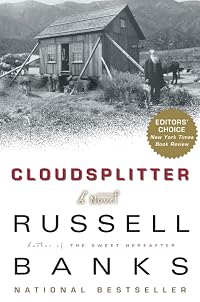
Cloudsplitter
by Russell Banks
On This Page
Description
A triumph of the imagination and a masterpiece of modern storytelling, Cloudsplitter is narrated by the enigmatic Owen Brown, last surviving son of America's most famous and still controversial political terrorist and martyr, John Brown. Deeply researched, brilliantly plotted, and peopled with a cast of unforgettable characters both historical and wholly invented, Cloudsplitter is dazzling in its re-creation of the political and social landscape of our history during the years before the show more Civil War, when slavery was tearing the country apart. But within this broader scope, Russell Banks has given us a riveting, suspenseful, heartbreaking narrative filled with intimate scenes of domestic life, of violence and action in battle, of romance and familial life and death that make the reader feel in astonishing ways what it is like to be alive in that time. show lessTags
Recommendations




Member Recommendations
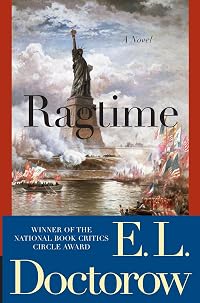
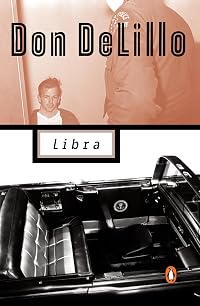
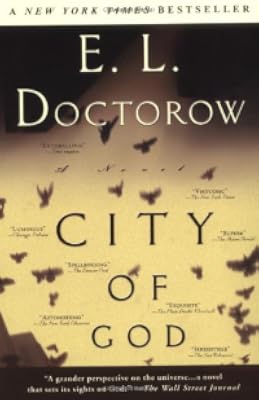
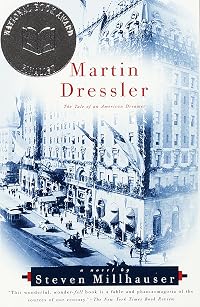
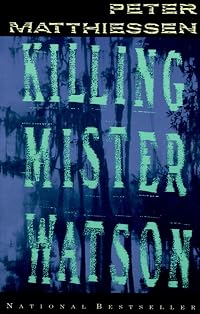
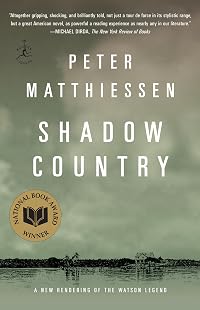
amyblue Midnight Rising is the true story of the Harper's Ferry raid, told by the fantastic Tony Horwitz and Cloudsplitter is the fictionalized account of John Brown's life by Russell Banks.
20

aprille What’s it like to the child of a saint/prophet?

pitjrw Very good at detailing the influential supporters Brown had & the realistic plan at the heart of his actions.
aprille John Brown and Lauren Olamina are both exceptional empaths and religious leaders
Member Reviews
It took me a long time to get up the energy to read this 750 page historical fiction novel about the abolitionist/terrorist/martyr John Brown, but I ended up glad I did. Russell Banks is an excellent writer and had me completely immersed in this family's life and times. The focus of the book is actually Owen Brown, the third son of John Brown. When most people think of this family, they probably think of their time in Kansas and the fight between those who wanted Kansas to be a free state and those who wanted in to be a slave state. And then, of course, the raid on Harpers Ferry. But Banks, instead, explores the growth of the family and their time in the Northeast, meeting other abolitionists, codifying their beliefs, and just trying to show more make ends meet as a large, poor family.
I really liked this approach. I thought it was so interesting to imagine how John Brown and his family came to their beliefs during a time when it was not the norm to actively crusade for an end to slavery. Banks spends 600 pages on this time and a mere 150 on the final, famous events in Kansas and Harpers Ferry. It made the novel unique and presented a more nuanced view of John Brown and his family/followers.
I don't think this book will be for everyone, but if you have an interest in Civil War era, I think it is well worth your time. show less
I really liked this approach. I thought it was so interesting to imagine how John Brown and his family came to their beliefs during a time when it was not the norm to actively crusade for an end to slavery. Banks spends 600 pages on this time and a mere 150 on the final, famous events in Kansas and Harpers Ferry. It made the novel unique and presented a more nuanced view of John Brown and his family/followers.
I don't think this book will be for everyone, but if you have an interest in Civil War era, I think it is well worth your time. show less
“Of all the animals on this planet, we are surely the nastiest, the most deceitful, the most murderous and vile. Despite our God, or because of him. Both.”
John Brown. Those simple words, still conjure up so many conflicting images: abolitionist, terrorist, crusader, madman, insurrectionist and martyr. It still resonates, a century and a half after his death.
There have been many books written on Brown and this is Banks epic, take on this man's story. It is told entirely through the eyes of his third son, Owen, who somehow survived and escaped the raid on Harper's Ferry. He spent the rest of his life as a sheepherder in California.
Yes, this is fiction, something clearly stated in the foreward, but the amount of research Banks must show more have mounted, is truly astounding and his writing is robust, fluid and beautifully-rendered. A true labor of love. An over-looked American classic.
“ We pass between sea and sky with unaccountable, humiliating ease, as if there were no firmament between the firmaments, no above or below, here or there, now or then, with only the feeble conventions of language, our contrived principles, and our love of one another's light to keep our own light from going out; abandon any one of them, and we dissolve in darkness like salt in water.” show less
John Brown. Those simple words, still conjure up so many conflicting images: abolitionist, terrorist, crusader, madman, insurrectionist and martyr. It still resonates, a century and a half after his death.
There have been many books written on Brown and this is Banks epic, take on this man's story. It is told entirely through the eyes of his third son, Owen, who somehow survived and escaped the raid on Harper's Ferry. He spent the rest of his life as a sheepherder in California.
Yes, this is fiction, something clearly stated in the foreward, but the amount of research Banks must show more have mounted, is truly astounding and his writing is robust, fluid and beautifully-rendered. A true labor of love. An over-looked American classic.
“ We pass between sea and sky with unaccountable, humiliating ease, as if there were no firmament between the firmaments, no above or below, here or there, now or then, with only the feeble conventions of language, our contrived principles, and our love of one another's light to keep our own light from going out; abandon any one of them, and we dissolve in darkness like salt in water.” show less
(40) This is quite a book. 760 pages of closely spaced small typeface. It took me forever to read and I often interspersed other reading or only read small chunk. It is definitely fine writing, but dense and slow to develop. This is a biographical novel of John Brown the famous, or infamous abolitionist that conducted the raid at Harper's Ferry that is said to have sparked the Civil War. It is told to us by his surviving son reflecting on his father's actions and his relationship with his father many years later. John Brown is portrayed as a fascinating character - part religious fanatic, part renaissance man, with a dash of loving father mixed in. He seemingly was a courageous visionary standing up and fighting for what was just - the show more end of slavery. But, his zealotry and his egomania along with his bloody actions serve to vilify him.
I have to say, I mostly come down on the side of crazy villain despite the righteousness of his cause - the ends did not justify the means. And interesting Owen's overarching theme that loyalty to family is almost a form of slavery.
Anyway, I digress. The novel is powerful and transformative, but tedious and repetitive at times. Owen is a sympathetic character and one wishes he could have broken free. I think this is an important novel about race from the white perspective - Lyman and Owen's relationship leaves us much to ponder. Will we ever be post-racial in this country? This book suggests we will not.
In any event, if one is ever depressed about the culture of divisiveness in this country; we can feel better at least that it is not the 1850's. A rewarding reading experience that is worth the time commitment, even if it is not always enjoyable. Recommended for lovers of the Civil War time period and historical fiction with gravitas and literary merit. show less
I have to say, I mostly come down on the side of crazy villain despite the righteousness of his cause - the ends did not justify the means. And interesting Owen's overarching theme that loyalty to family is almost a form of slavery.
Anyway, I digress. The novel is powerful and transformative, but tedious and repetitive at times. Owen is a sympathetic character and one wishes he could have broken free. I think this is an important novel about race from the white perspective - Lyman and Owen's relationship leaves us much to ponder. Will we ever be post-racial in this country? This book suggests we will not.
In any event, if one is ever depressed about the culture of divisiveness in this country; we can feel better at least that it is not the 1850's. A rewarding reading experience that is worth the time commitment, even if it is not always enjoyable. Recommended for lovers of the Civil War time period and historical fiction with gravitas and literary merit. show less
This novel is a historical novel in sheep's clothing. What, you may ask, do I mean by that? The title of the novel, Cloudsplitter(1998, finalist for Pulitzer and PEN/Faulkner), suggests that this may well be a biographical novel depicting the life of John Brown, and to a certain extent it is just that; but it is primarily a historical novel about the the antebellum period in America focusing on the Abolitionist movement and John Brown's role in that movement. The insights into the different aspects of abolitionism provide fascinating reading. For example, in his portrayal of Brown in Cloudsplitter, Russell Banks shows how Brown is more interested in the mighty sword than the ringing word. After listening with his son, Owen, to one of show more Emerson's talks in Boston, Brown walks out on the Sage of Concord while the sophisticated crowd applauds wildly:
"That man's truly a boob!" Father blurted. "For the life of me, I can't understand his fame. Unless the whole world is just as foolish as he is. Godless? He's not even rational! You'd think, given his godlessness, his sec-u-laahr-ity, he'd be at least rational," he said, and gave a sardonic laugh. The book is filled with such detail about abolitionism and this makes it a worthwhile read. However, I found that, in spite of its length, the novel ultimately disappointed in its limited portrayal of the most famous episode in Brown's life, the raid on Harper's Ferry. Thus the reader who picks up Cloudsplitter expecting all the details of the life of the epynomous historical figure may be, as I was, somewhat disappointed by the end of the book. show less
"That man's truly a boob!" Father blurted. "For the life of me, I can't understand his fame. Unless the whole world is just as foolish as he is. Godless? He's not even rational! You'd think, given his godlessness, his sec-u-laahr-ity, he'd be at least rational," he said, and gave a sardonic laugh. The book is filled with such detail about abolitionism and this makes it a worthwhile read. However, I found that, in spite of its length, the novel ultimately disappointed in its limited portrayal of the most famous episode in Brown's life, the raid on Harper's Ferry. Thus the reader who picks up Cloudsplitter expecting all the details of the life of the epynomous historical figure may be, as I was, somewhat disappointed by the end of the book. show less
How historically accurate is this? I've no idea, but I would argue that it doesn't matter. This is more a portrayal of Owen Brown's struggle with his own nature and with his famous father, John Brown, with the underlying theme of sacrifice, especially John Brown's sacrifice of his sons on the altar of his belief.
A thread running throughout is Abraham's willingness to sacrifice Issac; Brown seems willing to sacrifice of all his sons, yet in the end, Owen's survival possibly belies that, and raises doubt of Brown's complete conviction in his success at Harper's Ferry, as it is he who arranges for Owen not to be there.
Another reviewer suggests that this book condones terrorism. Far from it, but it certainly reveals what faith in a cause show more and fanatical determination might look like close up.
Amazing book, beautifully written. show less
A thread running throughout is Abraham's willingness to sacrifice Issac; Brown seems willing to sacrifice of all his sons, yet in the end, Owen's survival possibly belies that, and raises doubt of Brown's complete conviction in his success at Harper's Ferry, as it is he who arranges for Owen not to be there.
Another reviewer suggests that this book condones terrorism. Far from it, but it certainly reveals what faith in a cause show more and fanatical determination might look like close up.
Amazing book, beautifully written. show less
Aside from its daunting size (well over 700 pages) this was a treat to read. Owen Brown, the third of John Brown's sons, tells the story of his father's controversial life, beginning with his own childhood. Cloudsplitter opens with a written apology to Miss Mayo, a young Columbia University student who had been rebuffed by Owen after she traveled to his remote mountainside home in Altadena, California in hopes of an interview. After chasing Miss Mayo away Owen is feeling the pressures of mortality, for he is not a young man, and decides to tell his entire story from start to finish. While he is apparently ambivalent to his father's tragic path of life he is also deeply reflective, detailing the process of how his father become of of show more history's most complex antislavery agitators and martyrs. Seeing as how Cloudsplitter is told from the point of view of one of John Brown's sons it is safe to say the story was not meant to be yet another retelling of the famous yet failed raid on Harper's Ferry. It is more accurately an illustration of how one man's beliefs can grow to become the catalyst for one of the most well known events in the anti-slave movement. While Banks' style of writing is, at times, rambling and contradictory (a reflection of Owen's ability to tell the story) he is able to seamlessly weave nonfiction into fiction; reality into imagined to create a vivid political and cultural 19th century landscape. show less
What I expected from Cloudsplitter was historical fiction about the famous abolitionist, John Brown. What I found was a masterful exploration of the relationship between two men, an extraordinary father and his ambivalent son, and their unrelenting struggles - within themselves, with each other, and with a nation that allows the enslavement of human beings.
Cloudsplitter is narrated by John Brown’s third son, Owen, who chronicles his life with his famous father for a biographical researcher. In an Author’s Note, Banks emphasizes that this novel is “a work of the imagination” and “should be read solely as a work of fiction, not as a version or interpretation of history”. Although following the main historical threads of John show more Brown’s life and anti-slavery activities, there are moments of divergence from fact and much added that is speculative and pure invention. But this seems largely irrelevant to Banks’ broader purpose.
John Brown is a complex figure whose single-minded opposition to slavery is both driven and marred by contradictions. Married twice and fathering twenty children, only eleven of whom survive to adulthood, Brown is devoted to his family, but extreme in his expectations of them.
Highly religious, Brown imposes his own interpretation of God’s will in a harsh and severe manner. While intolerant of those who do not meet his strict Christian standards, his own version of faith inexplicably justifies the use of violence to advance his abolitionist cause. Historians have long debated whether John Brown was insane or simply a religious fanatic, a terrorist or a hero. But regardless, at the core of his character is a massive egotism that drives his failed ambition to amass great wealth and ultimately leads him to sacrifice his family and martyr himself to his abolitionist cause.
By comparison, Owen Brown is plagued by doubts. He lacks the unquestioning religious faith of his father and exhibits a rebellious temperament, driven by a desire to find a place and purpose in life that is missing for him. Despite these conflicting emotions, Owen is unable to separate from his father, eventually embracing his fanaticism and becoming his closest advisor and co-conspirator in their final acts of battle. Yet he secretly bears the guilt and responsibility for the accidental death of a freed slave and friend, and carries the crushing knowledge that he is himself not without prejudice and bigotry. And of all the family members, it is Owen that is most aware that his father is flawed, and not the prophet that his followers believe him to be.
The storyline focuses on the decades prior to the 1859 raid on Harpers Ferry, exploring in-depth the development of John Brown’s abolitionist rage while only tangentially addressing the historical significance of this seminal event and its aftermath. Intricately plotted, the narrative follows the Browns through years of harsh conditions and hard work, marked by births and deaths. The family’s 1850 move to North Elba in the Adirondack Mountains is a turning point in their lives - a time of active participation in transporting runaway slaves to safety across the Canadian border, while evading slave-catchers and federal authorities. John and Owen Brown travel extensively during subsequent years, both for business purposes and to seek the support of wealthy abolitionists. During one such trip to Boston, Owen’s sense of faith and purpose are ignited by the excitement of danger and he is “brushed by an angel of the Lord”. His father’s resolve for militant action is strengthened by what he sees as the passivity of Boston’s prominent abolitionists and he develops elaborate plans to establish Kansas as a slavery-free state and to cause the collapse of Virginia’s economy by promoting an armed insurrection of slaves. But in the end, John Brown commits and condones horrific and wholly unnecessary acts of violence, culminating in a failed, armed attack on the federal armory at Harpers Ferry.
Russell Banks has a gift for creating multi-dimensional characters and placing them in real settings and situations. In Cloudsplitter, he reveals the complexities and contradictions inherent in the story of John Brown, while touching on important questions regarding the nature of faith, family, and the ways in which we are enslaved by our beliefs and ambitions. Banks writes in a voice that is both lyrical and stunning in its realism, using language consistent both with the period and with the religious fanaticism of John Brown. Never straying from Owen’s voice, Banks brings the reader into the mind of his narrator with an intensity that sustained my interest through the more than 750 pages of this incredible novel. show less
Cloudsplitter is narrated by John Brown’s third son, Owen, who chronicles his life with his famous father for a biographical researcher. In an Author’s Note, Banks emphasizes that this novel is “a work of the imagination” and “should be read solely as a work of fiction, not as a version or interpretation of history”. Although following the main historical threads of John show more Brown’s life and anti-slavery activities, there are moments of divergence from fact and much added that is speculative and pure invention. But this seems largely irrelevant to Banks’ broader purpose.
John Brown is a complex figure whose single-minded opposition to slavery is both driven and marred by contradictions. Married twice and fathering twenty children, only eleven of whom survive to adulthood, Brown is devoted to his family, but extreme in his expectations of them.
Compared to the rest of us, no matter how hotly burned our individual flame, Father’s was a conflagration. He burned and burned, ceaselessly, it seemed, and though we were sometimes scorched by his flame, we were seldom warmed by it.
Highly religious, Brown imposes his own interpretation of God’s will in a harsh and severe manner. While intolerant of those who do not meet his strict Christian standards, his own version of faith inexplicably justifies the use of violence to advance his abolitionist cause. Historians have long debated whether John Brown was insane or simply a religious fanatic, a terrorist or a hero. But regardless, at the core of his character is a massive egotism that drives his failed ambition to amass great wealth and ultimately leads him to sacrifice his family and martyr himself to his abolitionist cause.
By comparison, Owen Brown is plagued by doubts. He lacks the unquestioning religious faith of his father and exhibits a rebellious temperament, driven by a desire to find a place and purpose in life that is missing for him. Despite these conflicting emotions, Owen is unable to separate from his father, eventually embracing his fanaticism and becoming his closest advisor and co-conspirator in their final acts of battle. Yet he secretly bears the guilt and responsibility for the accidental death of a freed slave and friend, and carries the crushing knowledge that he is himself not without prejudice and bigotry. And of all the family members, it is Owen that is most aware that his father is flawed, and not the prophet that his followers believe him to be.
They all thought me shy, inarticulate, perhaps not as intelligent as they, as they always had anyhow, and they were not wrong. But that did not mean that I did not know the truth about Father and why he did the great, good things and the bad, and why so much of what he did was, at bottom, horrendous, shocking, was wholly evil.
The storyline focuses on the decades prior to the 1859 raid on Harpers Ferry, exploring in-depth the development of John Brown’s abolitionist rage while only tangentially addressing the historical significance of this seminal event and its aftermath. Intricately plotted, the narrative follows the Browns through years of harsh conditions and hard work, marked by births and deaths. The family’s 1850 move to North Elba in the Adirondack Mountains is a turning point in their lives - a time of active participation in transporting runaway slaves to safety across the Canadian border, while evading slave-catchers and federal authorities. John and Owen Brown travel extensively during subsequent years, both for business purposes and to seek the support of wealthy abolitionists. During one such trip to Boston, Owen’s sense of faith and purpose are ignited by the excitement of danger and he is “brushed by an angel of the Lord”. His father’s resolve for militant action is strengthened by what he sees as the passivity of Boston’s prominent abolitionists and he develops elaborate plans to establish Kansas as a slavery-free state and to cause the collapse of Virginia’s economy by promoting an armed insurrection of slaves. But in the end, John Brown commits and condones horrific and wholly unnecessary acts of violence, culminating in a failed, armed attack on the federal armory at Harpers Ferry.
Russell Banks has a gift for creating multi-dimensional characters and placing them in real settings and situations. In Cloudsplitter, he reveals the complexities and contradictions inherent in the story of John Brown, while touching on important questions regarding the nature of faith, family, and the ways in which we are enslaved by our beliefs and ambitions. Banks writes in a voice that is both lyrical and stunning in its realism, using language consistent both with the period and with the religious fanaticism of John Brown. Never straying from Owen’s voice, Banks brings the reader into the mind of his narrator with an intensity that sustained my interest through the more than 750 pages of this incredible novel. show less
Members
- Recently Added By
Lists

1001 Books You Must Read Before You Die
1,448 works; 1,137 members

Best Contemporary Literary Fiction (Around the Last 30 Years)
400 works; 124 members

Pulitzer Prize for Fiction - Finalists
88 works; 9 members

Pen/Faulkner Winners and Finalists
178 works; 9 members

Books Read in 2023
5,638 works; 147 members
Author Information

40+ Works 11,950 Members
The oldest of four children, Russell Banks spent his childhood and adolescence in New Hampshire and Eastern Massachusetts. His blue collar, working class background is strongly reflected in his writing. The first in his family to attend college, Banks studied at Colgate University and later graduated Phi Beta Kappa from the University of North show more Carolina, at Chapel Hill. While he was establishing himself as a writer, Banks spent time as a plumber, shoe salesman, and a window dresser. Banks's titles include Searching for Survivors, Family Life, Hamilton Stark, The New World, The Book of Jamaica, Trailerpark, The Relation of My Imprisonment, Continental Drift, Success Stories, Affliction, The Sweet Hereafter and Dreaming Up America. Banks has also written numerous poems, stories, and essays. Banks is the recipient of several awards and prizes. Among his accolades are the St. Lawrence Award for Short Fiction, the John Dos Passos Award, and the Literature Award from the American Academy of Arts and Letters. In 1986, Continental Drift was a finalist for the Pulitzer Prize. (Bowker Author Biography) show less
Awards and Honors
Awards
Distinctions
Common Knowledge
- Canonical title
- Cloudsplitter
- Original publication date
- 1998
- People/Characters
- Fred Brown; Jason Brown; John Brown, abolitionist; John Brown, Jr.; Mary Brown; Owen Brown (show all 9); Ruth Brown; Lyman Epps; Susan Epps
- Important places
- USA; New York, USA; North Elba, New York, USA
- Important events
- Pottawatomie Massacre (1856); John Brown's raid on Harpers Ferry (1859); Abolitionist Movement
- Epigraph
- . . . and I only am escaped alone to tell thee.
JOB 1:16 - Dedication
- For C.T., the beloved,
and in memory of William Matthews (1942 - 1997) - First words
- Upon waking this cold, gray morning from a troubled sleep, I realized for the hundredth time, but this time with deep conviction, that my words and behavior towards you were disrespectful, and rude and selfish as well.
This is a work of the imagination. (Author's Note) - Last words
- (Click to show. Warning: May contain spoilers.)The trees were blue-black and flattened in the moonlight, and the fields seemed to be covered with a skin of powdery snow.
- Original language
- English
Classifications
Statistics
- Members
- 1,840
- Popularity
- 11,862
- Reviews
- 33
- Rating
- (3.87)
- Languages
- 5 — English, French, German, Portuguese, Spanish
- Media
- Paper, Audiobook, Ebook
- ISBNs
- 24
- ASINs
- 12