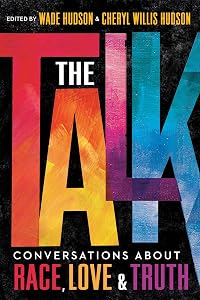
The Talk: Conversations about Race, Love, and Truth
by Wade Hudson (Editor), Cheryl Willis Hudson (Editor)
On This Page
Description
"Thirty diverse and award-winning authors and illustrators capture frank discussions about racism, identity, and self-esteem"--Tags
Recommendations









Member Reviews
Each brief piece in this concise collection packs a punch. Many are in the form of letters or poems to the creators' children, or conversations (real or imagined) with them. Authors/artists are African-American, immigrants, bilingual, Jewish, Cherokee, and more; "The Talk" varies depending on the background and identity, and this variety and complexity is what makes this such a valuable collection. Everyone in the U.S. must confront the role of racism and prejudice in our lives and the lives of others.
Quotes
Measures of success in the mainstream culture of the U.S. do not mirror ours....Achievements in school or at work are never more important than caring about other living creatures. ("The Way of the Anigiduwagi," Traci Sorrell, show more 29-30)
At different times throughout history, selfish men have created unjust, racist laws and have spread racist attitudes as a way to divide the people they take advantage of. ("Why Are There Racist People?" Duncan Tonatiuh, 42)
Racism is wrong. It is important to condemn it, but it is also important to think critically and ask where racism comes from....Recognizing our similarities is a powerful way to combat prejudice. (46-47)
I do not want to raise you to be afraid.
But I do want you to be aware.
I want to help you grow.
I want to help you move through the world outside. ("My Olmec," Selina Alko, 60)
Our words are beautiful. Our words belong here. They give you more ways to understand the people around you....Remember that no language is better than another. No tongue makes one person more real or more important that someone else. And no great country ever tried to silence its people or make them all the same. ("Hablar," Meg Medina, 91)
"Being a polluter is a lot like being a racist. I hate pollution. And I hate racism. But I sit here and I benefit from them both." ("Our Inheritance," Adam Gidwitz, 101)
"Some folk will always
call you outside your name,"
she explained.
"Honey,
you can't stop hateful people
slinging hurtful words
like stones.
But who says
you have to pick them up
and put them in your pocket?"
("Tough Tuesday," Nikki Grimes, 106)
And while I want you to be aware of potential danger, you have also been born with tremendous privileges, things that could make you unaware of other people's struggles. We all have important issues that we are initially unaware of, but it is our responsibility to learn. Obliviousness is not an excuse. ("The Road Ahead," Minh Lê, 111)
Stories have such long ghosts. ("Mazes," Christopher Myers, 120) show less
Quotes
Measures of success in the mainstream culture of the U.S. do not mirror ours....Achievements in school or at work are never more important than caring about other living creatures. ("The Way of the Anigiduwagi," Traci Sorrell, show more 29-30)
At different times throughout history, selfish men have created unjust, racist laws and have spread racist attitudes as a way to divide the people they take advantage of. ("Why Are There Racist People?" Duncan Tonatiuh, 42)
Racism is wrong. It is important to condemn it, but it is also important to think critically and ask where racism comes from....Recognizing our similarities is a powerful way to combat prejudice. (46-47)
I do not want to raise you to be afraid.
But I do want you to be aware.
I want to help you grow.
I want to help you move through the world outside. ("My Olmec," Selina Alko, 60)
Our words are beautiful. Our words belong here. They give you more ways to understand the people around you....Remember that no language is better than another. No tongue makes one person more real or more important that someone else. And no great country ever tried to silence its people or make them all the same. ("Hablar," Meg Medina, 91)
"Being a polluter is a lot like being a racist. I hate pollution. And I hate racism. But I sit here and I benefit from them both." ("Our Inheritance," Adam Gidwitz, 101)
"Some folk will always
call you outside your name,"
she explained.
"Honey,
you can't stop hateful people
slinging hurtful words
like stones.
But who says
you have to pick them up
and put them in your pocket?"
("Tough Tuesday," Nikki Grimes, 106)
And while I want you to be aware of potential danger, you have also been born with tremendous privileges, things that could make you unaware of other people's struggles. We all have important issues that we are initially unaware of, but it is our responsibility to learn. Obliviousness is not an excuse. ("The Road Ahead," Minh Lê, 111)
Stories have such long ghosts. ("Mazes," Christopher Myers, 120) show less
Through an illustrated collection of letters, poems, short stories, and essays, thirty diverse authors and illustrators address young people in discussions on racism, identity, and self-esteem in The Talk: Conversations about Race, Love & Truth, edited by Wade Hudson and Cheryl Willis Hudson.
Let me point out first that the diverse people speaking through this book aren't only Black people. In this collection are the voices of a variety of people of color as well as white, Jewish authors.
While I found the book labeled as a young adult book, I'd say it's more of a family book—something suitable for young people around the ages of 10 to 16 to read and/or discuss with trusted adults in their lives. Not every point in the book matches my show more personal view, but that's all right, since this isn't a book of advice simply for swallowing. The authors' words are meant to help people engage in critical thinking...
...to realize that racism isn't only a matter of feeling hatred for folks and that it isn't only the problem of people of color. To realize the connections between racism and greed. To realize racism is also the problem of people who benefit from it, even if they've done so unwittingly.
To realize there are ways forward.
And for young people of color in particular, there's encouragement here about choosing their battles. About finding productive ways to deal with their pain and anger. About knowing who they are despite how other ill-meaning or well-meaning people may wrongly identify them.
It's a book for people willing to heed the call not to be indifferent or merely regretful about racism but to be anti-racist and advocates for needful change. show less
Let me point out first that the diverse people speaking through this book aren't only Black people. In this collection are the voices of a variety of people of color as well as white, Jewish authors.
While I found the book labeled as a young adult book, I'd say it's more of a family book—something suitable for young people around the ages of 10 to 16 to read and/or discuss with trusted adults in their lives. Not every point in the book matches my show more personal view, but that's all right, since this isn't a book of advice simply for swallowing. The authors' words are meant to help people engage in critical thinking...
...to realize that racism isn't only a matter of feeling hatred for folks and that it isn't only the problem of people of color. To realize the connections between racism and greed. To realize racism is also the problem of people who benefit from it, even if they've done so unwittingly.
To realize there are ways forward.
And for young people of color in particular, there's encouragement here about choosing their battles. About finding productive ways to deal with their pain and anger. About knowing who they are despite how other ill-meaning or well-meaning people may wrongly identify them.
It's a book for people willing to heed the call not to be indifferent or merely regretful about racism but to be anti-racist and advocates for needful change. show less
An honest and heartwarming anthology of conversations about identity, inheritance, and experiences that parents must talk about with their children.
A collection of thirty diverse stories and images that are filled with love, acceptance, truth, peace, and assurance that there can be hope for a better tomorrow and a better future for all. These stories cover topics about racism, identity, and self-esteem. Each story varies in quality but many are thoughtful, considered, and intentional. Some entries that were written like individual letters to children were less engaging but overall the material was encouraging and engaging. My favorite story was the poem by Nikkie Grimes titled Tough Tuesday. "You can't stop hateful people slinging hateful words like stones. But who says that you have to pick them up and put them in your pocket?" This book would make a good nighttime read with older show more children followed by a discussion about each topic.
Contains:
"Remember This" / by Renée Watson, illustrated by Shadra Strickland -- "Handle Your Business" / by Derrick Barnes, illustrated by Gordon C. James -- "Not a China Doll" / by Grace Lin -- "The Bike" / by Wade Hudson, illustrated by E. B. Lewis -- "The Way of the Anigiduwagi" / by Traci Sorell, illustrated by MaryBeth Timothy -- Untitled / by Daniel Nayeri, illustrated by Zeke Peña -- "Why Are There Racist People?" / by Duncan Tonatiuh -- "Never Be Afraid to Soar" / by Valerie Wilson Wesley, illustrated by Don Tate -- "My Olmec" / by Selina Alko -- "F.R.I.E.N.D.S.: Looking Back, Looking Forward" / by Torrey Maldonado, illustrated by Natacha Bustos -- "TEN" / by Tracey Baptiste, illustrated by April Harrison -- "I'm a Dancer" / by Sharon Dennis Wyeth, illustrated by Raul Colón -- "Hablar" / by Meg Medina, illustrated by Rudy Gutierrez -- "Our Inheritance" / by Adam Gidwitz, illustrated by Peter H. Reynolds -- "Tough Tuesday" / by Nikki Grimes, illustrated by Erin K. Robinson -- "The Road Ahead" /by Minh Lê, illustrated by Cozbi A. Cabrera -- "Mazes" / by Christopher Myers. show less
Contains:
"Remember This" / by Renée Watson, illustrated by Shadra Strickland -- "Handle Your Business" / by Derrick Barnes, illustrated by Gordon C. James -- "Not a China Doll" / by Grace Lin -- "The Bike" / by Wade Hudson, illustrated by E. B. Lewis -- "The Way of the Anigiduwagi" / by Traci Sorell, illustrated by MaryBeth Timothy -- Untitled / by Daniel Nayeri, illustrated by Zeke Peña -- "Why Are There Racist People?" / by Duncan Tonatiuh -- "Never Be Afraid to Soar" / by Valerie Wilson Wesley, illustrated by Don Tate -- "My Olmec" / by Selina Alko -- "F.R.I.E.N.D.S.: Looking Back, Looking Forward" / by Torrey Maldonado, illustrated by Natacha Bustos -- "TEN" / by Tracey Baptiste, illustrated by April Harrison -- "I'm a Dancer" / by Sharon Dennis Wyeth, illustrated by Raul Colón -- "Hablar" / by Meg Medina, illustrated by Rudy Gutierrez -- "Our Inheritance" / by Adam Gidwitz, illustrated by Peter H. Reynolds -- "Tough Tuesday" / by Nikki Grimes, illustrated by Erin K. Robinson -- "The Road Ahead" /by Minh Lê, illustrated by Cozbi A. Cabrera -- "Mazes" / by Christopher Myers. show less
Gr 5 Up—Noteworthy authors and familiar illustrators contribute to a powerful work that examines topics such as
racism and cultural identity. The emotionally engaging content uses a variety of formats to illuminate antiracist
advocacy.
racism and cultural identity. The emotionally engaging content uses a variety of formats to illuminate antiracist
advocacy.
RGG: Important, emotional, honest. But will students enjoy reading this themselves or is it better as an parent read-aloud. Reading Interest: 8-12.
RGG: Important, emotional, honest. But will students enjoy reading this themselves or is it better as an parent read-aloud. Reading Interest: 8-12.
Members
- Recently Added By
Lists

NEW BOOKS - Winter 2020
12 works; 1 member
Author Information


All Editions
Awards and Honors
Awards
Distinctions
Notable Lists
Common Knowledge
- Canonical title
- The Talk: Conversations about Race, Love, and Truth
- Original publication date
- 2020
- Important places
- United States of America
Classifications
- Genres
- Tween, Nonfiction, Kids
- DDC/MDS
- 305.800973 — Society, government, & culture Social sciences, sociology & anthropology Social group - Age, Gender, Ethnicity Ethnic and national groups standard subdivisions / Ethnic and national groups with ethnic origins from more than one continent, of European descent standard subdivisions Biography And History North America United States
- LCC
- E185.61 .T19 — History of the United States United States Elements in the population Afro-Americans Status and development since emancipation
- BISAC
Statistics
- Members
- 220
- Popularity
- 148,434
- Reviews
- 9
- Rating
- (4.13)
- Languages
- English
- Media
- Paper, Audiobook, Ebook
- ISBNs
- 7
- ASINs
- 1