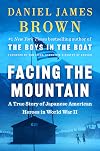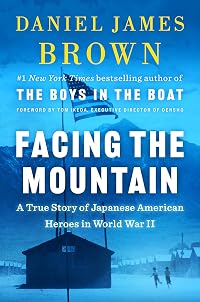
Facing the Mountain: A True Story of Japanese American Heroes in World War II
by Daniel James Brown
On This Page
Description
"From the #1 New York Times bestselling author of The Boys in the Boat, a gripping World War II saga of patriotism and courage: the special Japanese-American Army unit that overcame brutal odds in Europe; their families, incarcerated in camps back home; and a young man who refused to surrender his constitutional rights, even if it meant imprisonment. They came from across the continent and Hawaii. Their parents taught them to embrace both their Japanese heritage and the ways of their show more American homeland. They faced bigotry, yet they believed in their bright futures as American citizens. But within days of Pearl Harbor, the FBI was ransacking their houses and locking up their fathers. Within months many would themselves be living in internment camps. Facing the Mountain is an unforgettable chronicle of war-time America and the battlefields of Europe. Based on Daniel James Brown's extensive interviews with the families of the protagonists as well as deep archival research, it portrays the kaleidoscopic journey of four Japanese-American families and their sons, who volunteered for 442nd Regimental Combat Team and were deployed to France, Germany, and Italy, where they were asked to do the near impossible. But this is more than a war story. Brown also tells the story of these soldiers' parents, immigrants who were forced to shutter the businesses, surrender their homes, and submit to life in concentration camps on U.S. soil. Woven throughout is the chronicle of a brave young man, one of a cadre of patriotic resisters who stood up against their government in defense of their own rights. Whether fighting on battlefields or in courtrooms, these were Americans under unprecedented strain, doing what Americans do best--striving, resisting, pushing back, rising up, standing on principle, laying down their lives, and enduring"-- show lessTags
Recommendations




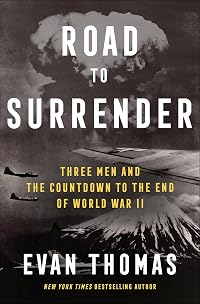
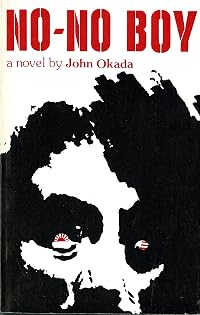


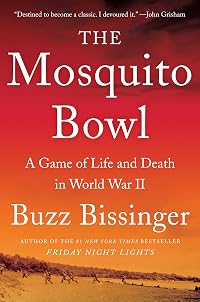
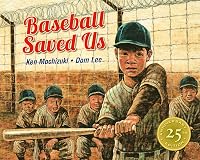


Member Recommendations

Member Reviews
I walked into my local library in Little Boston and as I was checking out the librarian asked if I had read enough books over the summer to qualify for the adult summer reading program.
Hell yeah, you bet I read enough.
I was awarded the choice of picking a free book and I chose Daniel James Brown's book Facing the Mountain: A True Story of American Heroes in the World. I'm so glad to have stumbled upon this excellent book about the Japanese American internment camps and the young men who despite all the hate thrown at them showed up and punched the Nazis and helped liberate Europe.
The sadness in reading this book is the realization of how far we have not come on our own soil.
In the epilogue, Brown quoted a letter from Truman to Eleanor show more Roosevelt about attacks against returning Japanese American families to their communities, "These disgraceful actions almost make you believe that a lot of our Americans have a streak of Nazi in them."
I like to hold on to this quote from the author also in the epilogue, "In the end, they helped us win for us a far better world than the one in which they found themselves when Japanese bombers first appeared over Pearl Harbor on the morning of December 7, 1941. Now, more than a generation later, it is up to us to cherish and protect what they won, to devote ourselves yet again to the principles they defended, to surmount our own mountains of trouble, to keep moving upward together on the long slope of our shared destiny." show less
Hell yeah, you bet I read enough.
I was awarded the choice of picking a free book and I chose Daniel James Brown's book Facing the Mountain: A True Story of American Heroes in the World. I'm so glad to have stumbled upon this excellent book about the Japanese American internment camps and the young men who despite all the hate thrown at them showed up and punched the Nazis and helped liberate Europe.
The sadness in reading this book is the realization of how far we have not come on our own soil.
In the epilogue, Brown quoted a letter from Truman to Eleanor show more Roosevelt about attacks against returning Japanese American families to their communities, "These disgraceful actions almost make you believe that a lot of our Americans have a streak of Nazi in them."
I like to hold on to this quote from the author also in the epilogue, "In the end, they helped us win for us a far better world than the one in which they found themselves when Japanese bombers first appeared over Pearl Harbor on the morning of December 7, 1941. Now, more than a generation later, it is up to us to cherish and protect what they won, to devote ourselves yet again to the principles they defended, to surmount our own mountains of trouble, to keep moving upward together on the long slope of our shared destiny." show less
Many of the Nisei men incarcerated in America's WWII concentration camps chose to go to war for their country. Some chose to fight for America in court by challenging the unconstitutional anti-Japanese-American laws such as curfews and conscription. To Daniel James Brown's credit, this epic history deals with both.
In "The Boys in the Boat", Brown had little choice but to focus on one of the crew, whose life was more thoroughly documented. For "Facing The Mountain", he had many sources and was able to tell a much wider-ranging story. He keeps the story moving along well; once he has introduced his main characters (and he does that so well that they are unforgettable and not easily mistaken), he narrates their adventures in parallel so we show more don't lose sight of any one of them, yet we don't have too much going on at once. He also manages to introduce many secondary characters who also are memorable individuals. Some fiction writers could and should take lessons from him.
At well over 600 pages (700 counting the notes and other end material), this is an epic. But even if the pace (or one's attention span) starts to flag at times, it's absolutely worth finishing. The last two chapters are some of the best writing in the book, dealing with the liberation of the German concentration camps and with the aftermath of the War when the young soldiers returned to find their families struggling and racism rampant. I was moved to tears. show less
In "The Boys in the Boat", Brown had little choice but to focus on one of the crew, whose life was more thoroughly documented. For "Facing The Mountain", he had many sources and was able to tell a much wider-ranging story. He keeps the story moving along well; once he has introduced his main characters (and he does that so well that they are unforgettable and not easily mistaken), he narrates their adventures in parallel so we show more don't lose sight of any one of them, yet we don't have too much going on at once. He also manages to introduce many secondary characters who also are memorable individuals. Some fiction writers could and should take lessons from him.
At well over 600 pages (700 counting the notes and other end material), this is an epic. But even if the pace (or one's attention span) starts to flag at times, it's absolutely worth finishing. The last two chapters are some of the best writing in the book, dealing with the liberation of the German concentration camps and with the aftermath of the War when the young soldiers returned to find their families struggling and racism rampant. I was moved to tears. show less
The tragedy of Japanese-American citizens in World War II, who played on the sports teams, practiced in the bands, fiddled around with hot rods, and who were in all respects exactly like their friends of English – or German or Italian – ancestry. Except the Japanese were rounded up and sent to concentration camps. They weren’t death camps, to be sure – there wasn’t an American Auschwitz or Kolyma – but it wasn’t any fun and was certainly a national disgrace. The story covers the young guys – who mostly ended up in the 100th Infantry Battalion (from Hawaii) or the 442nd Regimental Combat Team (from everywhere else); their parents and sister, who ended up in the camps; and the few who resisted all this.
Last first: Gordon show more Hirabayashi filed suit against incarceration and curfew requirements – it went all the way to the Supreme Court. They ruled unanimously that “wartime conditions justified racial discrimination”. Hirabayashi continued peaceful protest; he was sentenced to a work camp but it was inside the Japanese exclusion zone in Washington state. The next closest camp was near Tucson, Arizona; in one of those Catch-22 things, the US government didn’t have the to send him there yet couldn’t keep him in Washington. Hirabayashi volunteered to hitchhike to Arizona, and the puzzled Washington officials let him go. Some time later, after various minor confrontations on the way, he showed up in Tucson. Tucson police had no paperwork for him and tried to send him back to Washington; Hirabayashi suggested they call Spokane and Seattle and promised to come back later. He eventually did end up in the Santa Catalina Honor Camp.
The relatives were puzzled by the whole thing. The older issei generally accepted their fate stoically, spending their time on various crafts – carving wooded figures was popular. The women patched up the tar-paper shacks and made them neat households.
The boys went off to train. The Hawaiians and the mainlanders initially didn’t get along; mainlanders called Hawaiians “Buddhaheads” and Hawaiians called mainlanders “katonks” – after the sound a coconut makes when you hit it. There were fights between the two groups. Things settled down when the commander arranged a dance with local interned girls - presumable sending hormonal energy elsewhere - and when combat training actually started. Ironically the training camps were in Mississippi, where everybody suffered from cognitive dissonance; the locals couldn’t figure out if Japanese-Americans counted as “colored” or not.
It’s noted that Japanese-American internment had some unusual responses from American politicians. Earl Warren, then the Attorney General of California, was very much in favor of internment and argued that the lack of any actual sabotage by Japanese-Americans meant that they were holding back so they could do a massive blow. Political pundit Walter Lippman took the same attitude. On the other hand, J. Edgar Hoover – not normally considered a champion of civil liberties – argued that internment was unconstitutional and should be handled on a case-by-case basis, if at all.
Once in Europe and actual combat the 442nd RCT (now merged with the 100th infantry battalion) distinguished itself as the most highly decorated unit of its size in US history (and still is). The book is full of individual stories of breathtaking heroism; some of the white commanders of the unit were accused of using it as cannon fodder (at an awards ceremony in 1944, General John Dahlquist angrily berated Colonel Miller, the unit commander, for only having a paltry 26 men show up to receive decorations. Miller tightly responded “This is all I have left”.)
After the war the 442nd didn’t do much better; their homes and farms had often been confiscated and they were still refused jobs and recognition – in particular, being denied membership in the VFW and American Legion.
Sad, moving and inspiring. Author Daniel James Brown keeps the narrative moving and easily readable. Brown’s previous works include Under a Flaming Sky, about the 1894 Hinkley Minnesota firestorm, and The Indifferent Stars Above, about the Donner Party. show less
Last first: Gordon show more Hirabayashi filed suit against incarceration and curfew requirements – it went all the way to the Supreme Court. They ruled unanimously that “wartime conditions justified racial discrimination”. Hirabayashi continued peaceful protest; he was sentenced to a work camp but it was inside the Japanese exclusion zone in Washington state. The next closest camp was near Tucson, Arizona; in one of those Catch-22 things, the US government didn’t have the to send him there yet couldn’t keep him in Washington. Hirabayashi volunteered to hitchhike to Arizona, and the puzzled Washington officials let him go. Some time later, after various minor confrontations on the way, he showed up in Tucson. Tucson police had no paperwork for him and tried to send him back to Washington; Hirabayashi suggested they call Spokane and Seattle and promised to come back later. He eventually did end up in the Santa Catalina Honor Camp.
The relatives were puzzled by the whole thing. The older issei generally accepted their fate stoically, spending their time on various crafts – carving wooded figures was popular. The women patched up the tar-paper shacks and made them neat households.
The boys went off to train. The Hawaiians and the mainlanders initially didn’t get along; mainlanders called Hawaiians “Buddhaheads” and Hawaiians called mainlanders “katonks” – after the sound a coconut makes when you hit it. There were fights between the two groups. Things settled down when the commander arranged a dance with local interned girls - presumable sending hormonal energy elsewhere - and when combat training actually started. Ironically the training camps were in Mississippi, where everybody suffered from cognitive dissonance; the locals couldn’t figure out if Japanese-Americans counted as “colored” or not.
It’s noted that Japanese-American internment had some unusual responses from American politicians. Earl Warren, then the Attorney General of California, was very much in favor of internment and argued that the lack of any actual sabotage by Japanese-Americans meant that they were holding back so they could do a massive blow. Political pundit Walter Lippman took the same attitude. On the other hand, J. Edgar Hoover – not normally considered a champion of civil liberties – argued that internment was unconstitutional and should be handled on a case-by-case basis, if at all.
Once in Europe and actual combat the 442nd RCT (now merged with the 100th infantry battalion) distinguished itself as the most highly decorated unit of its size in US history (and still is). The book is full of individual stories of breathtaking heroism; some of the white commanders of the unit were accused of using it as cannon fodder (at an awards ceremony in 1944, General John Dahlquist angrily berated Colonel Miller, the unit commander, for only having a paltry 26 men show up to receive decorations. Miller tightly responded “This is all I have left”.)
After the war the 442nd didn’t do much better; their homes and farms had often been confiscated and they were still refused jobs and recognition – in particular, being denied membership in the VFW and American Legion.
Sad, moving and inspiring. Author Daniel James Brown keeps the narrative moving and easily readable. Brown’s previous works include Under a Flaming Sky, about the 1894 Hinkley Minnesota firestorm, and The Indifferent Stars Above, about the Donner Party. show less
This is an extremely unsettling book about racial bigotry in all its ugliness. During WWII, Japanese and Japanese Americans were interned in camps, euphemistically called “relocation centers.” The camps were surrounded by barbed wire watchtowers, similar to what one would find in a prison. These people were stripped of their civil rights, and lost their homes, businesses, and possessions. The author focuses on individuals and families whose lives were disrupted.
Eventually, the need for more combat troops resulted in the formation of the 442nd Regimental Combat Team, a racially segregated unit of Japanese Americans. This account highlights the experiences of four men, three of whom served in the unit. The unit’s experiences and show more achievements are impressive.
The author based his account on interviews, archives, and recorded voices. He relates history through telling the stories of the people who lived through it. It is an impressive work and particularly pertinent as a warning to safeguard against erosion of civil liberties. show less
Eventually, the need for more combat troops resulted in the formation of the 442nd Regimental Combat Team, a racially segregated unit of Japanese Americans. This account highlights the experiences of four men, three of whom served in the unit. The unit’s experiences and show more achievements are impressive.
The author based his account on interviews, archives, and recorded voices. He relates history through telling the stories of the people who lived through it. It is an impressive work and particularly pertinent as a warning to safeguard against erosion of civil liberties. show less
The title of the book, “Facing the Mountain: The True Story of Japanese American Heroes in World War II” likely causes someone who hasn’t read the book to assume this is the story of Japanese American soldiers in WW II. And that is true, but it’s only half the story. The other half of Daniel James Brown’s (also authored the best seller “Boys in the Boat”) book tells one of American’s darkest stories since slavery—the incarceration of Japanese, including American citizens of Japanese descent, in concentration camps after the attack on Pearl Harbor on Dec. 7, 1941. Most Americans are well aware that the U.S. government herded Japanese citizens into camps, but not many know the story of the sons of those Japanese show more Americans who fought, many heroically, in the fiercest battles of World War II. The men of the 442nd Regimental Combat Team fought in France, Germany, and Italy where their missions were virtually impossible, and, although their casualties were huge, in each battle, they achieved the impossible victory. One severely injured soldier was back home in the states. On crutches, he walked into a barber shop before going to see his parents. A sign in the window said, “No Japs allowed!” Obviously recovering from injuries suffered in the war (he was in full uniform), the owner of the shop came up to him, grabbed him and physically threw him and his crutches out into the street. That is the respect members of the 442nd got. Finally after decades of essentially ignoring the unit’s incredible achievements, the U.S. government finally recognized their heroism and awarded Presidential Medals to many in the unit. Among the many veterans of the 442nd who went to law school and then entered public service, Hawaiian senator Daniel Inoue (1924-2012) served his state and the nation in the Senate from 1963 to 2012. Inoue lost his right arm in one of the bloodiest battles the 442nd fought. Inoue was posthumously awarded the Presidential Medal of Freedom. The story of Inoue and the rest of the unit is told with amazing detail by Brown with the same dignity as “Boys in the Boat.” This is a book every American should take the time to read. show less
This is an extremely unsettling book about racial bigotry in all its ugliness. During WWII, Japanese and Japanese Americans were interned in camps, euphemistically called “relocation centers.” The camps were surrounded by barbed wire watchtowers, similar to what one would find in a prison. These people were stripped of their civil rights, and lost their homes, businesses, and possessions. The author focuses on individuals and families whose lives were disrupted.
Eventually, the need for more combat troops resulted in the formation of the 442nd Regimental Combat Team, a racially segregated unit of Japanese Americans. This account highlights the experiences of four men, three of whom served in the unit. The unit’s experiences and show more achievements are impressive.
The author based his account on interviews, archives, and recorded voices. He relates history through telling the stories of the people who lived through it. It is an impressive work and particularly pertinent as a warning to safeguard against erosion of civil liberties. show less
Eventually, the need for more combat troops resulted in the formation of the 442nd Regimental Combat Team, a racially segregated unit of Japanese Americans. This account highlights the experiences of four men, three of whom served in the unit. The unit’s experiences and show more achievements are impressive.
The author based his account on interviews, archives, and recorded voices. He relates history through telling the stories of the people who lived through it. It is an impressive work and particularly pertinent as a warning to safeguard against erosion of civil liberties. show less
When Japan attacked Pearl Harbor on Dec. 7, 1941, a series of events and political decision were set in motion, leading to an exclusion zone, Japanese internment of immigrants and American citizens, and also the creation of a completely Japanese American fighting force in Europe.
Daniel James Brown, author of The Boys in the Boat delves into the story of the 442nd infantry, using materials from the Densho project and other primary sources, told most often through the experiences of Kats, Rudy, Fred, and Gordon. The first three fought in Europe; Gordon was a Quaker and conscientious objector who went to court - and prison - over refusing to capitulate to race-based curfews and quietly but firmly insisting on his rights as an American.
At show more first, I was overwhelmed by the details and back stories that Brown brings in, trying to keep everything - and everyone - straight in my head. I had to write down the characteristics of the four main men that he follows. I found some chapters downright tedious. But then they get to Europe, and the writing really takes off as you learn about what happened as they fight in Italy and Germany, contrasted with what was happening at home, where - as bravely as they fought in the war - there was still racism and unfair treatment. I actually wanted more when it ended. show less
Daniel James Brown, author of The Boys in the Boat delves into the story of the 442nd infantry, using materials from the Densho project and other primary sources, told most often through the experiences of Kats, Rudy, Fred, and Gordon. The first three fought in Europe; Gordon was a Quaker and conscientious objector who went to court - and prison - over refusing to capitulate to race-based curfews and quietly but firmly insisting on his rights as an American.
At show more first, I was overwhelmed by the details and back stories that Brown brings in, trying to keep everything - and everyone - straight in my head. I had to write down the characteristics of the four main men that he follows. I found some chapters downright tedious. But then they get to Europe, and the writing really takes off as you learn about what happened as they fight in Italy and Germany, contrasted with what was happening at home, where - as bravely as they fought in the war - there was still racism and unfair treatment. I actually wanted more when it ended. show less
Members
- Recently Added By
Lists

Books Read in 2024
4,727 works; 128 members

Top Five Books of 2024
795 works; 264 members

History: Asia
103 works; 1 member

Book Review Roundup
254 works; 2 members

History: War & Terrorism
64 works; 1 member

Japanese Internment after Pearl Harbor
14 works; 1 member
Author Information

6 Works 9,650 Members
Daniel James Brown was born in Berkeley, California. He received a Bachelor of Arts degree in English at the University of California at Berkeley and a Master of Arts degree from the University of California at Los Angeles. He has taught writing at San Jose State University and Stanford University. He is the author of The Indifferent Stars Above: show more The Harrowing Saga of a Donner Party Bride, Under a Flaming Sky: The Great Hinckley Firestorm of 1894, and The Boys in the Boat. (Bowker Author Biography) show less
Awards and Honors
Awards
Distinctions
Common Knowledge
- Important events
- World War II
- Epigraph
- You know, to me, I felt all the guys who didn't make it, I hope they're watching from heaven so that they, too, can enjoy and say, "Look what we have done."
Rudy Tokiwa
March 24, 2002 - Dedication
- To Kats and Rudy and Fred and Gordon
And all those who held aloft the light of liberty
And led us over the mountain
when the darkness came - First words
- One of the many pleasures of writing a book like this is meeting the extraordinary people who have lived the story you are telling.
- Last words
- (Click to show. Warning: May contain spoilers.)As he presented the medal, Obama quoted from Gordon himself: "Unless citizens are willing to stand up for the Constitution it's not worth the paper it's written on."
Classifications
Statistics
- Members
- 567
- Popularity
- 52,166
- Reviews
- 27
- Rating
- (4.49)
- Languages
- English
- Media
- Paper, Audiobook, Ebook
- ISBNs
- 16
- ASINs
- 2