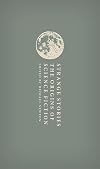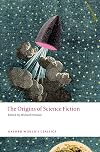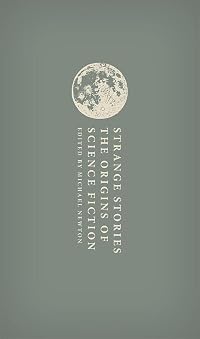
The Origins of Science Fiction (Oxford World's Classics Hardback Collection)
by Michael Newton
On This Page
Description
This anthology gathers together seventeen gripping tales from the nineteenth and early twentieth century that make up the foundations of science fiction.Tags
Recommendations



















Member Reviews
[b:The Origins of Science Fiction|123758962|The Origins of Science Fiction (Oxford World's Classics)|Michael Newton|https://i.gr-assets.com/images/S/compressed.photo.goodreads.com/books/1680077479l/123758962._SY75_.jpg|145139733] was another choice from the library's new acquisitions shelf and one that I subsequently chatted with a librarian about. It is of course a matter of contention when the 'first' science fiction was written, as the introduction to this excellent collection acknowledges. Both librarian and introduction mentioned Lucian of Samoasta's 2nd century account of a trip to the moon. However the editor here, Michael Newton, chose the stories on the basis that science fiction in the form we understand it today depends upon show more the existence of science. Until the enlightenment conception of science as a systematic means of investigating and understanding the world came into existence, narratives of exploring space and strange other words were more along the lines of fantastical, supernatural, or allegorical fiction. I tend to distinguish between weird fiction that is predominantly sci-fi (a term I hyphenate or not inconsistently, sorry) or fantasy or supernatural based on the underlying vibes. To determine whether fiction is sci-fi ask questions like, is the narrative interested in how the weird things are happening? Is the weirdness grounded in physical limitations and rules? Is it extrapolated from scientific understanding at the time of writing?
The excellent introduction and copious endnotes to [b:The Origins of Science Fiction|123758962|The Origins of Science Fiction (Oxford World's Classics)|Michael Newton|https://i.gr-assets.com/images/S/compressed.photo.goodreads.com/books/1680077479l/123758962._SY75_.jpg|145139733] primes you to read the stories synoptically, so I did. The otherwise undistinguished tale by Sir Arthur Conan Doyle, 'The Terror of Blue John Gap', demonstrates most succinctly and effectively how to differentiate a sci-fi narrative from other genres. Its plot has been classic for thousands of years: man goes into a cave and encounters a weird monster. If the protagonist had deemed the weird monster a demon, the story would be supernatural or fantastical. In Conan Doyle's version, there is instead an explanation based on underground lakes and evolved cave bears - this is what makes it science fiction. It isn't usually so easy to spot the line between genres, so I presume the story was included for precisely that reason (as it is otherwise uninteresting).
I had previously read only two of these stories, despite nearly all the authors being very familiar. The collection is very suitable for those who already have read a lot of sci-fi and have opinions about it. I found myself reading primarily in synoptic mode, looking for the ways the stories were in dialogue with each other and commonalities that demonstrated the genre's formation. The desire for scientific explanations for seemingly supernatural events is present and correct across varied examples of the uncanny: aliens, psychic powers, immortality, parallel worlds, and contact with the dead. Several stories are apocalyptic, although only one is set in the future. There is a striking contrast between Jack London's 'The Red One', which has a very racist narrator, and W. E. B. Du Bois's thoughtful examination of US racism in 'The Comet', which I'd previously come across in [b:Dark Matter: A Century of Speculative Fiction from the African Diaspora|510342|Dark Matter A Century of Speculative Fiction from the African Diaspora|Sheree Renée Thomas|https://i.gr-assets.com/images/S/compressed.photo.goodreads.com/books/1344265438l/510342._SY75_.jpg|498352].
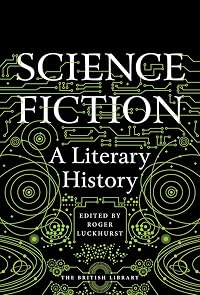
Aside from genre analysis, the collection offers simpler reading pleasures as well. Frank R. Stockton's 'The Water-Devil: A Marine Tale' is really funny and Nathaniel Hawthorne's 'Rappaccini's Daughter' includes a delightfully vivid proto-Poison Ivy. 'The Machine Stops' had every bit of the same impact upon rereading. It was an ideal choice for the sole story set in the future, given its extraordinary foresight. One wonders whether E. M. Forster inadvertently glanced through a wormhole and observed 21st century social media, as he predicts it earlier (1909!) and more accurately than anyone else. I recommend [b:The Origins of Science Fiction|123758962|The Origins of Science Fiction (Oxford World's Classics)|Michael Newton|https://i.gr-assets.com/images/S/compressed.photo.goodreads.com/books/1680077479l/123758962._SY75_.jpg|145139733] to anyone keen on the genre and/or developments in 19th and early 20th century literature. I found it thought-provoking and a great complement to [b:Science Fiction: A Literary History|35606447|Science Fiction A Literary History|Roger Luckhurst|https://i.gr-assets.com/images/S/compressed.photo.goodreads.com/books/1523864004l/35606447._SX50_.jpg|57044063]. Two years ago in my review of the latter I gave a rather different definition of sci-fi, in response to its differing focus. Dialectics in action! show less
The excellent introduction and copious endnotes to [b:The Origins of Science Fiction|123758962|The Origins of Science Fiction (Oxford World's Classics)|Michael Newton|https://i.gr-assets.com/images/S/compressed.photo.goodreads.com/books/1680077479l/123758962._SY75_.jpg|145139733] primes you to read the stories synoptically, so I did. The otherwise undistinguished tale by Sir Arthur Conan Doyle, 'The Terror of Blue John Gap', demonstrates most succinctly and effectively how to differentiate a sci-fi narrative from other genres. Its plot has been classic for thousands of years: man goes into a cave and encounters a weird monster. If the protagonist had deemed the weird monster a demon, the story would be supernatural or fantastical. In Conan Doyle's version, there is instead an explanation based on underground lakes and evolved cave bears - this is what makes it science fiction. It isn't usually so easy to spot the line between genres, so I presume the story was included for precisely that reason (as it is otherwise uninteresting).
I had previously read only two of these stories, despite nearly all the authors being very familiar. The collection is very suitable for those who already have read a lot of sci-fi and have opinions about it. I found myself reading primarily in synoptic mode, looking for the ways the stories were in dialogue with each other and commonalities that demonstrated the genre's formation. The desire for scientific explanations for seemingly supernatural events is present and correct across varied examples of the uncanny: aliens, psychic powers, immortality, parallel worlds, and contact with the dead. Several stories are apocalyptic, although only one is set in the future. There is a striking contrast between Jack London's 'The Red One', which has a very racist narrator, and W. E. B. Du Bois's thoughtful examination of US racism in 'The Comet', which I'd previously come across in [b:Dark Matter: A Century of Speculative Fiction from the African Diaspora|510342|Dark Matter A Century of Speculative Fiction from the African Diaspora|Sheree Renée Thomas|https://i.gr-assets.com/images/S/compressed.photo.goodreads.com/books/1344265438l/510342._SY75_.jpg|498352].
Aside from genre analysis, the collection offers simpler reading pleasures as well. Frank R. Stockton's 'The Water-Devil: A Marine Tale' is really funny and Nathaniel Hawthorne's 'Rappaccini's Daughter' includes a delightfully vivid proto-Poison Ivy. 'The Machine Stops' had every bit of the same impact upon rereading. It was an ideal choice for the sole story set in the future, given its extraordinary foresight. One wonders whether E. M. Forster inadvertently glanced through a wormhole and observed 21st century social media, as he predicts it earlier (1909!) and more accurately than anyone else. I recommend [b:The Origins of Science Fiction|123758962|The Origins of Science Fiction (Oxford World's Classics)|Michael Newton|https://i.gr-assets.com/images/S/compressed.photo.goodreads.com/books/1680077479l/123758962._SY75_.jpg|145139733] to anyone keen on the genre and/or developments in 19th and early 20th century literature. I found it thought-provoking and a great complement to [b:Science Fiction: A Literary History|35606447|Science Fiction A Literary History|Roger Luckhurst|https://i.gr-assets.com/images/S/compressed.photo.goodreads.com/books/1523864004l/35606447._SX50_.jpg|57044063]. Two years ago in my review of the latter I gave a rather different definition of sci-fi, in response to its differing focus. Dialectics in action! show less
Members
- Recently Added By
Author Information
194 Works 4,162 Members
Michael Newton is an award-winning author of numerous books on topics ranging from cryptozoology to civil rights and organized crime. He lives in Indiana.
All Editions
Common Knowledge
- Canonical title
- The Origins of Science Fiction (Oxford World's Classics Hardback Collection) (Oxford World's Classics Hardback Collection)
- Original publication date
- 2022
Classifications
- Genres
- Literature Studies and Criticism, Fiction and Literature
- DDC/MDS
- 823.0876208 — Literature & rhetoric English & Old English literatures English fiction By type Genre fiction Adventure fiction Speculative fiction Science fiction Collections and anthologies Collections
- LCC
- PR1309 .S3 .O75 — Language and Literature English English Literature Collections of English literature
- BISAC
Statistics
- Members
- 24
- Popularity
- 1,106,916
- Reviews
- 1
- Rating
- (4.00)
- Languages
- English
- Media
- Paper, Ebook
- ISBNs
- 4
- ASINs
- 1