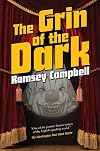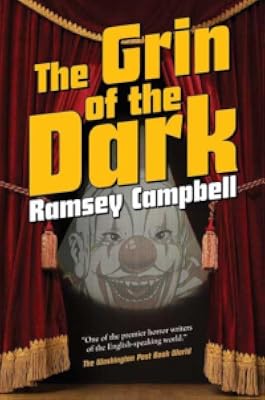
The Grin of the Dark
by Ramsey Campbell
On This Page
Description
Jumping at an offer to write the biography of a silent-film star, struggling film critic Simon investigates the actor's mysterious disappearance, only to witness bizarre occurrences, from the unusual appearances of a menacing clown to unnatural outbreaks of laughter wherever he goes.Tags
Recommendations







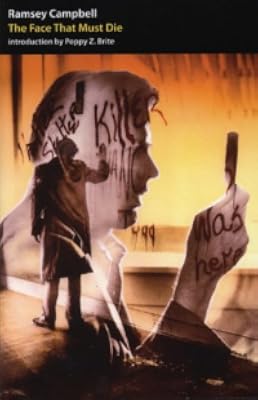

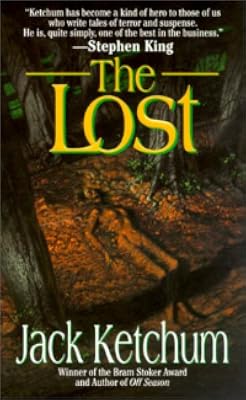
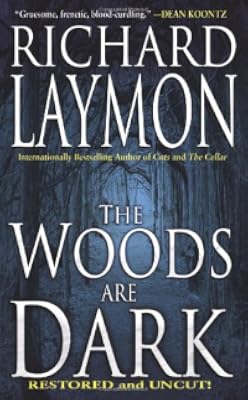


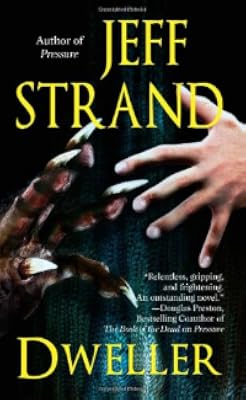




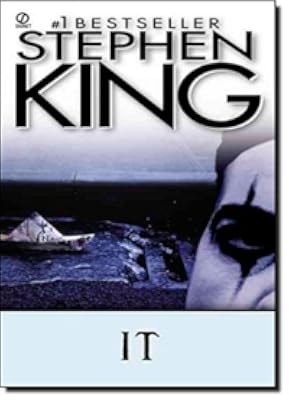
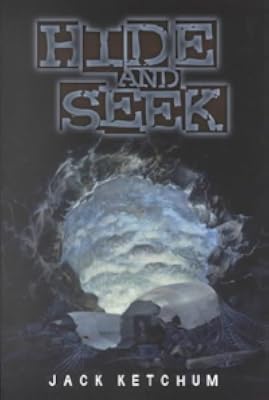
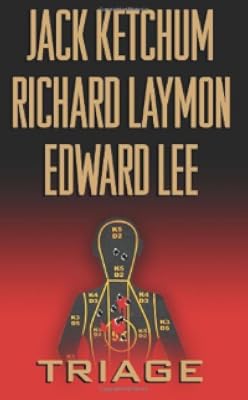

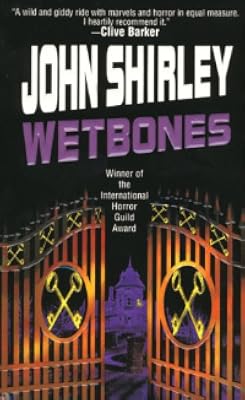

Member Recommendations
SomeGuyInVirginia Disturbing lost film causes madness.

SomeGuyInVirginia Disturbing lost film.
Member Reviews
I haven't read a Ramsey Campbell in many many years, and I had forgotten how excruciatingly British they are. So while the protagonist is surrounded by odd noises and furtive movements and strange behaviours, the real creeping horror is the collision of manners, the pettiness of officials, the animosity of girflriend's parents, the toxicity of his relationship with his own parents, all fueled and exacerbated by misunderstandings, farcically embarrassing incidents, and the overspilling of repressed rage and frustration at what turns out to be wrong targets. Ramsey Campbell's everyday horrors are the horrors of social cringe. Of course there's also delving into the history of a forgotten silent movie star with an unsavory reputation and show more the protagonist's ongoing obliviousness to, or denial of, the fact that weird and strange and terrifying things are subtly warping his world, and the dysfunctional nature of his everyday world and the supernatural creepiness are melding and mixing until it's far too late to do anything about it, if there ever was something that could have been done about it. show less
I've had mixed experiences with Campbell. His short stories have occasionally been brilliant, but more often obscure or underwhelming. Nonetheless, the best of his work has been sufficiently intriguing for me to seek out the bulk of his work in the hope of finding something similar.
This was my first novel of his and I'm happy to say that it's excellent, a masterful slow-burning work that ranks alongside the best in the genre. Like a lot of his short stories, there's a certain off-ness to the prose that works very effectively to unsettle and dislocate the reader's senses. Campbell uses the novel length format to ramp this up to almost unbearable levels and there were times when I began to feel genuinely uneasy; a sure sign of a great show more horror novel.
There are only a couple of things that stop this from being a five star novel. First, the work is a little too slow and subtle at times, at least for this reader. Secondly, Campbell makes no attempt to draw the reader in. You need to work and be committed to get the full effect. Not necessarily a criticism of the work as a whole, but I put a lot of stock in readability and Campbell lets me down a little here. show less
This was my first novel of his and I'm happy to say that it's excellent, a masterful slow-burning work that ranks alongside the best in the genre. Like a lot of his short stories, there's a certain off-ness to the prose that works very effectively to unsettle and dislocate the reader's senses. Campbell uses the novel length format to ramp this up to almost unbearable levels and there were times when I began to feel genuinely uneasy; a sure sign of a great show more horror novel.
There are only a couple of things that stop this from being a five star novel. First, the work is a little too slow and subtle at times, at least for this reader. Secondly, Campbell makes no attempt to draw the reader in. You need to work and be committed to get the full effect. Not necessarily a criticism of the work as a whole, but I put a lot of stock in readability and Campbell lets me down a little here. show less
'The Grin in the Dark' is less a horror tale than a novel of unease. From that perspective, the three pages of closely set third part endorsements give the wrong impression on this occasion.
The tale uses the conceit (known to us from Japanese horror) of a creative medium - the cinema shorts of a disturbing lost silent comedian - that infects the minds of others.
There are strong elements of the gothic, the occult and Kingian coulrophobia and the whole novel leaves us with a lingering sense of disorientation but it is primarily a dark fantasy about modern life.
The rule is no spoilers. Not too much can be said except that the internet plays a major role as do a series of paranoid experiences with authority and with our complicated culture show more of automated responses.
Is our hero mad, drugged or the victim of dark forces? The doubt is maintained and Campbell sets the whole in a family structure that is superficially stable but riddled with misunderstandings.
It has to be said that Campbell writes well and he delivers more than the genre expectations we pay for - the human dynamics and characters are well done and assist the sense of Simon's and our alienation.
Alienation requires something to be alienated from. The family and society are portrayed as always just off normal in a way that it is hard for us to put our finger on. This takes great creative skill.
If it has a meaning as a novel beyond the thrill, it lies in a solitary male's alienation from the world, the 'victim' of unseen forces in a world where other men have become uniforms or strangers.
At times, it is oddly restrained - thrills are held back where a lesser writer might have reveled in them. Nothing quite comes to the sort of negative resolution we might expect until it has to.
The 'family life' always makes Simon the outsider, one felt to be an outsider, whose emotional reality depends on the whim (freely provided it would seem) of one self-sufficient woman and her young son.
The effect of the comic's material on Mark (a seven year old) gives us an example of Campbell's restraint. It would be obvious to place him in danger. He is in danger but it would seem no more than others.
This is a world closer to Ligotti than Lovecraft but without the former's relentlessness. Campbell's world is really just our world seen through a distorting prism on the edge of being 'true'.
If you are overweight and sensitive about it, you might find this story just a little offensive because fat people are quite clearly associated with a bigger meme - descent into mindless conformity.
Unusually, though, mindless conformity is associated with hilarity - not the usual combination - so that this represents part of the disorientation we feel. It seems we laugh together ... we are 'canned'.
Campbell's world (in this story) is a world where the individual finds himself constantly coming up against the Clausewitzian friction of a system that is always breaking down at the margins.
This breaking down seems to be something we simply put up with - increasingly with laughter, whether at our situation or because the situation is laughing at us and we just join in with it.
As part of the world, he (and we) are also always breaking down at the margins. The inhabitants of this world end up all looking much the same, obese and eternally grinning.
This laughter is the 'grin in the dark', an aimless, general laughter that comes when we have turned into roly-poly conforming creatures of what it is that lies under all things, something very primitive.
Campbell takes us through the process of discovering an existential discomfort - one is reminded of Roquentin staring at the tree in Sartre's 'Nausea' - but without any philosophical resolution.
It is important that Simon is ordinary, bright enough to be a graduate but not bright enough to see his own predicament clearly. Our ordinariness is in the face of things and people becoming things.
This is a book reasonably put on horror shelves but not one that seems prepared to reach too deeply into the dark night of the soul - as we say, it is a novel of deep unease about the world we thrown into. show less
The tale uses the conceit (known to us from Japanese horror) of a creative medium - the cinema shorts of a disturbing lost silent comedian - that infects the minds of others.
There are strong elements of the gothic, the occult and Kingian coulrophobia and the whole novel leaves us with a lingering sense of disorientation but it is primarily a dark fantasy about modern life.
The rule is no spoilers. Not too much can be said except that the internet plays a major role as do a series of paranoid experiences with authority and with our complicated culture show more of automated responses.
Is our hero mad, drugged or the victim of dark forces? The doubt is maintained and Campbell sets the whole in a family structure that is superficially stable but riddled with misunderstandings.
It has to be said that Campbell writes well and he delivers more than the genre expectations we pay for - the human dynamics and characters are well done and assist the sense of Simon's and our alienation.
Alienation requires something to be alienated from. The family and society are portrayed as always just off normal in a way that it is hard for us to put our finger on. This takes great creative skill.
If it has a meaning as a novel beyond the thrill, it lies in a solitary male's alienation from the world, the 'victim' of unseen forces in a world where other men have become uniforms or strangers.
At times, it is oddly restrained - thrills are held back where a lesser writer might have reveled in them. Nothing quite comes to the sort of negative resolution we might expect until it has to.
The 'family life' always makes Simon the outsider, one felt to be an outsider, whose emotional reality depends on the whim (freely provided it would seem) of one self-sufficient woman and her young son.
The effect of the comic's material on Mark (a seven year old) gives us an example of Campbell's restraint. It would be obvious to place him in danger. He is in danger but it would seem no more than others.
This is a world closer to Ligotti than Lovecraft but without the former's relentlessness. Campbell's world is really just our world seen through a distorting prism on the edge of being 'true'.
If you are overweight and sensitive about it, you might find this story just a little offensive because fat people are quite clearly associated with a bigger meme - descent into mindless conformity.
Unusually, though, mindless conformity is associated with hilarity - not the usual combination - so that this represents part of the disorientation we feel. It seems we laugh together ... we are 'canned'.
Campbell's world (in this story) is a world where the individual finds himself constantly coming up against the Clausewitzian friction of a system that is always breaking down at the margins.
This breaking down seems to be something we simply put up with - increasingly with laughter, whether at our situation or because the situation is laughing at us and we just join in with it.
As part of the world, he (and we) are also always breaking down at the margins. The inhabitants of this world end up all looking much the same, obese and eternally grinning.
This laughter is the 'grin in the dark', an aimless, general laughter that comes when we have turned into roly-poly conforming creatures of what it is that lies under all things, something very primitive.
Campbell takes us through the process of discovering an existential discomfort - one is reminded of Roquentin staring at the tree in Sartre's 'Nausea' - but without any philosophical resolution.
It is important that Simon is ordinary, bright enough to be a graduate but not bright enough to see his own predicament clearly. Our ordinariness is in the face of things and people becoming things.
This is a book reasonably put on horror shelves but not one that seems prepared to reach too deeply into the dark night of the soul - as we say, it is a novel of deep unease about the world we thrown into. show less
It's very rare for me to get a really creepy feeling from a novel these days but this one did just that for me. All the way through it gives you a feeling that there's a lot more to life than just what's on the surface, and that it wouldn't take very much at all to draw it to the surface. Clowns, of course, are automatically creepy but here we have a very intelligent reworking of the creepy old clown story. Tubby Thackeray is actually a comedian working in the silent black and white film era, while Simon Lester is a writer employed by a publisher to do a kind of biography of the man and his films. Unfortunately for Simon there's a little more to it than just a publisher offering a writer a project and things soon turn very weird indeed show more for our protagonist.
A very well written novel, and one that fully deserves it's 5 star rating. I'll be leaving it a couple of years and then re-reading it, which is something I rarely do what with there being so many novels I'd like to get to, but this is truly deserving of that future re-read. Do yourself a huge favour and pick this one up ASAP. It's brilliant. show less
A very well written novel, and one that fully deserves it's 5 star rating. I'll be leaving it a couple of years and then re-reading it, which is something I rarely do what with there being so many novels I'd like to get to, but this is truly deserving of that future re-read. Do yourself a huge favour and pick this one up ASAP. It's brilliant. show less
This is the first Ramsey Campbell book I’ve read and I have Amazon Vine to thank for that. I don’t know how typical of his work this book is but in my opinion it was too long for what it was. When I first saw the blurb for the book I thought the premise was excellent and I was very much looking forward to reading, it seemed to have something chilling about it in the way that [Henry James]' [Turn of the Screw] chilled me. Instead it took a long time to get going and I wondered whether I would actually complete the novel.
The fact that the writing is brilliant is what inspired me to keep going and I’m pleased I did, the ending looked like it was going to be great and it was. I felt like I was really invited into Simon Lester’s show more life, mainly through the use of first person which doesn’t always work for me. I remember feeling as involved in a character’s life when I read [House of Leaves] by [Mark Z. Danielewski]. I could imagine all of the characters but I really couldn’t imagine Simon, I couldn’t visualise what he looked like, which unsettled me at the beginning but is actually important as he goes through so many different changes as a person during his search for information about Tubby Thackeray. As a reader I went through moments where I forgot I was actually reading a piece of fiction and suddenly felt that the author was actually Simon Lester, it was quite bizarre; all the signs of a good writer I suppose.
It was a very readable and really enjoyable novel overall. I would consider reading something else by this author just for comparison. I read this in two sittings to try to keep the momentum going, I have a feeling I might have been lost off if I hadn’t because so many different things are happening at the same time. I can’t confess to completely understanding it, if I’m honest, and if I was a re-reader I’d have to read it again to try to find clues as to what was happening. If it was to be a novella I’d suggest losing all the unnecessary arguments between Natalie’s parents and Simon – they were pointless, the relationship was important to explore but it went on and on detracting from the plot. show less
The fact that the writing is brilliant is what inspired me to keep going and I’m pleased I did, the ending looked like it was going to be great and it was. I felt like I was really invited into Simon Lester’s show more life, mainly through the use of first person which doesn’t always work for me. I remember feeling as involved in a character’s life when I read [House of Leaves] by [Mark Z. Danielewski]. I could imagine all of the characters but I really couldn’t imagine Simon, I couldn’t visualise what he looked like, which unsettled me at the beginning but is actually important as he goes through so many different changes as a person during his search for information about Tubby Thackeray. As a reader I went through moments where I forgot I was actually reading a piece of fiction and suddenly felt that the author was actually Simon Lester, it was quite bizarre; all the signs of a good writer I suppose.
It was a very readable and really enjoyable novel overall. I would consider reading something else by this author just for comparison. I read this in two sittings to try to keep the momentum going, I have a feeling I might have been lost off if I hadn’t because so many different things are happening at the same time. I can’t confess to completely understanding it, if I’m honest, and if I was a re-reader I’d have to read it again to try to find clues as to what was happening. If it was to be a novella I’d suggest losing all the unnecessary arguments between Natalie’s parents and Simon – they were pointless, the relationship was important to explore but it went on and on detracting from the plot. show less
Too unfocused to be really effective. The main idea is engaging and some of the scenes are brilliant, such as what Simon does in Amsterdam to raise a little money (I can see why Campbell and the eds didn’t want to cut them), but at around 400 pages the pace devolves from moody to glacial, and in the end the reader has to drag it bodily over the finish line. I really wanted to enjoy this one but I couldn’t because the author got in the way.
I found this to be a particularly cruel story; by the time I was halfway through it I could only stand to read one chapter a day. It lacks (unless you've read the dust jacket) any suggestion of supernatural horror until the last chapter or two; prior to that it's basically a mystery, and when the horror is finally revealed you discover that it began earlier in the story that you suspected. The resolution is not believable and every last one of the characters is unlikeable. I did give it an extra star because the words are put together extremely well, but even that's not enough to recommend the book.
It brought to mind F. Marion Crawford's short story "The Dead Smile" (1899).
It brought to mind F. Marion Crawford's short story "The Dead Smile" (1899).
Members
- Recently Added By
Author Information

314+ Works 9,861 Members
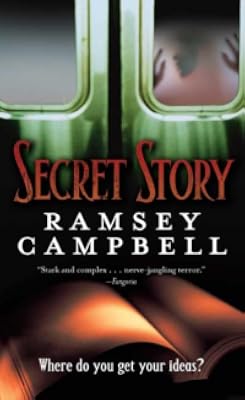
John Ramsey Campbell was born January 4, 1946 in Liverpool, England. He is a horror fiction author and editor. At the age of 11 he wrote a collection called Ghostly Tales which was published as a special issue of Crypt of Cthulhu magazine titled- Ghostly Tales- Crypt of Cthulhu 6. He continued to write and later published his collection called The show more Inhabitant of the Lake and Less Welcome Tenants. At the suggestion of August Derleth, he rewrote many of his earliest stories, which he had originally set in the Massachusetts locales of Arkham, Dunwich and Innsmouth, and relocated them to English settings in and around the fictional Gloucestershire city of Brichester. The invented locale of Brichester was deeply influenced by Campbell's native Liverpool, and much of his later work is set in the real locales of Liverpool. In particular, his 2005 novel Secret Stories both exemplifies and satirizes Liverpoolian speech, characters and humor. John Campbell's titles include The Doll Who Ate His Mother, The One Safe Place , The Seven Days of Cain and The Last Revelation of Gla'aki. (Bowker Author Biography) show less
Some Editions
Awards and Honors
Common Knowledge
- Canonical title
- The Grin of the Dark
- Original publication date
- 2007
- People/Characters
- Simon Lester; Tubby Thackerey
Classifications
Statistics
- Members
- 178
- Popularity
- 184,025
- Reviews
- 10
- Rating
- (3.76)
- Languages
- English
- Media
- Paper, Ebook
- ISBNs
- 7
- ASINs
- 3