On This Page
Description
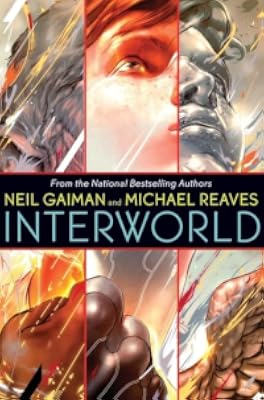
When Newbery Medal winner Neil Gaiman and Emmy Award winner Michael Reaves teamed up, they created the bestselling YA novel InterWorld.InterWorld tells the story of Joey Harker, a very average kid who discovers that his world is only one of a trillion alternate earths. Some of these earths are ruled by magic. Some are ruled by science. All are at war.
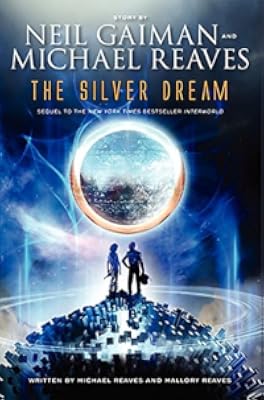
Joey teams up with alternate versions of himself from an array of these worlds. Together, the army of Joeys must battle evil magicians Lord show more Dogknife and Lady Indigo to keep the balance of power between all the earths stable. Teens—and tweens and adults—who obsessively read the His Dark Materials and Harry Potter series will be riveted by InterWorld and its sequel, The Silver Dream.
. show less
Tags
Recommendations


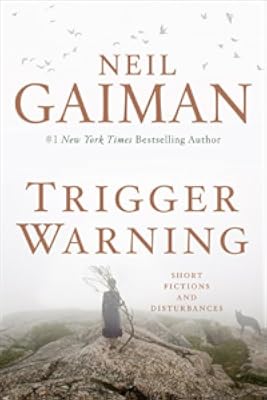
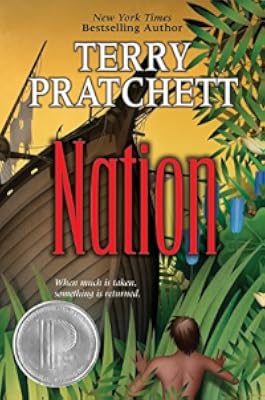
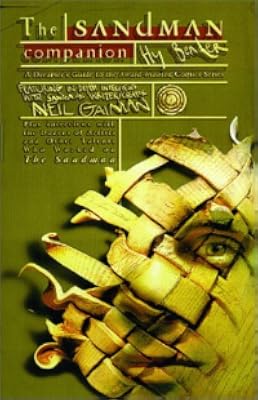
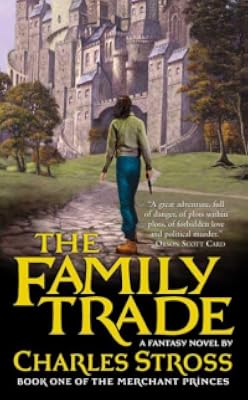



Member Recommendations
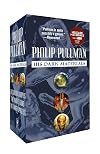
His Dark Materials Trilogy (The Golden Compass; The Subtle Knife; The Amber Spyglass) by Philip Pullman
espertus A richer trilogy about teenagers influencing the course of alternate universes.
30


lampbane Similar premise to InterWorld, but unique in its own way, especially with a fun James Bond-esque outlandishness. First part of an ongoing series, which is good, because it hasn't been said if there will be more InterWorld books yet.

espertus InterWorld reminded me of Robert Heinlein's juveniles, most of which I thought superior to InterWorld. Time for the Stars also features a teen who discovers he has special powers and has a twin.
fyrefly98 More YA multiverse-traveling sci-fi.
Jozzey07 Both are amazing science fiction novels about space travel

FFortuna Both awesome YA sci-fi novels.
elbakerone Another interesting science fiction work dealing with multiple realities and geared toward a younger audience.

fulner Probability broach is a sci-fi thriller mystery novel. Private investigation ain't easy, and even more so when you fall into another demention
Member Reviews
Plot Synopsis
Joey Harker, a normal boy, stumbles into another dimension, and so begins his journey, fraught with peril, as a Walker. The other Walkers are Other Joeys from various worlds in the Altiverse, and as if that isn't enough for Harker to contend with, the army of magical beings wants to boil him up and use his soul as fuel.
My Thoughts
I love the premise for the fight in this book. It isn't good versus evil; it is science versus magic, and they are both evil. Each side wants to conquer and control the gazillion other worlds, pushing each to one side or the other. The good guys belong to a understaffed, underprepared, oddly young group of Walkers, who are committed to ensuring the balance between science and magic in all the show more worlds of the Altiverse.
The premise of the Pendragon series is eerily similar, and I found myself thinking about this similarity while reading (I reviewed books 1-8 in the series in May and June). In Pendragon, the lead character is not leaping through various versions of Earth, but in fact is going to entirely different worlds, but still both main characters are walking through wormholish thingamabobbers in order to fight an entity/group that wants to control all worlds. And of course both are mid-teen males who have the whole reluctant hero thing going on.
My favorite character in this book is not the lead, but rather Jai, an enigmatic sesquipedalian (logophilia baby). Every sentence he utters is like taking a trip through a thesaurus. Afterall, "What good is a vocabulary that isn't used? My second favorite character is Hue, a blob of somethingoranother that communicates through color changes. My third favorite...okay, I liked the characters.
The story is quick, moving from action-sequence to action-sequence with less reflective abstractness than is typical in Gaiman; in other words, the story didn't make me contemplate any deep universal truths like with American Gods, Anansi Boys, the Sandman series, or Good Omens. But it was just what I needed to keep my attention for a nighttime read-a-book-in-one-sitting-marathon. I quite liked the story in general. I want sequels, a whole series, and the door is wide open for future books. Alas, no plans on that front.
Memorable Scene: Joey's first walk into the In-Between was a setting I will remember. I loved imagining this world which made me think of dropping acid while taking a ride through some strange combination of Disney World's Pirates of the Caribbean and It's a Small World and simultaneously having someone read Edgar Allen Poe's poetry to you. Yep. (Note: I have never dropped acid. And I don't even know where I would drop it if the chance ever came. Seems like something you'd want to hold onto being all expensive and everything.)
Memorable Quote: Commence our intradimensional excursion. I can so picture Spock saying this. show less
Joey Harker, a normal boy, stumbles into another dimension, and so begins his journey, fraught with peril, as a Walker. The other Walkers are Other Joeys from various worlds in the Altiverse, and as if that isn't enough for Harker to contend with, the army of magical beings wants to boil him up and use his soul as fuel.
My Thoughts
I love the premise for the fight in this book. It isn't good versus evil; it is science versus magic, and they are both evil. Each side wants to conquer and control the gazillion other worlds, pushing each to one side or the other. The good guys belong to a understaffed, underprepared, oddly young group of Walkers, who are committed to ensuring the balance between science and magic in all the show more worlds of the Altiverse.
The premise of the Pendragon series is eerily similar, and I found myself thinking about this similarity while reading (I reviewed books 1-8 in the series in May and June). In Pendragon, the lead character is not leaping through various versions of Earth, but in fact is going to entirely different worlds, but still both main characters are walking through wormholish thingamabobbers in order to fight an entity/group that wants to control all worlds. And of course both are mid-teen males who have the whole reluctant hero thing going on.
My favorite character in this book is not the lead, but rather Jai, an enigmatic sesquipedalian (logophilia baby). Every sentence he utters is like taking a trip through a thesaurus. Afterall, "What good is a vocabulary that isn't used? My second favorite character is Hue, a blob of somethingoranother that communicates through color changes. My third favorite...okay, I liked the characters.
The story is quick, moving from action-sequence to action-sequence with less reflective abstractness than is typical in Gaiman; in other words, the story didn't make me contemplate any deep universal truths like with American Gods, Anansi Boys, the Sandman series, or Good Omens. But it was just what I needed to keep my attention for a nighttime read-a-book-in-one-sitting-marathon. I quite liked the story in general. I want sequels, a whole series, and the door is wide open for future books. Alas, no plans on that front.
Memorable Scene: Joey's first walk into the In-Between was a setting I will remember. I loved imagining this world which made me think of dropping acid while taking a ride through some strange combination of Disney World's Pirates of the Caribbean and It's a Small World and simultaneously having someone read Edgar Allen Poe's poetry to you. Yep. (Note: I have never dropped acid. And I don't even know where I would drop it if the chance ever came. Seems like something you'd want to hold onto being all expensive and everything.)
Memorable Quote: Commence our intradimensional excursion. I can so picture Spock saying this. show less
A very enjoyable fantasy for young adults that should not be judged by the standards of adult fiction. It has the feel of being at the better end of Netflix. It is no surprise to find that Gaiman and his co-author Michael Reaves derived the novel from an original animated script for Dreamworks.
It is almost certainly unfilmable (because of the complexity of the visual ideas) as anything but animation without losing what makes it good - the imaginative construction of different planes of existence. In fact, it would probably be weakened by even the best of animators.
While this is not a masterpiece of world literature and might be classed as a potboiler from the Gaiman factory, if you do not expect too much you should enjoy the authors' show more deployment of memes from children's literature, science, horror and fantasy within a very entertaining confection.
The 'hero' Joe Harker is someone most adolescent nerdy kids could identify with (although Gaiman slips a few British words and a little British humour into an essentially American small town story). The outpouring of ideas is a tour de force of imaginary excess.
The attempt to create an interworld through which Walkers like Joe can travel is certainly not like anything I have read before - a Lovecraftian fantasy made rather joyful if that were possible. The science, of course, does not stand up at all but who cares in a fantasy adventure.
The 'moral universe' is also nicely simplified along classical lines as a struggle between science and magick (both evil forces at their extremity) with the Walkers trying to maintain a universal balance. There is even a reference to the mothers of Sparta to indicate the pagan influence.
As for the villainous Dogknife and his evil sidekicks Lady Indigo (straight out of Oz) and Scarabus (via Ray Bradbury perhaps), the authors certainly know how to create a memorable and truly evil enemy. A challenge will be to do the same with Binary the science rival to the world of Hex.
Educated adults (at least those educated in pulp fiction and the classics) will enjoy the references from Gernsback to (of course) Lovecraft, all suitably re-engineered for a High School reader. When needed, small town life is as well drawn as Stephen King draws it.
Yes, lots of ideas derived from lots of sources but it hangs together as fantasy quite well so long as you really are very good at the art of suspending disbelief. If you are without imagination yourself, you will be bored and hate it.
This is a guilty pleasure for adults lying in bed feeling a little under the weather (as I was) and probably a real pleasure for many young adults. I won't hide away from the two sequels in the series. Sometimes factory production works in literary entertainment. show less
It is almost certainly unfilmable (because of the complexity of the visual ideas) as anything but animation without losing what makes it good - the imaginative construction of different planes of existence. In fact, it would probably be weakened by even the best of animators.
While this is not a masterpiece of world literature and might be classed as a potboiler from the Gaiman factory, if you do not expect too much you should enjoy the authors' show more deployment of memes from children's literature, science, horror and fantasy within a very entertaining confection.
The 'hero' Joe Harker is someone most adolescent nerdy kids could identify with (although Gaiman slips a few British words and a little British humour into an essentially American small town story). The outpouring of ideas is a tour de force of imaginary excess.
The attempt to create an interworld through which Walkers like Joe can travel is certainly not like anything I have read before - a Lovecraftian fantasy made rather joyful if that were possible. The science, of course, does not stand up at all but who cares in a fantasy adventure.
The 'moral universe' is also nicely simplified along classical lines as a struggle between science and magick (both evil forces at their extremity) with the Walkers trying to maintain a universal balance. There is even a reference to the mothers of Sparta to indicate the pagan influence.
As for the villainous Dogknife and his evil sidekicks Lady Indigo (straight out of Oz) and Scarabus (via Ray Bradbury perhaps), the authors certainly know how to create a memorable and truly evil enemy. A challenge will be to do the same with Binary the science rival to the world of Hex.
Educated adults (at least those educated in pulp fiction and the classics) will enjoy the references from Gernsback to (of course) Lovecraft, all suitably re-engineered for a High School reader. When needed, small town life is as well drawn as Stephen King draws it.
Yes, lots of ideas derived from lots of sources but it hangs together as fantasy quite well so long as you really are very good at the art of suspending disbelief. If you are without imagination yourself, you will be bored and hate it.
This is a guilty pleasure for adults lying in bed feeling a little under the weather (as I was) and probably a real pleasure for many young adults. I won't hide away from the two sequels in the series. Sometimes factory production works in literary entertainment. show less
A thin offering from Gaiman (of whom I expect better) and Reaves (with whose work I'm not familiar). It's reminiscent of a second-tier Heinlein juvenile novel, down to the "Old Man" who is revered by all and for whose mission everyone would sacrifice to carry out. The plot is enjoyable enough, though it will seem fairly derivative to most YA F&SF readers. Character development is weak and rushed, and some characters who seem important (like Nigel) simply disappear. We learn about Binary but not enough to explain why we had to learn it. There is a little trouble with world building--for example, why wouldn't the crew of the Lacrimae Mundi know who/what Joey was (p. 40)? It's clear later that they know exactly where people like him fit show more into their world. More problematic is a bit of fabricated difficulty where Joey narrates that "I couldn't find the key that would let me go back to Base Town" (p. 170), though 14 pages before it "burned clear and bright in my mind" (p. 156) and by page 232 he knows it again, for no particular reason.
One is left with the overall impression that in its present incarnation, Interworld was not adequately edited to stand alone. It feels like an action-adventure opener that didn't warrant a sequel to fill in the gaps. show less
One is left with the overall impression that in its present incarnation, Interworld was not adequately edited to stand alone. It feels like an action-adventure opener that didn't warrant a sequel to fill in the gaps. show less
Interworld is a collaborative effort from Neil Gaiman and Michael Reaves that is aimed squarely at the YA Sci-Fi reader. To be honest, no mater how you juggle the numbers that make up my birthday, there’s no way I’m going to fit a teen reader profile. Not even close. Despite this gap, I really enjoyed this book.
It is far from perfect, though. One interesting features was in the inconsistent use of semi strong language. One of the characters refers to another as a “son of a bitch”. Not necessarily the strongest language I’ve read, and given the character being talked about this was a perfectly good description, but curiously, later on the main character utters a “darn” when “damn” would have been within bounds of show more usage.
Cheap clichés also abound. There was one about the truth “coming at you like a freight train” and being bound to the tracks as it is coming at you. Other tired metaphors were there too. Yet it all worked and it worked very well. One neat twist had Joey, the male lead, looking at a female character and “staring at the two things that made us different” only to find he was gazing at her wings!
I am not sure how much credit goes to each author, but I am presuming the main storyline comes from Neil Gaiman. He is a masterful storyteller and he blends his usual fantasy with science and science fiction quite nicely in this story. Some of the devices were not completely original, yet there is enough of a twist I don’t think you could say the storyline was copied from another work.
If you like light Sci-Fi, I think you’ll like this one. If you’re a Gaiman fan, it is worthy to be added to your collection. I’ve yet to read anything by Michael Reaves, but if this in indicative of his talent, I may have to look up his works. If you are just exploring YA, try this for something a little out of the ordinary. Worth a full four stars. show less
It is far from perfect, though. One interesting features was in the inconsistent use of semi strong language. One of the characters refers to another as a “son of a bitch”. Not necessarily the strongest language I’ve read, and given the character being talked about this was a perfectly good description, but curiously, later on the main character utters a “darn” when “damn” would have been within bounds of show more usage.
Cheap clichés also abound. There was one about the truth “coming at you like a freight train” and being bound to the tracks as it is coming at you. Other tired metaphors were there too. Yet it all worked and it worked very well. One neat twist had Joey, the male lead, looking at a female character and “staring at the two things that made us different” only to find he was gazing at her wings!
I am not sure how much credit goes to each author, but I am presuming the main storyline comes from Neil Gaiman. He is a masterful storyteller and he blends his usual fantasy with science and science fiction quite nicely in this story. Some of the devices were not completely original, yet there is enough of a twist I don’t think you could say the storyline was copied from another work.
If you like light Sci-Fi, I think you’ll like this one. If you’re a Gaiman fan, it is worthy to be added to your collection. I’ve yet to read anything by Michael Reaves, but if this in indicative of his talent, I may have to look up his works. If you are just exploring YA, try this for something a little out of the ordinary. Worth a full four stars. show less
Quick Note: I read this on my brand-new Nook. I actually checked it out from our local library's e-reading program, which means I downloaded it from the library website onto my laptop, then loaded it into my Nook. I have to say, the Nook is freakin' awesome. The main thing I was concerned about was whether or not the electronic gadget would "disappear," so to speak, as I was reading -- like a paperback. I am happy to report that when reading on the Nook, I sink into the story just as easily as when I read a physical book. My eyes don't hurt after 20 minutes like when I read on a laptop. I surface hours later, head spinning and dizzy with the characters and completely unaware of the medium I was introduced to them through.
Speaking of show more characters -- I really don't need to review this, if you're familiar with Gaiman's writing. Unlike other prolific writers (looking at you, Nicholas Sparks and Nora Roberts), Gaiman doesn't follow the same basic plotline over and over. He doesn't recycle characters, slapping a new face and name onto the same stock personalities.
No, every Gaiman book is a fresh treat. A tour-de-force in writing that takes the reader to new planes of idea and fantasy. Every time I read a Gaiman book, I half-expect to run into an old, familiar character -- he writes so much, you can't help but expect he'll begin recycling plots and characters. But it hasn't, as yet, happened.
As usual, his plot pacing is quick and fun, his characters are well-fleshed out, the motivations and actions understandable and relatable. As usual, he introduces fantastic new ways of looking at classic sci-fi and fantasy -- I swear, the man takes a funhouse mirror to every existing fantasy/ mythology stereotype and turns them completely on their head. And as usual, his writing style (turn of phrase, dialogue, etc) is evocative, lyrical, descriptive and fun.
Gaiman is an unparalleled joy to read. I have favorites among his books, true, but I can say with complete honesty that Gaiman is the one author I've read where I like every book he's written. show less
Speaking of show more characters -- I really don't need to review this, if you're familiar with Gaiman's writing. Unlike other prolific writers (looking at you, Nicholas Sparks and Nora Roberts), Gaiman doesn't follow the same basic plotline over and over. He doesn't recycle characters, slapping a new face and name onto the same stock personalities.
No, every Gaiman book is a fresh treat. A tour-de-force in writing that takes the reader to new planes of idea and fantasy. Every time I read a Gaiman book, I half-expect to run into an old, familiar character -- he writes so much, you can't help but expect he'll begin recycling plots and characters. But it hasn't, as yet, happened.
As usual, his plot pacing is quick and fun, his characters are well-fleshed out, the motivations and actions understandable and relatable. As usual, he introduces fantastic new ways of looking at classic sci-fi and fantasy -- I swear, the man takes a funhouse mirror to every existing fantasy/ mythology stereotype and turns them completely on their head. And as usual, his writing style (turn of phrase, dialogue, etc) is evocative, lyrical, descriptive and fun.
Gaiman is an unparalleled joy to read. I have favorites among his books, true, but I can say with complete honesty that Gaiman is the one author I've read where I like every book he's written. show less
I admit: the only reason I checked out InterWorld is because it has Neil Gaiman's name on it and it was available at my local library. I was waiting for a copy of a different book that I wanted to read, and I needed something to fill the time while I waited. I admit, as well, that I hadn't paid any attention to the fact that InterWorld is a YA novel.
I wish I knew how much of InterWorld comes from Mr. Gaiman and how much is from the coauthor, Michael Reaves. I hope this is mostly Mr. Reaves book because, otherwise, I have to accept that Mr. Gaiman finally wrote something that disappointed me.
I'm not saying InterWorld is a bad book. It's not. It's smart and funny and fast-paced. It's entertaining, with a delightful cast of characters.
It's show more just that there really isn't a single original idea in the whole thing. This is standard fare: it's a run-of-the-mill multiple Earth / multiverse setting and it features a pretty standard tug-of-war between science and magic.
But mostly, it's the same kind of teenage escapist fantasy that millions of young people dream up for themselves everyday (you know the kind—kid mysteriously crosses over into a different world where they turn out to be the Chosen One).
Joey Harker is a Walker—someone who can cross between the planes, between worlds, in the Altiverse (not the full multiverse, mind you, just the section of it which contains all the versions of Earth). Turns out, he's the most powerful Walker out there. He discovers his talent by accident, he's chased after by bad guys who want to use his power to dominate the Altiverse, and he falls in with a group of people dedicated to opposing them and maintaining a balance of powers.
InterWorld establishes a more robust mechanism for its multiverse setting than many such stories, with deeper references to cosmological and mathematical concepts than is typical for YA books. I applaud the authors for that. It spends much of its time exploring the edges and the borders between worlds, and envisions some highly imaginative environments and creatures to populate them (including a cute and endearing intelligent soap bubble).
This novel has quite a wonderful sense of humor. Joey's teammates are a bit of a surprise, too.
Frankly, the fact that this is standard teenage escapist fantasy makes me want to like it. I came up with innumerable variations of stories very much like InterWorld when I was a teenager (smart, well educated, outcast, and steeped in scifi). It's interesting to see professional authors respect this kind of story as a legitimate work.
But we can also turn that around: InterWorld really isn't any better than the usual escapist fantasy that any smart teenager can dream up for themselves. The narrative is handled better than most teenagers can manage, merely by virtue of Mr. Gaiman and Mr. Reaves' skills as professional writers, but the story itself is nothing special.
In the "Afterward" of the book, the authors mention that this story was conceived as a scenario for a TV show. They wrote the novel originally as part of a non-conventional strategy to pitch the show to producers. No one bought it, and now they've polished and published the book.
I think this story would work better as TV show than it does as a novel.
The best parts of the book are its structural elements: the environment, the cast of characters, the overall scenario. The weak point is the story itself.
Exactly what you would expect from a book that began its life as a pitch for a TV show.
The book is worth reading. I would have loved this book when I was in middle school. It validates all the fantasies I had back then. It's worth reading because it takes very little time, so there's little investment. It's worth reading because it's entertaining and kinda silly.
But don't expect it to be anything more than that. show less
I wish I knew how much of InterWorld comes from Mr. Gaiman and how much is from the coauthor, Michael Reaves. I hope this is mostly Mr. Reaves book because, otherwise, I have to accept that Mr. Gaiman finally wrote something that disappointed me.
I'm not saying InterWorld is a bad book. It's not. It's smart and funny and fast-paced. It's entertaining, with a delightful cast of characters.
It's show more just that there really isn't a single original idea in the whole thing. This is standard fare: it's a run-of-the-mill multiple Earth / multiverse setting and it features a pretty standard tug-of-war between science and magic.
But mostly, it's the same kind of teenage escapist fantasy that millions of young people dream up for themselves everyday (you know the kind—kid mysteriously crosses over into a different world where they turn out to be the Chosen One).
Joey Harker is a Walker—someone who can cross between the planes, between worlds, in the Altiverse (not the full multiverse, mind you, just the section of it which contains all the versions of Earth). Turns out, he's the most powerful Walker out there. He discovers his talent by accident, he's chased after by bad guys who want to use his power to dominate the Altiverse, and he falls in with a group of people dedicated to opposing them and maintaining a balance of powers.
InterWorld establishes a more robust mechanism for its multiverse setting than many such stories, with deeper references to cosmological and mathematical concepts than is typical for YA books. I applaud the authors for that. It spends much of its time exploring the edges and the borders between worlds, and envisions some highly imaginative environments and creatures to populate them (including a cute and endearing intelligent soap bubble).
This novel has quite a wonderful sense of humor. Joey's teammates are a bit of a surprise, too.
Frankly, the fact that this is standard teenage escapist fantasy makes me want to like it. I came up with innumerable variations of stories very much like InterWorld when I was a teenager (smart, well educated, outcast, and steeped in scifi). It's interesting to see professional authors respect this kind of story as a legitimate work.
But we can also turn that around: InterWorld really isn't any better than the usual escapist fantasy that any smart teenager can dream up for themselves. The narrative is handled better than most teenagers can manage, merely by virtue of Mr. Gaiman and Mr. Reaves' skills as professional writers, but the story itself is nothing special.
In the "Afterward" of the book, the authors mention that this story was conceived as a scenario for a TV show. They wrote the novel originally as part of a non-conventional strategy to pitch the show to producers. No one bought it, and now they've polished and published the book.
I think this story would work better as TV show than it does as a novel.
The best parts of the book are its structural elements: the environment, the cast of characters, the overall scenario. The weak point is the story itself.
Exactly what you would expect from a book that began its life as a pitch for a TV show.
The book is worth reading. I would have loved this book when I was in middle school. It validates all the fantasies I had back then. It's worth reading because it takes very little time, so there's little investment. It's worth reading because it's entertaining and kinda silly.
But don't expect it to be anything more than that. show less
Interworld is light, fun book for the Tweener and MG crowd. And, of course, we goofy adults that enjoy such literature, enough that we read and review it.
The story is set in a multiverse. A place where all variations of earth (and other places) exist. In this book, those universes extend past what we might expect, in that there are earths with varying degrees of tech, and earths with varying degrees of magic.
The setting in this book is very important to it's success. What little description is used --this is an action genre book, and it moves quickly ahead, without a great deal of verbiage wasted on scenery and such -- focuses on the inter-dimensional space that lays between worlds. The authors do their best to extract their physics show more from String Theory and whatnot, and they do pretty well making it kid-friendly, interesting, cool, and understandable.
And it's here afterall, that a good percentage of the action takes place. And it's here where Joey picks up his side-kick, a multi-dimensional creature he calls "Hue". [Hue communicates with colors].
As far as characters, Joey is done fairly well. The rest of the cast is rather standard -- the commander who's stern stuff and who everybody calls the 'old man'. There's the strong guy, and the tech wizard.... Well, if you've seen those old war movies, I'm sure you can guess the rest (if you keep in mind that magic needs to be added.)
By adult standards, the plotting isn't thorough. There's nothing in the way of foreshadowing, and frequently solutions are sort of pulled out of the authors'... eh, ...hat, but again, that's probably only going to bother adults and not kids who want an action story.
The story, by the way, focuses on Joe's not fitting in. For one, he's the new guy. And for another, he managed to get the guy who was sent out to 'bring him in' killed.
There's enough emotion along the way that the book isn't totally void. And there's plenty of action and 'science'. It's not as good as Heinlein's "The Rolling Stones", but it's meant for a similar audience.
Talking Points:::
Despite my criticism, I have to say that I found Interworld to be fun read. I'd suggest it for youngsters looking for adventure.
It's a quick read with some novel ideas that ought to make people think.
**The one concern I haven't mentioned yet is the mild cursing. There's a "son of a bitch" and "damn" or two. Certainly not a problem for teenagers, but the back cover mentions that this book is for those as young as 10 years. As a mom of a 9 y.o. I know that they haven't all been exposed to cursing yet. (Yes, you may applaud my self control)
Finally, those expecting this book to have prose that sounds anything like Gaiman's are going to be thoroughly disappointed.
Pam T~
mom and reviewer at BooksForKids-reviews show less
The story is set in a multiverse. A place where all variations of earth (and other places) exist. In this book, those universes extend past what we might expect, in that there are earths with varying degrees of tech, and earths with varying degrees of magic.
The setting in this book is very important to it's success. What little description is used --this is an action genre book, and it moves quickly ahead, without a great deal of verbiage wasted on scenery and such -- focuses on the inter-dimensional space that lays between worlds. The authors do their best to extract their physics show more from String Theory and whatnot, and they do pretty well making it kid-friendly, interesting, cool, and understandable.
And it's here afterall, that a good percentage of the action takes place. And it's here where Joey picks up his side-kick, a multi-dimensional creature he calls "Hue". [Hue communicates with colors].
As far as characters, Joey is done fairly well. The rest of the cast is rather standard -- the commander who's stern stuff and who everybody calls the 'old man'. There's the strong guy, and the tech wizard.... Well, if you've seen those old war movies, I'm sure you can guess the rest (if you keep in mind that magic needs to be added.)
By adult standards, the plotting isn't thorough. There's nothing in the way of foreshadowing, and frequently solutions are sort of pulled out of the authors'... eh, ...hat, but again, that's probably only going to bother adults and not kids who want an action story.
The story, by the way, focuses on Joe's not fitting in. For one, he's the new guy. And for another, he managed to get the guy who was sent out to 'bring him in' killed.
There's enough emotion along the way that the book isn't totally void. And there's plenty of action and 'science'. It's not as good as Heinlein's "The Rolling Stones", but it's meant for a similar audience.
Talking Points:::
Despite my criticism, I have to say that I found Interworld to be fun read. I'd suggest it for youngsters looking for adventure.
It's a quick read with some novel ideas that ought to make people think.
**The one concern I haven't mentioned yet is the mild cursing. There's a "son of a bitch" and "damn" or two. Certainly not a problem for teenagers, but the back cover mentions that this book is for those as young as 10 years. As a mom of a 9 y.o. I know that they haven't all been exposed to cursing yet. (Yes, you may applaud my self control)
Finally, those expecting this book to have prose that sounds anything like Gaiman's are going to be thoroughly disappointed.
Pam T~
mom and reviewer at BooksForKids-reviews show less
Members
- Recently Added By
Lists

KayStJ's to-read list
1,616 works; 11 members

Books Read in 2014
2,343 works; 89 members

Vlogbrothers Book Recommendations
307 works; 4 members
Talk Discussions
Past Discussions
recent SF: boy meets different versions of himself in sort of alternate universes? in Name that Book (March 2013)
Author Information

844+ Works 450,038 Members
Neil Gaiman was born in Portchester, England on November 10, 1960. He worked as a journalist and freelance writer for a time, before deciding to try his hand at comic books. Some of his work has appeared in publications such as Time Out, The Sunday Times, Punch, and The Observer. His first comic endeavor was the graphic novel series The Sandman. show more The series has won every major industry award including nine Will Eisner Comic Industry Awards, three Harvey Awards, and the 1991 World Fantasy Award for best short story, making it the first comic ever to win a literary award. He writes both children and adult books. His adult books include The Ocean at the End of the Lane, which won a British National Book Awards, and the Locus Award for Best Fantasy Novel for 2014; Stardust, which won the Mythopoeic Award as best novel for adults in 1999; American Gods, which won the Hugo, Nebula, Bram Stoker, SFX, and Locus awards; Anansi Boys; Trigger Warning: Short Fictions and Disturbances; and The View from the Cheap Seats: Selected Nonfiction, which is a New York Times Bestseller. His children's books include The Day I Swapped My Dad for Two Goldfish; Coraline, which won the Elizabeth Burr/Worzalla, the BSFA, the Hugo, the Nebula, and the Bram Stoker awards; The Wolves in the Walls; Odd and the Frost Giants; The Graveyard Book, which won the Newbery Award in 2009 and The Sandman: Overture which won the 2016 Hugo Awards Best Graphic Story. (Bowker Author Biography) show less

56+ Works 11,918 Members
Some Editions
Awards and Honors
Awards
Distinctions
Series

Work Relationships
Common Knowledge
- Canonical title
- InterWorld
- Original title
- Interworld
- Original publication date
- 2007
- People/Characters
- Joseph Harker (Joey); Lady Indigo; Lord Dogknife; Hue
- Important places
- InterWorld
- Dedication
- Neil would like to dedicate this book to his son Mike, who read the manuscript and liked it and encouraged us, and always asked when he was going to be able to read it in a real book.
Michael would like to dedicate this bo... (show all)ok to Steve Saffel. - First words
- Once I got lost in my own house.
- Quotations*
- Je me faisais l'impression d'être une Porsche ayant enfin appris qu'elle n'était pas un vélo mais prenant toujours part à des courses cyclistes.
- Last words
- (Click to show. Warning: May contain spoilers.)We Walked.
*Some information comes from Common Knowledge in other languages. Click "Edit" for more information.
Classifications
- Genres
- Fiction and Literature, Teen, Young Adult
- DDC/MDS
- 813.54 — Literature & rhetoric American literature in English American fiction in English 1900-1999 1945-1999
- LCC
- PZ7 .G1273 .I — Language and Literature Fiction and juvenile belles lettres Fiction and juvenile belles lettres Juvenile belles lettres
- BISAC
Statistics
- Members
- 2,816
- Popularity
- 6,469
- Reviews
- 121
- Rating
- (3.45)
- Languages
- 11 — Czech, English, French, German, Hungarian, Indonesian, Italian, Polish, Portuguese, Spanish, Turkish
- Media
- Paper, Audiobook, Ebook
- ISBNs
- 40
- UPCs
- 2
- ASINs
- 14