
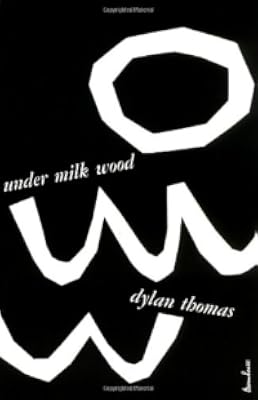
Under Milk Wood
by Dylan Thomas
On This Page
Description
Matthew Rhys and Kate Burton headline a Welsh and Welsh-American cast celebrating the centenary of Dylan Thomas' birth in a performance of his timeless "play for voices." With characters such as Captain Cat, Polly Garter, and Nogood Boyo, Thomas brings to life the inhabitants of the fictional town of Llareggub in funny, poignant, and poetic detail. Includes a conversation with Andrew Lycett, author of Dylan Thomas: A New Life. An L.A. Theatre Works full-cast production, starring Matthew show more Rhys, Kate Burton, Laura Evans, John Francis, Jason Hughes, Christopher Monger, Cerris Morgan-Moyer, Jo Osmond, and Morgan Ritchie. Directed by Sara Sugarman. Recorded before a live audience by L.A. Theatre Works. show lessTags
Recommendations



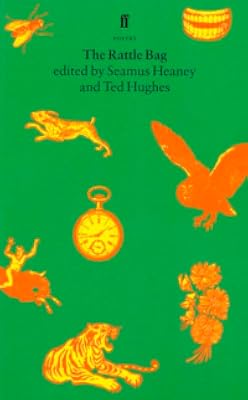

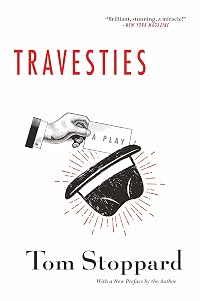
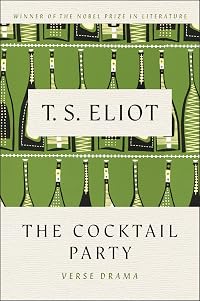
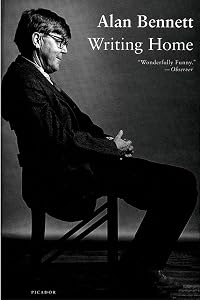










Member Recommendations
Sylak If you enjoy 20th Century poetry, give this a try.
hazzabamboo Both poetic and humorous snapshots of small rural communities - and both superb.
Member Reviews
This was a totally immersive pleasure. I savoured every word - and they're in abundance as they come at you almost without pause for thought or breath in this extended prose poem - 'a play for voices'. The tempo and rhythm matches that of a day's span: gentle and deliberate at times, busily frenzied at others. I don't know if this is Thomas' masterpiece as I'm only at the beginning of reading his work, but it must surely have been hard to better. It is a small piece of perfection - short in length but leaving a lasting impression. A day in the life of the backwater seaside town of Llareggub. I should say that it is a fictional town, but that almost seems ungrateful on my part - such is the power and vivid impression of his rendering of show more that place. It is a place alive with spirit and flavour, sounds and smells, tones and tastes. There are ghosts and poetry, dreams and gossip. Hopes and memories abound. At times I was struck by an almost Chagall-like sense of imagery. There are equal parts tragedy and wonder, as well as the fantastic and the banal; and a fair dollop of fruity humour to boot.
I had the pleasure of listening to the audiobook version remade by the BBC in 2003, featuring the pitch-perfect original recording of Richard Burton as 'First Voice', together with a new all-Welsh cast of many wonderful voices - including Sian Phillips as 'Second Voice'. I've seen the 1970s film adaptation before but this audio recording was superlative. Now I want a printed edition - and I hope there'll be a suitably designed commemorative one out in 2014 for the Thomas centenary - as I know that I will want to savour this all again, line by line, over and over. As soon as I finished it I put the first disc back in and had to listen to it all over again. It is a magical and beautiful thing. show less
I had the pleasure of listening to the audiobook version remade by the BBC in 2003, featuring the pitch-perfect original recording of Richard Burton as 'First Voice', together with a new all-Welsh cast of many wonderful voices - including Sian Phillips as 'Second Voice'. I've seen the 1970s film adaptation before but this audio recording was superlative. Now I want a printed edition - and I hope there'll be a suitably designed commemorative one out in 2014 for the Thomas centenary - as I know that I will want to savour this all again, line by line, over and over. As soon as I finished it I put the first disc back in and had to listen to it all over again. It is a magical and beautiful thing. show less
I'm in love.
I want to read and listen again. Probably multiple times, if possible. There's so many sudden flashes of humor and delight, and this being my first time through, I reveled in those moments when you feel uncertain, then a lightbulb goes on with that adrenaline rush of illumination.
And the language is to die for.
It reminded me a bit of two other classics, the 1914 [Spoon River Anthology] poems by Edgar Lee Masters (except Thomas' people are sleeping, Masters' people are sleeping forever) and also the 1922 poem [The Waste Land] by T S Eliot, especially in the "Goodnight, ladies" part. But this work came later--equally good and definitely Dylan made it his own.
I listened to the play on YT, the one with Richard Burton and show more followed along reading it. I noticed the play did not include all the text. Wonder if Dylan continued to work on the play even after that performance, or if some was cut due to time constraints. Never mind, the audio was dreamy good and added immensely to the pleasure of the play.
https://www.youtube.com/watch?v=im7ICMh0h9M&list=PLBx3BOGiHZrXqgEZ2xhUZWn4Ep...
https://gutenberg.net.au/ebooks06/0608221.txt show less
I want to read and listen again. Probably multiple times, if possible. There's so many sudden flashes of humor and delight, and this being my first time through, I reveled in those moments when you feel uncertain, then a lightbulb goes on with that adrenaline rush of illumination.
And the language is to die for.
It reminded me a bit of two other classics, the 1914 [Spoon River Anthology] poems by Edgar Lee Masters (except Thomas' people are sleeping, Masters' people are sleeping forever) and also the 1922 poem [The Waste Land] by T S Eliot, especially in the "Goodnight, ladies" part. But this work came later--equally good and definitely Dylan made it his own.
I listened to the play on YT, the one with Richard Burton and show more followed along reading it. I noticed the play did not include all the text. Wonder if Dylan continued to work on the play even after that performance, or if some was cut due to time constraints. Never mind, the audio was dreamy good and added immensely to the pleasure of the play.
https://www.youtube.com/watch?v=im7ICMh0h9M&list=PLBx3BOGiHZrXqgEZ2xhUZWn4Ep...
https://gutenberg.net.au/ebooks06/0608221.txt show less
"Under Milk Wood" is a radio play and while I am used to reading plays and have also read a handful of radio/audio plays, I realized after a couple of pages that this one must definitely be listened to. My husband was sitting next to me reading his fantasy novel and I disturbed him every few minutes because I wanted to read a passage to him. These words and sentences simply beg to be read aloud, and I tried doing this in my head as well as I could, but I still think that the experience is only a fraction of what listening to it might offer. Every word carries meaning, there are so many puns and word plays, and I think that I read it far too quickly (because that is my pace even if I try to read more slowly) to even appreciate half of show more it.
The story is set in Wales in the small town of Llareggub (read that in reverse!) and we follow the inhabitants through their day - from their dreams during the night when we learn about their secrets, their desires and fears, until the next evening. It is funny, sad, disturbing, sometimes incomprehensible to me (I think that will get better when I listen to it), crazy and still so true to life in many aspects. There are so many characters that it is hard to keep up with them and to tell them all apart, but that is another aspect that I think will be better when one listens to it. show less
The story is set in Wales in the small town of Llareggub (read that in reverse!) and we follow the inhabitants through their day - from their dreams during the night when we learn about their secrets, their desires and fears, until the next evening. It is funny, sad, disturbing, sometimes incomprehensible to me (I think that will get better when I listen to it), crazy and still so true to life in many aspects. There are so many characters that it is hard to keep up with them and to tell them all apart, but that is another aspect that I think will be better when one listens to it. show less
Rewritten July 30th, 2011, read way back when and reread 2011
Some works of literature just beg to be read out loud - This is the House that Jack Built and Hiawatha are two that most people are familiar with. Under Milkwood too, is better appreciated read aloud.
A sample (read aloud with Welsh accent, sing-song, go up like a question at the end of the line):
FIRST VOICE
Mr Pugh, in the School House opposite, takes up the morning
tea to Mrs Pugh, and whispers on the stairs
MR. PUGH
Here's your arsenic, dear.
And your weedkiller biscuit.
I've throttled your parakeet.
I've spat in the vases.
I've put cheese in the mouseholes.
Here's your... [_Door creaks open_
...nice tea, dear.
MRS PUGH
Too much sugar.
Or try this, read by Richard Burton (who was show more also from the valleys) http://www.youtube.com/watch?v=uuPO2Kvqlms
When I read this play by Dylan Thomas, I hear the village life of my childhood come to life. He caught the lilt and cadence of the valley speech and the trivial preoccupations of the people perfectly. Of course it helps that like Dylan Thomas I am also from South Wales and have the accent down pat!
A little known fact, apparent to all Welsh people but no-one else, is that the village of Llareggub which looks perfectly Welsh is actually the English Bugger All backwards. (If it had been Welsh it would have been Llanreggub and mean the Parish of St. Reggub!) show less
Some works of literature just beg to be read out loud - This is the House that Jack Built and Hiawatha are two that most people are familiar with. Under Milkwood too, is better appreciated read aloud.
A sample (read aloud with Welsh accent, sing-song, go up like a question at the end of the line):
FIRST VOICE
Mr Pugh, in the School House opposite, takes up the morning
tea to Mrs Pugh, and whispers on the stairs
MR. PUGH
Here's your arsenic, dear.
And your weedkiller biscuit.
I've throttled your parakeet.
I've spat in the vases.
I've put cheese in the mouseholes.
Here's your... [_Door creaks open_
...nice tea, dear.
MRS PUGH
Too much sugar.
Or try this, read by Richard Burton (who was show more also from the valleys) http://www.youtube.com/watch?v=uuPO2Kvqlms
When I read this play by Dylan Thomas, I hear the village life of my childhood come to life. He caught the lilt and cadence of the valley speech and the trivial preoccupations of the people perfectly. Of course it helps that like Dylan Thomas I am also from South Wales and have the accent down pat!
A little known fact, apparent to all Welsh people but no-one else, is that the village of Llareggub which looks perfectly Welsh is actually the English Bugger All backwards. (If it had been Welsh it would have been Llanreggub and mean the Parish of St. Reggub!) show less
A radio-play thats part beatnik poem. It describes a day in the life of a small village starting with their dreams as they sleep and following them until they sleep again.
The beatnik style can take a little getting used to, and i have a dislike of the surreal so the opening dream-sequences were a little jarring. Overall though its pretty funny and a bit moving in places.
The beatnik style can take a little getting used to, and i have a dislike of the surreal so the opening dream-sequences were a little jarring. Overall though its pretty funny and a bit moving in places.
A smorgasbord of language. I am still blown away every time I read that first measured sentence, about the woodland ‘limping invisible down to the sloeblack, slow, black, crowblack, fishingboat-bobbing sea’.
If you only knew Dylan Thomas from his short poems (as I did before I read this) then prepare for a very pleasant shock. The wonderful rhythm of the lines here, the extraordinary creativity of compound words and unexpected similes, all sustained over a considerable distance, is something quite distinctive and entirely absorbing. And surprisingly funny at times: there is a lot of warm, affectionate interplay between the different characters of this sleepy Welsh town, rivalries, fantasies, frustrations, sexual liaisons real and show more imagined, boredom, dreams – everything you'd expect from small-town life is here.
But it's the poetic language that makes me really love it. The ‘sunhoneyed cobbles’, the ‘dumb goose-hiss of the wives’, Gossamer Benyon who is ‘spoonstirred and quivering’ and who ‘high-heels out of school’ – milk churns that stand ‘like short, silver policemen’, and lovers in ‘the grassgreen gooseberried double bed of the wood’ – it's all described as though in the throes of some ecstatic vision, which I suppose is what good poetry should be like.
I don't want to overstate my case too much, but go here and listen to Richard Burton reading the opening section, and if you're not rolling on the floor in delight after about thirty seconds, then you probably have no soul. show less
If you only knew Dylan Thomas from his short poems (as I did before I read this) then prepare for a very pleasant shock. The wonderful rhythm of the lines here, the extraordinary creativity of compound words and unexpected similes, all sustained over a considerable distance, is something quite distinctive and entirely absorbing. And surprisingly funny at times: there is a lot of warm, affectionate interplay between the different characters of this sleepy Welsh town, rivalries, fantasies, frustrations, sexual liaisons real and show more imagined, boredom, dreams – everything you'd expect from small-town life is here.
But it's the poetic language that makes me really love it. The ‘sunhoneyed cobbles’, the ‘dumb goose-hiss of the wives’, Gossamer Benyon who is ‘spoonstirred and quivering’ and who ‘high-heels out of school’ – milk churns that stand ‘like short, silver policemen’, and lovers in ‘the grassgreen gooseberried double bed of the wood’ – it's all described as though in the throes of some ecstatic vision, which I suppose is what good poetry should be like.
I don't want to overstate my case too much, but go here and listen to Richard Burton reading the opening section, and if you're not rolling on the floor in delight after about thirty seconds, then you probably have no soul. show less
A creative and lyrical play that takes place over the course of single day in a small coastal Welsh town, starting with the dreams of people in the town and then drifting around them somewhat randomly to paint a picture of their personalities and lives.
Thomas would die very shortly afterwards completing the work at the age of 39 following a bender in which he was quoted as saying "I've drunk eighteen straight whiskies -- I think that's the record." Pity.
Quotes:
Of love lost:
“Now men from every parish round
Run after me and roll me on the ground
But whenever I love another man back
Johnnie from the Hill or Sailing Jack
I always think as they do what they please
Of Tom Dick and Harry who were tall as trees
And most I think when I’m by their show more side
Of little Willy Wee who downed and died.”
On lust:
“Gossamer Beynon high-heels out of school. The sun hums down through the cotton flowers of her dress into the bell of her heart and buzzes in the honey there and crouches and kisses, lazy-loving and boozed, in her red-berried breast. Eyes run from the trees and windows of the street, steaming ‘Gossamer,’ and strip her to the nipples and the bees. She blazes naked past the Sailors Arms, the only woman on the Dai-Adamed earth. Sinbad Sailors places on her thighs still dewdamp from the first mangrowing cockcrow garden his reverent goat-bearded hands.”
And:
“I’ll tell you no lies.
The only sea I saw
Was the seesaw sea
With you riding on it.
Lie down, lie easy.
Let me shipwreck in your thighs.”
On poisoning someone, I love the descriptiveness:
“Alone in the hissing laboratory of his wishes, Mr. Pugh minces among bad vats and jeroboams, tiptoes through spinneys of murdering herbs, agony dancing in his crucibles, and mixes especially for Mrs. Pugh a venomous porridge unknown to toxicologists which will scald and viper through her until her ears fall off like figs, her toes grow big and black as balloons, and steam comes screaming out of her navel.”
And:
“Sly and silent, he foxes into his chemist’s den and there, in a hiss and prussic circle of cauldrons and phials brimming with pox and the Black Death, cooks up a fricassee of deadly nightshade, nicotine, hot frog, cyanide, and bat-spit for his needling stalactite hag and bednag of a pokerbacked nutcracker wife.” show less
Thomas would die very shortly afterwards completing the work at the age of 39 following a bender in which he was quoted as saying "I've drunk eighteen straight whiskies -- I think that's the record." Pity.
Quotes:
Of love lost:
“Now men from every parish round
Run after me and roll me on the ground
But whenever I love another man back
Johnnie from the Hill or Sailing Jack
I always think as they do what they please
Of Tom Dick and Harry who were tall as trees
And most I think when I’m by their show more side
Of little Willy Wee who downed and died.”
On lust:
“Gossamer Beynon high-heels out of school. The sun hums down through the cotton flowers of her dress into the bell of her heart and buzzes in the honey there and crouches and kisses, lazy-loving and boozed, in her red-berried breast. Eyes run from the trees and windows of the street, steaming ‘Gossamer,’ and strip her to the nipples and the bees. She blazes naked past the Sailors Arms, the only woman on the Dai-Adamed earth. Sinbad Sailors places on her thighs still dewdamp from the first mangrowing cockcrow garden his reverent goat-bearded hands.”
And:
“I’ll tell you no lies.
The only sea I saw
Was the seesaw sea
With you riding on it.
Lie down, lie easy.
Let me shipwreck in your thighs.”
On poisoning someone, I love the descriptiveness:
“Alone in the hissing laboratory of his wishes, Mr. Pugh minces among bad vats and jeroboams, tiptoes through spinneys of murdering herbs, agony dancing in his crucibles, and mixes especially for Mrs. Pugh a venomous porridge unknown to toxicologists which will scald and viper through her until her ears fall off like figs, her toes grow big and black as balloons, and steam comes screaming out of her navel.”
And:
“Sly and silent, he foxes into his chemist’s den and there, in a hiss and prussic circle of cauldrons and phials brimming with pox and the Black Death, cooks up a fricassee of deadly nightshade, nicotine, hot frog, cyanide, and bat-spit for his needling stalactite hag and bednag of a pokerbacked nutcracker wife.” show less
Members
- Recently Added By
Lists

Folio Society
831 works; 53 members

Works Referenced in The League of Extraordinary Gentlemen
122 works; 6 members

Books mentioned in The Diary of a Bookseller
26 works; 1 member

Read in 2009
44 works; 1 member

Recommended Reading : 600 Classics Reviewed, Editors of Salem Press, 2015
634 works; 6 members

Books Read in 2009
464 works; 11 members

Books With Our Favorite First Lines
168 works; 104 members

Books Read in 2021
5,361 works; 114 members

1950s
340 works; 22 members
Favourite Books
1,817 works; 316 members

Plays I Like
230 works; 31 members

Used books to buy next
565 works; 1 member

Poetry Corner
187 works; 15 members

20th Century Literature
1,161 works; 55 members

Best of Irish Literature
37 works; 6 members

Tonikat reading completed on Librarything journals
329 works; 2 members

Top Five Books of 2013
1,562 works; 721 members

Best manuscripts lost on public transport (or elsewhere...)
7 works; 3 members

In Our Time books
4,934 works; 2 members
Author Information

274+ Works 15,805 Members
The most important Welsh poet of the twentieth century, Thomas was born in Swansea, about which he remembered unkindly "the smug darkness of a provincial town." He attended Swansea Grammar School but received his real education in the extensive library of his father, a disappointed schoolteacher with higher ambitions. Refusing university study in show more favor of immediately becoming a professional writer, Thomas worked first in Swansea and then in London at a variety of literary jobs, which included journalism and, eventually, filmscripts and radio plays. In 1936 he began the satisfying but stormy marriage to the bohemian writer and dancer Caitlin MacNamara that would endure for the rest of his career. His life fell into a pattern of oscillation between work and dissipation in London and recovery and relaxation in a rural retreat, usually in Wales. Thomas worked in a documentary film unit during the war. Besides his poetry, he wrote plays and fiction. In the early 1950s, he gave three celebrated poetry-reading tours of the United States, during which his outrageous behavior vied with his superb reading ability for public attention. Aggravated by chronic alcoholism, his health collapsed during the last tour, and he died in a New York City hospital. In his poetry, Thomas embraced an exuberant romanticism in the encounter between self and world and a joyous riot in the lushness of language. His work falls into three periods---an early "womb-tomb" phase during which he produced a notebook, which he later mined for further poems, a middle one troubled by marriage and war, and a final acceptance of the human condition. The exuberant rhetoric of his work belies an equally strong devotion to artistry, what he once called "my craft or sullen art." His great "Fern Hill," for example, builds its imagery of the rejoicing innocence of childhood on a strict and demanding syllabic count. A recollection of boyhood holidays on the farm of his aunt and uncle, that poem places its emotion within an Edenic framework typical of Thomas's work. The impressive sonnet sequence "Altarwise by Owl-Light" (1936) combines the internal quest of romanticism with a more elaborate religious outlook in tracing the birth and spiritual autobiography of a poet. Almost at the end of his career he produced the moving elegy "Do Not Go Gentle into That Good Night" (1952), written during the final illness of his father. Despite his periods of doubt and dissipation, Thomas celebrated the fullness of life. As he wrote in a note to his Collected Poems (1952), "These poems, with all their crudities, doubts, and confusion, are written for the love of Man and in praise of God, and I'd be a damn fool if they weren't." (Bowker Author Biography) show less
Some Editions
Awards and Honors
Series
Belongs to Publisher Series
Work Relationships
Is contained in
Has the adaptation
Has as a supplement
Has as a student's study guide
Common Knowledge
- Canonical title
- Under Milk Wood
- Original title
- Under Milk Wood
- Alternate titles
- The town that was mad
- Original publication date
- 1954
- People/Characters
- Captain Cat; Rosie Probert; Myfanwy Price; Mog Edwards; Jack Black; Evans the Death (show all 38); Mr Waldo; Mrs Ogmore-Pritchard; Mr Ogmore; Mr Pritchard; Gossamer Beynon; Organ Morgan; Mrs Organ Morgan; Mr & Mrs Floyd; Utah Watkins; Ocky Milkman; Cherry Owen; Mrs Cherry Owen; Attila Rees (police constable); Willy Nilly; Mrs Willy Nilly; Mary Ann Sailors; Sinbad Sailors; Mae Rose Cottage; Bessie Bighead; Butcher Beynon; Mrs Butcher Beynon; Eli Jenkins (Rev.); Mr Pugh; Mrs Pugh; Dai Bread; Mrs Dai Bread One; Mrs Dai Bread Two; Polly Garter; Nogood Boyo; Lord Cut-Glass; Lily Smalls; Gwennie
- Important places
- Llareggub, Wales, UK (fictional)
- First words
- Under Milk Wood is unique. It is certainly the most famous and probably the most generally enjoyable of all works specifically written for radio.
Introduction (Folio Society ed., 1972).
FIRST VOICE (Very softly)
To begin at the beginning: It is spring, moonless night in the small town, starless and bible-black, the cobble streets silent and the hunched, courters' – and- rabbits' wood limping inv... (show all)isible down to the sloeback, slow, black, crowblack, fishingboat-bobbing sea. The houses are blind as moles (though moles see fine tonight in the snouting, velvet dingles) or as blind as Captain Cat there in the muffled middle by the pump and the town clock, the shops in mourning, the Welfare Hall in widows' weeds. And all the people of the lulled and dumbfounded town are sleeping now. - Last words
- (Click to show. Warning: May contain spoilers.)The thin night darkens. A breeze from the creased water sighs the streets close under Milk waking Wood. The Wood, whose every tree-foot's cloven in the black glad sight of the hunters of lovers, that is a God-built garden to Mary Ann Sailors who knows there is Heaven on earth and the chosen people of His kind fire in Llareggub's land, that is the fairday farmhands' wantoning ignorant chapel of bridebeds, and, to the Reverend Eli Jenkins, a greensleaved sermon on the innocence of men, the suddenly wind-shaken wood springs awake for the second dark time this one Spring day
(Click to show. Warning: May contain spoilers.)Pub stuff
Voices for gravestones, Epitaphs, with comments
Sinbad Sailors fearing the ark
Mrs Willy-Nilly telling fear stories to Willy-Nilly and children (MS)
Appendix : Discarded passages (Folio Society ed., 1972). - Original language*
- Saesneg
*Some information comes from Common Knowledge in other languages. Click "Edit" for more information.
Classifications
Statistics
- Members
- 3,020
- Popularity
- 5,864
- Reviews
- 40
- Rating
- (4.14)
- Languages
- 11 — Catalan, Danish, Dutch, English, French, German, Hebrew, Italian, Spanish, Swedish, Welsh
- Media
- Paper, Audiobook, Ebook
- ISBNs
- 101
- UPCs
- 1
- ASINs
- 90