On This Page
Description
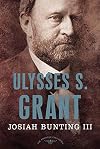
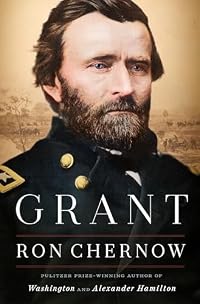
The underappreciated presidency of the military man who won the Civil War and then had to win the peace as well. As a general, Ulysses S. Grant is routinely described in glowing terms-the man who turned the tide of the Civil War, who accepted Lee's surrender at Appomattox, the man who had the stomach to see the war through to final victory. But his presidency is another matter-the most common word used to characterize it is "scandal." Grant is routinely portrayed as a man out of his depth, show more whose trusting nature and hands-off management style opened the federal coffers to unprecedented plunder. But that caricature does not do justice to the realities of Grant's term in office, as Josiah Bunting shows in this provocative assessment of our eighteenth president. Grant came to Washington in 1869 to lead a capital and a country still bitterly divided by four years of civil war. His predecessor, Andrew Johnson, had been impeached and the Radical Republicans in Congress were intent on imposing harsh conditions on the southern states before allowing them back into the Union. Grant made it his priority to forge the states back into a single nation, and Bunting shows that despite the troubles that characterized Grant's term in office, he was able to accomplish this most important task-very often through the skillful use of his own popularity with the American people. Grant was indeed a military man of the highest order, he was also a better president than he is often given credit for. show lessTags
Recommendations





Member Reviews
Josiah Bunting III's biography of Ulysses S. Grant differs from the plethora of material available on Grant in that it is short. He hits the highlights of Grant's younger years as a West Point student, his service during the American Civil War as one of the Union's most effective generals, and his Presidency. The book provides a good idea of Grant’s personal characteristics, such as his strategic brilliance, gritty determination, and ability to learn from mistakes.
Grant listened to others’ viewpoints without disclosing much about his own opinions. He occasionally seemed rather naïve, assuming honorable intentions where they were not always present. While acknowledging Grant's shortcomings and corruption scandals that plagued his show more administration, Bunting points out that Grant's commitment to Reconstruction and civil rights for freed slaves demonstrated his moral courage and forward-thinking leadership. The biography serves as a concise (200 pages) yet insightful introduction to Grant's life. show less
Grant listened to others’ viewpoints without disclosing much about his own opinions. He occasionally seemed rather naïve, assuming honorable intentions where they were not always present. While acknowledging Grant's shortcomings and corruption scandals that plagued his show more administration, Bunting points out that Grant's commitment to Reconstruction and civil rights for freed slaves demonstrated his moral courage and forward-thinking leadership. The biography serves as a concise (200 pages) yet insightful introduction to Grant's life. show less
Grant possessed that rarest quality among American presidents: nobility of character. As a military strategist he possessed quiet compassion, firm judgment and humanity. Then, where other historians hold Grant's administration responsible for many of the failures of Reconstruction, the author believes Grant was in his era "the central force in the achievement of civil rights for blacks, the most stalwart and most reliable among all American presidents for the next eighty years." What's more, Bunting does as good a job as possible in making sense of Grant's difficult presidency.
This is a relatively weak entry in this series. The author is a military man who is far too interested in analyzing Grant's generalship; in a short-format series such as this, one needs to cut to the chase and not waste two chapters on a career with only a tangential relationship to evaluating a president--as though anybody could analyze Grant as a commander in two chapters anyway. The author also thinks that Grant was a fine president, which is his prerogative, but to be a revisionist, a historian needs to do a much better job than Bunting does of explaining why the conventional wisdom is wrong. He does enumerate the scandals, in a formulaic, dry section, but the voices of the old-time historians who considered the scandals show more disqualifying in their evaluation of Grant's administration are very muted. show less
A brief, to-the-point biography of Grant - of the sort Grant himself might have approved. Pres. Grant's accomplishments for civil rights, suffrage and national unity have been forgotten due to the scandals his contemporary and historical opponents made great hay out of. Bunting makes this case, but not as forcefully as he might have. For example, he brings up that Congress hadn't had a raise in 20 years, but never ties that to the general culture of corruption he seeks a solution to.
The book seems like a very good starting point for reading about Grant, but not a good stopping one. It's very much an overview and doesn't spend much time on the details. (Think strategy, not tactics, like Grant)
The book seems like a very good starting point for reading about Grant, but not a good stopping one. It's very much an overview and doesn't spend much time on the details. (Think strategy, not tactics, like Grant)
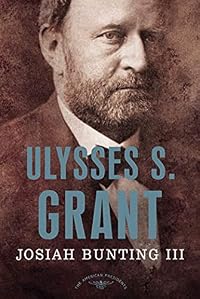
The American Presidents Series: The 18th President, 1869-1877. The underappreciated presidency of the military man who won the Civil War and then had to win the peace as well. As a general, Ulysses S. Grant is routinely described in glowing terms-the man who turned the tide of the Civil War, who accepted Lee's surrender at Appomattox, and who had the stomach to see the war through to final victory. But his presidency is another matter-the most common word used to characterize it is "scandal." Grant is routinely...
Ratings
Members
- Recently Added By
Lists

Ulysses S. Grant & the American Civil War
24 works; 1 member
Author Information
6+ Works 480 Members
Josiah Bunting III is a former army officer who for eight years served as superintendent of his alma mater, the Virginia Military Institute Arthur M. Schlesinger, Jr., is the preeminent political historian of our time. The recipient of two Pulitzer Prizes and a National Humanities Medal
Awards and Honors
Distinctions
Series

Common Knowledge
- Canonical title
- Ulysses S. Grant
- People/Characters
- Ulysses S. Grant
- Important places
- Point Pleasant, Ohio, USA; Ohio, USA; United States Military Academy, West Point, New York, USA; Washington, D.C., USA; Galena, Illinois, USA; Illinois, USA
- Original language
- English
Classifications
Statistics
- Members
- 246
- Popularity
- 130,808
- Reviews
- 5
- Rating
- (3.44)
- Languages
- English
- Media
- Paper, Audiobook, Ebook
- ISBNs
- 6
- ASINs
- 3