On This Page
Description
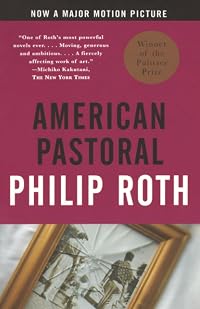
Fiction. Literature. American Pastoral is the story of a fortunate American's rise and fall—of a strong, confident master of social equilibrium overwhelmed by the forces of social disorder. Seymour "Swede" Levov—a legendary high school athlete, a devoted family man, a hard worker, the prosperous inheritor of his father's Newark glove factory—comes of age in thriving, triumphant postwar America. But everything he loves is lost when the country begins to run amok in the turbulent 1960s. show more Not even the most private, well-intentioned citizen, it seems, gets to sidestep the sweep of history. With vigorous realism, Roth takes us back to the conflicts and violent transitions of the 1960s. This is a book about loving—and hating—America. It's a book about wanting to belong—and refusing to belong—to America. It sets the desire for an American pastoral—a respectable life of space, calm, order, optimism, and achievement—against the indigenous American Berserk. show lessTags
Recommendations
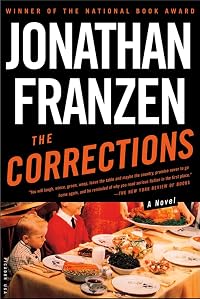
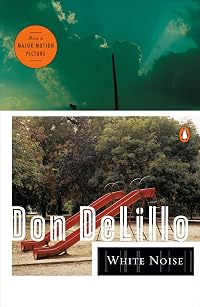
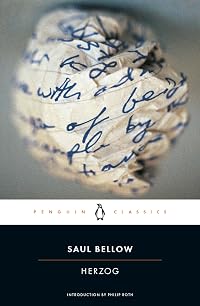
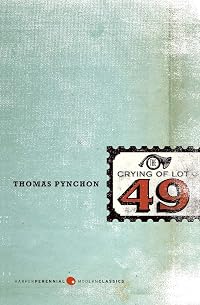
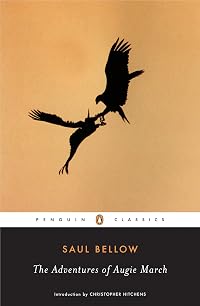
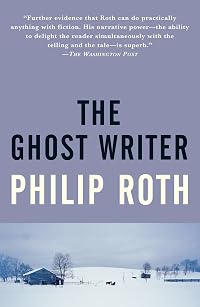
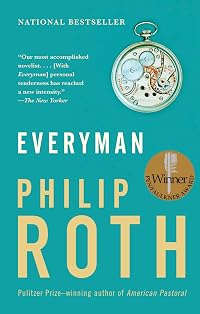
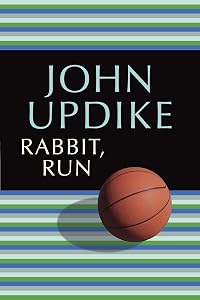
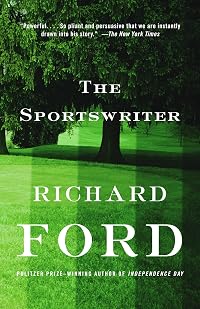
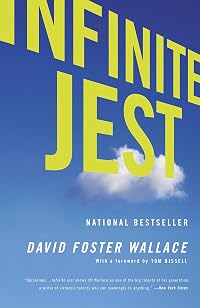
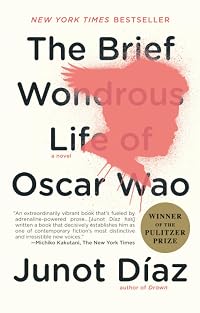
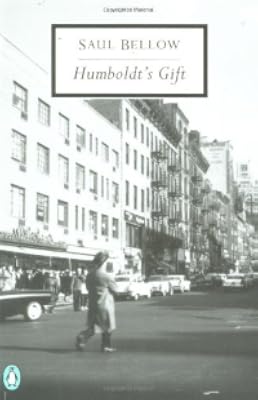
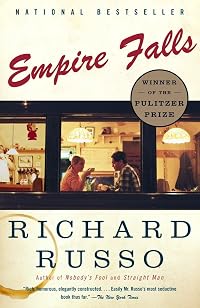
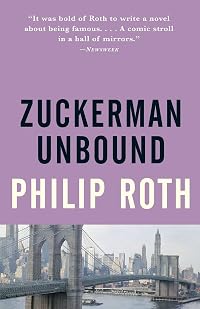
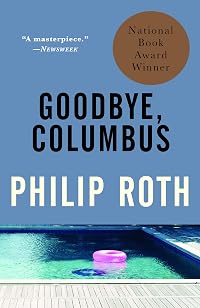
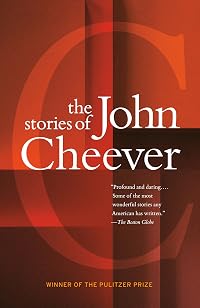


Member Recommendations
dreamreader An expansive and resonant masterpiece that ranks with American Pastoral as one of the best 10 reads of my adult life.
by ateolf
Member Reviews
Why was this exceptional? I'm not entirely sure. I certainly never need to hear another thing about how bloody gloves are made. And I definitely understand why people view this as self indulgent; there's absolutely no idea or line of though that Roth doesn't explore to its absolute end.
And I should point out, I listened to it by audiobook, with a performance by Ron Silver that has surely never been matched. So maybe that embued the book with more than it carried on its own.
But ultimately, I thought the way he conveyed lived experience and emotion was exceptional. Could I relate? Not a jot; I'm not a parent, nor a middle-aged male Jew in America, both of which elements are key to the protagonist and his (except not his, I'll get to that) show more experience. But could I feel empathy through how it was presented to me? Absolutely. The writing is both aesthetically beautiful and meaningful; a fine balance.
My only big issue? The novel dresses itself up as a novel about the Swede, but in the first half is cleverly far more about the 'narrator' than the Swede as his subject. It's a clever bait and switch, and enjoyable, and when the transition heads purely towards the Swede, one feels that is entirely fair, because surely the narrative will find symmetry by returning to the narrator (who seems to be the secret, or at least equal protagonist of the novel). But it never does: he is just abandoned half way as we give over fully to the Swede's narrative. That left me consta tky off kilter, and I guess I wanted more conventional symmetry from the book.
Despite that tiny gripe, it doesn't stop me from being bowled over by the book. An easy 5 star. show less
And I should point out, I listened to it by audiobook, with a performance by Ron Silver that has surely never been matched. So maybe that embued the book with more than it carried on its own.
But ultimately, I thought the way he conveyed lived experience and emotion was exceptional. Could I relate? Not a jot; I'm not a parent, nor a middle-aged male Jew in America, both of which elements are key to the protagonist and his (except not his, I'll get to that) show more experience. But could I feel empathy through how it was presented to me? Absolutely. The writing is both aesthetically beautiful and meaningful; a fine balance.
My only big issue? The novel dresses itself up as a novel about the Swede, but in the first half is cleverly far more about the 'narrator' than the Swede as his subject. It's a clever bait and switch, and enjoyable, and when the transition heads purely towards the Swede, one feels that is entirely fair, because surely the narrative will find symmetry by returning to the narrator (who seems to be the secret, or at least equal protagonist of the novel). But it never does: he is just abandoned half way as we give over fully to the Swede's narrative. That left me consta tky off kilter, and I guess I wanted more conventional symmetry from the book.
Despite that tiny gripe, it doesn't stop me from being bowled over by the book. An easy 5 star. show less
The whole time I was reading American Pastoral I kept thinking that if the name on the cover wasn't Philip Roth, this novel would not have won a Pulitzer Prize nor have gained much recognition. It is an uneven novel written in what I would describe as modified stream-of-consciousness, as though its narrator, Roth's fictional doppelgänger Nathan Zuckerman, suffers from ADHD. He habitually and annoyingly interrupts significant events to have a character dwell on trivialities, such as when a drunken neighbor stabs his father and, just after the initial, unexplained screams, spends two pages writing about fauna and flora before finally returning to the stabbing. Particularly odd is the disappearance of Zuckerman right in the middle of his show more 45th high school reunion while dancing with the insubstantial Joy Helpern. Zuckerman evanesces before our eyes; his first-person ruminations on his childhood hero, Seymour Levov, morph into third-person, single character point-of-view imaginings of the life of Levov, forever known as the Swede, an almost mythical legend of high school sports and a highly successful businessman.
American Pastoral is separated into three parts, "Paradise Remembered," "The Fall" and "Paradise Lost." One can't ignore the obvious allusions to the Bible and Milton's epic poem nor avoid interpreting the Swede and his wife, Dawn, as Adam and Eve. Their daughter, Merry, is Satan, an angel cast out of heaven for bombing the village store in protest of the Vietnam War. Through this act, Merry ends up killing an innocent man and becomes a specter haunting Levov as he tries to figure out what he did to set his daughter on her anarchist path. The remainder of the novel is devoted to stripping away the veneer of the Swede's charmed life and questioning the wisdom of his level-headed approach to life's problems.
Roth is reported to have expended a great effort researching his novel; what this adds in detail is overshadowed by the often unrealistic and at times bizarre thoughts of his protagonist (what devoted father describes his prepubescent daughter's genitalia as a c**t?). Most unsatisfying is that, after spending Parts II and III focused on the noble Swede's search for daughter, Rothleaves her fate unresolved, electing instead to end the novel with a repulsive minor character mockingly laughing at the ideal couple's comeuppance . show less
American Pastoral is separated into three parts, "Paradise Remembered," "The Fall" and "Paradise Lost." One can't ignore the obvious allusions to the Bible and Milton's epic poem nor avoid interpreting the Swede and his wife, Dawn, as Adam and Eve. Their daughter, Merry, is Satan, an angel cast out of heaven for bombing the village store in protest of the Vietnam War. Through this act, Merry ends up killing an innocent man and becomes a specter haunting Levov as he tries to figure out what he did to set his daughter on her anarchist path. The remainder of the novel is devoted to stripping away the veneer of the Swede's charmed life and questioning the wisdom of his level-headed approach to life's problems.
Roth is reported to have expended a great effort researching his novel; what this adds in detail is overshadowed by the often unrealistic and at times bizarre thoughts of his protagonist (what devoted father describes his prepubescent daughter's genitalia as a c**t?). Most unsatisfying is that, after spending Parts II and III focused on the noble Swede's search for daughter, Roth
A well-written but ultimately downbeat glimpse into the rapidly tarnishing American dream of the post-WWII generation. I found the book both compulsively readable with well-developed characters and irritatingly repetitive in spots. Overall, I'm glad I read this book, and I plan to read more from Roth, but the subject matter here is often a downer.
I'm so glad this wasn't my 1st attempt at Philip Roth's work, it would have put me off him forever. It must be a generational thing because I didn't get it in the way I'm sure someone my parent's age or my grandparent's age would have. This is not to say I didn't understand it; I did, but the way it was presented was comical and trying in the extreme. It made me feel pity for that generation in their locked in state; unable to flow or to grow with change, wanting everything the same for ever and ever.
Waaahh, my daughter didn't turn out exactly like me. Waaahh, the American Dream is dead. Waaah, politicians are unscrupulous. Waaahhh, war isn't fun. Waaahh, why can't everyone just love and respect 'the greatest generation' and not make us show more responsible for anything? Waaahh, why can't I be a Jewish WASP? Waaahhh. Ugh. What a horrible follow up read for me on the heels of The Human Stain. I won't give up on Mr. Roth, but this novel was so long, drawn out and simultaneously self-pitying and self-congratulatory that I had to force myself to finish it. show less
Waaahh, my daughter didn't turn out exactly like me. Waaahh, the American Dream is dead. Waaah, politicians are unscrupulous. Waaahhh, war isn't fun. Waaahh, why can't everyone just love and respect 'the greatest generation' and not make us show more responsible for anything? Waaahh, why can't I be a Jewish WASP? Waaahhh. Ugh. What a horrible follow up read for me on the heels of The Human Stain. I won't give up on Mr. Roth, but this novel was so long, drawn out and simultaneously self-pitying and self-congratulatory that I had to force myself to finish it. show less
I thought I knew what I was getting into with this book- I knew that it was a nostalgic look back at youth in New Jersey, and I guessed at the idea of a decaying facade due to the title. But I had no idea about the richness, range and depth of the topics that would be discussed.
I am still new to Philip Roth, and his style of how he uses a narrator is still a bit strange to me, but the story was enthralling. As I mentioned to co-workers, I have never been so uncomfortable as I was when I realized that I was seeing elements of myself in such a loathsome character- a young, angry, radicalized teen aged girl. As I finished it, I am frustrated and curious still.
This will be one I return to down the road...
I am still new to Philip Roth, and his style of how he uses a narrator is still a bit strange to me, but the story was enthralling. As I mentioned to co-workers, I have never been so uncomfortable as I was when I realized that I was seeing elements of myself in such a loathsome character- a young, angry, radicalized teen aged girl. As I finished it, I am frustrated and curious still.
This will be one I return to down the road...
Seymour 'Swede' Levov is the American ideal- he is Jewish, tall, blonde and handsome. A star athlete, a war hero and thanks to his father’s glove manufacturing business, very wealthy. He also marries a former beauty queen. The facade starts to crack when their teenage daughter, Merry, begins to rebel and she gets involved in political terrorism, which leads to committing a horrendous attack.
I think this novel reflects America perfectly- all the starry ideals, along with all the ugliness, bubbling just under the surface. The writing is absolutely stellar, equal to it’s ambitious scope. I am not an authority on Roth but I would have to say that he is at the top of his game here. Brilliant book.
I think this novel reflects America perfectly- all the starry ideals, along with all the ugliness, bubbling just under the surface. The writing is absolutely stellar, equal to it’s ambitious scope. I am not an authority on Roth but I would have to say that he is at the top of his game here. Brilliant book.
Philip Roth’s American Pastoral is filled with bile, lyrical bile. Whether in the voice of Seymour Levov, “the Swede”, or his brother Jerry, or his father Lou, or the Swede’s daughter, Merry, or almost any other character, the potential for an excoriating rant is virtually irresistible. The anger, or envy, or contempt, or, sometimes, distorting idolatry, is released shotgun fashion – its spread is wide and indiscriminate and it may not necessarily kill what it hits. Distorting idolatry might sound odd in that list, but love in this novel, whether of Zuckerman for the Swede, the Swede for his daughter or his wife, or various characters for “America”, is often so blurred and overridden with wish fulfilment that it begins to show more feel a bit more like hate for whatever the real object of that love might be.
The novel opens with a long framing device in which Roth’s writerly alter-ego, Zuckerman, introduces us to the Swede. The Swede is almost too good to be true, and not surprisingly cracks in the façade soon begin to emerge. At that point the frame of Zuckerman is dropped and the novel continues in revelatory fashion from the Swede’s perspective. That has the effect of making the frame appear to have been superfluous. No matter. By then the rants are in full flown against LBJ, the war in Vietnam, capitalism, anti-capitalism, Nixon, intellectualism, almost each character, against the narrator (the Swede) himself, and more.
We follow the Swede from his origins in Newark to the superficially idyllic and pastoral setting of Old Rimrock, with his near-Miss-America wife, Dawn, and their stuttering daughter, Merry. Merry’s impulse to rant is nearly matched by her speech impediment. It is an articulate inarticulateness, with explosive consequences, that is mirrored by other characters, and, possibly, by Roth himself. We see pyrotechnical displays of language but I fear it may be mere display. As ever there is no counter-balance, and the reader is left with the suspicion that despite piercing insight, Roth has missed something equally obvious. Or at least that is how this reader reacts. show less
The novel opens with a long framing device in which Roth’s writerly alter-ego, Zuckerman, introduces us to the Swede. The Swede is almost too good to be true, and not surprisingly cracks in the façade soon begin to emerge. At that point the frame of Zuckerman is dropped and the novel continues in revelatory fashion from the Swede’s perspective. That has the effect of making the frame appear to have been superfluous. No matter. By then the rants are in full flown against LBJ, the war in Vietnam, capitalism, anti-capitalism, Nixon, intellectualism, almost each character, against the narrator (the Swede) himself, and more.
We follow the Swede from his origins in Newark to the superficially idyllic and pastoral setting of Old Rimrock, with his near-Miss-America wife, Dawn, and their stuttering daughter, Merry. Merry’s impulse to rant is nearly matched by her speech impediment. It is an articulate inarticulateness, with explosive consequences, that is mirrored by other characters, and, possibly, by Roth himself. We see pyrotechnical displays of language but I fear it may be mere display. As ever there is no counter-balance, and the reader is left with the suspicion that despite piercing insight, Roth has missed something equally obvious. Or at least that is how this reader reacts. show less
Members
- Recently Added By
Published Reviews
Bewundernswert ist die Detailversessenheit und die akribische Genauigkeit, mit der Roth sein Pastiche malt. Sie macht die Besessenheit des Erzählers, mit der er die faszinierende Gestalt des Schweden umkreist, eindrucksvoll und wahrhaftig. Eine Frage aber bleibt: Wieviel amerikanische Idyllenmalerei, auch wenn sie im Dienste der Demontage eben dieser Idylle steht, erträgt der show more nicht-amerikanische Leser? Stellenweise geht Roth zu weit - er geht zu sehr ins Detail. Wenn er sowohl Vater als auch Sohn Levov in ihrer Begeisterung für das Handschuhgewerbe beschreibt, läßt er auch uns bis in die unbedeutendsten Einzelheiten an diesem Gewerbe, seiner Geschichte und seinen Fachbegriffen teilhaben. Und von welchem anderen Roman kann man schon lernen, was ein "Schichtel" ist? show less
added by Indy133
added by doomjesse
Lists

1001 Books You Must Read Before You Die
1,448 works; 1,132 members

The Guardian's 1000 Novels Everyone Must Read
1,005 works; 550 members

Pulitzer Prize Winners for Fiction
102 works; 54 members

Great American Novels
158 works; 42 members

Novels from The Guardian's Great American Novelist Tournament
148 works; 24 members
Favourite Books
1,819 works; 316 members
20th Century Literature
1,161 works; 55 members

Jewish Books
367 works; 24 members

Canon de la narrativa universal del siglo XX
254 works; 6 members
Time Magazine's "All-Time 100"
113 works; 15 members

The Guardian's 100 greatest novels of all time
100 works; 16 members

1990s
309 works; 17 members
The American Experience
173 works; 18 members

100 New Classics
101 works; 13 members

Blue Pyramid 1,276 Best Books of All Time
1,248 works; 32 members

Five star books
1,755 works; 107 members

Top Five Books of 2015
811 works; 240 members

40 Books to Read Before You’re 40
40 works; 4 members

Pulitzer Prize-Winning Books
42 works; 10 members
Fiction For Men
142 works; 11 members

Unread books
1,063 works; 86 members
Time's All-Time 100 Novels
100 works; 27 members

50 Books from the Past 50 Years
50 works; 8 members
Best of American Literature
146 works; 9 members

Book Riot's 100 must-read works of Jewish Fiction
100 works; 8 members

A Novel Cure
742 works; 23 members

Love Triangles in Literature
108 works; 15 members

Dysfunctional Families
133 works; 7 members

The Hatchery's Book Club Suggestions
2 works; 1 member
Phi Beta Kappa reading list
260 works; 8 members
TML 200 Best Books 1950-1999
202 works; 10 members
Best Domestic Fiction
77 works; 6 members

Books Read in 2015
3,299 works; 126 members

A's favorite novels
100 works; 3 members
Books Read in 2016
4,666 works; 197 members

SHOULD Read Books!
354 works; 9 members

Books Set in New Jersey
22 works; 4 members
American Lit for Eng 11 Research Project
368 works; 6 members

Swinging Seventies
255 works; 18 members
Literary Travelogue of the United States Challenge
133 works; 6 members

Books worth rereading
21 works; 1 member

Mustich's 1000 Books to Read Before You Die: A Life Changing List
1,001 works; 19 members

Books Read in 2024
4,623 works; 126 members
Canon de la narrativa universal del s. XX (cicutadry)
499 works; 3 members

The Torchlight List
95 works; 1 member

DigitalDreamDoor top 300
300 works; 4 members
.
396 works; 1 member

The Modern Library (The Two Hundred Best Novels....
202 works; 1 member
Author Information

115+ Works 74,657 Members
Philip Milton Roth was born in Newark, New Jersey on March 19, 1933. He attended Rutgers University for one year before transferring to Bucknell University where he completed a B.A. in English with highest honors in 1954. He received an M.A. from the University of Chicago in 1955. His first book, Goodbye, Columbus, received the National Book Award show more in 1960. His other books include Letting Go, When She Was Good, Portnoy's Complaint, My Life as a Man, The Ghostwriter, Zuckerman Unbound, I Married a Communist, The Plot Against America, The Facts, The Anatomy Lesson, Exit Ghost, Deception, Nemesis, Everyman, Indignation, and The Humbling. He won the National Book Critic Circle Awards in 1987 for his novel The Counterlife and in 1992 for his memoir Patrimony: A True Story. He won the PEN/Faulkner Award for Fiction in 1993 for Operation Shylock: A Confession and in 2001 for The Human Stain, the National Book Award in 1995 for Sabbath's Theater, and the Pulitzer Prize in 1998 for American Pastoral. He stopped writing in 2010. He died from congestive heart failure on May 22, 2018 at the age of 85. (Bowker Author Biography) show less
Some Editions
Awards and Honors
Awards
Notable Lists
Torchlight List (38.1)
Series

Belongs to Publisher Series
Work Relationships
Is contained in
Has the adaptation
Has as a commentary on the text
Has as a student's study guide
Common Knowledge
- Canonical title*
- Amerikietiška Pastoralė
- Original title
- American Pastoral
- Original publication date
- 1997
- People/Characters
- Nathan Zuckerman; Seymour Levov; Jerry Levov; Merry Levov
- Important places
- New Jersey, USA; Newark, New Jersey, USA
- Important events
- Newark riots (1967)
- Related movies
- American Pastoral (2016 | IMDb)
- Epigraph
- Dream when the day is thru, dream and they might come true, things never are as bad as they seem, so dream, dream, dream.
—Johnny Mercer from "Dream," popular song of the 1940s
the rare occurrence of the expected...
—William Carlos Williams, from "At Kenneth Bruke's Place," 1946 - Dedication
- To J. G.
- First words
- The swede.
- Quotations
- What he saw, in a scarecrow's clothes, stick-skinny as a scarecrow, was the scantiest farmyard emblem of life, a travestied mock-up of a human being, so meager a likeness to a Levov it could have fooled only a bird.
- Last words
- (Click to show. Warning: May contain spoilers.)What on earth is less reprehensible than the life of the Levovs?
- Original language
- English
*Some information comes from Common Knowledge in other languages. Click "Edit" for more information.
Classifications
Statistics
- Members
- 8,851
- Popularity
- 1,219
- Reviews
- 188
- Rating
- (3.92)
- Languages
- 23 — Catalan, Chinese, Czech, Danish, Dutch, English, Estonian, Finnish, French, German, Greek, Hungarian, Italian, Lithuanian, Norwegian (Bokmål), Polish, Portuguese, Romanian, Russian, Slovenian, Spanish, Swedish, Turkish
- Media
- Paper, Audiobook, Ebook
- ISBNs
- 87
- UPCs
- 1
- ASINs
- 31