
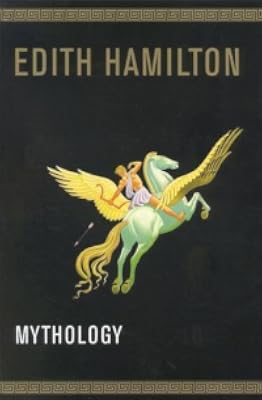
Mythology
by Edith Hamilton
On This Page
Description
Monsters, mortals, gods, and warriors: For over sixty years readers have chosen this book above all others to discover the thrilling, enchanting, and fascinating world of Western mythology. From Odysseus's adventure-filled journey to the Norse god Odin's effort to postpone the final day of doom, Edith Hamilton's classic collection not only retells these stories with brilliant clarity but shows us how the ancients saw their own place in the world and how their themes echo in our consciousness show more today. An essential part of every home library, Mythology is the definitive volume for anyone who wants to know the key dramas, the primary characters, the triumphs, failures, fears, and hopes first narrated thousands of years ago-and still spellbinding to this day. show lessTags
Recommendations













Member Recommendations


by anonymous user


RickyHaas Both books center on mythology (obviously). The Norse Myths is more focused on a specific mythology. Whereas Mythology is a broader scope with a heavier focus on Greek/Roman Mythology.

themulhern One is a scholarly examination of classical mythology the other is, primarily, a scholarly retelling of classical mythology. Obvious compliments.
Also recommended by themulhern
Member Reviews
This book is an enjoyably written retelling of the major Greek and Roman myths, with a brief introduction to Norse mythology tacked on to the end. Edith Hamilton is clearly at home in the literature; she prefaces each tale with a brief account of which classical sources she used. Taken together, they reflect her reasons for preferring some (Homer and the main Greek tragedians) over others (Ovid, for example), as well as demonstrating that she prizes the ancient Greek world over anything that came before or has come since. There is a sense of freedom in her accounts of goddesses and princesses who scorned marriage and pairs of male heroes, such as Achilles and Patroclus, bound by mutual devotion, as well as married couples whose tender show more love for each other contrasted with the woes of Zeus and Hera. In general, the gods are flawed and contradictory, needlessly interfering with the world of humans.
Her overview also helps contextualize some of the oldest biblical tales. The recasting of Iphigenia’s fate can be compared to that of Isaac. Both stories seem to reflect an earlier tradition of human sacrifice, but in their present form show a change of heart on the part of tellers of tales and or their audiences, leading to the conviction that no god could want that kind of thing. Also, Iphigenia’s reunion with her brother Orestes bears a likeness to Joseph’s with his brothers in Egypt.
When the book appeared, it undoubtedly served as a handy reference, as well as a book to be read and savored. Nowadays, if I have forgotten just who Calliope was — male, female, a god, human, halfway in between — I would go first to the internet. But Hamilton’s book remains a good read nonetheless. show less
Her overview also helps contextualize some of the oldest biblical tales. The recasting of Iphigenia’s fate can be compared to that of Isaac. Both stories seem to reflect an earlier tradition of human sacrifice, but in their present form show a change of heart on the part of tellers of tales and or their audiences, leading to the conviction that no god could want that kind of thing. Also, Iphigenia’s reunion with her brother Orestes bears a likeness to Joseph’s with his brothers in Egypt.
When the book appeared, it undoubtedly served as a handy reference, as well as a book to be read and savored. Nowadays, if I have forgotten just who Calliope was — male, female, a god, human, halfway in between — I would go first to the internet. But Hamilton’s book remains a good read nonetheless. show less
The blanket title is a misnomer; this is Greek/Roman mythology, with a tiny bit of Norse mythology tacked on as an epilogue (though she ties it in nicely). Once that's understood, it's fantastic.
I was amazing to learn what Greek mythology lacks, given how rich it has always seemed to be. The personalities of the gods are not well drawn, often inconstant and changing. Most surprising, there is no original creation myth in Greek mythology to explain how the world came to be. The introduction lists the Greek/Roman gods and their general profiles, then there's a very helpful overview of the most important sources for these ancient myths - not just Greek but Roman as well. As a preamble to each of the tales, Hamilton outlines her amalgamated show more sources for them. Nearly all are sewn together from the writings of multiple authors who lived centuries apart. She's done the work of bringing these together into a cohesive and complete narrative, so that all we need to do is read and enjoy. I'm confused what her real opinion is of Appolodorus as a source. She claims his writing is boring and the least interesting of her sources, but then goes on to use him as her primary source for the most famous myths.
Some myths lack our modern sense of drama (or logic) in their original form. Theseus finding and killing the Minotaur while it's sleeping, for example, doesn't make for much of a confrontation. And Perseus seems to forget he has Medusa's head in a sack when he fends off the sea monster that wants to eat Andromeda. The fall of Troy is made ridiculous by Odysseus and Diomedes first scaling the wall to swipe a sacred image for Athena out of the city - simple as that. Once safely outside with the image, they can only come up with the elaborate Trojan Horse plan to get back in? Hamilton's occasionally expresses some skepticism of her own, pointing out when the myths don't properly explain some missing detail.
The conclusion of Hamilton's story of the Odyssey omits Odysseus' murder of the maidservants. This leads me to wonder what else she sanitized in the other myths that I was unable to catch. This is still a fantastic tour that saves me from what would otherwise be a lot of extended reading and sleuthing. It was worthwhile reading it from cover to cover, and it will remain a great reference. show less
I was amazing to learn what Greek mythology lacks, given how rich it has always seemed to be. The personalities of the gods are not well drawn, often inconstant and changing. Most surprising, there is no original creation myth in Greek mythology to explain how the world came to be. The introduction lists the Greek/Roman gods and their general profiles, then there's a very helpful overview of the most important sources for these ancient myths - not just Greek but Roman as well. As a preamble to each of the tales, Hamilton outlines her amalgamated show more sources for them. Nearly all are sewn together from the writings of multiple authors who lived centuries apart. She's done the work of bringing these together into a cohesive and complete narrative, so that all we need to do is read and enjoy. I'm confused what her real opinion is of Appolodorus as a source. She claims his writing is boring and the least interesting of her sources, but then goes on to use him as her primary source for the most famous myths.
Some myths lack our modern sense of drama (or logic) in their original form. Theseus finding and killing the Minotaur while it's sleeping, for example, doesn't make for much of a confrontation. And Perseus seems to forget he has Medusa's head in a sack when he fends off the sea monster that wants to eat Andromeda. The fall of Troy is made ridiculous by Odysseus and Diomedes first scaling the wall to swipe a sacred image for Athena out of the city - simple as that. Once safely outside with the image, they can only come up with the elaborate Trojan Horse plan to get back in? Hamilton's occasionally expresses some skepticism of her own, pointing out when the myths don't properly explain some missing detail.
The conclusion of Hamilton's story of the Odyssey omits Odysseus' murder of the maidservants. This leads me to wonder what else she sanitized in the other myths that I was unable to catch. This is still a fantastic tour that saves me from what would otherwise be a lot of extended reading and sleuthing. It was worthwhile reading it from cover to cover, and it will remain a great reference. show less
This book, widely recognized as a classic - or perhaps the classic - in the field of mythology, provides not just Hamilton's scholarship over a lifetime of classical myths; it provides Hamilton's outlay for how to live the good life. She respects and admires the Greek and Roman cultures whose myths she portrays - so much so that she attempts to convince the reader of their nobility and ability to transform contemporary life.
Mythology in an age of science has its own issues. Nonetheless, we as a culture have certain archetypal stories that we share so as to maintain social cohesion from neighbor-to-neighbor. Phrases like "the girl next door," "listen to the siren-song," or "a Trojan horse" all harken to prior stories in our cultural show more memory. Some of these go as far back as Greco-Roman mythology. Hamilton brings these allusions to life and remind us of our cultural debt to those who lived thousands of years ago.
It's amazing to think of how much we owe, particularly to the Greeks as intellectual originators and less so to the Romans as cultural progenitors. How did this small island people bring about such enlightenment that students still study their materials in modern America today (e.g., Euclid's Geometry)? Why Greece, of all places? Mythology does not answer all these questions. Instead, it brings us along the way as it tells a story of civilization, of humanity, and of ourselves. show less
Mythology in an age of science has its own issues. Nonetheless, we as a culture have certain archetypal stories that we share so as to maintain social cohesion from neighbor-to-neighbor. Phrases like "the girl next door," "listen to the siren-song," or "a Trojan horse" all harken to prior stories in our cultural show more memory. Some of these go as far back as Greco-Roman mythology. Hamilton brings these allusions to life and remind us of our cultural debt to those who lived thousands of years ago.
It's amazing to think of how much we owe, particularly to the Greeks as intellectual originators and less so to the Romans as cultural progenitors. How did this small island people bring about such enlightenment that students still study their materials in modern America today (e.g., Euclid's Geometry)? Why Greece, of all places? Mythology does not answer all these questions. Instead, it brings us along the way as it tells a story of civilization, of humanity, and of ourselves. show less
I read this as a child and was instantly fascinated and taken away by it. Since then I have read much more and heavier books on the subject. None of them take away from Hamilton's. This is a good read that will point you in the direction of similar subject matter. What makes this volume nice is the lesser known stories that take Mythology out of the box.
I’ve always loved mythology and even took a Classical Mythology class in college, but it’s been years since I really studied it. Despite that many of the Greek gods’ names are ingrained in our collective minds: Zeus, Athena, Poseidon, Hades, but it’s easy to loose track of how they are connected. This 1942 publication is a simple but complete overview of mythology.
The book is broken down into the following seven sections:
1: The Gods, the Creation, and the Earliest Heroes (Both Greek and Roman names)
2: Stories of Love and Adventure (Cupid & Psyche and the Quest for the Golden Fleece)
3: The Great Heroes before the Trojan War (Perseus, Theseus, Hercules, and Atalanta
4: The Heroes of the Trojan War (Achilles, Odysseus and Aeneas)
5: show more The Great Families of Mythology (Atreus, Thebes, and Athens)
6: The Less Important Myths (Midas, etc)
7: The Mythology of the Norsemen (Odin, Thor, Loki, etc)
One reason mythology can be confusing is because all of the gods have at least two names: the Greek name and the Roman name. For example, Zeus is the Greek name for the ruler of Olympus and the same god is called Jupiter in Roman culture. There are also multiple versions of all of the myths. Different authors told their own interpretation and over the years the story begins to contradict itself. Hamilton removes this confusion, making the stories more accessible and breaking everything down by family tree and relationships. She also sights her sources at the beginning of each section. So if she compiled one version of the story from four different authors’ versions she explains what she did and what the differences are.
That’s the reason this book is so excellent. Hamilton collected dozens of authors’ works into one edition. She took pieces from plays, epic poems, etc. to create on cohesive narrative. She includes an important element from one author in the story written by another author so that everyone’s actions make sense. Then she put them in chronological order within the narrative of the story. For example, she includes the Judgment of Paris, which is assumed to be the real reason for the Trojan War, before Virgil and Homer’s story of the Trojan War itself
There are many themes that remain the same throughout the mythology. A major one is the attempt to beat fate and failing miserably. Heroes and rulers frequently heard prophesies about their lives. Then they would try to outsmart those predictions, like Oedipus’ father trying to kill his son when he was a baby or Cronus eating his children. They were trying to prevent their own deaths, but their actions inevitably led to the fulfillment of the prophesy.
“To attempt to act in such a way that the prophesy would be made void was as futile as to set oneself against the decrees of fate.”
Another common theme is the power and cruelty of the gods. There is example after example of their quick tempers and over reactions. They often cause madness in a person to extract their revenge. Then that person (Hercules, Agave, etc.) kills their own families. Other times a god would fall in love with a mortal and regardless of whether or not that love was returned, it usually meant death and destruction for that person.
The tale of Cupid and Psyche was won of my favorites. It’s all about true love and trust as opposed the stories of brute force where the gods just take what they want. They are a couple that truly love each other and work even harder to find each other once they are separated because they know real love is worth the pain.
The final section covers Norse mythology. There are many similarities with Greek mythology. Asgard is their equivalent to Greece’s Olympus, Thor is similar to Zeus, etc. The writing and proverbs is less poetic, but it’s still interesting.
"Brave men can live well anywhere. A coward dreads all things."
The book wraps up with a section of family trees. I flagged this break down early on and added notes as I went. It seems like every major family line is connected to the others and the trees helped me keep it all straight.
BOTTOM LINE: This book covers so much ground, compiling hundreds of years of Greek literature into one volume. The work is priceless and my copy is flagged and highlighted for future reference. I’d highly recommended it to anyone who loves Greek mythology. It might be a little dry for those who aren’t already interested. It would also be a valuable resource for anyone reading modern Greek literature, like The Song of Achilles or the Percy Jackson series.
"According to the most modern idea, a real myth has nothing to do with religion. It is an explanation of something in nature."
“They had learned that every sin causes fresh sin; every wrong brings another in its train.” show less
The book is broken down into the following seven sections:
1: The Gods, the Creation, and the Earliest Heroes (Both Greek and Roman names)
2: Stories of Love and Adventure (Cupid & Psyche and the Quest for the Golden Fleece)
3: The Great Heroes before the Trojan War (Perseus, Theseus, Hercules, and Atalanta
4: The Heroes of the Trojan War (Achilles, Odysseus and Aeneas)
5: show more The Great Families of Mythology (Atreus, Thebes, and Athens)
6: The Less Important Myths (Midas, etc)
7: The Mythology of the Norsemen (Odin, Thor, Loki, etc)
One reason mythology can be confusing is because all of the gods have at least two names: the Greek name and the Roman name. For example, Zeus is the Greek name for the ruler of Olympus and the same god is called Jupiter in Roman culture. There are also multiple versions of all of the myths. Different authors told their own interpretation and over the years the story begins to contradict itself. Hamilton removes this confusion, making the stories more accessible and breaking everything down by family tree and relationships. She also sights her sources at the beginning of each section. So if she compiled one version of the story from four different authors’ versions she explains what she did and what the differences are.
That’s the reason this book is so excellent. Hamilton collected dozens of authors’ works into one edition. She took pieces from plays, epic poems, etc. to create on cohesive narrative. She includes an important element from one author in the story written by another author so that everyone’s actions make sense. Then she put them in chronological order within the narrative of the story. For example, she includes the Judgment of Paris, which is assumed to be the real reason for the Trojan War, before Virgil and Homer’s story of the Trojan War itself
There are many themes that remain the same throughout the mythology. A major one is the attempt to beat fate and failing miserably. Heroes and rulers frequently heard prophesies about their lives. Then they would try to outsmart those predictions, like Oedipus’ father trying to kill his son when he was a baby or Cronus eating his children. They were trying to prevent their own deaths, but their actions inevitably led to the fulfillment of the prophesy.
“To attempt to act in such a way that the prophesy would be made void was as futile as to set oneself against the decrees of fate.”
Another common theme is the power and cruelty of the gods. There is example after example of their quick tempers and over reactions. They often cause madness in a person to extract their revenge. Then that person (Hercules, Agave, etc.) kills their own families. Other times a god would fall in love with a mortal and regardless of whether or not that love was returned, it usually meant death and destruction for that person.
The tale of Cupid and Psyche was won of my favorites. It’s all about true love and trust as opposed the stories of brute force where the gods just take what they want. They are a couple that truly love each other and work even harder to find each other once they are separated because they know real love is worth the pain.
The final section covers Norse mythology. There are many similarities with Greek mythology. Asgard is their equivalent to Greece’s Olympus, Thor is similar to Zeus, etc. The writing and proverbs is less poetic, but it’s still interesting.
"Brave men can live well anywhere. A coward dreads all things."
The book wraps up with a section of family trees. I flagged this break down early on and added notes as I went. It seems like every major family line is connected to the others and the trees helped me keep it all straight.
BOTTOM LINE: This book covers so much ground, compiling hundreds of years of Greek literature into one volume. The work is priceless and my copy is flagged and highlighted for future reference. I’d highly recommended it to anyone who loves Greek mythology. It might be a little dry for those who aren’t already interested. It would also be a valuable resource for anyone reading modern Greek literature, like The Song of Achilles or the Percy Jackson series.
"According to the most modern idea, a real myth has nothing to do with religion. It is an explanation of something in nature."
“They had learned that every sin causes fresh sin; every wrong brings another in its train.” show less
As an avid reader, I wanted a resource that would give me enough information about Greek and Roman mythology that I could encounter most references in other literature without having to Google them. As a writer, I wanted something that would show me which myths connect to my own creative essence. This book provided me with both. Hamilton's summaries are both interesting and easily approachable, even for someone with minimal knowledge of mythology. While I wouldn't use this as my only source for mythological knowledge, it's a good jutting off point. Nevertheless, I did have a few qualms. Firstly, there are no actual citations in this work. Secondly, Hamilton too frequently disrupts the flow of her narration by including her personal show more judgments of the original writers or the content. Lastly, the section on Norse mythology seemed like a forced, poorly handled add on. Despite this, I still really enjoyed this work. show less
I have to talk about this book on two levels. On the first level is considering the book as a collection of paraphrases of Greek and Roman mythology. On this level, it's a perfectly adequate book and serves as a decent reference source for a reader that might run across allusions to Theseus, Ariadne, or Agamemnon in other readings. Hamilton covers a wide breadth of myths in relatively brief space and keeps the language at a level that makes comprehensible for a non-academic.
The second level is about the tone Hamilton uses when she talks about myths, writers, and Norse mythology as a whole. It is not good. She comes across as condescending, pretentious, and superior, and for reasons that escape me, includes "the important parts" of Norse show more mythology in just 10 pages or so. In talking about one Greek writer, she describes him as "boring, but less boring in this tale." A lot of this is likely the product of this book being originally published in 1942 but the lack of cultural relativism drove me a little crazy. My view of the book is particularly tainted by this as the Norse mythology section is at the end and this approach of Hamilton's is in strongest evidence there. If you're looking for a decent reference source on Greek mythology, this isn't bad to get the gist of the myths, but don't look at it for criticism of the literature. show less
The second level is about the tone Hamilton uses when she talks about myths, writers, and Norse mythology as a whole. It is not good. She comes across as condescending, pretentious, and superior, and for reasons that escape me, includes "the important parts" of Norse show more mythology in just 10 pages or so. In talking about one Greek writer, she describes him as "boring, but less boring in this tale." A lot of this is likely the product of this book being originally published in 1942 but the lack of cultural relativism drove me a little crazy. My view of the book is particularly tainted by this as the Norse mythology section is at the end and this approach of Hamilton's is in strongest evidence there. If you're looking for a decent reference source on Greek mythology, this isn't bad to get the gist of the myths, but don't look at it for criticism of the literature. show less
Members
- Recently Added By
Lists

Unread books
1,063 works; 84 members

Books You Read During High School (For School)
301 works; 53 members

GreatBooks Worldview Academy Lists
133 works; 4 members

CCE 1000 Good Books List
1,033 works; 12 members

Favorite Childhood Books
1,646 works; 517 members

100 Most Recommended Works
100 works; 11 members

Books Read in 2006
421 works; 8 members

Mythical Monsters of the World
199 works; 79 members

Before Austen Comes Aesop
318 works; 9 members

Club Read's Recommended Nonfiction Written by Women
618 works; 30 members

Gen X Library
245 works; 4 members

Non-Fiction
68 works; 1 member

School Made Us Read It
380 works; 196 members

Mythology
9 works; 2 members

el
1,139 works; 1 member

bound
100 works; 1 member
Author Information

16+ Works 21,635 Members
Some Editions
Awards and Honors
Notable Lists
Work Relationships
Has as a student's study guide
Common Knowledge
- Original title
- Mythology - Timeless Tales of Gods and Heroes
- Original publication date
- 1942
- People/Characters
- Achilles; Abas; Acestes; Acetes; Achaeans; Achates (show all 831); Achelous; Acheron; Acis; Acrisius; Actaeon; Admeta; Adrastus; Adonis; Adrastea; Aeacides; Aeacus; Aeëtes; Aegaeon; Aegeus; Aegina; Aegisthus; Aegyptus; Aeneas; Aeneas Sylvius; Aeolians; Aeolus; Aepytus; Aero; Aerope; Aeschylus; Aesculapius; Æsir; Aethra; Aetolus; Agamemnon; Agave; Agenor; Aglaia; Aglauros; Aidos; Ajax; Ajax the Lesser; Alba Longa; Alcestis; Alcaeus; Alcinous; Alcmaeon; Alcmene; Alcyone; Alecto; Aloadae; Aloeus; Alpheus; Althea; Amalthea; Amata; Amazons; Amphiaraus; Amphion; Amphitrite; Amphitryon; Amymone; Anaxarete; Ancaeus; Anchises; Androgeus; Andromache; Andromeda; Andvari; Anemone; Angerbode; Antaeus; Anteia; Anteros; Antigone; Antilochus; Antinous; Antiope; Aphrodite; Apollo; Apollodorus; Apollonius of Rhodes; Absyrtus; Apuleius; Aquilo; Arachne; Arcas; Arcturus; Ares; Arete; Arethusa; Arges; Argonauts; Argos (dog); Argus; Argus (bulit the Argo); Ariadne; Arimaspi; Arion (person); Arion (horse); Aristaeus; Aristophanes; Arne; Arsinoe; Artemis; Aruns; Ascanius; Ask; Asopus; Astraea; Astyanax; Atalanta; Ate; Athamas; Athena; Athenians; Atlas; Atli; Atreus; House of Atreus; Atropos; Audhumla; Aurora; Auster; Autonoë; Balder; Bacchantes; Battus; Baucis; Great Bear; Lesser Bear; Bellerophon; Bellona; Belus; Bion; Bootes; Bor; Boreas; Bragi; Briareus; Briseis; Brontes; Brunhild; Cabeiri; Cacus; Cadmus; Calais; Calchas; Calliope; Callisto; Calypso; Camenae; Camilla; Candace; Camenae; Capaneus; Cassandra; Cassiopeia; Castalia; Castor; Catullus; Cecrops; Celaeno; Celeus; Centaurs; Cephalus; Cephissus; Cerberus; Cercopes; Ceres; Ceyx; Chaos; Charites; Charon; Charybdis; Chimaera; Chiron; Chrysaor; Chryseis; Chrysothemis; Cimmerians; Cinyras; Circe; Cleobis; Clotho; Clymene; Clytemnestra; Clytie; Coeus; Coronis; Corybantes; Cottus; Cranes of Ibycus; Creon; Cresphontes; Cretheus; Creusa; Cronus; Cumaean Sibyl; Cupid; Curetes; Cybele; Cyclopes; Cycnus; Cydippe; Cynosure; Cynthia; Cyprian; Cyrene; Dactyls; Daedalus; Danaans; Danaë; Danaïdes; Daphne; Daphnis; Dardanus; Day; Death; Deianira; Deidamia; Deiphobus; Delian from Delos; Delphi; Demeter; Demophon; Deucalion; Diana; Dictys; Dido; Dike; Diomedes; Dione; Dionysus; Dioscuri; Dirce; Dis Pater; Dodona; Dorians; Doris; Dryads; Echidna; Echo; Egeria; Eileithyia; Electra; Electryon; Elli; Elves; Emathia; Endymion; Enyo; Epaphus; Epeus; Ephialtes; Epigoni; Epimenides; Epimetheus; Erato; Erebus; Erechtheus; Erichthonius; Erinyes; Eriphyle; Eris; Eros; Erymanthus; Erysichthon; Erytheia; Eteocle; Ethiopians; Etruscans; Euceladus; Eumaeus; Eumenides; Eumolpus; Euphrosyne; Euripides; Europa; Eurus; Euryale; Euryalus; Eurycleia; Eurydice; Eurynome; Eurystheus; Eurytus; Evander; Evenur; Fáfnir; Farbaut; Fate; Fates; Fauna; Fauns; Faunus; Favonius; Fenris; Flora; Freki; Freya; Freyr; Frigga; Frost Giants; Furies; Gaea; Galatea; Ganymede; Garm; Genius; Gerda; Gerdi; Geryon; Greek Giants; Norse Giants; Giuki; Giukungs; Glaucus; Glaucus (grandson of Bellerohon); King Glaucus; Gorgon; Graces; Gray Sisters; Greyfell; Grimhild; Griffins; Gryphons; Gudrun; Gullinbursti; Gunnar; Guttorm; Gyges; Hades; Haemon; Hamadryad; Harmonia; Harmony; Harpies; Hebe; Hecabe; Hecate; Hecatonchires; Hector; Hecuba; Heimdall; Hel; Hela; Helen of Troy; Helenus; Heliades; Helios; Helle; Hellen; Hephaestus; Hera; Hercules; Hermes; Hermione; Hermod; Hero; Herodotus; Herse; Hesiod; Hesione; Hesperus; Hesperia; Hesperides; Hestia; Hilara; Himeros; Hippodamia (wife of Pirithous); Hippodamia (wife of Pelops); Hippolyta; Hippolytus; Hippomedon; Hoder; Hogni; Homer; Horace; Hugi; Huginn; Hyacinth; Hyades; Hydra; Hygea; Hylas; Hymen; Hyperboreans; Hyperion; Hypermnestra; Hypnos; Hypsipyle; Iacchus; Iapetus; Iasus; Ibycus; Icarius; Icarus; Icelus; Ida; Idas; Idomeneus; Iduna; Ilion; Ilisos; Ilithyia; Inachus; Ino; Io; Iobates; Iolaus; Iole; Ion; Ionians; Iphigenia; Iphicles; Iphimedia; Iphis; Iris; Ismene; Itys; Lulus; Ixion; Jana; Janus; Jason [Argonaut]; Jocasta; Jomunrek; Jove; Juno; Jupiter; Juturna; Juventus; Kora; Kronus; Labdacus; Lachesis; Ladon; Laertes; Laestrygons; Laius; Laocoön; Laodamia; Laomedon; Lapiths; Lares; Larissa; Larvae; Latinus; Latins; Latona; Lausus; Lavinia; Leander; Leda; Lemnians; Lemures; Leto; Leucippus; Leucothea; Liber; Liberia; Libitina; Literses; Logi; Loki; Lotis; Lotus-Eaters; Lucian; Lucifer; Lucina; Luna; Lyaeus; Lycon; Lycians; Lycomedes; Lycurgus; Lycus; Lydia; Lynceus; Machaon; Maenads; Magna Mater; Maia (mother of Hermes); Maia (wife of Vulcan); Manes; Marpessa; Mars; Marsyas; Mater Matuta; Mater Turrita; Meander; Medea; Maeander; Medusa; Megaera; Megara; Melampus; Melanion; Meleager; Melicertes; Melic Nymphs; Melpomene; Menelaus; Menoeceus; Mentor; Mercury; Merope; Metis; Metaneira; Mezentius; Midas; Melanion; Mimir; Minerva; Minos; Minotaur; Minyans; Mnemosyne; Moira; Moirae; Mopsus; Mors; Moschus; Mother Earth; Mountain Giants; Mulciber; Muninn; Muses; Myrmidons; Myrrha; Myrtilus; Naiads; Nanna; Narcissus; Nausicaa; Neleus; Lion of Nemea; Nemesis; Neoptolemus; Nephele; Neptune; Nereids; Nereus; Nessus; Nestor; Nidhogg; Night; Nike; Niobe; Nisus; Norns; Notus; Numa; Numina; Nysaean Nymphs; Ocean; Oceanids; Ocyrrhoe; Odin; Odysseus; Oedipus; Oeneus; Oenopion; Oileus; Olympians; Omphale; Ophion; Ops; Oracle; Orcus; Oreads; Orestes; Orion; Orithyia; Orpheus; Orthia; Ossa; Otus; Ouranos; Ovid; Owl; Pactolus; Paean; Palaemon; Pales; Pallas (a giant); Pallas (son of Evander); Pallas Athena; Pan; Pandarus; Pandora; Pandrosus; Panope; Paris of Troy; Parthenopaeus; Parthenope; Pasiphae; Patroclus; Pausanias; Peacock; Pegasus; Peitho; Pelasgus; Peleus; Pelias; Pelops; Penates; Penelope; Peneus; Penthesilea; Pentheus; Perdix; Pergamus; Persephone; Perseus; Phantasus; Phaon; Phidias; Philemon; Philoctetes; Philomela; Phineus; Phobos; Phoebe (a name of Artemis); Phoebe (a titan); Phoebus Apollo; Pholus; Phorcys; Phosphor; Phrixus; Pierus; Pierides; Pieria; Pindar; Pirene; Pirithous; Pittheus; Plato; Pleiades; Pluto; Plutus; Poeas; Poena; Pollux; Polybotes; Polybus; Polyclitus the Elder; Polydectes; Polydorus; Polyhymnia; Polyidus; Polynices; Polyphemus; Polyphontes; Polyxena; Pomona; Porphyrion; Poseidon; Priam; Priapus; Procne; Procris; Procrustes; Prometheus; Proserpine; Protesilaus; Proteus; Psamathe; Psyche; Psychopompus; Pygmalion; Pylades; Pyramus; Pyrrha; Pyrrhus; Python; Quirinus; Ravens; Remus; Rhadamanthus; Rhea; Rhesus; Rhoecus; Rhoetus; Romulus; Telamon; Salii; Salmoneus; Sarpedon; Saturn; Satyrs; Scamander; Schoeneus; Sciron; Scorpion; Scylla; Selene; Selli; Semele; Semiramis; Serimnir; Seven Against Thebes; Sichaeus; Sidero; Philocles; Siegfried; Siggeir; Sigmund; Signy; Sigurd; Sigyn; Sileni; Silenus; Sinfiotli; Sinis; Sinon; Sirens; Sisyphus; Skirnir; Skuld; Sleipnir; Apollo Sminthian; Socrates; Solymi; Sol; Somnus; Sophocles; Sparrow; Sphinx; Sterope; Steropes; Stheno; Stone People; Strophius; Snorri Sturluson; Stymphalian Bird; Stymphalus; Suadela; Surt; Swan; Swanhild; Sylvanus; Talus; Tantalus; Taurians; Taygete; Teiresias; Telamon; Telemachus; Telephus; Tereus; Terminus; Terpsichore; Tethys; Teucer; Thalia (muse of comedy); Thalia (one of the three graces); Thamyris; Thanatos; Thea; Themis; Theocritus; Thersander; Theseus; Thespian Lion; Thestius; Thetis; Thjalfi; Thoas; Thor; Thracians; Thrym; Thyestes; Thyiades; Tiberinus; Tisiphone; Titans; Tithonus; Tityus; Tmolus; Trivia; Triton; Tritogenea; Triptolemus; Troilus; Turnus; Tyche; Tydeus; Tydides; Tyndareus; Tyndaris; Typhoeus; Typhon; Tyr; Tyndaridae; Tyro; Ulysses; Urania; Uranus; Urda; Utgard-Loki; Valkyries; Ve; Venus; Verdandi; Vertumnus; Vesper; Vesta; Vestales; Victoria; Vidar; Vili; Virbius; Virgil; Völsung; Voluptas; Vulcan; Vulture; West Wind; Winds; Woden; Wooden Horse; Xanthus; Xuthus; Ymir; Zephyr; Zetes; Zethus; Zeus
- Important places
- Ancient Greece; Ancient Rome; Scandinavia; Mount Olympus; Thebes, Greece; Athens, Greece (show all 144); Aeaea; Abydus; Abyla; Acropolis; Aegae; Aegean Sea; Aegina, Greece; Ammon; Arcadia; Argos; Asgard; Attica, Greece; Augean stables; Aulis; Babylon; Bifröst; Black Sea; Boeotia; Calpe; Calydon; Karpathos, Greece; Carthage; Cerynitia; Chios, Greece; Cithaeron; Cnossos, Crête, Grèce; Cocytus; Colchis; Colonus; Corinth; Cyllene, Arcadia; Mount Cynthia; Cythera; Cyprus; Daulis; Delos; Delphi, Greece; Earth; Eleusis; Elfheim; Elysian Fields; Emathia; Enna; Ephyre; Eridanus; Ethiopia; Etruria; Euxine; Fensalir; Fields of Mourning; Roman Forum; Friendly Sea; Ginungagap; Gyoll; Heaven; Hebrus; Mount Helicon; Hellespont; Hippocrene; Mount Ida; Ilion; Ilium; Illyria; Iolcus; Ionian Sea; Rhodes, Greece; Ithaca, Greece; Jotunheim; Labyrinth; Lacedaemon; Latium; Latmus; Lemnos; Lerna; Lethe; Libethra; Lycia; Mediterranean Sea; Messenia; Midgard; Moon; Muspelheim; Mycenae; Naxos; Niflheim; Nile River; Tomb of Ninus; Nysa; Mount Oeta; Olympus; Ortygia; Othrys; Paphos; Mount Parnassus; Parthenon; Pelion; Pharos; Pherae, Thessaly, Greece; Phlegethon; Phrygia; Pillars of Hercules; Pontus; Pylos; Scaean Gates; Scheria; Scyros; Seriphus; Sestus; Sicily, Italy; Simoeis; Skidbladnir; Sparta, Greece; Styx; Symplegades; Syracuse; Taenarum; Taenarus; Tarpeian Rock; Tartarus; Tempe; Thebes, Greece; Themyscira; Thessaly, Greece; Thrace; Thrinacia; Tirnys; Tiryns; Trinacria; Troezen, Greece; Troy; Underworld; Urda's Well; Valhalla; Vigrid; Vingolf; Well of Knowledge; Well of Wisdom; Yggdrasil
- Important events
- Classical Antiquity; Calydonian Boar Hunt; Eleusinian Mysteries; Golden Age; Halcyon Days; Judgment of Paris (show all 11); Death of Palinurus; Ragnarok; Aeneas Wars on Rutulians; Saturnalia; Trojan War
- Epigraph
- Of old the Hellenic race was marked off from the barbarian as more keen-witted and more free from nonsense
— Herodotus I - First words
- Greek and Roman mythology is quite generally supposed to show us how the human race thought and felt untold ages ago.
- Last words
- (Click to show. Warning: May contain spoilers.)Norse mythology and Greek mythology together give a clear picture of what the people were like from whom comes a major part of our spiritual and intellectual inheritance.
- Canonical DDC/MDS
- 292.13
- Canonical LCC
- BL310.H3
Classifications
- Genre
- Nonfiction
- DDC/MDS
- 292.13 — Religion Other religions Greek & Roman Mythology Religious mythology, general classes of religion, interreligious relations and attitudes, social theology Mythology and mythological foundations
- LCC
- BL310 .H3 — Philosophy, Psychology and Religion Religions. Mythology. Rationalism Religions. Mythology. Rationalism The myth. Comparative mythology
- BISAC
Statistics
- Members
- 17,317
- Popularity
- 380
- Reviews
- 97
- Rating
- (3.95)
- Languages
- 11 — Chinese, Czech, English, Estonian, French, German, Hungarian, Portuguese, Russian, Spanish, Turkish
- Media
- Paper, Audiobook, Ebook
- ISBNs
- 100
- UPCs
- 2
- ASINs
- 119