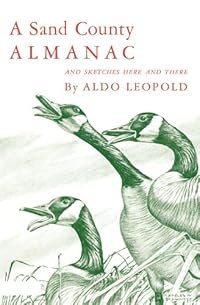
A Sand County Almanac and Sketches Here and There
by Aldo Leopold
On This Page
Description
First published in 1949 and praised in the New York Times Book Review as "full of beauty and vigor and bite", A Sand County Almanac combines some of the finest nature writing since Thoreau with an outspoken and highly ethical regard for America's relationship to the land. As the forerunner to such important books as Annie Dillard's Pilgrim at Tinker Creek, Edward Abbey's Desert Solitaire, and Robert Finch's The Primal Place, this classic work remains as relevant today as it was more than show more seventy years ago. show lessTags
Recommendations
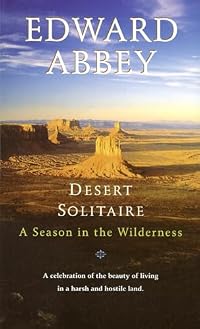













Member Recommendations
lorax A collection of some of Leopold's earlier writings; it's very interesting to see his "land ethic" evolve over time.
84
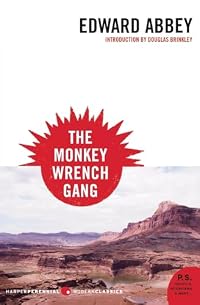
coclimber Although Abbey writes with an undertone of harshness at times, his love of the desert environment and ability to bring you into that world are a delight to anyone who loves our natural world.
40

PaperbackPirate Aldo Leopold is referenced several times in this book.
02


thesmellofbooks Two carefully observed and elegantly written volumes on a particular segment of nature. Sand County, and the Canadian taiga.
Benbreep My favorite novel, environmental themes, equally fantastic writing.
Member Reviews
“There are some who can live without wild things, and some who cannot. These essays are the delights and dilemmas of one who cannot… We of the minority see a law of diminishing returns in progress; our opponents do not.”
Some of my favorite writing is contained within these essays: stunning, intelligent, nostalgic, artistic, meticulously-crafted lines that continued from the first page to the last beautiful sentence. I was at once filled with wonder, then with a tragic sense of loss, moved beyond my expectations by the heartbreaking simplicity and overwhelming significance of the ideas contained within this too short book.
“If I were to tell a preacher of the adjoining church that the road crew has been burning history books in show more his cemetery, under the guise of mowing weeds, he would be amazed and uncomprehending. How could a weed be a book?…
It might be wise to prohibit at once all teaching of real botany and real history, lest some future citizen suffer qualms about the floristic price of his good life.”
A pivotal piece of environmentalist literature, A Sand County Almanac does many things, and all of them with extreme care and precision. The first half of the text comprises a walk through nature of sorts, snippets of life on Aldo Leopold’s farm throughout the months and seasons. Interspersed between descriptions of the various inhabitants of his farm are explorations of humankind’s—with an emphasis on the local and national—relationship with the Land.
“When we see land as a community to which we belong, we may begin to use it with love and respect.”
Leopold, who in the latter half of this book defines in more direct terms the idea of a “land ethic”, shares within these first intimate and reflective passages his personal philosophy concerning the nature of wilderness, the biotic community as a whole, and how we as a species can be a better member of it. He does so not only through showcasing the beauty of the land and wildlife he so obviously cherishes, but through a candid look at the effect we have thus far had on the natural world.
“What a thousand acres of Silphiums looked like when they tickled the bellies of the buffalo is a question never again to be answered, and perhaps not even asked.”
Leopold does not simply philosophize whether or not we can live amongst nature and restore it, nor does he unilaterally demonize those who are imperfect members of this biotic community. He builds within the reader a great respect and understanding for the shift in mindset we must undertake in order to become better as a people, as an environmental neighbor, and as inhabitants of a planet that gives us everything.
Being myself a lover of nature, a gardener, and an Earth dweller amongst other things, this book was perfectly engineered to grab me and not let go. It has managed to dig its way under my skin, where its presence shall remain. Over the months I have spent slowly reading this book, it has sprouted within me renewed love, reverence, and fierce protectiveness of all aspects of our world. It has inspired me to continue listening to the songs of small birds who call in the night, and to cheer on the slow growing tree, to remember that I am a small, important piece of a much grander whole. show less
Some of my favorite writing is contained within these essays: stunning, intelligent, nostalgic, artistic, meticulously-crafted lines that continued from the first page to the last beautiful sentence. I was at once filled with wonder, then with a tragic sense of loss, moved beyond my expectations by the heartbreaking simplicity and overwhelming significance of the ideas contained within this too short book.
“If I were to tell a preacher of the adjoining church that the road crew has been burning history books in show more his cemetery, under the guise of mowing weeds, he would be amazed and uncomprehending. How could a weed be a book?…
It might be wise to prohibit at once all teaching of real botany and real history, lest some future citizen suffer qualms about the floristic price of his good life.”
A pivotal piece of environmentalist literature, A Sand County Almanac does many things, and all of them with extreme care and precision. The first half of the text comprises a walk through nature of sorts, snippets of life on Aldo Leopold’s farm throughout the months and seasons. Interspersed between descriptions of the various inhabitants of his farm are explorations of humankind’s—with an emphasis on the local and national—relationship with the Land.
“When we see land as a community to which we belong, we may begin to use it with love and respect.”
Leopold, who in the latter half of this book defines in more direct terms the idea of a “land ethic”, shares within these first intimate and reflective passages his personal philosophy concerning the nature of wilderness, the biotic community as a whole, and how we as a species can be a better member of it. He does so not only through showcasing the beauty of the land and wildlife he so obviously cherishes, but through a candid look at the effect we have thus far had on the natural world.
“What a thousand acres of Silphiums looked like when they tickled the bellies of the buffalo is a question never again to be answered, and perhaps not even asked.”
Leopold does not simply philosophize whether or not we can live amongst nature and restore it, nor does he unilaterally demonize those who are imperfect members of this biotic community. He builds within the reader a great respect and understanding for the shift in mindset we must undertake in order to become better as a people, as an environmental neighbor, and as inhabitants of a planet that gives us everything.
Being myself a lover of nature, a gardener, and an Earth dweller amongst other things, this book was perfectly engineered to grab me and not let go. It has managed to dig its way under my skin, where its presence shall remain. Over the months I have spent slowly reading this book, it has sprouted within me renewed love, reverence, and fierce protectiveness of all aspects of our world. It has inspired me to continue listening to the songs of small birds who call in the night, and to cheer on the slow growing tree, to remember that I am a small, important piece of a much grander whole. show less
4.5/5
A classic of environmental writing that is extremely prophetic, poetic, and ahead of it's time. Written in 1947, A Sand County Almanac was rediscovered several decades later, and provided the environmental movement in the 60's with a backbone text. Leopold was a visionary in the field to be sure, ahead of his peers in western land management when considering the intrinsic value of wild spaces and species of little marketable value.
The book is broken up into four different sections, each having their own focus and subject. It starts with a journal of Leopold's observations on his farm in central Wisconsin. This is followed by some short vignettes focusing on trips and work that he preformed in other parts of the world, and then show more Some essays on various topics of personal concern. Finally, Leopold lays out his environmental ethic, that he would care to see being used more in land management and use. Particularly, I found the passages describing the last bear in Arizona, and trip he took with his brother to the Colorado river delta in Mexico to be quite enjoyable. The essay Goose Music, which covers his philosophy that the songs of geese are no less important to future generations economic production feels especially heartfelt and sincere.
Leopold personally draws his value of the natural world through wildlife; this much is clear from passages in the book describing spaces without visible forms of fauna as bleak and empty. I think this must come from his extensive history with hunting and fishing. Indeed, much of his perspective in this book comes from that lens, which comes off as a bit dated, but certainly doesn't make his views any less poignant. He makes an interesting point about hunting being the only sport where ethics are enforced only by yourself (and God), in comparison to having an audience.
I really can't get over how modern much of this book feels. Leopold outlines his ethics for land use, and much of it would still be considered radical today. He calls for a wholesale change in land management, where self-interest no longer dominates that values of the land. He asks for a reformation of ecologic education, where there is less study of bone structures and more study of relationships between species, including ourselves. He asks to refocus recreation away from building structures, amenities, and roads. It's a more venomous work than I remember it being, but necessarily so I think. The prose itself is mostly gentle and poetic.
It is clear that Leopold was traumatized by some of the work that he did for the Forest Service when he was young, especially when he took part in the federal mandate to kill wolves, and much of his later views are a product of that trauma. A Sand County Almanac was a keystone book when it was published, and unfortunately continues to remain that way. show less
A classic of environmental writing that is extremely prophetic, poetic, and ahead of it's time. Written in 1947, A Sand County Almanac was rediscovered several decades later, and provided the environmental movement in the 60's with a backbone text. Leopold was a visionary in the field to be sure, ahead of his peers in western land management when considering the intrinsic value of wild spaces and species of little marketable value.
The book is broken up into four different sections, each having their own focus and subject. It starts with a journal of Leopold's observations on his farm in central Wisconsin. This is followed by some short vignettes focusing on trips and work that he preformed in other parts of the world, and then show more Some essays on various topics of personal concern. Finally, Leopold lays out his environmental ethic, that he would care to see being used more in land management and use. Particularly, I found the passages describing the last bear in Arizona, and trip he took with his brother to the Colorado river delta in Mexico to be quite enjoyable. The essay Goose Music, which covers his philosophy that the songs of geese are no less important to future generations economic production feels especially heartfelt and sincere.
Leopold personally draws his value of the natural world through wildlife; this much is clear from passages in the book describing spaces without visible forms of fauna as bleak and empty. I think this must come from his extensive history with hunting and fishing. Indeed, much of his perspective in this book comes from that lens, which comes off as a bit dated, but certainly doesn't make his views any less poignant. He makes an interesting point about hunting being the only sport where ethics are enforced only by yourself (and God), in comparison to having an audience.
I really can't get over how modern much of this book feels. Leopold outlines his ethics for land use, and much of it would still be considered radical today. He calls for a wholesale change in land management, where self-interest no longer dominates that values of the land. He asks for a reformation of ecologic education, where there is less study of bone structures and more study of relationships between species, including ourselves. He asks to refocus recreation away from building structures, amenities, and roads. It's a more venomous work than I remember it being, but necessarily so I think. The prose itself is mostly gentle and poetic.
It is clear that Leopold was traumatized by some of the work that he did for the Forest Service when he was young, especially when he took part in the federal mandate to kill wolves, and much of his later views are a product of that trauma. A Sand County Almanac was a keystone book when it was published, and unfortunately continues to remain that way. show less
"A Sand County Almanac" is an amazing in many ways. Written in the 1940s and published posthumously in 1949, Leopold’s writing predate the mainstream environmentalist movement of the sixties and seventies by well over a decade.
To modern readers, it may feel slow moving, a culturally unfamiliar; Leopold represents a dual character of both hunter and environmentalist, two camps often dived by a political gulf today.
As you might have heard Wes Jackson say, Leopold’s legacy was his “land ethic.” The concept that the earth might have rights, and that, as humans, we have an obligation to steward land, was prescient for a white American. Many of his ideas are still both radical and familiar today.
In this book, Leopold offers an show more insightful and biting critique of the myth of progress, on that many other thought leaders built upon in subsequent decades. show less
To modern readers, it may feel slow moving, a culturally unfamiliar; Leopold represents a dual character of both hunter and environmentalist, two camps often dived by a political gulf today.
As you might have heard Wes Jackson say, Leopold’s legacy was his “land ethic.” The concept that the earth might have rights, and that, as humans, we have an obligation to steward land, was prescient for a white American. Many of his ideas are still both radical and familiar today.
In this book, Leopold offers an show more insightful and biting critique of the myth of progress, on that many other thought leaders built upon in subsequent decades. show less
“Of what avail are forty freedoms without a blank spot on the map?”
—Aldo Leopold, “A Sand County Almanac”
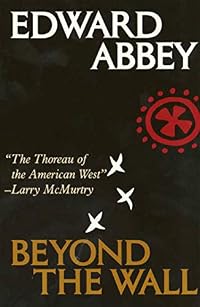
If there is something similar in the heart and structure of Sand County Almanac and [b:Desert Solitaire|214614|Desert Solitaire|Edward Abbey|https://i.gr-assets.com/images/S/compressed.photo.goodreads.com/books/1399583343l/214614._SY75_.jpg|234706], the two are contrasted by the distinct perspectives of Abbey and Leopold. Leopold's heart belongs to the Wisconsin land he first describes, but his descriptions of other places he has tended and lived and explored fill the reader with the same kind of reverence. Abbey has the aspect of a desert martyr, a hermit and a wanderer who believes that anyone who tries to approach the show more wilderness in a different way is twice sinning: first, for interrupting his reverie, and second, for doing the whole thing all wrong. Leopold leans more towards the quiet, spiritual, and hyper-local perspective of Wendell Berry, but is more stringent in his views: he espouses a more conservative faith that would respect the land at all costs.
All three authors offer maybe the best or only real environmental lesson: to look closer. But they ask more, they ask action: to be careful, but actively careful, not passively so; to be a caretaker. show less
—Aldo Leopold, “A Sand County Almanac”
If there is something similar in the heart and structure of Sand County Almanac and [b:Desert Solitaire|214614|Desert Solitaire|Edward Abbey|https://i.gr-assets.com/images/S/compressed.photo.goodreads.com/books/1399583343l/214614._SY75_.jpg|234706], the two are contrasted by the distinct perspectives of Abbey and Leopold. Leopold's heart belongs to the Wisconsin land he first describes, but his descriptions of other places he has tended and lived and explored fill the reader with the same kind of reverence. Abbey has the aspect of a desert martyr, a hermit and a wanderer who believes that anyone who tries to approach the show more wilderness in a different way is twice sinning: first, for interrupting his reverie, and second, for doing the whole thing all wrong. Leopold leans more towards the quiet, spiritual, and hyper-local perspective of Wendell Berry, but is more stringent in his views: he espouses a more conservative faith that would respect the land at all costs.
All three authors offer maybe the best or only real environmental lesson: to look closer. But they ask more, they ask action: to be careful, but actively careful, not passively so; to be a caretaker. show less
Mark Twain said, “A classic is something that everybody wants to have read and nobody wants to read.” If you spend any time at all reading ecological literature, you will see A Sand County Alamanc referred to as one of the classics in the genre. But in this case, Twain is wrong. This is a wonderful book. Leopold has a wry style; never out-and-out funny, but enough to keep my smiling throughout much of the book. He also deploys references historical, philosophical, religious, and literary, giving the text a rich texture. But Leopold also has a deadly serious point to the book. And he makes his case well, which is why people have been reading this book for 70 years. I highly, highly recommend the book.
There are certain books in the world you can't help but try to read all in one sitting. They draw you in and you can't find your way out of the pages until you reach the final words of The and End. A Sand County Almanac is one such book, especially as an audio read by Cassandra Campbell. Hour after hour would rush by as I got lost in Aldo's world. I could hear the calling of the birds in the fields, the rattle of dried leaves in the oak trees signifying winter is on its way, and the gurgling rush of the stream as it stubbed its toes on rocks worn smooth. Leopold's observations were so warm I couldn't help but think if he were alive today, he and Josh Ritter would be friends.
“Conservation is getting nowhere because it is incompatible with our Abrahamic concept of land. We abuse land because we regard it as a commodity, belonging to us. When we see land as a community to which we belong, we may begin to use it with love and respect.”
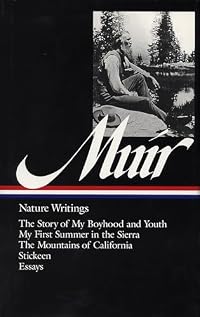
Published in 1949, Aldo Leopold is an early conservationist, following in the footsteps of John Muir. The book is arranged seasonally in the essay format of an almanac. It is focused on the natural region of the author’s home in Wisconsin. It features lovely nature writing:
“On motionless wing they emerge from the lifting mists, sweep a final arc of sky, and settle in clangorous descending spirals to their feeding grounds. A new day has begun on the crane marsh.”
I very show more much enjoyed this book and recommend it to anyone interested in the history of conservation. show less
Published in 1949, Aldo Leopold is an early conservationist, following in the footsteps of John Muir. The book is arranged seasonally in the essay format of an almanac. It is focused on the natural region of the author’s home in Wisconsin. It features lovely nature writing:
“On motionless wing they emerge from the lifting mists, sweep a final arc of sky, and settle in clangorous descending spirals to their feeding grounds. A new day has begun on the crane marsh.”
I very show more much enjoyed this book and recommend it to anyone interested in the history of conservation. show less
Members
- Recently Added By
Lists

Recommended Nature Writing
346 works; 180 members

New York Public Library's Books of the Century
120 works; 19 members

New York Public Library's Books of the Century - All
170 works; 14 members

Nature Writing
33 works; 3 members

Top Five Books of 2014
1,064 works; 398 members

Firewatch reading list
14 works; 1 member

University Presses
155 works; 1 member

Terrapin's Deserted Island Ecology Reading List
13 works; 1 member

The Great Courses: Earth at the Crossroads
48 works; 1 member

Environmental History
46 works; 8 members

Five star books
1,755 works; 107 members

The r/AskScience Reading List
159 works; 3 members

Favourite Books
1,817 works; 316 members

Books and authors mentioned by Le Clézio in his Nobel Prize speech
87 works; 3 members

Books We Love to Reread
688 works; 296 members

Habitat Hero books
37 works; 1 member

LIT - Il Bookclub Della McMusa
47 works; 1 member
Author Information

35+ Works 5,817 Members
Aldo Leopold was born in Iowa in 1887 and after graduation from the Yale School of Forestry joined the U.S. Forest Service. In 1935 the University of Wisconsin created a chair of game management for him. He died in 1948, fighting a grass fire on a neighbor's farm, shortly after he had become an advisor on conservation to the United Nations. show more Barbara Kingsolver is the author of many books, including The Poisonwood Bible and Animal, Vegetable, Miracle: A Year of Food Life. show less
Some Editions
Awards and Honors
Awards
Notable Lists
Work Relationships
Is contained in
Contains
Is abridged in
Inspired
Has as a teacher's guide
Common Knowledge
- Canonical title
- A Sand County Almanac and Sketches Here and There
- Alternate titles
- A Sand County Almanac with Other Essays on Conservation from Round River
- Original publication date
- 1949
- Important places
- Illinois, USA; Idaho, USA; Arizona, USA; New Mexico, USA; Chihuahua, Mexico; Sonora, Mexico (show all 10); Oregon, USA; Utah, USA; Manitoba, Canada; Madison, Wisconsin, USA
- Important events
- Dust Bowl Era
- First words
- There are some who can live without wild things, and some who cannot. (Forward)
Each year, after the midwinter blizzards, there comes a night of thaw, when the tinkle of dripping water is heard in the land. - Quotations
- To me an ancient cottonwood is the greatest of trees because in his youth he shaded the buffalo and wore a halo of pigeons, and I like a young cottonwood because he may some day become ancient.
But all conservation of wildness is self-defeating, for to cherish we must see and fondle, and when enough have seen and fondled, there is no wilderness left to cherish.
To see America as history, to conceive of destiny as a becoming, to smell a hickory tree through the lapse of ages--all these things are possible for us, and to achieve them takes only the free sky, and the will to ply our wi... (show all)ngs. In these things, and not in Mr. Bush's bombs and Mr. DuPont's nylons, lies objective evidence of our superiority over the beasts.
Despite several opportunities to do so, I have never returned to the White Mountains. I prefer not to see what tourists, roads, sawmills, and logging railroads have done for it, or to it. I hear young people, not yet born w... (show all)hen I first rode out 'on top,' exclaim about it as a wonderful place. To this, with an unspoken mental reservation, I agree.
It is a century now since Darwin gave us the first glimpse of the origin of the species. We know now what was unknown to all the preceding caravan of generations: that men are only fellow-voyagers with other creatures in the ... (show all)odyssey of this time, a sense of kinship with fellow-creatures; a wish to live and let live; a sense of wonder over the magnitude and duration of the biotic enterprise. Above all we should, in the century since Darwin, have come to know man, while now captain of the adventuring ship, is hardly the sole object of its quest, and that his prior assumptions to this effect arose from the simple necessity of whistling in the dark.
...Thoreau's dictum 'In wildness is the salvation of the world.'
A professor may pluck the strings of his own instrument, but never that of another, and if he listens for music he must never admit it to his fellows or to his students. For all are restrained by an ironbound taboo which decr... (show all)ees that the construction of instruments is the domain of science, while the detection of harmony is the domain of poets. Professors serve science and science serves progress. It serves progress so well that many of the more intricate instruments are stepped upon and broken in the rush to spread progress to all backward lands. One by one the parts are thus stricken from the song of songs. If the professor is able to classify each instrument before it is broken, he is well content.
Science contributes moral as well as material blessings to the world. Its great moral contribution is objectivity, or the scientific point of view. This means doubting everything except facts; it means hewing to the facts, le... (show all)t the chips fall where they may. One of the facts hewn to by science is that every river needs more people, and all people need more inventions, and hence more science; the good life depends on the indefinite extension of this chain of logic. That the good life on any river may likewise depend on the perception of its music, and the preservation of some music to perceive, is a form of doubt not yet entertained by science.
This thumbnail sketch of land as an energy circuit conveys three basic ideas: that land is not merely soil, that the native plants and animals kept the energy circuit open; others may or may not, that man-made changes are of ... (show all)a different order than evolutionary changes and have effects more comprehensive than is intended or foreseen
I have read many definitions of what is a conservationist, and written not a few myself, but I suspect that the best one is written not with a pen, but with an axe. It is a matter of what a man thinks about while chopping, or... (show all) while deciding what to chop. A conservationist is one who is humbly aware that with each stroke he is writing his signature on the face of his land. Signatures of course differ, whether written with axe or pen, and this is as it should be. - Last words
- (Click to show. Warning: May contain spoilers.)Recreational development is a job not of building roads into lovely country, but of building receptivity into the still unlovely human mind.
- Disambiguation notice
- Do not use for Sand County Almanac with Essays from Round River, which has more of Leopold's writings. This books is simply 12 months plus afterword and numerous photographs by Tom Algire
Classifications
Statistics
- Members
- 5,097
- Popularity
- 2,692
- Reviews
- 74
- Rating
- (4.23)
- Languages
- 10 — Chinese, Czech, English, French, German, Italian, Japanese, Portuguese, Spanish, Turkish
- Media
- Paper, Audiobook, Ebook
- ISBNs
- 55
- UPCs
- 4
- ASINs
- 66