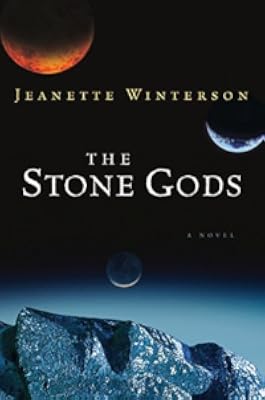
The Stone Gods
by Jeanette Winterson
On This Page
Description
After rendering the planet unlivable, humankind begins to colonize a new blue planet, and heroine Billie Crusoe embarks on a personal odyssey into the future, in an adventure that explores humankind's relationship to the environment, power, and technology.Tags
Recommendations
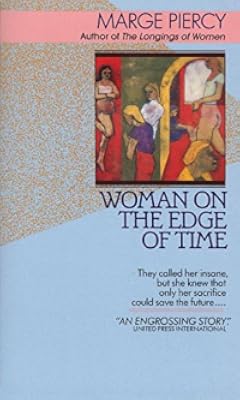
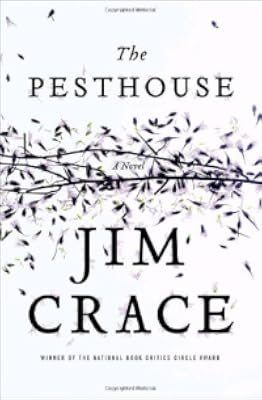
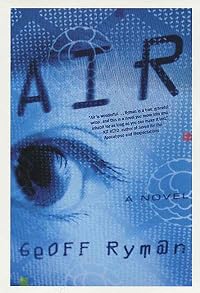
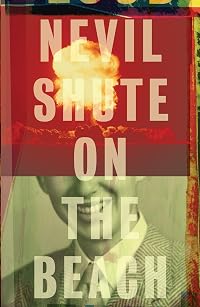



Member Recommendations
Member Reviews
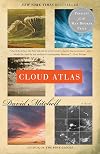
There’s a reverse snobbery thing you sometimes find in science fiction in which sf commentators sneer at non-sf authors, so-called “literary fiction” authors, who write sf and sort of get it wrong. I’m not one of them (well, not unless they sneer at science fiction first). Literary authors writing science fiction, whether they acknowledge it or not, has resulted in some excellent science fiction and fiction. Unfortunately, it has also resulted in books some writers would probably sooner didn’t appear on their bibliographies. I mean, Jeanette Winterson is a highly-regarded author in the UK and has written some excellent novels, but The Stone Gods reads like it was written by someone who thinks all literary sf should resemble show more David Mitchell’s highly successful Cloud Atlas. While the prose is actually really good, everything in the story feels secondhand and, well, used, and you have to wonder what point Winterson thought she was trying to prove. I mean, the novel opens with the sort of misogyny that might not have looked out of place in a 1940s sf novel but would certainly have raised eyebrows in a 2000 one. And then the narrative drops back to the 1700s and Easter Island, and takes as real the myth the islanders caused the islands’ ecological collapse. The idea of using science fiction as one of several narratives to illuminate a point is, in principle, almost impossible to abuse, although perhaps not entirely. Mitchell at least has a history in sf – he was a member of the BSFA for many years – but even so his novels still feel somewhat jejeune on a science-fictional level. Which is somewhat ironic, given that science fiction is itself a largely juvenile genre. But Winterson, an otherwise excellent writer, does not compare well with Mitchell with this book, and I don’t simply mean reading The Stone Gods as sf. In other respects, too. It’s clumsy. It fumbles its deployment of its sf tropes. It seems to imagine sf exists in opposition to an historical narrative. Which is not true. And never has been. Everything a literary author could do wrong when when writing sf-as-literary-fiction it sort of does wrong. And yes, I know “wrong” is not the right word, but you know what I mean. It fumbles everything. It’s almost the dictionary definition of a book by a lit author that sf snobs sneer at. Which unfortunately means it is neither good sf nor good literary fiction. Avoidable. show less
Science fiction, as a genre, is a way for an author and a people to look directly at their society without having to name names or point fingers. Good science fiction should be a dream, a hope, a warning, and a mirror. Not too many books these days can fulfill sci-fi's true potential...
The Stone Gods does.
Ok, so these are very strong words, but this reader does not think that they are entirely without backing. With this book, Winterson has recaptured much of the spirit of the classic Science Fiction writers of the middle 20th Century in a voice that is distinctly modern/post-modern. It begins in a short, descriptive, cleverly and beautify written Bradburyan world where the human planet is dying, illiteracy is state-mandated, robots are show more obligatory, and genetic science allows one to pick their age. When a new world, pristine and primordial, is discovered, what does humanity do?
Though it is a simple and oft-seen theme, this story quickly reveals its depths and twists in a circular pattern of human nature. Part-way through it takes a very unexpected path, but that is for you to discover, not me to divulge. In many ways, it is an Environmentalist novel, but in a way that this reader felt was more touching, more troubling, and more believable than any Ismael or Silent Spring.
A short novel, but one that requires patience, thought, and acceptance of the incredible. If you can give Winterson a chance, she very well might just blow you, as she did me, right off your feet. show less
The Stone Gods does.
Ok, so these are very strong words, but this reader does not think that they are entirely without backing. With this book, Winterson has recaptured much of the spirit of the classic Science Fiction writers of the middle 20th Century in a voice that is distinctly modern/post-modern. It begins in a short, descriptive, cleverly and beautify written Bradburyan world where the human planet is dying, illiteracy is state-mandated, robots are show more obligatory, and genetic science allows one to pick their age. When a new world, pristine and primordial, is discovered, what does humanity do?
Though it is a simple and oft-seen theme, this story quickly reveals its depths and twists in a circular pattern of human nature. Part-way through it takes a very unexpected path, but that is for you to discover, not me to divulge. In many ways, it is an Environmentalist novel, but in a way that this reader felt was more touching, more troubling, and more believable than any Ismael or Silent Spring.
A short novel, but one that requires patience, thought, and acceptance of the incredible. If you can give Winterson a chance, she very well might just blow you, as she did me, right off your feet. show less
Science fiction that weaves together future, past, and present in three separate but interlinked stories that comment on humanity’s penchant for destroying the world, contrasted with an individual’s ability to love. In the first section, we see a futuristic setting where materialism and vanity have been taken to extremes. The planet Orbus has been decimated by the inhabitants, so they are searching for a new planet on which to start over. In the second part, we are abruptly shifted to the 18th century, where Captain Cook’s ship is visiting Easter Island. The titular “stone gods” are a reference to this island’s moai statues. In the last story, set near present time, Earth has experienced World War III (called Post-3 War), a show more corporation governs society, and people impacted by the fallout are attempting to survive in the wreckage. The protagonists in each of the three times have the same names (Billie/Billy and Spike/Spikkers), and the relationship forming between them is another primary area of focus.
In two of the three timelines, Spike is portrayed as a “Robo-sapiens,” programmed to gain an understanding of humanity, and designed to learn enough to eventually be able to make better decisions for the benefit of society, rather than to its detriment as humans have done. I would like to have seen more deeply drawn characters, especially Spike, as she is of core importance. The dialogue can seem overly-explanatory, but the prose is elegant. At its heart this is a cautionary tale of history repeating itself, not learning from mistakes of the past, and the dangers of overindulgences without regard to impact. Winterson applies this message to themes of environmental responsibility, authoritarian control, and abuse of technology. She examines questions of how an individual can cope in such a society.
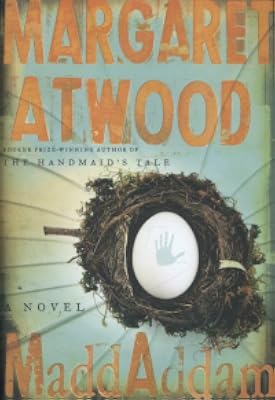
The book itself, The Stone Gods, makes several appearances, as well as Captain Cook’s Journal. At times it can be confusing, requiring patience and re-reading in certain sections, but eventually Winterson brings it all together. It’s definitely not for everyone, as it reflects a rather bleak outlook for humankind and the message can become rather heavy-handed. It will appeal to readers of “literary science fiction” in the vein of Ursula K. LeGuin or Margaret Atwood’s MaddAddam trilogy.
Memorable quotes:
“The key to happiness…is tolerance of those who do not do as you do.”
“Love is an intervention. Why do we not choose it?”
“[T]he future of the planet is uncertain. Human beings aren’t just in a mess, we are a mess. We have made every mistake, justified ourselves, and made the same mistakes again and again. It’s as though we’re doomed to repetition.” show less
In two of the three timelines, Spike is portrayed as a “Robo-sapiens,” programmed to gain an understanding of humanity, and designed to learn enough to eventually be able to make better decisions for the benefit of society, rather than to its detriment as humans have done. I would like to have seen more deeply drawn characters, especially Spike, as she is of core importance. The dialogue can seem overly-explanatory, but the prose is elegant. At its heart this is a cautionary tale of history repeating itself, not learning from mistakes of the past, and the dangers of overindulgences without regard to impact. Winterson applies this message to themes of environmental responsibility, authoritarian control, and abuse of technology. She examines questions of how an individual can cope in such a society.
The book itself, The Stone Gods, makes several appearances, as well as Captain Cook’s Journal. At times it can be confusing, requiring patience and re-reading in certain sections, but eventually Winterson brings it all together. It’s definitely not for everyone, as it reflects a rather bleak outlook for humankind and the message can become rather heavy-handed. It will appeal to readers of “literary science fiction” in the vein of Ursula K. LeGuin or Margaret Atwood’s MaddAddam trilogy.
Memorable quotes:
“The key to happiness…is tolerance of those who do not do as you do.”
“Love is an intervention. Why do we not choose it?”
“[T]he future of the planet is uncertain. Human beings aren’t just in a mess, we are a mess. We have made every mistake, justified ourselves, and made the same mistakes again and again. It’s as though we’re doomed to repetition.” show less
When I bought my copy of The Stone Gods, the bookseller told me two things: it had received strong reviews, and “It’s science fiction, you know.” I parried this last one with some fuzzy comment that much of Winterson’s fiction violates expectations, and we left it at that, both sounding smart and not having said much.
And then I started reading: sure enough, page after page, the thing read true to the sci-fi genre. And not just in the details: it sounded like sci-fi, it thought like sci-fi, it even carried sci-fi’s common politics—as much genre work tends to be, it sounded downright reactionary. The main character, Billie Crusoe, sounded as if she had actually been beamed into her era from our own; she spoke constantly of the show more contrast between then and now, as if she’d been witness to our time, and was quite conscientiously leading us through hers, tour-guide style, with heavy asides to the reader and a general lack of believable selfhood.
I was a bit taken aback; in fact, at several points, I had to remind myself of Winterson’s previous work—I said to myself, in fact, “prose this obvious, this flat and predictable, has been put in place for a reason.” And even fifty pages from the end, after the place and the style had shifted radically—several times, in fact—I was still sitting a few seats back in the auditorium, wondering whether she knew what she was up to.
But the connection comes—again and again, in surprising, subtle, parallel, spooky ways. In fact, much of the intersection is rightly described as spooky; quantum, in fact. As she did in Gut Symmetries, Winterson spends a lot of time pulling on the greater metaphor of quantum physics as she sees it mirrored in human life: it would not be a stretch to say that this book, as was Gut Symmetries, is something of a quantum novel, and that Billie Crusoe, strange particle that she is, exists outside of Newtonian plotting: where we want characters to make choices and suffer results—we want them to see three doors, walk through one, then lose forever what was behind the other two—Billie exists simultaneously in all three. The book travels through three different frames of time and space, and she is there—not only that, she is reading about herself in a manuscript left on the Tube, and she is stumbling across her own adventures in the journals of Captain Cook.
At every turn, she meets human short-sightedness: waste, folly, power. And at every turn, she ends up in a dead world, one sacrificed on the altar of power, but with the promise of a new birth coming soon—a new planet, a new peace, a new sapiens—that will never make the same mistakes again.
And this hits on one of the themes running through: the impossibility of denying the limbic, the spooky, the unreal. It’s not emotion that kills us off, it’s control. It’s our fear of a world more complex, less divided, and less clear that leads us to kill off the potential that exists when control falls away. We see this in the corporate governance of MORE, and we see this in the war between the Ariki Mau and the Bird Man on Easter Island. We see this, too, in the Robo sapiens, free of the unpredictability of emotion, to lead us from the damage of our own fuzzy natures. It’s clear, though, that the obsessive attempts to hide from our fuller selves have brought on our ending.
It was clear to me that the novel was, in part, Winterson’s response to the upsurge in media/commodity culture and feel-good authoritarianism that seems to be cresting so fervently at this time. Initially, I thought to myself, “what a shame that the novel will end up such a didactic response—so flat and obvious.” With the patters apparent, though, I see that the “message” of the book, in fact, is nowhere near as easy and flat as the initial section seems to belie. Maybe I’m a sucker for flash and experimentation, but the risk that Winterson took in the Stone Gods felt—to me—brave, insightful, and revelatory. It’s certainly not her first foray into these waters, nor is it the first book to reinvent linear narrative; however, the mission it takes and the tools it picks match up perfectly. I’m glad I stuck it through. show less
And then I started reading: sure enough, page after page, the thing read true to the sci-fi genre. And not just in the details: it sounded like sci-fi, it thought like sci-fi, it even carried sci-fi’s common politics—as much genre work tends to be, it sounded downright reactionary. The main character, Billie Crusoe, sounded as if she had actually been beamed into her era from our own; she spoke constantly of the show more contrast between then and now, as if she’d been witness to our time, and was quite conscientiously leading us through hers, tour-guide style, with heavy asides to the reader and a general lack of believable selfhood.
I was a bit taken aback; in fact, at several points, I had to remind myself of Winterson’s previous work—I said to myself, in fact, “prose this obvious, this flat and predictable, has been put in place for a reason.” And even fifty pages from the end, after the place and the style had shifted radically—several times, in fact—I was still sitting a few seats back in the auditorium, wondering whether she knew what she was up to.
But the connection comes—again and again, in surprising, subtle, parallel, spooky ways. In fact, much of the intersection is rightly described as spooky; quantum, in fact. As she did in Gut Symmetries, Winterson spends a lot of time pulling on the greater metaphor of quantum physics as she sees it mirrored in human life: it would not be a stretch to say that this book, as was Gut Symmetries, is something of a quantum novel, and that Billie Crusoe, strange particle that she is, exists outside of Newtonian plotting: where we want characters to make choices and suffer results—we want them to see three doors, walk through one, then lose forever what was behind the other two—Billie exists simultaneously in all three. The book travels through three different frames of time and space, and she is there—not only that, she is reading about herself in a manuscript left on the Tube, and she is stumbling across her own adventures in the journals of Captain Cook.
At every turn, she meets human short-sightedness: waste, folly, power. And at every turn, she ends up in a dead world, one sacrificed on the altar of power, but with the promise of a new birth coming soon—a new planet, a new peace, a new sapiens—that will never make the same mistakes again.
And this hits on one of the themes running through: the impossibility of denying the limbic, the spooky, the unreal. It’s not emotion that kills us off, it’s control. It’s our fear of a world more complex, less divided, and less clear that leads us to kill off the potential that exists when control falls away. We see this in the corporate governance of MORE, and we see this in the war between the Ariki Mau and the Bird Man on Easter Island. We see this, too, in the Robo sapiens, free of the unpredictability of emotion, to lead us from the damage of our own fuzzy natures. It’s clear, though, that the obsessive attempts to hide from our fuller selves have brought on our ending.
It was clear to me that the novel was, in part, Winterson’s response to the upsurge in media/commodity culture and feel-good authoritarianism that seems to be cresting so fervently at this time. Initially, I thought to myself, “what a shame that the novel will end up such a didactic response—so flat and obvious.” With the patters apparent, though, I see that the “message” of the book, in fact, is nowhere near as easy and flat as the initial section seems to belie. Maybe I’m a sucker for flash and experimentation, but the risk that Winterson took in the Stone Gods felt—to me—brave, insightful, and revelatory. It’s certainly not her first foray into these waters, nor is it the first book to reinvent linear narrative; however, the mission it takes and the tools it picks match up perfectly. I’m glad I stuck it through. show less
The new world–El Dorado, Atlantis, the Gold Coast, Newfoundland, Plymouth Rock, Rapanaui, Utopia, Planet Blue. Chanc'd upon, spied through a glass darkly, drunken stories strapped to a barrel of rum, shipwreck, a Bible Compass, a giant fish led us there, a storm whirled us to this isle. In the wilderness of space, we found . . .
History repeats itself, life goes on, and Billie or Billy falls in love with Spike or Spikkers as the world crashes and burns. This is a well-written book, as you would expect of Jeanette Winterson, but unfortunately I didn't really care what happened to the unengaging main characters, although you would have to have a heart of stone to be unmoved by this description of two hidden casualties of the War: A small show more boy and a small dog, the dog hairless and pink, tongue lolling, body worn thin like hope, the boy with a bad stomach wound sewn up at his home or his hole, subcutaneous fat pushed on the outside like a roll of tripe. He had the dog on a lead and he was still managing to be a boy with a dog and the dog was still managing to be a dog with a boy because not even a bomb gets to wipe out everything, and this little bit was missed in the blow-up, the fall-out, the death-toll, the regrettable acts of war. show less
History repeats itself, life goes on, and Billie or Billy falls in love with Spike or Spikkers as the world crashes and burns. This is a well-written book, as you would expect of Jeanette Winterson, but unfortunately I didn't really care what happened to the unengaging main characters, although you would have to have a heart of stone to be unmoved by this description of two hidden casualties of the War: A small show more boy and a small dog, the dog hairless and pink, tongue lolling, body worn thin like hope, the boy with a bad stomach wound sewn up at his home or his hole, subcutaneous fat pushed on the outside like a roll of tripe. He had the dog on a lead and he was still managing to be a boy with a dog and the dog was still managing to be a dog with a boy because not even a bomb gets to wipe out everything, and this little bit was missed in the blow-up, the fall-out, the death-toll, the regrettable acts of war. show less
Despite a mere 200 pages you too can experience what seems like an epic, multi-volume heap of guilt vomited upon the vulgar vanity with which us humans tuck ourselves in each night. We describe ourselves as civilized, perhaps even progressive, yet in her book The Stone Gods, Jeanette Winterson skillfully reiterates what what we humans are so good at, and obliterates such vanity like a bear would to a sausage pinata.
The problem with us, Winterson reminds, is that for all our abilities, we just can't seem to learn anything from history. This recurring idea is the theme of 3 and 1/2 short stories, vignettes maybe, all intertwined within The Stone Gods. The first story, centering around the newly discovered Planet Blue, deals with a very show more advanced "civilization" coming to terms with its interplanetary recolonization, or at least it's inevitable effect upon colonization. The second story, a historical speculative taking place on Easter Island, illustrates the more aged impulses involved in worshiping your chosen god while sacrificing your home in the process. The third + 1/2 story deals with our near-future hubris after the inevitable Post-3 War, or a not-so-subtle hint at World War III.
This novel is a brilliantly conceived yet complex mix of science fiction and dramatic literature. It's up to the reader to discern what worlds, time periods, even places Winterson is alluding to, and she does fantastic job of speculating human behavior, if it is indeed human, within each. She grapples with relevant concepts of today such as war, artificial intelligence, global warming, cosmetic enhancement, all the stuff we humans turn toward when we we turn away from ourselves. Our nuance is that we accept how flawed as a species we are, yet we still are too lazy to do anything about it.
Because of this, Winterson unleashes three apocalyptic scenarios upon the reader, both with beauty and inanity. It's a profound exposition on what it means to be human; dare I say it's vividly gonzo. Although it's an excellent book, for me it tended to degrade a bit at the third + story, amounting to more an effort of stream-of-consciousness than a coherent storyline. Here she also gets a little too complex in referring to the book within the story itself.
In any case, this is an imaginative and important work, good for both China Mieville and Cormac McCarthy fans. show less
The problem with us, Winterson reminds, is that for all our abilities, we just can't seem to learn anything from history. This recurring idea is the theme of 3 and 1/2 short stories, vignettes maybe, all intertwined within The Stone Gods. The first story, centering around the newly discovered Planet Blue, deals with a very show more advanced "civilization" coming to terms with its interplanetary recolonization, or at least it's inevitable effect upon colonization. The second story, a historical speculative taking place on Easter Island, illustrates the more aged impulses involved in worshiping your chosen god while sacrificing your home in the process. The third + 1/2 story deals with our near-future hubris after the inevitable Post-3 War, or a not-so-subtle hint at World War III.
This novel is a brilliantly conceived yet complex mix of science fiction and dramatic literature. It's up to the reader to discern what worlds, time periods, even places Winterson is alluding to, and she does fantastic job of speculating human behavior, if it is indeed human, within each. She grapples with relevant concepts of today such as war, artificial intelligence, global warming, cosmetic enhancement, all the stuff we humans turn toward when we we turn away from ourselves. Our nuance is that we accept how flawed as a species we are, yet we still are too lazy to do anything about it.
Because of this, Winterson unleashes three apocalyptic scenarios upon the reader, both with beauty and inanity. It's a profound exposition on what it means to be human; dare I say it's vividly gonzo. Although it's an excellent book, for me it tended to degrade a bit at the third + story, amounting to more an effort of stream-of-consciousness than a coherent storyline. Here she also gets a little too complex in referring to the book within the story itself.
In any case, this is an imaginative and important work, good for both China Mieville and Cormac McCarthy fans. show less
A longawaited return to form by one of my all time favourite writers. Using her imagination, instead of over-familiar plots of running away and sordid love-affairs, Winterson took my breath away with this beautifully scripted dystopia. All her themes are still there. We are constantly leaving, the environment sucks, and it's all our own fault. But despite the pessimism, Wintersons love of people and sense of humour keep shining through. And it's loyalty and friendship, however feeble and incapable of saving us, that make for the most memorable scenes in the book. Boating for beginners prefigures the humoristic lightness present here. The plot of The Stone Gods is far more complex, but it fits neatly together, which makes the book a very show more satisfactory read. show less
Members
- Recently Added By
Lists

Best Contemporary Literary Fiction (Around the Last 30 Years)
400 works; 124 members

Recommend the 20 best books you've read in the last five years
2,168 works; 608 members

Favorite Literary Love Stories
182 works; 101 members

Top Five Books of 2022
736 works; 272 members

Dystopian and Apocalyptic Literature
350 works; 74 members
Five star books
1,767 works; 110 members

Robinsonade Novels
55 works; 4 members

Post-Apocalyptic Fiction
57 works; 3 members

2022 To Read List
11 works; 2 members

Best Dystopias
280 works; 277 members
Author Information

56+ Works 37,227 Members
Jeanette Winterson was born in Manchester, England in 1959 and graduated from St. Catherine's College, Oxford. Her book, Oranges Are Not the Only Fruit, is a semi-autobiographical account of her life as a child preacher (she wrote and gave sermons by the time she was eight years old). The book was the winner of the Whitbread Prize for best first show more fiction and was made into an award-winning TV movie. The Passion won the John Llewelyn Rhys Memorial Prize for best writer under thirty-five, and Sexing the Cherry won the American Academy of Arts and Letters' E. M. Forster Award. (Bowker Author Biography) Jeanette Winterson lives in London & the Cotswolds. (Publisher Provided) show less
Awards and Honors
Awards
Distinctions
Series
Belongs to Publisher Series
Common Knowledge
- Canonical title*
- De stenen goden
- Original publication date
- 2007
- People/Characters
- Spike; Billie Crusoe
- Dedication*
- This book is to my oldest friends - Philippa Brewster, Vicky Licorish, Henri Llewelyn Davies, Mona Howard, Peggy Reynolds, Beeban Kidron, Philippa Giles, and Ruth Rendell. And to Ali Smith, who came later, and to Deborah Warn... (show all)er, always.
- First words*
- This new world weighs a yatto-gram.
- Quotations
- I don't want to recognize what I can't manage. I want to leave it remote and star-guarded. I want it weightless, because it is too heavy for me to bear. (p. 199)
Mankind, I hazard, wherever found, Civilized or Savage, cannot keep to any purpose for much length of time, except the purpose of destroying himself.
Neither art nor love fits well into the economics of purpose, any more than they fitted into the economics of greed. Any more than they fit into economics at all. - Last words*
- (Click to show. Warning: May contain spoilers.)Everything is imprinted for ever with what it once was.
*Some information comes from Common Knowledge in other languages. Click "Edit" for more information.
Classifications
Statistics
- Members
- 1,103
- Popularity
- 23,154
- Reviews
- 46
- Rating
- (3.53)
- Languages
- 8 — Catalan, Dutch, English, Estonian, German, Italian, Spanish, Swedish
- Media
- Paper, Audiobook, Ebook
- ISBNs
- 25
- ASINs
- 7