
The History of Tom Jones, a Foundling
by Henry Fielding
On This Page
Description
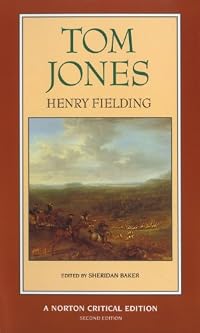
The foundling Tom Jones is found on the property of a benevolent, wealthy landowner. Tom grows up to be a vigorous, kind-hearted young man, whose love of his neighbor's well-born daughter brings class friction to the fore. The presence of prostitution and promiscuity in Tom Jones caused a sensation at the time it was published, as such themes were uncommon. It is divided into 18 shorter books, and is considered one of the first English-language novels..
Tags
Recommendations





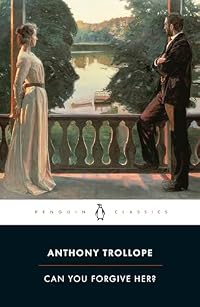





Member Recommendations
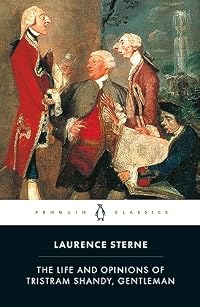
Widsith The obvious companion book...Shandy is funnier, but less story-driven
92
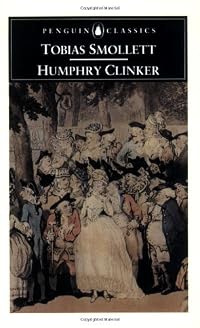
uncultured Surprisingly easy to read 18th century novel, written as a series of letters. The characters (and letter writers) include a cranky old maid; her nephew, a hotheaded young aristocra; his sister, an innocent romantic; and their gruff uncle, a country squire with a heart of gold. They travel about England, with especial emphasis on Bath and London, allowing the author [a physician) to point out just how disgusting even the highest society could be. Part travelogue, part comedy, part bittersweet commentary on age and family. Easily the equal of Henry Fielding.
Also recommended by amanda4242
50
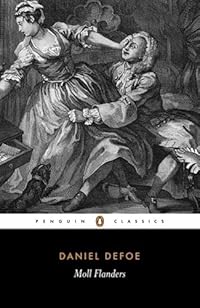
espertus Another 18th century bawdy picaresque novel
05
Member Reviews
Well-bred bastard Tom Jones travels across England, encounters a cross-section of humanity, and sleeps with half the women he meets.
Tom Jones is a great novel. Not for its characters (which are cardboard), not for its plot (which spins with great and soulless efficiency), and not for its themes (which are a grab-bag of universal homilies). Tom Jones is great because it has a great narrator: an omniscient, disembodied voice that boasts and preens, condescends and mocks. No high-falutin conceit can appear without the narrator troubling himself to explain things to his groundling readers in single-syllable words. No villain can appear on stage without the narrator taking the opportunity to undiegetically jab his personal enemies. The show more narrator elides the boring parts and cheerfully notes when he is doing so. The narrator advertises his favorites among the cast and compliments himself on his own cleverness at every plot twist. In short, Tom Jones has the finest narrator I've read since Middlemarch. (Although Middlemarch's narrator likely wins that particular steel-cage match, as Middlemarch used its omniscient narrator to a greater purpose, whereas Tom Jones' highest intention is untrammeled glee.)
Henry Fielding (who should not be confused with the narrating author, as the narrator is too much a self-conscious construction) clearly takes his inspiration from the stage, right down to the Shakespearean mix of aristocratic and groundling humor. In Tom Jones, the Latin epigrams are scattered among scenes of bawdy slapstick. Theatre and actors make repeated appearances in the text, from an evangelical Punch and Judy show to a performance of Hamlet attended by Tom Jones and his superstitious servant. The narrator uses the text as his podium to inveigh against dramatic critics and stupid narrative conventions. In many ways, Tom Jones would seem to be easily adapted to the stage -- all plot points are conveyed through dialogue; characters have no internal existence -- but for one thing: the narrator, who is so tightly (yet invisibly) entwined in everything that happens. Unless he played the Greek chorus? show less
Tom Jones is a great novel. Not for its characters (which are cardboard), not for its plot (which spins with great and soulless efficiency), and not for its themes (which are a grab-bag of universal homilies). Tom Jones is great because it has a great narrator: an omniscient, disembodied voice that boasts and preens, condescends and mocks. No high-falutin conceit can appear without the narrator troubling himself to explain things to his groundling readers in single-syllable words. No villain can appear on stage without the narrator taking the opportunity to undiegetically jab his personal enemies. The show more narrator elides the boring parts and cheerfully notes when he is doing so. The narrator advertises his favorites among the cast and compliments himself on his own cleverness at every plot twist. In short, Tom Jones has the finest narrator I've read since Middlemarch. (Although Middlemarch's narrator likely wins that particular steel-cage match, as Middlemarch used its omniscient narrator to a greater purpose, whereas Tom Jones' highest intention is untrammeled glee.)
Henry Fielding (who should not be confused with the narrating author, as the narrator is too much a self-conscious construction) clearly takes his inspiration from the stage, right down to the Shakespearean mix of aristocratic and groundling humor. In Tom Jones, the Latin epigrams are scattered among scenes of bawdy slapstick. Theatre and actors make repeated appearances in the text, from an evangelical Punch and Judy show to a performance of Hamlet attended by Tom Jones and his superstitious servant. The narrator uses the text as his podium to inveigh against dramatic critics and stupid narrative conventions. In many ways, Tom Jones would seem to be easily adapted to the stage -- all plot points are conveyed through dialogue; characters have no internal existence -- but for one thing: the narrator, who is so tightly (yet invisibly) entwined in everything that happens. Unless he played the Greek chorus? show less
This is a very early novel, published in 1749, and it's telling in several ways this was written when the form was young. There are eccentric spellings, erratic capitalizations, and dialogue isn't set off in the convention we're used to, but has various speakers lumped into one paragraph. There are archaic formulations such as "says he" rather than "he said" and such archaic words as nay, doth, hath, yon, thou, thee, etc. Swear words such as "damn" are presented as "d--n." I felt the various parts of the narration--description, dialogue, thoughts, action--are much better balanced in later novels. And the omniscient narrator here, sometimes breaking the fourth wall into first person, is very, very intrusive, with long digressions, some show more chapter-length, on such subjects as the novel's form or the nature of love. Some parts to my tastes were far too preachy, but having just read Robinson Crusoe before this, that religiosity is just another feature of the era. This did make for rather tedious going at times, especially before I got acclimated to the style, but for the most part the plot and comic aspects kept me chugging along.
It helps that Tom himself is much more likable than I expected from what I had heard of the novel--or even the description on the back of the book. I'd heard this was a picaresque tale with a hero that could be called a rake. But although he's no monk, I wouldn't describe Tom that way. He's neither rapist nor callous seducer. In fact, he's usually the seduced rather than the seducer. And he is young, after all; no older than twenty-one at the end of the novel. He says of himself:
Nor do I pretend to the Gift of Chastity... I have been guilty with Women, I own it; but I am not conscious that I have ever injured any--Nor would I, to procure Pleasure to myself, be knowingly the Cause of Misery to any human Being.
When Tom seemingly gets Molly Seagrim pregnant, he's quite willing to stand by her and marry her, even though she's poor. He'd been raised as a gentleman, and even though being base-born and not the heir means he can't look to marry the lady-of-the-manor next door, he could have done materially better than that. It's not until he finds out she's being unfaithful that he breaks things off with her. He shows himself generous and compassionate throughout. Tom's greatest fault indeed seems a naivete that allows others to take advantage of him.
I felt more mixed about the female characters and especially Tom's love Sophia Western. She's a bit too blushing and apt to swoon--on the other hand, she doesn't let herself be rolled over but takes action to change her fate. It's obvious Fielding does have respect for women and although like the men, they might be fools, often his female characters are more intelligent and better educated than their male counterparts. Note the maid Jenny Jones, who is more learned than the schoolmaster who taught her. To be honest, it's the secondary comic characters that have the most vividness like the Sancho Panza like Mr Partridge or the affected Aunt Western and uncouth Squire Western.
This was a surprisingly enjoyable novel on the whole, even if I wasn't as enchanted by it as I was by its comic descendents by Austen and Thackeray. I immediately felt the kinship to books such as Sense and Sensibility and Vanity Fair in the sparkling wit, the ironic tone, and wickedly sharp satire, even if Fielding is more genial than Thackeray, and more bawdy than Austen. show less
It helps that Tom himself is much more likable than I expected from what I had heard of the novel--or even the description on the back of the book. I'd heard this was a picaresque tale with a hero that could be called a rake. But although he's no monk, I wouldn't describe Tom that way. He's neither rapist nor callous seducer. In fact, he's usually the seduced rather than the seducer. And he is young, after all; no older than twenty-one at the end of the novel. He says of himself:
Nor do I pretend to the Gift of Chastity... I have been guilty with Women, I own it; but I am not conscious that I have ever injured any--Nor would I, to procure Pleasure to myself, be knowingly the Cause of Misery to any human Being.
When Tom seemingly gets Molly Seagrim pregnant, he's quite willing to stand by her and marry her, even though she's poor. He'd been raised as a gentleman, and even though being base-born and not the heir means he can't look to marry the lady-of-the-manor next door, he could have done materially better than that. It's not until he finds out she's being unfaithful that he breaks things off with her. He shows himself generous and compassionate throughout. Tom's greatest fault indeed seems a naivete that allows others to take advantage of him.
I felt more mixed about the female characters and especially Tom's love Sophia Western. She's a bit too blushing and apt to swoon--on the other hand, she doesn't let herself be rolled over but takes action to change her fate. It's obvious Fielding does have respect for women and although like the men, they might be fools, often his female characters are more intelligent and better educated than their male counterparts. Note the maid Jenny Jones, who is more learned than the schoolmaster who taught her. To be honest, it's the secondary comic characters that have the most vividness like the Sancho Panza like Mr Partridge or the affected Aunt Western and uncouth Squire Western.
This was a surprisingly enjoyable novel on the whole, even if I wasn't as enchanted by it as I was by its comic descendents by Austen and Thackeray. I immediately felt the kinship to books such as Sense and Sensibility and Vanity Fair in the sparkling wit, the ironic tone, and wickedly sharp satire, even if Fielding is more genial than Thackeray, and more bawdy than Austen. show less
The foundling Tom Jones exists in-between the worlds of privilege and poverty. Raised by a wealthy benefactor to become better than his bastard origins and yet not quite a gentleman, Tom’s inherent good nature and natural exuberance are overrun by his lack of seasoned judgement and his fortune of good looks: a fortune that attracts all the positives and negatives that a financial fortune attracts. After more obstacles and misunderstandings than could be thought possible to cram into one book, the summary is All’s Well That Ends Well.
Prepare for thy moral instruction! Better than I had feared — other than two or three speed-reading chapters where I lost stamina, this was actually a very enjoyable read. Definitely a book one has to show more be in the mood for: not reading for plot / novelty but rather an old-fashioned diversion. Once the style and language of the book are embraced, the reader can enjoy getting to know the narrator, leaving the characters to simply exist for the purpose of storytelling. Plenty of convenient props and devices, deus ex machina, two-dimensional characters and the like, but no more than in a staggering array of contemporary fiction.
Although referencing the events of the day (Jacobite Rebellion, Bonnie Prince Charlie), satire and humour are more prevalent. Early on, the narrator pokes fun at himself and his contemporary authors:
“As this is one of those deep observations which very few readers can be supposed capable of making themselves, I have thought proper to lend them my assistance . . . where nothing but the inspiration with which we writers are gifted can possibly enable any one to make the discovery.”
The book’s true appeal is in communicating with an interesting author, via his narrator, living amid the turmoil of the 1750’s in England; the narrator will be remembered with fondness long after the characters have faded. It may be both worrisome and comforting to see that human nature has not changed at all in the past almost 300 years since publication. Fielding’s observations and philosophies mostly continue to ring true. The book serves as a synopsis, tribute, and revenge for the various people that affected Fielding, from his beloved wife (he based the heroine on her) to those he raged against for hypocrisy.
Book XVIII, the last section of this work, addresses the reader:
“And now, my friend, I take this opportunity (as I shall have no other) of heartily wishing thee well. If I have been an entertaining companion to thee, I promise thee it is what I have desired. If in anything I have offended, it was really without any intention. Some things, perhaps, here said, may have hit thee or thy friends; but I do most solemnly declare they were not pointed at thee or them. . . No man detests and despises scurrility more than myself . . . I have had some of the abusive writings of those very men fathered upon me, who, in other of their works, have abused me themselves with the utmost virulence.
All these works, however, I am well convinced, will be dead long before this page shall offer itself to thy perusal; for however short the period may be of my own performances, they will most probably outlive their own infirm author, and the weakly productions of his abusive contemporaries.”
Fielding died at the age of 47, just four years after publication. show less
Prepare for thy moral instruction! Better than I had feared — other than two or three speed-reading chapters where I lost stamina, this was actually a very enjoyable read. Definitely a book one has to show more be in the mood for: not reading for plot / novelty but rather an old-fashioned diversion. Once the style and language of the book are embraced, the reader can enjoy getting to know the narrator, leaving the characters to simply exist for the purpose of storytelling. Plenty of convenient props and devices, deus ex machina, two-dimensional characters and the like, but no more than in a staggering array of contemporary fiction.
Although referencing the events of the day (Jacobite Rebellion, Bonnie Prince Charlie), satire and humour are more prevalent. Early on, the narrator pokes fun at himself and his contemporary authors:
“As this is one of those deep observations which very few readers can be supposed capable of making themselves, I have thought proper to lend them my assistance . . . where nothing but the inspiration with which we writers are gifted can possibly enable any one to make the discovery.”
The book’s true appeal is in communicating with an interesting author, via his narrator, living amid the turmoil of the 1750’s in England; the narrator will be remembered with fondness long after the characters have faded. It may be both worrisome and comforting to see that human nature has not changed at all in the past almost 300 years since publication. Fielding’s observations and philosophies mostly continue to ring true. The book serves as a synopsis, tribute, and revenge for the various people that affected Fielding, from his beloved wife (he based the heroine on her) to those he raged against for hypocrisy.
Book XVIII, the last section of this work, addresses the reader:
“And now, my friend, I take this opportunity (as I shall have no other) of heartily wishing thee well. If I have been an entertaining companion to thee, I promise thee it is what I have desired. If in anything I have offended, it was really without any intention. Some things, perhaps, here said, may have hit thee or thy friends; but I do most solemnly declare they were not pointed at thee or them. . . No man detests and despises scurrility more than myself . . . I have had some of the abusive writings of those very men fathered upon me, who, in other of their works, have abused me themselves with the utmost virulence.
All these works, however, I am well convinced, will be dead long before this page shall offer itself to thy perusal; for however short the period may be of my own performances, they will most probably outlive their own infirm author, and the weakly productions of his abusive contemporaries.”
Fielding died at the age of 47, just four years after publication. show less
Poor Tom: an innocent abroad, surrounded by a world of hypocrisy but for his benevolent adoptive father and the perfect Sophia. Even they can be turned on him by circumstantial evidence, and soon he is logging miles on the highway of despair. There are adventures along the way as he remains ever ready to help a stranger out, and sometimes he even meets with kindness, but how will Tom ever be welcomed back home or win Sophia's hand?
The initial reception of this novel was a bit shaky, as its publication was blamed for subsequent earthquakes in London. Its risqué and earthy content was considered scandalous, and the famed contemporary critic Samuel Johnson had nothing but contempt for it. Hundreds of years later it's considered a classic show more with bawdy bits to rival Chaucer's Miller Tale: fart jokes, adulterous liaisons, pratfall fisticuffs - and Fielding's narrative voice is present throughout to leap in with playful commentary. There's some foreshadowing of what would be tackled more seriously in other works like Richardson's "Clarissa", and more fun than Makepeace could conjure up in "Vanity Fair".
It bears credentials as one of the earliest English novels, maybe even the first modern novel as we understand them today. Fielding was openly feeling his way through the process of establishing a model for this medium, even recording some of his thoughts during those narrative asides. He was also just plain having fun. For thematic elements there's the exposé of hypocrisy at all levels of society, but for me it was earthquake-inducing scenes like Molly's wielding of the thigh bone as the muse sings that really made the reading worthwhile. show less
The initial reception of this novel was a bit shaky, as its publication was blamed for subsequent earthquakes in London. Its risqué and earthy content was considered scandalous, and the famed contemporary critic Samuel Johnson had nothing but contempt for it. Hundreds of years later it's considered a classic show more with bawdy bits to rival Chaucer's Miller Tale: fart jokes, adulterous liaisons, pratfall fisticuffs - and Fielding's narrative voice is present throughout to leap in with playful commentary. There's some foreshadowing of what would be tackled more seriously in other works like Richardson's "Clarissa", and more fun than Makepeace could conjure up in "Vanity Fair".
It bears credentials as one of the earliest English novels, maybe even the first modern novel as we understand them today. Fielding was openly feeling his way through the process of establishing a model for this medium, even recording some of his thoughts during those narrative asides. He was also just plain having fun. For thematic elements there's the exposé of hypocrisy at all levels of society, but for me it was earthquake-inducing scenes like Molly's wielding of the thigh bone as the muse sings that really made the reading worthwhile. show less
In 2015 The Guardian published a list of the 100 best novels published in English, listed in chronological order of publication. Under Covid inspired lockdown, I have taken up the challenge. Tom Jones is book 5 in the list.
I started Tom Jones as respite from Clarissa (book 4 in the list). Clarissa is LONG, unbelievably LONG, and after investing something over three weeks, I was only half way through - about 1,100 of 2,250 pages. While I was engaged with the book, the plot was getting nowhere - the heroine kept facing similar trials.
I'm glad I paused. While Tom Jones is from the same era (published in 1749, one year after Clarissa), the style is much fresher, and more modern. Clarissa is like an extended sermon on good and bad, while show more Tom Jones paints realistic characters trying to live realistic lives.
Tom Jones is still LONG - 1,000 pages in the Penguin edition, 800 in my ebook from Project Gutenberg, but the plot seems to make progress. By the last 100 pages it was becoming a page-turner!
The combination of believable characters and lots of colour depicting life and society in England nearly 300 years ago makes this book stand out. While the language and idiom are clearly dated, I loved finding phrases and usages that are still in use ("short and sweet", for example). I enjoyed the book immensely, and don't begrudge the hours invested. A worthwhile classic and worthy of its place in the top 100 novels list. show less
I started Tom Jones as respite from Clarissa (book 4 in the list). Clarissa is LONG, unbelievably LONG, and after investing something over three weeks, I was only half way through - about 1,100 of 2,250 pages. While I was engaged with the book, the plot was getting nowhere - the heroine kept facing similar trials.
I'm glad I paused. While Tom Jones is from the same era (published in 1749, one year after Clarissa), the style is much fresher, and more modern. Clarissa is like an extended sermon on good and bad, while show more Tom Jones paints realistic characters trying to live realistic lives.
Tom Jones is still LONG - 1,000 pages in the Penguin edition, 800 in my ebook from Project Gutenberg, but the plot seems to make progress. By the last 100 pages it was becoming a page-turner!
The combination of believable characters and lots of colour depicting life and society in England nearly 300 years ago makes this book stand out. While the language and idiom are clearly dated, I loved finding phrases and usages that are still in use ("short and sweet", for example). I enjoyed the book immensely, and don't begrudge the hours invested. A worthwhile classic and worthy of its place in the top 100 novels list. show less
Books as old as Tom Jones require the right frame of mind to both read and appreciate. You must remind yourself that 18th century authors shamelessly interrupted their story to sermonize, padded their novels with scenes of supposed comic hilarity and monotonous monologue which serve no purpose except to extend a novel's length, and over relied on coincidence to keep a plot together.
Having complained in this way, I confess that despite these drawbacks I enjoyed Fielding's ribald story of a bastard child in 18th century England in love with a beautiful girl above his station in life. When I remembered that authors of the times were free–perhaps even expected–to intrude upon the narrative, I found this book laugh out loud funny. show more Fielding repeatedly delivers a comic punch at end of an innocuous sentence: "Allworthy then departed, and left Blifil in a situation to be envied only by a man who is just going to be hanged."
Tom Jones might be pitched as Jane Austen meets Laurence Sterne. Over the course of eight hundred pages, Fielding turns an unbelievable series of coincidences (which he attributes to Fortune and which I will not spoil by divulging) into an entertaining commentary on the hypocrisy of English nobility and the enrichment which honesty and integrity bestow upon those who practice both. Tom's pursuit of love is repeatedly thwarted by self-inflicted wounds and the well-intentioned bumbling of his traveling companion, whose inability to keep matters private probably gave Murphy inspiration for his famous Law.
Fielding's humor is subtle; he begins each of the eighteen books which comprise Tom Jones with a direct address to the reader on topics seemingly unrelated to the plot and passes himself off as a historian rather than novelist. The ironic undercurrent of these intrusions builds slowly; at the end of the novel their cumulative effect satisfyingly mutes Fielding's 18th century moralizing.
Tom Jones demands patience and perseverance but is ultimately a highly rewarding read. show less
Having complained in this way, I confess that despite these drawbacks I enjoyed Fielding's ribald story of a bastard child in 18th century England in love with a beautiful girl above his station in life. When I remembered that authors of the times were free–perhaps even expected–to intrude upon the narrative, I found this book laugh out loud funny. show more Fielding repeatedly delivers a comic punch at end of an innocuous sentence: "Allworthy then departed, and left Blifil in a situation to be envied only by a man who is just going to be hanged."
Tom Jones might be pitched as Jane Austen meets Laurence Sterne. Over the course of eight hundred pages, Fielding turns an unbelievable series of coincidences (which he attributes to Fortune and which I will not spoil by divulging) into an entertaining commentary on the hypocrisy of English nobility and the enrichment which honesty and integrity bestow upon those who practice both. Tom's pursuit of love is repeatedly thwarted by self-inflicted wounds and the well-intentioned bumbling of his traveling companion, whose inability to keep matters private probably gave Murphy inspiration for his famous Law.
Fielding's humor is subtle; he begins each of the eighteen books which comprise Tom Jones with a direct address to the reader on topics seemingly unrelated to the plot and passes himself off as a historian rather than novelist. The ironic undercurrent of these intrusions builds slowly; at the end of the novel their cumulative effect satisfyingly mutes Fielding's 18th century moralizing.
Tom Jones demands patience and perseverance but is ultimately a highly rewarding read. show less
I gave this book a 100-page budget of my attention to see if I wanted to continue. And the narration, brisk pacing, and likable characters in Tom Jones and Sophia Western kept me through to the end.
The novel is clearly intended as comedy, a bit screwball at times with all the mistaken identities and misapprehension of motives as people see things from different perspectives. At other times there is some clear satire as figures of the gentry, religion, the law, and the military represent themselves as simpletons, hypocrites, alcoholics, connivers, and tyrants and often justify those character traits by deference to the principles, virtues, and customs of their offices, ranks, and positions in society.
I find the satire more interesting show more than the screwball comedy, which gets a little old after about 500 pages. The satire pokes a few eyes and I can see how some critics of the time might not have taken too well to the book's publication. It's not just that people, positions, and institutions are presented in a poor light but that those poor character traits are contrasted with Jones's actions, which are sometimes ill-considered but more often are just humbly good and virtuous even if they are not always seen that way. It's Jones' birth standing that gets in the way of what people see.
I won't give away the ending, but by the time that you get there you will likely have seen it coming for about 150 pages. And the ending is fine, but it ultimately feels like a giant "just kidding! LOL!" from Fielding that excuses a lot of people for their pig-headedness, tyrannical parenting, and social priggishness that he spent much of the novel skewering.
Nevertheless, it's worth it. show less
The novel is clearly intended as comedy, a bit screwball at times with all the mistaken identities and misapprehension of motives as people see things from different perspectives. At other times there is some clear satire as figures of the gentry, religion, the law, and the military represent themselves as simpletons, hypocrites, alcoholics, connivers, and tyrants and often justify those character traits by deference to the principles, virtues, and customs of their offices, ranks, and positions in society.
I find the satire more interesting show more than the screwball comedy, which gets a little old after about 500 pages. The satire pokes a few eyes and I can see how some critics of the time might not have taken too well to the book's publication. It's not just that people, positions, and institutions are presented in a poor light but that those poor character traits are contrasted with Jones's actions, which are sometimes ill-considered but more often are just humbly good and virtuous even if they are not always seen that way. It's Jones' birth standing that gets in the way of what people see.
I won't give away the ending, but by the time that you get there you will likely have seen it coming for about 150 pages. And the ending is fine, but it ultimately feels like a giant "just kidding! LOL!" from Fielding that excuses a lot of people for their pig-headedness, tyrannical parenting, and social priggishness that he spent much of the novel skewering.
Nevertheless, it's worth it. show less
Members
- Recently Added By
Lists

1001 Books You Must Read Before You Die
1,448 works; 1,132 members

The Guardian's 1000 Novels Everyone Must Read
1,005 works; 549 members

Classics you know you should have read but probably haven't
421 works; 407 members
501 Must-Read Books
508 works; 72 members

1898 C.K. Shorter List of Best 100 Novels
100 works; 34 members

Favorite Long Books
330 works; 42 members
Philip Ward's Lifetime Reading Plan
592 works; 22 members

The Top Ten: Writers Pick Their Favorite Books
240 works; 31 members

Favorite Coming of Age Novels.
164 works; 51 members

18th Century
42 works; 12 members
Best Satire
188 works; 27 members

100 Books to Read in a Lifetime (That Are Older Than 200 Years)
415 works; 175 members

Picaresque Novels
22 works; 9 members

Unread books
1,063 works; 82 members

The Guardian's 100 greatest novels of all time
100 works; 16 members
Folio Society
831 works; 53 members

Harold Bloom - The Western Canon: B. The Aristocratic Age
231 works; 13 members

Western World's Greatest Books - Project Gutenberg
295 works; 15 members
150 Best Novels Selected by Brander Matthews (1883)
150 works; 7 members

Great Books Favorites
71 works; 6 members

Global Reads: Books Set in the United Kingdom and Ireland
109 works; 5 members
How to Read a Book's Recommended Reading List
309 works; 10 members
Blue Pyramid 1,276 Best Books of All Time
1,248 works; 32 members

100 Most Recommended Works
100 works; 11 members

Newark Public Library's 1904 List of a Thousand of the Best Novels
95 works; 5 members
1964 College Preparatory Reading List
202 works; 8 members
Mensa for Kids Excellence in Reading Award Program (Grades 9-12)
116 works; 5 members

1,001 BYMRBYD Concensus
723 works; 27 members
The Greatest Books
99 works; 5 members

Top Five Books of 2017
757 works; 231 members

The Guardian's 100 Best Novels Written in English
105 works; 13 members
Lamont's Hundred Best Novels (1947)
100 works; 4 members
Out of Copyright
244 works; 14 members

Story Within a Story
65 works; 17 members

The Road to Freedom (Will Durant's 100 Best Books for an Education)
100 works; 8 members
The College Board: 101 Great Books Recommended for College-Bound Readers
111 works; 7 members
Mensa for Kids Excellence in Reading Award Program (Grades 9-12)
116 works; 3 members

Funny Classics
20 works; 2 members

Favorites
3 works; 1 member
W. Somerset Maugham's "Ten Best Novels of the World"
10 works; 4 members
Books with a Character's Name as the Title
129 works; 9 members
F. B. Perkins' List of 100 Best Fiction
100 works; 5 members

CCE 1000 Good Books List
1,033 works; 12 members
Trinity College Booklist (1951): Class Ten, English Literature
358 works; 5 members

University literature
145 works; 5 members

1740s
4 works; 1 member
Books Read in 2016
4,666 works; 197 members

99 Bücher, die man gelesen haben muss
37 works; 1 member

100
56 works; 1 member

Books Read in 2022
5,164 works; 111 members

http://thegreatestbooks.org's Greatest Fiction Books
59 works; 1 member

Leseliste
21 works; 1 member
W. S. Maugham's Reading Suggestions for Spiritual Enrichment: British
24 works; 3 members

Recommended Reading : 600 Classics Reviewed, Editors of Salem Press, 2015
634 works; 6 members
The 150 Greatest Novels of All Time
150 works; 6 members

Book Titles Mentioned In Newberry Medal And Honor Books
884 works; 3 members

.
194 works; 2 members

DigitalDreamDoor top 300
300 works; 4 members
Books You Read For University
184 works; 3 members
School Made Us Read It
380 works; 196 members
.
396 works; 1 member
In Our Time books
4,934 works; 2 members
My List
302 works; 1 member
Read These Too
458 works; 9 members
New Lifetime Reading Plan by Fadiman and Major
225 works; 5 members

Mustich's 1000 Books to Read Before You Die: A Life Changing List
1,001 works; 18 members

Edward Gorey Covers
150 works; 8 members

AP Lit
363 works; 6 members

Recommended Literary Books
111 works; 1 member

Greatest Books, allegedly
484 works; 9 members

A Reading List
100 works; 3 members

Literary Works Read in College
316 works; 15 members

My TBR
371 works; 3 members
Literary Classics To Read (pre 1900)
19 works; 2 members

Fiction with Men's Given Names in the Title
302 works; 10 members
bound
100 works; 1 member
Talk Discussions
Past Discussions
Folio Archives 297: Tom Jones by Henry Fielding 2008 in Folio Society Devotees (November 2022)
Author Information

259+ Works 15,878 Members
Henry Fielding, 1707 - 1754 A succcessful playwright in his twenties, Henry Fielding turned to the study of law and then to journalism, fiction, and a judgeship after his Historical Register, a political satire on the Walpole government, contributed to the censorship of plays that put him out of business. As an impoverished member of the upper show more classes, he knew the country squires and the town nobility; as a successful young playwright, the London jet set; as a judge at the center of London, the city's thieves, swindlers, petty officials, shopkeepers, and vagabonds. As a political journalist (editor-author of The Champion, 1739-1741; The True Patriot, 1745-1746; The Jacobite's Journal, 1747-1748; The Covent-Garden Journal, 1752), he participated in argument and intrigue over everything from London elections to national policy. He knowledgeably attacked and defended a range of politicians, from ward heelers to the Prince of Wales. When Fielding undertook writing prose fiction to ridicule the simple morality of Pamela by Samuel Richardson, he first wrote the hilarious burlesque Shamela (1741). However, he soon found himself considering all the forces working on humans, and in Joseph Andrews (1742) (centering on his invented brother of Pamela), he played with the patterns of Homer, the Bible, and Cervantes to create what he called "a comic epic poem in prose." His preface describing this new art form is one of the major documents in literary criticism of the novel. Jonathan Wild, a fictional rogue biography of a year later, plays heavily with ironic techniques that leave unsettled Fielding's great and recurring theme: the difficulty of uniting goodness, or an outflowing love of others, with prudence in a world where corrupted institutions support divisive pride rather than harmony and self-fulfillment. In his masterpiece Tom Jones (1749), Fielding not only faces this issue persuasively but also shows for the first time the possibility of bringing a whole world into an artistic unity, as his model Homer had done in verse. Fielding develops a coherent and centered sequence of events-something Congreve had done casually on a small scale in Incognita 60 years before. In addition he also relates the plot organically to character and theme, by which he gives us a vision of the archetypal good person (Tom) on a journey toward understanding. Every act by every character in the book reflects the special and typical psychology of that character and the proper moral response. In Tom Jones, Fielding affirms the existence of an order under the surface of chaos. In his last novel, Amelia (1751), which realistically examines the misery of London, he can find nothing reliable except the prudent good heart, and that only if its possessor escapes into the country. Fielding based the title character on his second wife, with whom he was deeply in love. However, ill himself, still saddened by the deaths of his intensely loved first wife and daughter, and depressed by a London magistrate's endless toil against corruption, Fielding saw little hope for goodness in that novel or in his informal Journal of a Voyage to Lisbon (1755). Shortly after traveling to Lisbon for his health, Fielding died at the age of 47, having proved to his contemporaries and successors that the lowly novel was capable of the richest achievements of art. (Bowker Author Biography) show less
Some Editions
Awards and Honors
Awards
Notable Lists
Daniel S. Burt's Novel 100 (015 – 15)
Series
Belongs to Publisher Series
Coleção Obras-Primas (34)
I capolavori [Sansoni] (44-45)
Winkler Weltliteratur Dünndruckausgabe (Fielding)
Prisma Klassieken (37)
Penguin English Library, 2012 series (2012-08)
Signet Classics (CQ380)
Modern Library (185.2)
Airmont Classics (135)
Everyman's Library (355-356)
Work Relationships
Is contained in
Contains
Has the adaptation
Is abridged in
Has as a study
Has as a commentary on the text
Has as a student's study guide
Common Knowledge
- Canonical title
- The History of Tom Jones, a Foundling
- Original title
- The History of Tom Jones, a Foundling
- Alternate titles
- Tom Jones
- Original publication date
- 1749-02-03
- People/Characters
- Tom Jones; Squire Allworthy; Sophia Western; Squire Western; Mr. Thwackum; Master Blifil (show all 10); Molly Seagrim; Mrs. Harriet Fitzpatrick; Lady Bellaston; Jenny Jones
- Important places
- Somerset, England, UK; England, UK
- Important events
- 18th century; Enlightenment
- Related movies
- Tom Jones (1963 | IMDb); The History of Tom Jones, a Foundling (1997 | IMDb)
- Dedication
- To the Honourable George Lyttleton, Esq.
One of the Lords Commissioners of the Treasury - First words
- An author ought to consider himself, not as a gentleman who gives a private or eleemosynary treat, but rather as one who keeps a public ordinary, at which all persons are welcome for their money.
- Last words
- (Click to show. Warning: May contain spoilers.)And such is their condescension, their indulgence, and their beneficence to those below them, that there is not a neighbour, a tenant, or a servant, who doth not most gratefully bless the day when Mr. Jones was married to his Sophia.
- Original language*
- Inglese
*Some information comes from Common Knowledge in other languages. Click "Edit" for more information.
Classifications
Statistics
- Members
- 8,987
- Popularity
- 1,187
- Reviews
- 103
- Rating
- (3.86)
- Languages
- 17 — Catalan, Czech, Dutch, English, Estonian, Finnish, French, German, Hungarian, Italian, Latvian, Russian, Serbian, Spanish, Swedish, Turkish, Portuguese (Portugal)
- Media
- Paper, Audiobook, Ebook
- ISBNs
- 263
- UPCs
- 4
- ASINs
- 359