
Babbitt
by Sinclair Lewis
On This Page
Description
Babbitt is the middle-class, average-American protagonist of this novel. Though he conforms to society and attempts to scale the social ladder, Babbit gradually becomes dissatisfied with the American Dream. He branches out to test other, more rebellious ways of life. He returns to where he began, disillusioned with the equally rigid standards he has found among the non-conformists, though still holding an openness to individuality in his heart..
Tags
Recommendations






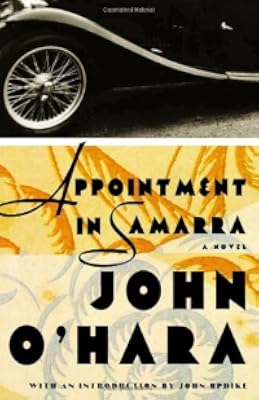

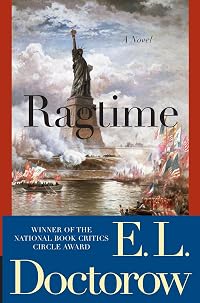
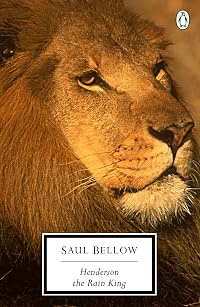

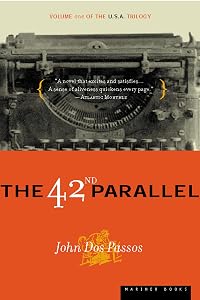

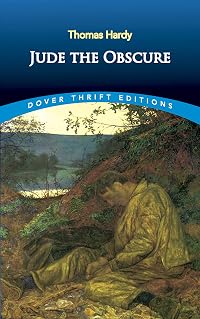
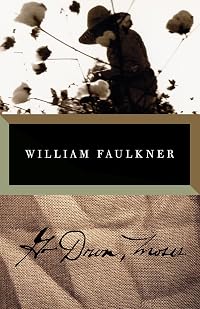
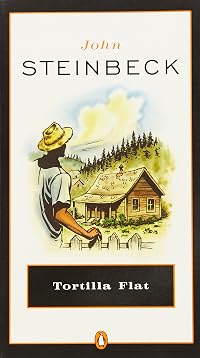
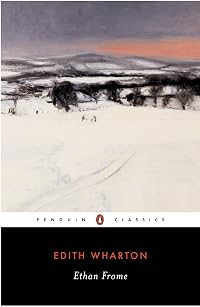
Member Recommendations
aprille Both concern the power of a community to bring a member back from the brink of transgression.
Member Reviews
1922. Really liked it. Sinclair Lewis writes so beautifully that he can make even a middle class businessman's life lyrical. The novel deals with traditional conservative ideals like pulling yourself up by your bootstraps and unquestioning patriotism and loyalty. Babbitt briefly entertains a liberal thought. He sympathizes with the labor movement for about thirty seconds, cheats on his wife and drinks too much for a few months, and loses all his friends and most of his social standing.
Then his wife gets appendicitis and he rushes to her side to be the perfect husband once again, and he conforms to the standards he was living by before, with just a bit of niggling doubt left in his mind. He places his hope of ever breaking out of show more society's mold in his son and hopes he does a better job of it.
For someone who basically upholds views I disagree with for most of the book, Babbitt is wonderfully human and loveable. He struggles with real-life questions which I think nearly every one can relate to. His life gets too routine and he experiments, but returns to the safe, straight and narrow path before long. And the dialogue is tip-top! show less
Then his wife gets appendicitis and he rushes to her side to be the perfect husband once again, and he conforms to the standards he was living by before, with just a bit of niggling doubt left in his mind. He places his hope of ever breaking out of show more society's mold in his son and hopes he does a better job of it.
For someone who basically upholds views I disagree with for most of the book, Babbitt is wonderfully human and loveable. He struggles with real-life questions which I think nearly every one can relate to. His life gets too routine and he experiments, but returns to the safe, straight and narrow path before long. And the dialogue is tip-top! show less
In 1920s America, George Babbitt has it all. He lives in an up-and-coming, prosperous town. He has a family and two children. He has a successful job. He’s not a superman. No, he’s neither a CEO of a large corporation, nor a super-rich business tycoon, nor a famous celebrity. Nonetheless, he’s living a good life. But something suddenly happens to one of his close friends, and he calls his entire life into question.
Today, we would call this event a “mid-life crisis.” Babbitt indulges in behaviors that he’s always wanted to explore. He parties. He drinks. He fools around. He stops associating with upright people. His family and his business associates are aghast. Will he recover? If so, how? And is human redemption even show more possible?
Written in the so-called “Roaring ’20s,” this book addressed an American society drunk with economic prosperity. The frank need to survive in the Great Depression had not hit yet. Interestingly, this book also was a success in Great Britain, with its similarly advanced industrial economy. As with works like The Great Gatsby, this book addressed social problems of how to live in a time of materialism.
Although some terms of modern life have changed in the postindustrial and postfeminist age, the philosophical problems of life’s meaning have not. Since Sinclair Lewis penned this book, women’s roles in the world have changed dramatically as have the centrality of American institutions. But we still need to find our place in the world. We still question whether material comfort is all there is to life. We still need to placate our regrets and guilt. Today, we might read Babbitt and relegate it to a prior age of indulgence and fixed social structures. However, when we are honest with ourselves, we all reflect George Babbitt more than we realize. That’s what makes this book a timeless classic. show less
Today, we would call this event a “mid-life crisis.” Babbitt indulges in behaviors that he’s always wanted to explore. He parties. He drinks. He fools around. He stops associating with upright people. His family and his business associates are aghast. Will he recover? If so, how? And is human redemption even show more possible?
Written in the so-called “Roaring ’20s,” this book addressed an American society drunk with economic prosperity. The frank need to survive in the Great Depression had not hit yet. Interestingly, this book also was a success in Great Britain, with its similarly advanced industrial economy. As with works like The Great Gatsby, this book addressed social problems of how to live in a time of materialism.
Although some terms of modern life have changed in the postindustrial and postfeminist age, the philosophical problems of life’s meaning have not. Since Sinclair Lewis penned this book, women’s roles in the world have changed dramatically as have the centrality of American institutions. But we still need to find our place in the world. We still question whether material comfort is all there is to life. We still need to placate our regrets and guilt. Today, we might read Babbitt and relegate it to a prior age of indulgence and fixed social structures. However, when we are honest with ourselves, we all reflect George Babbitt more than we realize. That’s what makes this book a timeless classic. show less
George F. Babbitt is a successful realtor in the fictional Midwest town of Zenith in the 1920s. Though he has all a middle class man could desire he is vaguely dissatisfied. He is pompous, arrogant and obtuse and I think this quote nicely captures his essence,
“These standard advertised wares—toothpastes, socks, tires, cameras, instantaneous hot-water heaters—were his symbols and proofs of excellence; at first the signs, then the substitutes, for joy and passion and wisdom.”
About two-thirds of the way through the novel an event shakes Babbitt to the core. He reexamines his beliefs and values, dabbling in some immoral and liberal (by 1920s standards) behavior, before his proclivity for self-preservation gets the better of him. show more
Another slow starter of a book and though it never really gets exciting, the inaction and subtle tension is very readable and compelling. As a satire, I didn’t find it overly preachy and details of this suburban life really were amusing. Somehow this self-involved, unlikeable Babbitt grew on me; I was rooting for him and hoping he would wake up from his suburban coma to DO SOMETHING. Alas, I got what I wished for and was disappointed. But really there wasn’t any other way it could’ve been for a specimen like Ol’ Babbitt. show less
“These standard advertised wares—toothpastes, socks, tires, cameras, instantaneous hot-water heaters—were his symbols and proofs of excellence; at first the signs, then the substitutes, for joy and passion and wisdom.”
About two-thirds of the way through the novel an event shakes Babbitt to the core. He reexamines his beliefs and values, dabbling in some immoral and liberal (by 1920s standards) behavior, before his proclivity for self-preservation gets the better of him. show more
Another slow starter of a book and though it never really gets exciting, the inaction and subtle tension is very readable and compelling. As a satire, I didn’t find it overly preachy and details of this suburban life really were amusing. Somehow this self-involved, unlikeable Babbitt grew on me; I was rooting for him and hoping he would wake up from his suburban coma to DO SOMETHING. Alas, I got what I wished for and was disappointed. But really there wasn’t any other way it could’ve been for a specimen like Ol’ Babbitt. show less
This book is everything I dislike about literary fiction, and yet it's so darn well written I'm giving it four stars, even though I never would have finished the thing if it wasn't for research purposes. Lewis can WRITE. There's a reason he's remembered as one of the great writers of the 20th century.
Here's the thing about Babbit. He's a horrible person, but he's like people all of us know. The book really centers around a catastrophic mid-life crisis. Babbit is sanctimonious, loud-mouthed, a sexual harrasser, desperate to climb the social ladder. He's largely spineless--he follows whatever crowd holds sway over him. Most of all, we are never intended to like him, but we relate to him in small ways all the same. It was only by the power show more of Lewis's writing that I stuck with the book, because this really hit on so many tropes that I loathe, especially when it comes to spousal abuse (though Babbit's sin in this regard is mostly in supporting his best friend's abuse/near-murder of his wife) and Babbit's extramarital affair. I mean, I HATED this guy, but I kept reading, and on the last page I genuinely pitied him. This book is an exercise is incredible character development.
One of the reasons I braved this book was due to the social impact it had in the 1920s. In several books from that period, I have come across mentions of people being considered "like Babbit." The book was a bestseller, and since we all know people like Babbit, it's no wonder the name entered popular culture. show less
Here's the thing about Babbit. He's a horrible person, but he's like people all of us know. The book really centers around a catastrophic mid-life crisis. Babbit is sanctimonious, loud-mouthed, a sexual harrasser, desperate to climb the social ladder. He's largely spineless--he follows whatever crowd holds sway over him. Most of all, we are never intended to like him, but we relate to him in small ways all the same. It was only by the power show more of Lewis's writing that I stuck with the book, because this really hit on so many tropes that I loathe, especially when it comes to spousal abuse (though Babbit's sin in this regard is mostly in supporting his best friend's abuse/near-murder of his wife) and Babbit's extramarital affair. I mean, I HATED this guy, but I kept reading, and on the last page I genuinely pitied him. This book is an exercise is incredible character development.
One of the reasons I braved this book was due to the social impact it had in the 1920s. In several books from that period, I have come across mentions of people being considered "like Babbit." The book was a bestseller, and since we all know people like Babbit, it's no wonder the name entered popular culture. show less
I knew that Babbitt was a satire but I didn't expect it to be so sharp or so applicable to today's world. What saves it from being just ugly and biting is that Babbitt is oddly sympathetic. He's also infuriating and obnoxious at times, but Lewis seems to be telling us he's a product of his time and we can't expect much. It's a harsh indictment of American society, especially the upwardly mobile middle class and the already entrenched upper class, and it hits uncomfortably close to home in certain ways. While dated to some extent, Babbitt still manages to have something important to say, even 90+ years later.
As I was reading this book I kept thinking, I know this man! Actually, I've met a couple that would come very close to this guy. The way Lewis presented him was very clever. It was hard to like Babbitt very much, but I couldn't hate him either. Just when he got truly unlikeable, he would do something goofy and utterly human or have a moment of relative clarity. His self righteousness as well as his doubts are shown with equal distinction. The satire is fabulous and I laughed out loud many times. Read this book.
His last despairing fling before the paralyzed contentment of middle-age'
By sally tarbox on 27 Mar. 2014
Format: Paperback
George F Babbit is a respectable 'pillar of the community' in the fictional city of Zenith. Married with kids, an increasingly successful realtor in a world of 'good little people, comfortable, industrious, credulous', a good social life...and yet beset by the realisation that:
'perhaps all life as he knew it and vigorously practised it was futile; that heaven as portrayed by the Rev Drew was neither probable nor very interesting; that he hadn't much pleasure out of making money; that it was of doubtful worth to rear children merely that they might rear children who would rear children. What was it all about? What did show more he want?' Whether Babbit finally breaks with his conservative and conventional life forms the story.
I really enjoyed Lewis' humorous touches, especially the characterization of his mundane domestic life:
' "An apple a day keeps the doctor away", he enlightened Mrs Babbit, for quite the first time in fourteen hours.'
Also his comic takes on advertising and religion (which he focussed on more fully in later work 'Elmer Gantry'.)
The realisation that this is all there is, is as relevant today as back in the 1920s, and this was an excellent read. show less
By sally tarbox on 27 Mar. 2014
Format: Paperback
George F Babbit is a respectable 'pillar of the community' in the fictional city of Zenith. Married with kids, an increasingly successful realtor in a world of 'good little people, comfortable, industrious, credulous', a good social life...and yet beset by the realisation that:
'perhaps all life as he knew it and vigorously practised it was futile; that heaven as portrayed by the Rev Drew was neither probable nor very interesting; that he hadn't much pleasure out of making money; that it was of doubtful worth to rear children merely that they might rear children who would rear children. What was it all about? What did show more he want?' Whether Babbit finally breaks with his conservative and conventional life forms the story.
I really enjoyed Lewis' humorous touches, especially the characterization of his mundane domestic life:
' "An apple a day keeps the doctor away", he enlightened Mrs Babbit, for quite the first time in fourteen hours.'
Also his comic takes on advertising and religion (which he focussed on more fully in later work 'Elmer Gantry'.)
The realisation that this is all there is, is as relevant today as back in the 1920s, and this was an excellent read. show less
Members
- Recently Added By
Lists

1001 Books You Must Read Before You Die
1,448 works; 1,134 members

The Guardian's 1000 Novels Everyone Must Read
1,005 works; 548 members

Radcliffe's 100 Best Novel of the 20th Century
100 works; 32 members
Novels from The Guardian's Great American Novelist Tournament
148 works; 24 members

Great American Novels
158 works; 40 members
In and About the 1920s
181 works; 31 members

Unread books
1,063 works; 82 members

Favourite Books
1,819 works; 316 members
20th Century Literature
1,161 works; 54 members
Harold Bloom - The Western Canon: D. The Chaotic Age
833 works; 24 members
Out of Copyright
244 works; 14 members

One Book, Many Authors
441 works; 40 members

Nobel Price Winners
222 works; 20 members

100 Most Recommended Works
100 works; 11 members

Top Five Books of 2017
757 works; 231 members

The Guardian's 100 Best Novels Written in English
105 works; 13 members
1920s
141 works; 6 members
1,001 BYMRBYD Concensus
723 works; 27 members

Favorite Sinclair Lewis Novels
10 works; 3 members
Daria Morgendorffer's Bookshelf
70 works; 5 members
Mensa for Kids Excellence in Reading Award Program (Grades 9-12)
116 works; 5 members

Best First Lines
133 works; 8 members

Lamont's Hundred Best Novels (1947)
100 works; 4 members

Books Read in 2023
5,638 works; 147 members

Books Read in 2017
4,249 works; 129 members
The College Board: 101 Great Books Recommended for College-Bound Readers
111 works; 7 members

discontinued
10 works; 4 members

SHOULD Read Books!
354 works; 9 members
Trinity College Booklist (1951): Class Ten, English Literature
358 works; 5 members

Books Read in 2022
5,226 works; 115 members

Schwob Nederland
207 works; 2 members

Books in the Bibliography of Freethinkers by Susan Jacoby
155 works; 1 member

.
396 works; 1 member

DigitalDreamDoor top 300
300 works; 4 members
Canon de la narrativa universal del s. XX (cicutadry)
499 works; 3 members

Recommended Reading : 600 Classics Reviewed, Editors of Salem Press, 2015
634 works; 6 members

Books Read in 2024
4,727 works; 128 members

For Further Reading: A List of 160 Novels from 15 Literatures
160 works; 4 members

Publisher's Weekly Bestsellers Part I - 1895-1939
399 works; 8 members

AP Lit
363 works; 6 members

Greatest Books, allegedly
484 works; 9 members

1964 College Preparatory Reading List
202 works; 8 members
Mensa for Kids Excellence in Reading Award Program (Grades 9-12)
116 works; 3 members

bound
100 works; 1 member

Books About Older People
50 works; 11 members
Author Information

127+ Works 23,034 Members
Harry Sinclair Lewis was born on February 7, 1885 in Minnesota. He was an American novelist, short-story writer, and playwright. In 1930, he became the first writer from the United States to receive the Nobel Prize in Literature. A lonely child, Lewis immersed himself in reading and diary writing. While studying at Yale University and living in show more writer Upton Sinclair's communal house, he wrote for Yale Literary Magazine and helped to build the Panama Canal. After graduating from Yale in 1908, Lewis began writing fiction, publishing 22 novels by the end of his career. His early works, while often praised by literary critics, did not reach popularity but with Main Street (1920), Babbitt (1922), Arrowsmith (1925), Elmer Gantry (1927), and Dodsworth (1929), Sinclair Lewis achieved fame as a writer. His style of choice was satire; he explored American small-town life, conformity, hypocrisy, and materialism. Sinclair Lewis was married and divorced twice. As his career wound down, he spent his later life in Europe and died in Rome on January 10, 1951. (Bowker Author Biography) show less
Some Editions
Awards and Honors
Awards
Distinctions
Notable Lists
Series
Belongs to Publisher Series
Florin Books (17)
Rowohlt Jahrhundert (27)
Signet Classics (CQ344)
Nobelpreisträger Coron-Verlag (weiß) (1930 (USA))
rororo (4024)
Work Relationships
Is contained in
Sinclair Lewis Set: Ann Vikers, Arrowsmith, Babbit, It Can't Happen Here, Work of Art by Sinclair Lewis
Babbitt / Moths in the Arc Light / The Willow Walk / It Can't Happen Here / The Queen's Letter by Sinclair Lewis
Sinclair Lewis Boxed Set – 16 titles in One Volume: Babbitt, Main Street, The Trail of the Hawk, Moths in the Arc Light, Nature, Inc., The Cat of the Stars and more by Sinclair Lewis
Contains
Is abridged in
Has as a study
Has as a student's study guide
Common Knowledge
- Canonical title*
- Бэббит
- Original title
- Babbitt
- Original publication date
- 1922
- People/Characters
- George F. Babbitt; Myra Babbitt; Verona Babbitt; Ted Babbitt; Katherine (Tinka) Babbitt (Tinka); Henry T. Thompson (show all 8); Paul Riesling; Zilla Riesling
- Important places
- Zenith; Zenith Athletic Club; Boosters' Club; Minnesota, USA
- Important events
- Prohibition in the United States; The Noble Experiment
- Related movies
- Babbitt (1924 | IMDb); Babbitt (1934 | IMDb)
- Dedication
- To Edith Wharton.
- First words
- The towers of Zenith aspired above the morning mist; austere towers of steel and cement and limestone, sturdy as cliffs and delicate as silver rods.
When Sinclair Lewis published Main Street in 1920, he was the author of four inconsequential novels that had appeared over the preceding six years. (Introduction) - Last words
- (Click to show. Warning: May contain spoilers.)Arms about each other's shoulders, the Babbitt men marched into the living room and faced the swooping family.
(Click to show. Warning: May contain spoilers.)Over the next two decades his imagination grew more exhausted, and while he scored a critical triumph with his fantasy of a Fascist takeover of America in It Can't Happen Here in 1935 and commercial successes later with Cass Timberlane (1945) and Kingsblood Royal (1947), he seemed more and more to be taking his cue from what other novelists were doing rather than showing the way, as he had done so gloriously in the 1920s, especially in Babbitt (Introduction) - Original language
- English
- Canonical DDC/MDS
- 813.52
- Canonical LCC
- PS3523.E94
*Some information comes from Common Knowledge in other languages. Click "Edit" for more information.
Classifications
Statistics
- Members
- 5,663
- Popularity
- 2,340
- Reviews
- 101
- Rating
- (3.72)
- Languages
- 15 — Czech, Dutch, English, Estonian, Finnish, French, German, Greek, Hungarian, Italian, Portuguese, Russian, Spanish, Swedish, Turkish
- Media
- Paper, Audiobook, Ebook
- ISBNs
- 254
- UPCs
- 4
- ASINs
- 150