On This Page
Description
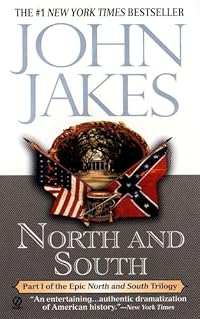
The first volume of John Jakes's acclaimed and sweeping saga about a friendship threatened by the divisions of the Civil War In the years leading up to the Civil War, one enduring friendship embodies the tensions of a nation. Orry Main from South Carolina and George Hazard from Pennsylvania forge a lasting bond while training at the United States Military Academy at West Point. Together they fight in the Mexican-American War, but their closeness is tested as their regional politics diverge. show more As the first rounds are fired at Fort Sumter, Orry and George find themselves on different sides of the coming struggle. In John Jakes's unmatched style, North and South launches a trilogy that captures the fierce passions of a country at the precipice of disaster. This ebook features an illustrated biography of John Jakes including rare images from the author's personal collection. show lessTags
Recommendations


















Member Reviews
What to say about this book, this brick of a historical fiction novel?
First off, the positives, and there is a lot going in this book’s favor.
The novel is imminently readable, no small advantage for a book of this length. The reader can breeze their way through several chapters without the fatigue that sometimes attends sprawling, historical narratives like this. True, the characters are a bit simple, the heroes are absolute paragons and the villains are cartoonishly evil. However, the plot flows wonderfully and the author juggles the dozen or so interesting characters and their crisscrossing plotlines adroitly.
The principal virtue of this book is its entertainment value. The historic details are present and integral but somehow show more feel surface level at times. Overall this book narrowly misses the distinction that some historical fiction attains (from the pen of someone like Mary Renault, for instance) of breathing vibrant life into a specific time and place long past, fully capturing the feel for a certain period. This novel presents the history as linear and apparent, which of course it is to us now, but somewhat strains credulity when the main characters back in the mid 1800’s regularly foresee the nature of events, elections, succession, battles, etc. and are almost always right. One almost gets the sense that every main character already knows all about the Civil War in general, just not their specific part to play in it.
Now on to the less positive impressions this book left me with.
First and foremost is the problem of Virgilia.
Virgilia, sister of George Hazzard, is the only truly staunch abolitionist we see in in the entire novel. She is also portrayed as raving mad, vindictive, and seemingly more interested in the cause of abolition for personal motives (resentment, a desire to “get even” with the world, etc.) than for any real moral reasons. Her portrayal only deteriorates as the novel progresses. In the beginning she’s unpleasant, (repeatedly other characters theorize she only does abolition work because she is homely and therefore needs something to occupy her time) and may say something unkind and too pointedly political during dinner. But by the book’s end she’s a complete lunatic who wants to see Orry hanged by a mob. Now I don’t deny some abolitionists were extreme in their views, but it bears repeating that Virgilia is the ONLY abolitionist we spend any time with in the book. Without any other abolitionist characters, she becomes a representative sample which makes her characterization extremely troubling. The only one adamantly against the whole institution of slavery is a spiteful, vindictive person with an apparently serious set of mental disorders.
There were many persuasive, moral, and eloquent abolitionists from this period in American history. We have their speeches, essays, and letters and their assertions were, of course, proven correct. But we hear from none of them in this book, thus we miss a vital element of the debates going on at the time and the work of good people horrified by slavery is omitted.
The problem of Virgilia is really just a symptom of a larger issue I had with the book, that is that it veers incredibly close to ahistorical “Lost Cause” talking points and removes and responsibility for the institution of slavery from any individual slave owners.
At one point towards the end of the novel, Cooper Main, a likeable and honorable South Carolinian, speaks to his wife about his upcoming service to the confederate government. He states he believes the cause “already lost” yet feels compelled to serve his state for the sake of honor. Further, by the end of the novel every “good” character who owns slaves is convinced of the institutions’ moral wrongness yet feels unable to give it up. Indeed, Orry finds a note from his father disclosing that he too knew slavery was wrong despite never expressing those views publicly. This framing attempts to portray the slave holders themselves as victims of a sort while at the same time ameliorating or obviating their own personal responsibility for the “peculiar institution” and didn’t sit well with me.
In their repeated forays into the North, the Mains are often accosted by bigoted Yankees and held personally responsible for all the evils of slavery in America. The author points out, through tone and framing, that this is doesn’t hold up to scrutiny. But they ARE responsible for owning slaves themselves, something the novel never seems eager to address head on, and if they’re not individually responsible for their own actions then who in history was?
I understand the novelist’s impulse to make characters on both sides of the Mason Dixon relatable, to make both families morally good people, it makes for excellent story telling. But this humanizing impulse shouldn’t extend to wiping out personal responsibility for one of the worst institutions to ever exist in the history of our species. I may read the other books in this series but I am thus far skeptical for the reasons mentioned above. show less
First off, the positives, and there is a lot going in this book’s favor.
The novel is imminently readable, no small advantage for a book of this length. The reader can breeze their way through several chapters without the fatigue that sometimes attends sprawling, historical narratives like this. True, the characters are a bit simple, the heroes are absolute paragons and the villains are cartoonishly evil. However, the plot flows wonderfully and the author juggles the dozen or so interesting characters and their crisscrossing plotlines adroitly.
The principal virtue of this book is its entertainment value. The historic details are present and integral but somehow show more feel surface level at times. Overall this book narrowly misses the distinction that some historical fiction attains (from the pen of someone like Mary Renault, for instance) of breathing vibrant life into a specific time and place long past, fully capturing the feel for a certain period. This novel presents the history as linear and apparent, which of course it is to us now, but somewhat strains credulity when the main characters back in the mid 1800’s regularly foresee the nature of events, elections, succession, battles, etc. and are almost always right. One almost gets the sense that every main character already knows all about the Civil War in general, just not their specific part to play in it.
Now on to the less positive impressions this book left me with.
First and foremost is the problem of Virgilia.
Virgilia, sister of George Hazzard, is the only truly staunch abolitionist we see in in the entire novel. She is also portrayed as raving mad, vindictive, and seemingly more interested in the cause of abolition for personal motives (resentment, a desire to “get even” with the world, etc.) than for any real moral reasons. Her portrayal only deteriorates as the novel progresses. In the beginning she’s unpleasant, (repeatedly other characters theorize she only does abolition work because she is homely and therefore needs something to occupy her time) and may say something unkind and too pointedly political during dinner. But by the book’s end she’s a complete lunatic who wants to see Orry hanged by a mob. Now I don’t deny some abolitionists were extreme in their views, but it bears repeating that Virgilia is the ONLY abolitionist we spend any time with in the book. Without any other abolitionist characters, she becomes a representative sample which makes her characterization extremely troubling. The only one adamantly against the whole institution of slavery is a spiteful, vindictive person with an apparently serious set of mental disorders.
There were many persuasive, moral, and eloquent abolitionists from this period in American history. We have their speeches, essays, and letters and their assertions were, of course, proven correct. But we hear from none of them in this book, thus we miss a vital element of the debates going on at the time and the work of good people horrified by slavery is omitted.
The problem of Virgilia is really just a symptom of a larger issue I had with the book, that is that it veers incredibly close to ahistorical “Lost Cause” talking points and removes and responsibility for the institution of slavery from any individual slave owners.
At one point towards the end of the novel, Cooper Main, a likeable and honorable South Carolinian, speaks to his wife about his upcoming service to the confederate government. He states he believes the cause “already lost” yet feels compelled to serve his state for the sake of honor. Further, by the end of the novel every “good” character who owns slaves is convinced of the institutions’ moral wrongness yet feels unable to give it up. Indeed, Orry finds a note from his father disclosing that he too knew slavery was wrong despite never expressing those views publicly. This framing attempts to portray the slave holders themselves as victims of a sort while at the same time ameliorating or obviating their own personal responsibility for the “peculiar institution” and didn’t sit well with me.
In their repeated forays into the North, the Mains are often accosted by bigoted Yankees and held personally responsible for all the evils of slavery in America. The author points out, through tone and framing, that this is doesn’t hold up to scrutiny. But they ARE responsible for owning slaves themselves, something the novel never seems eager to address head on, and if they’re not individually responsible for their own actions then who in history was?
I understand the novelist’s impulse to make characters on both sides of the Mason Dixon relatable, to make both families morally good people, it makes for excellent story telling. But this humanizing impulse shouldn’t extend to wiping out personal responsibility for one of the worst institutions to ever exist in the history of our species. I may read the other books in this series but I am thus far skeptical for the reasons mentioned above. show less
Wow. I really enjoyed this book. it's not often I read stories set in this time/location, but I am glad I came across this book. As a history buff, this book was well-researched and it was easy to imagine what life could have been like, either in the North or the South.
One thing that makes this story so strong is that the abolitionists and slavers are not portrayed in black and white (no pun intended) You have rabid abolitionists like Virgilia, and people who question slavery and can admit to flaws in the system without being outright abolitionists. I think the author presented a balanced view of the two sides, as well as the circumstances that helped to start the Civil War, through mainly the eyes of the two main characters Orry and show more George, along with relatives and friends. show less
One thing that makes this story so strong is that the abolitionists and slavers are not portrayed in black and white (no pun intended) You have rabid abolitionists like Virgilia, and people who question slavery and can admit to flaws in the system without being outright abolitionists. I think the author presented a balanced view of the two sides, as well as the circumstances that helped to start the Civil War, through mainly the eyes of the two main characters Orry and show more George, along with relatives and friends. show less
This is set in the decades leading up to the American Civil War. It focuses on two families: the Hazards, living in Pittsburgh, and the Mains, who own a plantation (and slaves) in South Carolina. George Hazard and Orry Main become best friends when at military school in the early 1840s(?). They fight together in the Mexican War, then retire from the military. George does marry, but Orry falls for a woman who is marrying a brutal slave owner.
Years later, George’s youngest brother, Billy, and Orry’s young cousin, Charles, head to the same military school together (though they have known each other through the families’ friendship for a while now)… but now the school is much more divisive along North/South lines with show more slavery/politics being the issue.
Orry’s brother, Cooper, is very much against owning slaves and he marries a woman from the North. George’s sister, Virgilia, is a staunch abolitionist and gets in Orry’s face whenever the Mains visit. Billy has fallen in love with Orry’s youngest sister, Brett, though he had a brief flirtation with a sister, Ashton, just slightly older. Brett really is the marrying type vs Ashton’s flirtatious ways.
There is a lot going on in this long book and a lot of North/South mixing between the families and their friends/acquaintances. It’s not often I rate a book this long (over 800 pages) this high, but I really liked this one all the way though (though it was a bit tricky at the start to get a handle on who was who!). There is even more going on (and more characters) than I’ve detailed in my summary. This is the first in a trilogy. I assume the others are also very long, so it might be a while before I get to the next, but I will definitely read it at some point. I’ve never seen the miniseries, but would like to; I hadn’t realized Patrick Swayze is in it! show less
Years later, George’s youngest brother, Billy, and Orry’s young cousin, Charles, head to the same military school together (though they have known each other through the families’ friendship for a while now)… but now the school is much more divisive along North/South lines with show more slavery/politics being the issue.
Orry’s brother, Cooper, is very much against owning slaves and he marries a woman from the North. George’s sister, Virgilia, is a staunch abolitionist and gets in Orry’s face whenever the Mains visit. Billy has fallen in love with Orry’s youngest sister, Brett, though he had a brief flirtation with a sister, Ashton, just slightly older. Brett really is the marrying type vs Ashton’s flirtatious ways.
There is a lot going on in this long book and a lot of North/South mixing between the families and their friends/acquaintances. It’s not often I rate a book this long (over 800 pages) this high, but I really liked this one all the way though (though it was a bit tricky at the start to get a handle on who was who!). There is even more going on (and more characters) than I’ve detailed in my summary. This is the first in a trilogy. I assume the others are also very long, so it might be a while before I get to the next, but I will definitely read it at some point. I’ve never seen the miniseries, but would like to; I hadn’t realized Patrick Swayze is in it! show less
Although I got a little frustrated in the middle of the book, this was just one I couldn't wait to pick up again. I felt that some things were sort of skimmed over in the middle (all of a sudden Cooper is married, Billy is no longer into Ashton but is now in love with Brett...), but John Jakes did an amazing job portraying the feelings, both in the North and the South, leading up to the Civil War. He made the reader empathize with both sides, which in my opinion, is no easy feat.
I really enjoyed this book. The characters were interesting and I found myself wanting to know more about them. At times there was a cliffhanger with one character at the end of a chapter and I would find myself paging ahead to see how it turned out because I just couldn't wait! The book also provides some insight into what living in America during those times was really like. I felt the situations that the characters confronted were very real. I appreciated the author's attention details especially when he would comment on what the characters were reading at the time. Very clever. I was pleasantly surprised at the number of topics covered in this book from the obvious conflicts over slavery to homosexuality in the military. I look show more forward to reading the next installment in this trilogy. show less
To readers in the UK, John Jakes' novel is the other North and South, which confuses matters when searching for Mrs Gaskell's Victorian romance. And until I read about the American Civil War in another story recently, I was content to carry on bypassing both Jakes' epic trilogy and the 1980s adaptation with Patrick Swayze. Book one of North and South hasn't exactly captured my imagination like Gaskell's story did, but I now know more than I did about the civil war (not that one, the other one).
My main problem with Jakes' North and South is the unnecessary length - this is only the first instalment of three novels, covering twenty years of fictional and national developments leading up to the start of the war, and yet the run-up requires show more 800 pages? Jakes does a fine job of cramming the text with historical research, but he also wastes space by explaining what more skilful authors can convey with dialogue and imagery. Show not tell, Mr Jakes. My other complaint is that the characters, especially the 'villains', are a tad too obvious, like the narrative. Captain Bent and Ashton Main, in particular, spend the greater part of the novel bearing grudges that would crush mere mortals, and over nothing much to start with. Confrontations and duels pepper the story, but the outcome is always predictable.
Construction and caricatures aside, I actually enjoyed reading much of this great doorstop of a history lesson. Yes, a lot of the subplots devolve into soap opera, but also Jakes manages to present both sides fairly and instructively - the power and arrogance of the north, and the tradition and fear of the south. George and Orry, and Charles and Billy, are likeable, yet convincing in their respective attitudes to the issues of abolition and slavery, union and secession. I have learned a lot about a time and place in history that I knew little or nothing about, for which I am grateful to the author - but I don't know if I have the strength to tackle Jakes' second novel just yet! show less
My main problem with Jakes' North and South is the unnecessary length - this is only the first instalment of three novels, covering twenty years of fictional and national developments leading up to the start of the war, and yet the run-up requires show more 800 pages? Jakes does a fine job of cramming the text with historical research, but he also wastes space by explaining what more skilful authors can convey with dialogue and imagery. Show not tell, Mr Jakes. My other complaint is that the characters, especially the 'villains', are a tad too obvious, like the narrative. Captain Bent and Ashton Main, in particular, spend the greater part of the novel bearing grudges that would crush mere mortals, and over nothing much to start with. Confrontations and duels pepper the story, but the outcome is always predictable.
Construction and caricatures aside, I actually enjoyed reading much of this great doorstop of a history lesson. Yes, a lot of the subplots devolve into soap opera, but also Jakes manages to present both sides fairly and instructively - the power and arrogance of the north, and the tradition and fear of the south. George and Orry, and Charles and Billy, are likeable, yet convincing in their respective attitudes to the issues of abolition and slavery, union and secession. I have learned a lot about a time and place in history that I knew little or nothing about, for which I am grateful to the author - but I don't know if I have the strength to tackle Jakes' second novel just yet! show less
I enjoyed this book immensely, and I only have one complaint. The so-called romantic parts were cringe-worthy. It had all the awkwardness of an author trying too hard to convey a man's love for a woman and not getting the message across properly. It was bordering on the ridiculous, if not bearing similarities to the horrible romance novels I read in my youth.
Still, Mr. Jakes has a romantic soul, and it deals with the romance of history. His main characters are chivalrous and noble during tumultuous times, and his villains are absolutely heinous. He creates characters you love and characters you love to hate. John Jakes tells a damn good story, and I will be continuing with the series.
Still, Mr. Jakes has a romantic soul, and it deals with the romance of history. His main characters are chivalrous and noble during tumultuous times, and his villains are absolutely heinous. He creates characters you love and characters you love to hate. John Jakes tells a damn good story, and I will be continuing with the series.
Members
- Recently Added By
Lists

Best Historical Fiction
620 works; 261 members

Historical Fiction
889 works; 91 members
Best Family Stories
241 works; 22 members

KayStJ's to-read list
1,616 works; 11 members

THE WAR ROOM
813 works; 24 members
Talk Discussions
Past Discussions
North and South by John Jakes - norabelle414 tutoring Samantha_kathy in 75 Books Challenge for 2012 (April 2012)
Author Information

270+ Works 20,348 Members
John Jakes was born in Chicago in 1932. He studied acting at Northwestern University, where he began writing professionally during his freshman year. Later he enrolled in a creative writing program at DePauw University and received a master's degree in American literature from Ohio State University. Early in his career Jakes wrote copy for a show more pharmaceutical company and various ad agencies, and authored dozens of short stories encompassing western, mystery and science fiction themes. In March 1973, Jakes commenced work on The Kent Family Chronicles, a multi-volume set portraying American history through the lives of a fictional family. Later works include North and South (1982), California Gold (1989), Homeland (1993), and American Dreams. Six of his major novels have been filmed as television miniseries, and North and South remains one of the highest rated miniseries in the history of television. Jakes is actively involved in the adaptation of North and South for the Broadway stage. John Jakes has been hailed as the godfather of the historical novel, and America's history teacher. (Bowker Author Biography) show less
Some Editions
Awards and Honors
Distinctions
Notable Lists
Series

Work Relationships
Common Knowledge
- Canonical title
- North and South
- Original publication date
- 1982
- People/Characters
- Orry Main; George Hazard; Cooper Main; Virgilia Hazard; Elkanah Bent; Charles Main (show all 82); Billy Hazard; Stanley Hazard; Justin LaMotte; Madeline LaMotte (Fabray); Brett Hazard (Main); Ashton Huntoon (Main); J. E. B. Stuart; George E. Pickett; Forbes LaMotte; Constance Hazard; Isabel Hazard; Tillet Main; Grady Garrison; James Huntoon; George B. McClellan; Clarissa Main; Alice Peet; Casimir de Jong; Maude Hazard; Cuffey; William Hazard; Maum Sally; Salem Jones; Jezreel Flicker; Caleb Slocum; Fitzhugh Lee; William Worth; Wilford Place; Eños Hoctor; Joseph Hazard (Moffat); Charles de Main; Simon Cameron; Patricia Hazard; Laban Hazard; Levi Hazard; Robert Toombs; Judith Main; Judah Main; Robert Rhett; Whitney Smith; Smith Dawkins; Frank Pratt; Marie-Louise Main; Aunt Belle Nin; Lemuel Tubbs; Watt Smith; Henry A. Wise; Gerd Hochwalt; William L. Yancey; Lieutenant Hawes; Francis LaMotte; I. K. Brunel; Henry Bessemer; George Henry Thomas; Lafayette O'Dell; Zachariah Breedlove; Martha Lantzman; Corporal Ostrander; John Brown, abolitionist; Oliver Brown; Abner Doubleday; Cameron Plummer; Robert Anderson; Frederick C. Humphreys; Madame Conti; Corporal Tannen; Jeanne de Main; King Sebastian; Bess Windom; Thad Windom; Giles Hazard; Captain Smollet; Dennis H. Mahan; Théophile D'Orémieulx; Dillard McAleer; ]
- Important places
- Charleston, South Carolina, USA; West Point, New York, USA; Lehigh Valley, Pennsylvania, USA; Harper's Ferry, West Virginia, USA; New York, USA; Pennsylvania, USA (show all 12); South Carolina, USA; West Virginia, USA; Texas, USA; Fort Sumter, Charleston Harbor, South Carolina, USA; Fort Moultrie, South Carolina, USA; Newport, Rhode Island, USA
- Important events
- Mexican-American War (1846 | 1848); Siege of Veracruz (1847-03-09 | 1847-03-29); American Civil War (1861 | 1865); Battle of Fort Sumter (1861-04-12 | 1861-04-14); Kansas-Nebraska Act (1854); Fugitive Slave Act of 1850 (show all 12); Dred Scott Decision; Publication of "Uncle Tom's Cabin" (1852); Raid on Harper's Ferry (1859); Election of Abraham Lincoln to the presidency of the USA (1860); Secession Crisis (1860 | 1861); Election of Jefferson Davis provisional president of Confederate States (1861)
- Related movies
- North and South (1985 | IMDb)
- Epigraph
- Lover and friend has thou put
far from me, and mine acquaintance
into darkness.
--PSALM 88
...In future wars the Nation must
look to the Academy for the skill
to conduct valor to victory.
--SECRETARY JOHN C. CALHOUN
TO SYLVANUS THAYER, SUPERINTENDENT,
U.S. MILITARY ACADEMY
1818
Human beings may be inconsistent,
but human nature is true to herself.
She has uttered her testimony
against slavery with a shriek ever
since the monster was begotten; and
till it perishes amidst the execr... (show all)ations
of the universe, she will traverse
the world on its track, dealing her
bolts upon its head, and dashing
against it her condemning brand.
--THEODORE DWIGHT WELD
American Slavery As It Is
1839
If they break up, in God's name let
the Union go ... I love the
Union as I love wife. But if my
wife should ask and insist upon a
separation, she should have it
though it broke my heart.
--JOHN QUI... (show all)NCY ADAMS
On Burr's rumored secession conspiracy
1801
I tell you there is a fire. They
have this day set a blazing torch
to the temple of constitutional
liberty, and, please God, we shall
have no more peace forever.
-- LAWYER JAMES PETIGRU
OF CHARLEST... (show all)ON, during
the celebration of secession
DECEMBER 20, 1860 - Dedication
- In memory of Jonathan Daniels - Islander, Southerner, American, Friend
- First words
- "The lad should take my name," Wisdom said after supper. "It's long past time."
- Last words
- (Click to show. Warning: May contain spoilers.)Slavery brings the judgement of heaven upon a country. As nations cannot be rewarded or punished in the next world, they must be in this. George Mason of Virginia 1787
Classifications
Statistics
- Members
- 2,309
- Popularity
- 8,534
- Reviews
- 35
- Rating
- (3.92)
- Languages
- 13 — Czech, Danish, Dutch, English, French, German, Hungarian, Italian, Norwegian (Bokmål), Norwegian, Russian, Spanish, Swedish
- Media
- Paper, Audiobook, Ebook
- ISBNs
- 67
- UPCs
- 2
- ASINs
- 31