On This Page
Description
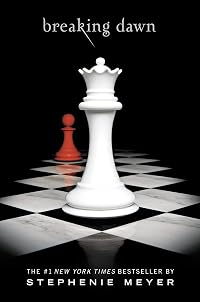
Although eighteen-year-old Bella joins the dark but seductive world of the immortals by marrying Edward the vampire, her connection to the powerful werewolf Jacob remains unsevered.Tags
Recommendations
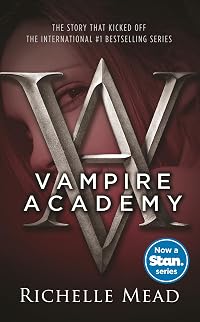
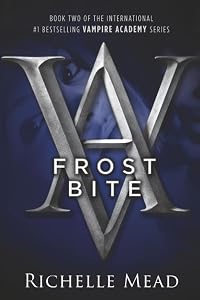
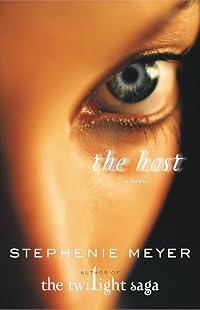
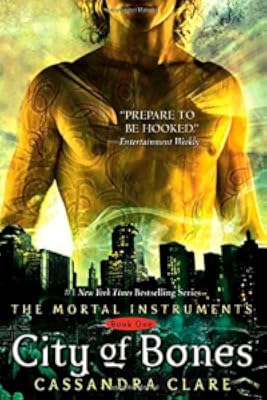
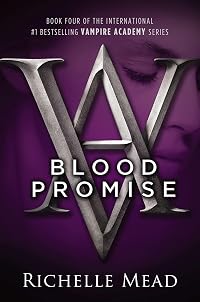
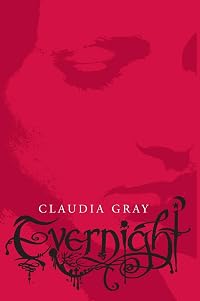
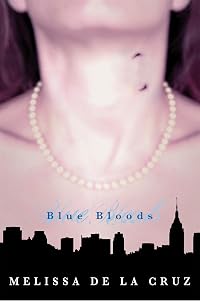
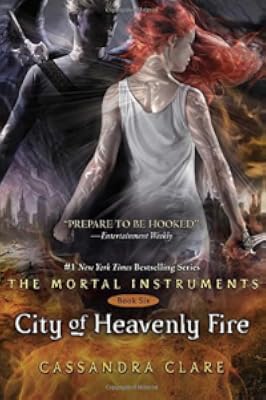
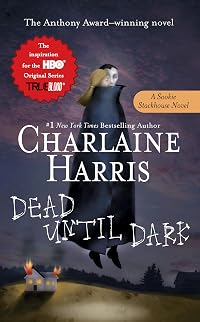
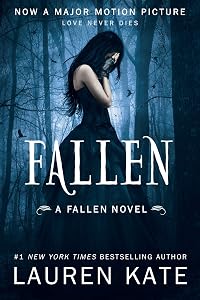
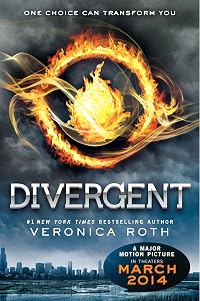
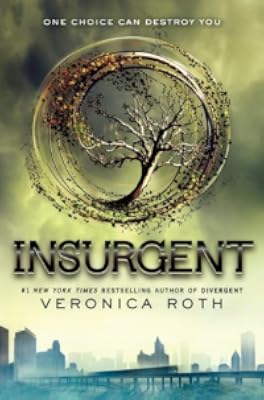
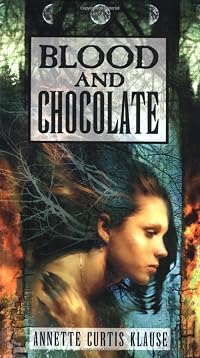
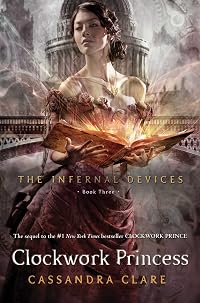
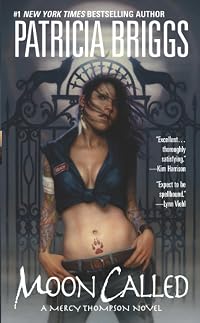
Member Recommendations
Jenson_AKA_DL If you're looking for more vampire stories, I'd suggest this one!
Also recommended by Rachook
41
amybroad25 Amazing books
Could not put any of them down
Hoping that she will write another one about Bella and Edwards daughter renesmee
30
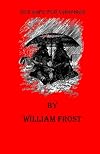
LostVampire Thomas Watson becomes a vampire during the Civil War. The YA fantasy fiction novel NOT SAFE FOR VAMPIRES is a good read. It is only 128 pages, but it is not light reading, You really have to follow the beginning - once you understand the style of writing (there are flashback scenes) you will really enjoy the journey. The story is filled with history. For example, Africatown and the Clotilde ship are a real part of history (I googled it). Also, the character Captain Thomas Watson was really a soldier for the Union Army. I believe you will enjoy this book and add it to your library as well.
310
Member Reviews
While this is technically the canon ending to the Twilight saga, it reads like a bad fanfiction and I would recommend most readers pick a fanfiction they prefer.
There were some enjoyable moments - Charlie being furious about the wedding, being inside Jacob's head and seeing the wolf pack dynamics and learning more about Leah's character, the bad strongly outweighs the good. For those enjoyable moments, I can give a 2. But the book fails to me in every other way.
Bella gets pregnant on her honeymoon - which should not be possible, given that vampires are in a frozen state, and the explanation for why supernatural women are infertile but not men (Leah included) leaves a bad taste in my mouth.
Bella's pregnancy nearly kills her, and when show more the baby is born - Jacob imprints on her. This has to be the most disgusting moment in the series, and I don't understand why Meyer thought the fans would like this. She claims Jacob is a character she loves. I wish she hated him if that was the case, to spare the fans his fate of losing his free will to vampires this way. It is also ridiculous to assert that Jacob's love for Bella was due to the egg. He fell in love with her before he ever became a werewolf.
Additionally, though I enjoyed Jacob as a narrator, it was a jarring difference to have him as narrator for so much of the book at once, instead of spread out every few chapters or something.
Bella then becomes a vampire, and is of course the most perfect vampire to ever exist, with zero challenges, which is quite boring, and nonsensical. Her shield power is fine, but the ease of it and her being "born to be a vampire" is ridiculous.
Vampire Bella was meant to have to fake her death and say goodbye to her parents - but Meyer decided to write an ending that allows her to stay in contact with Charlie. This once again takes all the angst and stakes and throws them out the window. There are no consequences to Bella's choice, everything just gets tied up in a bow with no main character deaths or anything. Even the wolves just kind of accept things.
The Volturi confrontation left one dead - but not a main character, only one we'd never met (only heard of), and many new vampires were introduced in the last half of the book, with no time for the reader to get to know them. Had they been introduced over time, readers may be more invested in them and their fates.
The ending is meant to be happy - Bella and Edward are together forever, and no one important died. But the build-up in the first three books would have necessitated a struggle with consequences - either losing everything to be with Edward, or choosing humanity and needing to take on the Volturi to protect her humanity.
Breaking Dawn is a disservice to the saga, and I would recommend reading the first three as a trilogy, and finding a good fanfiction or headcanon to wrap things up post Eclipse, because the canon can and should be disregarded. show less
There were some enjoyable moments - Charlie being furious about the wedding, being inside Jacob's head and seeing the wolf pack dynamics and learning more about Leah's character, the bad strongly outweighs the good. For those enjoyable moments, I can give a 2. But the book fails to me in every other way.
Bella gets pregnant on her honeymoon - which should not be possible, given that vampires are in a frozen state, and the explanation for why supernatural women are infertile but not men (Leah included) leaves a bad taste in my mouth.
Bella's pregnancy nearly kills her, and when show more the baby is born - Jacob imprints on her. This has to be the most disgusting moment in the series, and I don't understand why Meyer thought the fans would like this. She claims Jacob is a character she loves. I wish she hated him if that was the case, to spare the fans his fate of losing his free will to vampires this way. It is also ridiculous to assert that Jacob's love for Bella was due to the egg. He fell in love with her before he ever became a werewolf.
Additionally, though I enjoyed Jacob as a narrator, it was a jarring difference to have him as narrator for so much of the book at once, instead of spread out every few chapters or something.
Bella then becomes a vampire, and is of course the most perfect vampire to ever exist, with zero challenges, which is quite boring, and nonsensical. Her shield power is fine, but the ease of it and her being "born to be a vampire" is ridiculous.
Vampire Bella was meant to have to fake her death and say goodbye to her parents - but Meyer decided to write an ending that allows her to stay in contact with Charlie. This once again takes all the angst and stakes and throws them out the window. There are no consequences to Bella's choice, everything just gets tied up in a bow with no main character deaths or anything. Even the wolves just kind of accept things.
The Volturi confrontation left one dead - but not a main character, only one we'd never met (only heard of), and many new vampires were introduced in the last half of the book, with no time for the reader to get to know them. Had they been introduced over time, readers may be more invested in them and their fates.
The ending is meant to be happy - Bella and Edward are together forever, and no one important died. But the build-up in the first three books would have necessitated a struggle with consequences - either losing everything to be with Edward, or choosing humanity and needing to take on the Volturi to protect her humanity.
Breaking Dawn is a disservice to the saga, and I would recommend reading the first three as a trilogy, and finding a good fanfiction or headcanon to wrap things up post Eclipse, because the canon can and should be disregarded. show less
I wish I could award this book negative stars. I confess that I went into it with a negative bias, having seen the two first movies, but I figured that before criticizing I should at least read one of the series, and skipped right to the last one.Now I can criticize fairly. I'd always had a belief that, when I have kids, I'd let them read anything they wanted, because I don't believe in censorship and hey, at least they'd be reading, right? This book managed to make me question my conviction. It's not just poorly written (which is an understatement already), with characters not fleshed out, bland, and with no growth or development of any kind. It is an actively damaging book against women. (This next bit might be slightly spoilery to show more those who've been living under a rock.) The main character, Bella, is the epitome of blandness, relying constantly on her abusive boyfriend/husband. She is manipulated into a marriage by a denial of her sexuality, and once it happens, she becomes pregnant... and Edward tries to force a natural abortion. Granted, the baby is evidently the devil's spawn - it breaks her column when it is being born in one of the most grotesque scenes I have ever read.Fortunately, the story itself was too unremarkable for me to fully remember now, which unfortunately means that I can't keep giving examples of how this book is horrifyingly (there are really not enough negative adverbs) awful. As for my conviction, I still believe that I can't forbid my future children from reading this if they want to; however I will insist on reading it with them so that I can point out everything that is terrible about everyone's relationships - the mental and physical abuse, the condemnation of sexuality, the sickening almost-pedophilia, the constant manipulation, the stalking... I could go on. Frankly, this book has absolutely no redeeming qualities. show less
I can see a lot of problems with the Twilight Saga now that I'm an adult, but as a teen I loved them. Except for this one. I was still an idiot 19 year old with no taste when I read this, and even I was disgusted by this book. The vampire pregnancy that almost kills Bella, Jacob imagining Bella pregnant with his baby, and then the whole Jacob imprinting on the baby thing. I don't even care that imprinting is a made-up concept; it's gross. Pedophilia alert. Literally don't care that nothing sexual will happen between Renesme and Jacob until she is older-that shit is nasty and even back when I liked twilight, I was like 'What the fuck am I reading right now??!!'
The first and second book were decent though. If you don't think about them show more too hard. Second was my favorite. show less
The first and second book were decent though. If you don't think about them show more too hard. Second was my favorite. show less
This was by far my favorite book of the series. What started out as reasonably coherent (vampires, werewolves, baseball) disintegrated into this trainwreck.
Does Esme has her own island? Of course she does! Will Bella's first sexual experience leaves her rip-roarin' to go again immediately afterward? Of course it will! Do babies make everything better for everyone forever? Of course they do!
Cap it off with a little half-human-half-vampire girl named (wait for it) Reneesme - Bella's father being told that his daughter is married to a vampire but not that she is pregnant because he'd totally freak out about that - and the usual Bad Guys who want nothing more than to murder Our Precious Bella, reason perfectly unclear - and boy howdy, show more you'd better hose me down. I think I'm in love. show less
Does Esme has her own island? Of course she does! Will Bella's first sexual experience leaves her rip-roarin' to go again immediately afterward? Of course it will! Do babies make everything better for everyone forever? Of course they do!
Cap it off with a little half-human-half-vampire girl named (wait for it) Reneesme - Bella's father being told that his daughter is married to a vampire but not that she is pregnant because he'd totally freak out about that - and the usual Bad Guys who want nothing more than to murder Our Precious Bella, reason perfectly unclear - and boy howdy, show more you'd better hose me down. I think I'm in love. show less
Bizarre. Really, in one word that’s all I have to say. This book is so out there, absurd, and just flat out weird that it doesn’t even seem to belong to the same universe as the three books in the series preceding it. Stephanie Meyer has amazed me in a way I didn’t think possible. She has written a book wherein it actually feels like the author is creating bad fan-fiction (read: improbable plot line on top of improbable plotline, puddle deep characters, pseudo supernatural techno babble going hand in hand with the loads loads loads of DEUS EX MACHINA’s she pulls from every which way to attempt to make some sense of this…insanity) for reasons I can’t even begin to, or really want to, get in to. Maybe she wrote herself into a show more corner? Maybe this felt like a fitting conclusion to the admittedly ever weakening twilight series? I have no idea. But what I can say is this: whereas I firmly believe the Harry Potter series will stand the test of time as a solid novel series that people young and old can enjoy, I can’t say the same for twilight. Everything about this series has felt paper thin. Just weak justifications for very unconvincing and poorly written escapism. When escapism is done well, there’s nothing like it (that’s great writing). But when done badly…yikes, wow, amazing. Breaking Dawn is fantastically bad in ways that almost defy categorization. I read it along with the rest of the series out of morbid (and somewhat macabre) fascination. Tread with fear and trepidation if you choose to do the same…but, at least it’s over, now. Ouch. show less
Having read the first three of Meyer's books, I was looking forward to this, the fourth installment in the series. Little did I know that Stephenie Meyer had gone completely insane between the third and fourth books.
The book started out as expected. Bella and Edward, about to be married, Bella clawing at Edward to sleep with her and Edward reluctantly agreeing. I wasn't surprised; Meyer had been leading up to this moment for three books already, it was about time. However, the godawful consequences of allowing it -- a half-demon baby? A mutated part-vampire pregnancy that kills Bella (had Edward not turned her, she would surely have died)? And then, when the child is born and Bella becomes a vampire, all the
Turning into a vampire was difficult; was painful and hard, for every member of the Cullen family, no matter how pious or prepared for the turn, no matter how openly they welcomed the change or how reluctantly they took their new supernatural burdens. But not for Bella. No, Bella gets to frolic around hours after she's turned; days later she can hang out with her very human father with not so much as a batted eyelash. Ridiculous.
And the wrenching angst of imprinting, portrayed so beautifully in the first three books by the difficult love triangle between Sam Uley and his ex, Leah, and his imprint, Emily... gone. No, in Breaking Dawn, imprinting wipes out all love for everything you ever felt love for. No longer is it difficult and wrenching and hard. No, it's simple. Simple as pie!
I had to put the book down once Bella was turned, I was just too disgusted by the appalling deviation from a set canon, not to mention the amateurish writing. Meyer's editors must have been handed a bombshell. I don't know if I should applaud them or condemn them for being able to put it into printing condition.
A genuinely satisfying read, a great end to the series, and the best book of the four. The rest of my comments are spoiler-rich for the whole series, so stop reading now if you don't want to know What Happens.
Breaking Dawn is the best book of the Twilight series because it deals with all of the weaknesses of the first three (except for the general quality of the writing, which still leaves something to be desired--though I will tentatively allow that Meyers got better at that as she went on). The weaknesses of the series up to this point were Bella's own weakness, lulls in the action, the tiresomeness of the virginity issue between Bella and Edward, and the lack of attention to vampiric metaphor (these last two are show more intertwined).
Throughout the first three books, I found Bella far too timid to be fulling satisfying as a protagonist (I said in my review of New Moon that I thought Edward was far more interesting than Bella--it's because Bella lets things happen to her rather than making things happen). Despite being a character who thinks for herself and who does not allow herself to to be swayed from her own ways of thinking, she doesn't do much in the beginning. In Twilight, Bella, who is not only the protagonist but the point-of-view character and the narrator, passes out at the climax. It makes sense within the framework of the story but is not terribly satisfying for a reader. Bella spends much of New Moon moping about and that book only picks up when she finally gets up and does something. She's a bit better in Eclipse, but in Breaking Dawn, Bella shows up in a way she doesn't in the other three. She takes on the protection of her husband, child, and extended family in a way that is fierce and interesting and that we just haven't seen from her before. Bella sort of is the climax of Breaking Dawn and that made for a satisfying read.
Each of the first three books (and mostly especially New Moon) contained long sections that just didn't hold my interest. Twilight dragged in the end (at exactly the point where the book should have been the most interesting), New Moon dragged in the middle (when Bella's anguish over Edward's absence is particularly trying--there's a reason the depressing middle bits of Romeo and Juliet only ask of the audience less than an hour of their time), and Eclipse suffers from "wrap-up syndrome"--the plot primarily cleans up what didn't get sorted in book two, and while I grew more and more interested in the workings of the supernatural world Meyers has created in Eclipse, I can hardly remember now, a mere two weeks after finishing it, what that one was about. But Breaking Dawn leaps right in at a resolution we've been waiting on for three books (the marriage and sexual consummation of Bella and Edward's relationship), and doesn't let up for nearly 800 pages. I was fully invested for the entire book (even through the lengthy section told from Jacob's point-of-view, which Meyers pulls off with more skill than I expected from her). The honeymoon, the pregnancy, the rift between Bella and the Cullens over that pregnancy, the conflict (and its resolution) between the wolves and the vampires, Bella's transformation into a vampire, the development of Renesmee and her influence over her family, and the conflict with the Volturi were all completely gripping. The last one hundred pages of the book were brilliantly, deliciously tense and contained, I think, the best example of Tolkien's concept of a eucatastrophe I have seen anywhere outside of his own work. Utterly satisfying all around.
One of the ongoing tensions throughout the first three books of the series was Bella's desire for Edward and Edward's desire to keep her at bay, at first because he's afraid he won't be able to be intimate with her without killing her, then because he wants to wait until they're married (why? He's not religious. She's not religious. He believes vampires have no souls, and he's committed to turning Bella into a vampire before he comes up with this marriage condition--I think the answer has to do with Meyers, not her characters, and its one of the few times she does not successfully couch her own views logically within her framework, and it's annoying), and then because he's afraid of hurting Bella because of his superior vampire strength. This issue of abstinence could have been fantastically compelling if handled with a little more finesse or sophistication. Vampires, as they sit in our 21st century western imagination, are about desire, specifically repressed sexual desire and submission to that desire in the face of the death (real or metaphorical) inherent in that submission. The Twilight series pulls the metaphor apart at the seams and gives us a vampire who controls not only his metaphory vampire desire (bloodlust) but his declared sexual desire as well. It's the human who is seducer, who wants to act on her desires (again both the real (sex) and the more metaphory (desire to be a vampire, or desire for death)). Meyers sort of turned the emotion behind vampire mythology on its head, but then she didn't do anything with it. And furthermore, the constant angst about the physical aspect of the relationship grew a little tiresome after some 1500+ pages (though I suppose it might be more interesting to a teen, especially one considering becoming sexually active), and I was relieved when they finally consummated the relationship (albeit in a fade-to-black that might as well have been a literally blank page in the book--I certainly wasn't expecting anything graphic, but good grief. Hays would be proud) and it wasn't an issue anymore. So Breaking Dawn was better than the other three for me because I no longer had to roll my eyes at the sexual angst (because it was resolved) or calm myself down when I got all twitchy about the vampire stuff (because if everyone's a vampire, the metaphor kind of goes pfffft anyway).
I still have some lingering concerns about the portrayal of women (mostly Bella) in the series. I love that Bella comes into her own in the last book. But I am suspicious of the fact that she cannot do so until she has married and had a child. Bella becomes a vampire (and thus strong and immortal) at the moment she gives birth. This is another moment that makes perfect sense within the framework of the book, but which bothers me in the same way that Bella's obsession with Edward-as-perfect-and-superior boyfriend bothered me in Twilight. Is it possible for a woman to feel stronger, to feel reborn, to feel as if she is more herself as a woman after giving birth? I'm sure it is. Is it necessary to give birth in order to become a strong woman who has goals that are not always perfectly in-line with her husband's or her family's (or whoever's)? No. Does the book send the message that motherhood is the path to some sort of better womanhood? I think it does. And as much as I loved this specific story about this woman and her child, I don't like that message at all. show less
Breaking Dawn is the best book of the Twilight series because it deals with all of the weaknesses of the first three (except for the general quality of the writing, which still leaves something to be desired--though I will tentatively allow that Meyers got better at that as she went on). The weaknesses of the series up to this point were Bella's own weakness, lulls in the action, the tiresomeness of the virginity issue between Bella and Edward, and the lack of attention to vampiric metaphor (these last two are show more intertwined).
Throughout the first three books, I found Bella far too timid to be fulling satisfying as a protagonist (I said in my review of New Moon that I thought Edward was far more interesting than Bella--it's because Bella lets things happen to her rather than making things happen). Despite being a character who thinks for herself and who does not allow herself to to be swayed from her own ways of thinking, she doesn't do much in the beginning. In Twilight, Bella, who is not only the protagonist but the point-of-view character and the narrator, passes out at the climax. It makes sense within the framework of the story but is not terribly satisfying for a reader. Bella spends much of New Moon moping about and that book only picks up when she finally gets up and does something. She's a bit better in Eclipse, but in Breaking Dawn, Bella shows up in a way she doesn't in the other three. She takes on the protection of her husband, child, and extended family in a way that is fierce and interesting and that we just haven't seen from her before. Bella sort of is the climax of Breaking Dawn and that made for a satisfying read.
Each of the first three books (and mostly especially New Moon) contained long sections that just didn't hold my interest. Twilight dragged in the end (at exactly the point where the book should have been the most interesting), New Moon dragged in the middle (when Bella's anguish over Edward's absence is particularly trying--there's a reason the depressing middle bits of Romeo and Juliet only ask of the audience less than an hour of their time), and Eclipse suffers from "wrap-up syndrome"--the plot primarily cleans up what didn't get sorted in book two, and while I grew more and more interested in the workings of the supernatural world Meyers has created in Eclipse, I can hardly remember now, a mere two weeks after finishing it, what that one was about. But Breaking Dawn leaps right in at a resolution we've been waiting on for three books (the marriage and sexual consummation of Bella and Edward's relationship), and doesn't let up for nearly 800 pages. I was fully invested for the entire book (even through the lengthy section told from Jacob's point-of-view, which Meyers pulls off with more skill than I expected from her). The honeymoon, the pregnancy, the rift between Bella and the Cullens over that pregnancy, the conflict (and its resolution) between the wolves and the vampires, Bella's transformation into a vampire, the development of Renesmee and her influence over her family, and the conflict with the Volturi were all completely gripping. The last one hundred pages of the book were brilliantly, deliciously tense and contained, I think, the best example of Tolkien's concept of a eucatastrophe I have seen anywhere outside of his own work. Utterly satisfying all around.
One of the ongoing tensions throughout the first three books of the series was Bella's desire for Edward and Edward's desire to keep her at bay, at first because he's afraid he won't be able to be intimate with her without killing her, then because he wants to wait until they're married (why? He's not religious. She's not religious. He believes vampires have no souls, and he's committed to turning Bella into a vampire before he comes up with this marriage condition--I think the answer has to do with Meyers, not her characters, and its one of the few times she does not successfully couch her own views logically within her framework, and it's annoying), and then because he's afraid of hurting Bella because of his superior vampire strength. This issue of abstinence could have been fantastically compelling if handled with a little more finesse or sophistication. Vampires, as they sit in our 21st century western imagination, are about desire, specifically repressed sexual desire and submission to that desire in the face of the death (real or metaphorical) inherent in that submission. The Twilight series pulls the metaphor apart at the seams and gives us a vampire who controls not only his metaphory vampire desire (bloodlust) but his declared sexual desire as well. It's the human who is seducer, who wants to act on her desires (again both the real (sex) and the more metaphory (desire to be a vampire, or desire for death)). Meyers sort of turned the emotion behind vampire mythology on its head, but then she didn't do anything with it. And furthermore, the constant angst about the physical aspect of the relationship grew a little tiresome after some 1500+ pages (though I suppose it might be more interesting to a teen, especially one considering becoming sexually active), and I was relieved when they finally consummated the relationship (albeit in a fade-to-black that might as well have been a literally blank page in the book--I certainly wasn't expecting anything graphic, but good grief. Hays would be proud) and it wasn't an issue anymore. So Breaking Dawn was better than the other three for me because I no longer had to roll my eyes at the sexual angst (because it was resolved) or calm myself down when I got all twitchy about the vampire stuff (because if everyone's a vampire, the metaphor kind of goes pfffft anyway).
I still have some lingering concerns about the portrayal of women (mostly Bella) in the series. I love that Bella comes into her own in the last book. But I am suspicious of the fact that she cannot do so until she has married and had a child. Bella becomes a vampire (and thus strong and immortal) at the moment she gives birth. This is another moment that makes perfect sense within the framework of the book, but which bothers me in the same way that Bella's obsession with Edward-as-perfect-and-superior boyfriend bothered me in Twilight. Is it possible for a woman to feel stronger, to feel reborn, to feel as if she is more herself as a woman after giving birth? I'm sure it is. Is it necessary to give birth in order to become a strong woman who has goals that are not always perfectly in-line with her husband's or her family's (or whoever's)? No. Does the book send the message that motherhood is the path to some sort of better womanhood? I think it does. And as much as I loved this specific story about this woman and her child, I don't like that message at all. show less
Members
- Recently Added By
Published Reviews
ThingScore 58
And so the pabulum slips down, spoonful by spoonful, with every now and then a neat idea, an unspoken hint of untold perversity, an almost subliminal flash of something nasty.
added by Shortride
Over 754 pages, the answers come almost too easily, but not quickly.
added by Shortride
Certain elements of BREAKING DAWN are perplexing, even off-putting --- particularly the scenes of sex, pregnancy and childbirth.
But it's nearly impossible to please everyone --- especially when so much of the series' drama has relied on the tension of Bella's choice between two very different but desirable lovers. Readers who are able, eventually, to gain some perspective will find much to show more redeem BREAKING DAWN, particularly its new insights into Jacob's inner life as well as its neat resolution to several of the series' pressing conflicts and its realistic (or at least as realistic as a vampire romance can get) portrayal of the complexities and joys of married life. show less
But it's nearly impossible to please everyone --- especially when so much of the series' drama has relied on the tension of Bella's choice between two very different but desirable lovers. Readers who are able, eventually, to gain some perspective will find much to show more redeem BREAKING DAWN, particularly its new insights into Jacob's inner life as well as its neat resolution to several of the series' pressing conflicts and its realistic (or at least as realistic as a vampire romance can get) portrayal of the complexities and joys of married life. show less
added by Shortride
Lists

Read the book and saw the movie
1,170 works; 195 members

You Couldn't Pay Me to Read That (Take 2)
213 works; 87 members

NPRs your favorites: 100 Best Ever Teen Novels
237 works; 49 members

Bloody Good Vampire Books
394 works; 28 members

Female Author
1,234 works; 67 members
Books tagged favorites
390 works; 30 members

Literature for Children and Teens
41 works; 2 members

Most Popular Young Adult Lit on LT
100 works; 4 members
Best-selling Books by Latter-day Saints
58 works; 2 members

Eerie eTales
192 works; 3 members

books featured on the book struggles twt
97 works; 2 members

Books Read in 2009
464 works; 11 members

Overdue Podcast
808 works; 9 members

The Worst Bestsellers Podcast
296 works; 5 members

To Read - Horror
137 works; 14 members

Luetut kirjat
74 works; 1 member

Set in the Pacific Northwest
136 works; 7 members

Speculative Fiction to Read
706 works; 32 members

Biggest Disappointments
606 works; 168 members

Books About Girls
219 works; 17 members
Books Set in Small Towns and Villages
278 works; 16 members

Best Friendship Stories
205 works; 16 members
Female Protagonist
1,056 works; 57 members
Talk Discussions
Past Discussions
Twilight in Someone explain it to me... (September 2012)
Discussion of Breaking Dawn by Stephenie Meyer (CAUTION:SPOILERS!!!) in Hogwarts Express (August 2008)
Author Information

Stephenie Meyer was born in Hartford, Connecticut on December 24, 1973. She received a bachelor's degree in English from Brigham Young University. Her first novel, Twilight, was published in 2005 and was the beginning of the popular Twilight Saga, which includes New Moon, Eclipse, and Breaking Dawn. All the books within the Twilight Saga were made show more into feature-length films. Her first novel for adults, The Host, was published in 2008. Meyer's novel The Chemist has been on several best seller lists including USA Today, Barnes and Noble and New York Times. (Bowker Author Biography) show less
1 Work 46,298 Members
1 Work 46,299 Members
Some Editions
Awards and Honors
Awards
Series

Work Relationships
Common Knowledge
- Canonical title
- Breaking Dawn
- Original title
- Breaking dawn
- Original publication date
- 2008-08-02
- People/Characters
- Edward Cullen; Isabella 'Bella' Swan; Jacob Black; Charlie Swan; Alice Cullen; Carlisle Cullen (show all 31); Esme Cullen; Emmett Cullen; Rosalie Hale; Jasper Hale; Seth Clearwater; Leah Clearwater; Sam Uley; Sue Clearwater; Renesmee 'Nessie' Cullen; Zafrina; Senna; Tanya; Eleazar; Carmen; Amun; Benjamin; Stefan; Vladimir; Aro; Caius; Alec; Jane the Volturi; Garrett; Kate; Paul
- Important places
- Forks, Washington, USA
- Related movies
- The Twilight Saga: Breaking Dawn - Part 1 (2011 | IMDb); The Twilight Saga: Breaking Dawn - Part 2 (2012 | IMDb)
- Epigraph
- Childhood is not from birth to a certain age and at a certain age. The child is grown, and puts away childish things. Childhood is the kingdom where nobody dies.
Edna St. Vincent Millay (Book 1: Bella)
And yet, to say the truth, reason and love keep little company together nowadays.
>William Shakespeare "A Midsummer Night's Dream" Act III, Scene i (Book Two: Jacob)
Personal affection is a luxury you can have only after all your enemies are eliminated. Until then, everyone you love is a hostage, sapping your courage and corrumpting your judgment.
>Orson Scott Card "Empire" (... (show all)Book Three: Bella) - Dedication
- This book is dedicated to my ninja/agent, Jodi Reamer.
Thank you for keeping me off the ledge.
And thanks also to my favorite band,
the very aptly named Muse,
for providing a saga's worth of inspiration.... (show all)> - First words
- I'd had more than my fair share of near-death experiences; it wasn't something you ever really got used to.
- Quotations
- The days were not long enough for me to get my fill of adoring my daughter; the nights did not have enough hours to satisfy my need for Edward.
- Last words
- (Click to show. Warning: May contain spoilers.)And then we continued blissfully into this small but perfect piece of our forever.
- Original language
- English
- Canonical DDC/MDS
- 813.087381; 813.087382
- Canonical LCC
- PZ7.M5717515
Classifications
- Genres
- Teen, Young Adult, Fantasy, Fiction and Literature
- DDC/MDS
- 813.087381 — Literature & rhetoric American literature in English American fiction in English By type Genre fiction Adventure fiction Horror fiction; Ghost fiction Horror fiction Vampires and the undead
- LCC
- PZ7 .M5717515 — Language and Literature Fiction and juvenile belles lettres Fiction and juvenile belles lettres Juvenile belles lettres
- BISAC
Statistics
- Members
- 46,329
- Popularity
- 51
- Reviews
- 1,088
- Rating
- (3.67)
- Languages
- 33 — Albanian, Bulgarian, Catalan, Czech, Danish, Dutch, English, Estonian, Finnish, French, German, Greek, Hebrew, Hungarian, Indonesian, Italian, Korean, Latvian, Lithuanian, Norwegian (Bokmål), Norwegian, Polish, Romanian, Russian, Croatian, Slovak, Slovenian, Spanish, Swedish, Turkish, Vietnamese, Portuguese (Portugal), Chinese, traditional
- Media
- Paper, Audiobook, Ebook
- ISBNs
- 209
- ASINs
- 69
