On This Page
Description
From the Pulitzer Prize–winning author Larry McMurtry comes the final book in the Lonesome Dove tetralogy—an exhilarating tale of legend and heroism, Streets of Laredo is classic Texas and Western literature at its finest.Captain Woodrow Call, August McCrae's old partner, is now a bounty hunter hired to track down a brutal young Mexican bandit. Riding with Call are an Eastern city slicker, a witless deputy, and one of the last members of the Hat Creek outfit, Pea Eye Parker, now married show more to Lorena—once Gus McCrae's sweetheart. This long chase leads them across the last wild stretches of the West into a hellhole known as Crow Town and, finally, into the vast, relentless plains of the Texas frontier. show less
Tags
Recommendations








Member Reviews
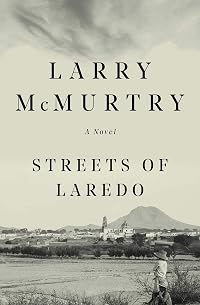
Still annoyed that I have an edition with a deeply boring cover.
Years later... Call is hired to hunt a bandit hijacking trains. Somehow this sets in train a huge series of events dragging in a wide range of characters, some of whom are hapless, and die, some of whom are experienced hands, who also die. Profoundly urnomanitc, full of failure, bitterness, regret and tragedy, usually quite senseless, as well as horror, usually man-made, this nevertheless manages to be an incredible and rousing epic adventure. I think McMurtry was a bit wry about how his anti-westerns became so beloved in a way Blood Meridian isn't, even though they're kind of about the same thing, but McMurtry is too prosaic and true-to-life to turn his horrors and show more atrocities into a generalised apocalypse of the human soul. I think he fundamentally likes human beings, which is why these books are as good as they are. For all the bad things that happen, the terrible msitakes that are made and the life-changing consequences, there's Pea Eye, and the equally true to life fact that sometimes serious mistakes *can* be fixed. show less
Years later... Call is hired to hunt a bandit hijacking trains. Somehow this sets in train a huge series of events dragging in a wide range of characters, some of whom are hapless, and die, some of whom are experienced hands, who also die. Profoundly urnomanitc, full of failure, bitterness, regret and tragedy, usually quite senseless, as well as horror, usually man-made, this nevertheless manages to be an incredible and rousing epic adventure. I think McMurtry was a bit wry about how his anti-westerns became so beloved in a way Blood Meridian isn't, even though they're kind of about the same thing, but McMurtry is too prosaic and true-to-life to turn his horrors and show more atrocities into a generalised apocalypse of the human soul. I think he fundamentally likes human beings, which is why these books are as good as they are. For all the bad things that happen, the terrible msitakes that are made and the life-changing consequences, there's Pea Eye, and the equally true to life fact that sometimes serious mistakes *can* be fixed. show less
I read Lonesome Dove in June 2010 and loved it, but what happened to one of the characters made me so sad that I didn't feel ready to read it till now, two and a half years later. That should tell you something about the power of his writing.
Once again he's set up a story where numerous people are on each other's trail through Texas and Mexico. A couple of them are psychopaths. The main story is about Captain Call and his deputies search for Joey Garza, a train robber, but various other characters and stories move in and out of that narrative. McMurtry ties up numerous loose ends left from Lonesome Dove and continues other story arcs. I found it as satisfying as its predecessor.
There is a lot here about man's inhumanity to women: Laurie show more remembers cruelties she suffered as a whore in Lonesome Dove and is sexually harassed (but she gives better than she gets); Joey Garza's mother Maria is endlessly physically abused by all the men in her life, and sexually harassed; another woman is saddened by all the sorrow Maria has known and wishes she could have talked with her; a woman reflects that a pretty blind girl will be spared knowing about men's leers. Other women are victimized sexually in various ways, and broken. While it's hard to read, this is good to see as a realistic portrayal of what the old west probably was like and of how women continue to be vulnerable, always watching their (our) backs for danger. Of course there's no shortage of cruelty by men to men, too, but the awareness of this stuff is what makes McMurtry such a good writer. Women are major characters in this book. show less
Once again he's set up a story where numerous people are on each other's trail through Texas and Mexico. A couple of them are psychopaths. The main story is about Captain Call and his deputies search for Joey Garza, a train robber, but various other characters and stories move in and out of that narrative. McMurtry ties up numerous loose ends left from Lonesome Dove and continues other story arcs. I found it as satisfying as its predecessor.
There is a lot here about man's inhumanity to women: Laurie show more remembers cruelties she suffered as a whore in Lonesome Dove and is sexually harassed (but she gives better than she gets); Joey Garza's mother Maria is endlessly physically abused by all the men in her life, and sexually harassed; another woman is saddened by all the sorrow Maria has known and wishes she could have talked with her; a woman reflects that a pretty blind girl will be spared knowing about men's leers. Other women are victimized sexually in various ways, and broken. While it's hard to read, this is good to see as a realistic portrayal of what the old west probably was like and of how women continue to be vulnerable, always watching their (our) backs for danger. Of course there's no shortage of cruelty by men to men, too, but the awareness of this stuff is what makes McMurtry such a good writer. Women are major characters in this book. show less
4/10
As much as it pains me to give this McMurtry novel such a low rating, I couldn't in good conscience walk away from this gunfight without putting some sort of warning on the ranch gate. In fact, I'm wondering if I'm not being generous in assigning this to a 4/10. If this had been my first McMurtry novel, I can assure the world it would have been my last. As it is, I still can't reconcile the McMurtry of Lonesome Dove with the guy who wrote Streets of Laredo.
Excess is the operative word, as in violent excess: gun violence, knife violence, emotional violence, sexual violence -- the kind of violence that Tarantino would be proud of. But, truth be told, I haven't seen a Tarantino movie yet that so degrades women. Never have I seen a show more Tarantino movie that degrades the value of life itself to such a level.
Sexual predators are more plentiful than maggots on a 3-day coyote kill. In whatever direction a woman moves, there's a maggot there wanting to take her to her knees, or on her knees, or both.
The violence against children is utterly repugnant, especially in that it appears as a gratuitous flinging into the flames.
The violence against animals is revolting.
No one is safe from the violence: even those characters who appear as cameos are brutalized in some way.
I'm not a cringing damsel, with a hankie soaked in lavender-water held to my temple: I know the brutality of life; and I completely buy into the brutality that was the Old West. But ... this!
The arc of the story itself was a red, hot bloody mess. Literally, on the "bloody". McMurtry dropped valuable storylines with a dismissive wave of his .45 and decided to people his work with decided murderous psychopaths, sociopaths, malignant narcissists ... hey ... just let me quote the DSM-5 for a shorter list.
The characters who gave breath and backbone to Lonesome Dove herein appear as cartoon characters who are paper doll housewives and cardboard ex-rangers. While this novel was purportedly a sequel to LD, thus implying a continuation of it, it was let loose on the plains to ride like one of Stephen Leacock's characters who ... flung himself from the room, flung himself upon his horse and rode madly off in all directions.
What saves it from being tossed into the flames of the campfire is that there is just enough of the Lonesome Dove essence to ransom it: Call redeems himself -- as I ever knew he would. It seems that might have been the point of Streets of Laredo all along: for Call to have a final stab at redemption, ham-fisted though the result was.
And that's all folks.
Oh, Larry, Larry, Larry ... Sigh show less
As much as it pains me to give this McMurtry novel such a low rating, I couldn't in good conscience walk away from this gunfight without putting some sort of warning on the ranch gate. In fact, I'm wondering if I'm not being generous in assigning this to a 4/10. If this had been my first McMurtry novel, I can assure the world it would have been my last. As it is, I still can't reconcile the McMurtry of Lonesome Dove with the guy who wrote Streets of Laredo.
Excess is the operative word, as in violent excess: gun violence, knife violence, emotional violence, sexual violence -- the kind of violence that Tarantino would be proud of. But, truth be told, I haven't seen a Tarantino movie yet that so degrades women. Never have I seen a show more Tarantino movie that degrades the value of life itself to such a level.
Sexual predators are more plentiful than maggots on a 3-day coyote kill. In whatever direction a woman moves, there's a maggot there wanting to take her to her knees, or on her knees, or both.
The violence against children is utterly repugnant, especially in that it appears as a gratuitous flinging into the flames.
The violence against animals is revolting.
No one is safe from the violence: even those characters who appear as cameos are brutalized in some way.
I'm not a cringing damsel, with a hankie soaked in lavender-water held to my temple: I know the brutality of life; and I completely buy into the brutality that was the Old West. But ... this!
The arc of the story itself was a red, hot bloody mess. Literally, on the "bloody". McMurtry dropped valuable storylines with a dismissive wave of his .45 and decided to people his work with decided murderous psychopaths, sociopaths, malignant narcissists ... hey ... just let me quote the DSM-5 for a shorter list.
The characters who gave breath and backbone to Lonesome Dove herein appear as cartoon characters who are paper doll housewives and cardboard ex-rangers. While this novel was purportedly a sequel to LD, thus implying a continuation of it, it was let loose on the plains to ride like one of Stephen Leacock's characters who ... flung himself from the room, flung himself upon his horse and rode madly off in all directions.
What saves it from being tossed into the flames of the campfire is that there is just enough of the Lonesome Dove essence to ransom it: Call redeems himself -- as I ever knew he would. It seems that might have been the point of Streets of Laredo all along: for Call to have a final stab at redemption, ham-fisted though the result was.
And that's all folks.
Oh, Larry, Larry, Larry ... Sigh show less
By all accounts, no one should love Woodrow Call. He is small-framed, cantankerous, old and weary. He keeps to himself; a self-confirmed bachelor and loner. He does not suffer fools and hates conversation, even with the smarter ones. Since the death of his best friend, Augustus McCrae, in McMurtry's previous book, Lonesome Dove, Woodrow Call has given up cattle ranching and is spending his twilight years as a bounty hunter. Never one to shy away from danger, he is now on the trail of a young train hustler who has a death wish. Except Call has lost his speed and agility. He is no longer the feared Texas Ranger. He is no longer the spirited cattle rancher. He is only a man hellbent on bringing a violent man to justice.
Streets of Laredo show more is a return to violence. Luckily, strong women like Lorena play a pivotal role in keeping the plot from becoming a bloodbath. show less
Streets of Laredo show more is a return to violence. Luckily, strong women like Lorena play a pivotal role in keeping the plot from becoming a bloodbath. show less
A disappointing follow-up to the masterpiece that was Lonesome Dove. It is still a more than serviceable story, by Western standards, but it is too often workmanlike in its storytelling, and sometimes clumsy. Plot coincidences abound, and McMurtry regularly breaks the 'show us, don't tell us' rule of storytelling. Its predecessor balanced humour and hardship well, but in Streets of Laredo there is hardly any humour, and the hardship has been ratcheted up from Lonesome Dove's workaday frontiersman trials to an unpleasant smorgasbord of rape and torture.
The main disappointment is in the characterization. Gus McCrae – the best character in Lonesome Dove – is a huge loss, and this is exacerbated by the fact that we are told early on show more that many of the characters we followed closely in the first book will not return, often because they have died cheap deaths in the years between the two books. Those who have survived are now, in Laredo, made to do things in the plot that are out-of-character. (Minor spoilers follow, but only concerning the first twenty pages or so of the book.) Lorena has married Pea Eye, of all people. Newt, the great hope of Lonesome Dove, has died off-screen. The Montana ranch, which they all strived so hard to reach and an adventure in which we followed them every step of the way, is dismissed as a failure which they all soon abandoned. (End minor spoilers.) It makes you wish McMurtry had just let alone. Undermining the foundations of its beloved predecessor so completely is a poor place for Streets of Laredo to begin its own story.
The new characters do not fill this void; Brookshire is decent enough, but I got the sense that McMurtry was forcing him on me, as the narrative was at pains to point out just how much Call liked him. (It's a bit like in the new Star Wars movies where Han Solo says of Rey, 'I'm beginning to like this kid.' No. We don't like her.) The main villain, Joey Garza, reads like a lesser Stephen King character; he shows depraved, almost cartoonish villainy and not much else. Maria, the other major addition, was OK but nothing more. I quite liked Teresa, the blind girl, but even here the characterization is informed rather than developed.
It may be 'tactless to bring up Montana', as Call opines on page 101, but Streets of Laredo fails completely to step out of Lonesome Dove's shadow, or even prove itself worthy of standing in its shade. Laredo is a decent enough Western potboiler, but considering its heritage and its characters it should have been more than that. Considering it is a world which captured us so completely in McMurtry's hands a few years earlier, we should feel more.
Consider, for example, Pea Eye's parting from Lorena on page 147. It doesn't make you feel anything. The contrast to Gus' parting from Lorena and Clara in Lonesome Dove – the 'Lorie, darlin'' scene that, in the television adaptation, might be one of the most exquisite scenes ever filmed – is marked. Everything in that earlier book's scene was thoroughly earned: the culmination of various plot arcs and characterization spun out over hundreds of pages before it (and, in the TV series, the addition of fine acting, music and cinematography). The Pea Eye/Lorena parting in Laredo just feels like something that has to happen and happen quickly, so that the plot can rumble on.
Part of me feels that my review is harsh. Lonesome Dove had an inimitable lightning-in-a-bottle quality and, like the ageing Call in battle, although Laredo is not a particularly good shot it is willing to fight and it fights successfully (pg. 421). There's enough of McMurtry's storytelling ability remaining in this sequel to keep you entertained. But the workmanlike nature of it, particularly in the characterization, ensures you have a sense of dissatisfaction through it all. At first, you are disappointed that Streets of Laredo is nowhere near as good as Lonesome Dove; but after a while, you are more disappointed that Streets of Laredo is nowhere near as good as Streets of Laredo ought to be. show less
The main disappointment is in the characterization. Gus McCrae – the best character in Lonesome Dove – is a huge loss, and this is exacerbated by the fact that we are told early on show more that many of the characters we followed closely in the first book will not return, often because they have died cheap deaths in the years between the two books. Those who have survived are now, in Laredo, made to do things in the plot that are out-of-character. (Minor spoilers follow, but only concerning the first twenty pages or so of the book.) Lorena has married Pea Eye, of all people. Newt, the great hope of Lonesome Dove, has died off-screen. The Montana ranch, which they all strived so hard to reach and an adventure in which we followed them every step of the way, is dismissed as a failure which they all soon abandoned. (End minor spoilers.) It makes you wish McMurtry had just let alone. Undermining the foundations of its beloved predecessor so completely is a poor place for Streets of Laredo to begin its own story.
The new characters do not fill this void; Brookshire is decent enough, but I got the sense that McMurtry was forcing him on me, as the narrative was at pains to point out just how much Call liked him. (It's a bit like in the new Star Wars movies where Han Solo says of Rey, 'I'm beginning to like this kid.' No. We don't like her.) The main villain, Joey Garza, reads like a lesser Stephen King character; he shows depraved, almost cartoonish villainy and not much else. Maria, the other major addition, was OK but nothing more. I quite liked Teresa, the blind girl, but even here the characterization is informed rather than developed.
It may be 'tactless to bring up Montana', as Call opines on page 101, but Streets of Laredo fails completely to step out of Lonesome Dove's shadow, or even prove itself worthy of standing in its shade. Laredo is a decent enough Western potboiler, but considering its heritage and its characters it should have been more than that. Considering it is a world which captured us so completely in McMurtry's hands a few years earlier, we should feel more.
Consider, for example, Pea Eye's parting from Lorena on page 147. It doesn't make you feel anything. The contrast to Gus' parting from Lorena and Clara in Lonesome Dove – the 'Lorie, darlin'' scene that, in the television adaptation, might be one of the most exquisite scenes ever filmed – is marked. Everything in that earlier book's scene was thoroughly earned: the culmination of various plot arcs and characterization spun out over hundreds of pages before it (and, in the TV series, the addition of fine acting, music and cinematography). The Pea Eye/Lorena parting in Laredo just feels like something that has to happen and happen quickly, so that the plot can rumble on.
Part of me feels that my review is harsh. Lonesome Dove had an inimitable lightning-in-a-bottle quality and, like the ageing Call in battle, although Laredo is not a particularly good shot it is willing to fight and it fights successfully (pg. 421). There's enough of McMurtry's storytelling ability remaining in this sequel to keep you entertained. But the workmanlike nature of it, particularly in the characterization, ensures you have a sense of dissatisfaction through it all. At first, you are disappointed that Streets of Laredo is nowhere near as good as Lonesome Dove; but after a while, you are more disappointed that Streets of Laredo is nowhere near as good as Streets of Laredo ought to be. show less
If you can find an exhilarating tale of heroism between the covers of this book, as the description proclaims, you've read a different book than I have. A handful of the survivors of Lonesome Dove are on the move in this book through a cold desolation and Call's chase after the murderous young train robber is no glorious yarn. The women are somewhat better represented than in Lonesome Dove and most of the men are rougher than #1 rasps.
I read Lonesome Dove several years ago, but have been holding off on the sequel. I was afraid that I wouldn't like it nearly as much. Which is true, I didn't, but only because Lonesome Dove is fantastic. Streets of Laredo is still pretty fantastic.
One big change is that the mood is much more somber. Time has skipped ahead 15 years, and Call is an old man who still rides down bandits. There is much meditation on the evil in men, on the types of dangers that once existed and the ones that still do, life's purpose for a bunch of old men, and apparently, life's place for many other people in general.
Somber, too, because it seems like nothing good ever happens to anybody in this book. One of the cheeriest and most devoted characters in the show more book meets and evil and senseless end. Maria, the likeable mother of the rather soulless Joey Garza, main villain, seems like she's lived a nearly joyous life at the hands of hard men and her even harder son. In fact, whenever there's a new character, be prepared for a depressing life story or a depressing death scene. Be prepared for that with most characters.
Despite the heaping helpings of depression, this is exactly what I wanted to read right now. It's still a western, and there's still something that appeals to me about the kinds of situations and characters that appeal to me in these types of stories. There's a lot of horrible things that happen in this book, but there's still a happy ending. The characters (mostly) do what they set out to. They all seem to learn about themselves in the process, including Call.
It's hard to say more than that, though. I liked it, but I can't even point to my favorite scenes, because almost all of them are really sad. Most of the humor is in when characters size each other up, then the perspective flips and we see the opinions reversed. Famous Shoes is a great character for levity, but he isn't nearly as lively as Gus, and not even Famous Shoes can bring joy to this story.
Still. Gunfights. Tracking. Long, very cold nights. Men wondering what their purpose is. Train robberies. An out-of-place Yankee that's incredibly loyal. There's a lot to like here, and I enjoyed it immensely. show less
One big change is that the mood is much more somber. Time has skipped ahead 15 years, and Call is an old man who still rides down bandits. There is much meditation on the evil in men, on the types of dangers that once existed and the ones that still do, life's purpose for a bunch of old men, and apparently, life's place for many other people in general.
Somber, too, because it seems like nothing good ever happens to anybody in this book. One of the cheeriest and most devoted characters in the show more book meets and evil and senseless end. Maria, the likeable mother of the rather soulless Joey Garza, main villain, seems like she's lived a nearly joyous life at the hands of hard men and her even harder son. In fact, whenever there's a new character, be prepared for a depressing life story or a depressing death scene. Be prepared for that with most characters.
Despite the heaping helpings of depression, this is exactly what I wanted to read right now. It's still a western, and there's still something that appeals to me about the kinds of situations and characters that appeal to me in these types of stories. There's a lot of horrible things that happen in this book, but there's still a happy ending. The characters (mostly) do what they set out to. They all seem to learn about themselves in the process, including Call.
It's hard to say more than that, though. I liked it, but I can't even point to my favorite scenes, because almost all of them are really sad. Most of the humor is in when characters size each other up, then the perspective flips and we see the opinions reversed. Famous Shoes is a great character for levity, but he isn't nearly as lively as Gus, and not even Famous Shoes can bring joy to this story.
Still. Gunfights. Tracking. Long, very cold nights. Men wondering what their purpose is. Train robberies. An out-of-place Yankee that's incredibly loyal. There's a lot to like here, and I enjoyed it immensely. show less
Members
- Recently Added By
Lists

Books Read in 2016
4,666 works; 199 members

Books You Couldn't Finish
202 works; 32 members
Author Information

96+ Works 43,441 Members
Larry McMurtry, winner of the Pulitzer Prize for Fiction, among other awards, is the author of twenty-four novels, two collections of essays, two memoirs, more than thirty screenplays, & an anthology of modern Western fiction. He lives in Archer City, Texas. (Publisher Provided) Novelist Larry McMurtry was born June 3, 1936 in Wichita Falls, show more Texas. He received a B.A. from North Texas State University in 1958, an M.A. from Rice University in 1960, and attended Stanford University. He married Josephine Ballard in 1959, divorced in 1966, and had one son, folksinger James McMurtry. Until the age of 22, McMurtry worked on his father's cattle ranch. When he was 25, he published his first novel, "Horseman, Pass By" (1961), which was turned into the Academy Award-winning movie Hud in 1962. "The Last Picture Show" (1966) was made into a screenplay with Peter Bogdanovich, and the 1971 movie was nominated for eight Oscars, including one for best screenplay adaptation. "Terms of Endearment" (1975) received little attention until the movie version won five Oscars, including Best Picture, in 1983. McMurtry's novel "Lonesome Dove" (1985) won the Pulitzer Prize in 1986 and the Spur Award and was followed by two popular TV miniseries. The other titles in the Lonesome Dove Series are "Streets of Laredo" (1993), "Dead Man's Walk" (1995), and "Comanche Moon" (1997). The other books in his Last Picture Show Trilogy are "Texasville" (1987) and "Duane's Depressed" (1999). McMurtry suffered a heart attack in 1991 and had quadruple-bypass surgery. Following that, he suffered from severe depression and it was during this time he wrote "Streets of Laredo," a dark sequel to "Lonesome Dove." His companion Diana Ossana, helping to pull him out of his depression, collaborated with him on "Pretty Boy Floyd" (1994) and "Zeke and Ned" (1997). He co-won the Best Screenplay Golden Globe and the Academy Award for Best Adapted Screenplay for Brokeback Mountain in 2006. He made The New York Times Best Seller List with his title's Custer and The Last Kind Words Saloon. McMurtry is considered one of the country's leading antiquarian book dealers. (Bowker Author Biography) show less
Some Editions
Awards and Honors
Distinctions
Series

Belongs to Publisher Series
Gallmeister, Totem (217)
Work Relationships
Common Knowledge
- Canonical title
- Streets of Laredo
- Alternate titles*
- Lonesome Dove. 3
- Original publication date
- 1993 (1e édition originale américaine) (1e édition originale américaine); 2020-11-05 (1e traduction et édition française, Gallmeister) (1e traduction et édition française, Gallmeister); 2022-06-02 (Réédition française, Totem, Gallmeister) (Réédition française, Totem, Gallmeister)
- People/Characters
- Woodrow Call; Pea Eye Parker; Newt; Roy Bean (judge)
- Related movies
- Streets of Laredo (1995 | IMDb)
- Epigraph*
- Pour l’amour de sa Mère mon Enfant me fut cher
Et elle, plus chère encore, par l’amour de l’Enfant.
SAMUEL COLERIDGE, Sonnet à un ami
L’Amérique habite encore la solitude ;
longtemps encore ses déserts seront ses mœurs…
CHATEAUBRIAND, 1827
On a battu doucement le tambour, agité lentement les éperons
Et pleuré amèrement tandis que nous le portions,
Car nous aimions tous notre compagnon, si brave et si beau,
Nous aimions tous notre compagnon, mê... (show all)me s’il avait mal agi…
Les Rues de Laredo, VERS 1860
N’insiste pas pour que je te quitte
et que je me détourne de ta route…RUTH 1:16 - Dedication*
- Pour Diana et Sara Ossana
- First words
- "Most train robbers ain't smart, which is a lucky thing for the railroads," Call said.
- Last words
- (Click to show. Warning: May contain spoilers.)Pea Eye shut the door of the oat bin, to keep out mice and snakes, and, at moments nervous, at moments relieved—at least she had called him honey—he followed his wife back to their house.
- Original language
- English
*Some information comes from Common Knowledge in other languages. Click "Edit" for more information.
Classifications
Statistics
- Members
- 2,663
- Popularity
- 7,007
- Reviews
- 37
- Rating
- (3.80)
- Languages
- 5 — English, French, Hebrew, Italian, Polish
- Media
- Paper, Audiobook, Ebook
- ISBNs
- 39
- UPCs
- 3
- ASINs
- 23