
On This Page
Description
For a dark decade, Dracula has ruled the British Empire, unchecked. Now, on the verge of his Tin Jubilee, forces are gathering to challenge his insidious reign. In London, vampire journalist Kate Reed has been summoned to a meeting with the Council of the Seven Days, a secret cabal dedicated to destroying Dracula. Meanwhile, the sinister Lord of Strange Deaths is planning to use the Jubilee celebrations for his own nefarious act of sedition. This all-new adventure written by Kim Newman and show more drawn by Paul McCaffrey, sees master storyteller Kim Newman's vast cast of characters explore the terrifying reality of a world ruled by the deadliest vampire of all times. show lessTags
Recommendations
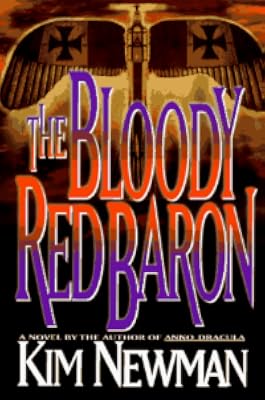


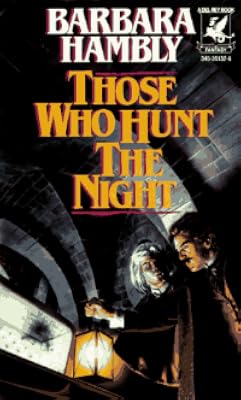
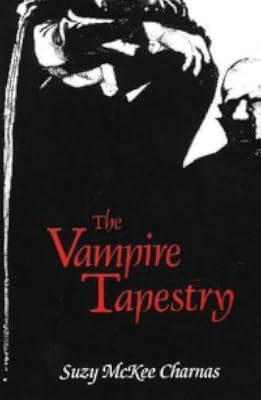


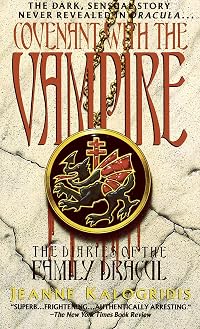









Member Recommendations


barpurple Newman has borrowed both characters and atmosphere from Conan Doyle. The stories of London's Consulting Detective are still wonderfull to read.
51
barpurple Oscar Wilde makes a brief apperance in Newman's book. There is a similar feeling of gothic horror to both books and I think Dorian Gray is a classic that everyone should try to read at some point.
21
Member Reviews
I have chosen to work in Whitechapel because it is the ugliest region of the city. The superficialities which some say make Dracula's rule tolerable are at their thinnest. With vampire sluts baying for blood on every corner and befuddled or dead men littering cramped streets, one can see the true, worm-eaten face of what has been wrought.
On the day his engagement to his dead wife's cousin is announced, Charles Beauregard is summoned to the Diogenes Club and given a new mission, to hunt down the killer of vampire prostitutes known as Silver Knife. Recently returned from abroad, Beauregard is unused to the new status quo, where Dracula rules the British Empire due to his marriage to Queen Victoria, and Londoners rich and poor are show more 'turning' in increasing numbers, he comes across Geneviève Dieudonné, a vampire even older than Dracula and of a less decadent line, and she joins him in his quest.
A very enjoyable story, where almost every character who appears is from Victorian history or literature, from Florence Stoker, still running her weekly salons despite the danger she is in due to her husband's notorious book, to Sherlock Holmes incarcerated in a concentration camp outside London. show less
On the day his engagement to his dead wife's cousin is announced, Charles Beauregard is summoned to the Diogenes Club and given a new mission, to hunt down the killer of vampire prostitutes known as Silver Knife. Recently returned from abroad, Beauregard is unused to the new status quo, where Dracula rules the British Empire due to his marriage to Queen Victoria, and Londoners rich and poor are show more 'turning' in increasing numbers, he comes across Geneviève Dieudonné, a vampire even older than Dracula and of a less decadent line, and she joins him in his quest.
A very enjoyable story, where almost every character who appears is from Victorian history or literature, from Florence Stoker, still running her weekly salons despite the danger she is in due to her husband's notorious book, to Sherlock Holmes incarcerated in a concentration camp outside London. show less
So: there is a truly fantastic story here, starting from a neat question. What if the events of Bram Stoker's Dracula, except for the ending, were true? What if, in the end, Dracula won? Well, as it turns out, he would go on to woo, and win, the heart and hand of Queen Victoria, turning her to a vampire, and wedding her as Prince Consort. Other vampires would come out of hiding and flock to England, where they'd create an increasingly large number of new-born vampires. The vampires would spread through all levels of society, gradually taking over. The survivors of Stoker's tale continue in this world, managing their existences however they can. And meanwhile, a madman has begun to brutally murder vampire prostitutes in Whitechapel. By show more page 20 I was completely hooked.
But: this marvelous story is nearly ruined by the most ridiculous, over-the-top pastiche of every single 19th-century figure the author has heard of. Vampires (Lord Ruthven, Countess Bathory, Kostaski, ...), adventurers and villains (Alan Quatermain, Colonel Sebastian Moran, Rupert of Hentzau for goodness sakes, ...), detectives (Mycroft, Mackenzie, ...), and more all get parts in the players, or at least brief mentions; even Gunga Din gets a nod, and John Merrick makes a brief appearance. Fun is fun, but by page 30 I was groaning aloud, and by page 50 I was saying "You've got to be kidding!". I don't know, perhaps if you've never read something like this before, it'll seem delightful and wonderful. But if you've read any significant amounts of Phillip Jose Farmer (e.g., Tarzan Alive, Doc Savage, The Other Log of Philias Fogg), you'll be familiar with, and probably a little tired of, this kind of excess. And by this book's standards, Farmer was a model of restraint!
Don't get me wrong; I liked this book, and I found it very hard to put down. But it sort of felt like the HBO adaptation of Game of Thrones: with every gratuitous nude scene (random literary reference), I'd just sigh and say "Oh, HBO" ("God. Really?"). It was distracting, at best.
Final note: Geneviève Dieudonné, one of the main characters, is an old (older than Dracula) female vampire, and she is a delight in more ways than I can describe. I gather that this book has sequels or prequels in which she figures prominently; I intend to read them, even if it means I have to subject myself to another 500 random literary or historical references. show less
But: this marvelous story is nearly ruined by the most ridiculous, over-the-top pastiche of every single 19th-century figure the author has heard of. Vampires (Lord Ruthven, Countess Bathory, Kostaski, ...), adventurers and villains (Alan Quatermain, Colonel Sebastian Moran, Rupert of Hentzau for goodness sakes, ...), detectives (Mycroft, Mackenzie, ...), and more all get parts in the players, or at least brief mentions; even Gunga Din gets a nod, and John Merrick makes a brief appearance. Fun is fun, but by page 30 I was groaning aloud, and by page 50 I was saying "You've got to be kidding!". I don't know, perhaps if you've never read something like this before, it'll seem delightful and wonderful. But if you've read any significant amounts of Phillip Jose Farmer (e.g., Tarzan Alive, Doc Savage, The Other Log of Philias Fogg), you'll be familiar with, and probably a little tired of, this kind of excess. And by this book's standards, Farmer was a model of restraint!
Don't get me wrong; I liked this book, and I found it very hard to put down. But it sort of felt like the HBO adaptation of Game of Thrones: with every gratuitous nude scene (random literary reference), I'd just sigh and say "Oh, HBO" ("God. Really?"). It was distracting, at best.
Final note: Geneviève Dieudonné, one of the main characters, is an old (older than Dracula) female vampire, and she is a delight in more ways than I can describe. I gather that this book has sequels or prequels in which she figures prominently; I intend to read them, even if it means I have to subject myself to another 500 random literary or historical references. show less
There are so many things I really liked about this book, and yet somehow, it just wasn't as awesome as I had hoped. An alternate history, where Dracula is realm but Van Helsing failed to kill him... Queen Victoria has remarried and now Vlad is the prince consort, vampires are out and people are choosing to turn, England is a bloody police state, and Jack the Ripper is at large. I enjoyed the mix of real and fictional characters, but it got to be a bit too much.
Anno Dracula was a novel ahead of its time; in the 90s it was in the vanguard of metatextual art, beating Alan Moore to the punch by taking icons of Victorian fiction and Victoriana and swirling it into a heady brew of alternative fictional history. As a result it’s aged rather well; the historical setting and literary collage approach mean it hasn’t particularly dated and indeed seems quite modern.
The essential premise of the book concerns the second half of the original Dracula novel being tweaked so that the Count ended victorious; the alternate history is one in which he is now the de facto ruler of the UK and where society is being shaped around a vampiric takeover of society; from the upper echelons to prostitutes. Newman has show more great fun with this, with the way vampires infiltrate the administrative structure a tart comment on how society essentially still works (and with the plot twist being equally perspicacious in how these upstarts are regarded). The question of vampire/human intercourse is also addressed at length and often fairly graphically. In short this is a beautifully worked out backdrop which Newman enjoys exploring.
This exploration never comes at the expense of the story. The plot which powers the book is a fairly obvious one for the period – the Jack the Ripper murders for a vampire society. The suspect is never a secret, and indeed his identity generates plenty of tension through the book. The central pairing of detectives are both well drawn, with at least one of them carrying a motivation even they don’t suspect at first. It all rounds off with a beautifully executed twist which makes perfect sense of certain seemingly off-kilter elements in the tale.
This reprint was rounded out with several essays from Newman, an extra short story and a script for a potential movie adaptation. None of it’s essential, and possibly only the first essay really enhances the experience of the novel. Nevertheless, it’s as adeptly handled and often nearly as much fun as Moore’s take of a few years later. show less
The essential premise of the book concerns the second half of the original Dracula novel being tweaked so that the Count ended victorious; the alternate history is one in which he is now the de facto ruler of the UK and where society is being shaped around a vampiric takeover of society; from the upper echelons to prostitutes. Newman has show more great fun with this, with the way vampires infiltrate the administrative structure a tart comment on how society essentially still works (and with the plot twist being equally perspicacious in how these upstarts are regarded). The question of vampire/human intercourse is also addressed at length and often fairly graphically. In short this is a beautifully worked out backdrop which Newman enjoys exploring.
This exploration never comes at the expense of the story. The plot which powers the book is a fairly obvious one for the period – the Jack the Ripper murders for a vampire society. The suspect is never a secret, and indeed his identity generates plenty of tension through the book. The central pairing of detectives are both well drawn, with at least one of them carrying a motivation even they don’t suspect at first. It all rounds off with a beautifully executed twist which makes perfect sense of certain seemingly off-kilter elements in the tale.
This reprint was rounded out with several essays from Newman, an extra short story and a script for a potential movie adaptation. None of it’s essential, and possibly only the first essay really enhances the experience of the novel. Nevertheless, it’s as adeptly handled and often nearly as much fun as Moore’s take of a few years later. show less
What would happen if Van Helsing had failed and Dracula had survived?
Finally found this book as a result of doing recent TBR culls and decided to read ahead of listening to "Dracula" on the Craftlit (http://www.craftlit.com) podcast.
It's Victorian England, Vampires are an established fact, and more and more people are "crossing over" to the Undead. Dracula is now the Prince Consort, married to a now un-dead Queen Victoria. His dirty blood line is being passed down into the lower dregs of society, into the prostitutes and lowlifes.
A killer, known as "The Silver Knife" has been killing vampire prostitutes in the fog bound London, and the newly dead Lestrade asks for help from an older Vampire to help investigate the killings. Meanwhile, show more the secret Diogenes Club sets its own "warm" investigator to persue his own inquiries. Soon they join forces to progress to find the killer who has been renamed in the press as "jack the ripper". It ultimately comes to a face off with a Dracula and his followers looking as you've never seen him before
Lots of fictional and non fictional characters have been included in the story. The Chinese elder vampire subplot I thought was a little redundant and could easily have been dropped - a lot of wordage was wasted purely to show how strong Genevive was (and how she recovered from her injuries). I think it could have been dropped in favour of the ending with Dracula.[return][return]Otherwise I think this is perhaps the best of the vampire books I've read. Certainly better than Twilight (spits into corner). I'll be interested to compare it to the original. show less
Finally found this book as a result of doing recent TBR culls and decided to read ahead of listening to "Dracula" on the Craftlit (http://www.craftlit.com) podcast.
It's Victorian England, Vampires are an established fact, and more and more people are "crossing over" to the Undead. Dracula is now the Prince Consort, married to a now un-dead Queen Victoria. His dirty blood line is being passed down into the lower dregs of society, into the prostitutes and lowlifes.
A killer, known as "The Silver Knife" has been killing vampire prostitutes in the fog bound London, and the newly dead Lestrade asks for help from an older Vampire to help investigate the killings. Meanwhile, show more the secret Diogenes Club sets its own "warm" investigator to persue his own inquiries. Soon they join forces to progress to find the killer who has been renamed in the press as "jack the ripper". It ultimately comes to a face off with a Dracula and his followers looking as you've never seen him before
Lots of fictional and non fictional characters have been included in the story. The Chinese elder vampire subplot I thought was a little redundant and could easily have been dropped - a lot of wordage was wasted purely to show how strong Genevive was (and how she recovered from her injuries). I think it could have been dropped in favour of the ending with Dracula.[return][return]Otherwise I think this is perhaps the best of the vampire books I've read. Certainly better than Twilight (spits into corner). I'll be interested to compare it to the original. show less
1888 London, and Dracula is hanging out with Queen Victoria, while in Whitechapel, prostitutes are dying strange bloody deaths...
It's obvious that the author had a lot of fun writing this, and I had just as much reading it. Historical fact mixed with Newman's particular sense of whimsy and walk on parts from fictional characters from the Victorian era, it's a tremendous mixture.
The ending comes a bit too quickly, and old Drac becomes a bit of a comic parody of a vampire lord, but all in all I lovd it.
It's obvious that the author had a lot of fun writing this, and I had just as much reading it. Historical fact mixed with Newman's particular sense of whimsy and walk on parts from fictional characters from the Victorian era, it's a tremendous mixture.
The ending comes a bit too quickly, and old Drac becomes a bit of a comic parody of a vampire lord, but all in all I lovd it.
In this alternative world Dracula won and became the Prince Regent in England with Victoria as his wife. Then he spread vampirism among England. He wasn't the only supernatural creature who resurfaced in England. There are those who fight against the Vampire overlords,
It's a bloody story in many ways and most of the main charcters are somewhat amoral, still it was an interesting read. I have the non-graphic novel verions of this and I'm looking forward to contrasting them.
It's a bloody story in many ways and most of the main charcters are somewhat amoral, still it was an interesting read. I have the non-graphic novel verions of this and I'm looking forward to contrasting them.
Members
- Recently Added By
Lists

Bloody Good Vampire Books
394 works; 28 members

Gaslamp Fantasy
87 works; 15 members

Books Read in 2014
2,343 works; 86 members

Books Read in 2017
4,249 works; 130 members

Unshelved Book Clubs
579 works; 5 members

Vampires: A Biteography
85 works; 5 members
Best Vampire & Werewolf Fiction
221 works; 146 members
Author Information

196+ Works 10,273 Members
Kim Newman is a novelist, critic and broadcaster. His fiction has been translated into many languages and he is a past recipient of, among others, the International Horror Critics' Guild Award for Best Novel
Awards and Honors
Awards
Notable Lists
Series

Work Relationships
Is contained in
Is a (non-series) sequel to
Is an expanded version of
Common Knowledge
- Canonical title
- Anno Dracula
- Original title
- Anno Dracula
- Original publication date
- 1992
- People/Characters
- Geneviève Dieudonné; Frederick Abberline (Inspector); Charles Beauregard; Annie Chapman; Dracula; Daniel Dravot (show all 22); Catherine Eddowes; Jonathan Harker; Arthur Holmwood (aka Lord Godalming); John Jago; Mary Jane Kelly; Mary Ann Nichols (Polly Nichols); Lord Ruthven; Lulu Schön; Jack Seward; Florence Stoker; Victoria, Queen of the United Kingdom; Abraham Van Helsing; Mycroft Holmes; Professor James Moriarty; Fu Manchu; Invisible Man
- Important places
- London, England, UK; Whitechapel, London, England, UK; Buckingham Palace, London, England, UK; Diogenes Club, Pall Mall, London, England, UK
- Important events
- Whitechapel Murders
- First words
- We Szekeleys have a right to be proud, for in our veins flow the blood of many brave races who fought as the lion fights, for lordship. -Count Dracula
I have studied, over and over again since they came into my hands, all the papers relating to this monster; and the more I have studied, the greater seems the necessity to utterly stamp him out. -Dr. Abraham Van Helsing
Dr. Seward's Diary (kept in phonograph)
17 September
Last night's delivery was easier than the others. Much easier than last week's. Perhaps, with practice and patience, everything becomes easier. If never easy. Nev... (show all)er... easy.
-Chapter 1, In the Fog - Last words
- (Click to show. Warning: May contain spoilers.)After they were past the piked skull of Abraham Van Helsing, Geneviève looked back and saw only darkness.
- Canonical DDC/MDS
- 823.08768; 823.087381
- Canonical LCC
- PR6064.E9277 A56
Classifications
- Genres
- Fiction and Literature, Horror, Fantasy, General Fiction, Science Fiction
- DDC/MDS
- 823.087381 — Literature & rhetoric English & Old English literatures English fiction By type Genre fiction Adventure fiction Horror and ghost fiction Horror fiction Vampires and the undead
- LCC
- PR6064 .E9277 .A56 — Language and Literature English English Literature 1961-2000
- BISAC
Statistics
- Members
- 1,362
- Popularity
- 17,528
- Reviews
- 45
- Rating
- (3.82)
- Languages
- 8 — English, French, German, Italian, Polish, Portuguese, Spanish, Turkish
- Media
- Paper, Audiobook, Ebook
- ISBNs
- 20
- ASINs
- 12