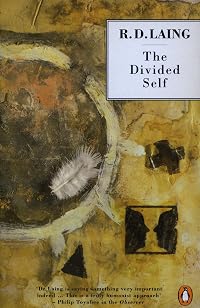
The Divided Self: An Existential Study in Sanity and Madness
by R. D. Laing
On This Page
Description
Dr. Laing's first purpose is to make madness and the process of going mad comprehensible. In this, with case studies of schizophrenic patients, he succeeds brilliantly, but he does more: through a vision of sanity and madness as 'degrees of conjunction and disjunction between two persons where the one is sane by common consent' he offers a rich existential analysis of personal alienation. The outsider, estranged from himself and society, cannot experience either himself or others as 'real'. show more He invents a false self and with it he confronts both the outside world and his own despair. The disintegration of his real self keeps pace with the growing unreality of his false self until, in the extremes of schizophrenic breakdown, the whole personality disintegrates. show lessTags
Recommendations




















Member Recommendations
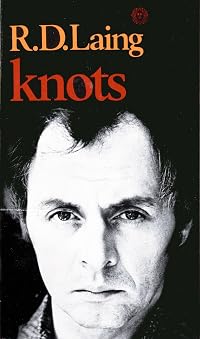
Knots by R. D. Laing
by KayCliff
Member Reviews
R.D. Laing has acquired kind of a cult status within psychiatry, not least due to his understanding of schizophrenia and his revolutionary approach towards patients. But is such reputation warranted?
His views are obviously rooted in the zeitgeist of his time that is, the counter-culture of the 1960s which was so critical of the establishment (as it was back then) that it was willing to look for explanations to individual disorders beyond, said, purely 'systemic' approach (for lack of a better term). I personally have nothing against that; and, in fact, I tend to agree with him in seeing schizophrenia as being, potentially, a defence mechanism resulting from trauma and/ or threats or perceived threats, whereas 'the self' withdraw and/ or show more is being alienated in favour of a 'false-self', with all the consequences this can have (from dissociation to feeling of persecution etc.). My problem with such view, though, is that it is, itself, reductionist. Psychosis and psychotic behaviours can be caused by a wide range of different reasons, of which a threatening, traumatic experience occurring in someone's life is only one. What about genetics? What about biology? What about the effects of some substances in triggering psychotic disorders?
Now, of course, the issue, here, is certainly not Laing himself! It's, merely, the paradigm within which he was working. After all, neurosciences were nowhere quite where we are now in our understanding of the human brain, and so he, of course, had no way to work based on what we now know. Nevertheless, here's not the only aspect where he showed himself reductionist. For example, the cases that he used to illustrate his view are all of people who grew up in dysfunctional families (more or less), and so his understanding tends to focus only upon the family environments of the persons concerned. But are dysfunctional families the only, potentially triggering cause?
Give him that: unlike some of his colleagues at the time, he was not blaming mothers only for children/ later adults developing schizoid symptoms. He, on the contrary, urged us to look at the whole family dynamics as 'a constellation' (his word). This approach is relevant too, but one must not forget that other alienating environments can, also, act as trigger, something which seems, here, to have eluded him (e.g. enough has been written, for instance, about why, in the Western world, Black people would be more likely to be diagnosed with schizophrenia than their White counterparts....). But then again: his was quite a new understanding, and so he could not but have been limited, himself, in his own frame of thinking.
Something which cannot be taken away from him, though, is his deep, heartfelt compassion and empathy for people otherwise dismissed as 'mad', and so (supposedly) uncapable of making sense when being psychotic, hence easy to ignore. He, on the contrary, was of the opinion that no matter how deluded a patient could be, under their 'schizophrenese' that is, their psychotic/ deluded language (I don't know if he coined the term, but I admit to liking it...) there is indeed 'a self' creeping out of 'the false self', and so that we ought to listen -attentively. He, then, was putting the patient at the centre of our understanding, something which has come to become working practice within the mental health and care sector since, yet which remains extremely difficult to do when handling psychotic people (I work with schizophrenic, and, yes, such ability to truly 'listen' is everything but easy!).
My rating is harsh. I gave it 2 stars only while, by any reckoning, it surely deserves a 3 stars at least. The thing is: I struggled to read it. The issue, here, was not the ideas of the author per se (no matter how limited, even within his own frame of thinking e.g. schizophrenia as being a result of 'alienation'). The issue was his heavy reliance on psychoanalysis, a field which I find loaded with jargon and, quite frankly, more prone to subjectivity than proper science. Again: it's not his fault either. He was merely looking up at Freud and his heritage the way people my generation are, perhaps, looking up at neurosciences and their heritage. Psycho-analytic mumbling asides, I would still recommend reading Laing for, at least, and again, his heartfelt empathy for schizophrenic individuals, and his insistence upon 'listening', truly listening to what they communicate beyond their (seemingly) nonsensical 'schizophrenese'. show less
His views are obviously rooted in the zeitgeist of his time that is, the counter-culture of the 1960s which was so critical of the establishment (as it was back then) that it was willing to look for explanations to individual disorders beyond, said, purely 'systemic' approach (for lack of a better term). I personally have nothing against that; and, in fact, I tend to agree with him in seeing schizophrenia as being, potentially, a defence mechanism resulting from trauma and/ or threats or perceived threats, whereas 'the self' withdraw and/ or show more is being alienated in favour of a 'false-self', with all the consequences this can have (from dissociation to feeling of persecution etc.). My problem with such view, though, is that it is, itself, reductionist. Psychosis and psychotic behaviours can be caused by a wide range of different reasons, of which a threatening, traumatic experience occurring in someone's life is only one. What about genetics? What about biology? What about the effects of some substances in triggering psychotic disorders?
Now, of course, the issue, here, is certainly not Laing himself! It's, merely, the paradigm within which he was working. After all, neurosciences were nowhere quite where we are now in our understanding of the human brain, and so he, of course, had no way to work based on what we now know. Nevertheless, here's not the only aspect where he showed himself reductionist. For example, the cases that he used to illustrate his view are all of people who grew up in dysfunctional families (more or less), and so his understanding tends to focus only upon the family environments of the persons concerned. But are dysfunctional families the only, potentially triggering cause?
Give him that: unlike some of his colleagues at the time, he was not blaming mothers only for children/ later adults developing schizoid symptoms. He, on the contrary, urged us to look at the whole family dynamics as 'a constellation' (his word). This approach is relevant too, but one must not forget that other alienating environments can, also, act as trigger, something which seems, here, to have eluded him (e.g. enough has been written, for instance, about why, in the Western world, Black people would be more likely to be diagnosed with schizophrenia than their White counterparts....). But then again: his was quite a new understanding, and so he could not but have been limited, himself, in his own frame of thinking.
Something which cannot be taken away from him, though, is his deep, heartfelt compassion and empathy for people otherwise dismissed as 'mad', and so (supposedly) uncapable of making sense when being psychotic, hence easy to ignore. He, on the contrary, was of the opinion that no matter how deluded a patient could be, under their 'schizophrenese' that is, their psychotic/ deluded language (I don't know if he coined the term, but I admit to liking it...) there is indeed 'a self' creeping out of 'the false self', and so that we ought to listen -attentively. He, then, was putting the patient at the centre of our understanding, something which has come to become working practice within the mental health and care sector since, yet which remains extremely difficult to do when handling psychotic people (I work with schizophrenic, and, yes, such ability to truly 'listen' is everything but easy!).
My rating is harsh. I gave it 2 stars only while, by any reckoning, it surely deserves a 3 stars at least. The thing is: I struggled to read it. The issue, here, was not the ideas of the author per se (no matter how limited, even within his own frame of thinking e.g. schizophrenia as being a result of 'alienation'). The issue was his heavy reliance on psychoanalysis, a field which I find loaded with jargon and, quite frankly, more prone to subjectivity than proper science. Again: it's not his fault either. He was merely looking up at Freud and his heritage the way people my generation are, perhaps, looking up at neurosciences and their heritage. Psycho-analytic mumbling asides, I would still recommend reading Laing for, at least, and again, his heartfelt empathy for schizophrenic individuals, and his insistence upon 'listening', truly listening to what they communicate beyond their (seemingly) nonsensical 'schizophrenese'. show less
This is an absorbing introduction to schizophrenia from an existential and phenomenological point of view. That is, with an intent to understand the ways that people think and feel and experience the world who are heading towards schizophrenia, and who are schizophrenic. It is made clear that there is a spectrum of schizoid traits (ways of feeling and of viewing/responding mentally to the world) between well adjusted people and those clinically schizophrenic. Some people have schizoid world views and live a normal-appearing life for many years (by coping mechanisms and pretending to be how they view others to be), while for others these world views lead to progressively more unusual behaviour and thought patterns until they lose any show more coherence of thought and sense of self.
Firstly, R.D. Laing explains the main concepts required for a basic understanding of schizophrenia. One of the most important of these is “ontological security” - the degree to which we feel or don't feel confident of our existence (bodily or mentally), in the world, and also of the existence of the outside world itself, other selves, and the ability to differentiate between oneself, others, and the world. A baby is not ontologically secure when it is born as it does not have a sufficiently complex world view, but this, along with a sense of ontological security usually develops as it grow up. Hence there is a range of world views and levels of ontological security within the healthy population.
In many schizophrenics this lack of ontological security means that they feel vulnerable to destruction by becoming absorbed or engulfed or dissipated by the world or others, and so create one or more false personas as a defensive mechanism so that their true inner self remains safely insulated from the outside. This lack of security is often felt as a subconscious unease and anxiety when faced with particular situations, and can be heightened by certain environmental and familial factors. The creation of false selves can often progress to a feeling of separation of the body and self (due to the false persona becoming more strongly associated with the body), and a further loss of ontological security, resulting in an increase in severity of the condition.
This issue of ontological security is not really discussed with regard to the idealist or materialist philosophies that themselves place emphasis on certain aspects of reality, though the parallels are obvious, and would provide material enough for another book. As would the mind body dualism of Descartes, which though discussed only theoretically by many philosophers, is actually one of the main sources of ontological insecurity of some types of schizophrenics.
Laing presents several interesting case studies throughout the book, mainly from patients he has encountered. In these he tries to understand the patterns of thinking and upbringing that have caused people to develop their atypical world views.
I would recommend this book to anyone with an interest in psychology, theory of mind, or philosophy. It is very accessible and humanising, and introduces what is probably one of the most interesting psychological conditions. show less
Firstly, R.D. Laing explains the main concepts required for a basic understanding of schizophrenia. One of the most important of these is “ontological security” - the degree to which we feel or don't feel confident of our existence (bodily or mentally), in the world, and also of the existence of the outside world itself, other selves, and the ability to differentiate between oneself, others, and the world. A baby is not ontologically secure when it is born as it does not have a sufficiently complex world view, but this, along with a sense of ontological security usually develops as it grow up. Hence there is a range of world views and levels of ontological security within the healthy population.
In many schizophrenics this lack of ontological security means that they feel vulnerable to destruction by becoming absorbed or engulfed or dissipated by the world or others, and so create one or more false personas as a defensive mechanism so that their true inner self remains safely insulated from the outside. This lack of security is often felt as a subconscious unease and anxiety when faced with particular situations, and can be heightened by certain environmental and familial factors. The creation of false selves can often progress to a feeling of separation of the body and self (due to the false persona becoming more strongly associated with the body), and a further loss of ontological security, resulting in an increase in severity of the condition.
This issue of ontological security is not really discussed with regard to the idealist or materialist philosophies that themselves place emphasis on certain aspects of reality, though the parallels are obvious, and would provide material enough for another book. As would the mind body dualism of Descartes, which though discussed only theoretically by many philosophers, is actually one of the main sources of ontological insecurity of some types of schizophrenics.
Laing presents several interesting case studies throughout the book, mainly from patients he has encountered. In these he tries to understand the patterns of thinking and upbringing that have caused people to develop their atypical world views.
I would recommend this book to anyone with an interest in psychology, theory of mind, or philosophy. It is very accessible and humanising, and introduces what is probably one of the most interesting psychological conditions. show less
Laing still has his followers and his own work moved on somewhat from this 'classic' early text but, as the introduction to this edition by neuropsychiatrist Anthony David suggests, his 'insights' of the late 1950s into the causes of schizophrenia have not stood the professional test of time.
This does not mean that he was wrong since we should always be wary of expert claims (they may be overturned a decade or more later) but only that the book is not likely to be useful to working psychologists rather than cultural historians and those 'searching for meaning'.
The book should be seen as a humanist tract coming out of two intellectual trends - existentialist philosophy and psychotherapy. It still has value as insight into the trajectory show more of thought as our culture moved into the 'sixties'. It is still provocative in its working model of our own condition.
The basic thesis is outlined with all the complex language of these two traditions, creating the paradox that an appeal to direct engagement with the problem of 'madness' beyond objectivity is couched in a rather sclerotic and often derivative language of 'given discourses'.
Critics might also point out to Laing's well known personal instabilities and his inability to maintain his own family despite the costs that his own writings might have implied as far as his children were concerned. I am not going to go down that route.
What is clear is that Laing is as divided as his objects of study in simultaneously trying to maintain some degree of scientific objectivity (while chafing against the theory) and 'sympathy' for the sufferers of mental breakdown. Sometimes it feels as if this book is his own psychotherapy.
The best chapters (whatever the scientific validity) are the last two which give us evidence of one schizophrenic's [Joan] own assessment of their situation (helping Laing's thesis along the way) and a dreadful account of extreme suffering [Julie].
The book ends with no resolution, no suggestion of a cure or a treatment, just a description of a state of being with the barest suggestion of some hope that is barely justified by what has gone before. The book becomes, in the end, an intellectual exercise.
To get to that point, Laing puts forward a theory of the dynamic between the 'false self' and the 'inner self' that is too complicated to summarise here but depends greatly on existentialism and phenomenology to carry its weight.
I am not qualified to judge the validity of his work in relation to treatment matters. Perhaps there are insights that are being ignored by modern experts. However, I was not as a lay person persuaded that Laing had honestly been more than suggestive. He provides 'insufficient data'.
The book becomes useful not because it tells us very much about schizophrenia that is useful (other than to confirm that it exists and is horrible) but because Laing is capturing (through the philosophy rather than his profession of psychiatry) some dark truths about our general condition.
What I found useful was the existentialist 'mythology' that he develops out of a combination of his own discomfort, study. professional practice and the observed tragedy of people whose minds completely break down for whatever reason.
What seems psychologically (at least as a means to treatment and cure) inadequate seems quite the opposite as a popularisation of the grim insights of the existentialist philosophers which have always struck me as both intrinsically true and socially unpalatable.
This does not mean that it is a great work in any way because the great work in this area is to be found in the philosophers themselves - Kierkegaard, Heidegger and Sartre amongst others. The book is more in the tradition of Colin Wilson's 'The Outsider' as exposition of an 'ideology'.
This is not to say that it is not an important historical text precisely because a tormented professional, faced by the horrors of madness, is attempting to find an answer and offers the last late flowering of existentialist thought as part of his tool kit (at least in this book).
Having said that, the humanist aspects of his analysis are still valuable and they ring true. Laing has found something very askew in the way our consciousness can work, how families can twist things into crisis and minds can collapse in onto themselves like black holes.
There is a lot of philosophy surrounding consciousness and a separate (continental) philosophy of our relation to being but less is done on the historical evolution and contingency of consciousness not just in individual human development but within humanity over time.
Of course, the problem is that the data is often not there and what is there is skewed to extreme cases and literate elites (who mask their inner selves in any case as part of their means of retaining power).
My intuition (no more) is that Laing was looking at a set of general truths about consciousness (which existential phenomenology provides) but then taking the contingent conditions of the nuclear family in the mid-twentieth century and over-egging his pudding as a result.
Nevertheless, as I read the book, periodically I would find an insight that raised the potential fragility of my own sanity (and those around me) and how the process he describes could spin any of us under certain conditions (but there is surely a genetic issue of predisposition) into the abyss.
Most of us, if we think about it, know that our inner self and our socialised self (centred initially on the family and its treatment of our autonomy) have some type of dynamic relationship that may not be unstable for everyone but could become very unstable and may result in miserable 'fixes'.
From this perspective the book is still worth reading for its ability to 'shake up' our complacent beliefs that we have achieved reliable stability on the one hand or must accept our miserable 'fixes' or neuroses (designed to hold us together) as both given and inevitable on the other.
Laing's description of minds becoming increasingly trapped in some sort of 'death in life' where a whole series of paradoxes, contradictions, failures of communications, ignorances and misunderstanding conspire to send someone into hell remains coherent and plausible.
The book does not really answer why some people and not others, why some 'fixes' are creative, beneficial and part of personality (he alludes to William Blake suggestively) and some are disastrous and what can be done about it all. The book is not 'helpful' in that respect.
Indeed, I think some people might be rather disturbed by the book in a way that is not at all helpful though I doubt if it would send anyone mad on its own. It is not Act II of 'The King in Yellow'. All in all, worth reading but less as psychology and more as thoughtful popular philosophy. show less
This does not mean that he was wrong since we should always be wary of expert claims (they may be overturned a decade or more later) but only that the book is not likely to be useful to working psychologists rather than cultural historians and those 'searching for meaning'.
The book should be seen as a humanist tract coming out of two intellectual trends - existentialist philosophy and psychotherapy. It still has value as insight into the trajectory show more of thought as our culture moved into the 'sixties'. It is still provocative in its working model of our own condition.
The basic thesis is outlined with all the complex language of these two traditions, creating the paradox that an appeal to direct engagement with the problem of 'madness' beyond objectivity is couched in a rather sclerotic and often derivative language of 'given discourses'.
Critics might also point out to Laing's well known personal instabilities and his inability to maintain his own family despite the costs that his own writings might have implied as far as his children were concerned. I am not going to go down that route.
What is clear is that Laing is as divided as his objects of study in simultaneously trying to maintain some degree of scientific objectivity (while chafing against the theory) and 'sympathy' for the sufferers of mental breakdown. Sometimes it feels as if this book is his own psychotherapy.
The best chapters (whatever the scientific validity) are the last two which give us evidence of one schizophrenic's [Joan] own assessment of their situation (helping Laing's thesis along the way) and a dreadful account of extreme suffering [Julie].
The book ends with no resolution, no suggestion of a cure or a treatment, just a description of a state of being with the barest suggestion of some hope that is barely justified by what has gone before. The book becomes, in the end, an intellectual exercise.
To get to that point, Laing puts forward a theory of the dynamic between the 'false self' and the 'inner self' that is too complicated to summarise here but depends greatly on existentialism and phenomenology to carry its weight.
I am not qualified to judge the validity of his work in relation to treatment matters. Perhaps there are insights that are being ignored by modern experts. However, I was not as a lay person persuaded that Laing had honestly been more than suggestive. He provides 'insufficient data'.
The book becomes useful not because it tells us very much about schizophrenia that is useful (other than to confirm that it exists and is horrible) but because Laing is capturing (through the philosophy rather than his profession of psychiatry) some dark truths about our general condition.
What I found useful was the existentialist 'mythology' that he develops out of a combination of his own discomfort, study. professional practice and the observed tragedy of people whose minds completely break down for whatever reason.
What seems psychologically (at least as a means to treatment and cure) inadequate seems quite the opposite as a popularisation of the grim insights of the existentialist philosophers which have always struck me as both intrinsically true and socially unpalatable.
This does not mean that it is a great work in any way because the great work in this area is to be found in the philosophers themselves - Kierkegaard, Heidegger and Sartre amongst others. The book is more in the tradition of Colin Wilson's 'The Outsider' as exposition of an 'ideology'.
This is not to say that it is not an important historical text precisely because a tormented professional, faced by the horrors of madness, is attempting to find an answer and offers the last late flowering of existentialist thought as part of his tool kit (at least in this book).
Having said that, the humanist aspects of his analysis are still valuable and they ring true. Laing has found something very askew in the way our consciousness can work, how families can twist things into crisis and minds can collapse in onto themselves like black holes.
There is a lot of philosophy surrounding consciousness and a separate (continental) philosophy of our relation to being but less is done on the historical evolution and contingency of consciousness not just in individual human development but within humanity over time.
Of course, the problem is that the data is often not there and what is there is skewed to extreme cases and literate elites (who mask their inner selves in any case as part of their means of retaining power).
My intuition (no more) is that Laing was looking at a set of general truths about consciousness (which existential phenomenology provides) but then taking the contingent conditions of the nuclear family in the mid-twentieth century and over-egging his pudding as a result.
Nevertheless, as I read the book, periodically I would find an insight that raised the potential fragility of my own sanity (and those around me) and how the process he describes could spin any of us under certain conditions (but there is surely a genetic issue of predisposition) into the abyss.
Most of us, if we think about it, know that our inner self and our socialised self (centred initially on the family and its treatment of our autonomy) have some type of dynamic relationship that may not be unstable for everyone but could become very unstable and may result in miserable 'fixes'.
From this perspective the book is still worth reading for its ability to 'shake up' our complacent beliefs that we have achieved reliable stability on the one hand or must accept our miserable 'fixes' or neuroses (designed to hold us together) as both given and inevitable on the other.
Laing's description of minds becoming increasingly trapped in some sort of 'death in life' where a whole series of paradoxes, contradictions, failures of communications, ignorances and misunderstanding conspire to send someone into hell remains coherent and plausible.
The book does not really answer why some people and not others, why some 'fixes' are creative, beneficial and part of personality (he alludes to William Blake suggestively) and some are disastrous and what can be done about it all. The book is not 'helpful' in that respect.
Indeed, I think some people might be rather disturbed by the book in a way that is not at all helpful though I doubt if it would send anyone mad on its own. It is not Act II of 'The King in Yellow'. All in all, worth reading but less as psychology and more as thoughtful popular philosophy. show less
As an early and historic example of thinking about the 'insane' or 'mental illness' in a different (not medicalised) way, Laing has done the world a great service in bringing ideas about the nature of human being from the world of existential philosophy together with his experience of 'schizophrenic' individuals in the context of their families.
If you work as a therapist, I would suggest this is a must-read, even if you take issue with Laing's ideas about schizophrenia. Psychiatrists, on the other hand, shouldn't read it, because it will upset them if they don't credit his viewpoint, and upset them even more if they do.
Among its flaws, it does get a little too caught up still with psychiatric concepts and speculation that aren't rooted show more in phenomenology, but he makes a very good attempt to bring the latter to bear on his case material. And in places he's a somewhat repetitive writer - but that also helps to solidify the ideas he's trying to get across.
Overall, in this book he sounds like someone you'd like to have at your side if your mind really took a wander off the beaten track - with his apparent capacity for patient and careful listening and fearless compassion. I imagine very few psychiatrists of his day would have had the time, courage or skills for that, and even less so nowadays in their hyper-pharmacological paradigm of trying to quickly anaesthetise mental and existential distress with pills. show less
If you work as a therapist, I would suggest this is a must-read, even if you take issue with Laing's ideas about schizophrenia. Psychiatrists, on the other hand, shouldn't read it, because it will upset them if they don't credit his viewpoint, and upset them even more if they do.
Among its flaws, it does get a little too caught up still with psychiatric concepts and speculation that aren't rooted show more in phenomenology, but he makes a very good attempt to bring the latter to bear on his case material. And in places he's a somewhat repetitive writer - but that also helps to solidify the ideas he's trying to get across.
Overall, in this book he sounds like someone you'd like to have at your side if your mind really took a wander off the beaten track - with his apparent capacity for patient and careful listening and fearless compassion. I imagine very few psychiatrists of his day would have had the time, courage or skills for that, and even less so nowadays in their hyper-pharmacological paradigm of trying to quickly anaesthetise mental and existential distress with pills. show less
Presenting case studies of schizophrenic patients, Laing aims to make madness and the process of going mad comprehensible. He also offers an existential analysis of personal alienation.
In this book Laing sets up a paradigm by which all humans may be classified as either ontologically secure or insecure. In his own words: "A man may have a sense of his presence in the world as a real, alive, whole, and, in a temporal sense, continuous person. As such, he can live out into the world and meet others: a world and others experienced as equally real, alive, whole, and continuous" (Laing, 40). If a human being is ontologically insecure (even if that person believes he "has" faith, or belief) then that person cannot simultaneously experience show more others and self as equally real, alive, whole and continuous. This aberration of experience can be related to by all of us, whether we are currently experiencing it in greater or lesser degrees or have already taken substantial steps towards a security which is ontological in nature. Laing further explains that the ontologically insecure person will fall into either of two categories: the embodied or unembodied types. The person of the embodied type believes, in the face of confusion, ignorance and uncertainty, that he himself is real, and the rest of the world is somehow not. Unembodied types believe the opposite: that the world is tangible and essential, but they are intangible and unreal. People of this type, or who cycle from one type to the other "may feel more unreal than real; in a literal sense more dead than alive ..." (Laing, 71) In this way, it is easy to disregard the thoughts and feelings of strangers, enemies (real or perceived), and even loved ones. We most often relegate others and/or ourselves to categories of useful/useless, harmful/harmless, inferior/superior and thus reduce them and ourselves to objects, devoid of divinity and empty of all but the most selfish and animalistic potentialities. show less
In this book Laing sets up a paradigm by which all humans may be classified as either ontologically secure or insecure. In his own words: "A man may have a sense of his presence in the world as a real, alive, whole, and, in a temporal sense, continuous person. As such, he can live out into the world and meet others: a world and others experienced as equally real, alive, whole, and continuous" (Laing, 40). If a human being is ontologically insecure (even if that person believes he "has" faith, or belief) then that person cannot simultaneously experience show more others and self as equally real, alive, whole and continuous. This aberration of experience can be related to by all of us, whether we are currently experiencing it in greater or lesser degrees or have already taken substantial steps towards a security which is ontological in nature. Laing further explains that the ontologically insecure person will fall into either of two categories: the embodied or unembodied types. The person of the embodied type believes, in the face of confusion, ignorance and uncertainty, that he himself is real, and the rest of the world is somehow not. Unembodied types believe the opposite: that the world is tangible and essential, but they are intangible and unreal. People of this type, or who cycle from one type to the other "may feel more unreal than real; in a literal sense more dead than alive ..." (Laing, 71) In this way, it is easy to disregard the thoughts and feelings of strangers, enemies (real or perceived), and even loved ones. We most often relegate others and/or ourselves to categories of useful/useless, harmful/harmless, inferior/superior and thus reduce them and ourselves to objects, devoid of divinity and empty of all but the most selfish and animalistic potentialities. show less
This was a good study of madness- particularly schizophrenia and schizoid personalities. The writing was fluid and the comparisons, references, and reflections very thoughtful and considerate. It allowed me to ruminate and explore the topic of mental illness from Laing's perspective and get a better handle on what he believed in and what he stood for. It was a meta-study, focusing on a few specific individuals, that ultimately led Laing to believe certain precepts (that he illustrated before and afterwards) when it came to his work.
Overall, a good book. 3.75!
Overall, a good book. 3.75!
Succinct and very readable account of the descent into schizophrenic psychosis, and how it develops from the 'normal' tendency to divide oneself between a 'true' inner self and a 'false' self or persona which is presented to the rest of the world. If the divide or conflict between the 'true' and 'false' selves becomes too extreme, this can develop into a schizoid split personality, and then can further descend into full-blown psychosis. Laing describes his approach as 'existential-phenomenological' and draws on sources including Heidegger, Husserl, Kierkegaard, Sartre, Camus, and Kafka. He traces several case studies, some in more depth than others, with chilling direct quotes from his patients. He also argues that it is crucial to show more consider not only the schizophrenic individual, but the 'schizophregenic' family, i.e. one that tends to reinforce the situations leading to full-blown schizophrenic psychosis. Hence he also discusses the reactions of family members and spouses. Laing wrote the 1st edition in 1956 when he was 28 and working as a physician at the Tavistock-Portman Clinic in Hampstead. show less
Members
- Recently Added By
Lists

David Bowie's Top 100
97 works; 23 members

Psicología - Clásicos
165 works; 2 members

David Bowie's List of Top 100 Books
94 works; 6 members
David Bowie’s Top 100 Favourite Reads
100 works; 3 members
Author Information

42+ Works 5,541 Members
Ronald David Laing, a prominent British psychoanalyst, won wide attention in the United States, especially among young people, for his questioning of many of the old concepts of what is "normal" and what is "insane" in a world that he sees as infinitely dangerous in the hands of "normal" people. Born and educated in Glasgow, Scotland, Laing show more questioned many of the basic assumptions of Western culture. Taking the role of social critic, he wrote in The Politics of Experience (1967): "A little girl of seventeen in a mental hospital told me she was terrified because the Atom Bomb was inside her. That is a delusion. The statesmen of the world who boast and threaten that they have Doomsday weapons are far more dangerous, and far more estranged from "reality' than many of the people on whom the label "psychotic' is affixed." Much of Laing's work was in the field of schizophrenia. Philosophical and humanist in approach, he questioned many of the cut-and-dried classifications for the mentally ill, whom he regarded with great compassion; he looked beyond the "case" to the man or woman trying to come to grips with life in the broadest human context. He was a compelling writer of great literary skill who brought to his studies a worldview that reached far beyond the confines of his profession. Until his death, Laing continued to expand on his early themes, which are also evident in his poetry, interviews, and conversations with children. show less
Some Editions
Awards and Honors
Series
Belongs to Publisher Series
Work Relationships
Is contained in
Common Knowledge
- Canonical title
- The Divided Self: An Existential Study in Sanity and Madness
- Original title
- The Divided Self: An Existential Study in Sanity and Madness
- Original publication date
- 1960
- Dedication
- To my mother and father
- First words
- The term schizoid refers to an individual the totality of whose experience is split in two main ways: in the first place, there is a rent in his relation with the world and, in the second, there is a disruption of his relatio... (show all)n with himself.
- Last words
- (Click to show. Warning: May contain spoilers.)If one could go deep into the depth of the dark earth one would discover 'the bright gold', or if one could get fathoms down one would discover 'the pearl at the bottom of the sea'.
- Original language
- English
Classifications
Statistics
- Members
- 1,555
- Popularity
- 14,762
- Reviews
- 15
- Rating
- (3.88)
- Languages
- 11 — Danish, Dutch, English, Finnish, French, German, Italian, Norwegian (Bokmål), Polish, Spanish, Swedish
- Media
- Paper, Ebook
- ISBNs
- 28
- ASINs
- 28