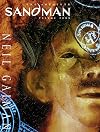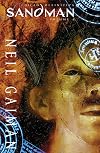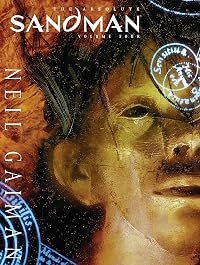
The Absolute Sandman Volume Four
by Neil Gaiman
The Sandman (The Absolute Sandman — Issues 57–75, Vertigo Jam 1), The Sandman {1989-1996} (Absolute — Absolute, issues 57-75)
On This Page
Description
"This final volume includes behind-the-scenes extras plus issues #57-75 and a story from VERTIGO JAM #1. Don't miss the end of what Playboy called 'a modern myth, as well as a précis on why the stories we tell matter so much'" -- from publisher's web site.Tags
Recommendations

Member Reviews
I read a third of this last night with a mug of cider and a few chunks of coffee cake. I got up at five this morning and came downstairs to finish it. The house was dark and I didn't turn on the light in the living room because I didn't want to disturb the dog, so I felt my way down the stairs in my stockinged feet. The door into the bedroom opened and closed behind me, and I stopped, and waited.
'Hello?' I said.
'Daddy,' said a sleepy six-year-old voice right behind me
I wasn't mad keen on the idea of a sleepy six year old going down the stairs in the pitch black of an early winter morning, but I couldn't go past him to get to the light and leave him alone, so together we went slowly downwards in our stockinged feet.
Nicky sat at one show more end of the table while I filled the kettle and prepared the porridge and made my coffee, then I sat down at the other end with my pot of coffee and a cup and Sandman volume four.
'We must be very quiet,' said Nicky. 'We mustn't make any noise or we will wake Martin and he will be cross.'
Martin's a sort of lodger. He's very nice and I don't think he'd get cross, but Nicky was right, we must be very quiet.
I started to read.
I think Neil Gaiman wrote at night a lot, so it felt appropriate to be reading this at five in the morning. There wasn't a storm lashing the windows with wind and rain, though I noticed later it was foggy, but that was later. I didn't notice Nicky go back upstairs. I was vaguely aware of Eddie getting up and moving around upstairs. I didn't notice the morning getting brighter, dimming the glare of the lights. At some various I did stir the porridge and turn the heat up and yell at the boys to come down and eat and for Eddie to walk the dog and I left the table long enough to take Annemarie's up on a tray and made some Van Morrison jokes.
('Have I told you lately that I love you?'
'Yes, but you haven't told me there's no-one above me.'
'...can't remember what comes next.'
'I fill your bowl with porridge? Take away your.... bowl... with no more porridge?'
'You make my breakfast that's what you do.')
Breakfast runs automatically now, and nothing spoils a morning read like burnt porridge.
So I finished it. I didn't want it to finish, but it did. Poor Lyta Hall. Poor Dream. Poor Clara. Poor everyone. It really was all about death, wasn't it? The story resolves in The Kindly Ones, but the real emotional climax is The Wake. Death and grief and loss and mourning and then waking up and moving on as best you can.
(At some point Eddie sat down to eat his breakfast and said: 'Oh, there's a hair in my porridge. Good thing it isn't a rabbit. Eh? Eh?')
I seem to remember Marc Hempel's art not being popular with everyone. I may have been unsure of it myself at first, but God, it's amazing. And Mike Zulli on the wake, and John J Muth and then holy moley Charles Vess reprising older, wiser, sadder Shakespeare in The Tempest.
The unresolved mystery of who Puck and Loki were really working for lingers. None of my own theories really fit properly, and I guess I appreciate leaving one thing unknown and possibly unknowable to haunt and nag the reader. I do hope it has a solution though - if there was no solution to the mystery, even if we never discover what it is, that would be a cheat.
I think reading The Sandman may have been the one thing I ever did that was cool, and I didn't do it because it was cool, I did it because I loved it, and it became cool for a while. I'm not sure anyone noticed me doing this cool thing while it was cool, but maybe that's what's cool about it.
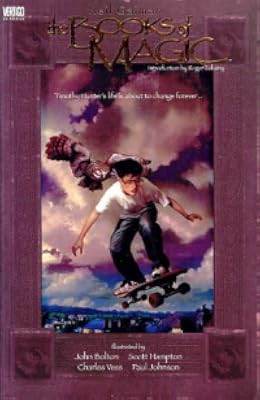
I still have Overture to read, which I'll get to tonight, and then there's assorted extras like The Dream Hunters and the Death collection and Books Of Magic, which is only vaguely related, which I'll get to eventually. At some point I might try to write something about the whole series from beginning to end, but not now, which is why this review is mostly about me going downstairs in the dark in my stockings with my six year old son behind me like a little familiar spirit. I can go back and read Sandman again, but moments like that come and go, and I'd like to be able to recall it long after it would be forgotten if I hadn't written it here.
Try to remember things, and tell your stories, and be remembered. show less
'Hello?' I said.
'Daddy,' said a sleepy six-year-old voice right behind me
I wasn't mad keen on the idea of a sleepy six year old going down the stairs in the pitch black of an early winter morning, but I couldn't go past him to get to the light and leave him alone, so together we went slowly downwards in our stockinged feet.
Nicky sat at one show more end of the table while I filled the kettle and prepared the porridge and made my coffee, then I sat down at the other end with my pot of coffee and a cup and Sandman volume four.
'We must be very quiet,' said Nicky. 'We mustn't make any noise or we will wake Martin and he will be cross.'
Martin's a sort of lodger. He's very nice and I don't think he'd get cross, but Nicky was right, we must be very quiet.
I started to read.
I think Neil Gaiman wrote at night a lot, so it felt appropriate to be reading this at five in the morning. There wasn't a storm lashing the windows with wind and rain, though I noticed later it was foggy, but that was later. I didn't notice Nicky go back upstairs. I was vaguely aware of Eddie getting up and moving around upstairs. I didn't notice the morning getting brighter, dimming the glare of the lights. At some various I did stir the porridge and turn the heat up and yell at the boys to come down and eat and for Eddie to walk the dog and I left the table long enough to take Annemarie's up on a tray and made some Van Morrison jokes.
('Have I told you lately that I love you?'
'Yes, but you haven't told me there's no-one above me.'
'...can't remember what comes next.'
'I fill your bowl with porridge? Take away your.... bowl... with no more porridge?'
'You make my breakfast that's what you do.')
Breakfast runs automatically now, and nothing spoils a morning read like burnt porridge.
So I finished it. I didn't want it to finish, but it did. Poor Lyta Hall. Poor Dream. Poor Clara. Poor everyone. It really was all about death, wasn't it? The story resolves in The Kindly Ones, but the real emotional climax is The Wake. Death and grief and loss and mourning and then waking up and moving on as best you can.
(At some point Eddie sat down to eat his breakfast and said: 'Oh, there's a hair in my porridge. Good thing it isn't a rabbit. Eh? Eh?')
I seem to remember Marc Hempel's art not being popular with everyone. I may have been unsure of it myself at first, but God, it's amazing. And Mike Zulli on the wake, and John J Muth and then holy moley Charles Vess reprising older, wiser, sadder Shakespeare in The Tempest.
The unresolved mystery of who Puck and Loki were really working for lingers. None of my own theories really fit properly, and I guess I appreciate leaving one thing unknown and possibly unknowable to haunt and nag the reader. I do hope it has a solution though - if there was no solution to the mystery, even if we never discover what it is, that would be a cheat.
I think reading The Sandman may have been the one thing I ever did that was cool, and I didn't do it because it was cool, I did it because I loved it, and it became cool for a while. I'm not sure anyone noticed me doing this cool thing while it was cool, but maybe that's what's cool about it.
I still have Overture to read, which I'll get to tonight, and then there's assorted extras like The Dream Hunters and the Death collection and Books Of Magic, which is only vaguely related, which I'll get to eventually. At some point I might try to write something about the whole series from beginning to end, but not now, which is why this review is mostly about me going downstairs in the dark in my stockings with my six year old son behind me like a little familiar spirit. I can go back and read Sandman again, but moments like that come and go, and I'd like to be able to recall it long after it would be forgotten if I hadn't written it here.
Try to remember things, and tell your stories, and be remembered. show less
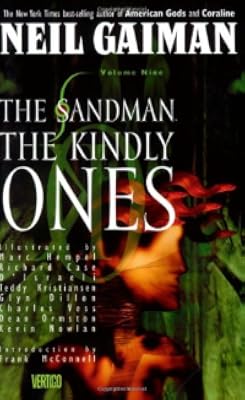
With this volume, The Sandman storyline hurtles to its inevitable conclusion. I had this spoiled for me ages ago, but it still totally works, and besides, Volume Three has a sequence that gives the game away anyway. The story is slow to start, but it really comes together as it goes, and as we see people throughout the universe of the series react to what is about to happen to Dream-- or what Dream is about to do? The final storyline makes a lot of sense of Dream's inactivity throughout the series (though I don't know that it excuses it as good storytelling), and I was happy to see Lyta Hall, wife of the 1980s Sandman, make a return. As the series' longest storyline yet, The Kindly Ones really works: I was riveted as I read, wanting to show more know what was going to happen next even thought I knew. There were lots of great little moments, especially the last stand of Merv Pumpkinhead during the assault on the Dreaming, and Cain's grief at what has happened to Abel. Marc Hempel has a different pencilling style from most of the other artists on the series, which would have been fine-- except that it often made it difficult to recognize brief appearances by preestablished characters. Though not quite as good as Brief Lives in Volume Three, The Kindly Ones provides an excellent finale to the series.
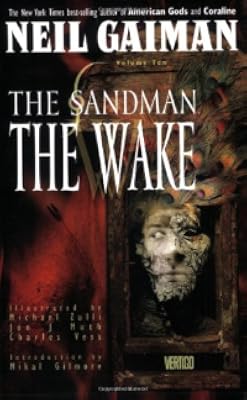
I need to say a few words about Matthew the Raven. Though Merv makes me laugh the most, Matthew is my favorite of the characters to inhabit the Dreaming, a mortal man who died and was offered a chance to live on in dreams as Dream's raven. He's your "average guy" amongst the far-fetched characters of the Dreaming, a little baffled but often able to cut through the crap. He got some good material in Volume Three, and he shines here in Volume Four, providing a human anchor for the massive events unfolding. The climax of the The Kindly Ones wouldn't be nearly as powerful without him, and he's what makes the last storyline in the book, The Wake, work as well as it does, as he struggles to come to terms with what happened. A great supporting character.
Neil Gaiman's The Sandman: « Previous in sequence | Next in sequence » show less
I need to say a few words about Matthew the Raven. Though Merv makes me laugh the most, Matthew is my favorite of the characters to inhabit the Dreaming, a mortal man who died and was offered a chance to live on in dreams as Dream's raven. He's your "average guy" amongst the far-fetched characters of the Dreaming, a little baffled but often able to cut through the crap. He got some good material in Volume Three, and he shines here in Volume Four, providing a human anchor for the massive events unfolding. The climax of the The Kindly Ones wouldn't be nearly as powerful without him, and he's what makes the last storyline in the book, The Wake, work as well as it does, as he struggles to come to terms with what happened. A great supporting character.
Neil Gaiman's The Sandman: « Previous in sequence | Next in sequence » show less
To understand this review, first you have to understand how I read the Sandman comics. Whenever my wife goes away for a few days, I read a volume of the Absolute Sandman. I don't quite know how I started this or why, but this is how things are. And, just over a year ago, my daughter was born. The past several days have been the first my daughter's been away from me since she was born.
This is the environment in which I've started--and finished--Absolute Sandman, Vol 4.
The arcs in Vol 4 are The Kindly Ones and The Wake. Or, to put it another way, The Death of Dream and, well, The Wake. What a positively depressing way to spend my depressing weekend away from my family. But, quite possibly the most beautiful story ever written. This is show more Gaiman at his best: the opposition of two unstoppable powers, very little combat in favor of deep conflict, sacrifice, grace, and transformation. I wasn't a fan of the art style for The Kindly Ones (seemed too cartoony), but it didn't distract and I particularly liked The Wake's art. show less
This is the environment in which I've started--and finished--Absolute Sandman, Vol 4.
The arcs in Vol 4 are The Kindly Ones and The Wake. Or, to put it another way, The Death of Dream and, well, The Wake. What a positively depressing way to spend my depressing weekend away from my family. But, quite possibly the most beautiful story ever written. This is show more Gaiman at his best: the opposition of two unstoppable powers, very little combat in favor of deep conflict, sacrifice, grace, and transformation. I wasn't a fan of the art style for The Kindly Ones (seemed too cartoony), but it didn't distract and I particularly liked The Wake's art. show less
Summary: This volume contains the final two arcs of the "main" Sandman storyline. In "The Kindly Ones", Lyta Hall's child Daniel has been kidnapped, and she seeks the Furies to help her avenge her loss... although the three play by their own rules, and by turning them loose, a chain of devastating consequences has been set into motion. The second arc, "The Wake", is much what it sounds like... a coalescence of the stories that have come before it, a closing, an end... and a beginning.
Review: Okay, I said in my review of Volume 3 that I was beginning to get hints of how each individual arc from the previous three volumes was beginning to be part of one overarching storyline. In Volume 4, all of that storyline comes rushing in, and it show more packs a wallop. Characters that we haven't seen since the beginning make their reappearances, events that happened way back in Volume 1 become important again, and themes that have been hinted at throughout are suddenly front and center. The art in most of "The Kindly Ones" is somewhat less representational than what's been typical for the series thus far, which occasionally made it difficult to recognize some of the more minor recurring characters. Of course, that could be because it's been several months since I first saw some of them in Vol. 1, too.
I don't know how much of the overarching Sandman story Gaiman had in his head when he started; either he planned a way to weave so many disparate stories into one big, beautiful thing, or else he managed to come up with a way that makes it looked like he planned it, but either way it's impressive. Recurrent throughout Sandman (and much of Gaiman's work, really) is the idea that stories have power, and this story is just oozing power - narrative power, metaphorical power, emotional power, you name it. By utilizing elements from throughout culture and history, the finished product feels whole, and organic, and more meaningful that a comic book should be.
Regardless, this is a series I could (and should) (and will) re-read. I finished it, and immediately wanted to turn around and start over at Volume 1 - and not just because I know which characters and events are going to wind up being important now. I actually went and priced it out, and I could get the ten-volume set of the original compilations for $135... but I don't want the originals, I want the huge, gorgeous, thirty-plus-pounds of restored and re-colored Absolute editions. I don't have a spare $250 laying around to drop on books (heck, I don't have a spare $135 laying around to drop on books), but MAN, do I covet these books. 4.5 out of 5 stars.
Recommendation: It took me a while to get my bearings in the series, but holy cow, did Gaiman finish it up with a bang. Don't start at the end, of course, but after finishing, it is absolutely clear to me why the Sandman series is a classic not only in the graphic novel genre, but also a must-read for fantasy fans in general. show less
Review: Okay, I said in my review of Volume 3 that I was beginning to get hints of how each individual arc from the previous three volumes was beginning to be part of one overarching storyline. In Volume 4, all of that storyline comes rushing in, and it show more packs a wallop. Characters that we haven't seen since the beginning make their reappearances, events that happened way back in Volume 1 become important again, and themes that have been hinted at throughout are suddenly front and center. The art in most of "The Kindly Ones" is somewhat less representational than what's been typical for the series thus far, which occasionally made it difficult to recognize some of the more minor recurring characters. Of course, that could be because it's been several months since I first saw some of them in Vol. 1, too.
I don't know how much of the overarching Sandman story Gaiman had in his head when he started; either he planned a way to weave so many disparate stories into one big, beautiful thing, or else he managed to come up with a way that makes it looked like he planned it, but either way it's impressive. Recurrent throughout Sandman (and much of Gaiman's work, really) is the idea that stories have power, and this story is just oozing power - narrative power, metaphorical power, emotional power, you name it. By utilizing elements from throughout culture and history, the finished product feels whole, and organic, and more meaningful that a comic book should be.
Regardless, this is a series I could (and should) (and will) re-read. I finished it, and immediately wanted to turn around and start over at Volume 1 - and not just because I know which characters and events are going to wind up being important now. I actually went and priced it out, and I could get the ten-volume set of the original compilations for $135... but I don't want the originals, I want the huge, gorgeous, thirty-plus-pounds of restored and re-colored Absolute editions. I don't have a spare $250 laying around to drop on books (heck, I don't have a spare $135 laying around to drop on books), but MAN, do I covet these books. 4.5 out of 5 stars.
Recommendation: It took me a while to get my bearings in the series, but holy cow, did Gaiman finish it up with a bang. Don't start at the end, of course, but after finishing, it is absolutely clear to me why the Sandman series is a classic not only in the graphic novel genre, but also a must-read for fantasy fans in general. show less
This volume contains the longest story arc of the series, The Kindly Ones and the next arc, The Wake but starts with an extra story where a dreamer (you, perhaps?) gets a tour of The Castle (from Vertigo Jam #1). Guided by Lucien with interjections from a few of the more recognizable inhabitants of The Dreaming. Then follows the 13 episode story in which the Furies have a score to settle with Dream. Lots of the old story arcs are revisited here with many great characters returning to create an ending and leave enough hope for a new beginning. This hope is further enhanced with the 4 episodes of the wake which has everyone coming to terms with previous events and their continuance, or not, in the scheme of things. Exiles sees Dream show more encounter an old Chinese philosopher who's been sent away from his emperor for the misdeeds of his son. The volume closes with a revisit to William Shakespeare as he completes the second play promised to Dream and so produces The Tempest.
Another excellent bunch of extra material follows which includes a Sandman timeline which goes through the major events from story pitch to the end of the stories published in this volume. Scripts (with thumbnails, pencils and promotional art) are provided for issue 57 (Kindly Ones Part 1) and issue 75 (The Tempest). There's also a couple of features on the collectibles that were made available over the course of this series' production (some of which I wouldn't mind owning). And finally the obligatory biographies of the people that made it happen.
This won't go down as my favourite book, the artist's style for The Kindly Ones I don't think did the story justice but was excellent for The Wake. Oh! I really wish they'd put spoiler warnings in the introductions. Don't read this one if you don't know what's going to happen in the stories contained in this volume. show less
Another excellent bunch of extra material follows which includes a Sandman timeline which goes through the major events from story pitch to the end of the stories published in this volume. Scripts (with thumbnails, pencils and promotional art) are provided for issue 57 (Kindly Ones Part 1) and issue 75 (The Tempest). There's also a couple of features on the collectibles that were made available over the course of this series' production (some of which I wouldn't mind owning). And finally the obligatory biographies of the people that made it happen.
This won't go down as my favourite book, the artist's style for The Kindly Ones I don't think did the story justice but was excellent for The Wake. Oh! I really wish they'd put spoiler warnings in the introductions. Don't read this one if you don't know what's going to happen in the stories contained in this volume. show less
The fourth Absolute Sandman volume completes the main story arc of the series, combining disparate elements and characters to produce a finale that I did not expect at all at the beginning. Initially I struggled with not being able to discern how anything related to anything else but the second half ravels everything up neatly.
I think this is the most challenging volume of Sandman. It gets pretty deep if you let it and does not have a light story over the top of the intellectualism. Still though, very much worth reading.
Members
- Recently Added By
Lists

Recommended Comics / Graphic Novels
595 works; 122 members

70 of the Best Horror Comics
178 works; 5 members

Books Read in 2012
816 works; 34 members
Author Information

844+ Works 450,011 Members
Neil Gaiman was born in Portchester, England on November 10, 1960. He worked as a journalist and freelance writer for a time, before deciding to try his hand at comic books. Some of his work has appeared in publications such as Time Out, The Sunday Times, Punch, and The Observer. His first comic endeavor was the graphic novel series The Sandman. show more The series has won every major industry award including nine Will Eisner Comic Industry Awards, three Harvey Awards, and the 1991 World Fantasy Award for best short story, making it the first comic ever to win a literary award. He writes both children and adult books. His adult books include The Ocean at the End of the Lane, which won a British National Book Awards, and the Locus Award for Best Fantasy Novel for 2014; Stardust, which won the Mythopoeic Award as best novel for adults in 1999; American Gods, which won the Hugo, Nebula, Bram Stoker, SFX, and Locus awards; Anansi Boys; Trigger Warning: Short Fictions and Disturbances; and The View from the Cheap Seats: Selected Nonfiction, which is a New York Times Bestseller. His children's books include The Day I Swapped My Dad for Two Goldfish; Coraline, which won the Elizabeth Burr/Worzalla, the BSFA, the Hugo, the Nebula, and the Bram Stoker awards; The Wolves in the Walls; Odd and the Frost Giants; The Graveyard Book, which won the Newbery Award in 2009 and The Sandman: Overture which won the 2016 Hugo Awards Best Graphic Story. (Bowker Author Biography) show less
All Editions
Some Editions
Awards and Honors
Notable Lists
Series

The Sandman
11 works (The Absolute Sandman — Issues 57–75, Vertigo Jam 1)

The Sandman {1989-1996}
76 works (Absolute — Absolute, issues 57-75)
Belongs to Publisher Series
Work Relationships
Is contained in
Contains
Is an abridged version of
Inspired
Common Knowledge
- Canonical title
- The Absolute Sandman Volume Four
- Original publication date
- 1993 - 1996 (original issues) (original issues); 2008-11-05
- People/Characters
- Dream (Morpheus & Daniel); Death of the Endless; Destiny of the Endless; Destruction of the Endless; Desire of the Endless; Despair of the Endless (show all 7); Delirium of the Endless
Classifications
Statistics
- Members
- 866
- Popularity
- 31,425
- Reviews
- 13
- Rating
- (4.78)
- Languages
- 5 — English, Hungarian, Italian, Portuguese, Spanish
- Media
- Paper
- ISBNs
- 7
- ASINs
- 4