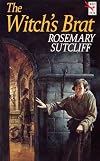
The Witch's Brat
by Rosemary Sutcliff
On This Page
Description
The knowledge of herbs and healing that once prompted the villagers to stone him out of town eventually becomes the salvation for a crippled boy in twelfth-century England.Tags
Recommendations
















Member Reviews
The Witch's Brat is another poignant tale from the wonderful Rosemary Sutcliff — author of so many classic historical novels I have loved from a young age. Lovel is just eleven when his grandmother, the village "witch," dies and leaves him to the untender mercy of the villeins who believe he belongs to the Evil One due to his crooked shoulder and humped back. Stoned and reviled, Lovel is driven from the village and eventually finds sanctuary with Augustinian monks.
One day Rahere, the king's jongleur (or jester) visits the monastery and shows Lovel the kindness that so few ever had. He leaves the next day but Lovel remembers his half-invitation to come back someday. Years pass and eventually Lovel's talent for healing is discovered. show more Slowly he grows into his role at the infirmary and finds contentment with this life until Rahere returns. Rahere is opening a hospital at Smithfield and invites Lovel to be the infirmarer — a position he joyfully accepts.
The roughness of life in the medieval era is not downplayed. Lovel receives harsh treatment from many and there are sad descriptions of the poor sick who come to the hospital (like the sick woman clutching her baby, begging Lovel to make the child better... the baby was dead). Sutcliff does not linger on the harshness but lets us see it through a child's eyes, a child who accepts it as normal and manages to survive in spite of it.
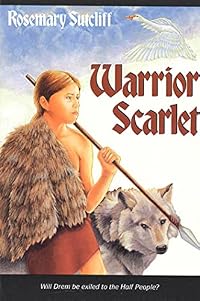
Sutcliff seems interested in the fate of people in historical times who had disabilities of some kind. My favorite of her novels, Warrior Scarlet, has this same theme. Life was so rough and difficult in many past centuries, and how such individuals overcome their physical disability and find a meaningful place in the society of their time is a fascinating twist on the usual historical-hero story. The author bio in the back tells of Sutcliff's own lengthy illnesses as a child and I wonder if that is why characters with physical ailments play a lead role in several of her stories.
I meant to just read a few chapters but finished this little novel in one evening. As always, Sutcliff finds the common human thread of experience that is universal across centuries and weaves her story around it — making her characters live in the imagination. show less
One day Rahere, the king's jongleur (or jester) visits the monastery and shows Lovel the kindness that so few ever had. He leaves the next day but Lovel remembers his half-invitation to come back someday. Years pass and eventually Lovel's talent for healing is discovered. show more Slowly he grows into his role at the infirmary and finds contentment with this life until Rahere returns. Rahere is opening a hospital at Smithfield and invites Lovel to be the infirmarer — a position he joyfully accepts.
The roughness of life in the medieval era is not downplayed. Lovel receives harsh treatment from many and there are sad descriptions of the poor sick who come to the hospital (like the sick woman clutching her baby, begging Lovel to make the child better... the baby was dead). Sutcliff does not linger on the harshness but lets us see it through a child's eyes, a child who accepts it as normal and manages to survive in spite of it.
Sutcliff seems interested in the fate of people in historical times who had disabilities of some kind. My favorite of her novels, Warrior Scarlet, has this same theme. Life was so rough and difficult in many past centuries, and how such individuals overcome their physical disability and find a meaningful place in the society of their time is a fascinating twist on the usual historical-hero story. The author bio in the back tells of Sutcliff's own lengthy illnesses as a child and I wonder if that is why characters with physical ailments play a lead role in several of her stories.
I meant to just read a few chapters but finished this little novel in one evening. As always, Sutcliff finds the common human thread of experience that is universal across centuries and weaves her story around it — making her characters live in the imagination. show less
This is one of those stories written for children that's also suitable for adults. This adult liked it, anyway.
Despite the title, this isn’t a supernatural tale. Rather, it’s set when people were superstitious about anyone who’s different to the norm. The ‘witch’ is a wise woman who people are a little afraid of but they seek her help for cures to ailments.
The ‘brat' is the wise woman’s grandson. He’s also humpbacked and lame, which really earns people’s distrust. After his grandmother dies early in the novel, the boy loses his protection and is persecuted.
The plot is set over several years during the first quarter of the twelfth century. Monks and monasteries are the main settings.
I like the first two-thirds of the show more book much more than the final third when we have a change of scenery. This involves a lot of static description regarding the main character’s journey on foot to London. Once he reaches London, my interest wanes a little. It’s not terrible or boring, but it’s lacking something that’s present earlier in the story.
Overall, though, it’s worth a read. show less
Despite the title, this isn’t a supernatural tale. Rather, it’s set when people were superstitious about anyone who’s different to the norm. The ‘witch’ is a wise woman who people are a little afraid of but they seek her help for cures to ailments.
The ‘brat' is the wise woman’s grandson. He’s also humpbacked and lame, which really earns people’s distrust. After his grandmother dies early in the novel, the boy loses his protection and is persecuted.
The plot is set over several years during the first quarter of the twelfth century. Monks and monasteries are the main settings.
I like the first two-thirds of the show more book much more than the final third when we have a change of scenery. This involves a lot of static description regarding the main character’s journey on foot to London. Once he reaches London, my interest wanes a little. It’s not terrible or boring, but it’s lacking something that’s present earlier in the story.
Overall, though, it’s worth a read. show less
Excellent. Sutcliff always has good, solid, realistic characters - this one is no exception. It's set a good deal later than her usual Roman Britain ones - around the death of Prince Hal in the White Ship (which is a somewhat important event in the story). The setting is very solid and realistic as well; she tells us who is a historical character and who isn't, but weaves the story so nicely that they _could_ have been real. I was crying at several points, and laughing at others. It's a skinny little book and presented as a children's book, but she's definitely not talking down to children!
Reread - still excellent. And worth rereading many times more.
Reread - still excellent. And worth rereading many times more.
A sweet tale of a crippled boy forced from his home village who first finds a home among the Benedictine monks at Winchester and then among the Augustinians at Smithfield outside London. As usual, Sutcliff keeps anachronisms from marring historical narrative.
Another interesting story, set in an era not commonly used for historical novels - the reign of Henry I - and tells about the founding of St Bartholomew's hospital in London.
"You will be one of the menders of this world; not the makers, nor yet the breakers; just one of the menders. . . . When the time comes, you'll know."
-- Rosemary Sutcliff, The Witch's Brat
The best of several profound and very beautiful quotes from this book. I aspire to be "one of the menders," both physically and spiritually, as the main character is.qq
-- Rosemary Sutcliff, The Witch's Brat
The best of several profound and very beautiful quotes from this book. I aspire to be "one of the menders," both physically and spiritually, as the main character is.qq
Ex-lib. Ulysses Philomathic Library, Trumansburg, NY
Members
- Recently Added By
Lists

Troublesome bodies
110 works; 7 members

Monastic life
31 works; 1 member

Books Read in 2018
4,360 works; 110 members
Author Information

83+ Works 22,254 Members
Rosemary Sutcliff was on born December 14, 1920 in East Clandon in Surrey, England. As a child she had Still's Disease, a form of juvenile arthritis. The effect of this led to many stays in hospital for painful remedial operations. She ended her formal education at fourteen, and went to Bideford Art School. She passed the City and Guilds show more examination and worked as a painter of miniatures. She felt cramped by the small canvas of miniature painting and turned to writing. Her first two books, The Chronicles of Robin Hood and The Queen Elizabeth Story, were published in 1950. Her other works included The Eagle of the Ninth, The Silver Branch, Sword Song, and the autobiography Blue Remembered Hills. She won the annual Carnegie Medal from the Library Association for The Lantern Bearers in 1959 and the annual Horn Book Award for Tristan and Iseult in 1971. She won inaugural Phoenix Award in 1985 for The Mark of the Horse Lord and again in 2010 for The Shining Company. In 1975, she was appointed an Officer of the Order of the British Empire for services to children's literature, and was promoted to be a Commander of the Order of the British Empire in 1992. She died on July 23, 1992. (Bowker Author Biography) show less
Some Editions
Awards and Honors
Common Knowledge
- Canonical title*
- Marc, de verschoppeling
- Original title
- The witch's brat
- Original publication date
- 1970
- People/Characters
- Lovel; Brother Eustace; Brother Peter; Brother Dominic; Rahere; Brother Anselm (show all 10); Brother John; Jehan; Nick Redpoll; Brother Luke
- Important places
- St. Bartholomew's Hospital, Smithfield, London, England, UK
- Dedication
- For Margaret
- First words
- The boy came stumbling down between the two big outfields of the village, on his way back from taking Gyrth the shepherd his supper.
- Quotations
- Perhaps it did not matter what names people called you by, only what they meant behind them.
- Last words
- (Click to show. Warning: May contain spoilers.)"A good miracle," Lovel agreed.
- Original language*
- Engels
*Some information comes from Common Knowledge in other languages. Click "Edit" for more information.
Classifications
- Genres
- Fiction and Literature, Children's Books, Kids
- DDC/MDS
- 823.914 — Literature & rhetoric English & Old English literatures English fiction 1900- 1901-1999 1945-1999
- LCC
- PZ7 .S966 .W — Language and Literature Fiction and juvenile belles lettres Fiction and juvenile belles lettres Juvenile belles lettres
- BISAC
Statistics
- Members
- 203
- Popularity
- 160,546
- Reviews
- 8
- Rating
- (3.80)
- Languages
- Danish, Dutch, English, German
- Media
- Paper, Ebook
- ISBNs
- 13
- ASINs
- 5