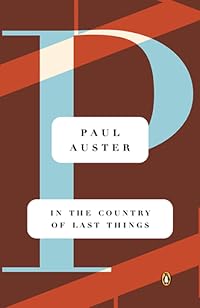
In the Country of Last Things
by Paul Auster
On This Page
Description
Paul Auster takes us to an unspecified and devastated world in which the self disappears amidst horrors that surround us.Tags
Recommendations






Member Recommendations
Member Reviews
In the Country of Last Things is a human-centered dystopian novel told in the form of a letter from Anna Blume to a childhood friend (or romantic interest – I’m really not sure).
Anna has come to the City searching for her brother William, a journalist who was sent there to report on the day-to-day goings-on of this rumored-to-be-awful place. And the City truly is a horrible place. Everything, including buildings and streets, is literally disintegrating and once you enter, it is nearly impossible to leave. Things (meaning anything you can think of, from pencils to airplanes) are no longer produced, therefore, many people survive by scavenging for discarded objects, attempting to put parts together to make a whole.
Death is show more everywhere and has become an art form. Cults have grown from the very common desire to commit suicide – from assassination clubs where you pay to have an unknown person shoot you at an undisclosed place and time, to running clubs where people train for months in order to go on a final death run, whereby they run until they drop dead. As a result, the main function of the ever-changing government is to collect the dead bodies that are used for the city’s only fuel source.
However, despite all this, the novel is really about how people desperately try to find meaning and purpose in their lives amidst this awful chaos. In one particularly striking passage, Anna points out (and I’m paraphrasing) that it’s truly remarkable that more people aren’t complete monsters, given the circumstances in which they live. A truly beautiful novel. I highly recommend it. show less
Anna has come to the City searching for her brother William, a journalist who was sent there to report on the day-to-day goings-on of this rumored-to-be-awful place. And the City truly is a horrible place. Everything, including buildings and streets, is literally disintegrating and once you enter, it is nearly impossible to leave. Things (meaning anything you can think of, from pencils to airplanes) are no longer produced, therefore, many people survive by scavenging for discarded objects, attempting to put parts together to make a whole.
Death is show more everywhere and has become an art form. Cults have grown from the very common desire to commit suicide – from assassination clubs where you pay to have an unknown person shoot you at an undisclosed place and time, to running clubs where people train for months in order to go on a final death run, whereby they run until they drop dead. As a result, the main function of the ever-changing government is to collect the dead bodies that are used for the city’s only fuel source.
However, despite all this, the novel is really about how people desperately try to find meaning and purpose in their lives amidst this awful chaos. In one particularly striking passage, Anna points out (and I’m paraphrasing) that it’s truly remarkable that more people aren’t complete monsters, given the circumstances in which they live. A truly beautiful novel. I highly recommend it. show less
Have you ever reread an old favourite book and been unsettled by what it told you about your past self? I can't remember when precisely I first read [b:In the Country of Last Things|19486|In the Country of Last Things|Paul Auster|https://i.gr-assets.com/images/S/compressed.photo.goodreads.com/books/1328287715l/19486._SY75_.jpg|1010901], I'd estimate fifteen years ago, but do recall that it spoke to me profoundly. This is probably because the main character is called Anna and she is trapped in an anxiety nightmare very similar to those I experience. As I read again with the benefit of hindsight, I wondered why the fuck did it took me so many years to realise that I have anxiety. From page six:
Surely not everyone would read this literary evocation of a society in terminal decline, narrated by a lost woman constantly afraid of violence and death, and think "Wow, this is just like the inside of my head!" Apparently I considered that normal; I now realise it isn't.
Personal revelations aside, this remains my favourite to date of Paul Auster's excellent fiction. It can be read primarily as a fable or more literally with historical echoes (perhaps of the Holocaust and Siege of Leningrad). The novel is structured as a long letter that the protagonist Anna Blume writes to her brother, who she is searching for in the unnamed collapsing city. The first line states 'she wrote', with the implication that someone reads her words. This opening and the ending give the book a slightly more hopeful cast than I remembered, but it is still a fundamentally bleak narrative. The atmosphere is of a nightmare, as Anna describes her attempts to survive in an utterly hostile and arbitrary urban environment.
In a sense the setting could be considered dystopian, but I have strong and capricious views about what is and isn't a dystopia. In my opinion, [b:In the Country of Last Things|19486|In the Country of Last Things|Paul Auster|https://i.gr-assets.com/images/S/compressed.photo.goodreads.com/books/1328287715l/19486._SY75_.jpg|1010901] is apocalyptic rather than dystopian as it's a setting collapsing chaotically rather than being terrible yet stable. I consider dystopias to be characterised by a stable yet terrible regime of power that appears impossible to overturn, cf the classics [b:1984|61439040|1984|George Orwell|https://i.gr-assets.com/images/S/compressed.photo.goodreads.com/books/1657781256l/61439040._SX50_.jpg|153313] & [b:Brave New World|5129|Brave New World|Aldous Huxley|https://i.gr-assets.com/images/S/compressed.photo.goodreads.com/books/1575509280l/5129._SY75_.jpg|3204877], rather than something worse than reality per se. Dystopian and apocalyptic fiction deal with different fears, at least according to my theories. Auster certainly has acute insight into social collapse:
That question has always haunted me and will certainly continue to do so as climate change accelerates. Another particularly striking passage concerns a charity hospital:
[b:In the Country of Last Things|19486|In the Country of Last Things|Paul Auster|https://i.gr-assets.com/images/S/compressed.photo.goodreads.com/books/1328287715l/19486._SY75_.jpg|1010901] was first published in 1987, yet reads presciently like post-Cold War fiction. It is characterised by a terrifying absence of socio-political systems, rather than their oppressiveness. Despite the pervasive deprivation, alienation, and threat, however, there is also kindness, love, care, and solidarity in hellish circumstances. I'd forgotten a lot of detailssuch as Anna losing a baby, her bisexuality, and the scene in which she nearly murders a man who tries to rape her but stops because she's enjoying choking him too much. I also didn't recall that the ending is open, as Anna and those she loves attempt to escape the ever-deteriorating city. They do not know whether they have any chance of managing it, but the reader is offered the possibility they succeed .
I'm glad that I reread [b:In the Country of Last Things|19486|In the Country of Last Things|Paul Auster|https://i.gr-assets.com/images/S/compressed.photo.goodreads.com/books/1328287715l/19486._SY75_.jpg|1010901], as it's an extraordinarily vivid, intense, and distinctive narrative that still haunts me. Now that it has given me an unsettling window into my lack of self-awareness when I was younger, though, I think I can pass my copy on. show less
You can never know which streets to take andshow more
which to avoid. Bit by bit, the city robs you of certainty. There can never be any fixed path, and you can survive only if nothing is necessary to you. Without warning, you must be able to change, to drop what you are doing, to reverse. In the end, there is nothing that is not the case. As a consequence, you must learn to read the signs. When the eyes falter, the nose will sometimes serve. My sense of smell has become unnaturally keen. In spite of the side effects - the sudden nausea, the dizziness, the fear that comes with the rank air invading my body - it protects me when turning corners, and these can be the most dangerous of all.
Surely not everyone would read this literary evocation of a society in terminal decline, narrated by a lost woman constantly afraid of violence and death, and think "Wow, this is just like the inside of my head!" Apparently I considered that normal; I now realise it isn't.
Personal revelations aside, this remains my favourite to date of Paul Auster's excellent fiction. It can be read primarily as a fable or more literally with historical echoes (perhaps of the Holocaust and Siege of Leningrad). The novel is structured as a long letter that the protagonist Anna Blume writes to her brother, who she is searching for in the unnamed collapsing city. The first line states 'she wrote', with the implication that someone reads her words. This opening and the ending give the book a slightly more hopeful cast than I remembered, but it is still a fundamentally bleak narrative. The atmosphere is of a nightmare, as Anna describes her attempts to survive in an utterly hostile and arbitrary urban environment.
In a sense the setting could be considered dystopian, but I have strong and capricious views about what is and isn't a dystopia. In my opinion, [b:In the Country of Last Things|19486|In the Country of Last Things|Paul Auster|https://i.gr-assets.com/images/S/compressed.photo.goodreads.com/books/1328287715l/19486._SY75_.jpg|1010901] is apocalyptic rather than dystopian as it's a setting collapsing chaotically rather than being terrible yet stable. I consider dystopias to be characterised by a stable yet terrible regime of power that appears impossible to overturn, cf the classics [b:1984|61439040|1984|George Orwell|https://i.gr-assets.com/images/S/compressed.photo.goodreads.com/books/1657781256l/61439040._SX50_.jpg|153313] & [b:Brave New World|5129|Brave New World|Aldous Huxley|https://i.gr-assets.com/images/S/compressed.photo.goodreads.com/books/1575509280l/5129._SY75_.jpg|3204877], rather than something worse than reality per se. Dystopian and apocalyptic fiction deal with different fears, at least according to my theories. Auster certainly has acute insight into social collapse:
People will talk about anything here, especially things they know nothing about. What strikes me as odd is not that everything is falling apart, but that so much continues to be there. It takes a long time for a world to vanish, much longer than you would think. Lives continue to be lived, and each one of us remains the witness of his own little drama. It's true that there are no schools anymore; it's true that the last movie was shown over five years ago; it's true that wine is so scarce that only the rich can afford it. But is that what we mean by life? Let everything fall away, and then let's see what there is. Perhaps that's the most interesting question of all: to see what happens when there is nothing, and whether or not we will survive that too.
That question has always haunted me and will certainly continue to do so as climate change accelerates. Another particularly striking passage concerns a charity hospital:
The quandary is immense, however. The moment you accept the idea that there might be some good in a place like Woburn House, you sink into a swamp of contradictions. It is not enough simply to argue that residents should be allowed to stay longer - particularly if you mean to be fair. What about all the others who are standing outside, waiting for a chance to get in? For every person who occupied a bed in Woburn House, there were dozens more begging to be admitted. What is better - to help large numbers of people a little bit or small numbers of people a lot? I don't really think there is an answer to this question. Dr. Woburn had started the enterprise in a certain way, and Victoria was determined to stick with it to the end. That did not necessarily make it right. But it did not make it wrong either. The problem did not lie in the method so much as the nature of the problem itself. There were too many people to be helped and not enough people to help them. The arithmetic was overpowering, inexorable in the havoc it produced. No matter how hard you worked, there was no chance you were not going to fail. That was the long and short of it. Unless you were willing to accept the utter futility of the job, there was no point in going on with it.
[b:In the Country of Last Things|19486|In the Country of Last Things|Paul Auster|https://i.gr-assets.com/images/S/compressed.photo.goodreads.com/books/1328287715l/19486._SY75_.jpg|1010901] was first published in 1987, yet reads presciently like post-Cold War fiction. It is characterised by a terrifying absence of socio-political systems, rather than their oppressiveness. Despite the pervasive deprivation, alienation, and threat, however, there is also kindness, love, care, and solidarity in hellish circumstances. I'd forgotten a lot of details
I'm glad that I reread [b:In the Country of Last Things|19486|In the Country of Last Things|Paul Auster|https://i.gr-assets.com/images/S/compressed.photo.goodreads.com/books/1328287715l/19486._SY75_.jpg|1010901], as it's an extraordinarily vivid, intense, and distinctive narrative that still haunts me. Now that it has given me an unsettling window into my lack of self-awareness when I was younger, though, I think I can pass my copy on. show less
“Nothing lasts, you see, not even the thoughts inside you. And you mustn’t waste your time looking for them. Once a thing is gone, that is the end of it.”
Perhaps I’ve read too many dystopias (they put current anxieties in perspective), because although I can’t fault this, and I wanted to know what would happen next, I was ultimately underwhelmed. I didn't mind not knowing what happened before and after, but I think I wanted a bit more mystery, rather than something so plausibly real.
The story comes from Anna’s notebook, written to a childhood friend who may never see it (though just occasionally, it breaks the fourth wall with a comment like “she continued”). It covers a few years from when, aged 19, she took a 10-day show more crossing to seek her brother, who had gone missing, months earlier. There is no explanation of anything; just what happens to her - until the story stops.
“The closer you come to the end, the more there is to say.”
She starts off describing survival skills in a city which is collapsing literally and metaphorically, where most are homeless, jobless, and friendless, where crime, disease, and death are endemic, and the authority’s main role is disposing of bodies and excrement.
“The essential thing is not to become inured. For habits are deadly.”
It’s grim, and gets worse. She has strokes of luck, always followed by disaster of some kind - until the story stops.
Image: Abandoned city (Source)
Language
As a child, Anna wrote stories, including ‘The Castle of No Return’, ‘The Land of Sadness’, and, most prophetically, ‘The Forest of Forgotten Words’.
In the country of last things and forgotten words, euphemisms blunt the horror. A mix of grassroots slang and official gaslighting: Vultures try to steal from Object Hunters who scavenge for things to sell to Resurrection Agents; Transformation Centers are crematoria creating fuel; Runners try to kill themselves by exhaustion, and Leapers by jumping off buildings while people watch (then frisk the bodies).
Starfish
Anna lives on the streets, in a single room with a couple, in the attic of an academic library, and in a small charitable hostel called Woburn House. The last is the most interesting: people queue for days to have a temporary place:
“Nothing is solved by this… We were supposed to be helping people… but there were times when we actually destroyed them… What is better - to help a large number of people a little bit or small numbers of people a lot?”
Image: Child throwing one of many washed-up starfish back into the sea, making a difference to that one. (Image source and associated parable)
Quotes
• “When hope disappears… you tend to fill the empty spaces with dreams.”
• “Every Jew believes that he belongs to the last generation of Jews.”
• “The present consumed us entirely now… There was a ghostly equilibrium to this life.”
• “Memory is not an act of will… It is something that happens in spite of oneself.”
See also
Anna writes:
“It’s not just that things [like airplanes] vanish - but once they vanish, the memory of them vanishes as well.”
The obvious comparison is with Yōko Ogawa’s The Memory Police, which I reviewed HERE, including links to my reviews of other dystopias. The Memory Police was published in Japan in 1994, but only translated to English in 2019. Like Auster’s 1987 novel, things disappear from life, and thence from vocabulary and memory. However, Ogawa’s is more surreal, or maybe supernatural. show less
Perhaps I’ve read too many dystopias (they put current anxieties in perspective), because although I can’t fault this, and I wanted to know what would happen next, I was ultimately underwhelmed. I didn't mind not knowing what happened before and after, but I think I wanted a bit more mystery, rather than something so plausibly real.
The story comes from Anna’s notebook, written to a childhood friend who may never see it (though just occasionally, it breaks the fourth wall with a comment like “she continued”). It covers a few years from when, aged 19, she took a 10-day show more crossing to seek her brother, who had gone missing, months earlier. There is no explanation of anything; just what happens to her - until the story stops.
“The closer you come to the end, the more there is to say.”
She starts off describing survival skills in a city which is collapsing literally and metaphorically, where most are homeless, jobless, and friendless, where crime, disease, and death are endemic, and the authority’s main role is disposing of bodies and excrement.
“The essential thing is not to become inured. For habits are deadly.”
It’s grim, and gets worse. She has strokes of luck, always followed by disaster of some kind - until the story stops.
Image: Abandoned city (Source)
Language
As a child, Anna wrote stories, including ‘The Castle of No Return’, ‘The Land of Sadness’, and, most prophetically, ‘The Forest of Forgotten Words’.
In the country of last things and forgotten words, euphemisms blunt the horror. A mix of grassroots slang and official gaslighting: Vultures try to steal from Object Hunters who scavenge for things to sell to Resurrection Agents; Transformation Centers are crematoria creating fuel; Runners try to kill themselves by exhaustion, and Leapers by jumping off buildings while people watch (then frisk the bodies).
Starfish
Anna lives on the streets, in a single room with a couple, in the attic of an academic library, and in a small charitable hostel called Woburn House. The last is the most interesting: people queue for days to have a temporary place:
“Nothing is solved by this… We were supposed to be helping people… but there were times when we actually destroyed them… What is better - to help a large number of people a little bit or small numbers of people a lot?”
Image: Child throwing one of many washed-up starfish back into the sea, making a difference to that one. (Image source and associated parable)
Quotes
• “When hope disappears… you tend to fill the empty spaces with dreams.”
• “Every Jew believes that he belongs to the last generation of Jews.”
• “The present consumed us entirely now… There was a ghostly equilibrium to this life.”
• “Memory is not an act of will… It is something that happens in spite of oneself.”
See also
Anna writes:
“It’s not just that things [like airplanes] vanish - but once they vanish, the memory of them vanishes as well.”
The obvious comparison is with Yōko Ogawa’s The Memory Police, which I reviewed HERE, including links to my reviews of other dystopias. The Memory Police was published in Japan in 1994, but only translated to English in 2019. Like Auster’s 1987 novel, things disappear from life, and thence from vocabulary and memory. However, Ogawa’s is more surreal, or maybe supernatural. show less
I can feel the despair and hunger seeping out through the pages and crawling into my skin.
This is what the end of the world looks like. This is truly the best description of the dystopian world that I imagine would be the most true to life. All the obstacles that occurred are very much what I imagine happening!
I found all of this extremely interesting and also terrifying!
This is what the end of the world looks like. This is truly the best description of the dystopian world that I imagine would be the most true to life. All the obstacles that occurred are very much what I imagine happening!
I found all of this extremely interesting and also terrifying!
عندما كتب بول أوستر روايته الشهيرة ( في بلاد الأشياء الأخيرة ) العام ١٩٨٧م كان يضع تصوراً للرعب الحقيقي الذي يخشاه البشر، أرضٌ تتسرب منها المثل والأخلاقيات والدين كما تتسرب المياه من كوب مثقوب!
تروي الحكاية قصة آنا بلوم التي تنتقل للمدينة بحثاً عن أخيها بعد اختفاءه، وتصف في يومياتها الحالة المزرية التي وصلتها الانسانية هناك.
كلّ شيء يفقد قيمته تدريجيا التكنولوجيا والصناعات والوظائف المهمّة وحتى البشر، show more يتسابقون في إنهاء حياتهم بطريقة أو بأخرى.
عيادات القتل الرحيم وأندية الإغتيال والانتحار الجماعي كلّ ذلك بعد أن يفقد الأفراد أملهم في العيش، ويستبد بهم الجوع والبرد الجوع الذي وصفه بول اوستر على لسان بطلة الرواية بقوله : “الجوع لعنة يوميّة والمعدة حفرة معدومة القعر، ثقب بحجم الكون”.
في بلاد الأشياء الأخيرة يتحول البشر إلى احجار تسير على غير هدى، خيالات تئن تحت وطأة الهزال وتبحث عن فريسة (بشرية) أو خردوات بين اكداس النفايات التي يمضي الوقت دون أن يهتم أحد في تنظيفها!
واجهت صعوبة كبيرة في تجاوز صفحات الرواية، ذات الشعور واجهته في قراءتي للطاعون لألبير كامو والعمى لجوزيه ساراماغو.
الوصف العميق للإنسان عندما يفقد حياته كما يعرفها ويتمسك بهدف وحيد أن يبقى حياً وبكامل أعضاءه!
تصور الرواية أيضاً خطورة غياب القانون، ذلك النظام الذي يضبط تعامل الإنسان مع أخيه الإنسان.
يريد الكاتب أن يصوّر لنا أن هذه القوانين الصارمة هي التي تكبح بعض الأشخاص عن أذية الآخرين بسبب خوفهم من المساءلة، وما إن تسقط حتى يتحولون إلى وحوش ضارية تقتل وتسرق وتقتلع الأضراس بحثاً عن المادة.
مدينة الأشياء الأخيرة حسبتها في البدء شيكاغو برياحها التي لا يتنبأ بها، أو نيويورك بجبالها الاسمنتية!
في الحقيقة هي البلاد كلّها عندما نفقد روحنا وانسانيتنا، وأبطالها يعيشون بيننا وفي كل مكان. show less
تروي الحكاية قصة آنا بلوم التي تنتقل للمدينة بحثاً عن أخيها بعد اختفاءه، وتصف في يومياتها الحالة المزرية التي وصلتها الانسانية هناك.
كلّ شيء يفقد قيمته تدريجيا التكنولوجيا والصناعات والوظائف المهمّة وحتى البشر، show more يتسابقون في إنهاء حياتهم بطريقة أو بأخرى.
عيادات القتل الرحيم وأندية الإغتيال والانتحار الجماعي كلّ ذلك بعد أن يفقد الأفراد أملهم في العيش، ويستبد بهم الجوع والبرد الجوع الذي وصفه بول اوستر على لسان بطلة الرواية بقوله : “الجوع لعنة يوميّة والمعدة حفرة معدومة القعر، ثقب بحجم الكون”.
في بلاد الأشياء الأخيرة يتحول البشر إلى احجار تسير على غير هدى، خيالات تئن تحت وطأة الهزال وتبحث عن فريسة (بشرية) أو خردوات بين اكداس النفايات التي يمضي الوقت دون أن يهتم أحد في تنظيفها!
واجهت صعوبة كبيرة في تجاوز صفحات الرواية، ذات الشعور واجهته في قراءتي للطاعون لألبير كامو والعمى لجوزيه ساراماغو.
الوصف العميق للإنسان عندما يفقد حياته كما يعرفها ويتمسك بهدف وحيد أن يبقى حياً وبكامل أعضاءه!
تصور الرواية أيضاً خطورة غياب القانون، ذلك النظام الذي يضبط تعامل الإنسان مع أخيه الإنسان.
يريد الكاتب أن يصوّر لنا أن هذه القوانين الصارمة هي التي تكبح بعض الأشخاص عن أذية الآخرين بسبب خوفهم من المساءلة، وما إن تسقط حتى يتحولون إلى وحوش ضارية تقتل وتسرق وتقتلع الأضراس بحثاً عن المادة.
مدينة الأشياء الأخيرة حسبتها في البدء شيكاغو برياحها التي لا يتنبأ بها، أو نيويورك بجبالها الاسمنتية!
في الحقيقة هي البلاد كلّها عندما نفقد روحنا وانسانيتنا، وأبطالها يعيشون بيننا وفي كل مكان. show less
This book, beautiful as all the Auster's ones, is full of the sadness that has now become to me so typical of Auster's writing, but an inspiring sadness, if I can call it this way. The story of Anna Blume, so tragical and full of pain, is also the story of a spirit that does not want to surrender, but maybe, just like with the protagonists of the other books, no matter how much they want to fight the status quo, they cannot but be victims in the bigger frame of things.
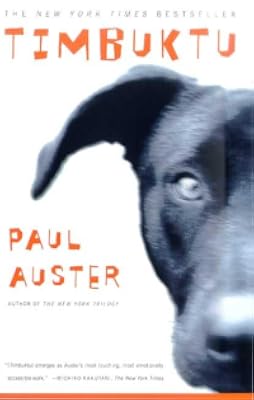
The narration, done in first person, as Anna is writing a diary to an unknown reader, is full of energy, and this made a change from the other stories I have read so far, in my opinion. Anna, a young woman who left her country to look for his brother, who left the family show more some time before, seems to me to always have the strength to live, to fight against the injustice and corruption, even when she seems to have lost all she has gained. She seems to me so different from some of the male protagonists of the New York Trilogy, or Moon Palace, mainly because I do not know what really happens to her afterwards...it's a diary interrupted just before the last chapter, and although there is always the hope that she has succeeded in escaping her destiny, I cannot help but think that, just like the others, even Mr Bones of Timbuktu, she didn't make it... show less
The narration, done in first person, as Anna is writing a diary to an unknown reader, is full of energy, and this made a change from the other stories I have read so far, in my opinion. Anna, a young woman who left her country to look for his brother, who left the family show more some time before, seems to me to always have the strength to live, to fight against the injustice and corruption, even when she seems to have lost all she has gained. She seems to me so different from some of the male protagonists of the New York Trilogy, or Moon Palace, mainly because I do not know what really happens to her afterwards...it's a diary interrupted just before the last chapter, and although there is always the hope that she has succeeded in escaping her destiny, I cannot help but think that, just like the others, even Mr Bones of Timbuktu, she didn't make it... show less
A dreamlike dystopian novel about a woman's plight to find her missing brother in an unnamed city where society has collapsed. Any means of making money is past, except by scavenging what has been left behind. The book has a strange structure; it's essentially a long letter written by the narrator, Anna, to a close friend. Overall, reading "In the Country of Last Things" is an extremely unsettling, inconclusive and haunting experience.
Members
- Recently Added By
Published Reviews
In a book-length letter home, Anna Blume reports that her search for a long-lost brother has brought her to a vast, unnamed city that is undergoing a catastrophic economic decline. Buildings collapse daily, driving huge numbers of citizens into the streets, where they starve or die of exposureif they aren't murdered by other vagrants first. Government forces haul away the bodies, and licensed show more scavengers collect trash and precious human waste. Weird cults form around the most popular methods of suicide. Anna tries to help, but the charity group she joins quickly runs out of supplies and has to close its doors. A number of post-apocalyptic novels have been published recently; Auster's, one of the best, is distinguished by an uncanny grasp of the day-to-day realities of homelessness. This is a scary but highly relevant book. show less
added by cmwilson101
Imagine an American city in the near future, populated almost wholly by street dwellers, squatters in ruined buildings, scavengers for subsistence. Suicide clubs offer interesting ways to die, for a fee, but the rich have fled with their jewels, and those who are left survive on what little cash trade-in centers will give them for the day's pickings. This enthralling, dreamlike fable about a show more peculiarly recognizable society, now in the throes of entropy, focuses on the plight of a young woman, Anna Blume. Anna has memories of a gentler life, but comes to the city in a "charity ship" to hunt for her missing brother. She first finds shelter with a madman and his wife and later experiences a brief idyll with a writer, Samuel Farr.Together they live in the deteriorating splendor of the marbled public library. Promise is ultimately rekindled when the survivors consider taking to the road as magiciansan action implying that art and illusion can save. Auster, an accomplished stylist, creates a tone that deftly combines matter-of-factness and estrangement. The eerie quality is heightened by the device of a narrator who learns everything from Anna's journal. show less
added by cmwilson101
Lists

The Guardian's 1000 Novels Everyone Must Read
1,005 works; 551 members

Novels from The Guardian's Great American Novelist Tournament
148 works; 24 members

Dystopian and Apocalyptic Literature
350 works; 74 members

Five star books
1,767 works; 110 members

Books Read in 2022
5,226 works; 115 members

Post-Apocalyptic Fiction
57 works; 3 members
Talk Discussions
Past Discussions
Found: YA? Dystopian Fantasy, Running forever until they died? in Name that Book (January 2024)
Author Information

106+ Works 64,983 Members
Paul Auster was born on February 3, 1947, in Newark, New Jersey. He received a B.A. and a M.A. in English and Comparative Literature from Columbia University. In addition to his career as a writer, Auster has been a census taker, tutor, merchant seaman, little-league baseball coach, and a telephone operator. He started his writing career as a show more translator. He soon gained popularity for the detective novels that make up his New York Trilogy. His other works include The Invention of Solitude; Leviathan; Moon Palace; Facing the Music; In the Country of Last Things; The Music of Chance; Mr. Vertigo; and The Brooklyn Follies. His latest novels are entitled, Invisible and Sunset Park. In addition to his novels, Auster has written screenplays and directed several films. He is the recipient of a fellowship from the National Endowment for the Arts and a French Prix Medicis for Foreign Literature. (Bowker Author Biography) show less
Some Editions
Awards and Honors
Series
Belongs to Publisher Series
Work Relationships
Common Knowledge
- Canonical title
- In the Country of Last Things
- Original title
- In the Country of Last Things
- Original publication date
- 1987-04-20
- People/Characters
- Anna Blume
- Epigraph
- Not a great while ago, passing through the gate of dreams, I visited that region of the earth in which lies the famous City of Destruction.
~Nathaniel Hawthorne - Dedication
- for Siri Hustvedt
- First words
- These are the last things, she wrote.
- Last words
- (Click to show. Warning: May contain spoilers.)Once we get to where we are going, I will try to write to you again, I promise.
- Original language
- English
- Canonical DDC/MDS
- 813.54
- Canonical LCC
- PS3551.U77
Classifications
Statistics
- Members
- 2,004
- Popularity
- 10,507
- Reviews
- 29
- Rating
- (3.76)
- Languages
- 15 — Danish, Dutch, English, French, German, Greek, Hebrew, Hungarian, Italian, Japanese, Polish, Portuguese, Spanish, Swedish, Turkish
- Media
- Paper, Audiobook, Ebook
- ISBNs
- 54
- UPCs
- 1
- ASINs
- 14